Guest Post from Dr David Ward: Time to ban NHS trusts from sacking whistleblower doctors and health care workers

DR DAVID E WARD

This blog arose from the recent case highlighted by the Health Services Journal of Dr Susan Gilby, the former chief executive of the Countess of Chester hospital in giving evidence to the Thirlwell Inquiry about the resistance from senior NHS people she faced trying to admit mistakes there. This is the hospital where a nurse Lucy Letby was found guilty of murdering seven babies and is now trying to get the case reconsidered. The CEO ultimately left the trust in late 2021, shortly after Letby’s trial began. An employment tribunal this month found she had been unfairly forced out by the trust and Mr Ian Haythornthwaite, the former chairman because she had raised concerns about his bullying behaviour. He resigned after the verdict.
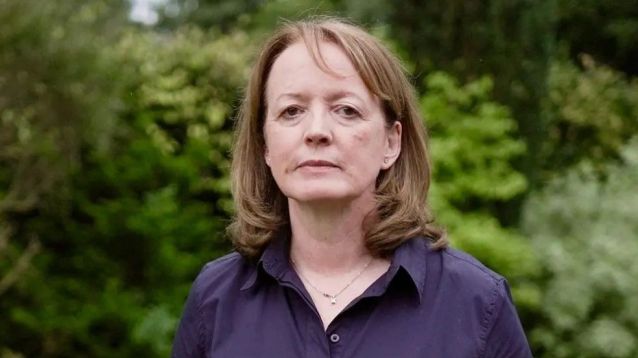
Dr Susan Gilby Pic credit: BBC

Dr Susan Gilby is brave. Her experience is in keeping with many others who have raised concerns including patient safety issues. Dr David Drew’s comments ( See HSJ 08.44, 25 Feb) are spot on: the whole play book is sanctioned from above (NHSE and probably higher). Some colleagues and I have spoken to NHSE on several occasions (including in person, at Wellington House, SE London). We have nothing to show for it other than placations and weaselly words. Action, there is none.

Regarding NDAs (anon HSJ 13.39) in relation to healthcare and the NHS, they should be banned. They are “lawful” means of concealing (potentially very important) evidence which therefore cannot be tested in court. That’s the raison d’être of NDAs, isn’t it? And this is England, in the 21st century! And yes, Sir Robert Francis tried but was evidently misguided (see his 290 odd recommendations!). Jeremy Hunt did nothing to improve the “status” of NHS whistleblowers; if anything he made it worse by ignoring the problem and trying to belittle them.

On the Lucy Letby case there are now several authoritative sources seriously questioning the safety of the judgment (see Google). Let us hope that these processes will be allowed to evolve openly and unhindered.

It is high time the NHS leadership, politicians (West Streeting MP, SoS Health, are you listening?) reviewed the whole process of the treatment of NHS whistleblowers (they are “canaries in the coal mine”, right?).

If Trusts were banned from dismissing a doctor (or any Healthcare worker) who has “blown the whistle” or raised patient-safety issues (not “because” they have raised those concerns as that is banned by PIDA) it would save £millions. It would avoid hugely expensive law firms (of course taxpayer funded in the rôle of defending a Trust), Employment Tribunals and all the disastrous personal and professional consequences these Tribunals’ ill-considered decisions may lead to. Another consequence would be to eliminate the unfair and unnecessary loss of competent and sorely needed highly skilled doctors, (see Dr Chris Day’s case, Health Service Journal and elsewhere – its beyond belief but true). Training a doctor takes years, dismissing them takes minutes.

Employment tribunal system unaccountable

The Employment Tribunal system is unaccountable (well, if it is, it is to another branch of the judiciary, the Employment Appeal Tribunal process; marking one’s own homework?). It is heavily biased and has no place evaluating or investigating “patient safety issues” which it doesn’t understand. Neither does it understand the modus operandi of the NHS and medical matters (I won’t rehearse those arguments here – but for a start no offences have been committed and no laws broken by raising safety issues). In fact, raising safety concerns is not only strongly encouraged by professional medical bodies, but also part of a doctor’s code of conduct.

Internal management of “whistleblowing” matters are unregulated and unsupervised by an independent body. They are akin to “marking your own homework” because they are directed by the Trust CEO and perhaps some “chums” who can be relied on to give a favourable opinion. This is hardly appropriate, is it? WB may lose their jobs, their careers, £0000’s. Their professional and personal lives may be destroyed all in a process funded by the taxpayer. How is that “fair and open justice”? It is not!

The last thing a WB wants to do is go to an Employment Tribunal presided over by a “dodgy” ET Judge who delivers questionable judgments and pay “dodgy” law firms £000s for a <3% of winning (whatever “winning” means; if it comes it usually does so at the end of a spiral of losing first ET, appeal at EAT, lose EAT appeal. A “win’ may mean the case is referred back to the ET and round and round we go! This is the gist of things anyway. No wonder dismissed doctors are strongly advised (not by lawyers of course) to give the ET circus a miss, save their hard-earned money instead of paying extortionate fees to law firms and take the less stressful path of getting on with their lives. (NB The Tribunal step could be all but eliminated at a stroke by banning dismissal of a doctor who has raised patient safety issues).

If a Hospital Trust doctor raises patient safety concerns, history tell us they are very likely to suffer serious detriments in the form of restrictions, disciplinary hearings, pay cuts, referred for MHPS investigations concerning contrived allegations of incompetence or whatever, and suspensions as part of a vindictive reaction of Trust management who have (for some reason) taken offence. Instead, should they not be promptly investigating and correcting the shortcomings, how they were raised and by whom? If these adverse rill-informed reactions can be stopped there is hope for progress. One consultant, a colleague, was submitted to a flawed MHPS process (using an external agency) which supported the Trust’s claims of “incompetence” by alleging the doctor was not “fit-for-purpose”. (Further information provided upon request). As far as I know the confabulated charge of “not-fit-for-purpose” does not exist in (English) Employment law, but it was accepted without question by the Trust and the doctor was dismissed. As the saying goes, “You pays your money and you takes your choice”, (Aldous Huxley, Brave New World). The Trust had achieved its aim – to secure dismissal of a “difficult” doctor through what can only be described as a “corrupt” process. I asked people at NHS England if the charge of not “fit-for-purpose” was legitimate. NHSE claimed it was. I’ve searched online and checked with lawyers and found nothing to support its legitimacy. Ten years later that doctor is still fighting for their career. (And no doubt many others).

New laws and regulations to deal fairly with whistleblowing issues are URGENTLY required! The whole process is corrupt and in serious need of a profound and far-reaching review. The current system is ineffective but, more importantly, it is destructive.

All those interested in WB, particularly in the NHS, should read Roger Kline’s LinkedIn article (see 07.29). https://www.linkedin.com/pulse/nhs-hr-leaders-what-would-you-have-done-when-susan-gilby-roger-kline-jlvfe/?trackingId=IT70HHjXTru3VkRS5nkaEw%3D%3D

Also see my blog about the role of Clare McLaughlan when she was questioned at the Thirwell inquiry.

One-Time
Monthly
Yearly

Make a one-time donation

Make a monthly donation

Make a yearly donation

Choose an amount

£5.00
£10.00
£20.00
£5.00
£15.00
£100.00
£5.00
£15.00
£100.00

Or enter a custom amount

£

Your contribution is appreciated.

Your contribution is appreciated.

Your contribution is appreciated.

DonateDonate monthlyDonate yearly

Please donate to Westminster Confidential

£10.00
How New Zealand whistleblowers and law advocates are watching ” retaliatory NHS trusts” in the UK who stamp on doctors

The scandal of the murdered babies at the Countess of Chester Hospital and the threats by managers to doctors who wanted it investigated has gone global. So has the treatment of Dr Chris Day – who has an international following – and Dr Usha Prasad – whistleblowers at two NHS trusts.

This is a guest blog by Tristam Price, a whistleblower from Wellington, who runs an employment law website with two law advocates in Auckland. Their site Leighton Associates can be found here. They were particularly interested in Dr Usha Prasad’s case as under New Zealand law an unsuccessful litigant can be asked to pay £2000 a day for the hearing.

This is a long read but I thought UK readers would be interested to know how much detailed coverage NZ readers are getting on a site aimed at lawyers and whistleblowers in the country. Two of my blogs on Usha’s case have had nearly 2000 hits on their site.

Where the NHS whistleblower retaliators are – by Tristam Price

Where the NHS Whistleblower Retaliators are – by Tristam Price

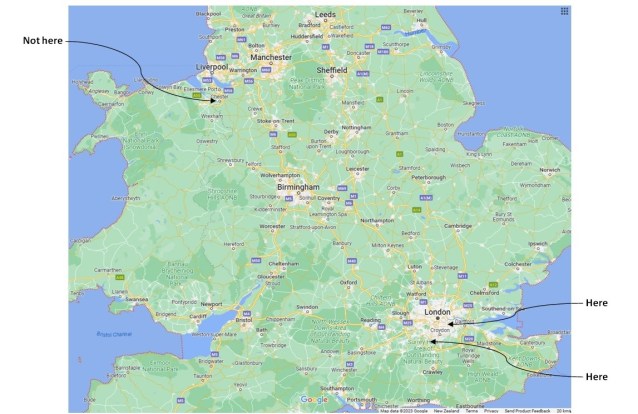
This map shows where the whistleblower cases are – future articles could populate these case

Letby case, Countess of Chester Hospital (murder of seven infants, attempted murder of another six)

There were two whistleblowers, Dr Stephen Brearey and Dr Ravi Jayaram who shared an office.

It’s too early to go into too much detail as there is an enquiry underway. But we can stand back and examine publicised reports for evidence of whistleblower retaliation.

  • There were 7 deaths for which nurse Lucy Letby was found guilty of murder, between 8 June 2015 and 24 June 2016.
  • Dr Brearley raised concerns with managers Eirian Powell and Alison Kelly, Oct 2015.  It was brushed off as a coincidence and no action was taken.
  • In February 2016, Dr Ravi Jarayam noted suspicious behaviour (a baby had stopped breathing).
  • Dr Brearley demanded Letby be taken off duty in June 2016, after the last two suspicious deaths later found to be murders (the hospital initially refused, but then moved Letby to an admin role, and the deaths stopped).
  • Medical Director Ian Harvey and another senior manager Stephen Cross opposed calling the police, preferring another agency the Royal College of Paediatrics and Child Health to investigate, which they did in Sept 2016, recommending a further external review which did not happen.  After Letby’s arrest in July 2018 it was discovered that Ian Harvey had Dr Brearey marked for retaliatory action, namely a complaint to the General Medical Council (GMC).  Fortunately that retaliatory complaint didn’t happen.
  • In January 2017 the CEO Tony Chambers met with seven neonatal consultants and insisted they apologise to Letby, and warned them not to “cross the line” again.  That apology happened on 28 Feb 2017 in a mediation that Dr Jarayam attended with Letby (but Dr Breary refused to).  However, the consultants persisted and persuaded hospital management to ask police to investigate. 
  • Police quickly launched Operation Hummingbird in April 2017.  Letby was prevented from returning to the neonatal unit and instead worked in the admin role for a further year before her arrest in July 2018.  That was nearly three years after Dr Brearey raised the alarm.   Around April 2018 Dr Brearey found evidence that one baby had been poisoned by insulin.
  • Ian Harvey was replaced by Dr Susan Gilby the following month, in August 2018.  She found evidence in Harvey’s office of poor reporting practices and an overly secretive management culture.  A few months later CEO Tony Chambers resigned and Dr Gilby replaced him, staying in that post until 2022.  She is now suing the NHS for unfair dismissal.
  • The Telegraph reported that, absurdly (or perhaps in typical DARVO style), Ian Harvey has attempted to shift blame onto the doctors.
  • Alison Kelly has been suspended from her subsequent job in light of evidence that emerged during the Letby trial (probably not listening to Dr Brearley in Oct 2015).

Conclusion:

  • Whistleblower retaliation at the low end by NHS standards
  • Bullying and malicious complaints at the low end by NHS standards
  • An overly secretive management culture; we’re not sure if this was normal by NHS standards
  • Negligence, which resulted in two more deaths than would have occurred if the whistleblowers were not stonewalled.

However, if Drs Brearley and Jarayan had experienced whistleblower retaliation (perhaps utilising a legal mechanism similar to Leighton Associates’ October 2020 “manual” on gagging whistleblowers with money, threats or both), then almost certainly more premature infants would have died at the hands of Letby.

Overall, while some poor decisions were made between October 2015 and June 2016 when Letby was finally put on administrative duties, putting a halt to the suspicious deaths and sparking investigations, however clumsily, there does not appear to have been whistleblower retaliation, just stonewalling.  Nobody close to the Letby case is likely to come out of this unscathed, but at least there should be comfort in the apparent absence of a “smoking gun” of whistleblower retaliation.

Epsom Hospital – Usha Prasad

Epsom and St Helier University NHB Trust (Epsom-St Helier), 15km South of Central London is where Dr Usha Prasad received the full Machiavellian treatment at the hands of senior management as punishment for making Public Interest Disclosures in relation to a coverup of the avoidable death of a heart patient.  Epsom-St Helier made 43 complaints about her to the GMC.  All were found to be without merit.  However, Epsom-St Heliers’ counsel did manage to argue Dr Prasad out of her whistleblower protection and her personal grievance for unjustified dismissal was unsuccessful.  In the vast majority of these cases, costs lie where they fall, but Epsom-St Helier chose to pursue Dr Prasad for costs anyway. 

Dr Prasad is now unable to afford a lawyer and her GP advised the Employment Appeal Tribunal (EAT) that she was too unwell to attend a hearing on the costs claim against her.  Judge Khalil ruled that the 23 August hearing would go ahead anyway.  But given the fallout from the Letby case, Epsom-St Heliers appear to be panicking, with an initial reduction of its demand to £24,000, 13.3% of the amount it sought last week.  A hearing on the new amount was adjourned by Judge McLaren.

But the CEO can’t un-ring that bell.  While much of the litigation pre-dates “Ms T” who has been the CEO since August 2021, the initial £180,000 costs claim of against whistleblower Dr Usha Prasad seems unlikely to have progressed without the sweep of Ms T’s pen, or the click of her mouse.  If that is to be her legacy, it’s an unfortunate one.

For those who were wondering what Epsom-St Heliers’ values are:

Above all we value RESPECT

It helps us to live our behaviours:

  • Kind
  • Positive
  • Professional   
  • Teamwork. 

So we can achieve our mission statement: outstanding care, every day.”

Erm… that’s nice.  Let’s see what’s happening about 15km northeast.

Lewisham Hospital – Dr Chris Day

The South London Trust Lewisham and Greenwich NHS Trust (Lewisham-Greenwich) dismissed whistleblower Dr Chris Day in 2014, and he has been involved in litigation since.  He had similarly raised concerns about patient safety.

Lewisham-Greenwich website says:

“The judgment of the June/July 2022 Employment Tribunal case between Dr Chris Day and Lewisham and Greenwich NHS Trust has been published. This has been a complex, long-running and high-profile case, difficult for many involved.

The Trust welcomes the Tribunal’s finding that “the Claimant’s claims of detriment for having raised protected disclosures are not well founded and are dismissed.”

The judgment did find, however, that some of the wording of a press statement issued by the Trust was detrimental to Dr Day. We apologise for that.

We also recognise that the judgment contains some criticism of the Trust, in particular with reference to storage and retrieval of corporate records. We acknowledge that there are lessons to learn here and we commit to doing so.

As a Trust we are fully committed to an open culture, where everyone should feel able to raise any concerns, and be supported in that.”

Lewisham-Greenwich destroyed evidence valuable to Dr Day, apologised for it, and won. 

On whistleblowing, Lewisham-Greenwich’s website goes on to say:

About Freedom to Speak Up (FTSU) guardians

FTSU guardians in NHS trusts were recommended by Sir Robert Francis, following his review and subsequent report into the failings in Mid-Staffordshire. FTSU guardians have a key role in helping our staff with concerns they might have with or within the Trust. The guardians help ensure our Trust is an open and transparent place to work, where everyone is encouraged to speak up safely to address any concerns or issues they might have.”

Yeah, good luck with that, Lewisham-Greenwich staff.

We won’t be surprised if more NHS cases come out of the woodwork.  But are we suggesting New Zealand is any better?  No.  For example, a District Health Board spent at least £150,000 on a SLAPP against a cardiac physiologist and her advocate, and a Tauranga City Council had a whistleblower, who it had already bankrupted on indemnity costs, briefly jailed for refusing to cease disclosing the Council’s malfeasence.

With the fallout from the Letby case it seems likely that the burden of whistleblower retaliation will shift to the retaliators themselves, and not only in the UK.

Please donate to Westminster Confidential to allow me to continue my forensic reporting on whistleblower issues.

One-Time
Monthly
Yearly

Make a one-time donation

Make a monthly donation

Make a yearly donation

Choose an amount

£5.00
£10.00
£20.00
£5.00
£15.00
£100.00
£5.00
£15.00
£100.00

Or enter a custom amount

£

Your contribution is appreciated.

Your contribution is appreciated.

Your contribution is appreciated.

DonateDonate monthlyDonate yearly

Please donate to Westminster Confidential

£10.00