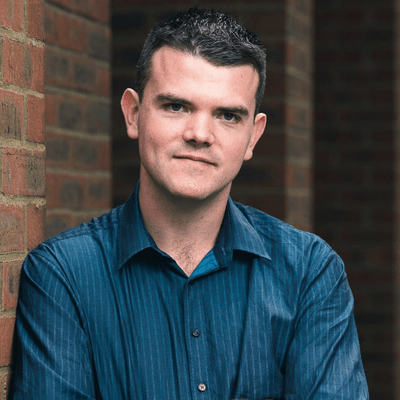
The latest in the long saga of employment tribunal hearings involving whistleblower doctor Chris Day and his ten year fight for justice over patient safety following the avoidable deaths of two patients in the intensive care unit at Queen Elizabeth Hospital, Woolwich ended with a judge reserving her decision.
This particular hearing concerned the role of top NHS lawyers Hill Dickinson, who were paid public money to draft commissioning contracts each worth tens of millions controlling the employment of junior doctors at every NHS trust in the country. As a result some 100 people observed the hearing on line over two days – more than could be accommodated in any of London South Employment Tribunal courts.
Directly involved in the case is the now defunct body Health Education England (HEE) which used to fund, commission and govern the employment and training of all English doctors on their path to hospital consultant or GP at NHS health trusts before it was merged with the rest of the NHS bureaucracy as part of NHS England.
Hill Dickinson was engaged by HEE to draw up a series of contracts called Learning and Development Agreements which were drafted in 2014 underpinning the £2 billion commissioning relationship between HEE and NHS Trust that was concealed from the courts in Dr Day’s case until last week’s hearing.
But the existence of these contracts — which exposed as false the denial from HEE made by Hill Dickinson that HEE had substantial influence over doctors – were kept from the courts during the long battle by Dr Chris Day over over the loss of his career and claims of deliberate concealment of patient safety issues,
Journalist’s Freedom of Information request was crucial
A freedom of information request put in by the indefatigable investigative journalist, Tommy Greene, resulted in the very LDA contract being disclosed that was in force during the time of Dr Day’s case between Lewisham and Greenwich NHS Trust and Health Education England . This came after Dr Day had agreed to no less than 3 separate settlement agreements one of which designed to protect all lawyers in the case from wasted costs arising out of misconduct.
This week’s wasted cost hearing was triggered by Tommy Greene’s discovery in July 2019. The hearing had been delayed for over 4 years by the London South Employment Tribunal since Dr Day’s original application. Since all the way back in 2015 and the all the way up to the Court of Appeal in 2017 and down again to the ET in May 2018, HEE and Hill Dickinson clung to the false factual submission that all contemporaneous documents showed Dr Day’s claim that HEE had substantial influence over the terms of engagement was fanciful.
The wording of the 2014 contract strengthened the power of the postgraduate dean employed by HEE who could end the career chances of an aspiring junior doctor who wanted to become a consultant as well as withdrawing money from a trust who was employing him. This included the power to delete a doctors National Training Number or as Dijen Basu KC, Hill Dickinson’s lawyer, admitted “a career death sentence”.
Yet HEE and Hill Dickinson powered by public money went all the way up to the Court of Appeal to argue that HEE had no substantial influence over a doctors career and that Dr Day’s claim that they did was fanciful. At the EAT level this resulted in Dr Day being threatened for costs for effectively defending whistleblowing for the nation’s doctors
Much of this week’s hearing was taken up with the semantics of whether these contracts really meant the HEE had the upper hand or whether the trust was still really the employer. The Court of Appeal had ruled that both the HEE and the trust were employers. Hill Dickinson admitted the ruling was a game changer but tried to argue it did not apply to Dr Day’s case as he had been employed under an earlier version.
Dr Day argued that if the documents had been shared by Hill Dickinson and HEE at the time of earlier hearings it would have saved taxpayers a fortune and him and his wife 10 years- hence the argument to claim back ” wasted costs” from Hill Dickinson because of all the legal fees spent.

Dijen Basu, barrister from Serjeants’ Inn chambers and a qualified doctor, cross questioned Dr Day about the difference between what is known as the ” gold guide” for junior doctors and the contract — implying he should have worked out for himself the existence of the hidden LDA contracts or could have used the Gold Guide himself to win the case.
Dr Day pointed out that it was Health Education and Hill Dickinson’s case from the 2015-2018 that the Gold Guide made fanciful Dr Day’s claim that HEE had substantial influence and also made the point that the ” Gold Guide” was worded as mere guidance on how doctors should be dealt with by NHS Trusts while the LDA was a proper contract that gave HEE a right to sue any NHS Trust if the LDA terms were not met.
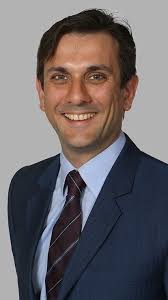
Michael Wright, a partner with Hill Dickinson, even tried to argue in the hearing that the new contract was not a contract because of the rule in the NHS that different branches never sued its each other so it couldn’t be upheld in the courts. He was rather shot down when it was clear that HEE had the power to withdraw all the money given to trusts if they broke the detailed rules over the training of junior doctors which is just as powerful.
In his witness statement to the tribunal Mr Wright said he first had no knowledge of LDA’s as they were drawn up by the firm’s commercial department not his department. When he did have knowledge he thought they were irrelevant which is his explanation why they were not handed over to Dr Day’s solicitors. After the Court of Appeal ruling which said both HEE and the trust were employers, he still argues that they are just a further extension of the ” gold guide” which is seen as guidance. Much of what really happened was clothed in secrecy as he claimed legal privilege not to disclose discussion that had gone on between Hill Dickinson and HEE.

Mr Basu also argued that Dr Day was out of time to pursue this case, which had already failed during a previous strike out hearing on wasted costs. See the Byline Times article on this. He said that the 2014 changes to the LDA came after he left, and urged the judge to throw out the claim because a three day summary hearing was not enough to deal with such a complex issue. He also appeared to suggest to the judge, Kathryn Ramsden, that if she ruled in Dr Day’s favour, she could be overruled by a higher court citing a House of Lords case. Is he prepared to go to Supreme Court over this?

It took Andrew Allan, KC, funded by supporters on Crowdjustice, o put in real context what Dr Day had had to put up with in his ten year struggle.
In his closing submission he said: “Whistleblowers in the NHS are stamped upon – it happens in case after case – in which extra hurdles are added to the already numerous hurdles in Part IVA
of the ERA[ Employment Relations Act] 1996 – the first is that you must be rich enough fund endless
litigation; the second is that you must have sufficient stamina to survive years of litigation – the second is that you must be perfect – because any imperfection will be seized upon and never let go – the tactic is to attack the whistleblower – they are obsessive – they are litigious – can’t let an injustice go – not the sort of people who get on in the NHS
” The skeleton argument on behalf of Hill Dickinson is a case in point – most of it is taken up in a partisan account of C’s [ Chris’s] litigation which – and frequently inaccurate – such as the comment about him having got nowhere in the EAT.. and is largely irrelevant a comment that C made about LJ Simler (as she was then) in 2020 is a favourite stick to beat C with – what possible relevance it could have to this application is unknown.
And it came back again in My Learned Friend’s oral submission –
These attacks are now routine – that C has had to prepare a ‘smears / misinformation document in anticipation of the same old points being trotted out.” See the smear file on Dr Day’s whistleblowing site on the hearing here.
Dijen Basu’s new smear against Dr Chris Day
And guess what ! At this tribunal a new smear against Chris was laid before the judge and Chris Day was not even asked about during his 4 hours of cross examination by Dijen Basu so he could reply.
In his late submission to the tribunal Dijen Basu accused Dr Chris Day of failing to refund £55,000 he had received in an earlier costs ruling to his Crowd Justice Fund implying he had pocketed the money.
His submission said: “he accepts that he has raised £470,490 for the crowd funding of his legal costs through Crowd Justice Limited (www.crowdjustice.com) and he has failed to show a single penny
being refunded to Crowd Justice Limited on his behalf, e.g. when HEE paid him £55,000 in
respect of his earlier employment tribunal costs which shows £284,719.61 then received (mostly) from Crowd Justice Limited, the £55,000 from HEE and £3,700 from Dr. Day, being entirely gobbled up by legal fees and disbursements, none of which was a refund to Crowd Justice Limited).”
This allegation was refuted by Crowd Justice Ltd itself who pointed out that none of the money raised to Dr Day goes to himself and is instead paid directly to law firms recognised by the Solicitors Regulation Authority. I am told Hill Dickinson and its law firm were informed this allegation was not the case by Crowd Justice Ltd
Andrew Allan’s and Elizabeth Grace’s submission covers this and can be read in full here.
Yet Dijen Basu went ahead. Given he works as a leading barrister for Serjeants’ Inn Chambers, he should have known this himself. He also markets himself as the go to barrister for chief constables up and down the country for handling police work. I would have thought they might express a bit of a surprise that he chose to influence a judge by using what is false information in a tribunal case.
The next stage in Dr Chris Day’s long fight will be an employment appeal tribunal on July 1 and July 2 next year. He will appeal the extraordinary case where employment judge Martin ignored the destruction of 90,000 emails by a management witness during the hearing against his former employer, Lewisham and Greenwich NHS trust and took no action. She has since wisely retired. My report on the hearing that led to the appeal is here. My verdict on judge Martin’s case – the tribunal of the absurd – is here.
For a full list of legal submissions and witness statements see Chris Day’s whistleblowing site. The link is here.
The rest of my coverage of Dr Day’s case is here.
Make a one-time donation
Make a monthly donation
Make a yearly donation
Choose an amount
Or enter a custom amount
Your contribution is appreciated.
Your contribution is appreciated.
Your contribution is appreciated.
DonateDonate monthlyDonate yearlyPlease donate to Westminster Confidential
£10.00




 Westminster Confidential