Revealed: Hospital doctors are the top target for the NHS Resolution Practitioner Performance Service

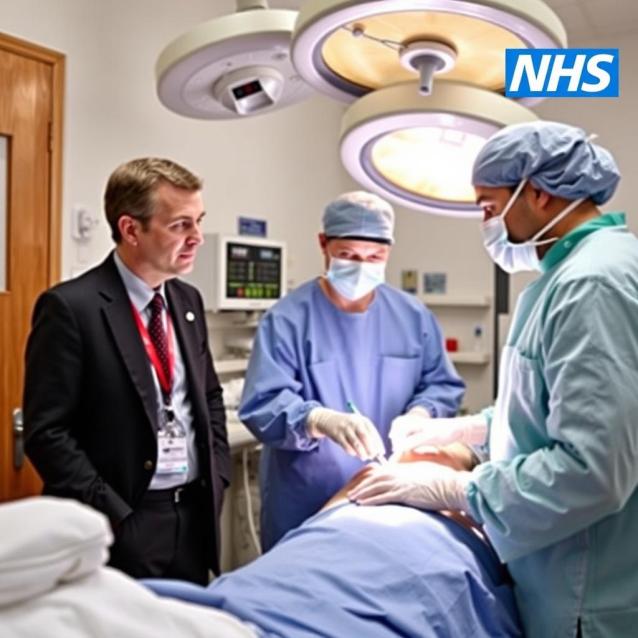
NHS Resolution solicitor overlooking hospital doctors under investigation. An AI image illustrating the situation facing hospital doctors in the NHS

Following my blog on the secret process using NHS Resolution to help hospital managers discredit whistleblowers I decided to ask the advisory body a series of questions on its operations using the Freedom of Information Act.

What emerged was extremely revealing. NHS Resolution hides in its annual report how many hospital doctors are involved by lumping them together with dentists and pharmacists. But the breakdown revealed through FOI reveals it is almost exclusively targeting doctors to advise trusts on how to handle them.

It shows that in the last financial year it advised in cases involving 1168 doctors in England, Wales and Northern Ireland. And the number of cases would be higher – as a number have multiple complaints from managers against them. This compares with 53 dentists and under 5 pharmacists. Indeed the pharmacists involved are so few – it won’t give me an exact number for fear of identifying individuals.

The PPS was last audited in 2019 and the organisation says it was then considered to be adequate and. effective. A more recent review in July this year by Dr Penny Dash looked just at the patient safety and learning role of the organisation and not wider issues.

Nor does NHS Resolution check whether it is given accurate information by managers. It said:” our role is to provide impartial and expert advice which is aimed towards supporting the local management and resolution of performance concerns. We are not a decision-making or an investigative body – in all cases, any decisions about the ongoing management, employment or contractual status of the practitioner rests solely with the healthcare organisation.”

In other words it is there solely to support health managers – who have no duty of candour – and it tries to include doctors by saying managers should tell them about their request for advice. In fact managers can and do ignore this as there is no requirement for them to say anything to the doctor they are investigating. So without hearing the doctor’s case it cannot be genuinely impartial. Also should a practitioner object to the partial advice given by a health manager they are ignored and the body continues to deal with the health manager.

NHS Resolution has not carried out any audit on the effect on doctors who are subject to complaints but it does do occasional research into problems arising on a very small scale. One example in its Insight Publication series last year was looking at whether ethnic minority doctors were badly treated in the NHS.

Involving just 11 doctors it said:”Most participants felt discriminated against based on their ethnicity and/or where they qualified. They felt this was reflected in the way their cases were handled by both their employer and Advice, and the higher rates of concerns raised against practitioners from ethnic minority backgrounds.”

Not surprisingly there was a lot of ignorance of how NHS Resolution’s advice service worked – given that health managers needn’t tell them about it. Again NHS Resolution’s solution was to give advice to managers which they need not take up. The full report is here.

Then there is the question of the phrase, performance. Is it a misnomer? NHS Resolution advice service does not look into the question of performance by doctors – relying on hospital manager for that – and it does not employ people qualified to do so. Many are solicitors, human resources staff and employment law experts and are not qualified to know when say a complex heart operation went wrong or the details of paediatric care. Indeed from doctors who have contacted me the trust often cites uncooperative behaviour and not working well with colleagues as part of its case.

Taken with earlier articles on the role of the General Medical Council a disturbing picture emerges which shows the hospital doctor is always at a disadvantage while the responsible officer – usually the medical director – holds all the cards – using NHS Resolution for advice and reporting the doctor to the GMC. Yet neither body is necessarily equipped to handle this and in NHS Resolution’s case, it is toothless to influence decisions by trusts. It can help to easily ruin a doctor’s career and even ban him or her for life for continuing their careers.

There seems to be a wholly unregulated sector covering NHS Resolution, the GMC and the trusts themselves and certainly no accountability. Patients have no idea how this is handled -yet their safety should be paramount in the NHS. And while NHS Resolution says it works under the direction of the Department for Health and Social Care my research shows it is not clear who regulates them.

If ever there was a case for reform of both systems, now is the time for something to be done.

One-Time
Monthly
Yearly

Make a one-time donation

Make a monthly donation

Make a yearly donation

Choose an amount

£5.00
£10.00
£20.00
£5.00
£15.00
£100.00
£5.00
£15.00
£100.00

Or enter a custom amount

£

Your contribution is appreciated.

Your contribution is appreciated.

Your contribution is appreciated.

DonateDonate monthlyDonate yearly

You can also donate using PayPal on the link below.
https://www.paypal.com/ncp/payment/865JAS3QJ3CGQ

Revealed: How a whistleblower doctor’s career was wrecked by a NHS trust manager aided by NHS Resolution

Two weeks ago I published a critical examination of how NHS Resolution’s Practitioner Performance Advice service contributed to the demise of whistleblower doctors revealing patient safety issues who stand to lose in 97 per cent of cases when they come before an employment tribunal.

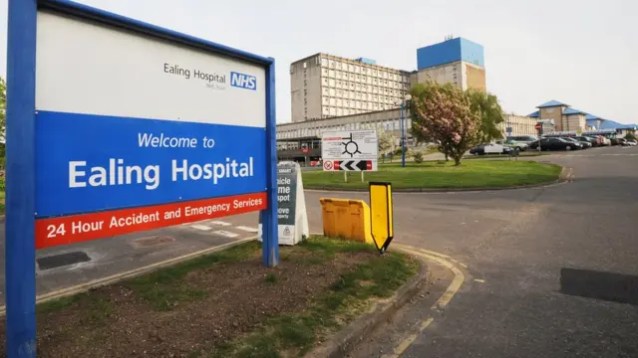
Ealing Hospital Pic credit:BBC

Since publication a number of doctors and patients have contacted me about their experiences with NHS Resolution and it makes disturbing reading. This is one of the cases.

One of the key points in the previous blog is that NHS Resolution does not require the health trust to inform a doctor when it has received advice from NHSR on what action to take against a doctor accused by the trust. So the doctor is completely ignorant that this has happened.

The paragraph in their letter, which is similar in other cases involving doctors, reads: “We encourage transparency in the management of cases and recommend that practitioners should be informed when their case has been discussed with us. I am happy for you to share this letter with the practitioner unless you consider it inappropriate to do so. Moreover, the practitioner is also welcome to contact us for a confidential discussion regarding their case.”

The London and North West University NHS Trust

I am not naming the doctor – an obstetrics and gynaecology consultant – as there will be an employment tribunal in 2027 – six years after the incident – but I am naming the trust, the London North West University NHS Trust- and the manager involved Dr Martin Kuper, then its chief medical officer – as events following this case were in the public domain.

A very tragic story

The incident that caused the referral to NHS Resolution is a very tragic story. An Afghan woman came to the hospital for a  myomectomy – a surgical procedure to take out fibroids ( small lumps) from the uterus.

The operation can be performed by either an incision into the abdomen or key hole surgery. The woman chose to have keyhole surgery as it is less invasive. The doctor performed the operation with an anaesthetist putting her to sleep. Unfortunately during the operation she arrested, bled heavily  and died.

The doctor was blamed by the trust for acting ” seriously below the accepted standard” despite PM Examination clearly reported absence of any injuries to major arteries and veins. According to the doctor what NHSR was not told that the delay in helping the patient was caused by the delay in transfusing blood products especially platelets as Ealing theatres did not stock any Emergency Platelets like Northwick Park theatres when the incident took place. The surgeon used to operate at Northwick Park and he was asked to move his complex surgeries to Ealing Hospital because he had a number of cases waiting more than two years. The day prior to index surgery the surgeon wrote to Trust management explaining that his cases were complex and should be operated upon at Northwick Park and not at Ealing theatres.

Worse the record of the conversation involving Dr Kuper in a letter from NHSR says the doctor was accused of tampering with the electronic record of the incident and omitted to tell NHSR that the doctor was a whistleblower who had raised serious questions about maternity and gynaecology services by that hospital which had not pleased the management. 

The doctor says this account is distorted. He had made an electronic draft entry into the record at 07:30, then made few linguistic corrections to finalise the draft and few hours later at 11:45 he submitted his statement. All these entries and the changes made to the draft are available should you press the Audit Tap of the software used at any time.

As for his concerns about maternity services, it was confirmed on the following month when the Care Quality Commission inspected the hospital and ruled the service as ” inadequate.”

The letter showed NHSR had been told by MD (Chief Medical Officer) that there were ” no other concerns in relation to this surgeon of a clinical nature brought to his attention in the last two years”, i.e, since he joined the Trust.

The letter from NHSR – based on Dr Kuper’s submission- advised as the doctor went off sick following the incident that the doctor should be referred to the Occupational Health service for possible mental and physical health problems. The surgeon also suffered series of sanctions upon his practice including his maternity work despite no concerns were raised at any stages in relation to his maternity work. On the contrary, he was one of the two consultants appointed to the Trust in 2006 to turn the maternity services around following CQC imposing measures on the maternity unit  being ranked in 2005.

Trust was selective and biased during collecting and while considering various witnesses statements aiming at victimising the surgeon. The surgeon and all gynaecologist involved were excluded from the initial stages to set him up for the next step. He was also subjected to an internal special investigation taken through Maintaining High Professional Standards procedure which amounts to an internal disciplinary procedure. Trust was selective 

None of this advice was conveyed to the doctor and the trust ignored the suggestion from NHSR that they should be open and transparent about the letter.

The letter was not sent to the doctor in a timely manner prior to start of MHPS investigation and he had to submit a subject access at some point, which cannot be refused, to obtain all the correspondences between Trust and NHSR.

There had been a coroner’s hearing under senior coroner Lydia Brown in which he was blamed for the death and the coroner blocked his barrister from pursuing questions about the action taken or not taken by the anaesthetist especially the delay in transfusing coagulation factors and the trust emphasised he had been reported to the General Medical Council for Fitness to practice investigation to protect patients and public.

However, this was not enough for the trust which made it impossible for him to get a job elsewhere by requesting NHSR to issue HPAN against his practice advising other potential employers not to appoint him advising responsible officers in other organisations to contact Dr Kuper’s successor Dr Johnathon Baker, the current CMO). By issuing the Notice the NHSR was given Trust another opportunity to wreck the surgeon career. This HPAN notice will be kept at NHSR records for thirty years before it can be destroyed.

Dr Baker raised numerous concerns regarding the Surgeon practice following carrying out an unjustifiable look back investigation into his unblemished practice, ending up referring a total of 23 cases to GMC but did not mention at any stage that the doctor raised patients’ safety concerns.

Helen Vernon, chief executive NHS Resolution

But when the report came back from the GMC he was completely exonerated of any clinical allegations in relation to the index case or any of the other 22 cases.

The surgeon complained to the NHSR in November 2023. The reply from Helen Vernon, the chief executive a month later is very revealing.

First the adviser was on prolonged sick leave and was unable to be involved. But her reply raises points on the role of the NHSR which show how weak it is.

She says: “As the Advice Service is not a decision-making body, any decisions regarding the management of a practitioner must rest solely with their employer/contracting body. Whilst the employer/contracting body may have regard to any advice provided by the Advice Service, having considered and weighed up all the relevant information available, they may take a view which differs from the opinion expressed by the Advice team.”

It was also clear that NHSR did not know he was a whistleblower, and were not certain whether it was aware of the bad CQC report on maternity care at the hospital. An unsatisfactory reply. altogether.

There is a postscript about the senior manager involved in this case – Dr Martin Kuper. He went on to become chief executive of the prestigious Moorfield Eye Hospital NHS Trust.

Martin Kuper

This year GB News reported that no fewer than 80 consultants had sent a letter to the board of the hospital complaining it had a culture of bullying, financial mismanagement and lack of transparency.

The report is here. As a result both the chair and the chief executive resigned. The trust in a statement said “Martin Kuper has taken the decision to resign from his position as chief executive of Moorfields and will formally leave the organisation.” There was very little about his achievements while he was there and at the moment does not appear to have got another job in the NHS.

One-Time
Monthly
Yearly

Make a one-time donation

Make a monthly donation

Make a yearly donation

Choose an amount

£5.00
£10.00
£20.00
£5.00
£15.00
£100.00
£5.00
£15.00
£100.00

Or enter a custom amount

£

Your contribution is appreciated.

Your contribution is appreciated.

Your contribution is appreciated.

DonateDonate monthlyDonate yearly

You can donate to Westminster Confidential via Paypal at the link below.

https://www.paypal.com/ncp/payment/865JAS3QJ3CGQ

The secret influence of NHS Resolution that ensures so many doctor whistleblowers don’t get their jobs back

logo for NHS Resolution

Why do 97 per cent of whistleblowers fail to win their cases in employment tribunals? Why are they sacked – not for their disclosures of patient safety which is illegal – but under the nebulous title – some other substantial reason (SOSR)? This could be allegations of bullying or saying they cannot get on with colleagues.

But how does a trust gather such information to discredit a doctor? What I have discovered is that NHS trust managers can get a free advice service or an endorsement for actions considered by managers against a Whistleblower from NHS Resolution, an arms length quango from the Department for Health and Social Care.

This ” phone a friend” service would allow the manager to set up a case file under Practitioner Performance Advice without the doctor even knowing this has happened. Effectively the evidence will be later presented at an employment tribunal by highly skilled and expensive lawyers hired by the trust to discredit the unfortunate doctor.

This process has no transparency, no verification with the doctor and there are no public records of what happens in these cases.

The only information that there is such a process is in the annual reports and accounts of NHS Resolution and even that is very sparse.

While there are reams of statistics about the organisation’s public facing work dealing with patients complaints about clinical and non clinical issues which it tries to resolve without going to expensive legal action, the role of practitioner performance advice service gets very little mention.

In the 2024-25 annual report it acknowledges “NHS Resolution’s Practitioner Performance Advice service delivers expert advice, support and interventions on the fair management of concerns about the performance of doctors, dentists and pharmacists.”

How do they judge performance having branded the therapist with a “behaviour” issue at the outset even with untrue claims or without awareness of risks to patients? Only when the formal referral actioned the therapist or doctors may get an opportunity to represent their side of the story BUT if the behaviour analyse are not even clinicians, how would they understand what culture therapist or doctor has been working in.

The PPA service also claims to be very efficient. It says 90% of advice and other case interventions delivered within target timeframe – this was achieved in 2024/25 NHS Resolution annual report and accounts 2024 to 2025 90% of all exclusions/suspensions critically reviewed (where due) – this was within tolerance at 82%, with 155 of 189 exclusions/suspensions reviewed within required timescales.

What it does reveal is that trusts searching to use its services are booming.

The report says: “The service received 1,420 new and reopened requests for advice from healthcare organisations with concerns about the practice of individual practitioners as well as services in 2024/25, representing a 24% increase compared to 2023/24.The open caseload at the end of the financial year stood at 1,149, a 15% increase when compared with the end of 2023/24 .”

It adds: “Requests for assessment and remediation services remained at a high level in 2024/25, with 50 requests for professional support and remediation action plans, 44 requests for behavioural assessments, six requests for clinical performance assessments and four requests for team reviews.”

And it says:” NHS Resolution delivered OARs ( Organised Activity Reports) to 18 secondary care trusts in England, offering follow-up consultations with a Performance Practitioner Advice adviser to each, and finalized reports for primary care trusts, mental health trusts and trusts in Wales and Northern Ireland for delivery in 2025/26″.

Helen Vernon, CEO of NHS Resolution

On what grounds has this service without transparency or regulation of its advisors been set up and run?Sally Cheshire Chair of the NHSR , and Helen Vernon,CEO, need to explain this.

The only other references are likely to lead to hollow laughs from some of the whistleblowers who lost their jobs at trusts – notably Martyn Pitman at Hampshire Hospitals NHS Trust and Usha Prasad at the now St Georges and Epsom and St Helier Hospitals Trust.

It claims that the whole process is to “develop Compassionate Conversations in relation to performance conversations to support kindness and compassion within the NHS .”

It goes on to say: the aim of the advice includes” Fostering just and learning cultures rather than punitive approaches” and” Ensuring fairness and proportionality in managing performance concerns.”

If there is a lack of transparency how can it be justified as a just culture suitable for learning?

Having covered employment tribunals now in NHS sacking cases the last thing I have seen is any compassionate conversation. Instead the trusts are keen to employ numerous highly paid lawyers to terrify and frighten professional doctors reducing in some cases people to tears – at enormous cost to the taxpayer who foots the bill for their salaries.

So if NHS Resolution is boasting about saving lawyer’s fees in patient complaint cases, it is also responsible for increasing lawyer’s fees – often running to hundreds of thousands of pounds – by advising trusts on how to ruin doctors’ careers when all they have raised is patient safety problems.

If you take this process alongside my previous blog about the role of the General Medical Council and its relationship with the responsible medical officer in the trust- it is no wonder that whistleblowers have little chance of success in the NHS. I now know of senior doctors who are NOT going to report patient safety issues because they fear it will be the end of their careers if they do.

NHSR’s PPA is yet another tool like the unregulated triage by the GMC that can be exploited to bury serious concerns using public funding.

One-Time
Monthly
Yearly

Make a one-time donation

Make a monthly donation

Make a yearly donation

Choose an amount

£5.00
£10.00
£20.00
£5.00
£15.00
£100.00
£5.00
£15.00
£100.00

Or enter a custom amount

£

Your contribution is appreciated.

Your contribution is appreciated.

Your contribution is appreciated.

DonateDonate monthlyDonate yearly

Please donate to Westminster Confidential through Paypal link below

https://www.paypal.com/ncp/payment/865JAS3QJ3CGQ