Death in Ward 23: Whistleblower nurse raises patient safety issues in the same hospital where Dr Chris Day is fighting avoidable deaths

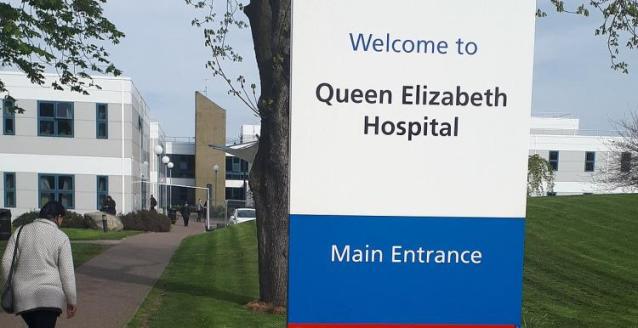
Queen Elizabeth Hospital, Woolwich pic credit: Lewisham and Greenwich NHS trust

Lewisham and Greenwich NHS Health Trust is facing a second whistle blowing case at an employment tribunal over patient safety six years after Dr Chris Day, a junior doctor, in 2014 brought a still on going case on two ” avoidable deaths” in their intensive care unit.

Francisca Holmes, a 61 year old nurse who has since resigned from Queen Elizabeth Hospital, Woolwich has claimed detriment after reporting an elderly frail patient was found to have died in her ward without the staff realising this had happened. She is also claiming age and racial discrimination.

She is being represented by her local solicitor Winston Brown, from Brown and Company. The trust is being represented by solicitors Capsticks and Camille Ibbotson, a junior counsel from Old Square Chambers.

Before the hearing even started Francisca contacted me saying she have been told that a journalist could not report the case because “all NHS cases” are confidential. When I pointed out this was nonsense her solicitor told her I could be given a link to attend the remote hearing.

Camille Ibbotson, junior barrister at Old Square Chambers

Then during the hearing I requested via the chat box to see a copy of her witness statement and the report into the investigation of the death. This was vigorously opposed by Camille Ibbotson, on behalf of the trust. She claimed that under the remote practice rules I had to make a formal application for the documents explaining why I wanted them and insisting that the report contained sensitive information and the witness statement contained allegations about people I should not see.

But the salaried employment judge Eion Fowell decided that my chatbox application was equivalent to a formal request, pointing out that in a physical tribunal hearing a journalist could raise the matter directly with a judge. I had also explained that I wanted the document so I could understand the case.

After an over night discussion the judge ruled in my favour on the grounds of ” open justice” rejecting the trust’s arguments. He said the trust was ” a large professional organisation” that could have applied before the hearing to keep some of the documents in the tribunal legal bundle private but had failed to do so.

Then it was revealed that the ” investigation” into the patient death is just a one page ” incident report”. The judge allowed the report to be flashed on the screen so I could take notes. It shows that an elderly frail lady was admitted with ” lower respiratory problems” and needed, at times, a nebuliser and oxygen to stay alive.

Evidently she was found to have died because this happened during the Covid pandemic on 17 May 2020 and the trust say ward was short staffed and unable to give her the continual care they would normally do. She was found dead after vomiting with her mask on her pillow and there was no oxygen in the nebuliser.

There seemed to be no suggestion that she had Covid herself but she was in a ward with Covid patients.

I will be reporting in full when the evidence given in the tribunal hearing is finished. But I thought this tussle over getting the documents should be reported as the judge’s ruling against the trust is important. Particularly as these arguments by the trust could be repeated elsewhere by Old Square Chambers.

One-Time
Monthly
Yearly

Make a one-time donation

Make a monthly donation

Make a yearly donation

Choose an amount

£5.00
£10.00
£20.00
£5.00
£15.00
£100.00
£5.00
£15.00
£100.00

Or enter a custom amount

£

Your contribution is appreciated.

Your contribution is appreciated.

Your contribution is appreciated.

DonateDonate monthlyDonate yearly

Please donate to Westminster Confidential

£10.00

Employment Tribunal open justice campaign : Sir Keith Lindblom’s office replies to lack of fairness and transparency in hearings

Sir Keith Lindblom, Senior President of Tribunals Pic credit : gov.uk

Last month over 320 people signed a letter to Sir Keith Lindblom, Senior President of Tribunals and the heads of the the employment tribunals in England, Wales and Scotland protesting that tribunals do not keep records or transcripts of their hearings.

The letter signed by senior NHS consultants, doctors, nurses, journalists, whistleblowers and wide range of members of the public sought reforms to the system because of the one sided nature of the hearings particularly in whistleblowing cases – where a litigant in person does not have the resources as a well funded employer.

Transcripts are not available unless the judge gives permission to the parties to take full notes and the only official document is the judge’s decision which can miss out facts given in the case.

Cases involve patient safety, bullying and discrimination

Many of the cases involve issues like hospital and patient safety, bullying, harassment, racial and sex discrimination where a claimant is sacked for suggesting anything has gone wrong rather than the issue being sorted.

Now the official reply from his office acknowledges a number of key facts that people have suspected but have not had confirmation.

First it admits no guidance exists on the use of transcripts and judges don’t have to use them. “There is no provision in the Rules or the Employment Tribunal Regulations that requires hearings to be recorded or transcripts to be produced.”

Second it admits that it is now possible to record hearings as many hearings are held on-line following both a courts modernisation programme and the Covid 19 pandemic.

Judge Barry Clarke, president of the employment tribunal service for England and Wales

And the most positive point in the reply suggests the most senior people are considering changes to the the system.

“The Presidents of the Employment Tribunals are giving consideration to recordings and transcripts in the context of video hearings, where there is a facility to make a recording and which are now used to a greater extent as a result of the HMCTS reform programme and the experience of the pandemic. This is in contrast to most in-person hearings. In most venues where Employment Tribunal hearings take place, recording equipment is not installed, and so no recording can be made. In a few locations in England and Wales, the Employment Tribunal is co-located with a court jurisdiction where such equipment is installed, and where that is so, its use is encouraged.”

The rest of the letter is unsurprisingly a defence of the present system.

“The overriding objective of the Employment Tribunal Rules of Procedure is to deal with cases fairly and justly. That includes, so far as practicable: ensuring that the parties are on an equal footing; dealing with cases in ways which are proportionate to the complexity and importance of the issues; avoiding unnecessary formality and seeking flexibility in the proceedings; avoiding delay, so far as compatible with proper consideration of the issues; and saving expense. Most Employment Tribunal hearings are held in public. Any consideration of an order to prevent or restrict the public disclosure of any aspect of the proceedings must give full weight to the principle of open justice, and, like any judicial decision on a matter of case management, would be amenable to appeal.”

Litigant in person may bring a friend or relative to take notes

“It is also possible to take a note of the proceedings, and a litigant in person may bring a friend or relative with them to the, tribunal to act as a notetaker. Judges invariably allow this, and indeed encourage it.
Litigants in person are also regularly signposted to services such as Support Through Court which can assist with notetaking. “

It goes on: “”The Employment Tribunals provide detailed written reasons explaining the factual and
legal basis of their decisions. Any appeal is based on the judgment and supporting reasons, and the Employment Appeal Tribunal will not accept a transcript in place of written reasons. If at appeal the parties cannot agree what was said in evidence, the Employment Appeal Tribunal may ask the judge who heard the case to answer questions in writing about the evidence on a particular issue or issues. When that happens, both parties will be provided with the document the judge sends in response. In accordance with its Practice Direction, the Employment Appeal Tribunal may also, if it wishes, obtain the judge’s notes of evidence on any disputed matter, which will then feature in the appeal bundle.”

Whistleblowers are at a disadvantage

The problem with this defence is that it doesn’t seem to be reflected on the ground. Many whistleblowers say they feel at a disadvantage particularly if they wish to appeal a decision and they haven’t got a transcript to raise points that are not mentioned in the judgement. And most whistleblowing hearings are far from informal occasions – employers use forensic barristers whose questioning of whistleblowers would not be out of place at an Old Bailey trial.

It also raises some interesting questions. If recording facilities are available at on-line and hybrid hearings why are they not used? Or while obviously judges only use notes, do other court officials use them unofficially to check facts for judges? There has to be change in the employment tribunal system to bring it up to the 21st century and the HM Tribunal and Court Service need to explain how they intend to bring this about.

After publication of this blog a circuit judge publicly backed the recording of all hearings.

Kaly Kaul QC said: “As a Judge in a Crown Court where proceedings have been recorded ever since it replaced shorthand writers, it is unfortunate that every Court is not recorded. Teams and Cloud Video platform have recording facilities. In addition we have recording onto micro SD cards so that any material played in court is automatically recorded so that the Jury can retire with it. It is imperative that proceedings are recorded. It cannot be that difficult to put in place.”

Please donate to Westminster Confidential to allow me to continue my forensic investigations and campaigns for justice.

One-Time
Monthly
Yearly

Make a one-time donation

Make a monthly donation

Make a yearly donation

Choose an amount

£5.00
£10.00
£20.00
£3.00
£9.00
£60.00
£3.00
£9.00
£60.00

Or enter a custom amount

£

Your contribution is appreciated.

Your contribution is appreciated.

Your contribution is appreciated.

DonateDonate monthlyDonate yearly

please donate to westminster Confidential

£10.00