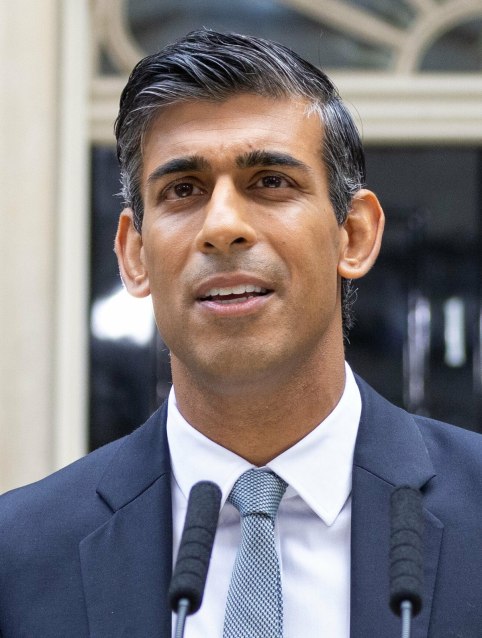
Rishi Sunak promised the UK will be a Science and Technology Superpower with world class digital technology attracting high skilled people from all over the world to come and work here.
Last October Chris Philp, then Minister for Tech and the Digital Economy,.at the Department for Digital, Culture, Media and Sport, also promised a bright future for the digital economy outlining the UK’s digital future with a host of government initiatives.
Back down to the real world the National Audit Office today published a report on one of the government’s initiatives – Making Tax Digital -and what a sorry story it is. For those familiar with Whitehall failures – it was the same story – the cost of the scheme had sky rocketed, its planned introduction had been delayed again and again – and worse, those businesses planning to go digital to pay their VAT, there was a huge additional cost, which somehow HMRC forgot to inform the Treasury.
The huge cost of switching the tax system to digital was supposed to cost £226 million when it was planned in 2016. This covered all VAT payments, businesses who pay via self assessment schemes and corporation tax. Instead it will now cost a staggering £1.3 billion – some five times the original estimate.
And it won’t be on time.
Scheme repeatedly delayed
The original programme was repeatedly delayed. Originally HMRC planned the entire changeover in 2020.
As the report says: “The timeframes for MTD[ Making Tax Digital] were agreed before HMRC had fully explored the range of options.” As a result large parts of the programme had to be rescheduled .And then came Brexit and the Covid pandemic which the hit the programme. Only VAT for larger firms was introduced before 2020 -in 2019 – and VAT for smaller companies waited until 2022 and the whole exercise cost £70m more than planned.
But it is the plan to switch over to digital tax for the self assessment businesses has been hit the most. The report said: In December 2022, the government pushed back the timetable for Self Assessment for the fourth time, delaying benefits and increasing costs further. On the advice of HMRC the government announced it would delay the start date for MTD for Self Assessment and take a phased approach to introducing it.
It won’t be implemented until 2026 or 2027 and even then not fully – as the original plan envisaged. It will apply to annual income above £50,000 in 2026 and above £30,000 in 2027. No date has been given for income below £30,000 which is still ” under review”.
HMRC left out cost to people of paying their VAT
On top of this HMRC in its business case forgot to tell the Treasury that it also landed business and taxpayers a bill for £1.45 billion. This is because for the digital system to work businesses and the self employed have to submit returns over three months and need to buy or lease expensive software to do it. So the government has put the cost on businesses avoiding the cost themselves. In my small way it hit me over VAT. Since my income was below the threshold I decided the simplest way was to deregister for VAT so the government now get nothing. Previously it was a simple form to fill in your quarterly VAT return supplied by HMRC.
HMRC said. “A project of this scale naturally comes with challenges, but MTD will deliver a strong return on investment for the taxpayer. We have always been wholly transparent about costs for business. We remain committed to ensuring that free software will be available for those with the simplest tax affairs.”
Gareth Davies ,Head of the NAO, said: ““The repeated delays and rephrasing of Making Tax Digital have undermined the programme’s credibility and increased its costs. They put at risk the support of taxpayers and delivery partners, including those who are essential to the programme succeeding.
“Our audit identified the omission of significant costs from some business cases. It is obviously important that business cases for major programmes such as this contain all the relevant information to support decision-making.”
My view is a bit broader than that. I am getting very fed up with rhetoric from leading politicians telling the public that every project is world class when clearly it isn’t. This report from the NAO shows what is happening in the real world, not in the complacent fantasy world of the present Tory politicians who govern us.
Please donate to Westminster Confidential so I can continue by forensic analysis of government policies.
Make a one-time donation
Make a monthly donation
Make a yearly donation
Choose an amount
Or enter a custom amount
Your contribution is appreciated.
Your contribution is appreciated.
Your contribution is appreciated.
DonateDonate monthlyDonate yearlyplease donate to Westminster Confidential
£10.00

 Westminster Confidential