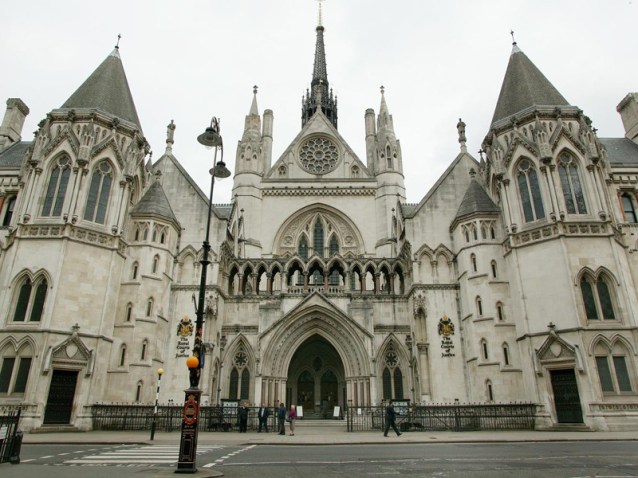
It is portrayed by HM Courts and Tribunals Service as “our vision for reform to make the justice system more straightforward, accessible and efficient.”
But this £1.3 billion digital court reform programme has been exposed by the National Audit Office and last week by the House of Commons Public Accounts Committee for having failed to meet its objectives. This ambitious programme started in 2016 has been much delayed and only half completed. As MPs commented last week it has ” burned through” over £1 billion of public money and is the on the verge of running out of cash before half the benefits can be realised.
No one would argue that the courts and tribunal system is antiquated and needs reform. One only has to watch judges in the employment tribunal system writing down what claimants and respondents are saying by hand in courts that don’t keep proper records of hearings to realise how antiquated it is.
But once again it looks like that Whitehall has fallen for an expensive simplistic digital solution for a service which is incredibly wide ranging and complex. The aim was to create a common computer platform to serve 44 different aspects of justice from the criminal courts to magistrates courts and from the family and divorce courts to the probate service and the tribunal service.
Timetable five years behind schedule
It also had a timetable to be completed by 2020. Now we will be lucky whether the truncated programme will be up and running by 2025. Also £1.3 billion won’t be enough – there is only £120 million left to spend and that is nowhere enough to meet what is needed. And £22 million was wasted trying to integrate the Crown Prosecution Service into the system which didn’t work.
Also there are promises of big savings by going digital. This is always promised and we will see whether that really happens.
Also plans to have fully digital probate and divorce services had not fully worked. The MPs said:
“HMCTS found that significant proportions of its online divorce and probate cases required manual interventions from staff and in March 2022 HMCTS identified that 55% of divorce cases could not be completed online.”
In addition it appeared that both services discriminated against ethnic minorities.
Both the Bar Council and the Law Society were not impressed. The report says:
The Law Society “explained that there were functionality issues with online portals for family services, such as family public law. These issues led to problems, including instances of solicitors not getting necessary notifications which made the system difficult to use and, in some cases, significantly delayed cases. It told us that it had frequently expressed concerns to HMCTS about the functionality and design of some reformed services.”
System developed in a vacuum – Bar Council
The Bar Council told MPs:” the designers and producers of the common platform appeared to
have a limited understanding of working needs and practices, and “displayed a marked reluctance for the system to be designed in conjunction with, and for the benefit of, professional court users”.
It said it looked like the system had been designed in a vacuum.
As for the general public, it looked like that it was going to be a problem at magistrates courts ,purely because most of the defendants didn’t have any legal representation and therefore might not have proper access to the system to defend themselves.
Meanwhile the project continues so far with the pausing of integrating possession orders, special tribunals except for the Criminal Injuries Compensation Tribunal.

Dame Meg Hillier MP, Chair of the Committee, said:
“Our courts were already stretched thin before the pandemic, and the backlogs now faced pose a real threat to timely access to justice. These are services crying out for critical reform, but frustratingly HM Courts & Tribunal’s attempts appear in some cases to be actively hindering its own staff’s ability to carry out their jobs. In particular, the roll-out of the Common Platform digital system was a blow upon a bruise for pressured court users.”
Given there are already many issues whether the courts do deliver justice, this rather botched computer programme does not give you much faith in the system.
Please donate to Westminster Confidential to allow me to continue my forensic reporting.
Make a one-time donation
Make a monthly donation
Make a yearly donation
Choose an amount
Or enter a custom amount
Your contribution is appreciated.
Your contribution is appreciated.
Your contribution is appreciated.
DonateDonate monthlyDonate yearlyPlease donate to Westminster Conbfidential
£10.00
 Westminster Confidential
I don’t know why they even bothered trying to improve access when there isn’t any justice in the first place. There are a lot of corrupt judges in the system, they are put there to protect professional reputations and public institutions, not justice or truth. I had one of UK’s top corrupt judges who took his judicial powers to the next level: https://patientcomplaintdhcftdotcom.wordpress.com/
LikeLike
I used to work for a company that make software for magistrates courts. Many former employees of the courts were given jobs by the company. ( nothing to see here, move along please) which caused some “problems” that took a while to be resolved.
The company was bought by Crapita – presumably to hoover up the magistrates courts that were customers. If they are still involved, I’m not surprised that the project has failed on delivery and budget.
LikeLike
Do you think the failure of this £1.3 billion reform program reflects poor planning, lack of consultation with legal professionals, or the complexity of unifying 44 aspects of justice into one system? regard animasi
LikeLike