
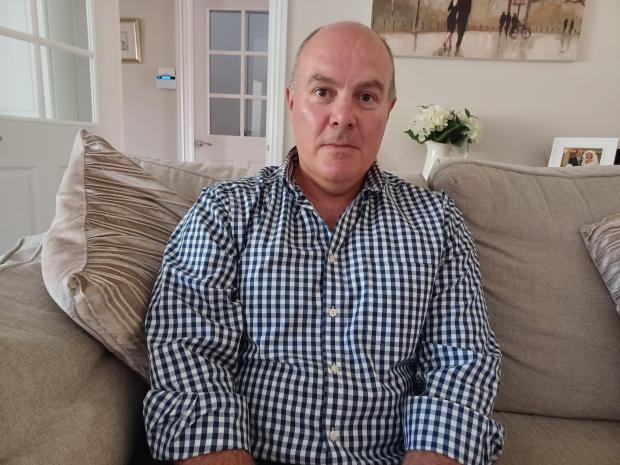
The fourth day of the Dr Martyn Pitman tribunal provided extraordinary revelations of how top managers at the Hampshire Hospitals NHS Foundation Trust secretly got rid of the popular whistleblower obstetrician and gynaecologist who raised patient safety issues in the midwifery and maternity services.
Two very different witnesses, Daniel Pebody, a senior employment adviser to the British Medical Association, and Ben Cresswell, Divisional Medical Director for the Surgical Department at the trust, gave evidence on what happened to Dr Pitman from different sides of the managerial fence.
Mr Pebody was strongly questioned by the trust’s lawyer Mark Sutton, KC, the former head of chambers at Old Square Chambers. He had been called in by the BMA as a health employment expert, to examine the investigation report into Dr Pitman by the trust and the procedures used to dismiss him form his job.
He quietly clashed with Mr Sutton when the lawyer put to him that the “well being of midwifery managers” had been adversely affected by Dr Pitman ” bullying “attitude which Mr Sutton said led to one resignation. Mr Pebody said this was an issue of the “perception by the managers of their well being” and not an intentional attitude by the consultant “. Mr Sutton then brought up a guideline by ACAS ( the Advisory, Conciliation and Arbitration Service) that would allow a person to be sacked for ” unconsciously bullying people” to justify the trust’s decision.
Mr Pebody was also critical of the short time the investigator spent preparing her report – only one month – and pointed out it was one sided if not just short of biased, as nowhere in there were any views expressed from people supporting him. He hinted that perhaps the young person may have wanted to impress the trust as it was one of her first reports.
Biggest clash
The biggest clash came over when Dr Pitman learnt from the chief executive of the trust, Alex Whitfield, when he was about to be taken back by the trust that he couldn’t be because he could put patients ” at risk” and his clinical work would have to be monitored ( without any specification of what was wrong). The tribunal was told then he had no choice but to take “special leave”
Mr Pebody said this was ” appalling ” and ” this should never be allowed to happen again anywhere.”
The tribunal was then told by Mr Pebody of the battle Dr Pitman had to find out the reasons and get hold of the minutes of an advisory meeting of top managers who had met in private to advise Dr Lara Alloway, then chief medical officer of the trust, what action she could take against him.
He had to put in both a freedom of information request to his own employer and a subject access request before managers would part with the information. Mr Pebody was highly critical of the lack of transparency in the trust.
Later the trust’s Ben Cresswell gave evidence and was cross questioned by Martyn Pitman’s lawyer, Jack Mitchell, a junior barrister from Old Square Chambers. He had attended this key advisory meeting though he did not have any dealings with Dr Pitman.
Questioned by Mr Mitchell he had to admit that the extraordinary meeting- which was chaired by Dr Lara Alloway, who was handling Dr Pitman’s official grievance – received no written evidence, did not see the investigation report and were only told that there were multiple people who had complained about Dr Pitman.
Mr Mitchell described the sacking procedure as ” appalling”
Two issues were strongly contested by Mr Mitchell. First he pressed Mr Creswell on why Dr Alloway was chairing a meeting which would advise her on what to do when she was handling directly Dr Pitman’s grievances. He described this as ” a conflict of interest”. Mr Cresswell insisted that there was NHS guidance dating from the 1990s that limited what was a” conflict of interest” and senior staff were entitled to chair meetings when directly challenged by a doctor.
The second issue was over the wording of the final paragraph of the minutes which Mr Mitchell insisted showed that in fact a decision had been made by this advisory committee, which compromised all the senior managers, to sack Dr Pitman ” to protect patients and the public ” because patient safety was at risk if Dr Pitman could not get on with his colleagues. Mr Cresswell said this was advice and Dr Alloway would decide ” as the responsible officer” what view she was going to take. Dr Alloway, now the former chief medical officer of the trust, will be giving evidence on Monday as the tribunal continues.
Please donate to Westminster Confidential to allow me to continue my forensic reporting.
Make a one-time donation
Make a monthly donation
Make a yearly donation
Choose an amount
Or enter a custom amount
Your contribution is appreciated.
Your contribution is appreciated.
Your contribution is appreciated.
DonateDonate monthlyDonate yearlyPlease donate to Westminster Confidential
£10.00
 Westminster Confidential
My bets are on the judge concluding with a perverse judgement, that contradicts the objective and contemporaneous evidence, in his role of protecting the establishment. Our courts are a theatre of the absurd in which the leading actor, the presiding judge, plays somersaults to defend the indefensible and close his eyes to the truth, no mater how unambiguous the evidence before him may be. As it was in my own case, and as in so many cases where an individual dare call the NHS out, in attacking the truth, HHJ Godsmark made 2 +2 = 5:
LikeLike
Gaslighting. As a friend and colleague reminded me today there is much in the story above of a particular persecuted WB with those of other “whistleblowers” which brings to mind “gaslighting”, a word derived from a 1938 play (Gas Light, by Patrick Hamilton) and used flippantly by certain radio presenters (and many others) without due thought thereby degrading the original sinister and intended meaning. Gaslighting is a method of psychological torture. That is exactly what the internal processes – coordinated and dominated by hospital management, Human Resources, internal MHPS hearings (run by dodgy external agencies) etc and most importantly the discredited Employment Tribunal system (Judiciary) are, in effect, doing to bonafide whistleblowers. In their devious ways, conscious or not, they turn the WB’s concerns into problems which can be wrongly attributable to the WB’s themselves. “Oh, it’s your problem, we’ve not seen this before you arrived…” What follows, the disciplinary hearings, restrictions, suspensions and eventual dismissal, all fall into place.
But there is something very strange about these opaque processes. It’s hardly surprising that WBs may begin to question their own convictions.
“Gaslighting”. Look it up (see excellent sources on Wiki). It will strike a chord in those who have read this far and certainly among “whistleblowers” themselves and anyone who is interested in open and fair justice.
LikeLike
“In their devious ways, conscious or not”- oh, so very not unconscious. An old legal trick that works every time: when they can’t defend the facts, they attack the accuser. Launch a smear campaign, it seems to be one thing the NHS is expert in
LikeLiked by 1 person
Agree completely!
LikeLike