This is the first blog with me by my new assistant Joseph Eden, a City University journalism graduate, on a speech given by Alison McDermott, on her horrendous experience as a whistleblower trying to expose bullying and malpractice at Britain’s largest nuclear site and the appalling treatment she received at the hands of British Justice

by Joseph Eden
Employment disputes are supposed to be settled in a free and fair way; the reality is much different. In an interview at the 2023 Annual European Compliance and Ethics Conference in Munich, the largest conference dedicated to this subject globally, whistle blower Alison McDermott spoke of her case, and of a system that is awash with discrimination, inequality and abuse – at the expense of those who need it most.
A recap for readers of this blog, Alison told the conference the ordeal Sellafield and its governing body, the NDA, have put her through. After speaking out about serious employee abuses and abject failures within the nuclear facility’s HR department in 2018, HR director Heather Roberts and Lesley Bowen, who was responsible for the company’s EDI strategy, dismissed Alison overnight, citing financial reasons. Later, when Alison pursued litigation, Sellafield changed its tune, instead saying they acted on concerns over her performance, only mentioning financial reasons “to be kind”.
“It just doesn’t stack up”, she told interviewer and communications consultant Katy Diggory. “There is nothing kind about telling someone that we’re sacking you for one reason, and then three months later introducing a new reason when you no longer have a right to reply because you’ve already left”.
In addition, Alison produced a document highlighting Sellafield’s offer of an 18-month contract renewal just one month before her dismissal, which detailed the nuclear site’s perception of her previous work there as excellent and trusted by the executive.
What followed Alison’s dismissal is another damning indictment of the employment tribunal system. From her initial claim to the verdict, Alison recounts the bullying and harassment she was subjected to, labelled a “self-absorbed, self-serving woman” by Sellafield’s barrister, who insinuated she was pursuing her employer purely for financial gain – despite full knowledge of Alison having refused a £160,000 settlement offer.
Her interview at the conference further highlights the egregious power imbalance within the tribunal system. From the contrasting legal budgets of self-funded claimants versus their employers (in this case, an employer whose £670,000 of legal fees were picked up by the taxpayer), to the absence of any court transcript, and the lack of safeguards to protect employees from having reputation-damaging judgements publicly made against them simply for speaking out.
“Imagine being in a boxing ring with your hands tied behind your back and having to absorb punch after punch” was the metaphor Alison used, her experience made even more shocking with Judge Philip Lancaster allowing her former employers to pursue her for the maximum allowed costs.

Research by Greenwich University supports the imbalance Alison described, finding that more than half of all whistleblowing claimants represent themselves at their hearings, usually as a result of financial constraints. At the same time, employers are securing more expert legal representation than ever before.
The conclusions point to a modern landscape at odds with the informal grounds upon which the employment tribunal system was founded. The requirement of an advanced understanding of legal dogma has accompanied the encroachment of major legal firms into the realm of employment law – with employers spending hundreds of thousands of pounds to defend themselves from the claims levied against them.
This calls into question how an individual claimant could ever be able to compete against their bosses. The outcomes of employment tribunal cases indicate that, in practice, they rarely can. Referencing the government’s own tribunal statistics, Alison told the conference that between 2007 and 2021 only 3% of whistle blowers were successful at tribunal, noting that for women, the challenges faced are even more difficult.
“I think it’s incredibly hard for anyone to blow the whistle because of the huge barriers and inequality”, she said. “But research shows that women’s motives are more likely to be mistrusted”.
Need for substantial reform of the Employment Tribunal system
This phenomenon, Alison says, was manifest in her own judgement, with Judge Lancaster determining she was “pursuing some ulterior motive related to her desire to position herself as the champion of inequality within the nuclear industry”. This despite Judge Lancaster having reviewed evidence of Sellafield describing her as already a nationally respected expert in her field of work.
The experience of employment the tribunal system Alison shared with the ECEC stands as a clear example of why it needs substantial reform. Even now, following a successful appeal of her judgement, she is still being pursued by Sellafield for costs.
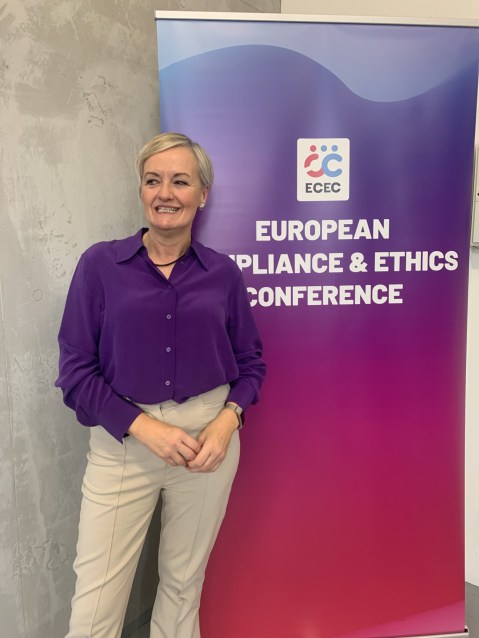
“Their duty is to create an environment where people are free to speak out, but hounding people for costs will obviously have the opposite effect” she said, adding that her tribunal experience has left others at Sellafield, the largest nuclear site in Europe, even more scared to raise concerns than they already were.
Closing her interview, Alison recommended several changes employers could implement, many of which are echoed by those who have gone through the same system. Assuming basic training and policies are in place, she prescribed a confidential way for employees to report concerns, a whistleblowing champion within organisations that values people who speak up, and finally that litigation should only be used as a last resort:
First, “investigate, investigate, investigate” she implored, ideally using external investigators. “I think that would send a very clear message to employees that the company really wants us to speak out.”
For those who want to hear directly from Alison the gruesome experiences of being a whistleblower there is a full video on YouTube of her speech. It is well worth watching.
 Westminster Confidential
Time and time again I am reading of employers, managers, authorities, organisations etc. vilifying employees, who have had the integrity and courage to speak out regarding genuine concerns, purely to protect their reputation at the cost of the wellbeing of employees, the public, patients etc.. The insidious practice of denigrating conscientious ‘whistleblowers’ is frankly chilling. Furthermore, it is scandalous that they are allowed to use taxpayers’ money in order to hammer the complainants. Why are these bullies – for that is what they are – not being held accountable?
LikeLike
Does not surprise me the way the unclear industry behaves to concerns and whistleblowers. Back in the 80s a girlfriend of mine had a relative working at Porton. Both her relative and another bucket carrier were big time irradiated. Bad, not as bad as the British nuclear scientist working for the UK In Australia and for the Soviets, who was caught by UK and Aussie spooks at an Athens data handover. Did he have to go to an ET? No way quietly retired on a full gold plated pension.
LikeLike
Pingback: There is nothing kind about telling someone that we’re sacking you for one reason, and then three months later introducing a new reason when you no longer have a right to reply because you’ve already left - CarrZee Carbon
Pingback: There is nothing kind about telling someone we’re sacking you for one reason, then 3 months later introducing new reason - CarrZee Carbon
May I congratulate Joe on his work with you David. This is such a common tale and has familiarity with the cases of Doctors Chris Day, Usha Prasad and Martyn Pitman on which you have reported in the past.
Whistleblowing is only one way of senior management receiving information crucial to improving their organisations performance. The other is feedback from user complaints.
With regard to the NHS and Government Departments, the final resting place for such complaints is the Parliamentary and Health Service Ombudsman (PHSO).
Your followers may be interested in the latest blog dated 17th October, posted on the website PHSOthetruestory. It is, in my view, an accurate synopsis of the performance over the last seven years of the current Ombudsman, Rob Behrens, who is due to be replaced in March 2024.
You have also previously reported on the plight of the WASPI 50’s women. The Ombudsman has dragged his heels over this particular issue and, as far as I am aware, is yet to issue his report.
What has to be of major concern is that those responsible for appointing these people into management positions do not seem to see the amount of taxpayers money spent on fighting as opposed to improving as money poorly spent.
It is surely time for the outdated Ombudsman legislation, passed in 1967, to be scrapped. What these bodies need, particularly the NHS, is one overarching organisation that brings the concerns of whistleblowers and patients alike into a central independent investigative body that truly holds management to account.
Stop the tinkering with and appointing quango’s. Do we really need separate bodies such as Care Quality Commission, Health Service Safety Investigation Branch, Patient Safety Commissioner, Ombudsmen and now another public inquiry into the issues at Countess of Chester NHS Trust?
So many past inquiries – so few lessons learned!
LikeLike
Excellent article. Well done Alison for speaking up.
LikeLike