Europe’s poverty aid programme for bankers and tax havens

Not quite the aid bankers have in mind. Picture courtesy The Guardian

When you think of aid to the starving poor in Africa, you think of Oxfam or Christian Aid. You don’t think of wealthy bankers, private equity companies or tax havens.

 Yet a report out  examining in detail the aid programme given by the European Investment Bank on behalf of the European Union reveals more and more aid cash is being given to African banks, private equity companies and passed through tax havens.

 The report from a group of non governmental organisations Counter Balance reveals that much of the €1.01 billion given  to relieve poverty is now going to projects that are run by banks and private equity companies. And worse than that commercial confidentiality by both the banks and the EIB  is preventing the public and the taxpayer knowing whether it has gone to good use.

The EIB argues that all is well as the banks know better than them what to do with the money and their own audit checks, often farmed out to local firms in these countries, prove it is value for money.

But the report reveals that all is not as well as they claim. In one case in Gabon the EIB had a lucky escape when they were about to give money ton the Banque Gabonaise de Devloppment only to discover that there was alleged corruption at the bank involving the siphoning of funds by the cronies of the now dead president, Christian Bongo. They pulled out just in time.

 In Nigeria, they also offered a €50 million credit line to the Intercontinental Bank of Nigeria at a  time when its managing director was being investigated for alleged fraud by Nigeria’s equivalent of the Serious Fraud Office. The bank had to bailed out last year by Nigeria’s state bank. Luckily for the EIB none of the money had been drawn down.

The report also highlights a lot of money going to Mauritius – where many private equity companies are based, but not much of the cash is being spent there, most of it is spent in the rest of Africa.

 The fear must be – in the wake of the Irish bank crisis and the collapse of Lehman Brothers which started the global crash – that the EIB could be next on the list. What could look on the surface as a sound investment might turn out to be little better than some of those subprime investments given a AAA rating.

 The problem is that all the EIB loans are triple AAA rated because they are in Europe. If anything goes wrong, it could be another matter. Don’t say you have not been warned, but this report, even though it is quite dense and detailed, is a must read. It is rather like a canary warning of danger in the mines.

You can get the report at Counter Balance. The direct link to download it is http://bit.ly/f6zalC.

 I have also written an article in The Guardian. The direct link is bit.ly/fdkO5K.

Armchair Audit: Brian Coleman- One of Britain’s highest paid councillors

This is the first of an occasional series of blogs auditing the work and wealth of public figures

Brian Coleman - a councillor with expensive tastes

who are shaping the destiny of thousands if not millions of people during the age of austerity. Taking my cue from David Cameron, who will be thrilled with the idea of this blog, it is part of making sure we are all in it together.  I am sure he will applaud the  checks on those at the top. Everything here is obtained from public documents and websites. Nothing, Andy Coulson please note, has been acquired from tapping personal mobile phones.

 Tory Brian Coleman, 49, has been in the news over a bitter dispute with London fire fighters over their hours. He accused them of holding down ” two jobs” and he brokered bringing in a private company, Assetco, to fight fires when the firefighters went on strike. The company is now in serious trouble-see other blogs on Assetco on this site.

HIS  INCOME

 Brian Coleman holds down four jobs all funded by the taxpayer. They are:

Member of the London Assembly                                                      allowance: £53,439

Cabinet member Barnet Council                                                         allowance: £38,177

Chair London Fire Brigade                                                                   allowance: £26,883

Chair LGA* fire services management committee                    allowance: £10,365

Grand Total from the taxpayer                                                                                £128,864

*Local Government Association, a voluntary body funded by councils from council taxpayers.

EXPENSES

Brian is a great expense claimer never knowingly underclaimed. He can claim for expenses for three of his four jobs – the LGA don’t allow him.

Last financial year his expenses as a London Assembly member and chair of the London fire authorityreached in excess of £3500 and that does not include his Barnet expenses which he declines to disclose on-line. Included in this are claims for the congestion charge – a tax that MPs are even barred from claiming and which might be challengeable by Revenue and Customs.

 He is a big patron of London cabbies claiming once over £10,000 a year  from the London Assembly on trips (2006-07). He is now more modest – claims have varied between £8000 -plus a £1700 travel card (2007-08) and £345 for 2009-10. All from the taxpayer.

His fire brigade expense claims are not much different.These include a £119 taxi fare to the Fire Service Awards Ceremony in  May 2009 and £143 to attend Westminster’s Lord Mayor’s reception for the Lord Mayor of London. He also spent £402 on a  rail ticket to go a LGA conference in Manchester. Little difference in 2011 -with a £145 taxi fare for him and his mum to go to a  firefighters service of remembrance  and meetings in London.

His red letter claims day is May 12 last year – where he managed to claim car mileage, congestion charge and over £67 in taxis  for a dinner -all on the same day.

For the current  financial year he is already on track to meet his usual high spending record- having claimed £1650 so far from the London fire authority. This included £145 for taxis one one day to go to St Pauls and back for the National Firefighters Remembrance Service in September and another £155 to go to and from a remembrance service for a colleague.

This year he has been entertained to lunch by two prominent Tory lobbyists – unsurprising given it will be election year in 2012 for the London assembly. They are Alex Challoner, managing director of Cavendish Place Communications, who masterminded Steve Norris’s ill fated bid to be London mayor, and Tony Hutt, of Four Communications, who is a lobbyist for major planning schemes in the capital.

His gifts include four dinners (three of them before the company won the contract) and a £350  Harvey Nichols hamper from the head of AssetCo, John Shannon, the company which has a £9m PFI deal with his authority and provided strike cover.

On Christmas Day he started to eat and drink everything in this picture.

Brian Coleman’s huge Christmas hamper: courtesy HarveyNichols

You can keep abreast of his latest expense claims and gifts by clicking these links  http://bit.ly/bRWy6Y and http://bit.ly/9IfKHi  for the london fire brigade and http://bit.ly/9DoqLs for the London Assembly. He has opted out of declaring his gifts and expenses at Barnet Council -see http://bit.ly/b5ADWV

He and David Cartwright have also been busy being entertained to £50 a head dinners by  Danish private fire company Falk, and British private outsourcing giant, Serco.

HIS HOME

Brian Coleman represents Totteridge in Barnet but lives in West Finchley, N3.  He is a member  of the Finchley Methodist Church. They are his landlords and his flat has a registered fair rent of  £546 a month since 2008. That is about £125 a week. This is the Valuation Agency document.Scan_Doc0002 . According to local estate agents, the market rent for 2 bedroom flats is £1200 a month in his and neighbouring streets. Mr Michael Giles, the minister in charge of the charity, has declined to comment on the huge difference.

ODIOUS TOAD AND OTHER CONTROVERSIES

Never short of a sharp word. Most of his exchanges are recorded on his wikipedia site.See all on http://bit.ly/dvA5P5

To get an idea of what he is like see this exchange that closed down a council meeting.

http://www.youtube.com/watch?v=xsA2EIVCsPk

 He also has had a spat with single mum who went to him for help but ended up being told to live in the ” real world” when she was faced with a £150 a month rent rise – paying double what Coleman pays on his subsidised flat.

CONCLUSION – ALL IN IT TOGETHER?

Brian Coleman’s  decisions will have a huge impact on thousands of families – both in his campaign to cut back on firefighters terms and conditions of work and his role as a team player  at Barnet Council implementing Easy Council solutions for  residents which will affect the lives of the poor, vulnerable and many of his middle class constituents. He is  going  to curb the right of backbench and Liberal Democrat councillors to speak at council meetings with the backing of the Barnet Mayor.

In the meantime he defends his income and expenses from the taxpayer. 

“I work about 100 hours a week and have had three days off since Christmas. I’m not pleading some special case, just saying that … these salaries are not unreasonable.”

Tell him what you think. You can ask to be his friend on Facebook but he keeps his comments there private.

 You could also  email him. His Barnet Council and London Assembly e-mails are:

I am sure he will be very much in favour of David Cameron’s policy of accountability and be delighted to respond. You can also find on this site armchair audits of Gareth Bacon, chair of  London fire brigade’s  performance management committee and David Cartwright,  the Mayoral appointee to the London fire brigade.

Meanwhile any comments on this blog are welcome.  Contact me if you think who should feature next.

David Kelly: Why Dominic Grieve is right to rule out an inquest


David Kelly:Leave to rest in peace

Sad to say Dominic Grieve’s decision not to hold a further inquest into the death of David Kelly  is the right one. A very detailed letter from Lord Hutton, to the Attorney General and published on the Attorney General Office’s website  this week seems to be clinching evidence that a new inquest would not reveal anything that we do not know already. You can find it  by scrolling through the reports on this link http://bit.ly/mfQPPo. He seems to make quite a convincing case that Dr Kelly’s death was investigated to a higher standard than happens at  a normal coroner’s inquest. Also as I said earlier the quality of the expertise of the investigators could not have been higher, even if the press at the time ignored what had been released as the issue was dominated by Andrew Gilligan’s reports over the Iraq War.

By publishing the pathologist’s report last October  to my mind had already laid to rest some of the more ludicrous conspiracy theories, including one by the present transport minister, Norman Baker.

As I wrote at the time(October 23, 2010)

The pathologist’s report into the death of Dr David Kelly, the scientist at the centre of the row over whether Iraq had weapons of mass destruction, should finally lay to rest conspiracy theorists’ views that he was murdered by the security services.

The report provides harrowing detail of the self-inflicted wounds he sustained and no evidence whatsoever that he had been attacked or fought off attackers.

Unfortunately the failure to publish the report by Lord Hutton’s investigation in 2004 and the decision to keep it secret for 70 years fuelled conspiracy theories that it was a gigantic cover up.

Yet careful examination of the evidence given by Roy Green, a forensic biologist and crime scene specialist, to the Hutton Inquiry on 3 September 2003 – it is still on the inquiry website- will show that many of the details in the pathologist’s report today  were made public at the time.( http://www.the-hutton-inquiry.org.uk/content/transcripts/hearing-trans29.htm)

It would also be extraordinary that Lord Hutton and the inquiry secretary Lee Hughes, who forced the PM’s aggressive press secretary, Alistair Campbell, to release his private diaries and the intelligence agencies to publish internal Whitehall minutes should be suborned by the government to suppress evidence of a murder. The Hutton inquiry, whatever one feels about its findings, was one of the most open and transparent investigations ever held – and its secretary, is an unsung hero in Whitehall in pressing for a freedom of information act.

The explanation is much more mundane – Lord Hutton wanted to safeguard the privacy of Kelly’s family – but even he knew at the time that his request could be overruled because of the Freedom of Information Act.

The real scandal is not the conspiracy to cover up a murder but the fact that it has distracted everyone from the appalling behaviour of Tony Blair’s administration in using every means possible to silence journalists and investigators from finding out the truth about the government’s lies over Iraq’s weapons of mass destruction and their threat to Britain.

Number Ten effectively used the naming of David Kelly to browbeat the BBC and  blacken the reputation of Andrew Gillighan, a  journalist trying to get to the bottom of the facts, and then were horrified when Kelly took his life.

But as someone who has to deal with moles, some can take a lot of shock and awe but others have to be treated with kid gloves, because their consciences tell them the public should know the facts but they are terrified of being exposed.

 Kelly, from his performance before  MPs, was obviously in the latter group and the fact that he was about to be exposed for lying to MPs that he had talked to another journalist, Susan Watts, was enough for him to kill himself.

The security services did not need to murder Kelly – even if they had wanted to do so, which is highly unlikely – he became sadly another  tragic victim of the Iraq War because he couldn’t take the strain of  being exposed to such  a massive media circus.

The real tragedy is that we have wasted six years going up a blind alley which might be great sport for conspirators, but we have let the people who drove this decent man to his death, escape any retribution for their actions and for not telling the people the truth.  Hutton’s conclusion in this respect left them off the hook.  I would be surprised whether the Chilcot inquiry – which has been far less open about releasing documents does any better.

This blog was first published on the Guardian’s Comment is Free website. For lots of responses see that site.

To “Red” Ed:Some advice from a “has been” Hack

Ed Miliband: The need to be ruthless and brave Pic: courtesy peoplesrepublicofsouthdevon

Journos love a drama and nothing better than a fratricidal battle between two brothers. But the coverage by my colleagues of  ” Red” versus ” Dead ” Miliband has  been well over the top.

Basically the argument goes like this. Ed has already been defined by his enemies as  red in tooth and claw, only in power because of the machinations of  union barons who duped their members into supporting him to ditch his brilliant elder brother.

Now with Joe Public  well briefed – and with only that difficulty over spending cuts which a public  will reluctantly accept after being told Labour is to blame – the Tories will be able to romp home in four years time.  Just offer the  squeezed middle classes big tax cuts from selling off the banks.

This cartoon portrayal  is likely to go badly wrong. I have no inside knowledge of the Ed Miliband team but I do talk to a lot of contacts who deal with him – and if he is astute enough he has a winning card.

Some people are obviously up to a job, others grow into it. Ed is the latter. As a special adviser to Gordon he seemed frightened of the media. As a Cabinet Office minister the Whitehall view was that he was indecisive about what to do. But as climate change and energy secretary, Whitehall revised their opinion. He took  them on over   emission targets and won, and there is nothing more they like than a minister with a firm agenda.

It was similar in the leadership election campaign. His address to the Parliamentary Lobby lunch was OK, but lacked blood and fire. But through the large number of  hustings, his performance improved and  he was steadily winning the argument. It is a myth  to say that he won the vote because only union bosses backed him. It was his arguments that convinced the individual union members to vote for him and pushed the leaders into backing him. David Miliband – as an article about to appear in The Journalist will reveal – campaigned equally ferociously with the unions but lost the argument.

So where does that leave him? For a start with four years to establish his personality, policies and identity thanks to fixed term Parliaments. The mood  music will then be quite different. We are still in the phoney war over the cuts and higher taxes. From January when VAT goes up, we will face a rolling programme of higher taxes, lower benefits and unthinkable cuts to public services- defended equally by two major coalition parties.

His first speech suggests that he will fight a number of the cuts but not offer to restore every one. He will have to be fleet footed, ruthless, know his own mind and be able to create not just an alternative policy but an alternative narrative that can be believed by the general public. On some issues he will need to be brave, because  the policy may not be instantly popular. He needs to use focus groups not just to tell him what people think but how he can influence people to think differently.

 He should not  underestimate his main opponent David Cameron. Behind  the public relations manner is a ruthless brain – just look at how he handled the expenses saga, leaving Gordon looking flat footed.

One Tory contact of mine at the conference  –  who  I have known for years- had a chilling insight into the right wing agenda. He said he did not mind if it was a one term coalition – because by 2015 they would have dismantled so much of the state – that  a Labour government would never have the money to put it back. His money comes from the Far East and the oil rich states surrounding Russia- so he doesn’t care if the UK does not really prosper – as he thinks  India and China will be the wealthy power houses of the future. That if nothing else should be warning to Ed of what he has got to do.

Medical Misdiagnosis Update:Inquiry on the Scillies

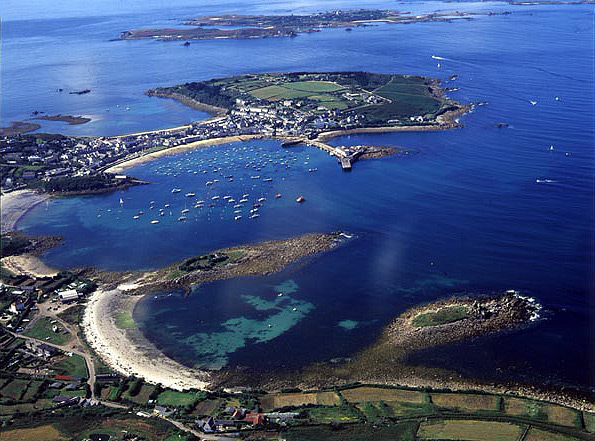
the scilly isles - beautiful but medically dangerous if you fall:pic courtesy duchy of cornwall

The Cornwall and Isles of Scilly Community Health Services has launched an inquiry into how they missed my triple fracture to my arm and shoulder at their local hospital on St Mary’s.

It has accepted a formal complaint from me aimed not only aimed to find out how my injury was misdiagnosed but to look into why  you can only get an X ray done on the islands for two hours a week.

 Given that the Isles of Scilly is a tourist destination for walkers, sailors and scuba divers it seems to me essential that at least in the summer months there should be proper medical facilities to deal with accidents.

Otherwise beautiful as the islands are, staying on them could result in serious consequences  for your health should you unfortunately trip over. I have still not got the full use of my arm back four months after the accident.

There is another reason to be worried. St Mary’s hospital is  GP led and the government without announcing it in its manifesto is commtited to GP commissioning of services. The Isles of Scilly is probably the nearest place where GPs are in control – and will this mean penny pinching and cost saving?

The authority has promised to reply within 25 days. I will keep you posted.

TUC: Why the unions must raise their game

brendan barber -more than fiery rhetoric needed. Pic courtesy Daily Telegraph

 Expect the standard sound and fury at the TUC Congress next week.  Union leaders’ rhetoric will be at fever pitch as they denounce the planned biggest cuts since 1945. Threats of another “spring of discontent” and co-ordinated strike action across the public sector will abound. But will it amount to little more than fierce words and a damp squib when it comes to the point?

 True the TUC has started well, releasing well researched reports on the cuts already announced, and promising a lobby of Parliament next month and a march against the cuts next March. Individual unions are certain to draw up strike plans to protect jobs and there is embryonic co-ordination between unions representing civil servants, fire fighters, journalists and rail workers. But there is a real issue that the effect of any strike action will be to alienate the public and play into the hands of the coalition.

So hasn’t the time come for union leaders to raise their game and think outside the box.

There are two good reasons to do this. One is that they will be daft to think that the coalition will sit idly by while they organise. The recent release to the Guardian of all the secret Cabinet committee papers (both ministerial and officials)on the 1984-85 miner’s strike show s an extraordinary resolve by Margaret Thatcher, William Whitelaw, Leon Brittan, Norman Tebbit and Peter Walker to co-ordinate action against the miners, using the law, the courts, the police , media and pit  and power station management. Often they could pre-empt and weaken the NUM’s action.

It’s not beyond the wit of the present Cabinet Secretary, Sir Gus O’Donnell, to follow his predecessor Lord Armstrong and set up a small Cabinet committee to co-ordinate action against protestors and unions should the opposition become really serious.

 This is why the unions need to be savvy. 2010 is very different to 1984. We now have mobile phones, the internet, social networking sites and an alternative festival network. The scope for instant protest abounds and with the coalition planning a small state, the resources David Cameron and Nick Clegg have at their disposal to monitor and control protests can only diminish as they cut back.

 Why can’t Bob Crow, the RMT leader and Gerry Doughty, the TSSA leader, organise a more popular free travel day as well as one day strike? If the unions asked all the members to deactivate the barriers at every tube and Overground station, will Transport for London want to prosecute thousands of its staff? The public would love them and Transport for London would lose as much revenue. Could Mark Serwotka, the PCS leader, decide to programme the VAT and Income Tax computers to refuse to send any demands out?

The mobile phone is also a brilliant for organising instant protests at any venue you might want. With Googlemaps pinpointing locations how about a “flash mob” protest when Nick Clegg  publicly announces his next constitutency surgery? Or put some fun into protest by organising a “Rock against the Cuts” festival  preferably applying to hold it in the grounds of the country estate of  one of the  millionaire Tory Cabinet ministers.

So how about it, Brendan Barber? You need a bit of imagination as well as fiery rhetoric. With luck and public support you really could turn the Big Society into the Big Protest.

Does the train take the strain? East Coast good, London Midland bad

A helpful East Coast express: pic courtesyLocoPix

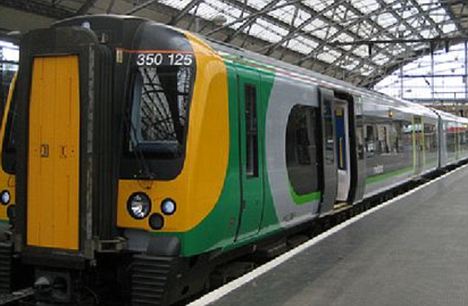
An unhelpful London Midland train

Travelling around with a recovering fractured shoulder  is not much fun. Particularly if you have to load your heavy luggage on a train. But fortunately there is a free public service offered by the rail companies to get assisted help if  you are disabled. Or is there?

I had two opposite experiences going on holiday from Berkhamsted to Edinburgh. One showed the worst aspect of rail franchise companies, the other the best.

I contacted both London Midland and East Coast Trains by e-mail in advance for help. East Coast trains replied by return, saying my e-mail did not make it clear how much help I needed and giving me a number to ring them for more help. London Midland did not respond and never did.

When I rang East Coast they could not have been more helpful. They took details of the trains, the seat reservation, and because I wasn’t sure how we would arrive at Kings Cross where to go to get assistance on the station.

I then rang London Midland on a freephone number on their website. No reply, not even an answering service and finally a member of staff disconnected the call.

So no help for the journey from London Midland. East Coast – despite the train being overcrowded because of two other cancellations at Kings Cross – kept their bargain. With the luggage space full, the porter obligingly moved the cases to the guards van. At Edinburgh Waverley there was a porter to meet us as we got off the train ( they wanted the seat reservations so he could meet us at our carriage). On the way back to Kings Cross exactly the same experience – the porter even found one case after another passenger had moved it.

Is there a political point in this?  East Coast is state owned, and seems to train its staff to beleive in public service. London Midland is not. It is a state subsidised profit making private operation – whom I have already  crossed swords with issuing ” ghost tickets” at different prices from Berkhamsted. (see earlier blog on this site).

My suspicion is that London Midland’s  disabled help service is a fake, just a cyberspace invention on their website invented by their pr department, to make it look as though they care. Or perhaps their training programme for staff centres on how to lose e-mails and put down phones on customers, thus saving them any inconvenience or cutting into their large proft margins.

Either way East Coast deserve congratulations, the managers of London Midland  need their shoulders breaking.

London Midland’s  response is  attached as a comment to this piece ( see above).

Four Cabinet Ministers and a Tory special relationship “charity” get off lightly

Henry Kissinger- a star speaker at Atlantic Bridge's uncharitable events- picture courtesy UPI

Any political activist knows that party politics and charitable status don’t mix. And if they do and someone complains the effects can be toxic for the organisation and any leading figures involved.

The Smith Institute found this to its cost when it was torn apart by a Charity Commission investigation two years ago accusing its trustees and organisers of appearing to be too party political and too close to Gordon Brown. The damage to Labour was enormous and the Commission used its powers to hold a full inquiry and directed its trustees to reform the organisation or else.

This week it was the turn of the Tories – or did you notice it?

 Atlantic Bridge- patron Margaret Thatcher  and an advisory board composed of four prominent Tory Cabinet ministers, Liam Fox, George Osborne, William Hague and Michael Gove – was given a year to change its act- after facing exactly the same allegations as Labour. The charity which promotes the “special relationship” with the US – was found in a damning report to be little more than a promotion for Thatcherite party political beliefs and neo-Cons in the US.

But one reason why it may not have hit the headlines is that the Charity Commission was far softer on the offending Tory charity. For a start its press officer advised after they received the initial complaint from Labour activist Stephen Newton that the word investigate could not be used as they had not launched a formal investigation. Instead the phrase “engaging with the charity to address concerns” through a regulatory compliance case was used instead.

Now nine months later the report has been issued with the almost same findings against The Smith Institute. The key phrase is the finding that the charity is “promoting a policy which is closely associated with the Conservative Party.”

But instead of a six month direction the charity has been given a year to change and only then is there a threat against the charity’s trustees of further action.

But more significantly while it is clear that the charity had broken the rules for at least seven years nothing is being done about its tax free position.

These are not minor sums. This was the charity that was charging £700 a seat for VIPs and £400 a seat for ordinary mortals to hear Henry Kissinger speak at a luxury London hotel last year and see him presented with a Margaret Thatcher Medal of Freedom. The commission’s report discloses that the charity admits this event was part of a tax free fund raising drive. The donors – probably mainly higher rate taxpayers – could claim the money against their tax returns. And it is now clear that Atlantic Bridge can’t claim the same charitable status as the National Trust.

So why hasn’t this been referred to Revenue and Customs?  Why aren’t more searching questions not being asked of the advisory panel of Cabinet ministers who presided over an organisation that clearly broke charity rules?

Atlantic Bridge is not actually being repentant either. In a statement they reluctantly promised to follow the Commission’s ruling and have taken down their website for “updating”. But it expressed its  “ disappointment” at the Commission’s ruling  and refused to answer any questions about the role of their trustees or advisory panel.

 The Charity Commission is being a little too careful in handling this scandal. I wonder why.

A similar version of this blog has now appeared on the Guardian’s Comment is Free website.

Misdiagnosis,bad prognosis then last minute brilliance: my treatment by the NHS

preparing to go under the knife(not my operation)

Being treated by the NHS is like riding a rollercoaster or watching England play in the World Cup ( even as a non football fanatic).

One minute you cannot believe professionals can make such errors, the next you can’t quite believe how they brilliantly they got their act together.

I had the misfortune to trip over a rock on a remote headland path on the Isles of Scilly – falling flat on my face with my arm outstretched skidding across another rock. I was unable to get up unaided.

 I should have known not to do this except on Tuesdays between 2.0 pm and 4.0pm – the only time there are X ray facilities on these  islands some 30 miles from the Cornish mainland. I was later to find that while Scilly has  brilliant first aiders and paramedics who use a jet ambulance boat, its cottage hospital at St. Mary’s is a one man and a dog operation.

And unfortunately for me this was a Thursday afternoon- so no x ray without calling in an air ambulance to Penzance. I was diagnosed as to have nothing wrong with me except  sprained and badly bruised muscles and sent home with Paracetamol and Ibuprofen.

For the rest of our holiday we spent quietly on Tresco. Only after visiting my GP in Berkhamsted nearly a week later and being sent off to casaulty at Watford General Hospital, did I find I had fractured my shoulder in three places. But never mind, the prognosis was that the bones would heal by themselves. I would be sent to the fracture clinic at Watford to arrange physio.

A week later and seen by orthopaedic doctors at the clinic, it suddenly emerged that I needed an operation to restore my shoulder and upper arm to full mobility. And worse still there was only a week left to do  it, because my bones were well on the way to trying to heal themselves  in the wrong position.

Here despite a horrendous reputation trying to run a busy overstretched hospital on a  shoestring (West Herts having closed down our nearest  a&e hospital Hemel Hempstead), fingers were (metaphorically) pulled out.

Within two hours, I had a CT scan, bloods and swabs taken in case I was carrying MRSA without knowing it. Within 24 hours the hospital found me an orthopaedic surgeon, South African Andrew Irwin, who specialises in smashed shoulders and upper arms.

They had a problem- no bed. A hospital administrator -Jane Ward- came to the rescue ( remember those people politicians despise because they don’t  do front line care) and three hours before I was due to come in-had found one.

My 44 hr stay on Flaunden  general surgery ward was a minor miracle -with almost every NHS cliche in the book. The surgeon turned out to be the typical no bedside manner type – in the one minute consultation- it was simply  “you have a smashed shoulder. We’ll fix it.” The nursing care-despite staff shortages- was superb with one staffer, Trish, doing a double night shift and staying on an extra hour to  complete unfinished tasks. And while the operation took six hours -described as ” a tricky one” by a junior surgeon the next day, I actually did feel safe before and afterwards.

Slight shock at being turfed out with one hour’s notice the next day- but I suspect that with one or two patients with undiagnosed infections surrounding me, it was for my own good. Yet they managed to get me to see a phsyiotherapist, get a final X ray ( when I discovered I have a metal plate and a long pin in my shoulder), get some drugs and talk to a pain nurse and after a strong representations from my anxious wife, arrange for patient transport home.

The experience suggests -despite Labour’s spending boom –  an NHS much on the edge trying to provide best patient outcomes. My shoulder is starting to recover. All I can say is that if David Cameron or Nick Clegg – start thinking of squeezing the NHS in any way- I shall use it to thump them when I meet in the House of Commons as part of my job.

Roast beef rebels plan Cameron Stew

Will Tory Roast Beef Rebels carve up Cameron? pic: courtesy BBC

Today’s first tranche of  spending cuts  will be small beer to rebellious right wing Tories  who are now heading for a serious  battle with David Cameron.

Already angry the he has given too much away to his new coalition partners, the Liberal Democrats, Tory conspirators are already gathering in Commons dining rooms to plot the blue lines he should never cross.

The full story is in my blog at http://www.progressonline.org.uk/ in my Tory Tracker column.

  Cameron may have won a vote  by rewriting the election rules for the 1922 committee to allow fellow ministers to vote but his decision infuriated his own whips and some of his own Cabinet colleagues – who seem to have been given no prior warning. And it could come back to haunt him this week. 

All this is going to do is to  further anger some of  his biggest  critics -the Cornerstone group- the Thatcherite No Turning Back Group and  Conservative Way Forward.

The first lot are now dominating Dining Room A  in increasing numbers   where they plot over traditional English Fare -like roast lamb and beef – hence the name the ” roast  beef rebels”. Their champions  vary from Iain Duncan Smith, the new works and pension secretary, to young right of centre Tory blades like Greg Hands.

They are starting to attract support from mainstream Tories who are reporting bad news from the golf courses as angry middle class  Conservative activities find out they may well be paying 40 per cent capital gains tax on their second home or seaside flat – which had been earmarked as their ” second pension”.

One of them faced with people saying to him ” I did not vote Tory for this” had to lamely reply ” It is a Liberal Democrat policy”.

The growing anger means that Camerom will find it an increasingly rocky road- as cuts and tax rises bite. Today covered the easy cuts, tomorrow will be different. And Cameron will have to be careful that the roast beef rebels don’t turn his new coalition into an overcooked stew.