How Romania’s inhumane prison system led to the tragic death of a campaigning newspaper owner

foto-dan-adamescu-bw-1

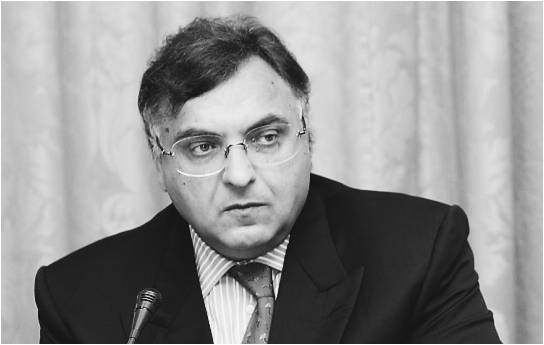
Dan Adamescu who dies this week after falling seriously ill in an inhumane Romanian prison system.


CROSS POSTED ON BYLINE.COM

Earlier this month this blog covered the plight of Alexander Adamescu, the joint owner of Romania’s oldest newspaper, who is facing extradition from the UK on what are seen as trumped up charges of bribery using the European Arrest Warrant.

His father, Dan, who was the co-owner of Romania Libera, Romania’s oldest newspaper was in prison serving a four year sentence on similar charges and his family were planning to fight the state over the way they are trying to close down his companies.

Now tragically his father has died – after a short period in hospital – one of a large number of people who die every year because of the notorious nature of the Romanian prison regime.


His son Alexander states :“On January 24, right after midnight, Dan Adamescu, aged 68, died in a hospital in Bucharest, without having his family close to him. Sentenced on June 5, 2014 following a trial that relied on false testimonies, he was consecutively imprisoned in 3 penitentiaries, where his health status became increasingly serious. Hospitalized in his last months of his life – which he spent being intubated and in semi-inducted coma – the 15 diseases he had made his body become more and more weak, and the deadly blow was given by the pathogenic bacterium called Staphylococcus aureus, with which he was contaminated in the inhuman conditions from the prison”

He mentions that his father went through difficult moments in the penitentiaries where he was imprisoned, given his health status.

“Jailed in unspeakable conditions in the Remand Center – 6 to 8 detainees in a cell of a few sq. m. at the basement, without closets, without room to move, with Turkish toilet – and not once, because of the atrophied muscles and of his ill knee, he felt I his own excrements – jailed for 23 of 24 hours – because he was allowed to go out for 1 hour, in the 30 sq. m. called “outdoor” (actually, a closed room of approx. 30 sq. m., having grids instead of the ceiling, extremely dirty) – he was moved later to the Rahova Penitentiary, where he shared a cell with 6 detainees, but because of his sharpened health status and of his inability to move, he remained permanently blocked in the cell.

Besides, for some bureaucratic reason, the treatment that he needed desperately wasn’t administered for 37 days, although medicines have been brought by my aunt, and his life was in real danger. Moving him to the Jilava Penitentiary was a new ordeal for my father… so he went from here to the Floreasca Emergency Clinical Hospital, directly in syncope; only after 10 days of medical care his vital functions have been restored, following a serious infection spread throughout his body” .

The issue of prison conditions in Romania- where nearly 500 people have died over the last five years often due to the lack of medical treatment –  has already been challenged in the High Court in London by the international human rights lawyer, Ben Emmerson ( who also represented Alexander Livenenko’s widow in the recent public inquiry into his poisoning by plutonium). He has taken up the cases of other people being extradited by the Romanians and the prison.

Romania’s cramped and unsanitary prison conditions mean that pre-trial detention has also become a kind of punishment. Prison standards are so bad that between 1998 and 2015, the European Court of Human Rights found Romania guilty of 178 violations of Article 3 of the ECHR prohibiting inhuman or degrading treatment. The court recorded 27 violations in 2015.

This sad end  to his father’s life strongly adds to the need for some action to stop the extradition of his son who blames the Romanian authorities for his early death.
 

A Romanian scandal that threatens press freedom that the UK could stop in its tracks

alexander-adamascue

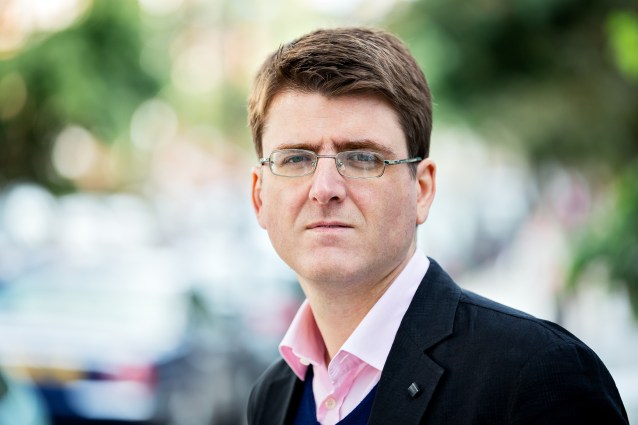
Alexander Adamescu: Facing extradition from the UK using the European Arrest Warrant

CROSS POSTED ON BYLINE.COM

Romania is not particularly high profile. It is  best known for Bram Stoker’s Dracula stories and the infamous  rule of Communist President Nicolae Ceaușescu overthrown and killed in a revolution in 1989.

Now it is seen as a NATO ally, a democracy with free elections and in European Union circles as being tough on corruption.

But beneath the surface there is growing evidence that Romania is about to go the same way as Hungary and Turkey with a crackdown on the freedom of the press, arbitrary arrests and flouting the rule of law.

The issue is becoming deeply personal – and this blog has decided to take up the issue – over the plight of a German businessman who with his father owns Romania’s oldest newspaper, Romania Libra. The paper  has been a thorn in the side 0f successive  governments by exposing corruption  and political intrigue. I have written both a news story and a large  feature in Tribune this week on the case.

Alexander Adamescu currently lives in St John’s Wood in London. His father Dan is in hospital in Romania while serving a prison sentence for corruption based on the uncorroborated evidence of one person that he tried to bribe an official. His son is now – two years later -facing a similar charge after a flimsy examination of the evidence in a 30 minute hearing called at two hours notice in his absence.

The Romanians are  using the European Arrest Warrant – which faces only a very limited challenge in the British courts- to try and extradite him to Romania and this spring there will be a court hearing.

Alexander Adamescu has applied for political asylum to Theresa May, has asked the all party Romania committee to take up his case in Parliament and appealed to the Labour leader, Jeremy Corbyn. Corbyn as a backbencher took up his father’s case in 2014 and was heavily critical of Romania’s judicial process. So far British politicians have not acted.

In the last year there have been more sinister developments – reminiscent of Russia’s secret service – affecting his family. He believes his wife, Adrianna, was the subject of a bungled kidnapping  outside his St John’s Wood flat this March.

As she got out of her car and approached her flat two masked men attacked her and tried to drag her to a waiting car.

She said: “They were both wearing bandanas and gloves. They drove in a Mini Cooper with fake number plates – as I was later told by the police – and didn’t steal anything from me despite the fact that I was wearing diamond earrings, and had my car keys in my hands.”

“When they approached me, I threw myself to the ground, and fought with them until my neighbour Kymone Hansson, hearing my screaming and came running out to me. At the same time, a cab driver with a passenger in the back seat pulled over next to me and called the police. That was the moment I was saved. The two men ran to their car and quickly drove away”.

The Met Police were able to trace the car but not the people and the case has been left on file.

Later there was a second incident which can be directly attributed to the Romanian authorities. Adrianna was returning from Bucharest and was stopped at the airport before she could board the plane. The authorities said her four year son could not leave the country because he was Romanian (he was born in the UK). As he is four they could not detain him so she quickly left the airport with him and drove across the border to Bulgaria and returned from there to the UK.

The issue of prison conditions in Romania- where nearly 500 people have died over the last five years often due to the lack of medical treatment –  has already been challenged in the High Court in London by the international human rights lawyer, Ben Emmerson ( who also represented Alexander Livenenko’s widow in the recent public inquiry into his poisoning by plutonium). He has taken up the cases of other people being extradited by the Romanians and the prison.

Romania’s cramped and unsanitary prison conditions mean that pre-trial detention has also become a kind of punishment. Prison standards are so bad that between 1998 and 2015, the European Court of Human Rights found Romania guilty of 178 violations of Article 3 of the ECHR prohibiting inhuman or degrading treatment. The court recorded 27 violations in 2015.

.Serious questions about the role of the independent judiciary, the misuse of the European Arrest Warrant and the freedom of an independent press to investigate the government are all at stake. Even the role of major accounting firms working in Romania like KPMG have been questioned.

Journalists on the paper have published an open letter accusing KPMG of aiding and abetting members of the Romanian government to rig insolvency hearings to destroy and silence their newspaper, infringing on the publication’s fundamental rights to freedom of expression.

“There is no doubt about it – this is a case of privatized censorship. KPMG has been used as a front by certain members of the Romanian government to take over control or shut us down,” said Sabin Orcan, chief editor of România Liberă.  “Our publication has survived more than 140 years of the worst types of oppression, including during the Soviet period. But who knew it would be the accountants who would deliver the death blow to freedom of the press in Romania?”

KPMG, to be fair, did find problems with the insurance company that bankrolled the paper, but recommended changes that amounted to a rescue plan for the company. The government vetoed the plan which shows where they stand.

All this suggests that the British government should act to stop this move. Given that it is committed to leaving the EU it should be possible to overrule this action or grant him political asylum.


Revealed: Boris’s Imperialist dream: £3 billion for military adventures ” East of Suez”

boris_johnson

Foreign Secretary, Boris Johnson

CROSS POSTED ON BYLINE.COM

The row over Boris’s clumsy intervention over ” proxy  wars ” and ” puppeteering ” by  Saudi Arabia in the brutal war in Yemen has somewhat obscured what Britain is really up to in the Middle East.

The full text of Boris Johnson’s speech to his Arab audience in Bahrain released by the Foreign Office at the weekend reveals that we are going to be spending vast sums of public money propping up the  undemocratic and inhumane regimes run by wealthy Arab Sheikhs  in return for their investment in Britain. We are reviving plans for a world military role ” East of Suez”.

All this at a  time when Theresa May is committed to retaining austerity at home well after 2020 with  all that entails in cuts to disabled benefits, social care,public services and restricting the growth of the NHS.

Boris began his speech by boasting how his new foreign policy overturned Harold Wilson’s 1968  Labour Cabinet decision to withdraw Britain’s troops from Borneo,Singapore and the Middle East. He showed extraordinary affinity for the then foreign secretary, George Brown, who like Boris, was a very colourful figure once found in the gutter after a particularly hard night’s drinking..

He described his decision as ” a triumphant vindication” for  the ” brilliant “George Brown over  Europhile Roy Jenkins  who with a ” frog like beam ” was determined to get Britain into Europe ( how Brexiteers love to damn Europhiles even way back to 1968!).

But it was the picture he drew for Britain’s future role for” centuries to come ” that was the most revealing.

He pledged that Britain would be involved in any future crisis in Gulf – which given the present volatile situation is no mean commitment.

As he put it “:any crisis in the Gulf is a crisis for Britain – from day one; that your security is our security ” and that ” your interests military, economic, political – are intertwined with our own..”

He goes on to cite  the billions Britain is spending for new military engagements in the Middle East.

This includes:Reopening HMS Jufair, a naval support facility  in Bahrain, which His Majesty the King of Bahrain,Hamad bin Isa Al Khalifa said he remembered from his childhood before our disengagement.

Basing  Britain’s Gulf Defence Staff in Dubai.

Developing the Al-Minhad air base in the United Arab Emirates providing a hub for the RAF.

Establishing a Regional Land Training centre for the British army – one of only four in the world.

As Boris put it : “Britain has in total 1,500 military personnel in the region and 7 warships, more than any other Western nation apart from the US.  We are spending £3 billion on our military commitments in the Gulf over the next 10 years and that is deepening a partnership that is stronger than with any other group of nations in the world outside NATO.”

So what is the pay back.?So much Arab money is pouring into London that the city is becoming a Gulf owned state. Boris named the capital as the 8th Emirate.

As he put it : “London is sometimes called the eighth Emirate. I think I may have made that up myself, but we’re proud of it.”

And he detailed how much retail estate is owned by Gulf states in London.

The Qataris own The Shard, Olympic Village,Harrods, and Chelsea Barracks.

The UAE owns the Excel exhibition centre in Docklands and the Tidal Array in the Thames Estuary . And there is the Emirates cable car across the Thames.

The Gulf states own the DP World Port. which has replaced London Docklands.

And even City Hall the seat of London government is owned by Kuwait.


As Boris said :” I didn’t know it until today but I’m stunned to find out.”.

Of course the foreign secretary stated that Britain gains from exports to the Middle East – from Marks and Spencer to military equipment and even sand for golf bunkers.

However after Britain’s bruising encounter in Iraq it seems the Tories are rapidly becoming the main defenders of a group of very wealthy Arabs – all of whom ( it has happened already) could face uprisings in the future from their own people.

Britain would have to defend them or see large swathes of the capital being owned by the very people who have overthrown them or if there is war – by another country.

I am not sure how keen the British people will be to get involved – but for the Tories ( although they were careful not to say it) it has smacks of returning to the glory days of Empire and Rule Britannia. That could be a very big mistake.


The not quite complete Exaro archive

exaro

CROSS POSTED ON BYLINE.COM

Historians and researchers may one day need to refer to articles put up on the Exaro website. It covered a wide range of issues from detailed investigations into allegations of child sex abuse, what Rupert Murdoch really thought about News International’s involvement in hacking and paying sources, the tax avoiders in Whitehall, the demise of the Audit Commission, business stories involving arms deals and ” dieselgate”.

Exaro has now taken down the website but fortunately a large proportion of the original articles can be seen here at this link here

However there are a number of caveats as this is  not the complete picture. This link only covers stories  published by Exaro up until the sacking of its editor in chief, Mark Watts, by Exaro and New Sparta management.

After this happened  Mark Conrad and I, who took over running the site, commissioned and published a number of new articles including one by Nick Kochan on the discovery of WMD in Iraq long after the row over the issue had been concluded.None of these are on this archive  but fortunately we have captured them and they will be put up at a later date.

When Exaro folded nearly a month later mysteriously these articles disappeared.

The description of the staff who worked for Exaro was changed back to an earlier period.Some of the profiles with the exception of Mark Watts were removed as was the detail of who was running the site in the last month. So the section in this archive is not accurate.

There is one other issue in this archive. It contains a number of stories about a survivor called  “Darren”. Mark Conrad and I no longer stand by the accuracy of these articles.

Prior to the closure of Exaro  Mark and I were going to conduct a review  of all  Exaro’s child sex abuse  coverage but stopped when the website closed. This does not mean we felt that articles were wrong or that we don’t stand by them despite hostile national press coverage.

But the editorial handling of the  articles on Darren  – which was a matter of internal dispute- made us uneasy. This is no reflection  on the excellent work done by  Tim Wood as a diligent reporter on the case. We felt that the editorial management  of the story did not reach proper and thorough journalistic standards that we would expect from such an investigative site. So the end  edited result should be treated with caution.

As for the future the dedicated staff of Exaro will be looking at alternatives so the investigative journalism we strive to produce will be resurrected in the future.

Are German State Railways exploiting train drivers in Britain to put lives at risk?

db-cargo-freight-train-in-uk

A DB Cargo UK train in the UK. Pic Credit: Flickr

CROSS POSTED ON BYLINE.COM

Earlier this month I  wrote an article for the Sunday Mirror about exhausted freight train drivers going over danger signals because they were asleep at the wheel.

The source was a highly respected but until then completely unnoticed report from Whitehall’s Rail Accident Investigation Branch. It followed two cases of drivers last year “momentarily falling asleep ”  while driving huge  freight trains on the Great Western main line near Reading.

The report made damning reading of the way DB Cargo UK, the Doncaster based British subsidiary of  state railway Deutsche Bahn, was treating its  train drivers with little concern for their  welfare and for that matter rail safety.

The report revealed that a combination of long shifts – ten hours at a time – and rest facilities which were ” unfit for purpose ” –  two sofas in a  brightly lit corridor – meant that drivers had little or no sleep. One driver hadn’t slept for 19 hours when he went over the danger signal. Another came to a halt where a luckily empty high speed passenger train was due to cross its path on the way to London Paddington. It was stopped by automatic train signals.

“Evidence gathered during the current investigation found widespread dissatisfaction with the standard of the drivers’ facilities at Acton train crew depot relative to equivalent facilities at other depots.

“The RAIB’s inspection confirmed that the designated rest facility at Acton was not conducive to napping because of the amount of noise, its location (being on a through route between other rooms), and the unsuitability of the furniture for napping.”

“Drivers’ rosters fell outside the guidance in respect of maximum duration for a night shift, minimum rest period between night shifts and clockwise rotation of shift start times,” says the report.

“The shifts being worked by both drivers when the incidents occurred involved starting in the middle of the night (00:48 hrs for Driver A and 23:51 hrs for Driver B) and working a relatively long shift (10 hours and 57 minutes for Driver A; 9 hours and 38 minutes for Driver B). Driver A was working a sixth consecutive shift, five of which were similar night duties.”


They also found staff reluctant to  complain.

“The RAIB also found a perception among some drivers that management are not sympathetic to drivers being fatigued and that controllers might pressurise drivers into continuing working in order to meet operational demands. Driver A stated that he experienced such pressure concerning a turn of duty in September 2015.”

The train drivers union,ASLEF, is campaigning for train drivers to be treated like truck drivers by allowing them to have greater rest periods.

You certainly could not drive a lorry for the length of time you can drive a train because tachographs would record that you had broken the law. And the driver who had not slept for 19 hours would have been stopped driving a car because his fatigue would probably register the equivalent of having too much alcohol in the blood.

DB Cargo UK say they have taken action to tackle the rosters and to provide newly refurbished facilities in another building in Acton for staff to have a nap.

Lee Bayliss, Head of Safety and Risk at DB Cargo UK, said: “Fatigue is an issue we take very seriously and we have implemented robust processes and policies to manage it. This includes establishing a Fatigue Working Group to integrate best practice from the Office of Rail Regulators and the Railway Safety Standards Board in order to continually improve procedures and standards.”

However while the report revealed the company did have regular safety meetings they were not well attended which suggested they did not command much priority.

The report shone a light on a hidden side of the rail industry. People are already fed up with the performance of some privatised firms running passenger trains – enough to make rail nationalisation popular again.

The freight side is overlooked but on this evidence it might suggest Labour should look at extending their pledge to freight.- particularly if foreign state rail companies behave like this. After all, both passenger and freight share the same tracks.


Robert Halfon v Jeremy Corbyn: The battle for the working class vote

CROSS POSTED ON BYLINE.COM

Jeremy Corbyn’s success in attracting tens of thousands of new Labour supporters was given a rare  accolade this week at the Conservative Party Conference.

Robert Halfon, Tory MP for Harlow and the skills minister, told a Conservative  Party fringe meeting  organised by Respublica how the Labour leader had attracted these people because they saw him representing  their ” moral and ethical ” values and being fair minded rather than representing ” the privileged few”.

No doubt this would lead to a furious denial  from the Labour right wingers like Ben Bradshaw and Tristram Hunt – who see the whole exercise as a  1980s rerun of ” Reds under the Beds”  and  some predictable squealing from the Tory right who probably believe it should be a criminal offence to join a trade union.

But it was an intelligent assessment if you are a Tory at a time when capitalism is associated with unbelievable greed, inequality, globalisation and you are about to start an experiment  with Brexit that could lead to  uncertainty and an economic downturn.

For if there is another economic crisis the public- and particularly the young  -could easily turn against capitalism if it continues to crush and impoverish the working class at the expense of global multi billionaires. And Jeremy Corbyn will be ready and waiting.

Halfon’s pitch – which was reflected  in Theresa May’s speech – was basically to say unions were a good thing and should be given more power and influence in the board room. The arguments for collective bargaining  were made at this meeting – and the argument that where unions and management collaborated in other countries there was more prosperity and growth for more people.

Halfon is a member of the Prospect union and the union’s moderate general secretary Mike Clancy  was speaking at the same meeting and telling a few home truths to Tories.

Ha, ha , you might say from the party that has just passed the most vicious anti trade union laws in Western  Europe, penalised the poor and disabled ( Halfon is disabled too) and vilified people as scroungers. And it has also seen post Brexit a ferocious attack on immigration and immigrants that has led to the death of a Polish worker in Halfon’s constituency.

But what we are seeing under May and Halfon is a new battle of ideas to woo ordinary workers and families. The Tory Party is once again transforming itself – away from the uber Metro Notting Hill Set of Cameron, Gove and Osborne – to   Essex and Berkshire – combining an appeal to working class  Essex man and  middle class Berkshire woman. It always does this to maintain what it wants – to stay as the party of government.

But there is a very big elephant in the room called Brexit and in my view the conference was in total denial about it. We are going to curb immigration, tell the European Union what we want, build world wide markets for goods and services, and nobody will challenge us. Our newly trained doctors will be barred from emigrating until they have served time in the NHS, while foreign doctors will disappear from hospitals.. Our young people will spend their summers picking strawberries and hops in the UK rather than travelling  – like they used to a century ago – to bar EU workers from doing the same jobs.

And any opposition from people with different.viewpoints will be silenced. No doubt we will send a gunboat to any foreign power that dares challenge us like Palmerston in the nineteenth century.

Really? As the Daily Mail didn’t say this week, the Tories will be living in la la land if they believe this.


Chilcot and The Blair Rich Project

Blair Inc paperback

Blair Inc: paperback version. Pic Credit: John Blake Books

CROSS POSTED ON BYLINE.COM

On Wednesday the  report into the Iraq War  will finally be published and Tony Blair’s role will be finally dissected by a top former civil servant, Sir John Chilcot.

Tonight (Monday)  at 8.0pm  I will be appearing in a Channel 5 documentary called The Blair Rich Project which will look at how  Tony and Cherie Blair have amassed so much wealth since he left office in 2007. You can link to it and view the episode here

The programme includes a number of stories which are covered in our book Blair Inc. The book came out  in paperback last week  and is co-authored by me,Francis Beckett and Nick Kochan.

The programme looks at the Blairs’ property empire, his deals abroad and both he and Cherie’s fascination with amassing wealth.

The book to remind you covers Blair’s former role as Middle East envoy, his failed bid to become European Union president, the Blair Faith Foundation, his deals with other  countries where he has been an apologist for dictators  and also includes a chapter on his close ally and friend Peter Mandelson, his lobbying empire and his relationship with Russian oligarchs. There is an attempt to prise open his far from transparent companies where he amasses his wealth.

As Blair faces questioning over his role in Iraq it is worth reminding people how far the Blairs have come since he left office nine years ago.


How the government is allowing the Japanese to profit from captive London and Brummie commuters


CROSS POSTED ON BYLINE.COM

Earlier this month the Department of Transport extended its recommended list of bidders to run Britain’s railways to a privatised rail company in Japan.

It shortlisted East Japan Railway as a minority partner with the Dutch state rail company Abellio, in the consortium West Midlands Trains Ltd as one of three groups bidding to take over the West Midlands franchise next October. which provides commuter services into London and Birmingham including my home town of Berkhamsted.

But more significantly it decided that East Japan Railway would qualify as an approved bidder for any other franchise up for grabs until 2020.

The Telegraph presented  the bid as a move by a company at the cutting edge of technology as it provides some of  Japan’s bullet train services.

But anyone thinking those on the crowded commuter routes will be whisked in by a super bullet train service should think again.

The story is in fact the exact opposite once you study the company’s latest annual report.

What it shows is that the bedrock of the company’s regular income is its commuter services around Tokyo not its bullet trains. And the prospect for making any more money out of them is a tad bleak.

It reveals that the company is currently facing a downturn in its commuter services serving Tokyo partly caused by a declining population and is looking to expand abroad. It currently provides no services outside Asia – where it is helping develop a mass transit rail system for Bangkok and improve train services in Indonesia.

The annual report says: “Generally, Japan’s declining population is seen as unfavourable for the transportation industry. However, our performance in fiscal 2015 proved that, even in an era of population decline, we can grow revenues by steadily implementing various measures.”

These include developing stations and encouraging more retired people to use local trains as the number of commuters decline.

With lower fares in Japan than the UK, the move could give the operator access to the lucrative London commuter market and it could also offer its services to maintain and build new trains for the British market.

So in other words commuters using London Midland trains to get into Birmingham and London Euston will be contributing to  profits which can be repatriated to Tokyo to offset the declining  Japanese market.

Which makes an investment in London Midland a one way bet for the Japanese since the current Tory government will ensure fares rise every year and the growing population in the UK will all help boost profits.

I would not be surprised to see government ministers in the transport department helping themselves to directorships and consultancies with the company a couple of years after they have stepped down from their posts. After all they have done them a great favour.

I have written about this in Tribune. The three consortia bidding are:a consortium run by London and West Midlands Railway Ltd, a subsidiary of Govia Ltd (a joint venture between Keolis and Go-Ahead Group)’ West Midlands Trains Ltd, currently a wholly owned subsidiary of Abellio Transport Group Ltd with East Japan Railway Company and Mitsui & Co Ltd as minority partners; and MTR Corporation (West Midlands) Ltd, a wholly owned subsidiary of MTR Corporation (UK) Ltd which runs the Hong Kong rail system.

The new London Midland operator will take over in October this year.

Should £1 bn of unclaimed pensions, shares and insurance policies be used to alleviate austerity?

Rob Wilson

CROSS POSTED ON BYLINE.COM

Just before Christmas the government  that promised a ” bonfire of the quangos”set up a new one.

It is called the Dormant Assets Commission and it is unusual in that every member of the quango is a wealthy business person.

Not surprisingly there was little coverage of this body. But the government itself provided a lot of information about what it would do and who was sitting on it. I have written about it in last week’s Tribune magazine.

It has been given a year to scour the financial markets to find unclaimed stocks and shares, pensions, bonds and insurance policies which have not been claimed for more than 15 years.

The quango, set up by the Cabinet Office, follows on the work of identifying dormant bank accounts which led to £850m being distributed to good causes by the Big Lottery Fund since it was set up by the last Labour government in 2008.

The decision on who will get the new money however will depend on Cabinet Office ministers who are making it clear that it is likely to go to charities which are replacing services provided by local government and the state.

Minister for Civil Society, Rob Wilson said:

“More than a billion pounds of assets, that might otherwise sit gathering dust, will go into funding for charities that make a real difference to people’s lives across the country.

“To build an even more caring and compassionate country we need to transform dormant resources and give the funds to those who need it.”

The commission is entirely staffed by business people – many global players – under the chairmanship of Nick O’Donohoe, chief executive officer of Big Society Capital until the end of last year and a former head of global research for bankers J P Morgan.

The business people aiding him are Richard Collier-Keywood, PwC Global vice-chairman; Kirsty Cooper, group general counsel and company secretary, Aviva plc;Gurpreet Dehal, former chief operating officer Global Prime Services, Credit Suisse;Rachel Hanger, partner, KPMG; Jackie Hunt, non-executive director, CityUK and member of the Financial Conduct Authority Practitioner Panel; Mark Makepeace, group director of information services, London Stock Exchange Group and chief executive of FTSE Group; Susan Sternglass Noble, senior advisor to the Investor Forum; and Martin Turner, group business risk director, Lloyds Banking Group.

Richard Collier-Keywood was the head international tax expert for PriceWaterhouseCoopers advising international companies on global taxation.

Rachel Hanger from KPMG is also another international tax adviser for hedge funds providing what her biography describes as “pro tax advice” to fund managers.

Mark Makepeace is the man who co-ordinated the “big bang” deregulation at the London Stock Exchange and runs his own global index business. He is the only one of the new appointments who declares any interest in charities, having been a long-standing supporter of Unicef.

To my mind the present Conservative government is pursuing a pretty nasty policy of cutting services. But should it make up the shortfall by grabbing other people’s assets and employ wealthy people skilled in tax avoidance to find them.

And how will ministers spend other people’s money. Will  the ” sofa style ” government of Tony Blair be replaced by the ” dinner party ” style of government by David Cameron and George Osborne distributing other people’s assets to their mates favourite charities or services in Tory marginal seats.?I am deeply suspicious of this venture and we are entitled to know more about it.

Heritage railways: Nearly a very nasty train crash

steam locomotive tangmere

Tangemere – the steam locomotive involved in the ” near miss” train crash. Pic credit: Wikipedia

CROSS POSTED ON BY-LINE.COM

The nostalgia for the age of steam has been turned into a profitable business. Rail trips using historic steam locomotives are very popular at holiday times. I enjoy them myself. They are not cheap but then safety standards for the travelling public need to be very high and it costs a lot of money to maintain steam locomotives.

Last year on one of these trips there was nearly a catastrophic train crash.  A steam special from Bristol run by West Coast Railways overshot a red light at Wootton Bassett in Wiltshire coming to rest on the South Wales main line only a minute after a 125  First Great Western express to Paddington had passed by. Some 750 people were on both trains. The inspector’s  damning report is here.

I am not going to comment further on this incident as both the engine driver  and the company are facing charges under health and safety legislation due to be heard at Swindon Crown Court in May.

However I am going to comment on the repercussions that followed this highly dangerous incident as it has led to West Coast Railways temporarily losing its licence ( now restored) to run a train service on Network Rail lines and to an extraordinary exchange of letters between the  Office of Road and Rail, the regulator, and the company. Both can be found here.

What emerges from the correspondence  is that this was not an isolated incident but one of a number – not all of which had been properly reported on other steam enthusiast’s train trips. And furthermore the company’s attitude to safety culture was seen by the Office of Road and Rail  as bad. It found ” that there is still an inadequate appreciation of the need for an appropriate safety culture from the Board down, and the senior management’s role in ensuring that its staff operate safely. ”

The report revealed also the staff who operate these trains were nearly all on  cheap zero- hours contracts – a matter that the company has now promised to rectify and that it was not clear  who was responsible for the day to day running of the company either.  Serious matters indeed.

David Smith, chairman of the company, has  promised  major changes to the way the company is run.

He writes to the ORR :” We have engaged the services of a respected independent safety consultancy to review our management arrangements and conduct safety culture surveys and gap analysis within the organisation. They will also conduct an assessment of the executive, identifying development plans if necessary.”

What is clear is that  the West Coast Railway Company needed more than just a major overhaul but a complete change of attitude from top to bottom. The public exchange of letters by the ORR shone a light on an area which the public know little and tend to trust the operators because they  are used to high safety standards on their daily commute or  travelling across the country by rail.

Luckily for the company we are discussing this after a ” near miss” not a fatal accident which could have killed and injured hundreds of people – and probably led to the end of main line steam heritage trips.