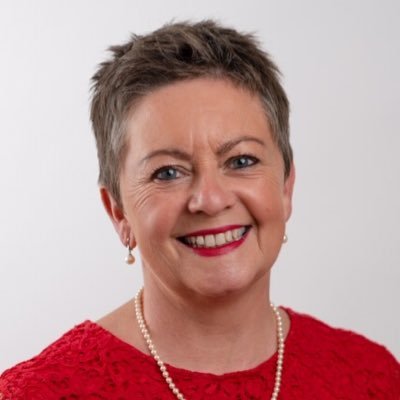
Judge holds hearing to decide whether Dr Usha Prasad unfair dismissal case can go ahead

Dr Usha Prasad

Dr Usha Prasad, the whistleblower cardiologist sacked by the Epsom and St Helier University Hospital Trust, was back at an employment tribunal yesterday to fight for a hearing that she had been unfairly dismissed.

The public hearing was delayed for nearly two hours because 400 pages of legal papers from the trust could not be immediately accessed to be read by the judge. So both sides spent three hours presenting oral evidence instead.

The successor trust, St George’s, Epsom and St Helier Hospital Group, is seeking to strike out her case saying a decision at a previous tribunal by Judge Hyams-Parish, which came down in favour of the trust over her claims of discrimination, victimisation, harassment and whistleblowing meant it should be the end of the matter.

Miss Rehana Azib, QC, for the trust argued that her dismissal was the consequence of the failure of her claims and there was no need for a further hearing.

To add to the confusion in the day Dr Prasad said a decision that the case should go ahead had already been taken in September 2022 – more than 18 months ago. . She said Judge Balogun had already rejected an attempt by the trust to strike out this further hearing and ordered that the case will be listed for a case management hearing for 2 hours and a separate full hearing listed for 3 days. “

She was told by the present judge that this ruling had been reconsidered by the judge. However it is extraordinary that Miss Azib excluded the letter saying the trust’s first strike out was unsuccessful from the trust’s bundle for the hearing. Dr Prasad had received no notice that this had been changed but yesterday’s hearing still went ahead.

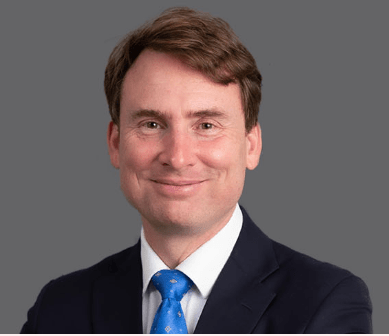
Rehana Azib KC: Pic credit: Keble College, Oxford

Miss Azib, KC from 2, Temple Gardens Chambers, based nearly all her entire case against Dr Prasad on Judge Tony Hyams-Parish’s judgement. She also tried to extricate Jacqueline Totterdell, group chief executive of the trust, from the case brought by Dr Prasad by arguing she was not chief executive at the time at the time of her dismissal. She has however continued to authorise lawyers to pursue Dr Prasad. There followed an argument that her post represented the main body of the trust. Ms Azib told the judge that to bring a case against her personally rather than the trust would cause her stress and be time consuming from her other duties.

I covered the Hyams- Parish judgement at the time. My blog on his judgement is here.

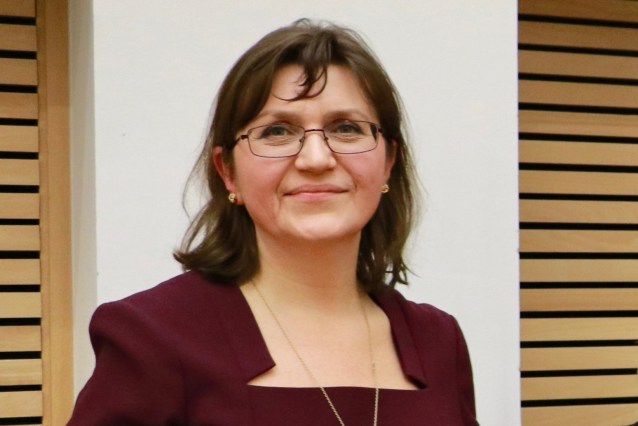
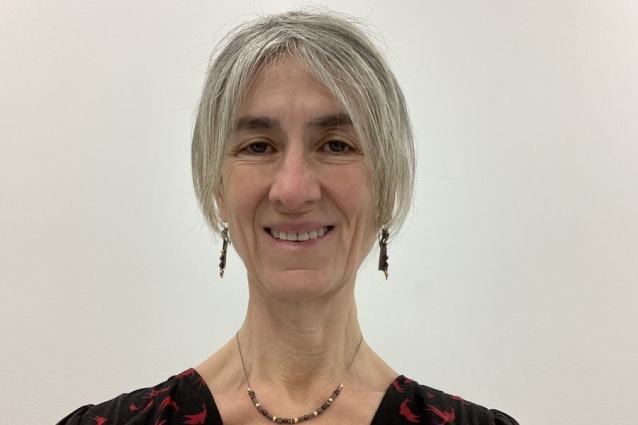
Judge Christina Morton

The most dramatic part of the hearing came when Dr Prasad, challenged by Miss Azib’s statement that none of actions by the trust were judged by Hyams-Parish to have been connected to her whistleblowing claims, produced a stream of examples.

This included an attempt by Dr. James Marsh, now group deputy group chief executive, to water down her whistleblowing report on the ” avoidable death ” of heart patient, Mr P, which the trust confirmed at the Hyams-Parish hearing had never been reported by Richard Bogle, head of cardiology to the coroner or the Care Quality Commission. Her refusal to do seemed to lead to her internal disciplinary hearing..

She pointed out that there was no independent expert at the hearing to examine the case against her, all the people were colleagues of Dr Marsh and his wife in both NHS and private practice. A list of what turned out to be vexatious cases of her failures sent to the General Medical Council by the trust was compiled by Dr Marsh’s close colleague. They were thrown out by the GMC who exonerated and revalidated her to work anywhere in the UK. Judge Hyams-Parish did not want to see their report.

The most telling example was an email from the then chief executive of the trust Daniel Elkeles, offering to abandon the internal disciplinary proceedings against her if she dropped the tribunal case against the trust which contained the whistleblowing claim. He would help to revalidate her so long as she left the trust.

She also pointed out that she was banned from any clinical duty and told to stay in the office for 28 months before the disciplinary hearing and her dismissal. Since she saw 2,000 cardiology patients a year, this meant that the NHS – which was also hit by the pandemic- was depriving thousands of patients seeing a consultant whom the GMC had judged was perfectly competent to do her job.

As you will see in my contemporary blog on the Hyams-Parish judgement I noticed the judged ignored the plight of Patient P and the evidence of the letter from the chief executive to her at the time

She also accused lawyers for the trust of witholding information and misleading previous court hearings – particularly not revealing that when she could not attend a hearing the text of a doctor’s letter explaining why. The respondent’s lawyer also told the judge that Dr Prasad hadn’t submitted ” any particulars of her claIm” over this case yet she had submitted them to the respondent last April. She also didn’t tell the judge Usha’s detriment case had been listed for an appeal.

The accusations led Miss Azib to remind the judge that serious allegations had been raised in ” an open hearing.”

I got the impression that the lawyer and the judge would have much preferred this hearing to have been held without the public and the press being present. It is a good example of why there ought to be more coverage of what happens at employment tribunals.. The judge is reserving judgement.

Facts surrounding the case

The trust has engaged and paid 33 lawyers to pursue Dr Prasad over the last six years at a cost of hundreds of thousands of pounds to the taxpayer.

Nearly 10,000 NHS cardiology patients in South London and Surrey have been deprived of being treated by Dr Prasad while she was restricted from doing any clinical work.

One-Time
Monthly
Yearly

Make a one-time donation

Make a monthly donation

Make a yearly donation

Choose an amount

£5.00
£10.00
£20.00
£5.00
£15.00
£100.00
£5.00
£15.00
£100.00

Or enter a custom amount

£

Your contribution is appreciated.

Your contribution is appreciated.

Your contribution is appreciated.

DonateDonate monthlyDonate yearly

Please donate to Westminster Confidential

£10.00
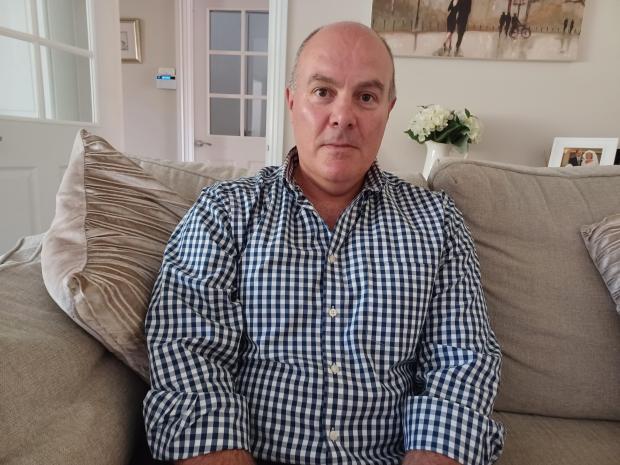
Why babies now could face brain damage at the health trust that sacked whistleblower obstetrician Mr Martyn Pitman

Dr Martyn Pitman

Thousands of followers of this website may remember last year’s nine blog coverage I gave to the employment tribunal over the sacking of whistleblower Mr Martyn Pitman at Hampshire Hospitals NHS Foundation Trust (HHFT). He lost the hearing. He was belittled and and repeatedly insulted  by the former head of chambers, Mark Sutton of Old Square Chambers, including calling him a ‘freelance agitator,’ only to later be forced to retract that slur. Sutton, who picked up a big share of the £650,000  taxpayer funded legal fees pay out to represent the trust, approached the ET by portraying Mr Pitman as something of a tyrant, an assessment clearly not shared by his previous colleagues, who actually worked with him, attending in numbers at the hearing, or indeed by his thousands of  social media supporters

 Mr Pitman was sacked because it was said his employment there was ” a present danger to patient safety ” by the former chief medical officer of the trust, Lara Alloway. It was also claimed that his relationship with the Trust’s senior management had ‘irretrievably broken down”. Yet it was he who had raised patient safety issues which was stomped on by non-clinical senior midwifery managers, despite identical concerns also being raised a few months later by several senior clinical  midwives.

Dr Lara Alloway now chief medical officer for Hampshire and the Isle of Wight Integrated Care Board

Well now a year on, following Mr Pitman’s dismissal, it is revealed that there is a ” present danger to patient safety ” in the maternity wards at the trust – a more than five fold increase in the number of babies delivered there with labour-related hypoxic brain injury (Hypoxic Ischaemic Encephalopathy: HIE) many of which may have been preventable.  According to the Trust’s latest on-line patient information approximately 5,700 babies are delivered across its 3 sites.

The trust had an extremely low rate of HIE until now


In the final year of Mr Pitman’s Consultant tenure at HHFT, prior to his formal dismissal, the HIE rate across the Trust was reported as  0.5 per 1000 deliveries – equivalent  to less than 3 babies per annum. In 2023, the year following his dismissal, the rate increased, in a previously unprecedented fashion, to 2.5 per 1000 deliveries, equivalent to 14 babies per annum.

Of course the trust dispute this – even though it was published in a very thorough article by Sirin Kale for Guardian Society. The full article is well worth a read and you can link to it here.

The trust communications department described the article as misleading. A statement said:

 “There are instances in Ms Kale’s reporting where we believe her reflection of the facts is misleading. This interpretation of the data fails to provide the reader with the wider context required to understand it. It therefore runs the risk of unreasonably undermining public confidence in a service which is safe and performing well. To avoid misleading the public we would strongly suggest that your article must explain that the rate of HIE in live births with Hampshire Hospitals is well within the normal limits.”

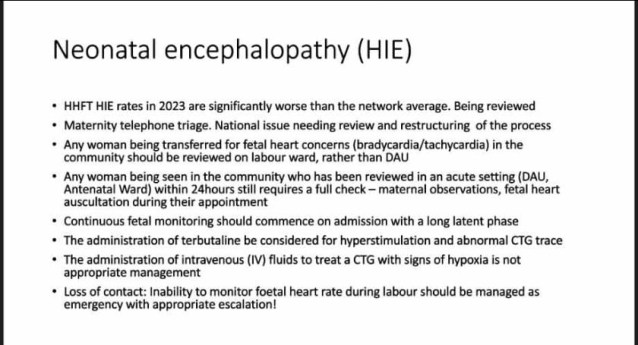
I might have believed them but for an internal power point presentation at a clinician led Neonatal Morbidity and Mortality meeting held at the trust in February. Reproduced below it says precisely the opposite to what the communications department is claiming – that cases of HIE are ” significantly worse than the network average”. It also proposes tough action to combat it. If people are to believe there is no problem and everything is safe – such action speaks volumes.

This particular issue at the trust was one of the problems raised by Mr Pitman in 2019 when he made his whistleblowing complaint in early 2019.

He told me:”  I had a specialist interest in fetal monitoring, CTG interpretation and labour management optimisation. Throughout my period of tenure I was responsible for cross-site staff teaching of fetal /CTG monitoring and had developed a regional reputation for my expertise in this area. For several consecutive years I had been praised for playing a significant role at RHCH in minimising the HIE rates down to commendably low levels well below the network and indeed national average for 2 consecutive years. For instance, we achieved the enviable statistic of not having a single poor maternity outcome attributed to CTG misinterpretation. This dramatic deterioration, in a critical maternity  outcome metric, that I was passionate about and had successfully devoted my focus and clinical attention to, to have occurred within the 12 months since my dismissal will certainly not have escaped the attention of  either the senior midwifery managers or the Trust’s senior management.”

Indeed significant events back in 2019, that led to Mr Pitman’s formal investigation and eventual dismissal included a a dispute between him and the midwifery managers about the dangers of sub-optimal fetal monitoring, including the potential pitfalls of assessing the baby’s heart rate using hand-held dopplers (intermittent auscultation) and confusing the baby’s heart rate with that of the mother.

He told me:” I was concerned that deteriorations in the standard of fetal monitoring and, particularly midwifery complacency in this regard in what were thought to be low-risk mothers was a developing concern and that if it was not addressed would lead to worse outcomes and, potentially increased baby injury (HIE) and death rates. This warning was completely and utterly ignored by the senior midwifery management. ” Such concerns have been highlighted repeatedly in other units across the UK, including the recent reviews undertaken by Donna Ockenden”.

What he predicted and was striving to prevent, by making practice recommendations, in the April 2019 Fetal Monitoring Guideline meeting has now happened. Instead of supporting him moves were made to silence him and to get him out of the way.

He said: “The very evening after this, unusually confrontational and adversarial, guideline meeting was when I was first ‘invited’ to a meeting which eventually developed into my formal disciplinary investigation. The senior midwifery managers had decided that my attempts to prevent their dangerous normalisation agenda had to be stopped

Two terrible baby births at Winchester hospital

Worse then happened, within just a week of this fateful meeting. As well as the tragic case raised in Sirin Kale’s article distressing case,  where a baby was deprived of oxygen throughout labour and delivery . This second baby was delivered within just hours of the case featured in Sirin Kale’s Guardian article. Mr Pitman was the Consultant on-call in the Winchester Maternity Unit when both these tragic cases were delivered but, as they were midwifery-led, as they were believed to be ‘low-risk,’ neither he nor the Obstetric team had been directly involved in their care, until the ‘crash-calls’ were put out.

He said: a ” supposedly entirely low-risk healthy baby, maintained under solely midwifery-led care, was born moribundly unwell from HIE and needed to be urgently transferred to Southampton Hospital for brain cooling. The Head of midwifery, my principal complainant, who had been in the guideline meeting would have come into work the following Monday, been informed of these 2 cases, that there were huge issue with the intrapartum monitoring of them both, realised that this put her in a challenged position and given my concerns and the practice changes that I had been recommending just the previous week. This appears to have prompted her to escalate her concerns about me into a formal complaint, rather than an issue that could and should have been addressed by mediation. The timeline of events, at this time, was very telling”

So where does leave the maternity services at Winchester and Basingstoke hospitals? The trust has been on a public relations drive inviting the local BBC TV station, BBC South, into the maternity wards BEFORE it published these worrying figures on babies delivered with HIE.  This was arranged and was broadcast less than a month before the concerning increased HIE rates were presented.

Here’s a video of the report:

BBC South Today broadcast on maternity services at Hampshire Hospitals NHS trust on 4th January this year chief executive Alex Whitfield tells viewers it is safe

Since then the trust has promised an internal , rather than , perhaps far more appropriate, independent external inquiry – rather the same philosophy as the Post Office used to say their Horizon computer project was sound when sub postmasters were being jailed for false accounting.

The most tragic outcome is that there are potentially parents in Hampshire who face a lifetime of worry worry and expense caring for children, who may have suffered avoidable labour-related hypoxic brain injuries. One also has to wonder what the level of medical negligence claims associated with these cases could, potentially, extend to? This could have been prevented if the trust was doing its job. Given the state of social care in this country this is a very serious state of affairs. You cannot say the trust were not warned by Dr Pitman. The then interim chief medical officer was Dr Nick Ward, a consultant paediatrician whose expertise is in paediatric nephrology.

So does the top management carry some blame? I put it to the communications department that Alex Whitfield, Lara Alloway ( now CMO at Hampshire and Isle of Wight Integrated Care Board), the midwifery management team, and Steve Erskine, chair of the trust board did. I got no comment on this but given what appears to be their complacent attitude to what is happening there I really wonder whether they do care about anything except the trust’s reputation.

On May 2nd one of the foremost experts on inquiries into maternity care Mr Bill Kirkup, has been invited to give a lecture at the trust. He has investigated baby deaths in the Morecambe Bay Trust and in the East Kent Trust. I wonder what my former colleague on the Gosport War Memorial Hospital independent panel will have to say about the Hampshire Hospitals NHS Foundation Trust.

One-Time
Monthly
Yearly

Make a one-time donation

Make a monthly donation

Make a yearly donation

Choose an amount

£5.00
£10.00
£20.00
£5.00
£15.00
£100.00
£5.00
£15.00
£100.00

Or enter a custom amount

£

Your contribution is appreciated.

Your contribution is appreciated.

Your contribution is appreciated.

DonateDonate monthlyDonate yearly

Please donate to Westminster Confidential

£10.00
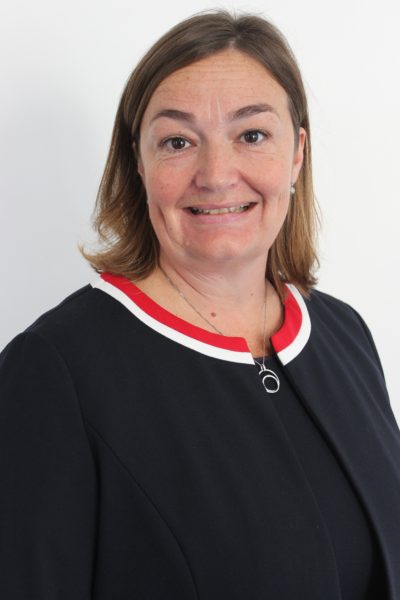
Guest blog: Time to regulate the all too powerful NHS Trust managers

They act as ” judge, jury and executioner” when whistleblowers raise patient safety issues

By David Ward, a former consultant cardiologist at St George’s Hospital, Tooting, London

All staff working in the healthcare professions should be regulated for very obvious reasons. Most of them are but NHS Trust managers (non-medical) are not. Why? Given that managers have enormous and disproportionate powers to initiate investigation, (enlisting private investigators is not unknown) restrict activities, refer to disciplinary hearings and regulatory bodies such as the GMC [ General Medical Council ] and the CQC, [Care Quality Commission] suspend and dismiss healthcare staff – most notably well-meaning, hardworking doctors for raising concerns about patient safety – shouldn’t managers should be regulated just like other NHS workers?

Doctors are obliged to raise concerns if they see problems which may affect patient safety (Duty of Candour, Reg 20 HSC Act 2008 and 2014) pejoratively called “whistleblowing”. It is a matter of patient safety. We know that the reactions by Trust managements to doctors raising concerns can destroy careers and family lives. Suicides of staff under persecution are not unknown. A few courageous people may resort to the corrupt Employment Tribunal process after dismissal. Trusts spend £millions (yes, really!) to defend their untenable self-appointed positions as “judge, jury and executioner”. Where does this money come from? You and me, the taxpayer. Does the victim (whistleblower) have equal access to such resources? Of course not! In fact, they are often sent the bill (aka a cost threat, a merciless device not worthy of a civilised society and in this context used to force the claimant to concede the case) for the huge legal expenses of the Trust’s lawyers. (I’ve seen a well-known law firms’ cost sheet, it’s mind-blowing).

Who initiates the actions that can result in these disastrous consequences? Yes, the Trust managers; sorry, but it’s true. (OK, sometimes medical managers are complicit as we have seen in recent dismissals – shame on them). This process must be taken away from management and regulation could incorporate this. As many recent cases illustrate, PIDA (1998) forces a Trust to deny that “whistleblowing” had any part of a dismissal despite the prior narrative being clearly laden with raising patient safety concerns. It urgently requires updating.

No winners in this egregious process

There are no winners during these egregious processes. Trusts are deprived of money that would be better spent on care. Doctors and nurses who have families to support but may be left without employment even in times of severe need such as the recent pandemic, their careers and family lives in ruins. Mental problems are not uncommon, why wouldn’t they be? Doctors who are required to cover for suspended and dismissed colleagues have to put in more hours. Dismissed doctors often find it difficult to get work in other Trusts. I know of cases where the management at the index Trust interferes with (including preventing) the appointment of a whistleblowing doctor elsewhere.

Managers (and their acolytes) should be banned from acting as “judge, jury and executioner”*. That’s not in keeping with open and fair justice, is it? (Human Rights Act,1998, Article 6). Stop disciplinaries just initiate prompt investigation (thereby reducing risk of further harms) of the concerns, analogous to the inquisitorial French system of discovering the facts – not the damaging adversarial approach prevalent at present in these situations.

Stop trusts wasting £millions on law firms

No wasting £millions on law firms and costly (very costly) barristers, no claimants (victims) forced to sell the family house, move abroad, give up the profession, no months of waiting for court hearings (often many, recurring over years – I know of at least 2 cases of dismissed doctors whose cases in the Employment Tribunal system have dragged on for a decade or more), less mental illness.

Pastoral care for staff who raise concerns? That would be a constructive, cost effective and beneficial alternative approach, wouldn’t it?

Just one last thing: in any given Trust does anyone remember the patient safety concerns that triggered all the iniquitous nonsensical sequence of particular events, what they were about and whether steps have been taken to rectify the deficiencies which led to the concerns in the first place (which may have included avoidable deaths)? Have they been documented other than by the person who initially raised the concerns? Were they formally registered? I doubt it. They are usually buried in a fog of emails and shrouded by a cloud of managerial vengeance directed toward the whistleblower. Perhaps some of the simple and inexpensive ideas mentioned here could be explored.

Does anyone really think that NHS managers should be exempt from regulation?

There is of course one simple solution: ban the suspension and dismissal by Trusts of medical staff who raise patient safety concerns in good faith. They are doing society a favour. *The Political State of Great Britain, for October 1717, Vol.XIV:398]

One-Time
Monthly
Yearly

Make a one-time donation

Make a monthly donation

Make a yearly donation

Choose an amount

£5.00
£10.00
£20.00
£5.00
£15.00
£100.00
£5.00
£15.00
£100.00

Or enter a custom amount

£

Your contribution is appreciated.

Your contribution is appreciated.

Your contribution is appreciated.

DonateDonate monthlyDonate yearly

Please donate to Westminster Confidential

£10.00
Whistleblower Dr Chris Day’s appeal: Has Judge Andrew Burns KC ruling made it impossible for him to get open justice?

Andrew Burns KC

UPDATE: In a further twist in this long saga, High Court judge Dame Jennifer Eady, President of the Employment Appeal Tribunal initially took a decision not to read Dr Day’s letter complaining about the injustices in the procedure of his tribunal case against Lewisham and Greenwich NHS Health Trust . Now it has been decided that another judge will rule whether she should read the letter. Such a move has been opposed by the trust, who are represented by Old Square Chambers.

Superficially the ruling by Deputy High Court judge Andrew Burns looked like a victory for the long campaigning whistleblower Dr Chris Day to get a fair hearing at his forthcoming Employment Appeal Tribunal. He was granted an appeal on six of the ten grounds presented to the hearing and he was publicly commended by the judge for restoring the employment rights of 54,000 doctors which had been taken away in a sleight of hand by the now merged Health Education England.

But a closer look at the judgement gives a rather different picture. Instead of allowing a full appeal of employment judge Ann Martin’s flawed hearing he introduced caveats and blocked the re-examining of crucial issues. These include examining whether MPs and the press have been misled by the NHS and their lawyers, whether deliberate concealment has occurred and such startling behaviour as a Lewisham and Greenwich health trust communications director destroying mid hearing 90,000 emails that could have helped Dr Day’s defence and subsequently declining to appear as a witness.. It also allowed the health trust’s lawyers to to traduce Dr Day’s public reputation and misrepresent his motives without fear of being dragged before the libel courts or even being properly cross examined about this at the tribunal.

Three Wise Monkeys – a rather good print by Swedish musician and artist Andreas Magnusson see https://printler.com/en/poster/167372/

In short Andrew Burns judgement is a ruling equivalent to the infamous “three wise monkeys” carving at a Japanese shrine. He ” sees no evil, he hears no evil and speaks no evil” at that flawed tribunal. And he has been given by Dr Day a chance to review his findings to take account of these omissions.

Dr Day’s points requesting a review are here.

To put it simply he is blind to Ann Martin’s mishandling of that tribunal, he is deaf to Dr Day’s arguments to put this right, and he is silent about the outrageous behaviour of the trust’s employees and their lawyers, particularly Ben Cooper, KC on traducing Dr Day’s reputation and it being broadcast to MPs, the public and other trusts.

As Dr Day puts in an email accompanying his crowd justice website ” which goes into all the legal details “The Judge has allowed me to have an appeal but taken all my weapons and has blocked key issues being explored.”

Ben Cooper KC

The language used against Dr Day by Old Square chambers lawyer Ben Cooper would be defamatory outside a court room. He is described as ” having an obsessive belief in his victimhood”, accused of an “elaborate rewriting of history by him to fit in with his narrative” and condemned his evidence as ” dishonest and underhand.”

When pressed on this by Dr Day’s barrister Andrew Allen KC at the June 2022 Mr Cooper conceded he had no example of what he meant from Dr Day’s witness statement and Mr Allen was then prevented from cross examining Mr Cooper on Dr Day’s supplementary statement rebutting Mr Cooper’s insults and allegations.

My Statement on Ben Cooper KC – DrChrisDay

To make matters worse Ben Cooper’s attack on Dr Day’s character has been picked up by a lawyer defending lawyers Hill Dickinson against Dr Day in another case. Dijen Basu, KC from Sergeants Inn Chambers, in a skeleton argument in a case still to be heard said of Dr Day ” The diagnosis of whistleblowitis is a pithy way of describing a man who had developed an obsessive belief in his own victimhood to the point of being prepared to dishonest and underhand in pursuit of what he saw as the virtue of his cause as Mr Cooper described him.”

The irony of this attack is the case revolves around Hill Dickinson depriving 54,000 junior doctors of their whistleblowing rights whilst not revealing key commissioning contracts  in disclosure the firm were paid to draft. Now who was really being dishonest and underhand!

As Dr Day purchased the transcript of Ann Martin’s tribunal he has been able to point out that cross examination of Ben Cooper’s claims was halted by the judge but she went on to allude to Ben Cooper’s argument against Dr Day in her public judgement. Dr Day argued that this a breach of court procedure but the judge did not agree.

Judge Andrew Burns did agree he had made a mistake in describing Dr Day’s withdrawal in a previous hearing in this long dispute as being caused by duress rather than misrepresentation.. This was when his lawyer Chris Milson, without his instructions, tried to negotiate a settlement which included a confidentiality clause. Dr Day was able to get Judge Burns to accept that his case was not one of duress but one of serious allegations of misrepresentation from a number of lawyers whose accounts of the infamous settlement of the Day Case in 2018 do not add up.

Dr Day has now written to Judge Dame Jennifer Eady, President of the Employment Appeal Tribunals, asking her to intervene.

Dr Chris Day

Letter to Dame Eady President of the Employment Appeal Tribunal – DrChrisDay

He writes: “It may come as no surprise that I and large numbers of doctors feel deeply let down by the way the EAT has handled my case over the last 10 years. I believe its decisions have not been logical and have ignored evidence, pleadings and important appeal points. I believe the most likely explanation for
this is the EAT’s failure to manage properly the conflicts of interests and human factors that have come into play when Judges have dealt with certain issues in my case affecting their legal colleagues.”

He goes on: “The destruction, concealment and ignoring of large amounts of evidence at the June 2022 ET hearing of my case and the obstruction of 2 of our proposed cross examinations was widely reported and shocked people. Many were expecting these obvious issues to be dealt with decisively by the appeal tribunal. Instead, I have had to get into an argument with the EAT about whether such extraordinary conduct is enough for me to advance procedural unfairness as a ground of appeal”

He adds: “I am seriously considering whether I can proceed with an appeal in this court whilst the EAT refuses to answer” these points.

A check on social media of Judge Burns X account by 54,000 doctors, a group who campaign for the whistleblowing rights of junior doctors reveals how closely 3 of the lawyers involved on both sides of the Day settlement are connected socially.

Judge Andrew Burns, a former lawyer at Devereux follows and is followed by Chris Milsom – Dr Day’s lawyer in a previous 2018 case that settled ; he follows Old Square Chambers, which has a leading role in pursuing whistleblowers; Martin Hamilton, managing partner, Capsticks who Dr Day alleges misled MPs and the Board of Lewisham and Greenwich about his case and settlement. Other followers include Nadia Motraghi, KC, another Old Square Chambers that was against Dr Day, who also pursued Dr Usha Prasad, a whistleblower cardiologist at Georges and Epsom St Helier NHS trust.

Dame Jennifer Eady

Finally it turns out that judge Dame Jennifer Eady – whom Dr Day is relying on to adjudicate about this – is a former lawyer at Old Square Chambers from 1990 to 2013. During her time at Old Square Chambers, for 13 years from 2000, Ben Cooper KC, and from 2004 Nadia Motraghi were colleagues. It would be amazing if they don’t know each other very well as they practised in the same field.

So how will Dr Day get a fair hearing when three of the lawyers he is accusing of misleading on the settlement are so closely linked to the judge and the final arbiter is their former colleague now in an all powerful position to control the entire employment appeal tribunal system.

My final point from covering a number of whistleblower tribunals is that I am disgusted at the way very senior professional lawyers seem to enjoy denigrating, insulting, and belittling the careers of eminent doctors whose main concerns are to protect the public from bad medical practices which endanger lives.

One-Time
Monthly
Yearly

Make a one-time donation

Make a monthly donation

Make a yearly donation

Choose an amount

£5.00
£10.00
£20.00
£5.00
£15.00
£100.00
£5.00
£15.00
£100.00

Or enter a custom amount

£

Your contribution is appreciated.

Your contribution is appreciated.

Your contribution is appreciated.

DonateDonate monthlyDonate yearly


Please donate to Westminster Confidential

£10.00

How Rishi Sunak caused chaos at the Parliamentary Ombudsman’s office by blocking a smooth transition to Rob Behren’s successor

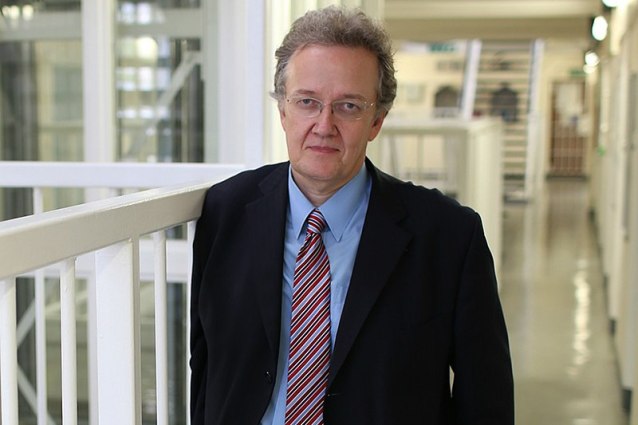
Nick Hardwick pic credit: Wikipedia

Today’s scoop in the Financial Times by the paper’s Whitehall Editor, Lucy Fisher, has finally revealed why it has taken nearly three months for the Parliamentary Ombudsman’s board not to be able to appoint a permanent successor to Rob Behrens, the outgoing Ombudsman, who has just retired.

It appeared Nick Hardwick, was the Parliamentary Ombudsman Board’s choice. Hardwick is a former chair of the Parole Board who resigned after judges overturned a board decision to give parole to John Worboys, a notorious convicted rapist who attacked 12 women while working as a taxi driver. The proposal to release Worboys on parole was a cause celebre for the tabloids at the time. Rishi Sunak, who has to approve the appointment, appeared to have blocked it by sitting on a decision for nearly three months.

William Wragg MP

William Wragg, the chair of the Commons Public Administration and Constitutional Affairs Committee, (PACAC)blew the whistle in Parliament on Monday night when he said, without naming Nick Hardwick, that his appointment had “seemingly been declined by Number 10.”

He also criticised the government for ” somewhat irregular behaviour ” during the appointment process. This is not surprising as William Wragg was on the panel who approved Nick Hardwick’s appointment.

This week PACAC released papers that appeared to give all the details of the recruitment process and a letter from Sir Alex Allan, Boris Johnson’s former independent adviser on ministerial interests, who resigned his job after Johnson refused to sack Priti Patel, then home secretary, after he found she had been bullying and swearing at her senior civil servants. He is now a senior non executive member of the Parliamentary Ombudsman board.

The papers do show that Rishi Sunak took a great interest in the appointment. In an earlier letter to William Wragg approving a salary of between £171,500 and £189,900 for the new Ombudsman plus a choice of a civil service or judicial pension, he wrote: “I would be grateful if the House could continue to work closely with the Government as the campaign to appoint the new PHSO progresses.”

The recruitment process does appear to have attracted a wide range of people. It shows that initially 52 people applied for the job. There were 31 male applicants, 20 female, and one who preferred not to say. Some 30 were white British, 5 Indian, 4 white non British,2 African, 2 Other mixed,1 Asian and White,1 Black African and White,1 Caribbean,1 Irish,1 Pakistani and 1 Ukrainian. Three preferred not to say.

Some 44 were heterosexual and two were gay and six preferred not to say or didn’t answer. Four people were disabled.

This was whittled down to 12 people – 7 males, 4 females and a person who preferred not to disclose a sex. Ten of the last 12 were White British and 1 white non British and one who preferred not to say. Nine of the people were heterosexual and one was gay and others preferred not to say.

The panel who interviewed them was chaired by Philippa Helme, a 63 year old independent panelist and a former principal clerk at the table office in the House of Commons. The other members are Shona Dunn (Second Permanent Secretary, Department of Health and Social Care) to cover the Ombudsman’s NHS role; Colleen Harris(independent panellist and appointed by the King to the King Charles III Charitable Foundation; Peter Tyndall (formerly President of the International Ombudsman Institute) and William Wragg MP.

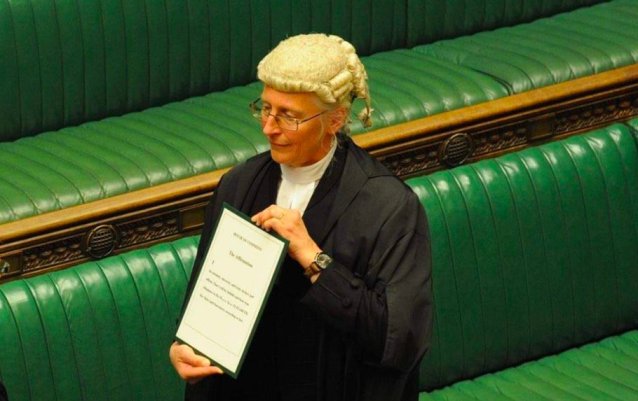
Philippa Helme -pic credit: Houses of Parliament

All went smoothly and on January 8 Nick Hardwick, aged 66, who is now Professor of Criminal Justice at Royal Holloway College was chosen. Then the problems began when the appointment arrived on Rishi Sunak’s desk. There was silence. What is missing from public disclosure is a desperate letter written by Sir Alex Allan on January 29 which revealed that the whole process was in jeopardy and they might have to appoint an ” interim Ombudsman ” or else the PHSO could not function ( see my blog here ) . It was then that Rebecca Hilsenrath, a recently appointed chief executive at PHSO, came into the frame. The moment the PHSO and the committee knew I had seen the letter on the PACAC website and was going to publish, it mysteriously disappeared from public view. I was told it had been ” prematurely published.”. Now I know this wasn’t true because the letter has not resurfaced in the documents released this week.

As time went on and by March there was no endorsement from Rishi Sunak, things got more and more desperate. So Sir Alex Allan and William Wragg hatched a plan to appoint Rebecca Hilsenrath as an ” acting Ombudsman” so the office could continue to function near normally. This involved getting King Charles III to present a motion to Parliament proposing her appointment so MPs could approve it on the nod. This happened on Monday.

Rebecca Hilsenrath

Now there is glowing description of Rebecca Hilsenrath’s qualities and experience in the papers released this week.

But once again there are some remarkable omissions about her career which have been swept under the carpet. When she was chief executive of the Equality and Human rights Commission, she carried out a campaign to sack black and disabled employees who happened to be strong trade unionists – a remarkable feat for a body that should champion diversity.

Her country cottage in north Wales

Also she was exposed in Times newspaper for a gross breach of the lockdown rules at the height of the pandemic when she drove from north London to north Wales to spend Christmas with her family of five children. She tried to say her holiday cottage was her main home – staying there for months. She was unmasked by a diligent local councillor who noted that unlike Michael Fabricant MP and Andy Street, the West Midlands Tory mayor, who never set foot in their nearby country cottages, was flagrantly breaching the lockdown.

This caused her trouble at the EHRC but she was thrown a lifeline when she got a job at the Parliamentary Ombudsman’s Office then run by Rob Behrens. She has now achieved a remarkable promotion courtesy of Rishi Sunak’s apparent blocking of Nick Hardwick for the top job.

All in all this is a sorry tale but to my mind the main point is that Rishi Sunak has usurped his powers to try and control a Parliamentary body that should be totally independent of government. If Nick Hardwick is not appointed after what looks like a fair process I shall not trust the new Ombudsman to be really independent but just a creature of a failing and interfering Prime Minister who is deservedly unpopular with the electorate today.

One-Time
Monthly
Yearly

Make a one-time donation

Make a monthly donation

Make a yearly donation

Choose an amount

£5.00
£10.00
£20.00
£5.00
£15.00
£100.00
£5.00
£15.00
£100.00

Or enter a custom amount

£

Your contribution is appreciated.

Your contribution is appreciated.

Your contribution is appreciated.

DonateDonate monthlyDonate yearly


Please donate to Westminster Confidential

£10.00
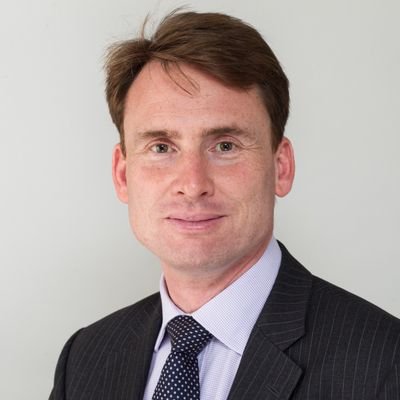

Whistleblower Dr Chris Day wins right to appeal in his ten year patient safety battle against Lewisham and Greenwich NHS Trust

Dr Chris Day

Whistleblower Dr Chris Day won the right to appeal today when a a Deputy High Court Judge Andrew Burns of the Employment Appeal Tribunal granted permission to appeal the November 2022 decision of the London South Employment Tribunal on six out of ten grounds at a hearing in London.

My blog on this judgement is here: Tribunal of the Absurd: My Verdict on the Dr Chris Day whistleblower case | Westminster Confidential (davidhencke.com)

The saga which has now being going on for almost ten years began when Dr Day  raised patient safety issues in intensive care unit at Woolwich Hospital in London. The Judge said today this was of the “utmost seriousness” and were linked to two avoidable deaths but their status as reasonable beliefs were contested by the NHS for 4 years using public money.

Deputy High Court judge Andrew Burns

In a series of twists and turns at various tribunals investigating his claims Dr Day has been vilified by the trust not only in court but in a press release sent out by the trust and correspondence with four neighbouring trust chief executives and the head of NHS England, Dr Amanda Pritchard and local MPs.

This specific hearing followed a judgement in favour of the trust by employment judge Anne Martin at a hearing which revealed that David Cocke, a director of communications at the trust, who was due to be a witness but never turned up, destroyed 90,000 emails overnight during the hearing. A huge amount of evidence and correspondence that should have been released to Dr Day was suddenly discovered. The new evidence showed that the trust’s chief executive, Ben Travis, had misled the tribunal when he said that a board meeting which discussed Dr Day’s case did not exist and that he had not informed any other chief executive about the case other than the documents that were eventually disclosed to the court..

The hearing went on for an extra week because of all these disclosures and the British Medical Association, who are representing Dr Day, asked for their costs to be repaid yesterday because of the additional expense at the hearing. The judge agreed that a separate appeal to recover the  BMA costs should also be granted permission to be heard.

Instead of a decision to allow an appeal this hearing was held today to decide whether there was an ” arguable case ” for an appeal.

Dr Chris Day won the right to appeal that some of the findings of the judgement were perverse, that the judgement failed to draw any inferences from the destruction of 90,000 emails and the failure to provide documents that would have helped Dr Day’s case. This in particular followed the disclosure in documents that under oath the chief executive, Ben Travis gave an untrue account about a board meeting and had hidden he had contacted other trust chief executives about Dr Day.

The judge seemed exercised that the trust despite the Care Quality Commission expressing concern about a press release which attacked Dr Day decided to do nothing about it and the judgement appeared to ignore this.

Andrew Allen KC

The judge also allowed the right of appeal for Dr Day about the way he had been treated as an employee and how events had unfolded at the trust.

What was not allowed was the right of Andrew Allen, the BMA’s funded lawyer, to cross examine the trust’s lawyer, Ben Cooper, about remarks he had made about Dr Day during the hearing. some of which he was forced to concede were not accurate. Mr Cooper was rescued By Judge Anne Martin from having to respond to Dr Day’s supplementary statement on this point and was further rescued by the EAT today. Coincidently today Mr Cooper was representing the retail giant Asda in a case next door to today’s hearing.

My Statement on Ben Cooper KC – DrChrisDay

 The Judge also blocked a ground of appeal relating to factual findings being made on whether MPs and the Press has been misled on Dr Day’s protected disclosures. Also blocked was Dr Day’s and his legal team’s clear request for a formal finding on whether deliberate concealment had occurred as part of Dr Day’s protected disclosures. It was made clear to the Judge these points were what the case was about.

Ben Cooper QC

Despite this the decision of a senior judge does call into question the judgement made by Anne Martin who it is now arguable made some poor calls -particularly avoiding the issue of the destruction of emails and withholding documents that should have been disclosed to Dr Day’s lawyers.

The judge also paid Dr Day a compliment saying by raising the dangers for patient safety caused by staff shortages in 2014 he was ” way ahead of his time.” This might suggest that judiciary is becoming increasingly aware about the state of the NHS and its effect on patient safety. Perhaps judges are seeing too many scandals reported in NHS trusts.

One-Time
Monthly
Yearly

Make a one-time donation

Make a monthly donation

Make a yearly donation

Choose an amount

£5.00
£10.00
£20.00
£5.00
£15.00
£100.00
£5.00
£15.00
£100.00

Or enter a custom amount

£

Your contribution is appreciated.

Your contribution is appreciated.

Your contribution is appreciated.

DonateDonate monthlyDonate yearly

Please donate to Westminster Confidential

£10.00

Exclusive:Rishi Sunak delays appointment of new Parliamentary Ombudsman and throws the organisation into crisis

Sir Alex Allan, board member of the Parliamentary and Health Service Ombudsman. Pic credit: BBC

Email from Sir Alex Allan revealing problem removed from Parliamentary website after I made a press inquiry

Parliament and the Health Service will not have a new permanent Ombudsman from April because the Prime Minister has delayed approving a new replacement who anyway cannot start work at the office because he or she has to give notice to leave their present job.

Details of the crisis at the office are revealed in an email sent on January 29 from Sir Alex Allan, a senior non executive member of the board of the Ombudsman’s office, to William Wragg, Tory chair of the Commons Public Administration and Constitutional Affairs Committee (PACAC).

Sir Alex is a former high flying civil servant who chaired the Joint Intelligence Committee, and was the Prime Minister’s independent adviser on ministerial standards until 2020 when he resigned after Boris Johnson refused to accept his report on Priti Patel, the former home secretary, concluding that her behaviour was bullying.

The email pleads with William Wragg to contact Downing Street to resolve the problem as a matter of urgency.

His email warns:

“As a corporation sole, the organisation cannot operate without an Ombudsman in post. Any delay to the appointment puts the organisation at considerable risk. In particular because key casework decisions could not be taken it puts at risk all of the work to reduce the queue and improve service to complainants. Clarity of the timeline for both the permanent and interim Ombudsman
appointments is therefore pressing.”

A pre-appointment hearing - part of the normal appointment process - had been pencilled in by PACAC to quiz the new Ombudsman but that has been pit back and there is no date for a future hearing. The page announcing the future hearing on the website is now blank.

He goes on: “”I am pleased that the Panel, led by Philippa Helme, has identified a preferred candidate but I am concerned about the apparent delays since then. We have yet to receive confirmation that the preferred candidate has been agreed by the Prime Minister. “

Rebecca Hilsenrath, chief executive at the PHSO

Sir Alex says the board’s preferred solution is to appoint an interim Ombudsman and suggests Rebecca Hilsenrath, the current chief executive who moved there from the Equality and Human Rights Commission, would be the ideal candidate.

But Whitehall has not even approved this. He writes: “We have yet to receive confirmation of this, despite the urgency, which is making it difficult for the organisation to properly plan for leadership change.”

The crisis facing the Ombudsman’s Office raises a whole of questions which I tried to put to them.

This includes questions like whether Rebecca Hilsenrath, if appointed as an interim, will be able to announce case decisions affecting complaints about hospitals and the NHS, or will they have to wait until they have a permanent appointment?

From Sir Alex’s letter it is also clear if neither people are approved by Downing Street and the Cabinet Office, the office would cease to function altogether until this was sorted out.

The impasse could also affect the timing of the publication of the final report by the outgoing Ombudsman, Rob Behrens, on maladministration in 50s women’s delayed pensions. WASPI have been waiting years for its publication and have seen the draft report which has already been leaked on this website. See the blog here.

A PHSO spokesperson said:

“The process to appoint a new Ombudsman is ongoing. We are in discussions about interim arrangements should they be needed. Our important service for the public continues.”

A spokesperson for PACAC said the committee could not comment but the original pre appointment hearing had been scheduled for last month but because they had not had confirmation from the Cabinet Office that the government had approved the appointment no date was fixed. The email should not have published on their website which is why it was taken down. This suggests that Rishi Sunak has been delaying a decision to approve the appointment for weeks.

For those interested the text of the email is published below:

From the Senior Non-Executive, Sir Alex Allan KCB
Sent by Email Only: pacac@parliament.uk
29 January 2024
Dear Mr Wragg,
I am writing to convey my concerns about the slippage in the timetable to appoint a new
Parliamentary and Health Service Ombudsman (PHSO) and to ask for your support, as Chair of the
Public Administration and Constitutional Affairs Committee, in raising these concerns with No 10.
I am pleased that the Panel, led by Philippa Helme, has identified a preferred candidate but I am
concerned about the apparent delays since then. We have yet to receive confirmation that the
preferred candidate has been agreed by the Prime Minister. That meant that the planned preappointment scrutiny hearing had to be cancelled and has not been refixed.
I am aware that, due to the preferred candidate’s notice period, there will be a need to appoint an
interim Ombudsman and that the view remains that this should be Rebecca Hilsenrath, Chief
Executive Officer at PHSO. We have yet to receive confirmation of this, despite the urgency, which
is making it difficult for the organisation to properly plan for leadership change.
As a corporation sole, the organisation cannot operate without an Ombudsman in post. Any delay to
the appointment puts the organisation at considerable risk. In particular because key casework
decisions could not be taken it puts at risk all of the work to reduce the queue and improve service
to complainants. Clarity of the timeline for both the permanent and interim Ombudsman appointments is
therefore pressing,

I have written to Baroness Neville-Rolfe to convey these concerns and I would be grateful if you
would consider raising them with the Prime Minister’s office.
Yours sincerely,
Sir Alex Allan

Senior Non-Executive Director

One-Time
Monthly
Yearly

Make a one-time donation

Make a monthly donation

Make a yearly donation

Choose an amount

£5.00
£10.00
£20.00
£5.00
£15.00
£100.00
£5.00
£15.00
£100.00

Or enter a custom amount

£

Your contribution is appreciated.

Your contribution is appreciated.

Your contribution is appreciated.

DonateDonate monthlyDonate yearly
One-Time
Monthly
Yearly

Make a one-time donation

Make a monthly donation

Make a yearly donation

Choose an amount

£5.00
£10.00
£20.00
£5.00
£15.00
£100.00
£5.00
£15.00
£100.00

Or enter a custom amount

£

Your contribution is appreciated.

Your contribution is appreciated.

Your contribution is appreciated.

DonateDonate monthlyDonate yearly

Please donate to Westminster Confidential

£10.00

How the toxic management of a health trust and law firm Capsticks got rid of a senior nurse whistleblower

Thurdy Campbell

A former senior nurse at Queen Elizabeth Hospital, Woolwich has come forward with a fresh tale of the toxic management at the Lewisham and Greenwich NHS Trust and their treatment of whistleblowers in the wake of the tribunal verdict involving staff nurse Francisca Holmes. Francisca lost her case against the trust management over her treatment but the judge ruled she had genuine whistleblowing concerns when she was told of a patient found dead in Ward 22.

This is the same health trust still involved in a ten year battle with Dr Chris Day,  a junior doctor, who in 2014 brought a still on going case on two ” avoidable deaths” in their intensive care unit. It is the same trust where a senior communications director deliberately destroyed 90,000 emails that could have been used in Dr Day’s defence during a tribunal hearing and escaped censure from the presiding judge.

Thurdy Campbell, a black senior nurse of Jamaican nationality, had worked for 22 years at the hospital as a senior sister in their accident and emergency department and manager of combined wards 22 and 23. She was dismissed on 17 May 2022.

Her grievance letter claims: “I was subjected to the following: work place mobbing, severe episodes of
harassment and discriminative treatments, miscarriage of justice , coercive control, defamation of character, endangered working environment , abuse of power of position for personal gain and recrimination after making a series of protected acts and qualifying disclosures to NMC [Nursing and Midwifery Council]25 May 2021.

Senior party members from the Lewisham and Greenwich NHS Trust Kelly Lewis-Towler, director of operations for acute and emergency medicine; Meera Nair ,director of people and board member, Victoria Tyler ,head of employee relations; HR Team and Investigation Managers colluded in wrongdoing by protecting the perpetrators and subjected me to series of detriments.”

Some of the managers she accuses appear in the same case as Francisca Holmes such as line manager Rodney Katandika and Ann Marie Coiley, the director of nursing.

Rodney Katandika

Matters came to a head when she was manager of the new combined Ward 22 and 23 – the ward where Francisca Holmes was told that an elderly patient was found dead. She raised the issue of patient safety but had no serious response. Six months after this incident Thurdy sent a further email saying “Clinical concerns relating to issues affecting patient’s safety, staffing, staff well-being and the working environment of Ward 22” escalating this to senior line management. Straight after this the trust launched a disciplinary hearing against her leading eventually to her dismissal the following May.

Kelly LewisTowler director of operations for acute and emergency medicine

She was certainly a thorn in the side of senior management. An internal email from Kelly Lewis-Towler to other senior managers, sent on 28 July 2021 accuses her of intimidation and claims senior staff were ill with workplace stress, declining to return from holidays, and claiming she cannot adequately support them and is facing ” a mass exit of staff”. All because she raised patient safety issues. She turns this on its head by saying patient safety is at risk because of the behaviour of Thurdy.

It is no wonder that during Francisca Holmes’ tribunal the trust did not produce her as a witness, even though she was well placed to comment on the situation since she was ward manager where the patient death happened because it would have revealed her warning of patient safety and provided evidence to the judge of bullying of Francisca by other senior staff.

Capsticks role in the trust

Thurdy’s grievance letter also exposes another worrying feature. Not only does Capsticks have a role as the trust’s lawyer to refute Thurdy’s claims at the employment tribunal but they have a major investigating role inside the trust for handling claims and disputes. So the firm has advance notice of any trouble coming managment’s way from staff and can intervene to help refute it and be in poll position should the person takes the trust to a tribunal. The firm are basically judge and jury in whistleblowing cases at Greenwich and Lewisham NHS trust.

Queen Elizabeth Hospital, Woolwich

Worse than that the grievance letter reveals that Capsticks attempted to force Thurdy to sign a non disclosure agreement – not as part of a normal procedure to get a settlement – but while the firm were involved in the internal investigation. Fortunately she resisted or otherwise you would be banned from reading about this case.

Thurdy lost the first round of employment tribunal cases and is awaiting the result of an appeal.

Her dismissal also nearly led to her being evicted from her home. She now has got a new job at less pay than in the NHS but in a much better enviornment.

My final point is that given the current state of the NHS it can ill afford to lose experienced nurses and doctors by maligning them in whistleblowing cases – like Thurdy and Francisca – and Martyn Pitman, the popular and competent obstetrician in Hampshire and Dr David Drew at Morecambe Bay. That’s why the treatment of whistleblowers needs urgent reform.

One-Time
Monthly
Yearly

Make a one-time donation

Make a monthly donation

Make a yearly donation

Choose an amount

£5.00
£10.00
£20.00
£5.00
£15.00
£100.00
£5.00
£15.00
£100.00

Or enter a custom amount

£

Your contribution is appreciated.

Your contribution is appreciated.

Your contribution is appreciated.

DonateDonate monthlyDonate yearly

Please donate to westminster Confidential

£10.00


I

How the St Georges, St Helier and Epsom Hospital Group fixed the dismissal of whistleblower cardiologist Dr Usha Prasad

St Helier Hospital

After my blog on the double standards of the Epsom and St Helier University Hospital Trust over its treatment of whistleblowers which included references to Dr Usha Prasad, I received an email from the communications team of the hospital group.

According to the team I had got everything wrong. The whistleblowing case had absolutely nothing to do with her dismissal. They said: ” It is not correct to say Ms Usha Prasad was dismissed for raising patient safety concerns. A disciplinary panel concluded that she should be dismissed for competency grounds, concerns around her practice/conduct and because relationships with key colleagues had broken down. This decision was upheld on appeal.”

Technically they are correct. But if you delve deeper it shows that this disciplinary panel was a completely flawed process – ignoring vital information and chaired by a person whose integrity had already been called into question and falls into a management playbook used by other trusts to get rid of troublesome doctors who raise unwelcome concerns about patient safety.

Even the conclusion of this disciplinary panel used a fake term. The chair concluded that she was ” unfit for purpose”. There is no such term in English employment law – a system can be ” unfit for purpose” but an individual cannot. And this has been raised at the highest level in NHS England by colleagues of her when they met Professor Stephen Powis, the national medical director, who could not explain such a term applying to an individual doctor.

Then there is the issue of competency. The big flaw in this is that after she raised her protected disclosure on patient safety the trust sent 43 complaints about her practice to the General Medical Council .These were organised by Dr James Marsh, then medical director of the Epsom and St Helier University Trust now Deputy Group Chief Executive Officer of the St George’s Group.

Dr James Marsh

Dr Marsh chose close colleague Dr Peter Andrews, a fellow renal physician who worked on the same ward, to investigate the claims, and Dr Ian Beeton, a cardiologist in private practice at nearby St Peter’s Hospital as an “independent” expert. Dr Beeton works with Dr Marsh’s wife, a radiologist at the same hospital. They asked Dr Richard Bogle, the head of the cardiology at the Epsom and St Helier Trust, to file the complaints who also works closely with private cardiologist Dr David Fluck at St Peter’s Hospital.

When it came to the disciplinary hearing the trust brought in Dr David Fluck to sit on the tribunal to judge Dr Usha Prasad. He also worked on joint projects with Dr Marsh.

I leave you to judge whether this was a genuinely independent investigation without any conflict of interest. But when the complaint went to the General Medical Council and was seen by a genuine independent cardiologist in Teesside and formerly at the world famous Papworth Hospital every complaint was thrown out. In fact I am told the GMC looked at the eight most serious complaints and decided there was nothing to see. And not only was it thrown out by the GMC , it decided to validate Dr Prasad as competent to work in any hospital in the UK for the next five years.

This GMC ruling was brushed aside by the disciplinary hearing and ignored by the judge when it came to an employment tribunal hearing later. The only clue came at the tribunal hearing when Dr James Marsh claimed that the trust had higher standards than the GMC. Frankly this was insulting to both the GMC and the eminent cardiologist who thought differently.

The second charge against her is that she couldn’t work with colleagues. Certainly relations with Dr James Marsh did deteriorate over her decision to say an elderly patient who died because the trust did not act on a serious heart condition was an ” avoidable death” and should have been notified to the coroner and the Care Quality Commission. Dr Marsh wanted this conclusion struck out and she refused to do it.

But if this is correct this would apply elsewhere and it doesn’t. Her work at Pinderfields Hospital in Yorkshire and at St George’s is praised by the hospitals and there have been no complaints about her relations with colleagues.

Dr David Ward

Dr David Ward, a close colleague of hers at St George’s, said this: ” I am pleased to say that I worked alongside Dr Usha Prasad when she was a visiting Consultant Cardiologist at St George’s Hospital (now part of the united Trust with Georges-Epsom- St-Helier or GESH). I found her to be collegiate, knowledgeable in general cardiology, skilled in her specialised areas (echo, heart failure etc). She was well-liked by all staff with whom she worked (catheter lab, echo). I (or anyone in the cardiology department at St George’s) never had any concerns about Dr Prasad’s clinical skills or competence and I find it most surprising that St Helier have retrospectively (for that it what it amounts to) found reason to question her abilities, coincidentally or not, after she had raised concerns about patient safety. I suspect this, also known as whistleblowing, is the underlying motive for the profoundly vengeful and unjustified response by the Trust.”

Claire McLaughlan

Finally there is the question of the disciplinary hearing itself. It was chaired by Claire McLaughlan – a profile of her is here – who ran into trouble with a judge at a hearing with cardiologist Dr Mattu, who won his case, for omitting evidence and over an interview for Lewisham and Greenwich NHS Health Trust with whistleblower Dr Chris Day, whose case is still continuing. He found the record of the interview with him had been altered, missing key points. As he had a secret recording of it, she had no alternative but to apologise and change back the record.

One final point. Dr Usha Prasad told me the former CEO of the Epsom and St Helier Trust, Daniel Elkeles ( now chief executive of the London Ambulance Trust) was prepared to “stop” the disciplinary hearing if I was prepared to drop “all you have against the trust; an ET case of whistleblowing detriment and harassment, discrimination”. One wonders how many back door deals take place over patient safety.

One-Time
Monthly
Yearly

Make a one-time donation

Make a monthly donation

Make a yearly donation

Choose an amount

£5.00
£10.00
£20.00
£5.00
£15.00
£100.00
£5.00
£15.00
£100.00

Or enter a custom amount

£

Your contribution is appreciated.

Your contribution is appreciated.

Your contribution is appreciated.

DonateDonate monthlyDonate yearly

Please donate to Westminster Confidential

£10.00

The double standards on whistleblowing by Epsom and St Helier University NHS Trust

Epsom Hospital

UPDATED: Since the publication of this blog the communications team of the St George’s, Epsom and St Helier Hospital Group have responded. It says:

It is not correct to say Ms Usha Prasad was dismissed for raising patient safety concerns. A disciplinary panel concluded that she should be dismissed for competency grounds, concerns around her practice/conduct and because relationships with key colleagues had broken down. This decision was upheld on appeal.

I shall be publishing a blog shortly on how this decision came about and how it was plainly unjust and directly aimed at ruining her career as a doctor.

An extraordinary missive has come to light from the leaders of the Epsom and St Helier University Trust ( now part of the St George’s, Epsom and St Helier Hospital Group) on whistleblowing.

The letter was sent to all staff to encourage them – that they will be safe if they disclose any unsafe practice or patient concern at the two hospitals. Indeed it says they shouldn’t hesitate to do so.

Ostensibly this followed the scandalous murders of babies at the Countess of Chester hospital which led to nurse Lucy Letby being sent to prison. The management of that hospital behaved appallingly threatening any doctor who raised the issue to cover it up and there will now be an independent inquiry.

What the letter doesn’t tell you about is the real behaviour of the top managers of that trust - its authors, chair Gillian Norton and chief executive , Jacqueline Totterdell – if anyone dares to report if something is wrong.

Dr Usha Prasad and the previous chief executive, Daniel Elkenes in better times

For this letter came out just six days after the trust were planning to land their biggest whistleblower, former consultant cardiologist, Usha Prasad, with a £180,000 costs bill for daring to raise the case of an ” avoidable death” of a heart patient at the trust and claims of racial and sexist discrimination. See hearing here.

Usha Prasad, who was dismissed by the trust, has had years of fighting the top management through employment tribunal hearings. The trust has spent a small fortune of taxpayer’s money employing battalions of lawyers to prove her wrong. The two top officials have been deaf and blind to any appeal on her behalf for reinstatement, including a letter from the chair of the British Medical Association.

Jaqueline Totterdell – chief executive

Worse than that the lawyers led by Jessica Blackburn from Capsticks and Nadia Motraghi KC, from Old Street Chambers, have continually derided her attempts to defend herself. Jessica Blackburn described her whistleblowing claim as ” unmeritorious” in correspondence and Nadia Motraghi, described her case having ” no prospect of success” during the latest cost hearing which led the judge to order her to pay £20,000 in her absence. She also painted a picture of her making a fortune as locum -based on no recent evidence- and appeared to be an expert on London house prices to justify her paying the bill.

Jessica Blackburn rushed to send her the bill only for another judge to stay the payment as Usha Prasad, a brave fighter, is to appeal the original judgement against her later this year. The trust are still charging interest at a daily rate while she appeals.

So if I were an employees of the trust I would be beware of the silken and siren tones of the letter below and think very carefully before reporting anything to the top management. Think instead of the fate of Usha Prasad.

This is a serious shame because the sentiments in the letter are fine but the reality is rather different. I am afraid I think this is more a public relations exercise than really the top management being committed to real change. I fear reputational damage always outweighs concerns about patient safety.

Read the text of the letter below:

Dear colleagues

The news of Lucy Letby’s crimes has shocked us all. These acts were a profound betrayal of patient trust, and we hold in our thoughts all those who have been affected.

We welcome the independent inquiry that will take place to identify every lesson that can be learned and to do all possible to prevent anything like it happening again.

While dreadful events like this are thankfully extremely rare, this is a stark reminder of the vital importance of us all feeling safe and confident to speak up, raise concerns, or whistleblow if we are worried about something.

We are all crucial in making sure our services run safely for our patients. It’s so important that every one of you – whatever your role – feels safe and confident to raise concerns if you have any worries. We want you to know that we will always take these seriously and you will not get into trouble for speaking up. If you feel you’re being treated differently for doing so, let us know and we will act as necessary. If you have something to say, please don’t hesitate.

Our responsibility doesn’t end with speaking up; it extends to listening to concerns and addressing them. Really listening and responding in the right way to the concerns of patients, families and colleagues should be an integral part of how we work and support each other. We know that sometimes when you raise concerns things don’t happen quickly enough, and we are introducing new measures to improve this.

In the meantime, how we respond to incidents will be strengthened across the NHS with the launch of the new Patient Safety Incident Response Framework (PSIRF) from September. It will increase opportunities to learn and improve, and for closer working with those involved.

We have a Raising concerns at work policy with more detail on the process. In summary, if you ever have concerns there are several ways you can report these, including through your manager or lead director, our Freedom to Speak Up Guardians, or, if you feel it cannot be resolved internally, organisations external to the Trust.

And of course, you can speak directly to us, or any member of our executive team or Board – we are here to listen and act as necessary on what you say.

We are sure that many of you will have found these recent events upsetting, and if you would like to talk to someone please do reach out to your line manager or to our staff support service – email esth.staffcounselling@nhs.net  or call (number deleted)

Thank you for everything you do every day to keep our patients and families cared for and safe.

With best wishes,

Gillian Norton, Chairman

Jacqueline Totterdell, Group Chief Executive

One-Time
Monthly
Yearly

Make a one-time donation

Make a monthly donation

Make a yearly donation

Choose an amount

£5.00
£10.00
£20.00
£5.00
£15.00
£100.00
£5.00
£15.00
£100.00

Or enter a custom amount

£

Your contribution is appreciated.

Your contribution is appreciated.

Your contribution is appreciated.

DonateDonate monthlyDonate yearly

Please donate to Westminster Confidential

£10.00