Local elections: The pincer movement that threatens Boris Johnson

Those who follow my tweets that record local by-election results over the last year should not be surprised by this week’s council election results. For the past year they have been revealing shock upsets where either the Green or Liberal Democrat candidate unseats a sitting councillor – more often a Tory rather than a Labour one – with a jump in their vote share by anything from 30 to 50 per cent.
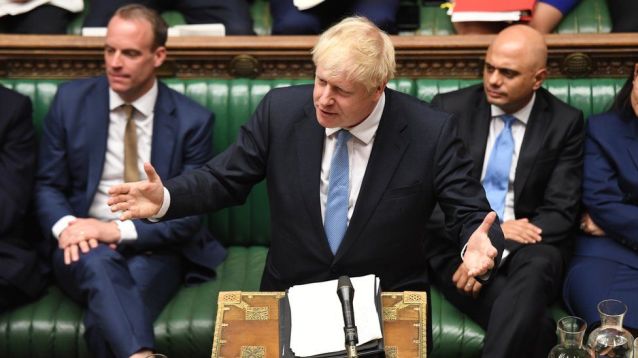
Boris Johnson – facing an all party pincer movement

Labour a year ago was still losing councillors to the Tories in by-elections in Red Wall and Midland seats. It is only in the last few months as the Partygate scandal developed that Labour started holding those seats and occasionally taking a seat back from the Tories.

What the local elections showed this week is that these startling by-election gains by the Greens and the Liberal Democrats are not a flash in the pan but part of a new trend. It also confirmed that Labour is back in business, has largely halted its decline in local government seats, consolidated its firm grip in London,, recovered from an all time low in Scotland, and yes, made gains in the North of England in Cumbria and Lancashire and stopped the rot in the North East. And it has made spectacular gains in Wales and become a force again in the South of England.

Sunderland symbolic of the halting of the Tory surge

The symbolic Labour council for me in the North was Sunderland. This was a council the Tories were keen for Labour to lose – and previous gains by the Tories and Liberal Democrats made this feasible as Labour’s majority had been cut. The Tories put money into winning seats – Johnson came up to the North East – even if he confused Tyneside with Teesside. What happened? The Tories did not gain a single seat and Labour managed to hold on with reduced majorities. Instead the Lib Dems took a seat off the Tories and Labour – winning by that surge in vote share that has become familiar in council by-elections.

The two symbolic Lib Dem council victories for me are St Albans and Gosport. The Lib Dems just controlled the Hertfordshire city before the local elections and had also taken the Parliamentary seat from the Tories in 2019. But this week’s election saw a Liberal Democrat landslide. The city has 56 councillors – 50 of them are now Liberal Democrat after they gained 20 seats overnight wiping out Labour and reducing the Tories to just four councillors.

Gosport was another extraordinary result for the Lib Dems. I know the town from sitting on the Gosport War Memorial Hospital inquiry. It is a fiercely working class, Tory naval town, heavily pro Brexit leaning even towards UKIP at one time. Yet the Remain supporting Liberal Democrats have taken control and ousted the Tories. This with Somerset , Woking and Hull going Liberal Democrat show a big change.

For Labour in the South the fact they now have a big majority on Worthing Council in West Sussex is also an extraordinary result. Some five years ago Labour won its first seat for 50 years and now they control the authority. The other extraordinary victory is Westminster. Dame Shirley Porter, now 91,- the Tory leader fined for gerrymandering the council to prevent Labour ever winning in the 1980s – must be cursing the result in Israel now Labour have a working majority.

Rise of the Greens

The other factor in the mix is the rise of the Greens. Though they control no council fewer and fewer authorities do not have a Green councillor – after this election . Here their appeal is potentially dangerous to both the main parties. The emphasis on green issues is subconsciously boosting their brand among people fed up with the old two party system. They can simultaneously appeal to the radical elements who left Labour after Jeremy Corbyn was banished from the Parliamentary party – and to rural Tories concerned about the demise of the countryside. No wonder one right wing Labour supporter suggested undemocratically that people expelled by Labour should be banned from joining another party. Thus the Greens can win seats in Sheffield, North Tyneside, Newham and West Oxfordshire, Sussex and Rutland all in the same year.

There is one person who is going lose out altogether by these converging trends – Boris Johnson. He is facing a pincer movement. His chances of further gains in the Red Wall area have been stymied, he has gone backwards in Scotland and Wales and his heartland Blue Wall seats are now seriously threatened by the Liberal Democrats in places like Esher and Walton and in places like Worthing and Southampton by Labour.

In my view, these local election results have created the perfect storm to undermine Boris Johnson.

Please donate to my blog so I can continue my forensic analysis of the political scene and my investigations.

please donate to westminster confidential

£10.00

Senior MPs challenge DWP on “shambles” after leaked internal documents and screenshots on Westminster Confidential reveal pension claims are being dumped

Dame Meg Hillier and Stephen Timms, chairs of the influential Public Accounts Committee and Work and Pensions Committee, have written to Peter Schofield, permanent secretary at the DWP, seeking an explanation why thousands of pensioners are being discouraged from claiming money they may be owed by the ministry.

The letter -published on the Work and Pensions Committee website – follows a high critical report by the Public Accounts Committee on the handling of pension back payments- and an articles on this website revealing internal advice given to ministry staff by senior management at the DWP.

It refers to my blog on February 10 which you can read here. This included an internal memo to people handling telephone callers seeking claims and a management training exercise aimed at speeding up the number of cases settled by staff by ignoring complicated claims, nearly all from women.

The most controversial was the ” drop and go” approach which urged staff ” if a case is complex or take a long time to resolve, move on to the next one in order to maximise the number of customers we can help today.”

Peter Schofield

The letter asks Peter Schofield to explain. It says:

“A report in Westminster Confidential on 10 February included screen shots, apparently of DWP internal documents, indicating that guidance to staff on handling calls about underpayments is to ‘close the call’ and only take details if the customer insists, unless the case is from or about someone who falls into one of the following four groups:
• A married woman whose husband claimed his State Pension before 17/03/2008
• An individual aged 80 or over who does not get any State Pension or only Graduated Retirement Benefit
• Someone who has died and may have been underpaid
• Someone who is divorced and wants to know how it impacts their State Pension.
It also refers to a message on the helpline which starts by telling callers that, if they are calling as a result of media coverage, “please be aware you do not need to contact us.” It goes on to tell people to stay on the line if they fall into one of the above groups.
Written in bold the MPs ask:

• What is the status of the documents quoted in the Westminster Confidential report? Do they represent current policy? If not, what changed and when?
• How will you evaluate the effectiveness of the revised information on Gov.UK in helping those who may be affected to understand their position and to take appropriate action?
Do you have plans to review your communication strategy and take further action if, for example, only a small number of those affected contact you to report a change of circumstances or make a claim?

The MPs say : “People in the four specified groups appear to be those who need to take action to receive an increase in their entitlement and, when they do claim, will generally only get twelve months’ backdating. Unlike those covered by the LEAP exercise,[This where the government has been mandated to pay back money such as the 135,000 pensioners who have been underpaid] there is no legal obligation on the Department to seek them out or pay them arrears.

The Department told the PAC that it could not publish guidance for those who may have been underpaid – such as an online assessment tool – because it believed it could not accurately cover all possible underpayment scenarios.

We remain extremely concerned – MPs

The letter goes on : “The Government’s response to the PAC report refers to revised information on Gov.UK which emphasises further that some individuals must make a claim and how they can do this. It is also working to provide a more direct route for those enquiring about underpaid State Pension in respect of a deceased customer. While this is welcome, we remain extremely concerned that the limited information on Gov.UK, together with the guidance and telephone message may discourage some from taking action that could increase their entitlement.”

The letter also discloses that a third of the way through the exercise to pay back the 135,000 pensioners owed money only 10 per cent of the cash has been paid out. This suggests that it may take much longer to pay the money to older pensioners who may not have long to live.

The MPs ask the permanent secretary to explain “The average and the longest amounts of time that pensioners who have contacted you about a potential underpayment can expect to wait for a full response.”

It is excellent that MPs are pursuing this story. The full letter is here. The DWP have until May 12 to respond. The ministry better have a good explanation.

Please donate to Westminster Confidential to allow me to continue my forensic coverage,

Please donate to Westminster Confidential

£10.00

Living with Shadows: How refugees fleeing the horrors of Nazism and Stalinism pass down their angst to future generations

Powerful book is a timely reminder of the trauma of the present day Ukrainian invasion could affect generations to come

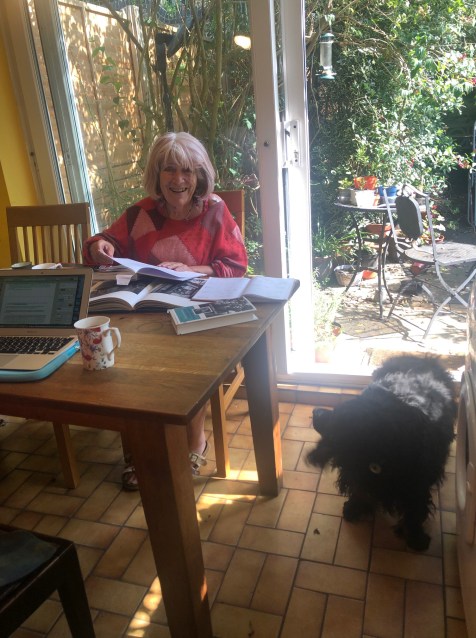
Merilyn Moos, the author, and her dog Rama. Pic credit: Carey

By a curious freak of timing as millions flee the horrors of the Russian invasion of Ukraine a remarkable memoir of earlier horrors of the last century – the rise of the Nazis and Stalinists and their effect on the refugees who fled Germany and Russia – has just been published.

The author Merilyn Moos is the daughter of two refugees who fled the Nazis in Germany to live in the UK and this short book describes in a thematic way her childhood here and how extraordinarily she only found out the full story about her parents’ past after they died.

Her father, Siegi ,was a lapsed Jewish Communist theoretician and director of an agit-prop theatre group performing plays by Brecht and a workers opera in Berlin. He went underground on the night of the Reichstag fire and fled Berlin minutes before the Gestapo raided his flat and walked over 1000 kilometres from Berlin to the Saarland to escape, only catching a train to cross the French border at Saarbrucken.

Lotte , her mother, met Siegi in Berlin and also escaped to the UK. But in 1936 she decided to go alone to Russia to visit a lover and friend , Brian Gould-Verschoyle, just at the time Stalin ordered show trials of Trotskyists. Both were put under house arrest and Brian was sent to Spain to work as an engineer to help the Spanish Communist Party. They were supposed never to communicate again but Lotte ignored this sending him a postcard praising a political group to the left of the Communist Party. This was intercepted by Stalin’s agents, he was kidnapped and put on trial as a Trotskyist and sent to a gulag where he died. She blamed herself for his death, fled the USSR coming back thoroughly disillusioned to the UK only to arrested as a suspected spy.

A rich history denied to their daughter

You would think with such a rich history her parents would tell Merilyn about their past. But as the main point of this memoir reveals, the opposite was true. So traumatic was their past they pretended to her that it never happened. Her parents were overprotective of her and paranoid. She never knew that she was from Jewish heritage until she was a young adult. Her father denied he was a Communist and pretended his family was Swiss. His mother never discussed her relationship with Brian.

As Merilyn says in the book: ” No family photos adorned our walls or mantelpieces. It was as if the three of us had been dropped onto earth by a stork, unencumbered by the ties and rituals of family life.”

She had an unhappy childhood, going to bed early until she was a teen and hardly ever allowed out alone from the house except to go to school. Her parents also did not want to her to become involved with boys and effectively pressurised her to break up up her first serious relationship with a boy after she got to Oxford University. No wonder she hardly spoke or visited them for 20 years.

The fascinating part of this book is that despite all of this Merilyn rebelled and followed in her parents footsteps becoming an active trade unionist campaigner and supporter of left wing causes. She is obviously now proud of their hidden past. She also is an accomplished sculptor and I have included one of them in this blog. Her son Josh, is a campaigner on climate change.

Sculpture of a pregnant women by Merilyn Moos

She and her son have been moved by the discovery of her parents real past. One of the most poignant moments in her memoir is how she and Josh traced their history back to Berlin and smuggled their ashes into Germany finding the apartment blocks where they had lived together and scattering the ashes around flower beds and bushes in the courtyard. As she said ” I had brought my parents home.”

This book has real insight into the trials and tribulations of refugees driven out of their country by hostile regimes and the dilemmas they face. Published at the same time as Europe faces its biggest war since the time the Nazis invaded the rest of mainland Europe, one wonders how many Ukrainians feel about their lives as they are driven from their homeland. It is also an intensely personal and honest account of a child of a refugee’s life in the UK and all the better for it.

Living with Shadows by Merilyn Moos. Available from Amazon £8.25

Please donate to Westminster Confidential to allow me to continue my breadth of coverage

Please donate to Westminster Confidential

£10.00

Judge backs DWP to deprive tens of thousands of elderly women of extra pensions

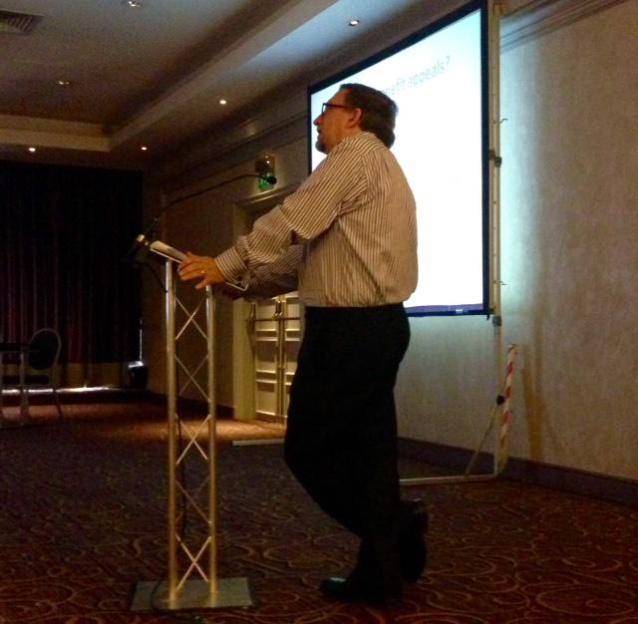
Judge Nick Wikeley giving his ” top tips for tribunal representatives on benefit appeals” at a study day.

Pic credit: Twitter

But his judgement admits national insurance is ” institutionally sexist”

Last month Judge Nick Wikeley, an administrative court judge, backed the Department for Work and Pensions to stop the pay out of millions of pounds to the most elderly pensioners in the country just as the ” cost of living crisis” started to hit home.

He took the decision on technical grounds despite his ruling conceding that the national insurance system was ” institutionally sexist” and that the women involved were likely to be the poorest pensioners in the country.

The case has considerable echoes with the one brought by BackTo60 for full restitution for the loss of their pensions after not being given enough notice of the raising of the pension age from 60 to 65.

Hugh Mercer QC Pic credit: Essex Court chambers
jane Russell Pic credit: Essex Court Chambers

It was brought by an 83 year old pensioner just known as Mrs GM with the pro bono backing of two barristers, Hugh Mercer QC and Jane Russell, both from Essex Court chambers. The DWP employed Julian Mitford QC and Ms Naomi Ling, who represented the DWP in the BackTo60 case.

Like all pensions cases it is complicated but also shocking. Her appeal contains a rule change for pension claimants brought in 2008 under Gordon Brown’s Labour administration.

Until 2008 women who claimed their own pension under the old pension system were also entitled to a second pension based on their husband’s NI contributions the moment he retired. But they had to claim it in their own right and the onus fell on the husband to tell them.

Labour changed this archaic system but did not backdate it

From March 2008 Labour changed this archaic system and women automatically received a second pension when their husband retired. But it was not backdated.

Mrs GM is one of those women in the first group. She got her pension in 1998 and her husband retired in 2000. She did not realise she should claim the second pension until 2017 – 17 years later. The DWP awarded her the second pension but only backdated it by one year. She has lost 16 years of her second pension. The pension is worth £82.45 a week.

Her case was she should be entitled to all her lost money =- either to 2008 when the law changed – or on human rights grounds and direct and indirect sex discrimination way back to 2000 when her husband retired.

The hearing turned into a battle between the DWP – which didn’t want to pay it- and human rights lawyers who thought she should be paid.

Sir Steve Webb

Sir Steve Webb, the former Liberal Democrat and coalition pensions minister, weighed in on her side while the DWP produced a star expert witness – Mr Lyndon Walters, a policy advisor to the DWP’s Decision Making and Appeals Team who was familiar with all the detail of the changes.

Sir Steve’s case centred around DWP policy and its failure to inform women properly about pension changes. The judge commented:

“The Webb W/S [Witness Statement] particularises the ways in which women, and especially married women have been, and to some extent still are, disadvantaged by the old system of retirement pensions, and seeks to quantify those affected. There are, with respect, undoubtedly a number of very well-made points in the witness statement, but they are primarily relevant to high level policy considerations. Understandably enough, and despite his distinguished ministerial career, there is much less about the nitty-gritty (or granular) operational issues underpinning the Department’s pragmatic approach.”

Indeed this moved to the heart of the judgement. The judge was more interested in the internal problems the DWP had in paying out pensions than the justice women were entitled to get the pension in the first place.

This showed up in the extraordinary support by the judge for the arguments put forward by Lyndon Walters.

The judge argued: “The Walters W/S makes out a compelling case for why the 2008 amendment took the exact form that it did. Mr Walters explains the general approach taken to encouraging claims for benefits , the practical considerations and rationale behind the introduction of regulation and the difficulties that would have lain in the way of extending the benefit of the 2008 amendment to those married women whose husbands had already become entitled to their Category A pension before that date In particular, he shows how it was that the advent of new IT systems enabled the Department to assess whether the wife of a Category A pension claimant was herself entitled to a Category B pension at the time of his Category A claim without the need for a separate claim being made. This is an informed and authoritative account that outweighs the Webb W/S, which lacks the same level of granular detail.”

Too difficult and expensive for the DWP to compensate the women

Very simply Walters had argued that it was too difficult and expensive for the DWP to inform the women of their rights. “Mr Walters explains, there was no functionality on the system to alert us to those women who were already entitled to have claimed for their category BL pensions but had not done
so” He concludes:

To identify these individuals, we could have run a search, or ‘scan’ in 2008. However, the task of performing such a search and reviewing the records of those identified, then contacting all of these
individuals and dealing with their entitlements would have been a significant additional burden on the Department, when the purpose of the PTP programme was to try to improve the efficiency and productivity of the system.”

The arguments over human rights were dismissed as peripheral – rather like in the 50swomen case the lawyers had argued: this was “unlawful discrimination on grounds of sex to inform a husband of a wife’s rights and then to reproach a wife of not availing herself of her rights”.

But then the judge admits: “Even so, although Mr Mercer did not employ such terminology, the label of institutional sexism may not be out of place in describing the national insurance scheme. This is undoubtedly, the context for the gradual amelioration of the position of women, and especially
married women, in relation to contributory benefits, including provision for their access to Category B pensions.”

And he further admits that it is like that the majority of women who have lost out in that age group could be among the poorest pensioners with the lowest pensions.

Frankly the judge’s decision in this case is remarkably complacent and far too favourable to the DWP. He seems to be more interested in the problems the DWP would have tracing the women than the loss the women have suffered under what was an archaic system. He is also far too complacent about the pace of redress for women who have suffered discrimination. That is another reason why we need to implement the UN Convention against all forms of discrimination against women (CEDAW) in full to stop this leisurely progress to righting centuries of discrimination. There will be hearing in July see the website for more information. This is particularly poignant in this case as the people involved are coming to the end of their lives.

A thank you to one of my readers Jeff Roberts, for drawing attention to this judgement. You can read it in full below.

Click to access UA_2021_001262_RP_CP_317_2021c.pdf

Please donate to Westminster Confidential to allow me to continue my investigative work.

please donate to Westminster Confidential

£10.00

Employment Tribunal open justice campaign : Sir Keith Lindblom’s office replies to lack of fairness and transparency in hearings

Sir Keith Lindblom, Senior President of Tribunals Pic credit : gov.uk

Last month over 320 people signed a letter to Sir Keith Lindblom, Senior President of Tribunals and the heads of the the employment tribunals in England, Wales and Scotland protesting that tribunals do not keep records or transcripts of their hearings.

The letter signed by senior NHS consultants, doctors, nurses, journalists, whistleblowers and wide range of members of the public sought reforms to the system because of the one sided nature of the hearings particularly in whistleblowing cases – where a litigant in person does not have the resources as a well funded employer.

Transcripts are not available unless the judge gives permission to the parties to take full notes and the only official document is the judge’s decision which can miss out facts given in the case.

Cases involve patient safety, bullying and discrimination

Many of the cases involve issues like hospital and patient safety, bullying, harassment, racial and sex discrimination where a claimant is sacked for suggesting anything has gone wrong rather than the issue being sorted.

Now the official reply from his office acknowledges a number of key facts that people have suspected but have not had confirmation.

First it admits no guidance exists on the use of transcripts and judges don’t have to use them. “There is no provision in the Rules or the Employment Tribunal Regulations that requires hearings to be recorded or transcripts to be produced.”

Second it admits that it is now possible to record hearings as many hearings are held on-line following both a courts modernisation programme and the Covid 19 pandemic.

Judge Barry Clarke, president of the employment tribunal service for England and Wales

And the most positive point in the reply suggests the most senior people are considering changes to the the system.

“The Presidents of the Employment Tribunals are giving consideration to recordings and transcripts in the context of video hearings, where there is a facility to make a recording and which are now used to a greater extent as a result of the HMCTS reform programme and the experience of the pandemic. This is in contrast to most in-person hearings. In most venues where Employment Tribunal hearings take place, recording equipment is not installed, and so no recording can be made. In a few locations in England and Wales, the Employment Tribunal is co-located with a court jurisdiction where such equipment is installed, and where that is so, its use is encouraged.”

The rest of the letter is unsurprisingly a defence of the present system.

“The overriding objective of the Employment Tribunal Rules of Procedure is to deal with cases fairly and justly. That includes, so far as practicable: ensuring that the parties are on an equal footing; dealing with cases in ways which are proportionate to the complexity and importance of the issues; avoiding unnecessary formality and seeking flexibility in the proceedings; avoiding delay, so far as compatible with proper consideration of the issues; and saving expense. Most Employment Tribunal hearings are held in public. Any consideration of an order to prevent or restrict the public disclosure of any aspect of the proceedings must give full weight to the principle of open justice, and, like any judicial decision on a matter of case management, would be amenable to appeal.”

Litigant in person may bring a friend or relative to take notes

“It is also possible to take a note of the proceedings, and a litigant in person may bring a friend or relative with them to the, tribunal to act as a notetaker. Judges invariably allow this, and indeed encourage it.
Litigants in person are also regularly signposted to services such as Support Through Court which can assist with notetaking. “

It goes on: “”The Employment Tribunals provide detailed written reasons explaining the factual and
legal basis of their decisions. Any appeal is based on the judgment and supporting reasons, and the Employment Appeal Tribunal will not accept a transcript in place of written reasons. If at appeal the parties cannot agree what was said in evidence, the Employment Appeal Tribunal may ask the judge who heard the case to answer questions in writing about the evidence on a particular issue or issues. When that happens, both parties will be provided with the document the judge sends in response. In accordance with its Practice Direction, the Employment Appeal Tribunal may also, if it wishes, obtain the judge’s notes of evidence on any disputed matter, which will then feature in the appeal bundle.”

Whistleblowers are at a disadvantage

The problem with this defence is that it doesn’t seem to be reflected on the ground. Many whistleblowers say they feel at a disadvantage particularly if they wish to appeal a decision and they haven’t got a transcript to raise points that are not mentioned in the judgement. And most whistleblowing hearings are far from informal occasions – employers use forensic barristers whose questioning of whistleblowers would not be out of place at an Old Bailey trial.

It also raises some interesting questions. If recording facilities are available at on-line and hybrid hearings why are they not used? Or while obviously judges only use notes, do other court officials use them unofficially to check facts for judges? There has to be change in the employment tribunal system to bring it up to the 21st century and the HM Tribunal and Court Service need to explain how they intend to bring this about.

After publication of this blog a circuit judge publicly backed the recording of all hearings.

Kaly Kaul QC said: “As a Judge in a Crown Court where proceedings have been recorded ever since it replaced shorthand writers, it is unfortunate that every Court is not recorded. Teams and Cloud Video platform have recording facilities. In addition we have recording onto micro SD cards so that any material played in court is automatically recorded so that the Jury can retire with it. It is imperative that proceedings are recorded. It cannot be that difficult to put in place.”

Please donate to Westminster Confidential to allow me to continue my forensic investigations and campaigns for justice.

please donate to westminster Confidential

£10.00

Revealed: A new generation of women face pension inequality

Pic credit: Siemens pension scheme

Just before the Parliamentary recess the House of Commons library produced a new report on pension inequality showing how a new generation of women will lose out again to men unless action is taken now.

The report- The Pension Gender Gap – makes stark reading for millions of women now in work. The focus in this report is on the hurdles facing women to get an equal pension with men.

The main hurdle is the private pension or second pension women receive to top up their state pension. It quotes a Women’s Budget Group pre-Budget Briefing which says that: ‘Private pension schemes, promoted and subsidised by UK governments, are the main reason for the gender gap in pensions, placing women at a disadvantage due to their domestic roles and lower pay’.

The pay gap – still at 7.9 per cent – between men and women is basically discriminating against women getting the same pension as men. When the Conservative government set up the auto-enrollment scheme for a workplace pension in 2012- funded by employers and employee contributions – they excluded anyone not earning enough to pay national insurance.

While it increased the chances of women getting a private pension ( from 40 per cent in 2012 to 86 per cent in 2020) their savings fall away after they reach 35 because they are bringing up children and often take part time work.

As the report says: “The design of automatic enrolment widens the gap between lower and higher earners in retirement and disadvantages those in second jobs.”

Women who take part time work or multiple part time jobs are simply excluded from getting a second private pension partly paid by their employer.

Some low paid women may never get a work pension

And those who never earn enough at work – there are an estimated 500,000 of them nearly all women – never get a second pension at all.

As the Association of British Insurers told MPs on the Commons Work and Pension Committee: “Women disproportionately work in lower paid jobs; 75% of those earning under the £10,000 AE earning trigger are women. They also make up the majority of multiple job holders, as much as 64%. This is significant as their total income could be over the AE earnings trigger, but as it is divided across multiple jobs they will not be automatically enrolled into a pension.’

Fortunately it looks like the Department for Work and Pensions is planning to do something about this though we may have to wait a couple of years before this happens.

A DWP spokesperson said :

“Automatic enrolment has helped millions more women save into a pension, with participation among eligible women in the private sector rising from 40% in 2012 to 86% in 2020 – equal to that of men. Our plans to remove the Lower Earnings Limit for contributions and to reduce the eligible age of being automatically enrolled to 18 in the mid-2020s will enable even more women to save more and start saving earlier.”

But this isn’t the only barrier. The report highlights three other issues, affordable child care, pension rights for divorcees and monitoring pension equality.

On child care the report highlights demands by the trade union, Prospect and the People’s Pension, one of the larger pension trusts, both call for help with child care including tax relief for the care of the under two year olds and a local authority grant for 3 and 4 year olds.

Make pension savings a compulsory part of a divorce settlement

The Pension and Lifetime Savings Association call for the law to be changed so pension rights have to be considered in divorce proceedings.

“The government should consider changing the law to ensure that pensions rights are considered on a mandatory basis as part of divorce. Currently pensions may only be considered if there is a financial settlement considered by the courts. The process of pension sharing on divorce could also be better streamlined to remove friction and delay for all parties.”

And finally the Government Equalities Office should impose a mandatory requirement on the DWP to publish gender pension gap statistics and then draw up proposals to speed up ending the gap. The GEO did not want to comment on this.

There is one ray of hope arising from the new state pension introduced in 2016. It has narrowed the gap between men’s and women’s state pensions. Women got 82pc of men’s pension in 2016. By 2020 it had narrowed to 92pc. But the DWP could not tell me when it would be 100 per cent.

Unless action is taking speedily a whole new generation of women are going to lose out to men. No one wants to suffer the fate of 50swomen who have been so badly treated again. They are already worse off because of the abolition of the second pension in 2016.

Chris Thompson, a retired pension expect, pointed out both men and women lost out over auto-enrollment. “Between 2012 and prior to 6 April 2016 when the new state pension started people were also paying into the state second pension if they were not contracted out.

” From the 6 April 2016 people ceased accruing state second pension so are now much worse off than under the old state pension system. A low earner about £46 pw worse off and a high earner about £67 pw. Another thing to remember is that losses do not take into account loss of inherited and derived rights, loss of GMP indexation if contracted out or increase in NI due to loss of NI rebate.”

Please consider donating to Westminster Confidential to allow me to continue my forensic investigations and monitor issues.

Please donate to Westminster Confidential

£10.00

Rip off: DWP to take no further action to compensate millions who lost thousands of pounds of extra pensions

Peter Schofield,permanent secretary at the Department for Work and Pensions

Those following the highly complicated story of the estimated 11 million who have lost extra pension payments because they are no longer entitled to a guaranteed minimum pension uprating every year after the new state pension was introduced in 2016 have received a further blow.

Despite further pressure for an explanation from the House of Commons Works and Pensions Committee Peter Schofield, permanent secretary at the DWP, has ruled that no further action to inform people is necessary.

The people affected were a large but distinct group. They were  people who were contracted out of SERPS by their employer but were told they would receive an index linked guaranteed minimum pension. This arrangement was scrapped when the new state pension was introduced in 2016 for anyone in the private sector – but remains for public sector workers.

The money they have lost is anything from a few pounds a week to tens of thousands of pounds over the lifetime of their pension. This decision was never debated in Parliament or included in the Pensions White Paper. Just as with the 50swomen and divorcees, women are the most affected.

Two people complained to the Parliamentary Ombudsman and won £1250 compensation between them for maladministration. Given the numbers involved you would have thought many more would have got compensation. In fact no one else has.

This is not surprising given the DWP ignored the remedy the Ombudsman suggested and put out a factsheet on their site without even an accompanying press release to say it had done it. The factsheet can be found here.

The Commons Work and Pensions Committee took it up with Peter Schofield, the DWP’s permanent secretary, and pressed for an explanation. The MPs have now got it.

The reply from Peter Schofield is here. He explains the factsheet was deliberately tested on people who did not know anything about pensions to prevent bias and 6,922 had viewed it. He claims that 57 per cent of people who saw it said it was ” useful”. Presumably 43 per cent thought it wasn’t.

Just five people put in a claim and none got it

When it comes to inquiries triggered by the website you can count them on one hand. Just five people, none of them eligible.

The DWP explanation why they believe this does not matter is to say the least interesting. He claims that the transitional arrangements for the new pension mean that someone could gain an extra £38.42 a week -presumably referring to the triple lock.

But the triple lock refers to everybody’s pension – it is not just for those who were contracted out. Also it is not a triple lock at the moment – as 12 million pensioners have lost out by not including the higher rise in earnings. And I notice Rishi Sunak, the Chancellor, did NOT reaffirm it was coming back for next year’s pension rise at the recent spring statement. In fact he didn’t mention pensioners at all.

A DWP spokesperson said in response to my story:

“We encourage anyone who is concerned to read the online factsheet and contact us if they think they have been affected.

“The publication of the factsheet is the final step in the Department meeting the Ombudsman’s recommendations on this issue.”

All this to me has wider implications -particularly for the 50swomen still hoping for compensation via the Ombudsman route. The exercise on GMP pensioners resulted in victory for the two complainants who proved there had been maladministration. But not one other person got any money – a complete failure for the Ombudsman.

Bad news for the 50swomen wanting pension compensation

It would be like the six 50swomen complainants over maladministration getting compensation but the DWP devising a way of ensuring the rest of the 3.8 million get nothing.

There has been much talk from some MPs and campaigning groups claiming the women are entitled to £10,000 or payments of up to £20,000. At the moment that is just wishful thinking because it depends on the willingness of the DWP to pay out. The case illustrated by those entitled to compensation for losing their GMP indexation shows the DWP has no intention of doing so if it can get away with it.

Please donate to Westminster Confidential to allow me to continue my investigative reporting.

Please donate to Westminster Confidential

£10.00

Another pension scandal: Incompetent financial advisers rip off steelworkers in the wake of the collapse of Tata Steel

Scunthorpe Steelworks Pic credit: Alan Murray-Rust

It is not just the DWP that can make a fine mess of pensions. A report just out from the National Audit Office reveals how thousands of steel workers have been swindled out of their their company pensions by incompetent and in some cases dodgy financial advisers.

Rocked by the sudden collapse of Tata in 2016 – brought out for a £1 by private equity group Greybull only to collapse again and be taken over by a Chinese firm, this uncertainty led to the government separating out British Steel’s pension scheme from the company to protect people who still had a final salary scheme.

But unfortunately some were offered to swap their pension for a far more risky package that no longer guaranteed a final salary pension.. The scheme now closed allowed steelworkers to retire on a final salary at 60 or 55 if they were made redundant. Who today would not welcome such a good deal.

But some 8000 steelworkers chose to use their right to transfer out of the pension scheme. Some 95 per cent of them were advised by independent financial advisers. Nearly half the steelworkers were given dud advice.

The workers were given only a short window to transfer by companies that had little experience in dealing with such a large number of people. The companies also made a shed load of commission for themselves in handling the deals.

The report concludes that the workers in places like Teesside and Scunthorpe were vulnerable to pension mis selling by financial advisers. Already spooked by whether they would keep a job, they thought it was a good idea to opt for a private pension. They have now lost an average of £82,600 – with some losing up to £489,000. The maximum claim they can make is £85,000 or £50,000 of the firm collapsed earlier. The total amount lost comes to £18m.

Industrial scale of the rip offs

The industrial scale of the rip offs can be shown by how many firms have been fined . The Financial Conduct Authority (FCA) has issued  £1.3 million of fines and has 30 more enforcement investigations ongoing. It has also changed its approach to regulating the pensions advice market in response. Many of the advisers at the time were one horse businesses -too small then to be regulated.

The investigation has also revealed how badly bodies supposed to protect ordinary people can cope with the problem – The FCA and the Pension Ombudsman- do not come out well – just as the DWP and Parliamentary Ombudsman don’t do a good job in rectifying complaints. The FCA has now sharpened up its act as a result of this – and not before time.

Just like the Parliamentary Ombudsman the process to get redress is complex and difficult to understand, Perhaps it is no wonder that only only 25% (1,878) of members who transferred out of the BSPS [ British Steel Pension Scheme] have sought redress through complaints. The FCA is yet to decide whether to implement a consumer redress scheme for BSPS members, in which all firms involved would have to review their advice and potentially offer compensation.

The report reveals that many don’t even realise they can get redress – so bad have the authorities been in not telling them. Many of them won’t be able to recover all the money because the firms have gone bust and will have to rely on a national compensation scheme.

Meg Hillier chair of the Public Accounts Committee

Meg Hillier, chair of the Commons public accounts committee, sums it up well:

British Steel pension members were badly let down by placing their trust in the very system designed to protect them.

“The handling of the BSPS case was a failure from top to bottom. Many of the pension advisory firms gave bad advice to customers and the FCA, whose job it is to regulate these firms, was asleep at the wheel.

“Efforts to improve the pension advice market and provide compensation will be too little too late for many BSPS members. “The bottom line is that many pension members have been left out of pocket and seen the rewards for their years of hard work melt away”

The Financial Conduct Authority issued this statement:

“In a letter sent today, the FCA has set out its expectation that firms in the scope of a potential redress scheme should retain assets and should not try to avoid their responsibilities.

The FCA has warned it will take such action as it deems necessary if a firm attempts to avoid redress liabilities. 

Former BSPS members should continue to check whether they received unsuitable advice and find out how to complain at fca.org.uk/bsps.

Firms should continue to progress any existing FCA required Past Business Reviews and engage in any ongoing enforcement investigations or supervisory work connected to the British Steel Pension Scheme.”

There seems to be another moral of this story, Be wary of silken tongue financial advisers and research very carefully what you want to do with your pension. Remember not all of them are competent and some are just plain dodgy.

Please donate to Westminster Confidential to continue my forensic investigations.

Please donate to Westminster Confidential

£10.00

Guest blog: The appalling treatment of NHS whistleblowers parallels the Post Office sub-post masters scandal

Dr David.E.Ward,

 David E Ward, a distinguished retired cardiologist, formerly at St George’s Hospital, South London, responds to the judgement by Tony Hyams-Parish on the case of Dr Usha Prasad

The treatment of NHS whistleblowers is a national scandal of the same iniquitous order of magnitude as the miscarriages of justice meted out to the sub-postmasters. This latter saga began 20 years ago after the installation of faulty software called Horizon from Fujitsu. Incredibly it was not picked up for years because the victims were not believed or they were accused of lying. The evidence was not properly collated or scrutinised. Or was it, but no-one said anything. “No other post office has had this problem” they were told. Perhaps the current Judge led inquiry will find out. Many were incarcerated. Some sold their homes to pay thousands of pounds of fictitious till deficits. Sadly, some committed suicide.

The sequence of events for NHS whistleblowers is different but the outcomes are strikingly similar. The NHS whistleblowers’ stories are largely unknown to the wider public apart from the occasional one featured in a national newspaper.

The WB raises a concern, which by the way is their duty under law, (Duty of Candourhttps://www.legislation.gov.uk/ukdsi/2014/9780111117613)

but instead of welcoming the exposure of the defect of a system (e.g. number of beds in a limited space), faulty equipment (e.g. a diagnostic machine) or a process (e.g. errors in admission procedures – wrong patient or wrong procedure) any of which may lead to patient harm or even death), the Trust fails to act but instead embarks upon a path of vicious and disproportionate reprisals against the WB.

The consequence of this chain of events is often catastrophic for the individual. The whistleblowing doctor may be subjected to repeated internal hearings, quasi-disciplinary proceedings, Maintaining High Professional Standards hearings etc. The latter may be chaired by lay persons with a legal qualification but posing as a barrister. Most doctors subject themselves (they raise an appeal) to an Employment Tribunal in the hope that justice will prevail. Sadly it does not. These proceedings are not formally recorded for later open scrutiny. The judge’s notes (such as they may exist) are private and not made available. It is also a criminal offence to make an electronic recording. The litigant can take notes but how do they manage to do that whilst giving evidence or listening intently to the evolution of their own fate? A preposterous suggestion.

Expensive lawyers who support the health trust

There is another major factor in these processes. They could not proceed without the complicity of the teams of expensive solicitors and barristers who support the Respondent. All this is paid for by the taxpayer. The claimant will of course have their own legal support if they can afford it but which is obviously limited by costs. This gross “inequality of arms” is a major factor in the final “justice” handed out. I don’t think many of us would call that fair and just. Doctors are threatened with enormous costs which in most cases could only be met by selling the family home. Why? Oh yes, it’s to force them to withdraw their claims and believe it or not it usually works!

Judge Tony Hyams-Parish

At Employment Tribunals it appears that the sum total of evidence is not scrutinised. Some evidence appears to be selectively omitted at the discretion of the ET Judge. In the Dr Prasad case (see David Hencke’s last blog) the admission by the lead of cardiology (Dr Richard Bogle) that a death which should have been reported to the coroner was not reported but “covered-up” is not even mentioned in the final judgment! One could ask for the transcript to check that this observation is correct. (Oh, no I can’t because there is no transcript but I did attend the virtual ET hearing and can vouch that I heard it stated!) That worked out quite well then didn’t it? To an outside observer who has some vicarious experience of these Tribunals it is nothing short of gobsmackingly incredible in a western democracy (I don’t have the full panoply of words to describe it!).

Former post office workers celebrate outside the Royal Courts of Justice, London, after having their convictions overturned by the Court of Appeal. Thirty-nine former subpostmasters who were convicted of theft, fraud and false accounting because of the Post Office’s defective Horizon accounting system have had their names cleared by the Court of Appeal. Issue date: Friday April 23, 2021. PA Photo. Photo credit : Yui Mok/PA Wire

The Post Office workers (Horizon scandal) did not commit any crimes neither did the NHS Whistleblowers. They have not broken any laws. Yet how is it that they have failed to present a case of sufficient strength to convince an ET Judge? Their punishment for exposing potentially harmful processes, which could save lives, is to be condemned, lose their careers, their livelihoods, their homes and in some cases their families or even their own lives. Put simply they are crushed by massive inequality of arms – expensive lawyers funded by the taxpayer. Swathes of evidence is ignored.

Is there some sort of collusion between the judiciary and the respondent or their legal representatives? Some MHPS hearings are seemingly very dodgy (some doctors/victims have observed this and can demonstrate it with evidence) up to and including the invention of spurious legal terms such as “fitness for purpose” which is unknown in British Employment law (see David Hencke’s blog on the Maintaining High Professional Standards Appeal).

Then there is always the possibility of undeclared conflicts of interest in the appointment of an ET officials. Just saying…..

Please donate to Westminster Confidential to allow my forensic coverage on this blog to continue.

Please donate to Westminster Confidential

£10.00

Judge covers up “avoidable death” of heart patient and General Medical Council revalidation of Dr Usha Prasad to dismiss her whistleblowing case

Employment Judge Tony Hyams-Parish Pic credit: dmhstallard.com

Publication of avoidable death scandal at Epsom and St Helier University Health Trust leads to another relative coming forward and queries about a former senior staff member in Jersey

An employment judge has thrown out Dr Usha Prasad’s whistleblowing case and all her allegations of victimisation, sex harassment, and sex and race discrimination.

She is also facing a costs claim of an astounding £150,000 plus VAT via the law firm Capsticks from the Epsom and St Helier University Health Trust.

A letter from Capsticks says: ” The Respondent has incurred very substantial costs indeed in defending the unmeritorious proceedings, of in excess of £150,000 plus VAT. The costs incurred correlate to the Claimant’s unreasonable conduct and the unmeritorious nature of her complaints.”

Judge Tony Hyams-Parish’s judgement is long on the detail of all the various top management’s moves against Dr Prasad which led to an unprecedented 28 month suspension from clinical duties and remarkably short on any evidence given by her and her witnesses. He exonerates the actions of the senior management and ignores claims by any of her witnesses. And given he goes into such detail it is rather surprising he doesn’t mention that Daniel Elkeles, the former chief executive of the trust, offered to abandon the internal disciplinary proceedings against her if she dropped the tribunal case against the trust.

Indeed the most twisted part of his judgement is what he leaves out. Take the issue of the GMC revalidation of Dr Prasad. This is his purple passage:

“The Tribunal was invited to consider was the outcome of the claimant’s hearing before the GMC. The GMC began an investigation into the claimant which concluded in March 2021 with no further action to be taken. The claimant continued to state throughout this hearing that she had been exonerated by the GMC, suggesting that their conclusion must cast doubt on the actions and motivations of the respondent. However, the Tribunal found it difficult to draw any such conclusions from the GMC outcome. The Tribunal was not shown the content of the GMC referral or the case examiner’s report. Whilst the GMC and the respondent were looking at the same cases, their remits were likely to be quite different. In any event, the Tribunal was not shown sufficient evidence to decide either way.”

Really? The GMC judgement was entirely based on a list of 43 complaints submitted by the trust and obviously the trust expected it to be endorsed by the GMC. Instead it was sent to very experienced cardiologist in Middlesbrough who had worked at Papworth Hospital and he could not find anything wrong. And not only was this finding approved by the GMC, they revalidated her – taking away the power of the trust to do this. Given many doctors feel they are not well treated by the GMC, this was a remarkable outcome. The GMC was telling the trust to get stuffed.

Dr Usha Prasad with the former chief executive of the trust, Daniel Elkeles

The second area is the glossing over of the main whistleblowing claim. It centred around the avoidable death of a 76 year old man, Mr P, from heart failure, partly caused by negligence, muddle and poor communication at the trust. Dr Usha Prasad, who had no part in the care of the patient, was asked to review the case as an independent person. Evidence was given that an attempt was made to get Dr Prasad to rewrite her findings which included that the death should have been reported to the coroner and the Care Quality Commission. At the hearing Dr Richard Bogle, former head of the cardiology department, admitted that this should have been done – basically saying Usha Prasad’s judgement was right.

But this has been airbrushed from the judgement. If I hadn’t been there to report the case, no one would be the wiser that this happened.

Judge Tony Hyams-Parish disrespectful to dead man’s family

Not only to do I find this a gross omission but in my view the judge is being disrespectful to the man’s family by removing the details of the whistleblowing case. It is though he is thinking so what, a 76 year old dies, who cares?

But Judge Hyams-Parish knows he is on solid ground to ignore all this. He has already told Usha Prasad there is no recording or transcript of the proceedings, and his judges’ notes will never be released. So his judgement is the only record. And it is criminal offence if anyone has a recording.

Judgement a stain on British justice

My view is that this judgement is a stain on British justice which is supposed to be the epitome of ” fair play” and full transparency.

Instead it appears to me to more akin to Russian and Chinese justice .Here there is a semblance of justice but the result is a foregone conclusion. What appears in this case is the forces of the Establishment have been marshalled to intimidate and destroy an individual for the benefit of state power.

One good result of the publicity is that a relative of another person who died at St Helier hospital has come forward to me to investigate their case. And what happened at St Helier seems to have been picked up in Jersey, where this blog has a small circulation, and queries are being raised about a former senior manager at St Helier.

Please donate to my blog to continue my forensic investigations

Please donate to Westminster Confidential

£10.00