The EHRC has refused to release the findings of an investigation into the huge breach of the Covid lockdown rules during the pandemic by Rebecca Hilsenrath, now chief executive of the Parliamentary Ombudsman’s Office.
The decision is in contravention of a ruling by John Edwards, the Information Commissioner, who ruled that Mark Benney , who put in the request to his office ,was entitled to answers about the finding of the report but not allowed to see it himself.
The EHRC has confirmed that a report was completed at the time Rebecca Hilsenrath, then its chief exceutive, was suspended by the EHRC as a precautionary measure. She then suddenly resigned only to get a senior job at the Parliamentary Ombudsman’s office almost immediately.
Her breach of Covid rules involved her traveling from her North London home to her country cottage in North Wales where her children also joined her -presumably also in breach of the rules – to spend their Christmas holiday together. She has four children. It was exposed in The Times newspaper.
Her holiday cottage in North Wales
Baroness Falkner, a crossbench peer and the chair of the EHRC, has used the same argument it deployed unsuccessfully to say that it would not answer questions about the report to protect Rebecca Hilsenrath’s privacy to refuse to publish the finding of the report.
Official Portrait of Baroness Falkner
She has decided not to appeal the decision but Mark Benney has put in his own appeal. It includes the words;” the Commissioner has erred in failing to consider whether the report and supporting documentation are capable of appropriate redaction in order to remove any special category data. Finally, it also follows that material within the report and supporting documentation that is neither personal data nor special category data is properly disclosable according to the overarching logic of the inDecision Notice.”
In my opinion this decision to hide the finding of a report about Rebecca Hilsenrath’s breach of the Covid rules is totally wrong. It may be five years ago but the lockdown meant tens of thousands of people could not move around the country, make trips like hers to celebrate Christmas and were not even able to visit relatives dying in hospitals all over the country.
In my opinion there appears to be a certain class of people who are arrogant enough to think that they are above rules that everybody else in the country is expected to obey. These people are often protected by friends in powerful positions to avoid the consequences that other less privileged people have to suffer from breaking the rules. I am not saying in this particular case this is necessarily so but the failure of public organisations to come clean about the facts in this case can only add to further speculation.
Incidently the Parliamentary Ombudsman website is still silent on any new cases and no date has been fixed yet for the new Ombudsman, Paula Sussex, to join it.
Rebecca Hilsenrath has broken her silence from the Parliamentary Ombudsman’s Office in a YouTube video on mental health put out by the Ombudsman’s Association on Leadership, Listening and Making Mistakes dealing with mental health issues. She frankly discloses that she suffered four bouts of post natal depression when she had her children and members of her family have suffered mental health problems so she is sympathetic about mentally ill people who are being badly treated by the NHS and other organisations. See the interview below.
05/07/2024. London, United Kingdom. Rachel Reeves, Chancellor of the Exchequer poses for a photograph following her appointment to Cabinet by Prime Minister Sir Keir Starmer in 10 Downing Street. Picture by Lauren Hurley / No 10 Downing Street
Last year the biggest hit on this blog was when I condemned the decision by Sir Keir Starmer and Rachel Reeves to abolish the winter fuel allowance for all pensioners except the poorest on pension credit. The blog went viral and currently stands at 188,400 with 129 comments.
The decision – one of the first by an incoming Labour government – was inept, stupid, ill thought out, and rushed – and showed that the Labour government was completely out of touch with its base and its reputation for helping the poorest.
There was a decent case for restricting the payment to the wealthiest members of society who did not need help with their fuel bills. But by setting the figure so low as £11,300 to get it and trying to get people to claim pension credit – which has been a policy failure for years – this was a serious own goal.
The decision to use regulations to do this was attacked by the House of Lords statutory instruments committee – when they examined the detail – and ministers by passed their own benefits advisory committee, the Social Security Advisory Committee, on the flimsiest excuse that they didn’t have time to do this to make sure it could be implemented as an emergency. The committee itself when it finally got to discuss the regulations pointed out it was perfectly capable to look at it at an emergency session. It did this when the last government introduced massive social security changes to cope with lockdown during the pandemic.
The optics also looked bad for any politician. Claiming they had found a huge black hole in government finances it looked as though the first people who would plug the gap were pensioners, many of them surviving on incomes less than £20,000 a year. Pensioners and the disabled also need warm homes in winter probably more than any other people and the government’s claim it was implementing the triple lock to raise pensions was no use in the winter. It would not be paid until the spring when temperatures begin to rise and some would be scrimping and saving to try and keep warm before receiving an extra penny.
The result came back to bite Labour in the spring council elections and Parliamentary by-election in Runcorn, when voters dumped Labour in droves turning to Reform, the Greens and the Liberal Democrats instead.
Labour MPs and activists found this was one of the most cited reasons why people turned against them during the election. As a result Reform could capitalise by gaining control of a swarth of county councils and some mayoralties. The Conservatives were still not trusted by people after their 14 years in government, but to be fair to them they never proposed to cut the winter fuel allowance in the first place.
Luckily for Labour it is four years to the next general election so there is a chance it might be forgotten how stupid they were after four winters. And the mechanism they have proposed to pay the allowance back to nine million pensioners is fair with those earning £35,000 or more having to pay back the money in their annual tax return. The big question is why they didn’t do this in the first place.
The overall policy will still save £450m versus the universal system. But £1.25bn of the £1.7bn projected saving when this policy was announced is gone. Rachel Reeves, the chancellor, was claiming she couldn’t have done this when the government came into power because of the state of the finances, but can now because the situation has improved. She will have to explain this big change in her statement to MPs this week.
In my view the government overall has lost a lot of support by targeting pensioners not only in this way but also in the way it has treated 50swomen who had to wait six years for their pension by completely rejecting any compensation for them and ruling out mediation. I am sceptical that the WASPI campaign will get anywhere by going to court to try and revive the now rejected Parliamentary Ombudsman’s report on partial maladministration.
The issue was always discrimination as well as maladministration and the Ombudsman’s report was a very tepid solution for those who lost tens of thousands of pounds.
And ministers are being dilatory in paying out money to HIV contaminated blood victims and those swindled by the Post Office computer scam. All these affect many in the same age group.
The government has got a lot to do to regain popularity to get a second term in office, but this U turn on the winter fuel allowance is only a start.
Judge Lancaster – the same judge who vilified the now vindicated Alison McDermott- a Sellafield whistleblower over bullying and nuclear safety issues
Judge Philip Lancaster – the controversial employment judge – already facing 16 complaints – nearly all from women – about his handling of their tribunal cases – has now been revealed as having helped a health trust to cover up patient deaths.
An investigation by Michael Buchanan, the BBC’s social affairs correspondent, released yesterday revealed that police are investigating heart patient deaths at Castle Hill Hospital near Hull. His full report which contains disturbing treatment of patients and a “cover up” of the circumstances of their deaths from relatives is here.
The employment tribunal case heard by Judge Lancaster centred around the safety of a procedure called Trans-Catheter-Aortic Valve Implantation (TAVI) – a keyhole surgery method to replace a defective aortic valve in the heart to predominately elderly patients,
The case had been bought against Hull University Teaching Hospitals Trust by consultant cardiologist Dr Thanjavur Bragadeesh, then clinical director of the hospital’s cardiology department, because he had raised safety concerns about the implementation of the procedure which had led to patients deaths.
Dr Bragadeesh
He had first raised the issue in 2020 to little effect and took the trust to the tribunal as a whistleblower in 2023. In fact he was demoted following raising the issues.
Ranged against him were the trust’s chief medical officer, Dr Makani Purva and three consultant colleagues, Dr.Joseph John, Dr Kumar Chelliah and Dr Manish Ramlall.
He brought 29 claims of detriment and 13 protective disclosures. All detriment claims were dismissed by Judge Lancaster as either being out of time or failed claims which were legally irrelevant.
As a result it was never publicly revealed until yesterday by the BBC that at least 11 patients died following procedural failures, with some death certificates failing to mention the surgery at all. Families were never told the truth. Independent reviews confirmed catastrophic decision-making and a mortality rate three times the national average.
Despite Dr. Bragadeesh’s concerns being validated by external reviews, including those by the Royal College of Physicians, the tribunal did not adequately engage with this substantive evidence. The failure to consider corroborative findings from reputable bodies suggests a potential bias in favour of the employer and a reluctance to hold the institution accountable.
Certainly the Judge Lancaster’s judgement reflects this highlighting similar omissions and gas lighting of whistleblowers as seen in other judgements – notably Judge Tony Hyams Parish ignoring the General Medical Council’s revalidation of whistleblower Dr Usha Prasad, then a cardiologist at Epsom and St Helier Trust and the avoidable death of a heart patient. And Dr Bragadeesh is described as having a ” bullying and undermining attitude” to other consultants – just as Dr Martyn Pitman, the obstetrician, who raised patient safety issues in the maternity services at Hampshire Hospitals NHS trust, was portrayed when he lost his tribunal case.
Alison McDermott
Yesterday also saw the damning findings of the Commons Public Accounts committee on Sellafield which showed that Sellafield had paid out £377,000 to staff to end labour disputes and had issued 16 non disclosure agreements to staff to cover up complaints. This vindicated Alison McDermott’s portrayal of the place at risk over nuclear safety and a bullying culture.
Still Sellafield and the Nuclear Decommissioning Authority are using the findings of Judge Lancaster’s flawed judgements to gaslight her.
In a joint public statement they said: “This case has been thoroughly litigated through an Employment Tribunal, Employment Appeal Tribunal (EAT) and the Court of Appeal. It was found that the claims made against Sellafield Ltd in this case were entirely without substance, and there was no basis for claims against the NDA.”
Try telling that to the MPs who wrote the report on Sellafield who say they are not convinced by claims that everything is OK or to the Department for Energy who admonished both organisations and said they must crack down on bullying.
There is a much wider issue to all of this. It is the question of the public accountability. Judge Lancaster is being protected by the Judicial Conduct Investigations Office. Despite a growing pile of complaints from women and from Dr Bragadeesh about his behaviour at tribunal hearings, it refuses to act on any of them. It is also fighting the Information Commissioner to prevent the public and press being able to put in any freedom of information requests.
By doing so they risk bringing the judicial system into disrepute and in my view they lack a moral compass.
If they continue to do this, they are acting as a party to suppressing patient safety in the National Health Service and in the case of Sellafield, because it is such a contaminated and dangerous place, putting the general public at risk.
Baroness Sue Carr, the Lady Chief Justice, and Shabana Mahmood, the Lord Chancellor, who both receive advice from the JCIO, should be wary about ignoring these developments, because at some stage they are going to come back and bite them.
NEW: Since this post was published I have learned that Rebecca Hilsenrath has been awarded an honorary KC and been appointed a member of theCivil Justice Council, chaired by the Master of the Rolls,Sir Geoffrey Vos. She is responsible for advising the judiciary on the use of alternative dispute resolution, where disputes are settled outside the courts. Ironically this would include the demand from CEDAWinLAW to solve the dispute over compensation for 50swomen pensioners which ministers oppose. She was and still is chief executive of the Parliamentary Ombudsman’s Office when the former ombudsman ,Robert Behrens, recommended compensation forpartial maladministration by the DWP. It would be curious to know what her position will be on this ifthis ever came up.
John Edwards, the Information commissioner, has ruled that the Equality and Human Rights Commission must answer what action it took when it was revealed that its former chief executive, breached Covid rules at the height of the pandemic by driving from north London to her holiday cottage in Wales for a family Christmas in 2020.
The decision is a partial victory for Mark Benny, a dogged campaigner, who sought answers to what action it took when it became publicly known through an article in The Times that she had driven hundreds of miles when there was a ban on any long distance travel as part of the national lockdown.
But the information commissioner has decided not to release a report of an EHRC investigation or correspondence from her because it goes into her private life and might cause unwanted distress.
Rebecca Hilsenrath’s Welsh holiday cottage
However his ruling is significant for a number of reasons. He has had to weigh up public interest in this case versus a person’s right to privacy. And he has come down very firmly that there is a public interest case about how senior public figures conducted themselves during the pandemic. He also ruled that public bodies cannot, as the EHRC did, impose a blanket ban under the privacy section of the Freedom of Information Act, to refuse to confirm or deny anything because it involves personal data.
This could have wider implications since public bodies use this technique where there are controversial appointments or resignations to refuse to provide information because itinvolves personal data
John Edwards, Information Commissioner
Rebecca Hilsenrath’s case was particularly controversial because she resigned her chief executive’s job at EHRC only to be parachuted into a top position at the Parliamentary Ombudsman’s Office where since became Interim Ombudsman and chief executive, an equivalent or even better status than she had at the EHRC.
Extraordinarily when Mark Benny pressed the Parliamentary Ombudsman’s Office on what they knew or whether they took into account of her Covid breach during her appointment, the office said it had lost the papers on her appointment process.
So now the EHRC will have to answer his questions within 30 days or as the Commissioner says in his report “failure to comply may result in the Commissioner making written certification of this fact to the High Court pursuant to section 54 of the Act and may be dealt with as a contempt of court.” The questions he has asked include whether there was a proper investigation into the breach, whether it was completed and what was the outcome. He also wants to know whether she was suspended by the EHRC or put on gardening leave and whether she was dismissed or decided to resign.
All the public had at the time was a terse statement by the EHRC to the press. It said:
“The Equality and Human Rights Commission said they will consider whether further action against its chief executive is needed. “She has apologised for this error of judgement,” said EHRC chair Baroness Kishwer Falkner. “I will establish all the facts before deciding if any further action is required.”
Nothing has been heard of this since and it is now known whether it came up again when she was interviewed to be Interim Ombudsman last year.
What the ruling by the Information Commissioner does is say that Mark Benney’s request was legitimate and it was necessary for the information to be released. But he thought this could be done through his questions and it was not a legitimate interest to release the full report because it contained details of her private life.
Interestingly he thought it might throw some more light on what happened at the Parliamentary Ombudsman’s Office. He said “he considers that disclosure of the requested information would allow further scrutiny of that process.”
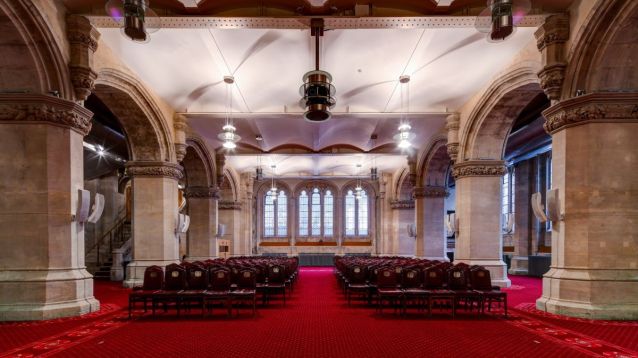
Last night I attended a reception by the City of London to welcome the opening in three years time of Britain’s first national Migration Museum which will be located in the heart of the capital.
You could not have had a better antidote to the current political antipathy to migrants whether it is from Nigel Farage’s by election and Reform council election victories or Sir Keir Starmer’s ill judged views that we are becoming a nation of strangers because of the number of people wanting to live here.
Nor could there be a bigger statement of support from the City of London in choosing the prestigious Livery Hall at London’s Guildhall to launch this. Talking to officials from the City of London at the reception it was very clear they are extremely enthusiastic about the project.
The Migration Museum project is now 10 years old. It has moved from an old fire station at the back of the Albert Embankment to an empty H & M store in Lewisham shopping centre before getting to the City. It will be a new three floor museum in a brand new building in Aldgate. This latest move has only been made possible by a superb gift from a successful property company , Dominus, set up by a refugee to the UK.
The brilliance of this museum is that it focuses on human interest stories and treats everybody as a human being – not as some bogeyman or threat to the stability of our country. And the stories and history of migration and emigration are so rich and diverse and so much part of this country that it is amazing that no such museum has been created until now to celebrate this.
Also it will not have a metropolitan bias. There are plans for pop up museums all over the country to bring the same human interest stories to the rest of Britain. It will be popular with schools visits and when it is open it is expected to attract 140,000 visitors a year plus another 100,000 on the internet.
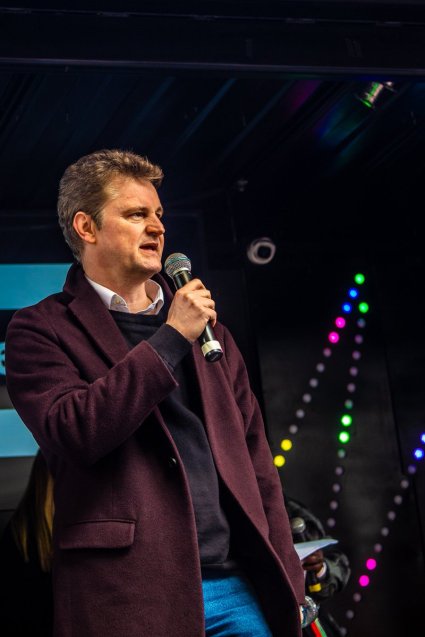
Last night’s launch included a panel discussion with Sathnam Sanghera , David Olusoga , Es Devlin, Indhu Rubasingham mediated by BBC news presenter Reeta Chakrabarti.
You can see how enthusiastic people were from this short Youtube video from Dr Krishna Kandiah, director of the Sanctuary Foundation. He says it better than I could express it.
On the way back home from the event on the tube I noticed a couple opposite me. The young man was a typical white Englishman with dark black hair. His girlfriend was a brown Asian lady. It was quite clear they were in love. And I thought those who claim we are a nation of strangers have got it wrong. The missing ingredient is love. In such a diverse country these attempts to drive wedges between people of different races will not resonate with them. Those who want to stir up fear and loathing are on the wrong side of history. Love will conquer all.
Charlotte Proudman Pic Credit:charlotteproudman.com
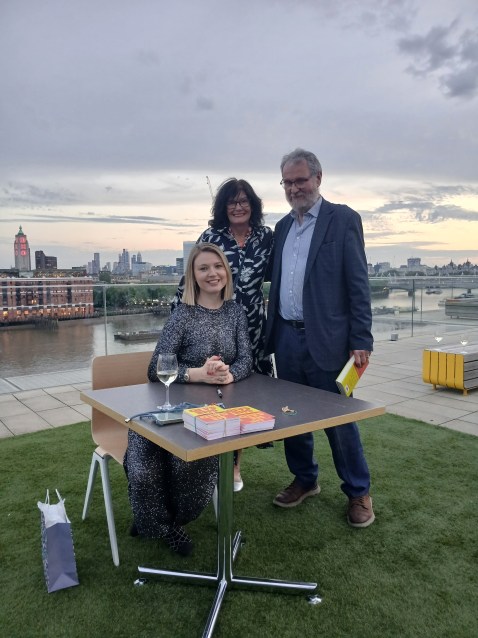
Last week I attended with Janice Chapman from CEDAWinLAW the launch of barrister Charlotte Proudman’s book He Said, She Said in London.
She is an extraordinary brave woman who stands up for sexually abused women and children in one of the most secretive parts of the judicial system – the family court – where estranged couples fight for custody of their children following a marriage breakdown. Most hearings are in private, ostensibly to protect the children, though a few can be reported in public following recent reforms.
For those familiar with my reporting of judgments in employment tribunals where whistleblowers stand only a 4 per cent chance of success this may not be such a surprise. Hearings such as those conducted by Leeds employment judge Philip Lancaster who has received 16 complaints from women he has insulted, belittled and patronised during hearings fit a pattern that seems rife in the family court system.
Janice Chapman and me with Charlotte Proudman at her book launch on the roof garden at Carmelite House. Janice asked her as a patron of CEDAWinLAW about the convention for the elimination of all forms of discrimination against women and why it needed to become law here.. Evidently the UK has not had a representative on the Geneva based committee under the last government and Baroness Helena Kennedy did not know whether the present government had to done anything to rectify this.
The book is a shocking eye opener into what goes on these largely secretive area of justice and exposes the appalling treatment of women in family courts – both by husbands and judges and ends with a failed attempt by the Bar Standards Board to end Charlotte’s career because she was exposing the mentality of the “boys club” world by both some male barristers and judges.
Among these is the case of a judge -Judge Scarratt – who threatened a woman who had been raped by her abusive partner and had been forced by him to take drugs to take away her daughter and put her in care and report her to social services for taking drugs. He made it clear that he was going to allow her abusive husband to have unsupervised contact with her daughter and said the whole proceedings were a waste of time. Charlotte Proudman managed to get his decision reversed by the Court of Appeal but by then the woman was traumatised as she says ” forcing even those who win to crawl over broken glass, leaving wounds that may never heal.”
Other highly disturbing material in the book includes the role of parental alienation used against women by men to say that women are turning their children against them. Extraordinarily these claims are backed up by so called experts – some who have no qualifications – who seem to be making a business out of the family court system.
Husband made wife sign a written contract allowing him to sexually assault his wife whenever he wanted
The most disgusting stuff is in a chapter on abortion and and reproductive coercion. It includes two contracts one before a woman became pregnant – which men forced on their partners. One insisted the husband would not have to give his sporting hobbies while she had to agree to shop for clothes in charity shops and ” keep the house as tidy as possible” and included the phrase ” I will entertain all sex requests- whenever and whatever -with a smile on my face and as a willing participant. It went to specify conditions for oral sex. As she comments; “It was, in effect, a charter for a man to rape and sexually assault his wife whenever he chose – a disgusting power fantasy.”
Two other chapters deal with a tragic case that involved the Hague Convention which is so limited in its scope that a woman fleeing her partner in Australia with her child because of domestic abuse was forced to return to him – as the issue of domestic abuse could not be used as a reason under the Hague Convention as it would have to be decided in Australia. The man then broke all his promises to the court.
Another case involved the hostile environment against child asylum seekers who faced female genital mutilation in their own country. Though the practice is illegal in the UK, the Home Office decided to split two sisters – allowing an 11 year old to stay but to deport her 14 year old sister on the wrong grounds she was too old to have FGM. After a desperate battle Charlotte managed to prevent the 14 year old from being deported.
The final part of the book turns the tables on Charlotte herself when she finds herself facing a tribunal at the Bar Standards Board for bringing the judiciary into disrepute – while far worse attacks are made against her on line by other barristers and men who lost their cases.
The tribunal decides that the justice system is robust enough to accept her on line criticisms of it – and board loses the case. The arguments put by the board to discredit her frankly look pathetic.
What this devastating book shows is that we still have along way to go to reform the judiciary and end the outdated boys club mentality. But Charlotte Proudman is on the right side of history and I am sure will prevail.
Last week I attended a conference which aims to unite diverse groups fighting racism to form a national campaign to stop the rising tide of prejudice, harassment and ideological views that portray black and brown people ( especially immigrants) as a threat.
The conference was organised by the law firm Equal Justice Solicitors whose chief executive Lawrence Davies made an impassioned speech at the end saying “no ” to all these traits and go on the offensive to get real integration in this multi racial country.
The response is opportune as the forces backing discrimination are rising high here and in the United States. Donald Trump is abolishing any approach that backs diversity, equality and inclusivity and Reform, who are expected to do well in the local elections this week, are committed to abolish the Equality Act, leave the European Court of Human Rights and will need to leave the UN Convention on the elimination of all forms of discrimination against women and girls, which Margaret Thatcher agreed to join in 1986.
Lawrence Davies put up a blog on his newsletter The Intercessor and it very much reflects what he said at the conference so I am reproducing most of it here as it covers a lot of issues and has good examples.
He wrote:”Obviously, at present we are in the midst of an invisible war. The “culture wars” were quietly declared by the Conservative government in 2020. Their aim was to prevent black people empowering themselves by mobilising and using the energy from the #BlackLivesMatter movement to become a political force, such as that which helped the Democrats win the November 2020 election.
“It is an ideological war. Those who do not accept the alleged British way of life (“white is right”) are to be humiliated, made to feel unwelcome, harassed and invited to leave Britian. DEI is to be ended. Unconscious bias training is to stop in the civil service. White (northern working class) people are to be viewed as the real victims, not black people or women. Diversity (and equality) has gone too far. The term “Institutional Racism” is unhelpful and must not be used by the EHRC in any report findings. Black ministers (NB: who ideologically see no racism) were deployed to implement the war tactics to deflect from and provide deniability from their innate racist motivation.
One chess move in that war was the decision by the institutionally racist Home Office (which oversees the institutionally racist Met Police) to implement the Hostile Environment – a policy of deliberately seeking to make the Windrush generation uncomfortable and unwelcome living in the Britain.
Another was to label all illegal immigrants as criminally minded threats to our way of life and culture.
It started in 2016, although ideologically decades before that. The anti-foreigner element to the Brexit campaign was a rallying call to lone wolf social media racists and incels alike.
Racial harassment at work rose from 16% to 31% in the period of 2016 to 2020. It has become much worse since then.
We had race riots in the summer of 2024. Every alleged crime committed by a black person was taken as a justification to visit personal injury on the whole black community, be it in Southport or anywhere else, due to racist stereotypes about aggressive black people. They are all the same. They have it coming etc.
By contrast, every heinous crime committed by white people of course did not lead to any attacks on the majority white community. The ideologically motivated, Andrew Tate loving, Kyle Clifford was not stereotyped as the danger that white people pose to others.
Reform UK promised in its manifesto to abolish the Equality Act 2010, removing all legal protection against racism at work, in education and in health services. They believe, like Jeremy Clarkson, in the white man’s right to call a black person a “N…” at work or in a hospital, without accountability, or liability.
In any non-racist, civilised country, the Law should of course protect the black community from such racism. However, our Law does not. 30% of black people suffer racism at work but only 1% feel sufficiently safe and empowered to utilise their rights under the Equality Act 2010. 99% of racist incidents therefore are simply suffered and not formally complained of. Any Law that 99% of victims are too afraid to use is NOT fit for purpose.
No incentive for organisations or corporations to change
Of the 4% (within that 1%) who exercise their rights and win, they win small and the employer does not change. It is statistically more likely that the racist co-worker or manager will be promoted rather than sacked. Awards for racism which would attract $10 million compensation in the USA attract an award of less than £12,000 in the UK. There is no economic incentive for corporations and organisations to change culturally over a £12,000 award.
Public inquiries into the worst racist cases from the Lawrence Report to Casey Report in 2023 have uncovered the obvious Institutional Racism but led to no real or structural change. In fact, matters are regressing. Doreen Lawrence told me that the police are as bad now as they were in 1993.
In any event “landmark” Employment Tribunal cases do not effect structural change. They just enthuse the claimant and the lawyers who believe that such case do lead to change. But 99% of victims of the new rights won’t exercise them. Metaphorically successfully sailing a boat across a hostile ocean, and against the constant current, to land somewhere (hopefully) safe does not change the presiding structural current, or get close to freezing the Moon – that invisible power, wealth, influence controller.
Meanwhile, Racists are becoming emboldened. That’s exactly what happens when the Law does not work to protect people at work, or outside work.
Wayne Hammond (white) called John J Campbell (black, Union official) a “fucking monkey” at work (Sheffield Teaching North Hospitals NHS Foundation Trust) in a heated discussion about union subscription deductions from wages. The Employment Tribunal found that the remark at work was not made by Hammond in the course of his employment and that the Trust had taken all reasonable steps to prevent such remarks being made (even though it is clear that the steps had not prevented the racist abuse), so neither the Trust nor Hammond were liable.
On 20 March 2025 the Employment Appeal Tribunal rejected the union (UNISON) backed appeal. The union failed to challenge the ET Decision on the grounds that it was perverse.
So the current Law permits a black worker to be called a “fucking monkey” at work provided the conversation is about union matters and the Trust has carried out all reasonably practicable preventative steps to prevent such racist conduct.
The current Law also says that if you are called an “N” at work and pinned to the wall by your manager in front of witnesses it is not perverse (legally wrong) for you to receive only £2,500 in compensation. Nor is it perverse for the appeal court to opine that awarding more than £20,000 in punitive damages would bring UK Law into disrepute, whereas in fact the opposite is true.
The current Law says I can (randomly) scream at you at work and cause you to have a mental breakdown and you have 3 years to sue me but if I (deliberately) scream racist abuse at you causing the same injury you only have 3 months less a day to sue me. Of course, the Law says you have 6 years to sue me if I sell you a defective television…..
Betty Knight posted a post on LinkedIn which tagged a former colleague and effectively stated that the senior team at the college was racist (having previously won a claim at the ET that her constructive dismissal was an act of racial harassment). One white employer (then the head of HR) said she felt harassed by that posting and rather than blocking Betty, instead, chose to report her to the police for criminal harassment. The aggressor said that she did so on her own phone, from her car in the car park, and her employer knew nothing about it and had not authorised the reporting. The ET found that extremely aggressive conduct was not done in the course of the perpetrator’s employment. The matter is on appeal. Either the EAT will find that (allegedly) popping out of the office to report a black person to the police for a LinkedIn post, that LinkedIn itself had no issue with, is part of the employer’s responsibility under the current Law or it will not. In either case, the current Equality Act 2010 is not fit for purpose. No Law that 99% of race victims fail to utilise protects the race victim. The fear of retaliation and the knowledge that Justice will be very expensive and unlikely to be achieved (4%) means that we have only cosmetic rights.
We need a new Inequality Act to be implemented as soon as possible to tackle the rising and ideologically driven racial harassment and tackle the underlying and long-standing structural racism.
In the last year, a black man shopping in an ASDA in London, with a black elderly friend who had had a stroke, was surrounded by plain-clothed security staff and asked about their intentions, being the only black customers in the store. He was then asked if he knew how to lift a voodoo curse from a white person.
Similarly, a black women made her way around Tescos with her daughter only to be surrounded by security staff and asked about her intentions, again being the only black customers in the store. When she complained a manager/supervisor apologised for the matter and offered her “a “bunch of bananas”, smirking at her.
None of the racist white Tesco or ASDA staff concerned were dismissed.
So reading this post, you may feel that won’t happen to me, and as only 25% of British people admit to be very or a little racist, you may (hopefully) avoid being targeted and harassed at work, but know if unfortunately you end up working with or for a racist colleague, once you complain you will be retaliated against because the current Law does not prevent retaliation, or the original racist act, any more than the training the Sheffield Trust did. In fact it permits and encourages it.
Anyone telling you that you have rights not to be racially discriminated against is lying. Yes, there are rights but almost all are unable and/or too afraid to exercise them. A right is not a right unless it is enforceable, and can be exercised safely.
Further, 95% of black school children face racist banter and harassment at school. So the next generation, will face a far more racist world than you did. Racist banter is becoming normalised. It is destroying black lives, and people’s sense of safety and damaging their mental health.
As our society becomes more intolerant under the hate-mongering by Reform UK and BRUV (Andrew Tate’s political vehicle to become PM – NB: 27% of men under 40 years of age believe his misogynistic views of women are correct and kids are 5 times more likely to view violence against women as legitimate having viewed his literature).
So do YOU feel safe at work, in education, in the NHS, when contacting the police, online and offline?
What more can WE do to ensure black people, women and the community as a whole are safe from racist sexist (RaX) people?
Finally, if 25% of British people remain admittedly racist, hopefully that means than more than 50% are not racist and therefore in fact that being British no longer means being racist. Because cultures evolve. So being British no longer means being slave-owners or profiting from the slave trade. Or where the rape of an unmarried girl or women is seen as a criminal rape and no longer viewed as damage to property. Our culture did evolve into a fair and more tolerant (ie: less racist), diverse community but war has been declared on that evolved culture and they want to drag us back to the 1970s culture (and some want to drag us back into chains).
It is time to say NO.
NO more.
Be safe, and prosper, “
Professor Patrick Vernon
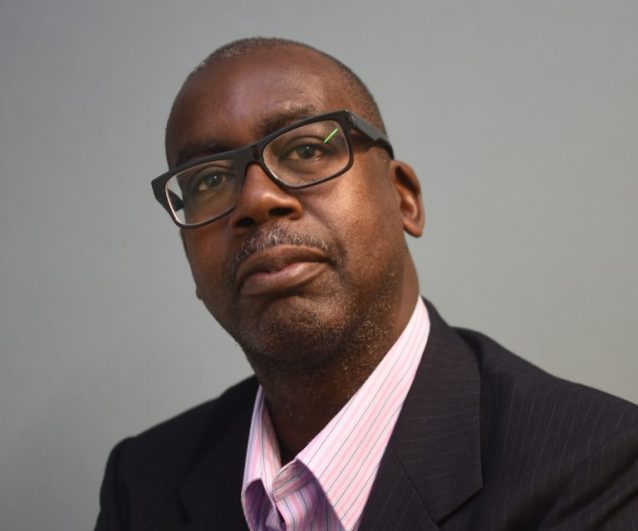
Among those who spoke at the conference were Professor Patrick Vernon, pro chancellor at the University of Wolverhampton and board chair of the Birmingham and Solihull Trust; Professor Miranda K Brawn Ahmed who is chair of People, Culture and Education Committee on Guy’s and St Thomas NHS Foundation Trust, veteran race discrimination campaigner Lee Jasper, Andy George, president of the National Black Police Association; Roger Kline, research fellow at Middlesex University; Hira Ali, an author and Ritka Wadhwa, founder of Cultural Intelligence. All were determined to make a big change so expect some strong action soon.
Three were good examples from the audience notably at Waltham Forest council where the executives and managers were being held to account over cuts and redundancies to make sure black people were not unfairly treated.
This week the International Court of Justice at The Hague begins a week long public hearing into whether Israel has broken international law in occupied Gaza through its brutal treatment of civilians, medics and aid workers and the Israeli ban on the United Nations aid organisation UNWRA.
Last week I attended a documentary film screening and discussion event organised by the media group Middle East Eye and the International Centre of Justice for Palestinians. The documentary was a searing account of the life and death of paramedics and doctors trying to save lives as Israel bombed the Muslim quarter of Beirut and the villages of Southern Lebanon. The panelists included doctors and volunteers who had worked in Gaza, and an international law expert who made it clear that these attacks were against international law.
The film by Middle East Eye was made with the co-operation of Lebanese workers and an extremely brave woman reporter, Hind Hassan, who embedded herself with emergency ambulance teams going to the latest bombings in Southern Beirut and the surrounding villages at great risk to her own life.
The “double tap” killings
What she discovered was that the Israelis were using a particular brutal bombing technique known as the ” double tap”. First they bombed a building and followed what happened using drones. Then they came back and bombed again just at the moment when ambulances and paramedics arrived to try and rescue victims. The only intention of the second bombing was not to kill Hezbollah but to kill doctors and paramedics at the scene.
The film also showed that many paramedics and doctors slept in Beirut’s hospitals so they could be on call immediately a bomb dropped during the night. The Israeli’s bombed their sleeping quarters killing a number of them. You can watch the video of the film at the top of this article.
The Israeli’s claim the reason they bomb ambulances is that they are used by Hezbollah to transfer arms and missiles not to rescue people – even cartoons are used to illustrate this. The reporter saw no evidence of this when she was working with the ambulance teams and frankly it would odd to load up an ambulance going to a bombed out zone with weapons – they need the space to take back casualties.
The discussion that followed included first hand accounts from medics who had worked in Gaza including Dr Ghassan Abu Sittah, a renowned humanitarian plastic surgeon, who has worked in conflict zones and in Gaza. He has been banned by Israel from returning to the Gaza strip. Dr Victoria Rose, anNHS plastic surgeon and the chair of the UK’s Specialty Advisory Committee on Plastic Surgery Training, who volunteered to work in Gaza and Yasmine Ahmed, UK director of Human Rights Watch.
Some of the statistics that came out during the discussion were terrifying. All Gaza’s hospitals have either been damaged and destroyed, some 512 schools and 12 universities destroyed, 52,000 people killed and some 5,700 people who are now the lone survivor of once large families. The medics and paramedics have been decimated – there are only two pathologists left alive in Gaza and many teachers and journalists have been killed. if all that is not genocide, what is it? It also suggest that the recent killing of Gaza ambulancemen to be dumped in a mass grave is not some professional mistake but part of a strategy to degrade the country and make it uninhabitable.
As I often do on my blogs there is a full report of the panel discussion on Youtube which I have embedded here. It is over an hour long but it will give a proper flavour of the event.
You may not have noticed but the UK Parliament and the National Health Service has not had a permanent Ombudsman to handle complaints for more than a year.
Ever since for some unexplained reason the former PM Rishi Sunak blackballed the first choice, Nick Hardwick, a former chair of the Parole Board, for the job despite going through a thorough selection process, interfering with a body which is independent of government, it has been rudderless without a permanent boss. See my blog on this here.
To solve the problem the Parliamentary Ombudsman’s office appointed an interim candidate, Rebecca Hilsenraft, then chief executive, after a meteoric rise since joining the organisation from the Equality and Human Rights Commission, who at least could adjudicate on complaints.
But they would have known then that her appointment would end on March 31st this year – a year after the last permanent Ombudsman, Sir Rob Behrens, retired. You would think that would have given them plenty of time to find a successor and go through a thorough selection process. But Oh no, by the time she reverted back to her old job, nobody had been appointed.
As a result the press office had to issue this statement:
“We are currently awaiting news on the appointment of a permanent Ombudsman.
“Our dedicated staff remain committed to delivering an important service for the public.
There may be a small number of cases we are unable to progress without an Ombudsman in post. Caseworkers will directly contact any complainants whose cases are affected.”
Checking their website yesterday there has not been one new press release nor any new decision of cases announced since April 1.
Then suddenly last week it was announced that the Public Administration and Constitutional Affairs Committee were to hold a pre appointment meeting this week for a new Ombudsman. Extraordinarily the name was kept secret from the public record until this Tuesday.
I gather it was at the request of the favoured candidate, Paula Sussex, because it appears she had not told told her present employer, she is chief executive of OneID, that she had clinched the job.
Now yesterday there was a hearing. The current chairman of the committee, Tory MP, Simon Hoare, recused himself from the hearing as he had sat on the selection board leaving Labour MP, Lauren Edwards, to take the chair.
It was a very underwhelming event both from the appearance of the favoured candidate and the MPs questioning. For a start four MPs did not attend and those who did were mostly newbies whom I thought had yet to get in their stride.
The candidate herself appeared to know little about the working of the PHSO system and even less about the NHS. She appeared to be a management and process person steeped in working for the private sector rather than a person concerned about policy. This was noticed when she was chief executive of the Charity Commission when a profile of her highlighted this. The article is here.
She was also wary of journalists. The same article noted: “she has declined to give interviews: she is said to be unused to dealing with the media, disconcerted by the amount of press attention the commission attracts and confirmed in her reluctance to speak by any coverage she perceives as negative.”
Considering she admitted during the hearing that the Parliamentary Ombudsman had too low a profile – it strikes me she is going to have to be more proactive with the media if she wants to change it.
Her previous jobs have involved her as a consultant on new technology, working at a top level at the transactional Students Loan Company and for private industry.
Her most recent role is as a non executive director with the Infected Blood Compensation Authority which will ” sadly”, as she said, to have to give up. Given her sparse knowledge of the workings of the Parliamentary Ombudsman’s Office I was rather surprised she did not mention that her fellow non executive director is none other than Sir Robert Behrens, the last Ombudsman, who could have given her great detail about its inner workings.
Also it is rather ironic that this body – which despite its name is a private contractor not a public body- is to face a recalled two day hearing next month of the Infected Blood Inquiry under Sir Brian Langstaff because of public dissatisfaction with its handling of compensation and a slew of other complaints. Jenni Richards KC , the inquiry’s counsel, has just published a huge list of issues. See here.
Given some of these issues will be the very bread and butter work that a Parliamentary Ombudsman and Health Service Ombudsman would have to handle, someone might ask why she presided in an organisation that now faces such searching questions for not doing its job. Of course its minutes aren’t published so we won’t know whether she raised such issues or went along with the management.
Altogether I am sceptical of whether there will be great change at the Parliamentary Ombudsman’s Office and I am afraid her attitude and the lax scrutiny by the one committee that can hold it to account will mean any great change.
The committee of course do not agree and think she is wonderful. This is their conclusion In a report published after the hearing.
“We are satisfied that Paula Sussex has the personal independence and professional skills necessary to fulfil the high profile, demanding and varied role of Parliamentary and Health Service Ombudsman. Paula Sussex is an excellent candidate with a track record of organisational transformation with a focus on improving the effectiveness and external reputations of the organisations she has led. Her professional background and experience as Chief Executive will aid her in giving the PHSO direction and certainty. We wish her every success in this role.”
Some 114 people applied for the job at a salary of between £171,000 and £189,000 a year -42 per cent were women.
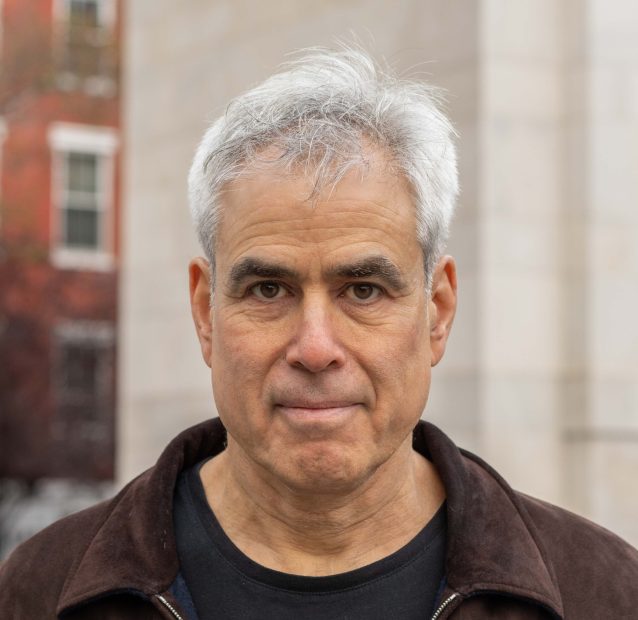
Yesterday I attended an extraordinary lecture by Jonathan Haidt ( pronounced height) a US social psychologist revealing extremely worrying trends following the invention of smart phones on kids education’s prospects.
It showed both in the UK and the US that educational attainment – far from rising – is dropping and that issues like mental illness and self harm are rising.
His research can precisely connect the emergence of the ubiquitous smart phone and a dramatic change in attainment in schools, increased loneliness among teenagers, who then become vulnerable prey to malevolent influencers or in the most extreme cases tricked by criminals and paedophiles.
We are all aware of teenagers being glued to their phones – even when walking down the streets – and might have thought this is a passing phrase with nothing to worry about. This research suggests otherwise.
Situation in UK worse since Covid lockdown
Part of the increase in isolation comes from this present generation’s experience of the Covid pandemic and lockdown. One might then expect to see some bounce back when life returned to normal. But his research shows the opposite, the situation in the UK and US is worse post Covid.
The main players in this are undoubtedly short videos on Tik Tok, Snapchat and Instagram – which provide addictive instant distraction and gratification for teenagers, and make more detailed lessons studying books or complicated maths formula seem boring. Add this to the distractions of X Box computer games and kids can – and sometime do – have 24 hours glued to screens only to be tired and irritable the next day.
Jonathan Haidt pointed out in his lecture that puberty is also the time when the brain develops new connections allowing teenagers to understand more complex concepts and ideas as well as emotional development. But fed on a permanent diet of addictive videos and porn is not helping the brain to develop and probably damaging it.
Given the power of Big Tech to influence politicians – brilliantly illustrated recently when a victorious Donald Trump was surrounded by billionaire tech barons- can we do anything about it?
The answer according to him is yes. Schools can play a big role in curbing the rot by banning the use of phones while teenagers are learning. My daughter, who teaches at a private school in Luton dealing exclusively with kids who have been expelled from other mainstream schools, all phones have to be handed in at the beginning of the day and returned when they leave. Even the staff are restricted from using phones so as not to set a bad example to the kids there.
Schools – and there are by no means enough of them – that have done this according to his research have seen a dramatic increase in educational attainment in English, maths and science and a dramatic decrease in disrupted lessons making it easier for teachers to do their job.
Sir Keir Starmer should be concerned
The government ought to be concerned about this. Sir Keir Starmer, has set great store on increasing the skills of a new generation so he can get the growth needed to boost jobs and the economy. But it is being undermined by this trend where the latest generation are being continually distracted by what they see on their smart phone. Employers are not keen to take on people whose spend time exclusively on their phones and as a result have worse literacy and mathematical skills.
For those who want to follow this up you should go to Jonathan Haidt’s website https://www.anxiousgeneration.com/ where his research team has all the details you need to know about this trend and its implications seem to have passed us all by.






 Westminster Confidential