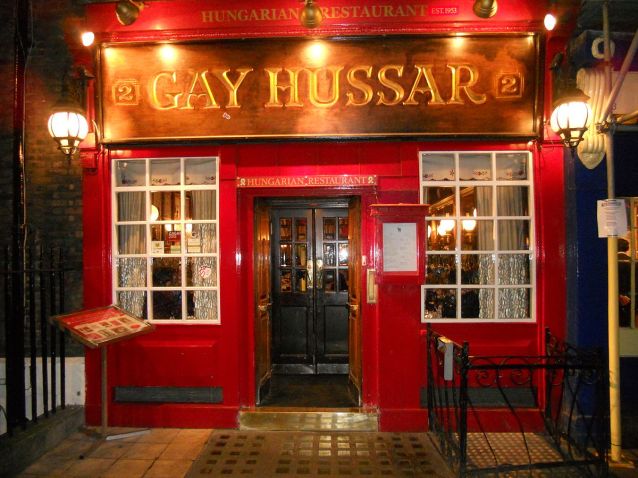
Fight to save the iconic Gay Hussar

Gay_Hussar_restaurant_-_November_2013

Gay Hussar restuarant- a fight to save it as it is due to close June 21. Pic Credit: wikipedia

CROSS POSTED ON BYLINE.COM

The news today  that one of London’s iconic restuarants, the Gay Hussar, is closing on June 21  will  be a catalyst for a fight back.

The sad decision was  announced by manager John Wrobel at the end of a very convivial lunch for Old Guardian hacks last week leading to today’s  excellent article in the Observer by  Rebecca Smithers.

Some less kind might say a fitting end for us retired or semi retired reprobates. But  as she writes this has been a regular venue for Left wing plots and meetings between journos and sources. I myself  confess that the odd confidential document might have been slipped into my hands before I left  there after dining on  herrings and soured cream and crispy duck with red cabbage.

The place was also the venue for Michael Foot’s 90th birthday, a superb collection of political cartoons loaned by Martin Rowson featuring the great and not so good and it is not unknown for right wing dissenters to dine there. My previous lunch there was with an independently minded Tory peer.

The wider issue which pushed its closure is globalisation and a fierce policy of raising business rates (rents automatically seem to follow) which is leading to the disappearance of many independent businesses  and their replacement by franchised national chains.

The planned closure of the Gay Hussar follows the disappearance of the Gran Paradiso in Pimlico and Luigis in  Aldwych. And it is not a problem confined to the capital.  My local town, Berkhamsted,  has lost the House of High Tea, a popular cafe which had a eye watering selection of brews for precisely the same reason- a tripling of the rent.

The decision by its conglomerate owners Corus Hotels  appears to have taken place in Kuala Lumpur pushed by the big jump in rent  prompted by the business rate  rise.

However all is far from lost.

John Goodman, the energetic chair of the Goulash Co-operative, is riding to the rescue.

Ina an email sent out to the members of the co-operative last night ( I declare an interest I am a small investor), he says:

” At last our moment has come! The day for which we have all been waiting has unexpectedly arrived.

“We learned a few days ago that Corus, the owners of the Gay Hussar, intend to close the restaurant some time in the near future, despite still having four years to run on the lease, which is held by Corus subsidiary The Restaurant Partnership (TRP). Our understanding is the long suffering and loyal staff, who do so much to make the Gay Hussar what it is, have already met with HR managers.

“As your directors, we immediately called an emergency meeting for Monday 14th May to discuss our action and have been working on it intensively since then.

We understand that Corus/TRP has been in discussion with the landlord and has reached an arrangement for early termination of the lease. This will give the landlord vacant possession and they will therefore be looking for a new tenant.

“Two of our number, including our legal and property advisers, met the landlord’s representatives on 16 May to discuss their intentions. They told us the building was not for sale but they expressed interest in offering us a new lease to continue the operation of the Gay Hussar, albeit in an upgraded form. In such circumstances there are a huge number of questions to be answered, involving finance and the potential operation of the restaurant.”

He ends with a rallying cry:

“In due course, and if our plans make progress in the way we hope, we will re-open the Goulash Co-operative for additional and fresh investment and investors as we anticipate a good deal of interest. We would ask you to alert friends and family to join in this great venture to keep the Gay Hussar and to develop further its enormous potential.”

Let battle commence!


Celia Brackenridge: An outstanding sportswoman and a pioneering campaigner against sexual abuse in sport

CROSS POSTED ON BYLINE.COM

Very sadly yesterday Celia Brackenridge died after a long battle with leukemia.

I have written an obituary which has been published in my old newspaper  The Guardian this evening. You can read about her extraordinary career here.

She will be sadly missed by her immediate family, friends, her partner, Diana, sports professionals across the world , academics at Brunel University and local people who got to know her in Berkhamsted.

Her fearless  campaigning  against sexual abuse in sport was ahead of our time and comes just as some of the people, particularly in the football world are finally facing justice for the sexual abuse of young promising soccer stars.

She faced the equivalent of today’s internet trolls – hate mail – from people who did not want to believe  this was happening or wanted it covered up.

The good news is that her work will not die with her because there is substantial funding  for  the Safe Sport International  organisation she set up and  action will continue on the issues she has raised.


Taking the 50s women protest to the doors of the Department of Work and Pensions


one voice

The protesters outside the DWP under the #One Voice umbrella

CROSS POSTED ON BYLINE.COM

The campaign for justice for the 50s women denied their pensions has come home to the Department of Work and Pensions.

A group representing all shades of opinion demanding redress for the 3.7 million women who have lost out hired an old London bus to protest outside Parliament, Downing Street and Caxton House, the DWP headquarters to drive the message home.

Under the banner #One Voice it included a number of #Waspi groups from London, Chichester, Bognor Regis to name but a few. On board backing the campaign was the Barnet blogger, Theresa Musgrove, who runs the @brokenbarnet  website.


20180508_131056_Richtone(HDR).jpg

Waspi supporters from London with a banner – the guy in the background is the DWP’s privatised security guard from G4S who was pretty accommodating given it was a surprise visit

The campaign was supported by lawyer Michael Mansfield who wants to bring a legal case against the DWP  presently represented by Guy Opperham, the pensions minister and MP for Hexham,. who is implacably opposed to giving any concessions to anybody.

He appealed for unity among the campaigners – warning that divide and rule between various factions – would mean they could be picked off by ministers.

The 50s women used a battlebus obtained by Angela Taylor to make as much noise as possible particularly in its thrice trip round Parliament Square, causing both tourists and MPs to turn their heads. No doubt the message would have got back to Japan given the number of pictures taken.

The choice of the bus added to the occasion. It was a London RT model – the workhorse of  London Transport for decades – and built pretty much at the same time as many of the 50s women were born.  Reliable, dependable and capable – it was very much symbolic of the women who have been robbed of their pensions.

Reliable London us

The pensions battle bus with Yvette Greenway  who works in association with #BackTo60 with her trusty loudhailer

Of course the government is still saying it will do nothing. A letter sent to Pauline Hinder by the DWP ministerial correspondence unit ( ministers  like Guy Opperham have better things to do than reply to the general public like watching the Eurovision song contest) says :

” The Government has no plans to revisit the policy on women’s State Pension age and does not intend to make further concessions….

And according to the ministers they are striking a blow for equality.

“Changes to the State Pension age put right a long lasting inequality which was based on an outdated rationale that women were dependent on their husband’s incomes.”

Bizarrely this is exactly what many of the 50s women  were dependent on – the minister is just rewriting history to suit himself.

And mindful that the ministry may soon to be taken to court for not telling people about the change they are on the defensive..

“In the years after the 1995 legislation (1995 to 2011) this equalisation was frequently reported in the media and debated at length in Parliament. People were notified with leaflets, an extensive advertising campaign was carried out, and later individual letters were posted out. Throughout this period the Department has been providing individuals with their most up-to-date State Pension age when they have requested a Pension statement.”

And also you aren’t entitled to a pension  and we can’t afford to pay it anyway. We just take your contributions and do what we like with it.

“The National Insurance scheme operates on a ‘pay-as-you-go’ basis. It is inaccurate to characterise the State Pension as an individual contract where people get out what they pay in. It is today’s contributors who pay for today’s pensioners.

“There is no surplus in the Fund that can simply be drawn upon. The Government Actuary recommends a surplus is kept in the National Insurance fund to cover day to day variations in spend. The surplus is lent to the Government while that happens – it cannot simply be spent again.”

I have a feeling that ministers may not get away with this if people continue to press them – the Conservative government can’t afford to lose 3.7 million votes when it is neck and neck with Labour.


Take time to smell the roses: Bulgarians love bomb London to counter British hate media

Bulgarians Soho square

Bulgarians after completing the planting of the damascene roses in Golden Square Soho in London Pic credits: Boyko Boev

CROSS POSTED ON BYLINE.COM

The Bulgarians have not had a good press -particularly in the  Sun, Daily Mail and the Daily Telegraph.

The Sun sent a reporter to Sofia to portray them as rushing to  hand out Britain just to claim benefits. The Daily Mail quoted a survey by a gambling company saying Bulgarians were the laziest people in Europe. The Daily Mail and The Telegraph have repeatedly highlighted that Britain is being flooded with them under EU rules.

Yet very little is known about the Bulgarians in Britain..until now. Bulgarian academics at Warwick University and the University of Florida  have carried out a detailed survey of  151 Bulgarians living and working in London for a report which has gone to Sadiq Khan, the London mayor. It is not a representative survey but it is full of insights.

And it coincided with a remarkable gesture by the Bulgarians – who have planted their national floral pride – the Rosa Damascena –  the perfumed rose grown for centuries in Bulgaria -in Golden Square, Soho – re-enacting  a gift to London  from Sofia 95 years ago-in 1923.

The report says: “After 2013, this community was caught unwittingly in the crossfire of an especially heated immigration debate around Brexit, feeding off of public discontent and strong activity of the opposition. Bulgarians and Romanians have been collectively sneered with reference to perceived combination of cultural and social traits. This form of bias is still highly discriminatory, even if not directly versed in common understandings of racism (of quasi-biological labels and insult).”

Bulgarians planting roses

Bulgarians planting the roses

What the survey did was examine groups of Bulgarians living in London from their 20s to their 50s and 60s. One fact that shows the media coverage suggesting Bulgarians are here to claim benefits is completely refuted. Just four were out of work.

The second suggestion that Bulgarians are lazy gets equal short shift – it turns out one of the favourite pastimes of Bulgarians in the capital – whether 20 or 50 – is going to the gym. Hardly couch potatoes then.

And a lot are highly educated with university degrees or high school diplomas – they are not always able to get jobs suitable to their qualifications.

Highly educated women were most affected  “Many work as housekeepers, babysitters, care providers and “personal assistants”, says the report.

But younger Bulgarians were getting jobs suitable for their qualifications. These included marketing or public relations coordinator, accountant, sales representative, teacher, programmer, as well as jobs requiring manual labour, such as a cook, car-mechanic, construction worker, barman, and stage worker in the theatre.

Living in London also changed the attitude of some Bulgarians Those in their 30s said  that their new life in London has changed them for the better, and that they have become more ‘tolerant towards diversity,’ ‘patient,’ ‘more open’, ‘exposed to more travel,’ ‘walking more often than earlier in Bulgaria’ and visiting more cultural events,

The report added: “there are also statements indicative of closing socially, due to extremely busy schedules: ‘I am becoming more productive due to the quick pace of life, but also more mindful of my private time, which is a limited resource.’

The report does pick up damage done by right wing media coverage which meant that many were reluctant to work outside London because they thought the rest of Britain would be more intolerant about them being there.

The report also says the majority were happy living London despite it being more stressful than their native country.  One recommendation  to the London  mayor is that London helps ,particularly older Bulgarians, to become more fluent in English by laying on language courses. This would help the older generation of Bulgarians here become more integrated than they are.

There is a 11 minute video from Warwick University academic Maria Koinova which gives the background to the study.


Government narrowly defeat plan for new Leveson inquiry after deal with DUP

Lord-Justice-Leveson

Lord Justice Leveson ; Pic courtesy Leveson Inquiry website

CROSS POSTED ON BYLINE.COM

UPDATE: Government defeated the Leveson2  inquiry by nine votes 304-295 . There were five Tory rebels. The nine DUP  MPs supported the government after they were offered a new press watchdog for Northern Ireland. The one independent Northern Ireland MP, Lady Hermon voted with Labour.

Five Tories voted with Labour – they were Ken Clarke, Dominic Grieve ( former attorney general), Peter Bone, Philip Hollobone and Crispin Blunt.

One Labour MP John Grogan voted with the government to block Leveson 2.

Parliament will decide today whether a second Leveson inquiry  should go ahead and on new rules that would strengthen the role of press regulator Impress and force compulsory arbitration in libel cases.

Voting in the Commons on both motions is on a knife edge with  literally the decision being made on who turns up and whether very active campaigns by  mainstream media moguls or Hacked Off can convince wavering MPs.

Theresa May has staked her reputation on protecting Murdoch and Dacre from a second Leveson inquiry into malpractices by the media and scrapping the section which would have forced compulsory arbitration. At the Westminster  Correspondents Dinner she promised lobby journalists that ” very good news” was coming to help the media moguls avoid further scrutiny into their practices.

But her failure to control Parliament has put both promises at risk- hence the frenzied campaign  in the media to protect press freedom by media bosses who do not want some of the dark practices subject to forensic examination by Lord Leveson.

There are two motions today – one by former Labour leader Ed Miliband and Tory rebel Kenneth Clarke – aims to reinstate Leveson 2 after a Commons committee overturned a Lords resolution to hold the inquiry.

The second by Tom Watson, Labour deputy’s leader and long time campaigner against the Murdoch press, would implement the changes promised to force compulsory arbitration in libel cases – making court cases very expensive for the media even if they won.

The first motion stands the best chance of passing with guaranteed support from a number of Tory rebels, Labour, the Liberal Democrats, the sole Green MP, Plaid Cymru and the Scottish Nationalists. Nobody seems sure how the DUP will vote.

This alliance is however dependent on everybody turning up and solid support among all the groups.

There was signs at the weekend  that media moguls had changed  tactics and were trying to persuade some Labour MPs not to back Ed Miliband’s motion and the one strengthening Impress-and suggesting this would go down very well in the mainstream media who might look favourably on covering some of the issues  these Labour MPs might want to take up. A senior Labour source told me : ” They (the Labour MPs) are trying to curry favour with the mass media”.

Labour whips have been alerted to this but some Labour MPs are playing their cards very close to their chests and trying to hide their proposed support. You can be sure there will be very active work done by Labour this morning to try and root them out.

The other problem  that could scupper a  defeat for the government will be if not all MPs turn up. Here the SNP with 35 MPs are a key group – but not all of them turn up if they have pressing business in Scotland. A  ” no show” by just a few in this group would have a big effect on the vote.

So today’s decision will depend on the capricious nature of MPs in Parliament – and how much priority they put into defeating the government over this issue.


Feted in Mayfair but flouted in Nuneaton: The extraordinary Labour local election performance

IA508943_942long

Tiffany’s in Bond Street,London now in an area represented by Labour:

CROSS POSTED ON BYLINE.COM

Now I have had time to look further into  Labour’s performance in the local elections a rather extraordinary picture is emerging among the losses and gains made by Labour on the night.

The election has been presented as a boring status quo result but if you drill down into the figures it  shows two rather extraordinary trends – Labour is losing among the UKIP more Brexit minded white working class voters to the Tories but making major progress in some of the most affluent  areas that  stayed Tory strongholds  even under Tony Blair.

Probably one of the most striking results was in Westminster. Now Labour failed to make the huge headway – just  gaining four seats overall though they narrowed the gap between Labour and Tory across the borough to 1.8 per cent. The Tories  held the one seat they had in Pimlico after a defection  last year.

Labour took one  of three seats in the West End ward – covering Mayfair, Soho and Fitzrovia in Central London.  What’s more the person who won – Pancho Lewis- did so with a by-election style rise in votes. In 2014, the party’s candidates received a total of 1,281 votes and this year the figure stood at 2,858 – more than the 2,831 votes for the three Conservatives. This means  that Oxford Circus, Park Lane,Bond Street, Grosvenor Square, the Dorchester hotel, Savile Row, Regents Street and for that matter the editorial offices of Private Eye are represented by a socialist. Since the ward was created in 1978 Labour have never been in sniffing distance.

The Westminster result mirrors  earlier council wins for Labour in the City of London where Labour won its first seat in the Portsoken ward in 2014 and then went on to win five seats -including one in the Barbican – in the next election.

A similar surprising victory for Labour  was in Harrow where Labour increased its majority to seven over the Tories. It was where it was won  that made it surprising.Labour took Harrow on the hill – one of the poshest bits of the borough – that includes Harrow School and a private hospital – not normally natural Labour territory. The Labour candidates put on 1500 votes between them.

And in Barnet amidst the carnage for some of the Labour councillors in Hendon – Labour did make a GAIN  by two votes -ousting a Liberal Democrat in Childs Hill  just north of Golders Green – in a diverse ward that included Jewish, Arab and Somali voters.

And in Redbridge – Labour which made a double digit number of gains – included the new ward of Wanstead Village where homes can go for £750,000 – again not natural Labour territory.

Outside London Labour did amazingly well in Worthing. Worthing has never had a Labour councillor since Harold Wilson’s second victory in 1966. Last year Labour won a seat in a by-election in the centre of the town. Last week it won another  four council seats and came close in a number of others. They also gained three seats from the Conservatives in next door Adur –  better known as Shoreham on Sea -while the Tories took two from UKIP. The MP for Worthing East and Shoreham , Tim Loughton, who has a majority of  5,106 over Labour should be worried.

The reverse can be shown in Nuneaton which if the council had a full election – it seems certain Labour would have lost it to the Tories. Labour lost eight seats – some by big margins- in a result that gave the Tories 51 per cent of the votes on a 32 per cent poll.

Nuneaton is 88.9 per cent white British with a large proportion of pensioners – immigration hardly exists –  the biggest group are Poles -but it had strong support for UKIP. which has transferred to the Tories.The census figures showed it was overwhelmingly Christian with just 12 Jews and 2895 Muslims out of 126,000 people.Nearly two thirds of the population are working class – classified as C2, D or E.

This makes an interesting  dilemma for Labour they are still gaining votes in areas that Tony Blair could not even dream about  but equally they are losing votes in traditional English working class areas where they need support. But Labour  need to progress in both old England and new diverse England to succeed. If there is any post mortem to be had after these elections – this is it.


Local Elections 2018: Reality triumphs over expectation

_96382326_7a0c9d81-55cd-4092-ba30-c62d693a88e1

Local elections 2018 Pic credit:BBC

CROSS POSTED ON BYLINE.COM

The local elections have been portrayed  in the mass media as a disappointment for Labour ,a shot in the arm for Theresa May and a revival for the Liberal Democrats

In the pre election scenario Labour were expected  to  sweep all before them winning Tory councils in London and elsewhere, Theresa May was going to face a dire night and the Lib Dems were not going to do so well because of their poll ratings.

Yes  Labour are partly to blame for creating this scenario  with the promise of a Momentum style surge knocking  the Tories out of Barnet, Westminster, Wandsworth and Hillingdon in London and winning Swindon, Plymouth and Trafford outside the capital. They had high expectations after the surprise  rebirth under Jeremy Corbyn in the last general election and thought another heave would do it.

But it would be very foolish to write up these elections as the end of Labour’s progress or  ruling out a slow revival of the Liberal Democrats.

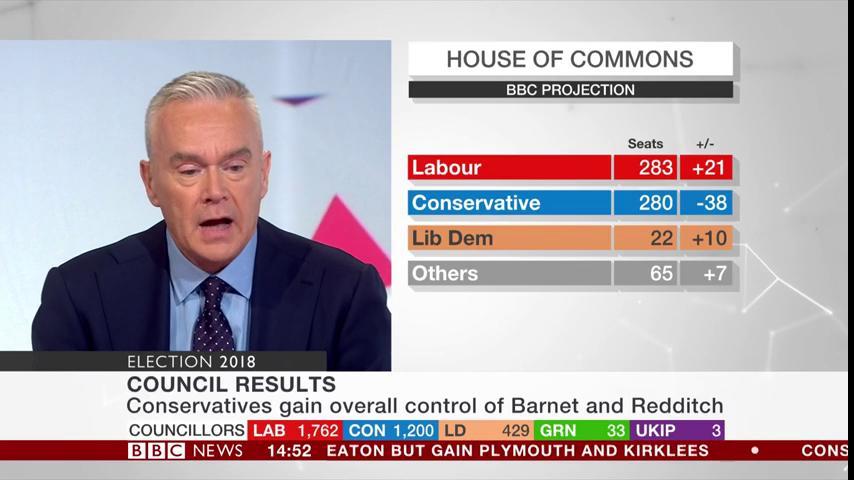
For a start the final analysis of voting by the BBC shows that if there was a  general election was based on these voting figures Labour would have got another 21 seats, andbecome the largest party in Parliament . The Tories would have lost 38 seats and the Lib Dems gained another 10. If that had  happened last year Theresa May would not have been able to form a government and it would be Labour plus a coalition that would be negotiating with Brussels.  And if you compare it with last year’s council elections it was the Tories making nearly all the gains. not Labour.

A more detailed analysis shows why this is true. Although Labour did not gain the breakthrough to take another four London boroughs from the Tories, their vote share was much nearer than their seat share. In Westminster where the Lab vote share jumped by 7.6 per cent – the difference in percentage support between Labour and the Tories is not much more than point. In Wandsworth there is only a 150 votes difference between the Tories and Labour running the council.

Even in Barnet where Labour’s self inflicted wound over antisemitism  led to a 13 seat Tory majority- the Tories biggest gains – the Labour share of the vote went up 2.8 pc but was trumped by a 6.6 per cent rise for the Tories.

Also not noticed in London is that Labour increased the number of seats on councils they already run, notably in Ealing, Enfield, Harrow, Hammersmith and Fulham and Waltham Forest – which will make it difficult for the Tories to regain Parliamentary seats.

In Swindon where Labour gained just one seat more people voted Labour than Tory but obviously not in the key wards. Interestingly in Plymouth where Labour won the council, more people voted Tory than Labour but not in the right places.

Also where councils switched from no overall control to Tory control – it was often by a couple of seats in places like Peterborough. The one exception was Nuneaton and Bedworth where the Tories were robbed – they got 51 per cent of the vote there but could win enough seats to take the council.

The other big factor which stymied Labour  and helped the Tories was UKIP. Many UKIP voters became Tories so they could get a hard Brexit. In Basildon and Great Yarmouth this gave the Tories the edge over Labour.  Labour did take  back seats from UKIP, but the Tories took more. In Great Yarmouth former UKIP candidates actually became Tory candidates. Britain Elects shows this disparity examining 81 UKIP losses with the Tories gaining 47 seats from UKIP while Labour gained 30.

It should not be a total surprise that the Lib Dems do well in local elections, they have won quite  a number of by-elections over the last year. But in three councils- where the whole authority was up for grabs – they did spectacularly well, trouncing the Tories. These are South Cambridgeshire, Richmond and Kingston, where they won sweeping gains pushing the Tories out. They also won seats in Hull, Sunderland  and Gosport but were pushed back in Birmingham and Newcastle upon Tyne.

So what is the prospect? The Tories can take comfort that they were not trounced and could claim a mandate for a hard Brexit after hoovering up  much of the UKIP vote. It is rather ironic that Theresa May treated councils she had not lost  as a victory parade-normally you go to places to celebrate a Tory gain.

Labour need to tackle the antisemitic issue promptly and to reflect soberly on how they need more than an incompetent government to form a majority administration. And the Lib Dems need to build on their local government base as a springboard to win  more seats in Westminster.

The reality for all parties is that it is going to be a hard slog to get or stay in government.


Revealed: Dishonest Eurostar’s disabled unfriendly direct service to Amsterdam

DTFcDMDW4AIhzTL

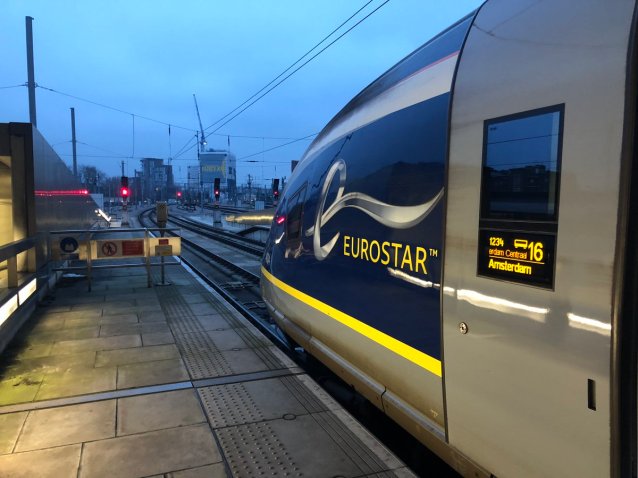
The new Eurostar Amsterdam Service : Not fit for the disabled Pic Credit: Eurostar Jo on Twitter

CROSS POSTED ON BYLINE.COM

It should have been a synch. A brand new train service direct from London to Amsterdam to a hotel opposite the city’s Central Station. An ideal break for myself and my disabled wife with passenger assistance.

The technology works – the superfast new Eurostar trains make the journey there on time- a cool three hours 41 minutes door to door- and could probably do it quicker as the train slowed through Antwerp and leaving Brussels.

But the rest was the stuff of nightmares and the return direct journey is  a fake  forcing everyone to change at Brussels onto other trains – due to the British obsession of  ” taking control of our borders”. And this is before Brexit takes effect.

But the real scandal is the way Eurostar treat disabled people by making false promises and leaving people in the lurch – made worse by poor internal communications and different national systems.

I made sure we had disabled help by contacting Eurostar in mid March and was promised help in London, Amsterdam and Brussels. So it should have been no worries.

The help at London St Pancras worked both on the way there and the way back and the train left on time.

It was only on the journey that things started to go wrong. The service is packed to Brussels – which is the first stop – but then most people get off including the entire train crew. The service then  takes on Dutch crew and becomes a bit of ghost train with few passengers yet going on to Rotterdam and Amsterdam.

We were a bit puzzled by first the Belgian crew and then the Dutch crew asking what disabled assistance we wanted – which was some wheelchair assistance at Amsterdam from the platform to the exit. A few minutes before arrival we were told that there would no wheelchair assistance only someone to help get my wife off the train.

The person did arrive and was more concerned that my wife didn’t fall down the gap between the train and platform – as they wanted to lock the train up. We were then left entirely in the lurch by both the Eurostar staff and the station staff to find our own way out.

I tweeted my complaint to Eurostar and they responded with this:

Thank you for your details. We can see that the Eurostar Assistance Team sent a request to assist you on 14th March to our counterparts. We are sorry to hear this did not happen and have forwarded your feedback. For your return please go to the Information Desk in Amsterdam Centraal Station on arrival and they can arrange for your assistance to Thalys train. At Brussels Midi you need to go to Eurostar Assist Desk by ticket gates . Each terminal has been advised of request of assistance.

On the way back the real drama began. At Amsterdam Centraal yes they knew we had assistance but we were suddenly told they do not provide wheelchairs except for emergencies. If my wife had fallen over or fell off the train they would help. The information office is on Platform 1 and the train departs from Platform 15 and you only get 20 minutes notice of which platform.

Luckily the woman took pity on us – since no way could my wife get to the train on time – because she walks slowly and was suffering as well from an arthritic knee to add to our problems.

The member of staff  broke the rules and despite being reprimanded by another staff member en route took my wife on a wheelchair to the station platform allowing us to get the train.

Then there was Brussels. There was no one to meet us off the Thalys train and although it came into Brussels Midi at platform 3 and Eurostar is on platform 1 there is a long walk through a shopping mall to get there. So given Eurostar allowed less than 50 minutes for the change, it took us nearly 30 minutes to hobble along in pain. I did go ahead to Eurostar to get assistance but there was a huge queue which spilled  onto the concourse for the train. When I tried to reach the assistance office inside the entrance I was blocked by other passengers ( there were no staff at the entrance) for queue jumping and they wouldn’t let me pass.

When we did get there – Eurostar had to act fast and the wheelchair man was almost running to get the train. Only to be delayed by British immigration  who were quizzing two dark skinned people in front of us about their right to come to the UK. The woman immigration official  reading as though from the UKIP handbook told them ” We don’t just  allow anyone to come into our country” . I suspect she was personally recruited by Theresa May to create ” a hostile environment” for people of colour.

We got there just in time but the train left late because of ” boarding problems” caused I suspect by the immigration jam. I suspect all Eurostar trains will leave late after Brexit.

Back in England West Midlands trains provided an excellent service at Euston and on the train back to Berkhamsted with the guard personally making sure my wife could get off the train there. Ironically West Midlands trains is mainly owned by Dutch railways.

Frankly if you are disabled do NOT go by Eurostar to Amsterdam, fly instead. Their service is not fit for purpose and the Brussels interchange is likely to continue until the end of 2019 because there are no customs facilities at Amsterdam. I am doing a separate investigation into why this has happened and the news will not be good for British  people wanting to travel to Europe by rail.

Eurostar responded:

 “We can see that you and your wife did not receive the right support during your recent journey. As part of the booking process, our teams did not correctly request the assistance services at each point of the journey and for this we sincerely apologise. I would like to respond to your specific questions as follows:

 We offer assistance services (for wheelchair users and other passengers with reduced mobility) in Amsterdam which are provided by NS, the Dutch railway operator. These services are available for passengers booked in the dedicated wheelchair space, and also for other passengers traveling in standard seating. These assistance services are available by contacting Eurostar at least 48 hours in advance of travel. The special assistance service provided by NS at Amsterdam is an escort from the meeting point to the platform. Unfortunately, NS does not provide wheelchairs as part of this assistance service. ( my emphasis)

–          On arrival into Brussels on a Thalys service, the special assistance services are provided by SNCB, the Belgian railway operator.  SNCB will meet the passenger at platform level and escort the passenger to the Eurostar Assist welcome point at the Channel Tunnel Terminal. From this point, Eurostar team members will escort the passenger through Eurostar check-in and up to the platform to board the train bound for London.

–          At Eurostar stations the Eurostar Assist welcome points are located on the main concourse with all check-in facilities. There are Eurostar Assist welcome points when departing from London, Ashford, Ebbsfleet, Lille, Paris and Brussels.  In Amsterdam, Rotterdam, Marne-la-Vallee, Lyon, Avignon, Marseilles and ski destinations – there are Special Assistance points in these stations usually provided by, or on behalf of, the station manager. We will pass your feedback on regarding your experience and your inability to access the Eurostar Assist welcome point due to congestion.

 “We do strive to make Eurostar journeys as seamless as possible for all of our travellers, and will be sharing your comments with our partners. In addition, we will be updating our website with more information about the Special Assistance services, and specifically about the connecting return journey from Amsterdam, in direct response to your feedback. (my emphasis) We thank you for your feedback which has helped us to continue to improve our services to passengers with assistance needs.

Britain: Sleep walking into the valley of death

img0937(1)

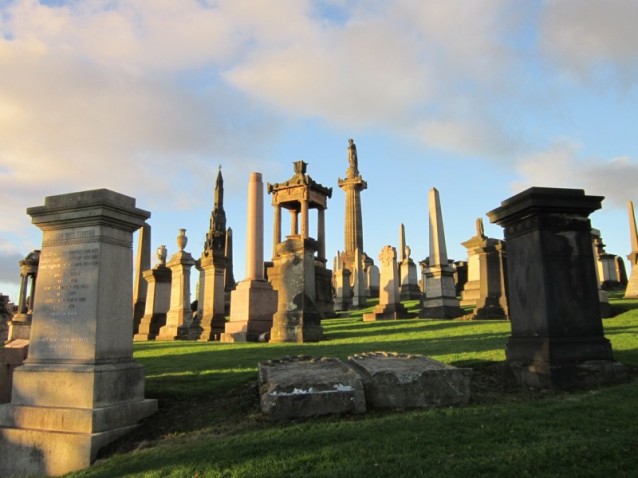
Glasgow Necropolis; Glasgow is nearly at the bottom for life expectancy for men and women. Pic Credit: historicgraves.com creative commons

CROSS POSTED ON BYLINE.COM

Britain is literally dying. Ever since the Tory and Liberal Democrat coalition came to power a 50 year improvement in the  death rate year on year went into reverse. Whether it is the weather’s toll on the elderly,  more homelessness or the NHS failing to cope, something has happened and nobody either  notices or wants to know.

The figures are not speculation. They are official and were published in a report from the House of Commons library just before Parliament came back after the Easter recess.

It is however remarkable that this abrupt change in trends has happened ever since successive governments committed themselves to austerity. The period also  coincides with a huge attack on the welfare state – including cuts in working benefits and  a £77 billion reduction in pension payments to  3.9 million women aged between 60 and 65 – soon to be 66 – which is known to have taken its toll.

What the figures show is that: Between 1961 and 2011 both the   crude  death rate( number of deaths per 1000 people) fell every year.

Since 2011, both the number of deaths and the crude death rate have increased. The number of deaths has increased more than the crude death rate, as some of the increase in the number of deaths was due to population growth.

Provisional figures on the number of weekly deaths indicate that winter mortality was higher than usual in early 2015, 2017 and 2018.

Improvements to life expectancy have slowed in recent years for both men and women, but estimates of life expectancy have not fallen compared with earlier periods.
Among the countries and regions of the UK, in the period 2014-16 life expectancy at birth and at age 65 was highest for women in London and for men in the South East. It was lowest for both women and men in Scotland.

This winter Theresa May presided over the largest number of deaths in recent years. The report reveals that during the first twelve weeks of 2018 the figure reached 154,684 and exceeded the 149,978 equivalent figure for  2015 – when it was known there was a serious winter flu epidemic.

This year’s flu epidemic numbers have not been as great as 2015 but the overall death rate is higher.

The report also reveals that life expectancy is still going up – but at a much slower rate than previously predicted and there is a huge difference between those living in London and the South East and much of the rest of the country – with many of the lowest life expectancy in  Scotland and the North. The difference between the metropolitan and the south and the North and Scotland is nearly 10 years.

Highest life expectancy for women ( between 86 and 86.8 years) is in Camden, Kensington and Chelsea, Hart,Westminster and Chiltern ( Chesham in Buckinghamshire).

Lowest life expectancy for women  ( between 78.7 and 79.6) is in West Dumbartonshire, Glasgow, Manchester, Blackpool, Middlesbrough, North Lanarkshire and Dundee.

For men the highest rates ( from 83.7 to 82.5) are Kensington and Chelsea,East Dorset, Chiltern,Hart and Harrow.

The lowest rates  for men  ( from 73.4 to 75.4) are Glasgow, Blackpool, Dundee, West Dunbartonshire and North Lanarkshire).

This disclosure suggests that since 2011 the country has been going into reverse and I don’t believe this is a coincidence. Nasty sharp government  policies are literally taking their toll.


The Crime Live event – “Real Life” Silent Witness but no time for sexual liaisons

Scientists&Logo

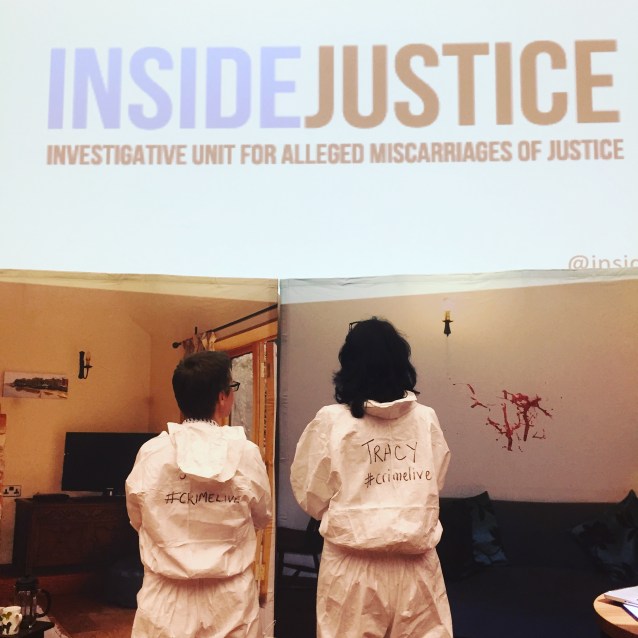
A previous performance of live crime with the two forensic scientists

CROSS POSTED ON BYLINE.COM

On May 10 not too far from the National Theatre on the South Bank a remarkable stage scene will be set up at the BPP Law University. A room with walls spattered with blood, a potential murder weapon and clues galore.

But this dramatic scene is not part of a rerun Agatha Christie play or some avant garde production on a pre West End theatre debut..

Instead of actors there will be two forensic scientists Tracy Alexander, Director of Forensic Services at City of London Police and Jo Millington, Senior Forensic Scientist at Millington Hingley both of whom featured in BBC’s Conviction: Murder at the Station.

They will take the audience through how you investigate a murder going into detail of how the evidence is gathered using the latest modern methods.

As Tracy Alexander tells the audience: “If you’ve seen Silent Witness you’ll know that Emilia Fox attends the crime scene, examines the corpse, looks for clues, performs the post-mortem, comforts the family of the victim, interviews suspects and sleeps with the senior investigating officer, all in the same nice suit without transferring vital evidence from one to the other. I can’t do all those things myself – well, not in an hour.”

The demonstration is put on by Inside Justice, a charity  which investigates alleged miscarriages of justice particularly where a fresh examination of forensic evidence can make a difference and only when they are convinced that the person usually serving a long jail sentence is innocent.

The charity’s director is Louise Shorter. She is best known for her 10 years as a producer/director of the BBC’s long-running miscarriage of justice TV series Rough Justice. Sadly with reduced media budgets such programmes are no longer made.

The last programme she made about the wrongful  murder convictions of Barri White and Keith Hyatt led directly to new evidence being found which resulted in their convictions being quashed. In 2013, Shahidul Ahmed, the real killer in this case was convicted following a cold-case review led by Inside Justice Advisory Panel member Tracy Alexander.

The charity’s panel which is largely composed of forensic scientists has since then taken up a series of cases – though faces a difficult battle in persuading police forces to release all the forensic evidence it holds to re-investigate cases.

The fact that Inside Justice exists is particularly important because of two issues- which are potentially conflicting. One is the march of forensic science which is now miles ahead of itself. The other is the effects of privatisation and cuts in police manpower and budgets.

As Louise explained to me  new developments in forensic science mean that a minute level of DNA is enough to trace one person to a spot even if he or she wasn’t there.

As she put it: ” Supposing we shake hands and I go off to the ladies toilet. I then touch something in the toilet and a trace of your DNA as well as mine is left there. Supposing unknown to either of us a crime is committed there two hours later. When the police arrive they will find a trace of your DNA at the crime scene. It is now possible to do this and you could become a murder suspect.”

Now this high level of DNA detection is good for crime detection but not so good if a hard pressed police force is anxious to get a quick conviction and you do not have an alibi. Given the growing concern about wrongful police convictions – from recent rape cases where the defence were not given all the evidence – this is not good news.

But in the  meantime it is obviously a  fascinating experience to see how forensic science can help solve real murders.

Inside Justice Poster SCREEN FILE There are two performances at the BPP Law University at 137 Stamford Street
London SE1 9NN. It is  five minutes walk from Waterloo station. Tickets for the event can be obtained from Eventbrite. GO TO WWW.EVENTBRITE.CO.UK
AND SEARCH FOR ‘CRIME LIVE’