Government decision on 50swomen promised by the end of February next year

UPDATE: Following publication of this post one issue has been raised by John Halford, Waspi’s lawyer from Bindman’s. He says it is not true that originally you needed permission for both parties or would have to pay £300 to attend the case management hearing. I have checked this back and staff at the administrative court did advise people to do this and told people If no agreement then you need to complete N244 Application form at a cost of £300 to register. This was overruled by the judge on December 2 who made it an open hearing. I passed this back to Mr Halford only to find he had blocked me sending a reply. What extraordinary behaviour from a lawyer.

A long awaited decision on the six year battle for redress for the 3.6 million remaining 50s women has been promised by the Department for Work and Pensions by the end of February next year – as part of a deal agreed between the ministry and Waspi Ltd.

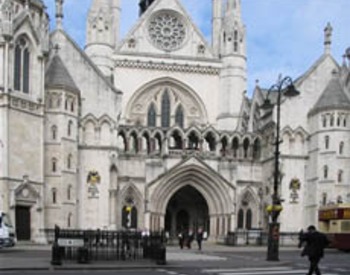
Royal Courts of Justice

Under the deal Waspi has dropped its judicial review claim due to be heard next week and accepted an offer by the DWP to pay the Waspi company £180,000 towards its legal costs in bringing the claim.

Most of the manoeuvring to obtain this arrangement has been behind the scenes in meetings between lawyers on both sides. As a result there will be no public hearing in the courts of the arguments where both sides would have put their case under the watchful eye of the Parliamentary Ombudsman who was an interested party. Waspi had been challenging Pat McFadden, the DWP secretary of state, over his decision not to award any compensation following the Parliamentary Ombudsman’s findings of partial maladministration over the communications informing the women.

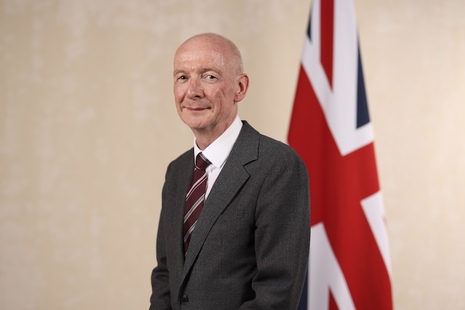
05/07/2024. London, United Kingdom.Chancellor of the Duchy of Lancaster, Pat McFadden, poses for a photograph following his appointment to Cabinet by Prime Minister Sir Keir Starmer in 10 Downing Street. Picture by Lauren Hurley / No 10 Downing Street

Then rather dramatically Mr McFadden on November 11 change his mind after the discovery of an earlier document which had been overlooked for 18 years revealing that attempts to inform the women had failed. Waspi’s lawyers Bindmans are said to have found it -presumably in the exchange of documents before the hearing. See my coverage of the document on this site here.

Before the hearing was dropped Waspi and DWP had the DWP arranged a case management hearing on December 3 with the most extraordinary terms allowing either side to block who would be allowed to attend or have to pay over £300 to obtain the right to attend.

This amounted to secret justice and it is no wonder on the day before the hearing the judge, Mr Justice Swift put out a national statement giving his directions for the case which made it clear it was a public hearing that anybody could attend and there were arrangements for people to hear it remotely.

This scotched the plan for a semi secret hearing so that evening it is clear that lawyers from both sides must have met and agreed to abandon the hearing the next day and Waspi Ltd agreed to pull out alongside the DWP from the two day judicial review.

It is my speculation that it will mean that some arrangement has been agreed under ” a nod and a wink” that the ministry will offer some form of compensation to some of the women. Certainly a seasoned lawyer like John Halford at Bindman’s ,would not have agreed to this without some hint or his client ,Waspi, would have been left in a very precarious position.

Waspi has not been alone in making representations to the government. Enter Edward Romain, a former whistleblower who has set up Blind Justice, a community interest company, to take up injustice cases and has joined joined forces with Cedaw in Law, to fight the case for the women on both discrimination and maladministration. I covered his case against Glyndebourne in an earlier article here. The case is now settled but it also discloses some strange behaviour by lawyers.His website is blindjustice.org.uk .

The day before the planned case review he delivered a recorded letter to Sir Keir Starmer and copied to Pat McFadden staking CedawinLaw’s claim to participate in any mediation process.

He followed this up with a powerful letter to Mr Oliver Towle, a senior lawyer at the Litigation Directorate for the DWP with a copy to the Treasury solicitor.

The letter asks the lawyer to confirm that following the court order that CEDAWinLAW and all other materially affected groups will be included in the consultations from the outset and clarifications of the intended structure and timeline for stakeholder engagement. The letter states

  • CEDAWinLAW represents the interests of 3.5 million women affected by State Pension Age changes. ​
  • The organization has made formal legal submissions and engaged with public authorities over four years. ​
  • It has pursued mediation and presented evidence to Parliament, highlighting ongoing advocacy efforts.

It also cites legal precedents quoting past cases covering natural justice, legitimate expectations, Wednesbury unreasonableness ( ie irrational responses), civil procedure rules and international law.

It concludes:”We respectfully submit that any reconsideration that does not include CEDAWinLAW would be procedurally flawed and open to future challenge. We remain available to assist constructively and can provide additional documentation or legal submissions if required.
We look forward to your confirmation and to contributing meaningfully to the reconsideration process.”

One curious fact, actions by WASPI and CedawinLaw appear to have come to attention of the Chinese government over the last five months.Altogether I have received over 76,000 hits from China from Beijing and 40 other cities across China data scraping my blogs on the pensions issue.

China has one of the lowest retirement ages in the world. Women can retire at 50, men at 60. I wondering whether the Government is thinking of raising it and is looking at the opposition to it in the UK. President Putin tried to raise the pension age for women some time ago but had such opposition from the Babuskas that he backed down -probably the only reversal he made as President.

The full letter to the government lawyer can be read here.

One-Time
Monthly
Yearly

Make a one-time donation

Make a monthly donation

Make a yearly donation

Choose an amount

£5.00
£10.00
£20.00
£5.00
£15.00
£100.00
£5.00
£15.00
£100.00

Or enter a custom amount

£

Your contribution is appreciated.

Your contribution is appreciated.

Your contribution is appreciated.

DonateDonate monthlyDonate yearly
You can donate via PayPal on the link below.

cards
Powered by paypal

Justice minister Sarah Sackman KC: Apologist for a failing county court system

Sarah Sackman KC:Justice minister

At the end of July I published a scathing report from the House of Commons Justice Committee on the appalling state of the dysfunctional county court system. MPs were so appalled that they demanded a root and branch inquiry into the system to address its myriad problems – huge waiting times to hear cases, court buildings infested by rats, lack of disabled access and a chaotic and incompatible digital system to handle cases. You can read it again here .

Now we have the ministerial response. And what a tepid, pathetic and apology for an answer it is from Sarah Sackman KC. It even incorporates a potential ” pork barrel” issue with somehow one of the few courts now undergoing modernisation is in her own Finchley and Golders Green constituency in North London.

She rejects the main finding of the committee – the call for the inquiry to deal with the problem.

She said: “Rather than focusing on a root and branch review of the County Court, the Government is keen to focus on taking tangible and practical steps to improve the operation of the County CShe rejects the main finding of the committee – the call for the inquiry to deal with the problem.

She said: “Rather than focusing on a root and branch review of the County Court, the Government is keen to focus on taking tangible and practical steps to improve the operation of the County Court – which will benefit everyday users – without further delay. We are already seeing these measures bear fruit with improvements to the timeliness of claims that got to trial, improving call waiting times, growth in small claims mediation and further improvement to case management and file transfer systems.”

Her so called improvements include a reduction in waiting times for Small Claims cases from 50.5 weeks a year go to an amazing 49.2 weeks up to July. A fantastic reduction of of 1.3 weeks – I am sure she being cheered to the rafters for that. While those waiting longer face a 72.4 week delay compared to 79 weeks a year ago. I am sure they appreciate that.

Meanwhile many litigants are facing wasted costs for travel, legal fees and subsistence to attend hearings that are ” overlisted ” or as the result of poor management of the courts and MPs thought they should be compensated. But for Sarah Sackman ” over listing ” is fine and she rejected any money to reimburse claimants.

Probably the most interesting revelation is the paucity of the programme to modernise the courts to bring them up to 21st century standards. Only three courts are currently being modernised- Norwich, Taunton and Barnet and there are plans for Reading and Blackpool.

The Barnet court project got funding in October 2024 – three months after Sarah Sackman had been appointed solicitor general and two months after she became justice minister. I may be being unfair to her but I do find it curious that of all the courts to get modernise first is in her constituency.

Barnet County Court, Regents Park Road, Finchley

When you compare this with the long list in the justice committee ‘of courts that don’t even provide wheelchair access – only Taunton is being modernised. So for disabled people there is no hope of admission to Mansfield County Court; Brentford County Court; Darlington County Court ;Edmonton County Court; Hertford County Court and Lewes Combined Court Centre to name a few.

She does accept a number of reforms to improve digital communication in county courts but again I wonder if these will just add to the different schemes already in operation. On litigants in person, she accepted that there should be more granular data on their cases and also that guidance for litigants should be improved . But I wonder how far this will go given the heavy criticism from MPs on how difficult it is for litigants in person to understand procedure.

Frankly this is a disappointing response from the new Labour government to tackle the enormous problems in the court service and Sarah Sackman as a KC should be well aware of this. But it seems to reflect the general public mood that Labour is failing to make an impact.

The full response to MPs is here.

One-Time
Monthly
Yearly

Make a one-time donation

Make a monthly donation

Make a yearly donation

Choose an amount

£5.00
£10.00
£20.00
£5.00
£15.00
£100.00
£5.00
£15.00
£100.00

Or enter a custom amount

£

Your contribution is appreciated.

Your contribution is appreciated.

Your contribution is appreciated.

DonateDonate monthlyDonate yearly

You can also donate via PayPal using the link below.

https://www.paypal.com/ncp/payment/865JAS3QJ3C

Equality and Human Rights Commission hides findings on Hilsenrath’s breach of Covid lockdown

Rebecca Hilsenrath

The EHRC has refused to release the findings of an investigation into the huge breach of the Covid lockdown rules during the pandemic by Rebecca Hilsenrath, now chief executive of the Parliamentary Ombudsman’s Office.

The decision is in contravention of a ruling by John Edwards, the Information Commissioner, who ruled that Mark Benney , who put in the request to his office ,was entitled to answers about the finding of the report but not allowed to see it himself.

The EHRC has confirmed that a report was completed at the time Rebecca Hilsenrath, then its chief exceutive, was suspended by the EHRC as a precautionary measure. She then suddenly resigned only to get a senior job at the Parliamentary Ombudsman’s office almost immediately.

Her breach of Covid rules involved her traveling from her North London home to her country cottage in North Wales where her children also joined her -presumably also in breach of the rules – to spend their Christmas holiday together. She has four children. It was exposed in The Times newspaper.

Her holiday cottage in North Wales

Baroness Falkner, a crossbench peer and the chair of the EHRC, has used the same argument it deployed unsuccessfully to say that it would not answer questions about the report to protect Rebecca Hilsenrath’s privacy to refuse to publish the finding of the report.

Official Portrait of Baroness Falkner

She has decided not to appeal the decision but Mark Benney has put in his own appeal. It includes the words;” the Commissioner has erred in failing to consider whether the report and supporting documentation are capable of appropriate redaction in order to remove any special category data. Finally, it also follows that material within the report and supporting documentation that is neither personal data nor special category data is properly disclosable according to the overarching logic of the inDecision Notice.”

In my opinion this decision to hide the finding of a report about Rebecca Hilsenrath’s breach of the Covid rules is totally wrong. It may be five years ago but the lockdown meant tens of thousands of people could not move around the country, make trips like hers to celebrate Christmas and were not even able to visit relatives dying in hospitals all over the country.

In my opinion there appears to be a certain class of people who are arrogant enough to think that they are above rules that everybody else in the country is expected to obey. These people are often protected by friends in powerful positions to avoid the consequences that other less privileged people have to suffer from breaking the rules. I am not saying in this particular case this is necessarily so but the failure of public organisations to come clean about the facts in this case can only add to further speculation.

Incidently the Parliamentary Ombudsman website is still silent on any new cases and no date has been fixed yet for the new Ombudsman, Paula Sussex, to join it.

Rebecca Hilsenrath has broken her silence from the Parliamentary Ombudsman’s Office in a YouTube video on mental health put out by the Ombudsman’s Association on Leadership, Listening and Making Mistakes dealing with mental health issues. She frankly discloses that she suffered four bouts of post natal depression when she had her children and members of her family have suffered mental health problems so she is sympathetic about mentally ill people who are being badly treated by the NHS and other organisations. See the interview below.

One-Time
Monthly
Yearly

Make a one-time donation

Make a monthly donation

Make a yearly donation

Choose an amount

£5.00
£10.00
£20.00
£5.00
£15.00
£100.00
£5.00
£15.00
£100.00

Or enter a custom amount

£

Your contribution is appreciated.

Your contribution is appreciated.

Your contribution is appreciated.

DonateDonate monthlyDonate yearly

Please donate to Westminster Confidential

£10.00

Information Commissioner orders EHRC to provide answers over Covid breach by former chief executive Rebecca Hilsenrath

Rebecca Hilsenrath

NEW: Since this post was published I have learned that Rebecca Hilsenrath has been awarded an honorary KC and been appointed a member of the Civil Justice Council, chaired by the Master of the Rolls,Sir Geoffrey Vos. She is responsible for advising the judiciary on the use of alternative dispute resolution, where disputes are settled outside the courts. Ironically this would include the demand from CEDAWinLAW to solve the dispute over compensation for 50swomen pensioners which ministers oppose. She was and still is chief executive of the Parliamentary Ombudsman’s Office when the former ombudsman ,Robert Behrens, recommended compensation for partial maladministration by the DWP. It would be curious to know what her position will be on this if this ever came up.

John Edwards, the Information commissioner, has ruled that the Equality and Human Rights Commission must answer what action it took when it was revealed that its former chief executive, breached Covid rules at the height of the pandemic by driving from north London to her holiday cottage in Wales for a family Christmas in 2020.

The decision is a partial victory for Mark Benny, a dogged campaigner, who sought answers to what action it took when it became publicly known through an article in The Times that she had driven hundreds of miles when there was a ban on any long distance travel as part of the national lockdown.

But the information commissioner has decided not to release a report of an EHRC investigation or correspondence from her because it goes into her private life and might cause unwanted distress.

Rebecca Hilsenrath’s Welsh holiday cottage

However his ruling is significant for a number of reasons. He has had to weigh up public interest in this case versus a person’s right to privacy. And he has come down very firmly that there is a public interest case about how senior public figures conducted themselves during the pandemic. He also ruled that public bodies cannot, as the EHRC did, impose a blanket ban under the privacy section of the Freedom of Information Act, to refuse to confirm or deny anything because it involves personal data.

This could have wider implications since public bodies use this technique where there are controversial appointments or resignations to refuse to provide information because itinvolves personal data

John Edwards, Information Commissioner

Rebecca Hilsenrath’s case was particularly controversial because she resigned her chief executive’s job at EHRC only to be parachuted into a top position at the Parliamentary Ombudsman’s Office where since became Interim Ombudsman and chief executive, an equivalent or even better status than she had at the EHRC.

Extraordinarily when Mark Benny pressed the Parliamentary Ombudsman’s Office on what they knew or whether they took into account of her Covid breach during her appointment, the office said it had lost the papers on her appointment process.

So now the EHRC will have to answer his questions within 30 days or as the Commissioner says in his report “failure to comply may result in the Commissioner making written certification of this fact to the High Court pursuant to section 54 of the Act and may be dealt with as a contempt of court.”
The questions he has asked include whether there was a proper investigation into the breach, whether it was completed and what was the outcome. He also wants to know whether she was suspended by the EHRC or put on gardening leave and whether she was dismissed or decided to resign.

All the public had at the time was a terse statement by the EHRC to the press. It said:

“The Equality and Human Rights Commission said they will consider whether further action against its chief executive is needed.
“She has apologised for this error of judgement,” said EHRC chair Baroness Kishwer Falkner.
“I will establish all the facts before deciding if any further action is
required.”

Nothing has been heard of this since and it is now known whether it came up again when she was interviewed to be Interim Ombudsman last year.

What the ruling by the Information Commissioner does is say that Mark Benney’s request was legitimate and it was necessary for the information to be released. But he thought this could be done through his questions and it was not a legitimate interest to release the full report because it contained details of her private life.

Interestingly he thought it might throw some more light on what happened at the Parliamentary Ombudsman’s Office. He said “he considers that disclosure of the requested
information would allow further scrutiny of that process.”

One-Time
Monthly
Yearly

Make a one-time donation

Make a monthly donation

Make a yearly donation

Choose an amount

£5.00
£10.00
£20.00
£5.00
£15.00
£100.00
£5.00
£15.00
£100.00

Or enter a custom amount

£

Your contribution is appreciated.

Your contribution is appreciated.

Your contribution is appreciated.

DonateDonate monthlyDonate yearly

Please donate to Westminster Confidential

£10.00

The continuing saga of muddle, delay and lack of accountability over the appointment of a new Parliamentary Ombudsman

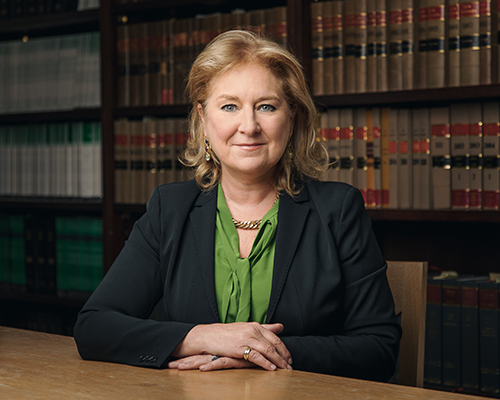
Paula Sussex – a Microsoft Teams picture

You may not have noticed but the UK Parliament and the National Health Service has not had a permanent Ombudsman to handle complaints for more than a year.

Ever since for some unexplained reason the former PM Rishi Sunak blackballed the first choice, Nick Hardwick, a former chair of the Parole Board, for the job despite going through a thorough selection process, interfering with a body which is independent of government, it has been rudderless without a permanent boss. See my blog on this here.

To solve the problem the Parliamentary Ombudsman’s office appointed an interim candidate, Rebecca Hilsenraft, then chief executive, after a meteoric rise since joining the organisation from the Equality and Human Rights Commission, who at least could adjudicate on complaints.

But they would have known then that her appointment would end on March 31st this year – a year after the last permanent Ombudsman, Sir Rob Behrens, retired. You would think that would have given them plenty of time to find a successor and go through a thorough selection process. But Oh no, by the time she reverted back to her old job, nobody had been appointed.

As a result the press office had to issue this statement:

“We are currently awaiting news on the appointment of a permanent Ombudsman.

“Our dedicated staff remain committed to delivering an important service for the public.

There may be a small number of cases we are unable to progress without an Ombudsman in post. Caseworkers will directly contact any complainants whose cases are affected.”

Checking their website yesterday there has not been one new press release nor any new decision of cases announced since April 1.

Then suddenly last week it was announced that the Public Administration and Constitutional Affairs Committee were to hold a pre appointment meeting this week for a new Ombudsman. Extraordinarily the name was kept secret from the public record until this Tuesday.

I gather it was at the request of the favoured candidate, Paula Sussex, because it appears she had not told told her present employer, she is chief executive of OneID, that she had clinched the job.

Now yesterday there was a hearing. The current chairman of the committee, Tory MP, Simon Hoare, recused himself from the hearing as he had sat on the selection board leaving Labour MP, Lauren Edwards, to take the chair.

It was a very underwhelming event both from the appearance of the favoured candidate and the MPs questioning. For a start four MPs did not attend and those who did were mostly newbies whom I thought had yet to get in their stride.

The candidate herself appeared to know little about the working of the PHSO system and even less about the NHS. She appeared to be a management and process person steeped in working for the private sector rather than a person concerned about policy. This was noticed when she was chief executive of the Charity Commission when a profile of her highlighted this. The article is here.

She was also wary of journalists. The same article noted: “she has declined to give interviews: she is said to be unused to dealing with the media, disconcerted by the amount of press attention the commission attracts and confirmed in her reluctance to speak by any coverage she perceives as negative.”

Considering she admitted during the hearing that the Parliamentary Ombudsman had too low a profile – it strikes me she is going to have to be more proactive with the media if she wants to change it.

Her previous jobs have involved her as a consultant on new technology, working at a top level at the transactional Students Loan Company and for private industry.

Her most recent role is as a non executive director with the Infected Blood Compensation Authority which will ” sadly”, as she said, to have to give up. Given her sparse knowledge of the workings of the Parliamentary Ombudsman’s Office I was rather surprised she did not mention that her fellow non executive director is none other than Sir Robert Behrens, the last Ombudsman, who could have given her great detail about its inner workings.

Also it is rather ironic that this body – which despite its name is a private contractor not a public body- is to face a recalled two day hearing next month of the Infected Blood Inquiry under Sir Brian Langstaff because of public dissatisfaction with its handling of compensation and a slew of other complaints. Jenni Richards KC , the inquiry’s counsel, has just published a huge list of issues. See here.

Given some of these issues will be the very bread and butter work that a Parliamentary Ombudsman and Health Service Ombudsman would have to handle, someone might ask why she presided in an organisation that now faces such searching questions for not doing its job. Of course its minutes aren’t published so we won’t know whether she raised such issues or went along with the management.

Altogether I am sceptical of whether there will be great change at the Parliamentary Ombudsman’s Office and I am afraid her attitude and the lax scrutiny by the one committee that can hold it to account will mean any great change.

The committee of course do not agree and think she is wonderful. This is their conclusion In a report published after the hearing.

“We are satisfied that Paula Sussex has the personal independence and professional skills necessary to fulfil the high profile, demanding and varied role of Parliamentary and Health Service Ombudsman. Paula
Sussex is an excellent candidate with a track record of organisational transformation with a focus on improving the effectiveness and external reputations of the organisations she has led. Her professional
background and experience as Chief Executive will aid her in giving the PHSO direction and certainty. We wish her every success in this role.”

Some 114 people applied for the job at a salary of between £171,000 and £189,000 a year -42 per cent were women.

One-Time
Monthly
Yearly

Make a one-time donation

Make a monthly donation

Make a yearly donation

Choose an amount

£5.00
£10.00
£20.00
£5.00
£15.00
£100.00
£5.00
£15.00
£100.00

Or enter a custom amount

£

Your contribution is appreciated.

Your contribution is appreciated.

Your contribution is appreciated.

DonateDonate monthlyDonate yearly

Please donate to Westminster Confidential

£10.00

Can Whitehall promote innovation, efficiency and AI technology to help overcome the crisis in providing public services?

Gareth Davies, head of the National Audit Office

Head of the National Audit Office raises pertinent questions about the future direction of Whitehall in annual speech

Anybody reading the latest tranche of reports from the National Audit Office and the Commons Public Accounts Committee could be forgiven for thinking the UK is living in a dystopian world. Indeed fiction writers could use their reports as a basis for a dystopian novel or a new TV series.

The problem is that it is not fiction, it is factual based evidence.

Never in my 40 years of reporting the NAO have I seen so many things run by Whitehall going wrong. Yes we have had scandals, waste of public money and even corrupt deals exposed by them. But the last tranche of reports almost beggars belief.

Simultaneously we have had the biggest backlog of building maintenance, totally £49 billion, the largest ever NHS waiting lists for operations, the Home Office admitting it has made 1000 mistakes and wasted tens of millions on acquiring sites for housing asylum seekers, half the local authorities in England on the verge of bankruptcy, outdated computer systems without proper security protection, record homelessness, and a huge backlog of people waiting for special education places or treatment in psychiatric hospitals.

Innovate or die

It is against this background that Gareth Davies, the head of the National Audit Office, addressed a well attended meeting yesterday in Parliament of MPs, peers, former permanent secretaries, academics and journalists.

While he did not use my journalistic hyperbole, his message was a simple one to Whitehall, innovate or die. And although the NAO is strictly non party political, there was an underlying message to the present government, sharpen your act or lose the next election.

As he put it: “we have a new Parliament and a new Government, but many of the same problems of rising demand and not enough money to quickly fix the gaps in key public services. We also face other challenges that risk causing widespread disruption, from global instability and climate change to public health emergencies and cyber threats.”

NHS needed fundamental reform

He was particularly critical of the department for Health and Social Care and the NHS, the biggest employer in the UK.

” Figures from NHS England in May last year showed it was still 8 per cent lower in productivity in 2023/24 than before the pandemic and much work is underway to address this.”

He went on later: ” In the last few months, our reports on supporting children with special education needs and NHS financial sustainability both identified the need for fundamental reform in the face of rising demand and costs, alongside unsatisfactory outcomes. This means tackling the causes of avoidable demand and allocating resources in a redesigned system where they can have maximum impact on outcomes.”

He is pleased that Whitehall is piloting AI but also warned that new technology is not the whole answer to greater productivity. He also emphasised that ministries need to employ the best skilled people – notably recently in the need for people with good computer skills and capable of negotiating good procurement deals.

He is also wanted Whitehall to concentrate on tackling resilience to protect the country. This included fighting cyber attacks and the risk of future pandemics. He revealed the NAO would soon publish a report looking at the international and domestic implications of protecting the UK from another pandemic like Covid 19 which came from abroad.

Civil servants must be less risk averse

Finally he wanted civil servants to be less risk averse and try out well managed schemes, dropping those that don’t work quickly.

His solution was summed up in four succinct points.

  • First, a clearly articulated risk appetite and a spread of investments, to maximise the chances of success in innovation
  • Second, harnessing new technology as I’ve already mentioned
  • Third, a culture of fast learning and evaluation, stopping failed experiments quickly and scaling up successes
  • Finally – and close to home for us – an accountability and scrutiny framework that encourages well-managed risk taking

” It’s no coincidence that innovation thrives in times of crisis, such as when lives are at stake. Organisations rapidly adjusted their risk appetites during the pandemic to meet urgent needs,” he said.

He pointed that Whitehall fears that they would hung up to dry by MPs and the press if they failed was now no longer true -instead MPs on the public accounts committee were now more critical of civil servants who failed to look at new ways of tackling problems rather than following safe bureaucratic procedures.

So what are the NAO doing themselves?  “our refreshed strategy from 2025 to 2030 takes fully into account the risk appetite set for the range of innovative projects. We will continue to look for and highlight positive examples of innovation, including where unsuccessful initiatives have been stopped in favour of more promising ones. As well as featuring these in our reports on departments and organisations, we will publish what we learn across government as part of our programme of lessons learned reports.”

AI is also coming to the NAO so auditors can spend more time making professional judgements on department’s performance and less time on manual exercises.

Talking to people who attended afterwards it was clear that MPs and academics are well aware that innovation is necessary or we will not be able to deliver public services to meet growing demand. MPs seemed especially aware that the NHS was not functioning properly – whether it was their local health trust – or the bureaucracy at the top. MPs have already publicly criticised the top management of the NHS for being complacent.

Over the next five years how Whitehall balances the money needed for innovation and risk taking against the perennial problem of working in a public sector which has been neglected for too long and needs ” first aid” to keep going will be crucial. Whitehall should treat the present state of public services as a national crisis which can only be tackled by radical innovation.

One-Time
Monthly
Yearly

Make a one-time donation

Make a monthly donation

Make a yearly donation

Choose an amount

£5.00
£10.00
£20.00
£5.00
£15.00
£100.00
£5.00
£15.00
£100.00

Or enter a custom amount

£

Your contribution is appreciated.

Your contribution is appreciated.

Your contribution is appreciated.

DonateDonate monthlyDonate yearly
Please donate to Westminster Confidential

£10.00

Ministry slammed by auditors for not getting correct Parliamentary approval for paying out Post Office victims

Parliament’s watchdog, the National Audit Office, has qualified last year’s annual accounts of the Department for Business and Trade, for failing to providing accurate estimates of the money needed to compensate the Post Office victims of the Horizon scandal and overspending its budget by over £200m.

The disclosure is the latest blunder in the handling of the scandal where hundreds of postmasters were wrongly accused of fiddling their books and some spent time in prison for crimes they did not commit Instead there was a cover up by the Post Office when the computer system was at fault.

Gareth Davies, the head of the National Audit Office, who audited the ministry’s accounts, says the omission to provide Parliament with the correct figures and the £208m proposed overspend on the scheme amounted to a breach of the ministry’s spending limits and has been classified as irregular spending.

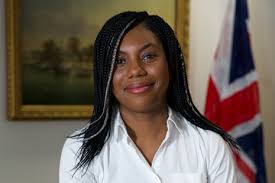
Kemi Badenoch. Pic credit: Gov uk

The decision to pay out compensation to the postmasters and quash their convictions happened when Kemi Badenoch, now the Tory Party leader, was business secretary. She was the sole shareholder of the Post Office under the present constitutional arrangement for running the business.

Last year the government set up compensation schemes for the postmasters – one to compensate them for the money they lost through the computer misrepresenting their accounts and another to compensate those who had been wrongly convicted.

What the accounts revealed is that the ministry did not hold enough data to properly estimate how much compensation it would have to pay out and put forward to MPs estimates to approve its spending that were not accurate – hence the overspend.

Under the first scheme the Horizon Shortfall Scheme (HSS), which is intended to support
those who accounts were falsified by the computer system , Individuals who qualify can choose to either accept a fixed sum of £75,000 or opt for full assessment by an independent advisory panel.

The Post Office is inviting current and former postmasters to apply if they wish to but haven’t yet done so, as there will be a closing date for the scheme. It has advised the ministry that it anticipates a response rate of approximately 25-30% and that the majority of new claimants will accept the fixed sum offer.
However, the auditors say due to the limited amount of available data on which to base this estimate,
the eventual outcome could vary significantly.

Under the Horizon Conviction Redress Scheme (HCRS) intended to compensate individuals who had their convictions overturned. Because this scheme is in its early stages, there is limited data upon which to base an estimate of future settlement values.

But the ministry just assumed that the proportion of applicants who choose to accept the fixed sum offer
(rather than submit a full claim for detailed assessment) will be similar to the take-up rate for those who had their convictions overturned by the court and are being compensated through the Overturned Conviction (OC) scheme;
It also assumed that the average settlement value for those choosing not to accept the HCRS fixed sum award will be significantly lower than its equivalent estimate for OC claimants.

Neither of these propositions could prove to be accurate because the period for claiming compensation is not over. And by estimating an extra £208 million to be spent on the second scheme led to the ministry breaching its obligation to tell Parliament how much it intends to spend.

The Department for Business and Trade said:”This issue took place as a direct result of the decision to rightfully offer further redress to Horizon scandal victims, at a time when the high volume and complexity of claims meant there was significant uncertainty on the cost estimates.

“We have acknowledged this to the NAO and remained determined to ensure that all affected postmasters receive the financial address they deserve to right these historic wrongs’

A further £1.8 billion has been provided since these accounts were reported.


One-Time
Monthly
Yearly

Make a one-time donation

Make a monthly donation

Make a yearly donation

Choose an amount

£5.00
£10.00
£20.00
£5.00
£15.00
£100.00
£5.00
£15.00
£100.00

Or enter a custom amount

£

Your contribution is appreciated.

Your contribution is appreciated.

Your contribution is appreciated.

DonateDonate monthlyDonate yearly

Please donate to Westminster Confidential

£10.00

Ministry of Justice and Lady Chief Justice Dame Sue Carr refuse to explain the lawfulness of withholding official ET court records

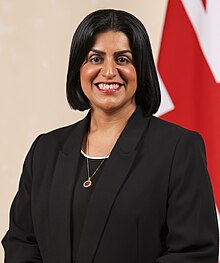
05/07/2024. London, United Kingdom.Chancellor and Secretary of State for Justice, Shabana Mahmood. poses for a photograph following her appointment to Cabinet by Prime Minister Sir Keir Starmer in 10 Downing Street. Picture by Lauren Hurley / No 10 Downing Street

By David Hencke and Alison McDermott

Direct complaint to the Lord Chancellor signed by 150 people is being blocked by officials at the Ministry of Justice

Whitehall and the judiciary are engaged in an extraordinary exercise to block, obfuscate and deny there is a legal issue over the public release of judge’s notes where they amount to an official record in employment tribunals.

We are now in the absurd position of Barry Clarke, the President of Employment Tribunals in England and Wales, both admitting the judge’s notes where tribunals are not recorded are the only official record but saying at the same they must remain private because they are personal notes under the Data Protection Act.

Employment tribunals are already in transition. After a new practice ruling the aim is that all hearings will be recorded but that is not happening yet in many cases. Also transcripts of the hearings can be made available but litigants have to buy them at huge cost and are not provided before the six weeks deadline to appeal. So what’s the point of them ?

But for a majority of tribunals the only official record is the judge’s notes – which can be used by appeal judges when they are adjudicating on an appeal to guide them. Barry Clarke has recently ruled that they are the official record but the public, press and both parties involved in a case cannot see them.

Thus the one vital official record of what the judge has recorded about the case is kept secret – contrary to any policy of transparency and open justice. It also means judges are not open to scrutiny, could be biased against either the claimant or defendant, are out of step with other European court systems and in the days of digital recordings, keep an archaic system of hand written notes. It also means if there are complaints against judges – the secrecy of the notes means the judge can withhold the information to prove it which is very helpful to an errant judge.

So what is legal position of this which allows this type of official record to be withheld? This is the question that led Alison McDermott, a former ET complainant against Sellafield, and 150 other people to wrote to the Lord Chancellor demanding an explanation, using the examples I have quoted and many more.

The letter is here. But guess what? You can’t send it direct to the Lord Chancellor’s Office or even to the Lord Chancellor as an MP unless you are a constituent in Birmingham, Ladywood. Instead you can only write to the ministry of justice and hope it can be passed on.

Dame Sue Carr: Pic Credit: Rory Lindsay

So Alison McDermott and I decided another tack. I put questions into the Ministry of Justice press office to ask for explanations. Alison had previously been told by Dame Sue Carr, the Lady Chief Justice that the only way she would get answers was to go to the Appeal Courts – an incredibly expensive business. This is also absurd as it puts the onus on the claimant to get a ruling to clarify the law and makes a lot of money for lawyers. Most people are not involved in tribunals so why should they be denied from knowing where the law stands?.

These are the questions I put to the Ministry of Justice which it refused to answer:

1.Does the MoJ agree that an official record of legal proceedings, including Employment Tribunal hearings, must be made available to parties and the public?

 2.Which specific law or authority allows judges to withhold their notes from ET proceedings, given that  ET President  Barry Clarke has recently confirmed that these notes serve as the official record where no other record exists?

3. If no such law or authority exists will the MoJ commit to releasing all judges’ notes? 

 4.. If not, does the MoJ acknowledge that judges’ notes cannot be considered the official record, as official records must be accessible?

5. In the absence of an accessible official record, does the MoJ agree this breaches the right to a fair trial under Article 6 of the Human Rights Act?  If not, what is the justification? 

6.  Why is the MOJ suggesting  that this can be resolved by individual appeals, as proposed by the Lady Chief Justice to Ms McDermott, rather than providing a clear policy response that would benefit all ET users?

Answer came there none. The ministry declined to answer any questions and said it was a matter for the Judicial Office to answer the questions.

I put the same questions to the Judicial Office press office. I heard nothing for a week and then sent them a reminder. The initial response was to refer them back to the Ministry of Justice until they suddenly realised I had already contacted them.

The office then sent a reply. This is it.

“We have answered the questions we can from a judicial perspective (see below) but other questions are for not for us and you may wish to ask other parts of Government.

Parties involved in an Employment Tribunals are given decisions following a hearing. If the decision is a judgment, the Tribunal will either give an oral judgment with reasons or reserve its decision and give a written decision at a later date. ” It goes on to quote existing rules and procedures.

So here we have it. They haven’t answered my questions. There is a failure to confirm what the lawful basis is for a judge to withhold the official record of an ET hearing and they have side stepped whether the refusal to do so breaches the right to a fair trial.

Judge Barry Clarke, president of the England Wales employment tribunals- an outlier with Europe advocating secrecy

Alison using AI found how outdated and Nethanderal this is compared to other advanced democracies. In France, Germany, Spain, the Netherlands, Sweden, Belgium and Italy all parties have access to the judges’ notes. This leaves the UK as an outlier, failing to provide basic transparency in proceedings that can have life-altering consequences. .

It added: “The practices in these European countries generally support greater transparency and access to court records, including judges’ notes, in employment cases. This trend aligns with principles of fair trial and effective appeal rights, as parties are given the opportunity to fully understand and, if necessary, challenge the basis of decisions made against them.”

The conclusions using AI are very powerful;

“The current state of the UK’s employment tribunal system is untenable and legally questionable. It operates on a contradiction that undermines the very principles of justice it’s meant to uphold. The solution is clear, legally grounded, and non-negotiable:

  1. Judges’ notes must be released to all parties.
  2. All hearings must be recorded.
  3. These records must be made accessible to all parties involved.
  4. These steps are essential for maintaining the integrity of the UK’s legal system, ensuring compliance with human rights law, and upholding the principles of natural justice and open courts. The time for obfuscation and delay is over. It’s time to resolve this legal paradox and restore faith in our justice system. Release the notes, record the hearings, and let justice be truly seen to be done.”

Only in the UK do we pursue a policy of secrecy masquerading as privacy to cover up official records, frustrating claimants and respondents in employment tribunals, and protecting judges from any scrutiny that could effectively challenge them. What a backward country we are. A judicial review can change this and looking at procedures in Europe eventually lead to a well deserved adverse ruling against the UK in the European Court of Human Rights. We understand that the Lord Chancellor holds the copyright to all court records so she can decide to release them.

One-Time
Monthly
Yearly

Make a one-time donation

Make a monthly donation

Make a yearly donation

Choose an amount

£5.00
£10.00
£20.00
£5.00
£15.00
£100.00
£5.00
£15.00
£100.00

Or enter a custom amount

£

Your contribution is appreciated.

Your contribution is appreciated.

Your contribution is appreciated.

DonateDonate monthlyDonate yearly

Please donate to Westminster Confidential

£10.00

Dishonorable gongs: Do the former Parliamentary Ombudsman and Permanent Secretary at the DWP deserve their knighthoods?

Now Sir Rob Behrens

Sir Peter Schofield

The King’s Birthday Honours List contains many eminent people from artist Tracey Emin to the not so well known Lord Etherton KC, a retired judge, who compiled a meticulous ground breaking report in 2023 into the disgraceful and inhumane treatment of gay people in the military prior to the lifting of the ban in 2000.

But there are two people who simultaneously received knighthoods which are open to question. They are Robert Behrens, the retiring Parliamentary Ombudsman and Peter Schofield, the current permanent secretary at the Department for Work and Pensions.

Both were at opposite ends over the huge controversy over whether 3.6 million people born in the 1950s should get restitution for maladministration and discrimination over the six year delay in getting their pensions.

Robert Behrens was responsible for compiling a report on whether there was maladministration ( his remit did not have to consider discrimination) over the ministry’s handling of the delay. It was the Ombudsman’s biggest report and he took years to do it, awarded only partial maladministration, and funked giving an award because of ministry opposition, leaving MPs to have to decide whether they get any money.

Peter Schofield was in charge of the department, which was not only totally opposed to giving them a penny, but under his leadership put in a submission to the Ombudsman exonerating his ministry, saying it not made even one mistake, should not be questioned by MPs about it, and further the 3.6 million seeking any money were likely to be fraudsters putting in false claims.

Let down 3.6 million women

Both of them let down 3.6 million law abiding women safe in the knowledge that sooner or later most of them would be dead. But for the government of the day, this was manna from heaven, saving them billions of pounds owed to the women, on top of inevitable pay outs to contaminated blood victims and sub postmasters. I suspect the fact that they were elderly women, who wouldn’t blockade the roads or disrupt public life like Extinction Rebellion and unlikely to be sprightly enough to climb on the roof of Rishi Sunak’s house in protest, was also a factor in their calculations.

No wonder a grateful Establishment would reward those who saved them a lot of money. Of course there is no mention of this in the citations given for the awards, which would add insult to injury. Instead it is tactfully avoided and the awards are for other matters.

For Rob Behrens, and this was emphasised in a tweet on X from his office, the award is more for his role as Health Service Commissioner. He has been outspoken about the toxic culture inside the NHS when patients complain, and in a report called Broken Trust was critical of clinical failings and the way some trusts acted in handling complaints. He followed this up with a letter to the Department for Health jointly with Henrietta Hughes, the Patient Safety Commissioner demanding a fundamental change in NHS culture from a combative to a restorative approach in handling complaints and ensuring there was a patient’s voice on the trust’s executive.

The Ombudsman’s press office reaction to his handling of the 50s women’s case was: “We have set out our findings following a robust, thorough and detailed investigation regarding how changes to the State Pension Age were communicated. It is now for Parliament to take forward and intervene to hold the Department for Work and Pensions to account and provide woman affected with the quickest route to remedy.” I’ll leave you to judge whether that is an adequate explanation.

34 years spent by the DWP producing inaccurate accounts

Now the award to Peter Schofield has to be taken against the background of the ministry’s 34 years of failure to produce accurate accounts because it cannot produce accurate figures on benefits. It is the worst performance across Whitehall and is regularly criticised by the National Audit Office who audit their accounts. According to the citation his award is for the speedy delivery of benefits, especially during the pandemic and for a culture encouraging innovation. I have asked the department to spell out what this means but have had no reply to date.

I notice the delivery of pensions is not cited as a reason to give him a knighthood. This is hardly surprising since the ministry is in the middle of having to pay out millions of pounds to existing pensioners, mainly women again, who have been shortchanged because of the ministry’s mistakes in calculating them. It also has a history of not wanting to implement decisions from the Ombudsman in anything but the most rudimentary way such as over the guaranteed minimum pension .

So do both of them deserve a knighthood? I think the handling of the 50swomen pensions fiasco should have been a factor in NOT awarding one because of the huge number of people who have so far ,been left with nothing. To be fair, Rob Behrens, has been outspoken as Health Services Commissioner, but I have noticed when handling complaints himself, he has been more cautious in his findings.

One-Time
Monthly
Yearly

Make a one-time donation

Make a monthly donation

Make a yearly donation

Choose an amount

£5.00
£10.00
£20.00
£5.00
£15.00
£100.00
£5.00
£15.00
£100.00

Or enter a custom amount

£

Your contribution is appreciated.

Your contribution is appreciated.

Your contribution is appreciated.

DonateDonate monthlyDonate yearly

Please donate to Westminster Confidential

£10.00

Whitehall whistleblowers: Cabinet Office monitors nothing, knows nothing and does nothing

Cabinet Office – 70 Whitehall Pic credit: Wikipedia Commons

The day after Parliament went into recess a damning Public Accounts Committee report exposes why Whitehall like the National Health Service has such an appalling record in dealing with whistleblowers.

The Cabinet Office, the ministry at the apex of power and responsible for co-ordinating all government policy should be interested in improving public service is turning a blind eye to any concerns that are raised by whistleblowers when things go wrong.

The Cabinet Office is supposed to collect data on whistleblowing across Whitehall but the report reveals it is making remarkably slow progress in doing so.

The report says: “There are some key metrics missing, such as data on “ongoing cases” and the length of time an investigation takes, making it difficult to understand whether cases are taking too long and why that might be the case. “

“The current data collection also does not ask for data on the treatment of whistleblowers which would help indicate whether whistleblowers are being treated fairly. Furthermore, some of the existing data collected lacks detail, for example the data shows that less than 5% of investigated concerns lead to changes in policies or procedures which suggests a lack of action is taken in response to concerns.”

40 per cent of Whitehall whistleblowing cases are about fraud

It goes on: “there is a lack of data analysis and sharing of insights regarding whistleblowing across of the civil serviceThe Cabinet Office does not utilise its central position to analyse the cross-government data it collects. It appears that 40 per cent of the whistleblowing cases involve fraud “but there is no further detail beyond this categorisation so the Cabinet Office do not understand why this is the case.”

“A ‘speak up’ environment is not yet embedded throughout departments to encourage people to comfortably raise concerns. There are still negative perceptions of whistleblowing which can create barriers to achieving the right environment for speaking up. The annual Civil Service People Survey in 2022 had a median organisational score of only 52% of people agreeing they ‘think it is safe to challenge the way things are done in my organisation’. So nearly half think it is not safe.

The report says the Cabinet Office and other departments do not seek feedback from whistleblowers and so are missing vital insights into the effectiveness of the process.

“We have seen no clear indications that any departments routinely seek feedback directly from whistleblowers. Some feedback can be given to departments through their Nominated Officers (senior members of staff who are nominated to receive and consider concerns), but it is not collected in a formal or systematic way for it to be informative and there are limitations with anonymous whistleblower.”

The report calls for a radical shake up across Whitehall with a serious approach from the Cabinet Office to monitor what is going on.

Ray of Hope

There is one ray of hope from one organisation that worked with the National Audit Office and obviously takes whistleblowing seriously – that is the Maritime and Coastguard Agency which is principally concerned with safety at sea and environmental protection. It is a Department for Transport agency. In evidence to MPs it has developed a strong whistleblowing policy and takes cases from both staff and members of the public including ships crew.

A fishing vessel Pic Credit: HM Coastguard UK

The external cases were mainly categorised under danger to the environment or health and safety related issues. These cases included safety of vessels in UK ports, failure to meet the obligations under the Maritime Labor Convention (noise and rest hour disturbance), untrained ship crew and fraudulent issue of seafarer competence certification.

Unlike health trusts the anonymity of whistleblowers is protected throughout the investigation and their names kept from the board of the agency.

The evidence says: “A recent example of protecting the identify of a whistleblower was following a report of health and safety concerns in relation to coastguard rescue equipment in one location. In order to protect the identify of the whistleblower the health and safety investigation manager reviewed equipment at more than one location. Similarly where there have been reports of potential travel and expense claim and government procurement card irregularities, spot checks across several employee claims have been undertaken to avoid identifying the whistleblower.”

As a result last financial year there were 34 whistleblowing investigations – 27 from staff and seven from members of the public.

“The internal cases during 2023-24 covered breaches of the civil service code, conflict of interest, recruitment irregularities, possible fraud, Health & Safety, Safeguarding of employees, Security breach, misuse of official position/ influence by improper pressure, GDPR breach and offer of a bribe. Of the 27 cases, four were not classed as Whistleblowing but “Speak Up” and were referred to MCA HR.

“The external cases during 2023-24  were health and safety issues on passenger vessels, potential security/ GDPR breach by an MCA contractor’s employee, security/environmental issue referred to the Joint Maritime Security Centre, a referral to the National Crime Agency and a modern day slavery report transferred to the appropriate authorities via Gov.Uk”

This appears to be exception rather than the norm. But it shows that if whistleblowing was taken seriously in Whitehall and the NHS far more serious safety issues could be investigated and fraud stopped. This lack of interest in whistleblowing – and the negative attitude towards doctors who report patient safety issues in the NHS – is a nasty blot on our public services. It does nothing to protect the public either.

One-Time
Monthly
Yearly

Make a one-time donation

Make a monthly donation

Make a yearly donation

Choose an amount

£5.00
£10.00
£20.00
£5.00
£15.00
£100.00
£5.00
£15.00
£100.00

Or enter a custom amount

£

Your contribution is appreciated.

Your contribution is appreciated.

Your contribution is appreciated.

DonateDonate monthlyDonate yearly

Please donate to Westminster Confidential

£10.00