David Kelly: Why Dominic Grieve is right to rule out an inquest


David Kelly:Leave to rest in peace

Sad to say Dominic Grieve’s decision not to hold a further inquest into the death of David Kelly  is the right one. A very detailed letter from Lord Hutton, to the Attorney General and published on the Attorney General Office’s website  this week seems to be clinching evidence that a new inquest would not reveal anything that we do not know already. You can find it  by scrolling through the reports on this link http://bit.ly/mfQPPo. He seems to make quite a convincing case that Dr Kelly’s death was investigated to a higher standard than happens at  a normal coroner’s inquest. Also as I said earlier the quality of the expertise of the investigators could not have been higher, even if the press at the time ignored what had been released as the issue was dominated by Andrew Gilligan’s reports over the Iraq War.

By publishing the pathologist’s report last October  to my mind had already laid to rest some of the more ludicrous conspiracy theories, including one by the present transport minister, Norman Baker.

As I wrote at the time(October 23, 2010)

The pathologist’s report into the death of Dr David Kelly, the scientist at the centre of the row over whether Iraq had weapons of mass destruction, should finally lay to rest conspiracy theorists’ views that he was murdered by the security services.

The report provides harrowing detail of the self-inflicted wounds he sustained and no evidence whatsoever that he had been attacked or fought off attackers.

Unfortunately the failure to publish the report by Lord Hutton’s investigation in 2004 and the decision to keep it secret for 70 years fuelled conspiracy theories that it was a gigantic cover up.

Yet careful examination of the evidence given by Roy Green, a forensic biologist and crime scene specialist, to the Hutton Inquiry on 3 September 2003 – it is still on the inquiry website- will show that many of the details in the pathologist’s report today  were made public at the time.( http://www.the-hutton-inquiry.org.uk/content/transcripts/hearing-trans29.htm)

It would also be extraordinary that Lord Hutton and the inquiry secretary Lee Hughes, who forced the PM’s aggressive press secretary, Alistair Campbell, to release his private diaries and the intelligence agencies to publish internal Whitehall minutes should be suborned by the government to suppress evidence of a murder. The Hutton inquiry, whatever one feels about its findings, was one of the most open and transparent investigations ever held – and its secretary, is an unsung hero in Whitehall in pressing for a freedom of information act.

The explanation is much more mundane – Lord Hutton wanted to safeguard the privacy of Kelly’s family – but even he knew at the time that his request could be overruled because of the Freedom of Information Act.

The real scandal is not the conspiracy to cover up a murder but the fact that it has distracted everyone from the appalling behaviour of Tony Blair’s administration in using every means possible to silence journalists and investigators from finding out the truth about the government’s lies over Iraq’s weapons of mass destruction and their threat to Britain.

Number Ten effectively used the naming of David Kelly to browbeat the BBC and  blacken the reputation of Andrew Gillighan, a  journalist trying to get to the bottom of the facts, and then were horrified when Kelly took his life.

But as someone who has to deal with moles, some can take a lot of shock and awe but others have to be treated with kid gloves, because their consciences tell them the public should know the facts but they are terrified of being exposed.

 Kelly, from his performance before  MPs, was obviously in the latter group and the fact that he was about to be exposed for lying to MPs that he had talked to another journalist, Susan Watts, was enough for him to kill himself.

The security services did not need to murder Kelly – even if they had wanted to do so, which is highly unlikely – he became sadly another  tragic victim of the Iraq War because he couldn’t take the strain of  being exposed to such  a massive media circus.

The real tragedy is that we have wasted six years going up a blind alley which might be great sport for conspirators, but we have let the people who drove this decent man to his death, escape any retribution for their actions and for not telling the people the truth.  Hutton’s conclusion in this respect left them off the hook.  I would be surprised whether the Chilcot inquiry – which has been far less open about releasing documents does any better.

This blog was first published on the Guardian’s Comment is Free website. For lots of responses see that site.

Four Cabinet Ministers and a Tory special relationship “charity” get off lightly

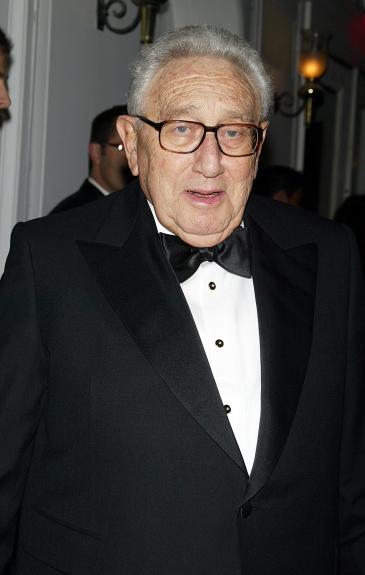
Henry Kissinger- a star speaker at Atlantic Bridge's uncharitable events- picture courtesy UPI

Any political activist knows that party politics and charitable status don’t mix. And if they do and someone complains the effects can be toxic for the organisation and any leading figures involved.

The Smith Institute found this to its cost when it was torn apart by a Charity Commission investigation two years ago accusing its trustees and organisers of appearing to be too party political and too close to Gordon Brown. The damage to Labour was enormous and the Commission used its powers to hold a full inquiry and directed its trustees to reform the organisation or else.

This week it was the turn of the Tories – or did you notice it?

 Atlantic Bridge- patron Margaret Thatcher  and an advisory board composed of four prominent Tory Cabinet ministers, Liam Fox, George Osborne, William Hague and Michael Gove – was given a year to change its act- after facing exactly the same allegations as Labour. The charity which promotes the “special relationship” with the US – was found in a damning report to be little more than a promotion for Thatcherite party political beliefs and neo-Cons in the US.

But one reason why it may not have hit the headlines is that the Charity Commission was far softer on the offending Tory charity. For a start its press officer advised after they received the initial complaint from Labour activist Stephen Newton that the word investigate could not be used as they had not launched a formal investigation. Instead the phrase “engaging with the charity to address concerns” through a regulatory compliance case was used instead.

Now nine months later the report has been issued with the almost same findings against The Smith Institute. The key phrase is the finding that the charity is “promoting a policy which is closely associated with the Conservative Party.”

But instead of a six month direction the charity has been given a year to change and only then is there a threat against the charity’s trustees of further action.

But more significantly while it is clear that the charity had broken the rules for at least seven years nothing is being done about its tax free position.

These are not minor sums. This was the charity that was charging £700 a seat for VIPs and £400 a seat for ordinary mortals to hear Henry Kissinger speak at a luxury London hotel last year and see him presented with a Margaret Thatcher Medal of Freedom. The commission’s report discloses that the charity admits this event was part of a tax free fund raising drive. The donors – probably mainly higher rate taxpayers – could claim the money against their tax returns. And it is now clear that Atlantic Bridge can’t claim the same charitable status as the National Trust.

So why hasn’t this been referred to Revenue and Customs?  Why aren’t more searching questions not being asked of the advisory panel of Cabinet ministers who presided over an organisation that clearly broke charity rules?

Atlantic Bridge is not actually being repentant either. In a statement they reluctantly promised to follow the Commission’s ruling and have taken down their website for “updating”. But it expressed its  “ disappointment” at the Commission’s ruling  and refused to answer any questions about the role of their trustees or advisory panel.

 The Charity Commission is being a little too careful in handling this scandal. I wonder why.

A similar version of this blog has now appeared on the Guardian’s Comment is Free website.

Whitehall’s censorship of farming subsidies spares Tories (and UKIP’s) blushes

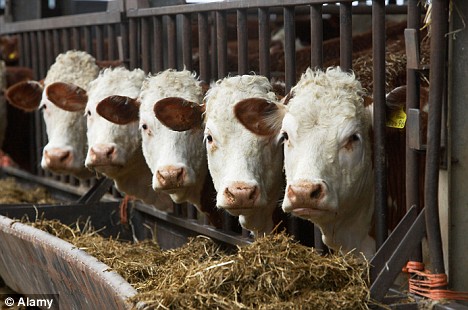
tucking into censored farm subsidy pic courtesy daily mail

Over the bank holiday weekend senior civil servants running the country took an extraordinary decision to ban the public  from seeing  information because  they thought it was so controversial that it would disrupt election campaigning.

They decided to protect candidates from being asked questions on the issue and thought it best the public be left in ignorance about the facts.

 What was this issue? Not some horrendous economic figure, some real facts on immigration. No, it was decision not to reveal which farmers and agribusinesses scooped up some £3 billion from the taxpayer from EU farm subsidies last year.

On Friday statistics were published simultaneously in the other 26 EU countries revealing who had been paid what – it is part of a victory by European journalists to force countries under freedom of information acts to release all this previously secret information.

But in London – against an EU directive – the information was banned. The Department for Environment, Food and Rural Affairs website says: “Due to the general election campaign, this website will not be updated with the 2009 figures until after the election.”

A letter from a DEFRA official to Jack Thurston, head of farmsubsidy.org, which campaigns for transparency for EU payments, says why:

“This decision reflects the need to maintain, and be seen to maintain, the impartiality of the UK Civil Service, given the potential risk that CAP payment  information relating to any individuals involved in the election might be used as part of election campaigning.”

Yet ministries continue to publish information on hospital admissions and roads just to name two. And in Scotland because of devolved government – they have taken the opposite decision. They published their figures over the weekend –revealing that 19,000 farmers and agribusinesses shared nearly £600m of public money and the world has not fallen apart north of the border.

So who does this protect? Initial research by farmsubsidy.org reveals that possibly up to 70 of the 650 Tory candidates standing at the election could be receiving some sort of subsidy. Up to half a dozen UKIP candidates- who campaign against the EU- could be receiving EU cash as well as a smattering of Liberal Democrat and BNP candidates. On the Tory side they have discovered that the declared postcode for receipt of EU subsidies is often the same one as used by a local Conservative Association, suggesting that leading officials of the local parties are also receiving subsidies. These are all taken from the previous year’s subsidy figures.

 Yet we won’t know, thanks to Whitehall, until after the election- even though the EU has made it clear in an article in the EU Observer today that it is disappointed with Britain and intends to write to the new government pointing out it is not in line with the EU directive.

Frankly disappointment is too weak a word. It is scandal that unelected officials should decide what information should be made public and when. The decision is also partisan in that it appears to protect opposition party candidates more than Labour candidates from scrutiny – particularly in the case of the Conservatives.

Sir Gus O’Donnell, the Cabinet Secretary, should reverse this now. Otherwise it bodes very badly if we are in “ hung Parliament “ territory when Whitehall  will be effectively  running the country while politicians sort out a new government. If officials are going to select what information the public should know and what should be kept secret, they are exceeding their brief.

This blog is also on the Guardian’s Comment is Free website.

Will bad planning by the Tories let the lights go out?

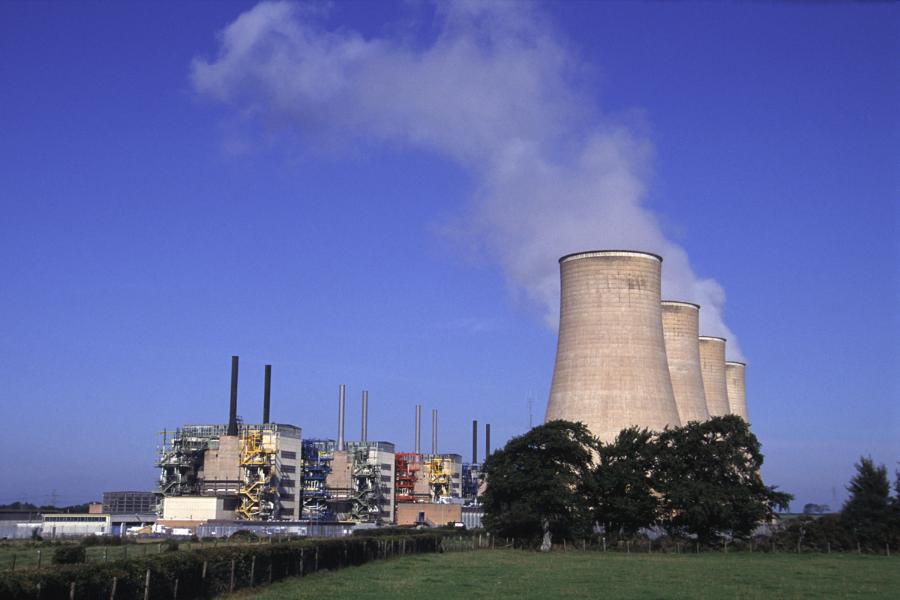
A new nuclear power station every 18 months -Cameron. Pic courtesy http://freefoto.com

A mad rush by the Tories to cut public expenditure the moment they are in office is already leading to fears that it could destabilise Britain’s fragile recovery. But there is now growing evidence that other policies could have similar damaging effects on the country.

Two Green Papers –one on planning and the other on energy- are leading to serious questions from some of the Tories natural allies – the CBI and the British Property Federation about their effectiveness. And when one looks at the detail, it is no wonder why.

The green paper on planning looks on the surface as a great, pro local democracy, anti bureaucracy document. And it does contain some good ideas, notably Open Source documents for all future planning applications.

 But in their rush to cull New Labour quangos, the Tories look set to stall rather than quicken the economic recovery. Their dash to kill the Infrastructure Planning Commission is actually going to cause chaos and confusion for any major schemes that might require planning permission in the next few years.

For the Tories want to bring back Parliamentary private bills for major projects and are daft enough to quote the Crossrail bill as a wonderful example of an alternative way of handling objections. This bill took literally years to get through Parliament with all day sittings and an enormous toll on the disinterested MPs who were supposed to monitor it.

Worse still The Tories are proposing an interim period when the Commission facing abolition will still be handling applications, while Parliament is geared up for a new role. Confused? Anyone would be.

But never mind. In their green energy paper, they propose using the same procedure to build an ambitious high speed rail link and nuclear power stations.

They deride Labour’s  London to Birmingham link as not ambitious enough and want to build a high speed railway across England .But imagine how long this will take under their planning reforms. The long winded Crossrail bill was just concerned with greater London but a bill for the whole of England will need the full term of the next Parliament for authorisation..

Cameron also promises to build a new nuclear power station every 18 months to solve the energy crisis – again using Parliamentary private bills to get planning permission. Energy analysts are not impressed. Inencom, the UK’s largest energy analysts, warned that this target is “verging on the impossible”, claiming that even if the party overcame planning delays, solving the skills shortages and construction complications would be a “huge challenge.”

Some of the smaller proposals in both papers also don’t stand heavy scrutiny.

On planning the Tories want to allow local residents and third party groups to object to new house building. This could also cause chaos for new home developments and traditional allies are not impressed.

 The British Property Federation said: “This would cause chaos for the system by allowing all manner of appeals.”

John Cridland, CBI Deputy Director-General, says: “The CBI agrees with the Conservatives that the planning system is broken, but it remains to be seen whether these proposals will fix it.”

And some energy schemes like encouraging micro generation of electricity in every home have not impressed the CBI either. Dr Neil Bentley, the CBI’s Director of Business Environment, said: This could end up increasing energy costs for businesses and consumers without increasing investment.”

The danger here is that not only will the Tories scupper a fragile recovery but manage to ensure that some half baked proposals will stifle new investment. They could even put the lights out.

This blog is also on http://progressives.org.uk as part of my Tory tracker column.