How Singapore shames London’s record on disabled mobility

Since taking this world trip I have gone out with my wife Margaret in a wheelchair in some 20 countries and encountered many challenges – from uneven and inaccessible pavements to stairs with no accompanying ramps, high kerbs, blocked paths and sudden inaccessible dead ends.

The visit to Singapore was a treat. It outstripped many European cities in the comprehensive services available to disabled people and the ease of getting around the country.

It sends a strong message to Transport for London on how to organise disabled friendly services across the capital. From travelling on the system it was clear a great deal of thought had been put in to make it as easy as possible for disabled people. Signage, positioning of lifts and the design of trains were all co-ordinated. So was access to the street to and from stations. It makes London just amateurish and years behind and pretty hostile to disabled people..

It was a lightening visit – just one day – it involved a visit to major attraction using the underground train system.
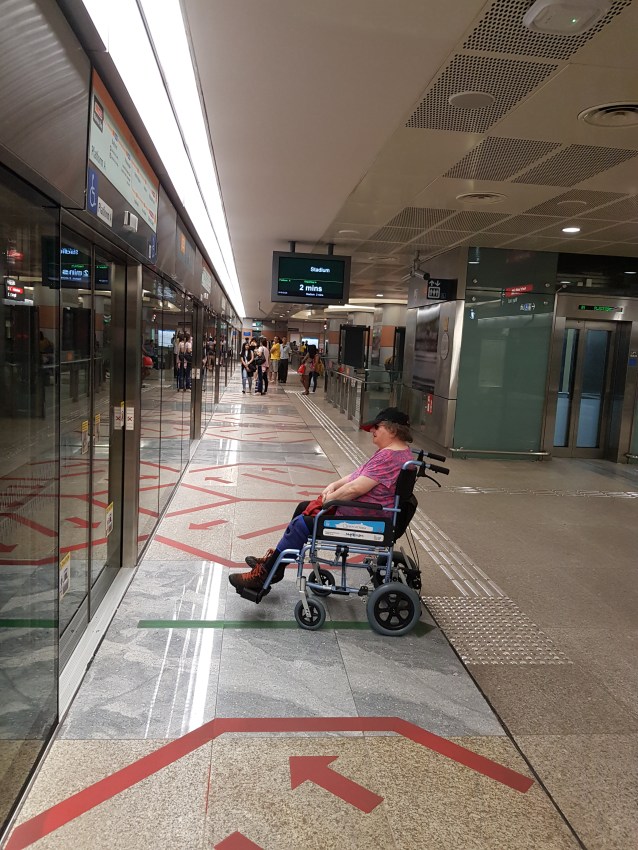
While This the cruise terminal was not directly connected to the metro the 250 yard walk from the terminal to the new station was well signposted. It’s served Marina South Pier where more local ferry services run. Getting access was easy . A wide ramp allowed wheelchair access to the station and lifts took you down to the booking hall and platform. The lift came out exactly opposite a carriage on the train which included wheelchair spaces.There was completely level access to the train with a minimal gap. We had to change lines at the next station Marina Bay. Again the system was easy to navigate.

Going out at Bayfront station was easy with lifts to the station entrance and a lift also well used by families with pushchairs to street level.

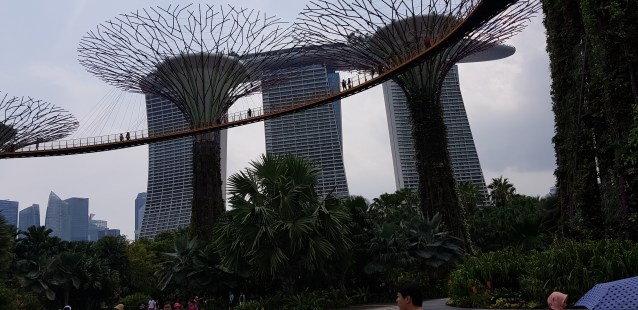
And then there was a bonus. We were going to the Gardens by the Bay one of Singapore’s newer iconic attractions. And round the corner was a shuttle bus to take you to the centre. But it was no ordinary shuttle bus. It included a ramp so wheelchairs could be hoisted on to the back to enable disabled people to travel in style. They were also testing a driverless vehicle.
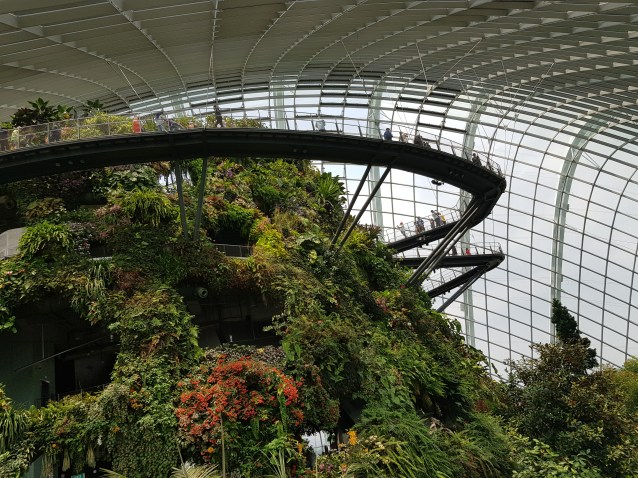
Once there the two amazing attractions the Flower Dome and the Cloud Forest were easily accessible.The Cloud Forest was particularly impressive with wheelchair accessible lift and always taking you hundreds of feet above the tree, hanging plants and huge waterfalls.The pictures tell the story.

Singapore’s system is copied by the metro in Kuala Lumpur in Malaysia. It also has lifts to platforms and ramps into stations. Unfortunately at the two stations we used half the lifts did not work. And the access to the stations is not straightforward. More like London than Singapore.
Vietnam: The scooter boys in a booming Communist state with a widening wealth gap 

Imagine being dropped in the centre of a huge, unfamiliar vibrant place like Ho Chi Minh City without any local currency or understanding the language. The first thing you might do is look for an ATM to get some local cash. But there is not one in sight.

Then a friendly young guy on a motor scooter who speaks English suggests he can direct you to one which turns out to be round the corner.

You successfully get the money. Then he asks for payment. In the end You give equivalent of £3 and he goes away. As a tourist to the city this happened to me. I was politely fleeced.

The incident is symbolic of the current state of affairs in Vietnam. The loss of £3 was not a huge matter for me but it was a small fortune for him. It illustrates both the gulf between first world tourists and third world countries and the internal divide between the rich and poor in an emerging nation like Vietnam.

The young motor scooter rider is one of the enduring features of Ho Chi Minh City.There are thousands of them desperate and anxious for work and they dominate the roads and the pavements. Trying to negotiate a wheelchair along the pavements I found they were my main competitors for the few ramps that made the streets accessible. The traffic in the city is anarchic and you take your life in your hands to cross the road. Many of scooter riders use the ramps for the disabled to mount the pavement to avoid being held up by traffic lights.

They are at the bottom of a very large pile with shoe shine cleaners and people selling fans to tourists. At the top are wealthy entrepreneurs and property developers in the new Asain tiger.

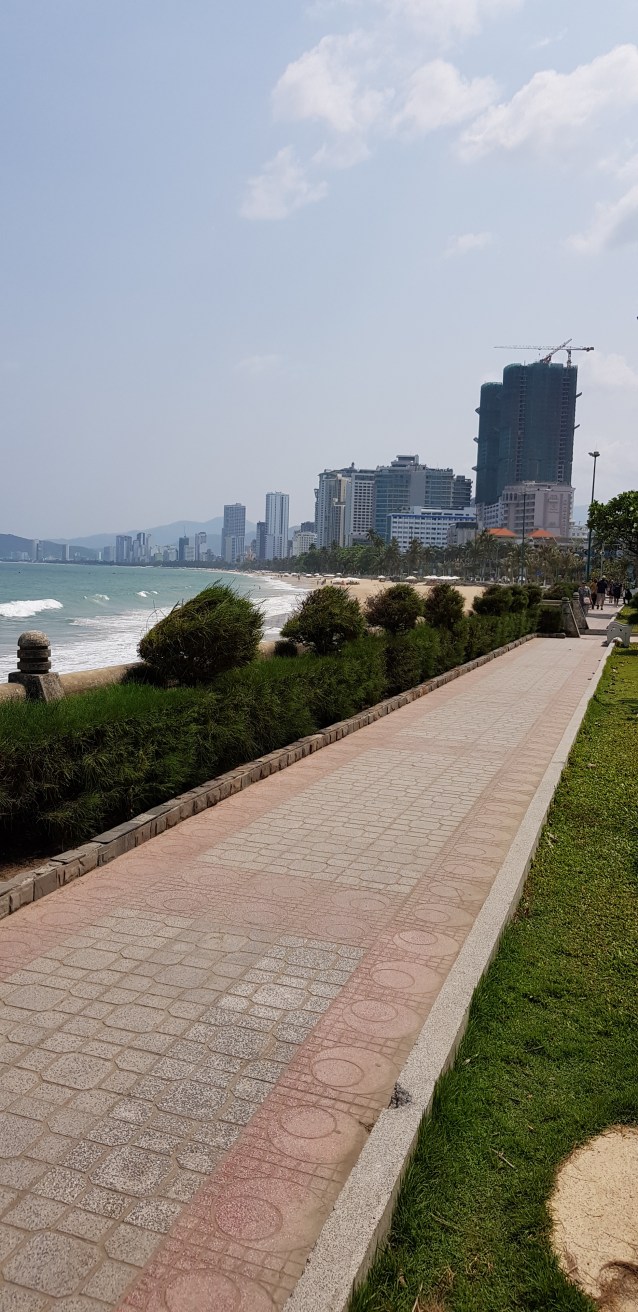
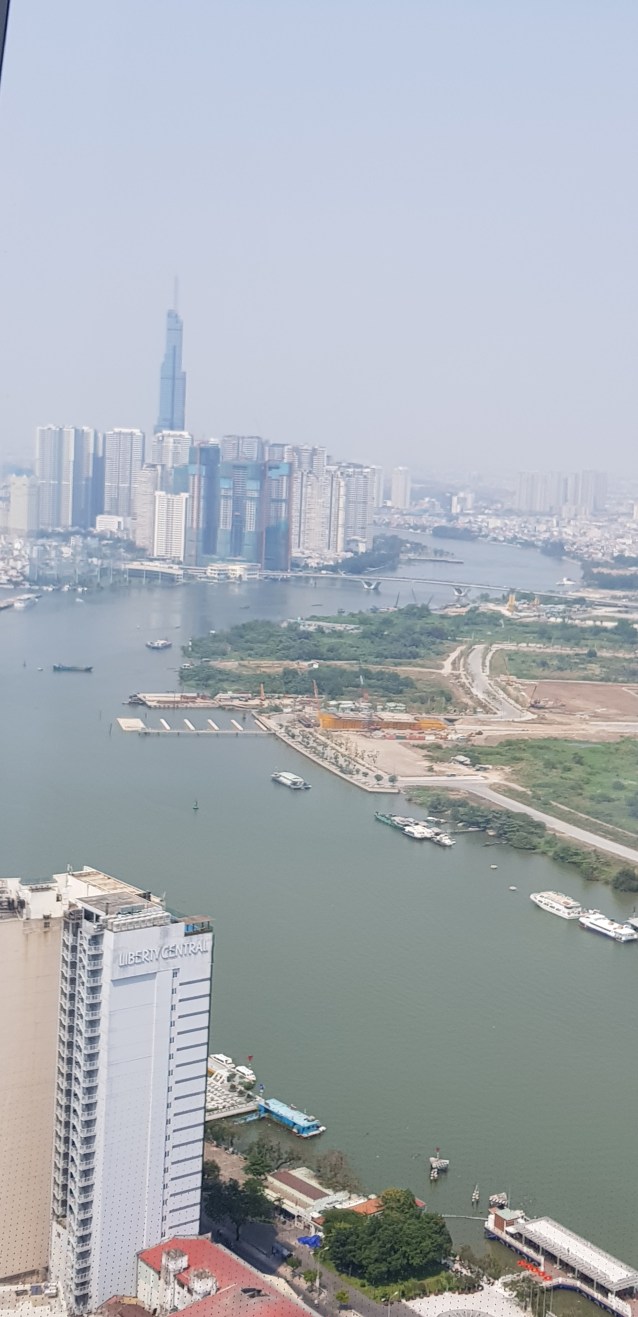
And a visit to Ho Chi Minh city and a popular seaside resort Nha Trang confirms this. Both are booming with new tower block offices and apartments in the former Saigon and new multi storey hotels in the seaside town.

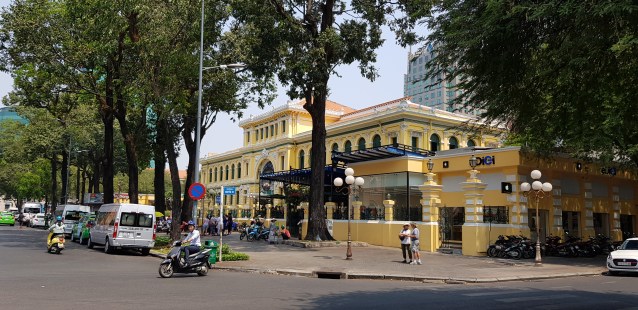
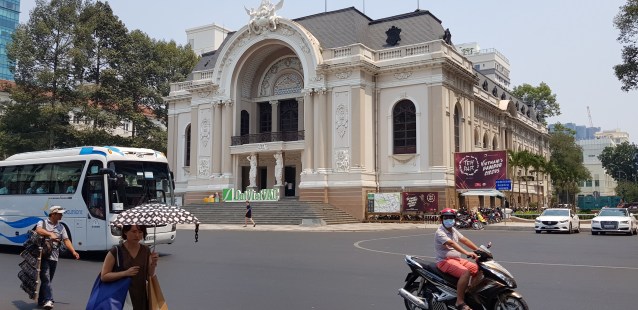
Ho Chi Minh City still has a number of its original French colonial buildings including the old post office, a Roman Catholic cathedral and an opera house that would not look out of place in Paris.But any idea that the writ of Macron runs here is out of the question. France has left an architectural legacy but not much else.

Instead it is the Japanese,Chinese, Americans and British ( in the shape of banks like HSBC and accountants like KPMG) that dominate the city alongside growing new Vietnamese entrepreneurs.

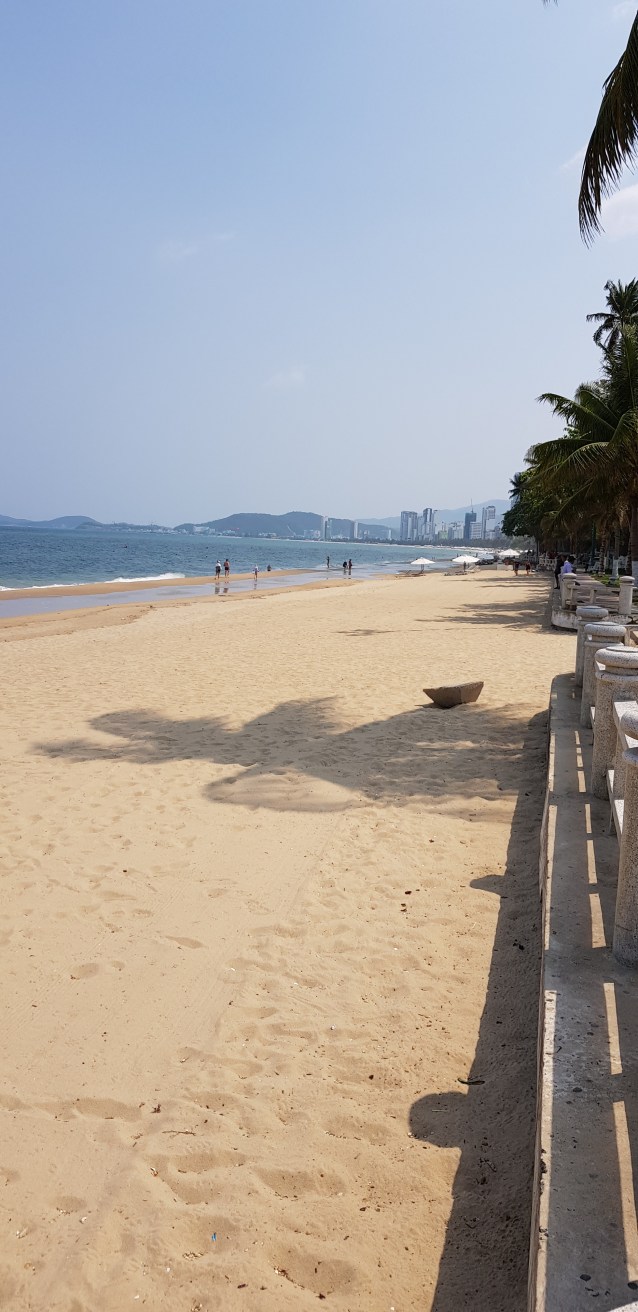
In Nha Trang a seaside resort that was a favourite relaxation destination for US troops during the Vietnam war it is US and Japanese hotels that are dominating the seafront with at least six new tower block hotels under construction when I visited.

After the American troops left it became a holiday destination for the Russians and Chinese. Now it is seeking a wider tourist market from Asia and even Europe. The resort is not just a cruise ship destination but a major tourist centre in its own right.

The present beautiful uncrowded beach could in future become as crowded as one on the Costa del Sol.

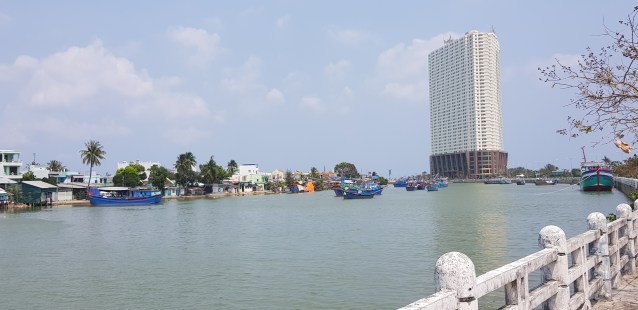
Small shacks with corrugated roofs are cheek by jowl with new luxury hotels in Nha Trang. And in Ho Chi Minh City huge swathes of modern apartments are going up in the city centre which are well beyond the reach of the average Vietnamese worker.

Communism comes in is over property ownership. The concept of private freehold property does not exist. Instead people buy a state licence to occupy the house or flat which can be revoked if the state requires the land for development. People are compensated for having to move and foreigners are restricted to a 50 year occupancy. Some, the guide suggested, get round this by getting a Vietnamese person to “own” it for them.

Most companies expect their staff to work a six day week . Japanese employers are rated the best as they offer staff a five day week.

Vietnam is a country in transition and is aping China. It is an inexpensive holiday destination if you ignore the poverty gap.

By the way the country plans to ban motor scooters from the Ho Chi Minh City by 2030 to combat smog. I wonder where they will go or whether they will succeed.

Murder at the laundrette: A Cunard experience not in the brochure 

Anybody on a world Cunard cruise cannot but be charmed  by the civilised behaviour of the crew and fellow guests. A day does not go by without any guest being encouraged to enjoy themselves by the large crew and fellow guests.Everybody is very considerate and helpful to each other. 

But there is one room in Queen Victoria where all this breaks down. It is called the laundrette. Here the genteel atmosphere throughout the ship evaporates in a mix of soap suds and wet clothes.

The laundrette is one of the few free services on board but there are only two or three machines for 100 or more cabins. And with 700 people going on a 108 day world cruise plus a turnover of some 1300 people at major ports demand is high.

To get a machine normally polite men and women are transformed into duplicitous schemers resorting to any ruse to get their hands on the machines.

When wiley women and aggressive men get going to grab a machine anything goes.

One person even came armed with two fake ” Out of Order ” notices to  attach to a washing machine and a dryer so she could get exclusive use during the voyage. The ruse was discovered when other suspicious guests tried using the machines and found they worked perfectly.

More direct action has involved taking other people’s clothes out of driers and washing machines when the guests using the machines are out of the laundrette.

One poor guest who had just loaded a washing machine and went out to get more dirty clothes came back five minutes later to find another guest had emptied her machine and replaced it with her clothes. By then she had started the machine and the first guest could do nothing about it.

As for men aggression can spill over. One man furious that another guy had taken out his washing turned to the other and said ” How dare you run your fingers through my wife’s knickers “. A fist fight broke out and it is said that Cunard threw both of them off the boat at the next port.

No wonder when you visit the Cunard laundrette you find a line of grim faced men and women guarding their machines with their lives and warning you there is a two hour wait before you need to come back.

So far the ethos of take no prisoners has not yet led to any deaths. But there is still another month on this voyage so anything could happen.

In the meantime nobody has copied the iconic Levi jeans advertisement where a  young guy goes to the laundrette to strip off and put all his  dirty clothes in the machines. But perhaps Cunard’s strict dress code of smart attire after 6.0 pm and a dinner jacket and cocktail dress on gala night puts off people from going to the laundrette in the nude. But again there is still time…

Australian Bush:The Invasion of the Giant Cane Toads

It could be science fiction.It has already been featured on games videos. But in the Australian Bush there’s an extraordinary real problem which is entirely self inflicted.

In the 1930s some bright person thought they had found an ecological way of dealing with a pest – a beetle – that was destroying Australia’s sugar cane crop. They decided to import the world’s large toad that had been introduced to Hawaii from Central America. The toads grow up to six inches long.

What the people who imported the toad did not know is that this large toad could not jump. And the beetles lived at the top of the sugar cane some 15 feet above the ground. So the toads were less than useless in combating the pest.

But their legacy has been a disaster. The toads secrete a poisonous fluid when attacked as their main defence mechanism. Toads are the natural food for many native reptiles and birds. They have no natural predators in Australia.

Worse the reptiles and birds that ate them were poisoned threatening the diversity of wildlife and forcing snakes and iguanas to the point of extinction in some areas. They also multiplied from a few hundred to an amazing 200 million and expanding their area from a small part of Queensland into the vast Northern Territories.

One area we visited was Litchfield National Park south of Darwin. This bush park is famous for its waterfalls and its giant termite mounds. Here the arrival of the cane toad has seen the disappearance of iguanas and some species of snake who ate the toads.

The guide who took us on the trip was devastated by the impact of the toads on other wildlife. And he was concerned about the spread of the toads which extend their range by about 25 miles every year.

Obviously it has not destroyed all wildlife in the park. Some specialised species like the olive python which feeds on bats are largely unaffected. And there is some hope that Australian wildlife hit by the toads may be able to adapt.

One snake has evolved to have a smaller jaw so it cannot swallow a giant toad. A bird under threat has found that if you turn the toad belly up it is possible to eat parts of it without being poisoned.

And the park’s meat eating ants have found they are immune from the poison. Normally they invade the huge termite mounds and kill the termites. Now they have found toads as another part of their diet.

The Australian cane toad has also adapted. It has grown longer legs so it can cover greater distances in this huge continent. Meanwhile scientists have unraveled the toad’s DNA in the hope of finding a way to try and eliminate them. This is an extraordinary story of a self inflicted problem that could be solved by evolution.

Report from Waitangi:Where Maori Aotearoa became New Zealand 

It is one of the most serene parts of New Zealand we saw in our short visit.Situated on the mainland of the beautiful Bay of Islands the Waitangi Treaty grounds is where in 1840 the Maori tribal leaders ceded sovereignty to the British.

The agreement has been disputed ever since through mistranslation. The Maoris thought they had ceded sovereignty, the British thought they had agreed that they would govern them and be able to take over their lands.Since Maoris had no written language it was an easy and useful mistake by the British.

The signing led to the seizure and purchase of the vast majority of Maori lands and like many of the people who inhabited the land in Australia and North America before the arrival of European settlers they became marginalised.

Since the 1940’s there has been a huge migration of Maoris from rural to urban areas. In 1926 84 percent of Maoris lived in rural settlements by 2006 it was down to 15 per cent. This added to marginalisation as many lost touch with their roots and some drifted into crime.

However since the 1970s there has been revival of Maori culture and nowhere does this show more than in Waitangi.The treaty grounds are run by a trust which receives no government money. Even the purchase of the land in the 1930’s depression relied on a well off white family rather than state aid. But the enthusiasm of the people who run the trust reflects the revival.

It was best illustrated by our Maori guide at Waitangi called John. He had a Maori name but that was too difficult to pronounce or remember for a European like me. He loved his job and spoke eloquently about Maori culture, traditions,language and history.

What came over is Maori fascination with ancestry. He could trace his own back 15 Maori generations and discovered in the process he was part Scottish and one per cent Native American.

The role of tattoos in Maori culture is also fascinating.John had got married and instead of exchanging rings with his bride he had a tattoo on his chest to celebrate his marriage. Marriage must be forever for Maoris.

The treaty grounds include the house where the treaty was signed, a Maori meeting house and a replica of a 150 man war canoe, a museum and a woodcarving centre where the

ancient Maori craft has been revived.

Princess Diana stirred up controversy on a Royal visit to Waitangi when she became the only woman to sit in the canoe breaking the sacred Maori rule that only men can sit in war canoes. But she was never one to follow tradition.

It also has a flagstaff with three flags,one created after the crew of trading boat were jailed in Australia for trading without a flag,the Union Jack, and the modern New Zealand flag.

The Treaty House is no grand building for such a momentous event. It is just a small homestead which later had an extension added. The room where the treaty was signed is simply furnished with bare boards and a wooden table.

For anyone visiting New Zealand this is well worth the trip.Allow a full three hours to include a display of Maori dancing.

Samoa: Boris’s Treasure Island for post Brexit Britain?

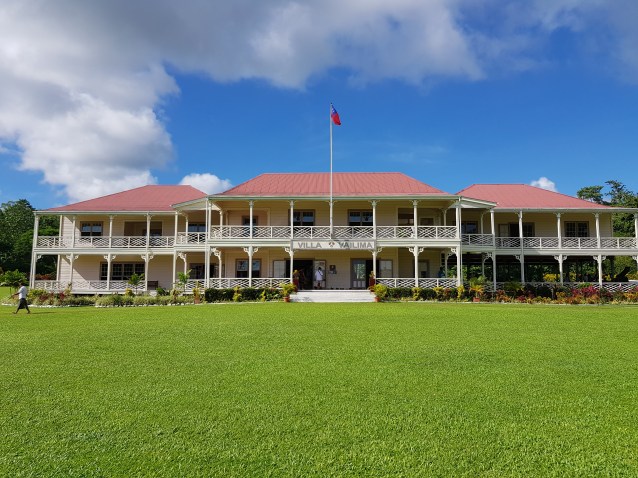
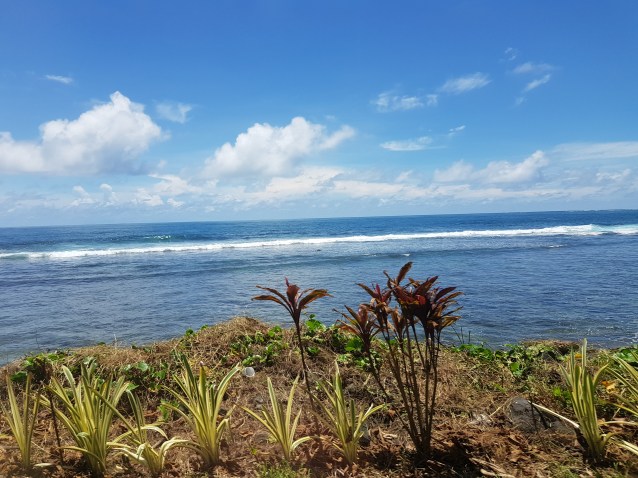
The lush tropical island of Samoa in the South Pacific is famous as the last resting place of Robert Louis Stevenson author of Treasure Island.His villa is now a museum and a major tourist attraction set in the hills above Apia, the nation’s capital.

Stevenson is buried at the top of a nearby mountain and reached by a hike through tropical rainforest. There is even an environmental project to preserve the forest in that area.

It was at Stevenson’s villa that five months ago that Laura Clarke the British High Commissioner to Samoa chose to launch a new initiative aimed to boost Britain’s place in the world post Brexit. Here for one day the Union Jack flew from the building while the high commissioner waxed lyrically about how similar the UK was do this tropical paradise. You can read all about it in a FO press release here.

Samoa it turns out is one of nine countries that Britain is keen to strengthen its presence as part of a Foreign Office initiative to compensate for losing its influence in the European Union. The argument goes along the lines that for every small country that Britain supports is likely to back Britain at the United Nations as each country has one vote. That way Britain can keep playing a major role without relying on the EU.The initiative goes back to Boris Johnson’s time as foreign secretary.It is being repeated in Tonga and Vanuatu.

The policy could be expensive and the competition could be fierce. In Samoa it will mean building a high commission to compete with the ones already in the capital representing Australia,New Zealand and Japan. In both Samoa and Tonga the main competition comes from China which is aiding Samoa’s education system and operates behind a high security compound in Tonga. The Japanese and Koreans are funding a new bridge in Apia. And both islands have strong links with Australia and New Zealand.

Exactly what new business opportunities Britain will get from Samoa and Tonga is not clear. Neither country relies entirely on tourism but most of their exports are agriculture and both have tiny populations ( they have less than 300,000 between them) and are no substitute for any EU country. Britain could benefit from coconut oil and cream from Samoa. Tonga could send us frozen fish,squash and vanilla beans.

As a visitor to both countries, Samoa is stunningly beautiful and friendly and Tonga is similar. Both have a very strong Christian religious communities dating from the missionaries and still observe Sundays as a day of rest.

In Samoa family is very important and unusually there are few cementaries as nearly all Samoans bury their ancestors on their own land. As well having their own homes they build meeting halls for family events.

Surprisingly for such a beautiful place it is not overdeveloped. There are no huge tower block hotels like Honolulu dominating the coast.Instead it remains rather a remarkable tropical paradise that even Robert Louis Stevenson might still recognise.

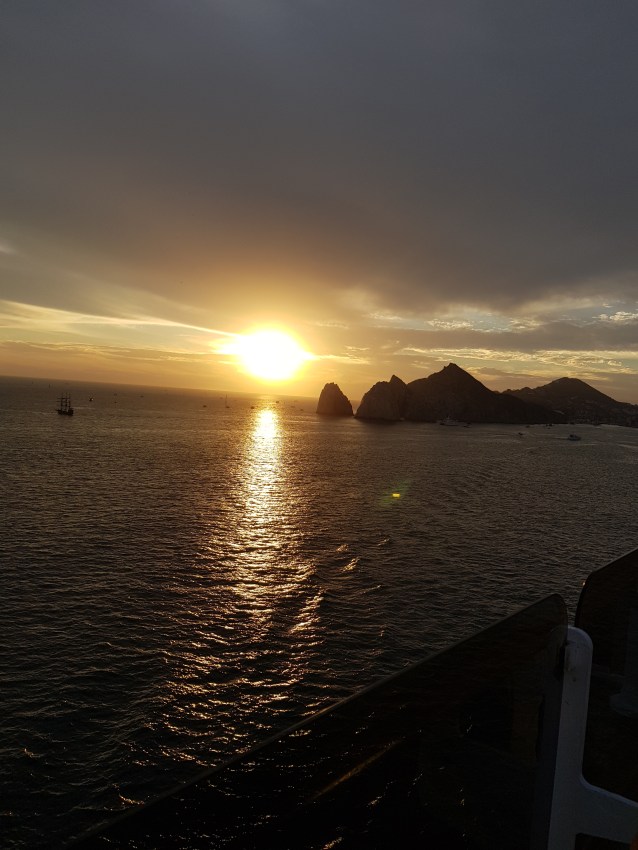
Cabo San Lucas: Mexico’s pristine environment on the front line of an American invasion

President Trump is more than keen to build a wall to keep out immigrant criminals, drug dealers and bad people from entering the United States from Mexico.

Yet some 1000 miles away from the proposed wall Americans are very happy to move into a country seen by some as a dangerous hotbed of crime and violence threatening the foundations of the US.

The front line for this “invasion” is Cabo San Lucas a fast growing resort in Baja California some 300 miles south of San Diego and once one of the remotest parts of the world.

Some 50 years ago it was a small fishing village set among spectacular scenery at the ” Lands End” of Baja California a long slither of land separated from the mainland of Mexico by an inland sea and then an extremely isolated home for amazing wildlife.

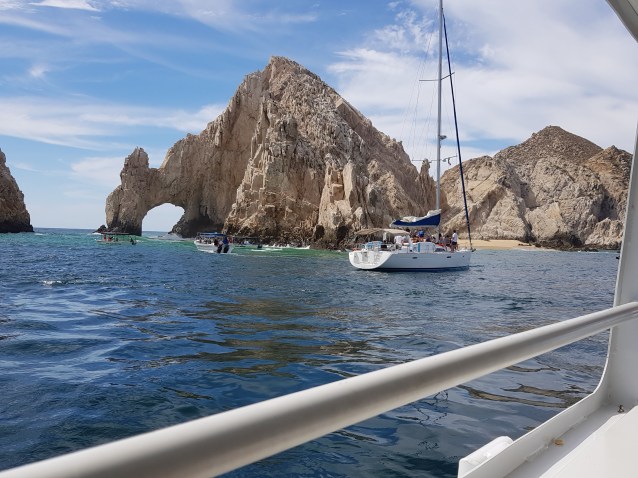
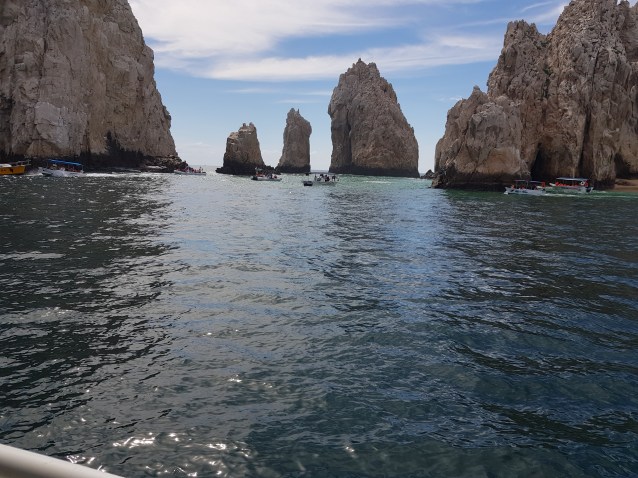
Every year grey whales from Alaska come and breed in Pacific Ocean off the coast and there are colonies of sea lions and pelicans plus a huge variety of other birds and fish. The local scenery is spectacular with huge rocks and pinnacles rising out of the ocean and a much photographed natural arch. Cabo San Lucas is also on the edge of a giant underwater canyon which makes for fine scuba diving. Outside the resort the desolate desert scenery is full of forests of slow growing cacti.

According to the guides the turning point in Cabo’s history came when the Mexican government altered land tenure law and allowed its original inhabitants to own their land in the village. Instead of sharing the windfall the people lucky enough to own property sold it to multinational corporations at what looked to them a vast profit. Most were American real estate companies who saw the opportunity to create a resort to exploit the stunning scenery and wildlife.

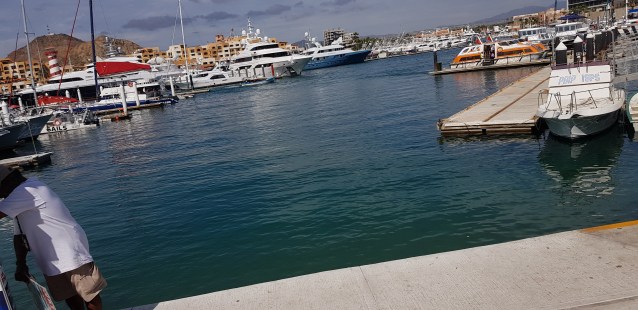
Now there are no original village homes left, local fishing has ceased,and an ever expanding ribbon of hotels,condominiums, apartments ,shopping malls and time shares have been built into the surrounding hills making it the most expensive city in Mexico. Villas with commanding views of the sea sell for seven million dollars. Millionaire yachts dock in the harbour alongside tourist boats.

The resort is and looks American with Walmart, Dominos Pizzas and McDonalds along the main streets. Most shops advertise their wares in English with pharmicists offering sleeping pills and body building drugs without prescriptions.Development has brought advantages for local people with most of the population in tourism or employed by real estate companies. Mexico unlike the US encourages immigration anyone who can earn the equivalent of 2000 US dollars,according to the guides, is welcome.
As a result Cabo has attracted people from other Central and South America to work there.


There are downsides. The pristine scenery and abundant wildlife is under threat by this mass invasion. Also the Koreans and Japanese are overfishing the abundant waters off Mexico though the under sourced Mexican government is trying to limit their activity.
The real dangers are that the overdevelopment of the area could eventually destroy its main attractions. There is also a national park where development is restricted which offers hope. But the town is both an example of pristine nature being exploited by corporate greed.

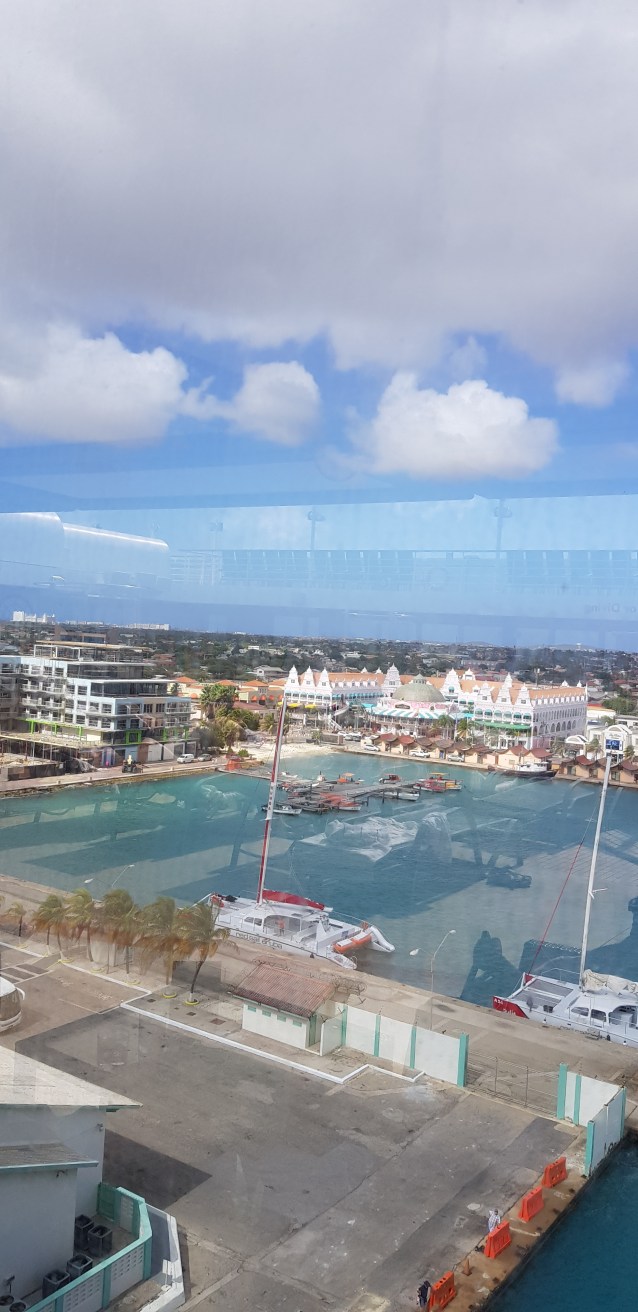
Report from Aruba: The boom tourist island off crisis hit Venezuela 

Just 18 miles off the coast of Venezuela lies the former Dutch colony of Aruba.The state of Aruba could not be more different from Venezuela.

While Venezuela is facing its worst economic crisis with hyper inflation and three million people have fled the country mainly to Colombia and Brazil, Aruba is in the middle of a tourist boom.

The distance from Aruba to Venezuela is less than that between Dover and Calais so it is not surprising, though it is unreported, that Venezuelans have also sought refuge here. Officially they are deported back to Venezuela if found but unofficially with the current labour shortages many may not be. And unlike the phobia by some in the UK of immigrants flooding the country this small island of 118000 people seems to welcome them.

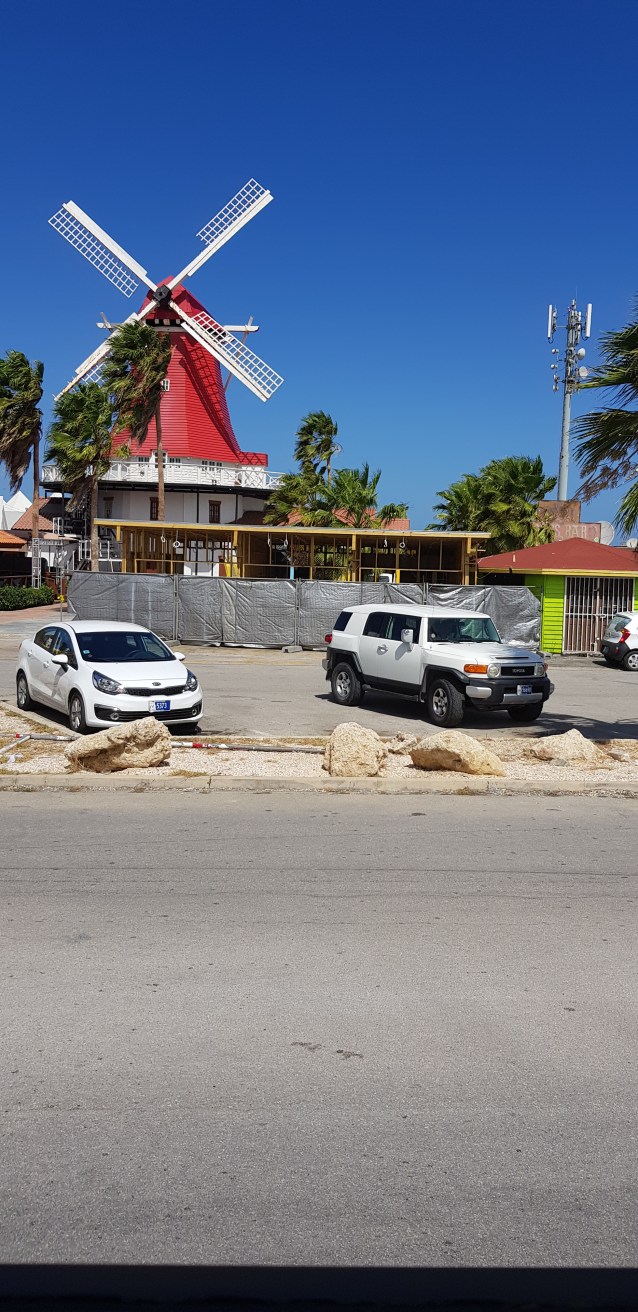
Aruba is a curious mixture of American high rise resort hotels,holiday apartments and casinos and Dutch social welfarism shown by affordable state housing schemes and a national contributory health service.

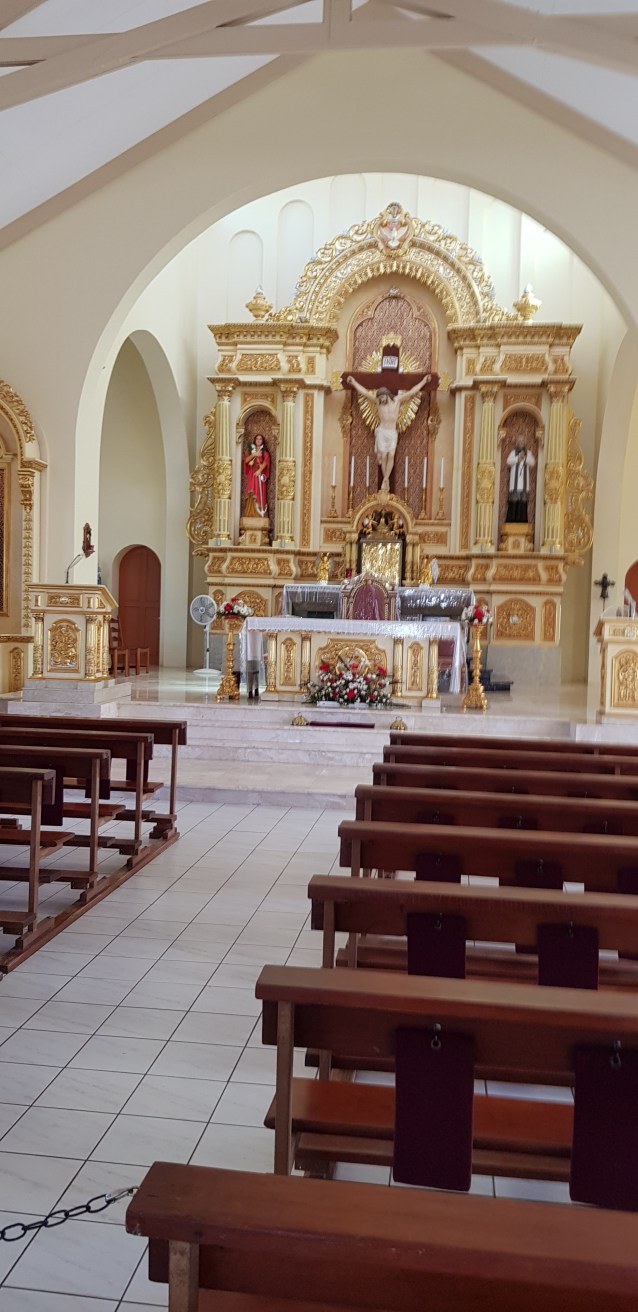
Most Arubians are trilingual – they learn Dutch,English and Spanish in school – though Dutch is the official language. They are mainly Roman Catholic rather than Protestant due to the legacy of the original Spanish conquerors of Aruba and their local currency still is the guilder long abolished in favour of the Euro in Holland. Nearly all the supermarkets are owned by the Chinese.

Arubians who want to study medicine or engineering go to Dutch universities and Arubians are proud they have freedom of movement as EU as well Dutch citizens. From March 29 they will have more freedom of movement than the British.

The biggest deal for Arubians is tourism. An estimated 1.8 million people visit the island every year from cruise ships and direct flights from the US and South America.As a result most people are employed by the tourism industry.There is a also a flourishing aloe vera industry as it has a dry desert like climate – it doesn’t rain for 8 months a year.

Intriguingly the country used to refine Venezuela oil but the big refinery was closed. It still imports a lot of its fruit and vegetables from Venezuela – which given the shortages in Venezuela is remarkable.

The main tourist attraction are the beaches – the hinterland when not developed is mainly desert scrub and grazed by goats- goat is staple diet. Wild creatures include iguanas, rattlesnakes which are protected and boa constrictors which were irresponsibly released into the wild.

When the local pest control are called out it is often to remove a boa that has got into someone’s yard.

But what is the most extraordinary is the parallel universe between Aruba and Venezuela – so close together but so far apart.

Bermuda: How shipwrecks can save our dwindling coral reefs 

While global warming and pollution are threatening our coral reefs Bermuda is a rather unusual success story.

Unlike more famous coral reefs like the Australian Barrier Reef which are in decline the coral reef around Bermuda is healthy and expanding.

One reason is that Bermuda is hundreds of miles from the US and other Caribbean islands and has no industry to speak of to pollute the seas.This tiny island has a coral reef far larger than the island itself. The Atlantic Ocean north of the island is in some areas just between three and twelve feet deep.

As a result the area is dotted with shipwrecks. So many ships have ran aground there and many have not been discovered. But here is the interesting point. These shipwrecks are incredibly beneficial to coral reefs. Sunken boats create a structure for corals to grow and are magnets with for fish with plenty of hides holes. And it appears rather surprisingly that the rusting iron of the hulks acts as a fertiliser to help coral establish itself. One of the few cases of human made debris being beneficial.

According to the tour guides who took us there is now growing interest in sinking redundant ships on the edge of coral reefs once they have been decontaminated. They are colonised by the coral which expands the reef.

One example is HMS Vixen a former Royal Navy ship which ran aground a century ago whose hull as the picture shows still sticks out of the shallow water. Here it is a magnet for grey snapper, Chubb and various tropical fish.

Bermuda’s coral reefs are also refuges for turtles which are protected from predators and conservationists have brought back turtle eggs to hatch on the island’s beache to re-establish and expand the population.

Not all Bermuda’s Eco experiments have worked. Just off the coral reef there is an abandoned Eco village. The houses are built on stilts on the coast with canvas rooves and no air conditioning and sound proofing.As a result they are unlettable in the summer when there is high humidity and people’s conversations can be heard from house to house.At the moment the government is desperately trying to flog them off to anybody who might want to use them as a spare summerhouse.

Some facts on tax haven Bermuda which free market Tories might like and Socialists hate. Income tax minimal at just six per cent or nothing for 65000 inhabitants.As a result there is a 17.5 per cent tax on everything that is sold there which is already expensive because it has to be imported. Average house prices are $800000. Cheapest one bed flat $300000. Some affordable houses for $300000 – these are ex Royal Navy homes. Lucky to get a beer for £7 and to eat out for two could cost over £100.

Not much chance of Liam Fox negotiating an independent trade deal – unless he wants to expand its tax haven status with the City. Bermuda doesn’t make anything except rum cakes. So apart from flying them in on direct services between Gatwick and Hamilton don’t expect anything special.

Bermuda until 1960’s had a naval presence. Plans by Gavin Williamson the defence secretary to bring back Royal Navy bases in the Caribbean should make it the ideal centre. A few slight problems.The Royal Navy commissioner ‘s house is a museum, the deep water berths are now cruise ship terminals and the port buildings a shopping mall. Apart from that it should be plain sailing.

Date set for Judicial Review of state pensions for 50s born women

CROSS POSTED ON BYLINE.COM

Michael Mansfield QC will taking the case of the injustice to 3.8 million 50s born women to judicial review on May 24 and 25.

UPDATE: Since this blog was written the dates for the hearing were changed to June 5 and June 6.

The historic hearing into whether 3.9 million 50s born women have been cheated out of their state pension by the government has been set by the High Court for May 24.

The date is later than expected because the Department for Work and Pensions expected to win the hearing for permission to bring the review on November 30 brought by BackTo60 campaigning group and thought they would stop the process in its tracks.

Now the Department has been allowed more time to prepare its case as all of its initial arguments to stop the review were thrown out by the judge.

The Hon Ms Justice Lang – who is also known as Dame Beverley Ann Macnaughton Lang – ruled in favour of all the issues raised by barristers Catherine Rayner and Michael Mansfield on behalf of the women.

This means the government will have to answer whether the decision to raise the state pension age from 60 to 65 and then 66 amounted to age and equality discrimination. The key point is that the judge decided that although the legislation dated back to 1995 the present effects of the change is causing hardship to a specific group of women who were not able to fully contribute to the national insurance fund.

The original hearing also led the government to admit that further changes introduced by the coalition government in 2011 had been part of an austerity programme and reveal that the private pensions industry is also against the women winning their case as it could have a knock on effect on private occupational pensions that are tied to the state pension age.

The issue of maladministration will not be the main feature of the case as this is being dealt with by the Parliamentary Ombudsman. Cases of discrimination and resulting hardship can still be brought by MPs to the Ombudsman. And recently Ben Lake, the Plaid Cymru MP for Ceredigion filed a case on behalf of a constituent.

Joanne Welch, spokeswoman, said

” BackTo60 .com had a resounding victory on 30th November 2018 and our amazing World Class Legal Team pressed home our advantage for a 2-Day Substantive Hearing.
“The substantial significance of our argument has been recognised by the authorities and the case has been elevated to a higher level for determination – this has necessarily involved an alteration of  hearing dates.
” There will now be a much more thorough and robust review as the case will take on an historic perspective and achieve national significance:  it will be heard, May 2019, at the Divisional Court.
Our collective impetus is working so well, thanks to each one of you.  Long may it be so.”