Martyn Pitman judgement: a bad ruling that could endanger mothers in childbirth

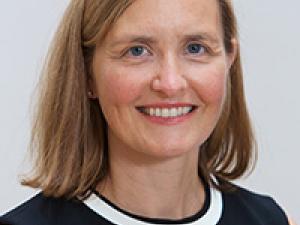
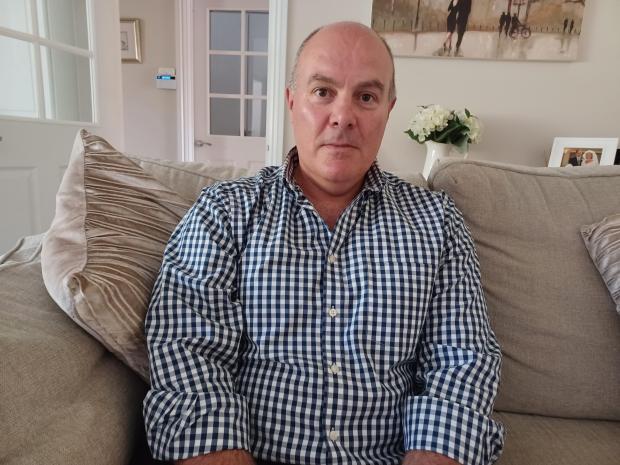
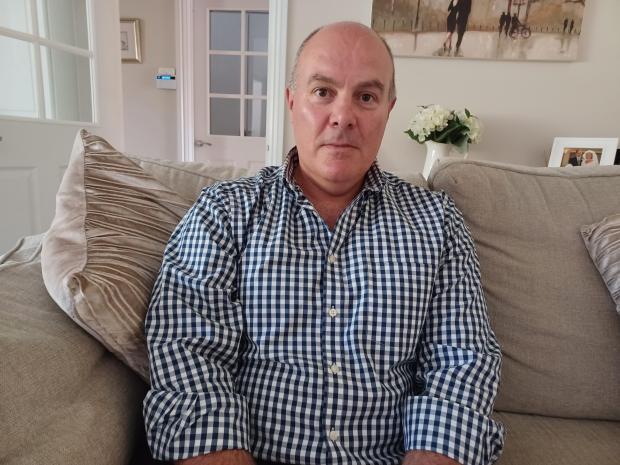
Dr Martyn Pitman Pic credit: Hampshire Chronicle Adele Bouchard

Jonathan Gray, the employment judge hearing the case brought by whistleblower obstetrician Martyn Pitman against Hampshire Hospitals NHS Foundation Trust used last Friday to issue his judgement dismissing all the doctor’s detriment claims against the trust. The judgement, despite widespread and national interest, has still at the time of writing, not been published by the HM Tribunals and Court Service.

Judge Jonathan Gray Pic credit: BDB Pitman

The judge, who previously worked for the law firm BDB Pitman in Southampton, managed both to accept virtually all his whistleblowing claims but throw out any claims that he had been persecuted by the trust for exposing them.

In short he believed every word given by Alex Whitfield, the former oil refinery executive turned trust chief executive; Lara Alloway, the former chief medical officer and Steve Erskine, the former businessman now chair of the trust and other leading figures who gave evidence for them. He didn’t believe a word of the case brought by Martyn Pitman of his bad treatment despite being ably defended by Jack Mitchell, funded by the BMA from Old Square Chambers.

What the judge did was turn Martyn Pitman against himself. His ruling at the end was :“Having considered each of the alleged detriments, there is in our view an overarching reason for what has happened to the Claimant that is not on the grounds of any of the alleged or proven protected qualifying disclosures. In short, it is the Claimant’s communication style and not the message he was trying to convey.”

To seal the deal the judge turned one of Martyn Pitman’s witnesses against him. He used the evidence of Dr Michael Heard, a fellow consultant, who backed up Dr Pitman’s whistleblowing claims to turn against Dr Pitman.

Dr Heard had made similar claims to Dr Pitman to the management at the trust and no action was taken against him. The judge used this to say it proved the trust management was keen to take whistleblowing seriously but not keen if it was presented in a forthright manner which affected the ” health and well being ” of the managers.
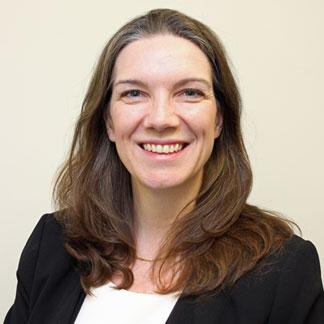
Alex Whitfield, chief executive, Hampshire Hospitals Trust

What was also strange in this hearing was that the person who made the most dramatic claims against Dr Pitman, Janice McKenzie, the divisional chief nurse and midwife, saying she had to leave the unminuted meeting dealing with patient safety with him, in tears to cry in the toilet, never gave evidence. But like ” Banqou’s Ghost” in Macbeth her claims hung over the hearing. I would have liked to see her testify given there is no written evidence of what happened there.

There was also a dispute – again unminuted – over the claim that towards the end of this long saga Dr Pitman was verbally told by Alex Whitfield, that he couldn’t continue working at the hospital because he was a risk to patient safety. She denied this and the judge believed her and not Dr Pitman.
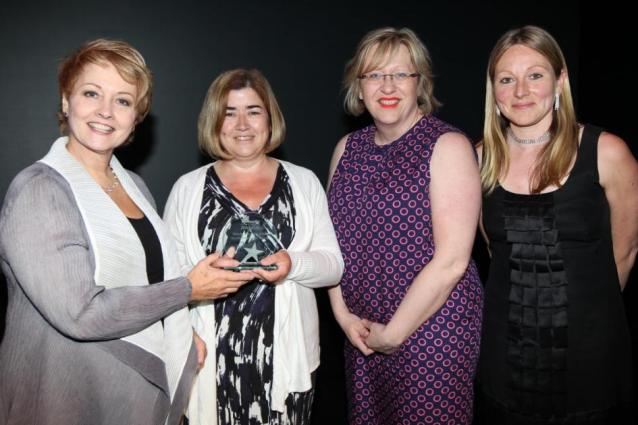
Basingstoke Hospital Midwife team receiving an award in 2015 in better times. Pic credit: Basingstoke Gazette

Now there is a much wider issue in this judgement which goes well beyond this being a local hospital dispute. It arose because of a merger of two trusts which brought a clash of cultures between midwives who worked at the North Hampshire Hospital and those who worked at the Royal Hampshire Hospital in Winchester. Midwife managers from Basingstoke tried to impose their system on midwives in Winchester. This led to unrest and unhappiness in Winchester and Dr Pitman intervened because he was worried about patient safety and took it up with the midwifery managers who seemed unable to cope with criticism.

The management of this became a national issue when the Care Quality Commission inspected the maternity services at the trust and downgraded the trust (see here). Again I am surprised this was not mentioned in the tribunal.
But why I really think this ruling is bad is another event which coincidently emerged while this case was on. The Care Quality Commission published its annual report on maternity services and it makes grim reading. The number of inadequate trusts has doubled from 9 to 18, the number of trusts that require improvement has increased from 46 to 67 and only six are in the outstanding quality category. The CQC is obviously worried about this since they have only inspected 73 per cent of trusts and are planning to inspect the rest as a matter of urgency. The issues raised include poor management, lack of staffing, bad communication with patients, patient safety being inadequate and also racial inequalities.

Now judge Gray won’t know about this and probably say it was irrelevant to his hearing but his ruling will be a solace to managers worried about whistleblowers raising inconvenient claims of patient safety in maternity wards. By putting down such an eminent obstetrician ( even the judge and the health trust couldn’t find fault with his clinical judgement) he is potentially putting at risk the safety of millions of mothers giving birth in England. Who is going to raise their voice in the NHS about patient safety in the maternity ward if they see a doctor put down and not believed in a tribunal like that? Yes he may be forthright and strong minded but we need people to have high standards to improve the health service for everyone. Judge Gray has a lot to answer.

Please donate to Westminster Confidential to allow me to do detailed investigations.

One-Time
Monthly
Yearly

Make a one-time donation

Make a monthly donation

Make a yearly donation

Choose an amount

£5.00
£10.00
£20.00
£5.00
£15.00
£100.00
£5.00
£15.00
£100.00

Or enter a custom amount

£

Your contribution is appreciated.

Your contribution is appreciated.

Your contribution is appreciated.

DonateDonate monthlyDonate yearly

Please donate to Westminster Confidential

£10.00
Martyn Pitman tribunal: Patient safety was a big issue as NHS watchdog downgrades Hampshire Trust’s maternity services

Dr Martyn Pitman

A highly critical report from NHS watchdog, the Care Quality Commission has confirmed fears from whistleblowers, including obstetrician Dr Martyn Pitman, that mothers were at risk using Hampshire Hospital NHS Foundation Trust’s maternity services in Winchester and Basingstoke.

The report was not raised during the two week employment tribunal hearing as I gather it came out too late to be included in the evidence. But it followed a visit by the CQC to the trust last year resulting in a report which highlighted a slew of concerns about the service.

The report has been taken up by Helen Hammond, a lawyer based in Basingstoke and Reading, who specialises in clinical negligence in maternity care, working for the international law firm, Pennington, Manches, Cooper. In a blog on its site she catalogues the damning findings of the report from staff shortages to injuries facing women giving birth. You can read her full blog here.

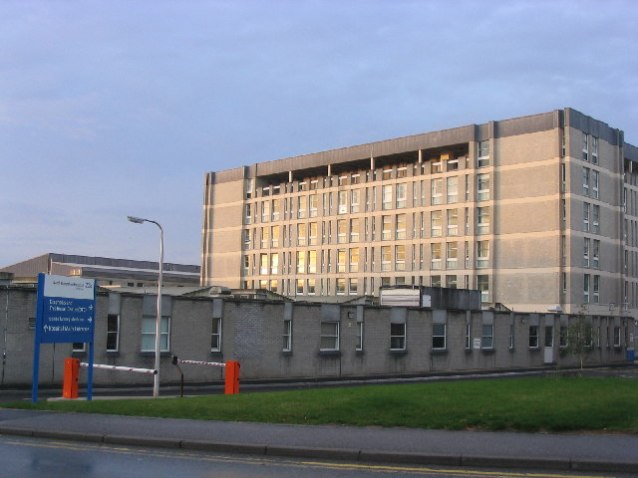
North Hampshire Hospital, Basingstoke Pic credit: Wikipedia

The health trust has spent hundreds of thousands of pounds of taxpayer’s money on expensive lawyers from Old Square Chambers to deny that Dr Pitman was a whistleblower concerned about patient care denigrating him at one stage -until subsequently withdrawn- as “a freelance agitator”. They produced evidence claiming he made a midwifery manager, who never gave any oral evidence to the tribunal herself, that he made her cry. Top officials of the trust including the former chief medical officer, Lara Alloway, chief executive, Alex Whitfield, and trust chairman, Steve Erskine, gave evidence against him.

Now the CQC report says that in 2022 there was a lack of midwifery staff to provide safe delivery of births; two day delays of inducing births, staff missing training because they had to fill in for staff shortages and senior midwifery staff not creating a culture that supported individuals. In Basingstoke there were cases of staff not spotting mothers deteriorating in the wards, and of a much higher level of serious maternity tears – caused by forceps delivery -than the national average. Staff at Basingstoke said they were asked to perform tasks they did not feel competent to do.

The service also delivered a much higher proportion of babies in poor health than the national average.

Helen Hammond, senior associate, Penningtons Manches Cooper

Helen Hammond says in her blog: “One frustrating aspect of the CQC report, which reflects our experience of representing local families whose babies have either died or developed brain injuries due to the management of their birth, is the failure to learn from previous incidents to prevent them reoccurring. Many families we have worked with have expressed a desire for the harm they or their child have suffered to lead to safer care for those who follow them. Acting on the findings of the report to make this the case would create a lasting legacy.”

The health trust said yesterday :

Our first priority is always our patients and it is vital we provide expectant parents with confidence in our care.

Following the 2022 CQC report, our maternity division is now fully staffed, and a number of policies and procedures are in place to remedy areas highlighted so that we address – among others – equipment concerns, communication issues, and training.

With that in mind, you have asked for a series of figures which we are concerned will be presented without appropriate clinical context, something that may cause undue alarm.

We ask that any expectant parents who may have concerns about the areas you have highlighted raise them directly with their midwives or obstetricians so that they can be given proper, medical advice and guidance. “

It is interesting that the trust would not provide me with current facts and figures on issues of maternity tears, babies born in poor health, or induction waiting times. I am sure that the CQC who normally revisit a trust to see if its services have improved, will look into this again and it will become public. It does rather fit in with the defensive attitude and lack of transparency from top officials at the trust during the tribunal.

Please donate to Westminster Confidential

One-Time
Monthly
Yearly

Make a one-time donation

Make a monthly donation

Make a yearly donation

Choose an amount

£5.00
£10.00
£20.00
£5.00
£15.00
£100.00
£5.00
£15.00
£100.00

Or enter a custom amount

£

Your contribution is appreciated.

Your contribution is appreciated.

Your contribution is appreciated.

DonateDonate monthlyDonate yearly

Please donate to Westminster Confidential

£10.00
A whistleblower consultant’s victory that exposes scandals at the Care Quality Commission and a hospital trust

Whistleblower Dr Shyam Kumar; Pic Credit: BBC

The victory by whistleblower Dr Shyam Kumar, an orthopaedic surgeon, against his unfair dismissal as an part time inspector for the Care Quality Commission is just the tip of an iceberg scandal at both the CQC and the University Hospitals of Morecambe Bay NHS Foundation Trust.

His victory – I am glad to say reported by the BBC, the Guardian and the medical press- was only possible by his persistence in the face of obstruction by the body that is supposed to hold up standards of medical care to protect patients and the collusion of a trust to protect its own reputation.

He told the BBC: “”The whole energy of a few individuals in the CQC was spent on gunning me down, rather than focusing on improvement to patient safety and exerting the regulatory duties,”

“I was perceived as a troublemaker within the CQC, or as a thorn in their side. That’s what I believe. And they just ignored it. And finally, people got involved.” 

The ruling at Manchester Employment Tribunal by Employment judge Mark Butler said he had received detriment for speaking out and awarded him £23,000 for injury to this feelings. Dr Kumar had not sought any other compensation.

The judge said:” There is evidence throughout this case….that the decision to disengage the claimant in this case (and the placing him on hold) has had a serious impact on the claimant’s reputation causing him injury to feelings. There were suggestions of misconduct by the claimant … where no evidence of this existed, and vague assertions of a breach of undefined values of the respondent … used in an attempt to justify the decisions made in this case, after the event” Instead the judge described Mr Kumar as a man with an untarnished reputation and expertise.

Dr X left a hip replacement patient never able to use her limbs

The detail of the concerns Dr Kumar found are deeply disturbing for patients. One involved Dr X whose two hip replacements on an elderly lady which overlooked the dislocation of her pelvis and she had to come back to accident and emergency unable to walk and his colleagues thought she would never be able to use her limbs again. When he raised this with the CQC and said a back review of Dr X’s cases should take place he was told the trust did not want to do this for reputational reasons.

When the Royal College of Surgeons did their own review much later into Dr X they found 26 out of 46 operations were matters of concern.

The judgement said:

a. some surgeries undertaken by Dr X were not completed to an acceptable
standard
b. some of the surgery and quality of care provided by Dr X was unacceptable.
c. some clinical decision making to undertake surgery by Dr X was
inappropriate.
d. in some cases there was either no or a lack of evidence of a “Duty of
Candour”

Dr Kumar was thanked by the associate medical director of the trust , Mr Damian Riley in 2021 for his work.

But at the time of the CQC inspection Dr Kumar faced a barrage of criticism from CQC officials, was effectively suspended from his job, and subject to racist attacks including being accused of being ” a traitor to his community ” for raising issues about Dr X’s competence by another trust doctor, Dr Sinha.

At a CQC focus meeting Dr Kumar was even falsely accused of deliberately creating NHS waiting lists so people would have to go privately – making extra money for doctors.

The CQC’s response was to side more with the trust than the whistleblower. This led Dr Kumar to write to the Chief Inspector of Hospitals, Professor Sir Mike Richards. complaining that “patient safety is being
significantly compromised by the behaviour of some CQC staff.” He also complained he had been bullied and obstructed by CQC officials, his professional independence had been undermined and his whistleblowing concerns ignored.

The court upheld his protective disclosures. The judge also took a strong line in allowing the press access to all the documents in the case and also restricted an attempt by the CQC lawyers to restrict reporting of the Royal College of Surgeons report on the grounds that families had to be told first. The judge granted a very short restricted reporting period and was never challenged again.

The CQC in a statement said: “We accept the tribunal findings and have learnt from this case. We have already improved many of our processes and will continue to review these based on the findings to ensure we make any further necessary changes.”

Much wider issues than just this case

But there seems to me a much wider issue here about the behaviour of this particular trust and the role of regulation. This is not the first time this trust has been found wanting. There is the case of Peter Duffy, a consultant surgeon, working for the Morecambe Bay Foundation Trust. Faced with failures at the trust in the emergencies department he expressed concern for two patients who subsequently died from kidney sepsis.

One would have expected the Trust to have remedied the situation. Instead they turned on him rather than admit any failings. As he told Matthew Syed on Dispatches: ” I was on the receiving end of allegations of bullying, abuse and racism. And so what I hoped would be an attempt to raise standards became an investigation of myself”.

He was eventually proved right after an investigation disclosed multiple problems but not until after a five year toxic battle and now practices in the Isle of Man.

Inquiry chair Dr Bill Kirkup Pic credit: gov.uk

There is also the 2015 inquiry report by Dr Bill Kirkup into Furness Hospital, run by the trust over the deaths of babies and appalling maternity care.

As he says in his introduction: “The result was avoidable harm to mothers and babies, including tragic and unnecessary deaths. What followed was a pattern of failure to recognise the nature and severity of the problem, with, in some cases, denial that any problem existed, and a series of missed opportunities to intervene that involved almost every level of the NHS.”

There is a disturbing pattern that repeats itself. Whistleblowers, whether doctors or families, raise serious life and death issues, are ignored, denied justice, bullied and attacked, using the power of the state to buy expensive lawyers to try and crush them -only for them to be proved right in the end. With the Dr Chris Day case due to report this month following an extraordinary employment tribunal hearing where evidence was destroyed, it remains to see whether this pattern can start to be broken .

Please donate to Westminster Confidential to allow me to continue my forensic reporting.

One-Time
Monthly
Yearly

Make a one-time donation

Make a monthly donation

Make a yearly donation

Choose an amount

£5.00
£10.00
£20.00
£3.00
£9.00
£60.00
£3.00
£9.00
£60.00

Or enter a custom amount

£

Your contribution is appreciated.

Your contribution is appreciated.

Your contribution is appreciated.

DonateDonate monthlyDonate yearly

Please donate to Westminster Confidential

£10.00
Exclusive: Are whistleblowers now too frit to reveal when NHS patients and care home residents are in danger?

dr-henrietta-hughes

Dr Henrietta Hughes, 4 day a week National Guardian Pic Credit: CQC

CROSS POSTED ON BYLINE.COM

Tucked away in a recent National Audit Office report on the NHS and social care regulator, the Care Quality Commission, is the extraordinary statistic that the number of whistleblowers who tipped off the regulator fell by a staggering 16 per cent to 7452 in 2016-17. That is one in six fewer whistleblowers than the previous year. See paragraph 2.19 of the report.

The figure compares with 153,000 members of the public – an increase of one per cent – expressing concerns about services during the same period.

I have written about this in Tribune this week.

And the latest figures come after  a report by Robert Francis QC to Jeremy Hunt, the health secretary,which was highly critical of the way some had been treated after they made a complaint.

In 2015, Francis reported widespread severe victimisation of staff by senior management when they spoke up for patients. Francis recognised that sacked whistleblowers are blacklisted and recommended a re-employment scheme but nothing seems to have come of it.

His most substantial recommendation was for a National Guardian to protect staff. This led the CQC to create a part time post with no powers. The first appointee, Dame Eileen Sills, quit before starting.

Since then Dr Henrietta Hughes . a GP has been appointed  as National Guardian, on a four day week. And according  to the CQC  yesterday marked her first year as the National Guardian for the NHS with the publication of her first case review report and her annual report highlighting the work of Freedom to Speak Up Guardians.

The one case review she published covered Southport and Ormskirk Health Trust which  has the unenviable reputation for bullying and discriminating against black and ethnic minority staff , a dodgy appointments system favouring some people against others and an attitude of not bothering when staff raise concerns about patients. This might sound familiar incidently for those who have followed my articles on staff practices at the Equality and Human Rights Commission but we should wait for the employment tribunals to see what happened there.

Dr Hughes has recommended a series of recommendations to put matters right – 22 in all – and there is promise from the interim chief executive of the trust, Karen Jackson, to act  with a new senior management team. We shall see. Also this was a trial – how many reports are we going to get from her in future?

The National Guardian has also produced a series of high flown documents which sound terribly good in theory – but again I think we should wait to see what happens.

What has happened so far is that the appointment of a national guardian has coincided with a drop in whistleblowers telling the CQC when things are going wrong.

What we do know is that staff do lose jobs are blacklisted and get the reputation of being troublemakers. There is a  website which covers 11 such cases here. All designed I suspect to cover up an NHS and care system creaking at the seams and not being adequately financed. I hope Dr Hughes does not turn out to be a convenient fig leaf for a service in trouble.


Sneaky and Naive: The Department of Health’s plan to raise care home inspection fees

Care quality Commission

CROSS POSTED ON BYLINE.COM

While MPs were enjoying their Christmas break the Department of Health sneaked out a consultation paper planning a massive increase in compulsory inspection fees for care homes, privately provided ambulance services and hospitals.

As part of the spending settlement the ministry has decided to recoup the present £120m  a year subsidy given to cover compulsory inspections made by the Care Quality Commission. Altogether the ministry want to recoup some £780m over a ten year period. I have written about this in Tribune magazine

There is a subsidy is because the CQC has had to up its game and do more through inspections after the scandals exposed by  the Robert Francis report into Mid-Staffordshire NHS Foundation Trust and the Winterbourne View private home for people with learning difficulties exposed by BBC Panorama.

The Treasury wants to abolish this subsidy on the grounds that it must recover all the costs of inspections rather than part of them.. Superficially this sounds fine as NHS trusts will not to have to pay for the inspection of their own hospitals and ambulance services. Neither will 94 per cent of GP surgeries.

However increasing privatisation and outsourcing of services by local authorities and health trusts to private firms means that the bill for the inspections which already run into thousands of pounds could fall on councils and trusts who commission the services.

The paper reveals that 90 per cent of  care services are already privatised and privatisation is increasing in the NHS with private ambulance providers becoming the norm and mental health provision and other services being outsourced.

To try and justify this civil servants have tried to tell ministers that this could have nil effect on health provision.

This naive view is bolstered by the belief that care homes s will accept a cut in their profits to prevent an adverse health outcome caused by councils and health trusts having to cut the number of people sent there because of the increased cost of inspection fees.

This is contradicted by negotiations for the present year’s fee increases. The paper says:

“There is a risk that any increases in fees could have a destabilising effect on providers, as many providers are facing a tough financial climate, with increased running costs and reductions in income. During the CQC’s consultation into their fee levels for 15/16, 80% of providers opposed the proposed 9% fee increases for this reason. “

This is hardly surprising given that to run a care home on a profit, they already pay staff little more than the minimum wage and cash strapped councils are unlikely to pay them any more for residents. It puts into question whether running a care home  is a suitable business for the private sector. Soon they will soon have to pay the living wage. So would anyone believe they will absorb higher inspection fees into their profit margins.


The paper also discloses that the review will mean they will cut inspection fees for private dentists as they make a profit. It then naively assumes that the dentist will pass on the saving to patients. Does anyone believe that?

Whoever drew up these proposals cannot really live in the real world – no wonder ministers are told what they want to know rather than face reality themselves.


About time too! Inspectors to up their game on private ambulance companies

England’s private ambulance services need some tough discipline as companies – from bus firms like Arriva to parking firms like NSL ( formerly National Car Parks) rush to make profits providing patient transport.

 A report I have written for Tribune magazine this week reveals that already 50 per cent of patient journeys to care homes and hospitals are provided by the private sector and they are already eyeing up taking over 999 ambulance services, Such is the pace of privatisation under the Conservative-Liberal Democrat coalition.

The standards provided by some of the companies – as earlier blogs, including one from personal; experience reveal,- is little short of  cruel and appalling. I will be returning in future blogs to expose other bad  firms who show little care for elderly and disabled people except to swell their bosses’s salaries.

However there is some good news. The Care Quality Commission –  whose job it is to monitor hospitals, care homes and ambulance services – is planning to up its game. It is reviewing its entire inspection  system of both private and public ambulance services – for both patient transport and emergency responses.

 The  decision is contained in a report from the CQC  which reveals that  Sir Michael Richards, chief hospitals inspector, has decided that this rather neglected side of the business deserves revamping. The report also discloses – as the CQC is the main registration for ambulance services  that already 50 per cent of patient transport journeys are carried out by private firms.

 Sir Michael ought to have done this sooner – he should know from, some of his own CQC inspections that some private firms were failing in the most basic way – like not bothering to check the criminal records of staff carrying vulnerable patients or whether they had proper training.

He is making big promises He says:  “Over the next three years we will develop a ratings system for most providers of health and social care.

“Our ratings will develop to become the single, authoritative assessment of the quality and safety provided by an organisation. They will be primarily based on the judgements of our inspectors about whether services are safe, effective, caring, responsive to people’s needs and well-led, but will also take into account all the information we hold about a service and the findings of others.”

Fine words, he better keep them. Unions like Unite and Unison are already warning about the deterioration of services and some of the people who have contacted me on this website have related appalling experiences. The only private firm that contacted me wanted the information  I reported about a bad inspection of their company  by the CGC removed from the internet. It shows you where they are coming from. Vigilance of these firms is going to be essential.


Revealed: The damning reports on privatised patients ambulance services ( and some public ones as well)

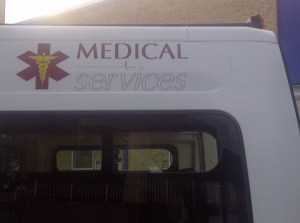
 Medical Services Ltd on" NHS " ambulance.They passed the Care Quality Care Commission inspection for Hertfordshire,but many others didn't Pic taken by myself

Medical Services Ltd on” NHS ” ambulance. They passed Care Quality Care Commission inspection, but many others didn’t Pic taken by myself

Following my appalling experience of a five hour wait for a privatised ambulance from Medical Services Ltd to pick my stroke victim wife in Hemel Hempstead, Hertfordshire I decided to look at the national picture for England. The company has passed an inspection by the Care Quality Commission- which regulates and inspects all NHS services-though the inspectors report admitted it never talked to patients.
People had already contacted me from Manchester and Devon to highlight private bidders for services which included bin collectors, bus companies, car parking and foreign firms queuing up across England to take over NHS patient ambulance services.
For example Arriva, the bus company, has landed a lucrative contract in Greater Manchester to take over ferrying disabled people, cancer and renal patients, despite a petition signed by 14,000 people opposing the move and opposition from Unison and two Labour MPs.

This is also following the company’s new subsidiary Ambuline being criticised by the Care Quality Commissionfor poor staff training, staff shortages and failing to keep records of whether vehicles were properly cleaned to avoid infection risks in a contract they run in Leicestershire. The CGC made a second inspection and now says the service is satisfactory.

In Manchester there are already complaints about Arriva not having enough ambulances and using taxis to transport disabled patients.

In South Devon and parts of Cornwall and Somerset ambulance services are to be taken over by the successor company to National Car Parks – NSL – who beat a refuse collection company and the NHS provided services.

Danish company,Falke which runs private ambulances and fire services, has bought a 45 per cent stake in Medical Services, with the obvious intention of buying up more services. It had already talked and entertained Brian Coleman, the former Tory chairman of the London fire Brigade, to discuss buying up London’s entire fire service.See my earlier blog.
The most damning stuff has come from the Care Quality Commission’s website which reveals a worrying picture. It shows that small private ambulance services in Dagenham, Wigan, Dorset, Wiltshire, Buckinghamshire, Bicester and Peterborough have been required to make improvements after their first inspections to bring them up to scratch, particularly over management and record keeping and staff standards.
You can find the inspections on the care quality commission website. Type in ambulances under services on home page.The roll call of companies found wanting by CQC inspections is too large for this blog but here are some of the firms.
International Medical Assistance, Tamworth; Patients at risk of harm from poor service which may now be under new management..
Medical Services Ltd Warrington : Failed to have proper records such as references on staff recruitment
APMS services, Peterborough. Staff inadequately trained to care for patients
Henry Ward, Buckingham. Had no checks on staff including whether they had a criminal record.
AFG Birmingham Recruitment staff bad, some had no interviews.Ambulance breakdown not reported.
BN Gibson, Newark. Staff not trained properly to manage medicines.
AST, Surbiton Staff references not obtained.
Remote Medical Service, Manchester poor recruitment policy and no training to deal with abuse of patients.
Caring for You PTS -Benfleet,Essex Staff started work without waiting for criminal record clearance.
Collingwood Medical Services, Salisbury, Staff not trained to safeguard patients from abuse.
Paramedico Correspondence Event Cover, West Wickham, Kent. Staff not fully trained, recruitment procedures not followed including independent criminal record check,
Medical Response Services, Wigan. Newly recruited staff not properly checked.
Medicar Ltd,Clacton, Essex. Staff references not obtained, no management supervision recorded, no complaints procedure.
First Aid Medical Services Ltd. Sheffield Owner only just aware that staff had to have criminal record checks, no knowledge of rules protecting patients from abuse.
Ambu Kare, Peterborough. No guidance on how to transport people with intravenous drips,patients belongings and medical needs not signed for, inaccurate info given to patients about complaints.
Plymouth Central Ambulance Service Ltd. Never applied for criminal records or medical checks on staff, one person didn’t have a satisfactory report from Criminal record Bureau.
NHS
East of England Ambulance Service. Failed to respond in time in Norfolk and Suffolk, particularly bad in responding to stroke patients in that area.
NHS Ambulance Trust London :Hit by equipment and staff shortages posing moderate risk to patients.

More worryingly it shows that the CQC has a backlog of inspections and has not looked at some of the big new privatised services, including Medical Services Ltd operation in Birmingham and Arriva’s new operation in Nottingham.
The overall picture is completely unsatisfactory given the big expansion in privatisation. What we could see is a dumbing down of standards, companies relying on out of date training provided earlier by the NHS, and no proper checks on who is being employed to look after vulnerable patients. The latter is regarded as a ” minor” by the CQC but I wonder whether patients would like to be looked after by people with criminal records.
The CQC – which has an appalling record of missing abuse in care homes- does not seem to have a real handle on this. They also don’t seem to want to seek patients views on privatised services – but do check up on those run by the NHS. Some double standards here and I wonder if they have the resources to do a proper job of inspecting the 856 services provided by companies and the NHS.