NHS Resolution solicitor overlooking hospital doctors under investigation. An AI image illustrating the situation facing hospital doctors in the NHS
Following my blog on the secret process using NHS Resolution to help hospital managers discredit whistleblowers I decided to ask the advisory body a series of questions on its operations using the Freedom of Information Act.
What emerged was extremely revealing. NHS Resolution hides in its annual report how many hospital doctors are involved by lumping them together with dentists and pharmacists. But the breakdown revealed through FOI reveals it is almost exclusively targeting doctors to advise trusts on how to handle them.
It shows that in the last financial year it advised in cases involving 1168 doctors in England, Wales and Northern Ireland. And the number of cases would be higher – as a number have multiple complaints from managers against them. This compares with 53 dentists and under 5 pharmacists. Indeed the pharmacists involved are so few – it won’t give me an exact number for fear of identifying individuals.
The PPS was last audited in 2019 and the organisation says it was then considered to be adequate and. effective. A more recent review in July this year by Dr Penny Dash looked just at the patient safety and learning role of the organisation and not wider issues.
Nor does NHS Resolution check whether it is given accurate information by managers. It said:” our role is to provide impartial and expert advice which is aimed towards supporting the local management and resolution of performance concerns. We are not a decision-making or an investigative body – in all cases, any decisions about the ongoing management, employment or contractual status of the practitioner rests solely with the healthcare organisation.”
In other words it is there solely to support health managers – who have no duty of candour – and it tries to include doctors by saying managers should tell them about their request for advice. In fact managers can and do ignore this as there is no requirement for them to say anything to the doctor they are investigating. So without hearing the doctor’s case it cannot be genuinely impartial. Also should a practitioner object to the partial advice given by a health manager they are ignored and the body continues to deal with the health manager.
NHS Resolution has not carried out any audit on the effect on doctors who are subject to complaints but it does do occasional research into problems arising on a very small scale. One example in its Insight Publication series last year was looking at whether ethnic minority doctors were badly treated in the NHS.
Involving just 11 doctors it said:”Most participants felt discriminated against based on their ethnicity and/or where they qualified. They felt this was reflected in the way their cases were handled by both their employer and Advice, and the higher rates of concerns raised against practitioners from ethnic minority backgrounds.”
Not surprisingly there was a lot of ignorance of how NHS Resolution’s advice service worked – given that health managers needn’t tell them about it. Again NHS Resolution’s solution was to give advice to managers which they need not take up. The full report is here.
Then there is the question of the phrase, performance. Is it a misnomer? NHS Resolution advice service does not look into the question of performance by doctors – relying on hospital manager for that – and it does not employ people qualified to do so. Many are solicitors, human resources staff and employment law experts and are not qualified to know when say a complex heart operation went wrong or the details of paediatric care. Indeed from doctors who have contacted me the trust often cites uncooperative behaviour and not working well with colleagues as part of its case.
Taken with earlier articles on the role of the General Medical Council a disturbing picture emerges which shows the hospital doctor is always at a disadvantage while the responsible officer – usually the medical director – holds all the cards – using NHS Resolution for advice and reporting the doctor to the GMC. Yet neither body is necessarily equipped to handle this and in NHS Resolution’s case, it is toothless to influence decisions by trusts. It can help to easily ruin a doctor’s career and even ban him or her for life for continuing their careers.
There seems to be a wholly unregulated sector covering NHS Resolution, the GMC and the trusts themselves and certainly no accountability. Patients have no idea how this is handled -yet their safety should be paramount in the NHS. And while NHS Resolution says it works under the direction of the Department for Health and Social Care my research shows it is not clear who regulates them.
If ever there was a case for reform of both systems, now is the time for something to be done.
Reforms without addressing core issues may lead to persistence of key flaws or omissions in any future changes with risks to patients
Last month I wrote about the government proposing the first major reforms for 40 years in the running of the General Medical Council. My blog was meant as a warning to ministers to scrutinise the changes very carefully because I was sceptical, after talking to a number of doctors, that there were flaws in the changes. You can read the blog here.
Now the GMC has published its new guidance by Dr Andrew Hoyle, an assistant director in the GMC’s Fitness to Practise Team He is both a doctor and a barrister.
In a high minded piece on Linked In and in a blog ( see the article here) he promises greater clarity and consistency .. and fair, flexible and compassionate fitness to practise processes. He also emphasises the GMC’s duty under the 1983 Medical Act to protect, promote and maintain the health, safety and well being of the public, promote public confidence in the profession and promote and maintain professional standards and conduct by doctors.
Now from the patient’s point of view how is this being enacted by a change to one simple process?
The first point is drawing up guidance for the decision makers on whether to proceed. There is a comprehensive list of issues to consider for the decision makers whether to start an investigation into a doctor. But the response to the concern raiser, the guidance does not specify who the decision makers are. Are they fully competent in the field or even sub-field of medicine practised by the doctor to make a sound judgment about clinical matters? I have heard from some doctors that this is not always the case. On the question of accountability should it not be made public who made the decision and their qualifications to do so. This would reassure the public and the patients that it had been properly investigated.
The current process’s most crucial step, the “initial triage and closure of concerns” relies on the “opinions” of the GMC postholders who in turn rely on managers. There is no mandatory requirement to immediately investigate serious harms or near miss issues that may have led to consequences to that or other patients.
This is particularly relevant asthere is also the issue of the seriousness of the concern. The guidelines suggest that if there is evidence of repeated bad practice this should be relevant to striking off doctors. But there is a second flaw in this process. How does the GMC know about a bad doctor? The answer is because he or she is reported to the GMC by the responsible officer – normally the medical director or chief medical officer of the trust or far less by patients and or colleagues who are more in the know of bad practices but are fearful of consequences. See article inthe Lancet.
Therefore the issue the GMC knows about may not be the first one and the GMC cannot verify it with the current approach neither can the complainant know of all issues.
From earlier blogs I have found this process to be flawed – either because the responsible officer has targeted a doctor who has raised whistleblowing issues – whether patient safety or fraud – to discredit a perfectly good doctor – the case of Usha Prasad, a former cardiologist at St Helier and Epsom hospital is a current example – or covered up bad practice to save the reputation of the trust or private hospital.
The most egregious example of the latter is the case of Mr Ian Paterson, a breast and general surgeon, now serving a 20 year prison sentence after performing unnecessary operations on hundreds if not thousands of unsuspecting patients until a lawyer brought a civil case against him.
The public inquiry into his practice concluded “They were then let down both by an NHS trust and an independent healthcare provider who failed to supervise him appropriately and did not respond correctly to well-evidenced complaints about his practice.”
It went on: “The recall of patients did not put their safety and care first, which led many of them to consider the Heart of England NHS Foundation Trust and Spire were primarily concerned for their own reputation. Patients were further let down when they complained to regulators and believed themselves frequently treated with disdain.”
Imagine how different the outcome for hundreds of patients if this had been first reported by a responsible officer to the GMC – life changing needless operations would have been stopped rather than covered up. What the GMC should demand is that the management of NHS trusts and private hospital groups have to sign a ” duty of candour” putting them on par with doctors who raise complaints. This would require them to notify the GMC about the practices of the doctor involved and meet the legal requirement that the GMC has to protect patients and promote higher standards in the profession. Otherwise the assessment of a serious repeated bad practice is a hollow gesture in many cases.
However if the GMC has been and appears it is continuing to rely on the Responsible Officers to provide a response can the GMC’s decisions be evidence-based and safe for public. Even if a small minority of doctors are unsafe or dishonest, the impact on the patient and profession must be the core of decision.
The third point is when a doctor acts inappropriately or unsafely that can be investigated by the GMC personnel but who are potentially not being regulated by any one and via a process built on reliance on an RO and in at times without transparency or evidence verification and opinion based decisions are taken that can affect lives This does not appear to be a safe approach as multiple scandals continue to occur; suggesting concerns are not really reaching the GMC due to its current system or are being ignored.
The current concern management requires a complete overhaul and not just superficial tweaks
Since I started looking at this issue I have been contacted by doctors across the country about the GMC and I intend to follow this up in a future blog.
Karin Smyth – health minister responsible for professional regulation reform
The new Labour government is embarking in the first reform of the professional regulation of the General Medical Council for 40 years. This welcome development comes after the GMC extended its scope to cover physician and anaesthesia associates at the end of last year. In theory it will allow the GMC more flexibility to change its rules and allow less adversity among fitness to practice cases involving doctors thus avoiding referrals to the overloaded and often unfair employment tribunals. It also abolishes an arbitrary rule that prevents it looking at cases that are more than five years old.
From my observations of recent complaints against doctors who raise patient safety cases and conversations with doctors who are concerned about referrals to the GMC the whole process needs a radical overhaul. It is also an overhaul that requires some political intervention.
How the GMC handles individual complaints against doctors is by no means transparent. Nor is the GMC directly accountable for their failings and omissions and its workings can be manipulated by individual health trusts. I am about to give you two different examples,
Many doctors think the complaints system is flawed because of a practice of referring the case to the so called ” responsible officer ” to handle it. The responsible officer is often the person who has brought the complaint in the first place – the chief medical officer of the trust. Now the chief medical officer is not what the public might think – the ultimate person protecting medical standards on behalf of patients. He is part of the trust’s management team whose main purpose is to protect the reputation of the trust which may not be in the interest of patients. So surely this is a conflict of interest?
NHS Managers labelled one doctor ” too passionate about patient safety”
There was also an extraordinary experience of a whistle-blower who was a warned by local managers against being too “passionate about patient safety.”
And does the GMC do a thorough job when it investigates.? Doctors are sceptical. In one example it appears the complaints about serious safety issues, were closed at the first step and not even seen by GMC clinician. The bald reply from the GMC confirmed that to be the case; neither the team had nor did they seek any advice or expert opinion.
The GMC’s current practices enable its staff without clinical knowledge to close clinical concerns in such manner or only with hospital managers’ response, even when the concerns about the said managers are known to the GMC. In one example it appears the complaint was not even seen by fellow clinicians.
Given the whole point, according to many of the doctors who have raised patient issues, is the worry that either patients have already been harmed or more are left at risk of being harmed by such poor medical practice, these do not appear to be safe concern closure processes for a regulatory body.
Dr Usha Prasad
There is another side and here I can quote an actual case – as it came up in an employment tribunal – the removal of cardiologist Dr Usha Prasad from the then Epsom and St Helier NHS Trust ( now merged with St George’s Hospital in Tooting, south London.)
Here the GMC faced with 41 complaints from the trust who wanted her removed did do a thorough investigation and checked with very senior cardiologists and exonerated her -including revalidating her working for the next five years.
But the trust’s chief medical officer, Dr James Marsh , refused to accept this, making the fatuous statement that the trust’s medical standards were ” higher than the GMC’s “. This is also ironic as the doctors from that organisation are being revalidated by, no one else but the GMC.
Where a doctor is revaluated the rules should be changed so in those circumstances the GMC’s decision is binding and final and this requires a politician to intervene to make sure this happens. An individual chief medical officer should not have the power to wreck a doctor’s career if their complaint to the GMC is utterly rejected. and not formally appealed against.
I would be very interested to see if other doctors have had similar experiences in both these areas and doctors can contact me on my website ie either concerns were dismissed without due consideration or the GMC decision was ignored by the managers. All contact will be treated in confidence unless the doctor wishes to go public.
This is a once in a lifetime reform and we need to get it right for both the benefit of the doctors and the safety of patients who entrust their lives to the NHS.
Karen Smyth, the minister of state for health, has a huge list of responsibilities from this area to cancer care and hospital car parking. The list is here. She needs to focus on this and ask pertinent questions.
Guest blog from Dr David Ward on the appalling treatment of whistleblowers in the NHS
Patient safety and the judiciary
What business has the judiciary with patient safety matters you may ask? I am referring primarily to the processes which may unwind when a doctor, having raised patient safety concerns is sacked by the Hospital Trust where they worked and seeks recourse via the corrupt Employment Tribunal system. (NB not sacked “for having raised the alarm” as that is expressly forbidden by the Public Interest Disclosure Act (PIDA 1998[1]). For example, if a piece of equipment is malfunctioning in such a way as to cause harm to a patient; if a process such as preparing a patient for a procedure is flawed in such a way as to put the patient at risk; an inadequate consent process; understaffing in, say, a post-operative ward; inadequately qualified personnel. Each of these deficiencies may put a patient at risk of harm and all have at some time been reported by doctors or nurses. There are many others. A responsible doctor witnessing any of these will be concerned and has a duty to raise an alarm. This is set out in Good Medical Practice, a guide produced by the GMC[2]. It is also part of the Duty of Candour regulations [3][4] and for traditionalists, in “The Hippocratic Oath”[5] the central tenet of which is “primum non nocere” or “do no harm”.
A problem may arise when a doctor (or healthcare worker) reports a “patient safety event” and the Trust reacts adversely (the psychology of such reactions is discussed elsewhere) which is a very common. It may trigger a series of defensive responses by the Trust which almost always ends badly for the doctor. This is seen time and again with “whistleblowers” who have had the “temerity” to raise a concern. The “playbook” is almost set in stone. In several recent cases where a dismissed doctor (Claimant) has sought recourse at an Employment Tribunal, the Respondent (the Trust or Hospital) has reacted vengefully rather than responsibly and promptly to look into the concerns.
The following is a brief account of the saga of a colleague who was referred to the GMC (after she reported safety concerns) in what can only be described as an act of vengeance by the Trust and the CEO who, having taken offence at the temerity of the doctor to report some shortcomings to the Trust, decided to “punish” her culminating with dismissal. Furthermore, the Trust prioritised this vengeful reaction over and above an urgent investigation into the problems she raised. It’s the same “playbook” with many other NHS whistleblowers (see Westminster Confidential 6 7).
Patient safety concerns.
If a doctor “raises a concern”, the most common of which is about something which may jeopardise “patient safety”, the obvious and reasonable response is to investigate it and correct any problems as soon as possible. Astonishingly, this is rarely what happens. The Trust not uncommonly reacts vengefully to the report, for example, by restricting the activities of the doctor who reported it. They may be “hauled over the coals”, have their duties limited, suspended for a period, referred to the GMC or even the CQC. The GMC may commission an external assessment of the doctor in question by an independent party usually another doctor in the same specialty. The Trust is not obliged to take any notice of this report. For example (I could cite many), a colleague who was referred to the GMC by her employing Trust was completely exonerated but she was dismissed all the same.[6] The CEO of the hospital, St Helier Hospital, Daniel Elkeles, made a veiled threat in a letter if she did not cooperate with his dismissal proposals:
4) ESTH agree to cease the MHPS process which means we can find a way to
ensure you are re-validated (not my area of expertise but i am sure there will be a
way)
5) You need to drop all the actions you are taking against ESTH.
If we can agree this then I would hope that everyone can move forward positively.
(This letter is in the Tribunal bundle in the public domain)
Another whistleblowing case where there are ongoing grave concerns about the propriety of the Employment Tribunal decisions (and others) in support of the dismissing Hospital Trust is that of Dr Chris Day whose case features extensively in columns of Westminster Confidential.[7]
Unregulated “Maintaining High Professional Standards”[8]
This code of practice was introduced in 2003 to update and clarify how concerns about a doctor and the associated “disciplinary” procedures are managed.
This entire process is unregulated and no independent body is statutorily involved. In fact, there is not even a statutory register of these processes or the events they purport to investigate. There is no register of NHS whistleblowers or the safety concerns they have raised. Trusts do not keep records, the regulators (BMA, CQC) don’t keep records. The NHS does not keep records (I confirmed this by asking the now defunct NHSE). HM Government does not keep records despite HM Treasury giving £millions (directly or via various organisations) to Trusts to pay inscrutable legal firms to defend the Trust against claims made by doctors who have raised safety concerns. This means a Trust can hire anyone they choose to conduct the investigation. There may even be an “informal agreement” or they may just be a ”pal” of the CEO. The investigator is not required to have any special qualifications and there is no register of such people. The St Helier Hospital case referred to above is a particularly egregious example of how this chumminess may operate. The “investigator”, a retired nurse[9], in her report invoked a fictitious “regulation” not previously seen in this context. The doctor in question was eventually dismissed on the grounds that she was not “fit-for-purpose”[10]. This is entirely confabulated by the investigator (who describes herself as a “non-practising barrister” but is not on any English register of barristers[11]) as no such “reason” for dismissal (or anything relating to humans) exists in English Employment law and the term is not applicable to a “human being” but rather to goods or services. How this has not, so far, been challenged in the Courts eludes me. Could this case even be cited as a “precedent” (pro or anti) in future similar cases?
It doesn’t take a leap of the imagination to conclude that if a Trust wishes to be rid of a doctor it will choose a compliant “investigator” with a reputation for such behaviour. This service costs money (provided, of course, by the taxpayer) and investigators can be very expensive. But hand-picked unregulated quasi-independent “investigators” are very compliant, aren’t they? Money talks… but conveniently no formal or open register is kept of money used to silence whistleblowers (pay the lawyers, investigators, payoffs, seal a Non-Disclosure Agreement etc). I wonder why?
A doctor threatened with dismissal (or who has been dismissed) may just move on, get another job (if possible having been “slandered” by the previous employer), leave the profession altogether, move abroad or any of these choices. Unfortunately, many will seek recourse via the arcane and grossly biased Employment Tribunal system. This may come about because the embattled doctor has received, shall we say, less than impartial advice, possibly from a law firm, recommending this route. Less than 3% of claimants at an Employment Tribunal emerge victorious (whatever that means)[12]. In other words over 95% of Claimants who brave this course will lose their case. Fair and open justice? I think not.
Who bears responsibility for all this?
Is it the doctor who “blew the whistle”? No, it is their duty to raise safety concerns.
Is it the Trust which dismissed the doctor? The Trust will deny dismissing the doctor (for raising concerns) and invoke PIDA 1998 47B in their support (1):
A worker has the right not to be subjected to any detriment by any act, or any deliberate failure to act, by his employer done on the ground that the worker has made a protected disclosure.
The Trust will say “oh no, it wasn’t because he raised a concern…it was because his manner was inappropriate/rude and …” (see story of Martyn Pitman, below). However, it is quite a different matter when it comes to dismissing a doctor “who has raised concerns”. This is not “unlawful” because it is consistent with PIDA. This is why the law needs to be changed; to ban the dismissal of “doctors who have raised safety concerns”. It’s a “no brainer” isn’t it?
Is it the lawyers who advised (and assisted) the dismissed whistleblower to seek recourse via the biased ET system? Yes, they are complicit once dismissed the employees submit themselves to the process. Millions of taxpayers’ money is spent on lawyers defending Trusts against claims made by whistleblowers yet almost nothing (no data are collected so we can’t be sure about this but we can infer it) on investigating and correcting the problems that gave rise to the claims. Sheer madness or what?
Is it the Trust managers who confabulate the case against the whistleblower? They have one aim in mind; to get rid of the “nuisance” doctor and by so doing avoid the “inconvenience” of looking into the safety “issues” raised in detail which could be very embarrassing if gross incompetence or negligence by the Trust or its employees is exposed.
And patient safety? Oh, that’s where the proverbial “carpet and brush” come in, as wielded by Trust managers (with legal advice) who themselves are unregulated[13]. If you want evidence for these claims read the newspapers (or search a major news website).
Inadequate regulations and deficient laws.
The regulations drawn up by regulators (and equally the inadequate laws passed by legislators) have contributed to this unsatisfactory situation where doctors are terrified of speaking up about patient safety because they fear for their careers and the livelihoods. If the regulations were tighter, we wouldn’t be here, would we?
A simple and almost cost-free solution to all these inappropriate behaviours is available without too much hassle and only minor changes to regulations and it based on the supremacy of maintaining patient safety: ban Trusts from dismissing doctors who have raised patient safety concerns and compel the Trust (by statute) to investigate those concerns. Just think of the benefits: no lawyers, no Tribunals, no money filling the coffers of law firms but instead expended on, inter alia, investigating and rectifying the concerns raised, improving care and communication. More openness and less retribution will encourage doctors to ‘’raise a hand” without fear of reprisals. Furthermore, is it not preferable to retain the services of an expensively trained, competent and dedicated doctor who had the courage to speak-up and has committed no offence, rather than destroying their careers and depriving patients of their skills? (This is the “playbook” in the cases of so many NHS whistleblowers I could list here). At present the judiciary (and the regulations they invoke), whether they agree or not, are complicit in covering-up patient safety issues and the adverse consequences of so doing.
Isn’t it time for a change of attitude and changes in the law related to raising concerns about patient safety – also known as “whistleblowing”? Why are the ”powers that be” not listening to the many supporters of whistleblowers who are raising the same issues time and time again?
Just one more thing: there are seven reasons which can be invoked in British Employment law to dismiss an employee[14]. None of them is especially relevant in this context except one.
“Some other Substantial Reason”, a most convenient clause for all the reasons one might imagine: if it isn’t covered by the other 6 this one should satisfy the Trust’s requirement to get rid of the doctor. Furthermore, it may obviate detailed scrutiny of evidence (isn’t that the reason it’s called SOSR?). Other reasons which are commonly exploited include: ”it’s impossible to carry on employing you” and “not being able to do your job properly”. The vagueness, highly subjective and unquantifiable nature of these clauses suggests they have a less-than-straightforward purpose.
If a Trust wants to dismiss a doctor it will find a way to do so. In the case of Martyn Pitman, Consultant Obstetrician and Gynaecologist, the Royal Hampshire Hospital strenuously denied that he had been dismissed for raising concerns. No, of course he wasn’t. The astonishing inanity of it was reported in the Guardian thus[15]:
“The judgment found the “overarching reason” for what has happened to Pitman was down to his communication style and not the message he was trying to convey”. (I couldn’t find this sentence in the 75 pages of the “unsearchable” official judgment).[16] So here is a senior and respected gynaecologist – who has done no wrong – being dismissed for his unacceptable “communication style”. You could not make it up!
It is a truism to state that the health of the nation is the single most important asset it has. (This is why “privatisation” of the NHS which would put “shareholders” ahead of patients would be a disaster). If the workforce is not healthy everything else will decline (I don’t need to explain this assertion but judging by what is happening in Westminster, politicians don’t seem to have grasped this concept. (Neither has the judiciary for that matter but I wouldn’t expect this self-serving body to opine on such “trivial” issues).
“If they [the judiciary and the JCIO] continue to do this, they are acting as a party to suppressing patient safety in the National Health Service and in the case of Sellafield, because it is such a contaminated and dangerous place, putting the general public at risk.
Is anyone listening to critics of the judiciary and its arcane processes in judging NHS doctors, nurses and other healthcare workers who raise patient safety concerns? Is anyone taking notice of the sufferings of the doctors who are doing their best (especially during the recent pandemic) for their patients? Is anyone calling out the absurdly illogical Employment Tribunal judgments which heap suffering on the Claimant (Doctor) and indirectly on patients? I know of one journalist who is – David Hencke. 17
Yesterday a conference of doctors, patients and journalists held at the prestigious Royal Society of Medicine in London highlighted the appalling treatment of doctors by NHS management who raise patient safety issues to protect patients. Examples were given from doctors who had been dismissed after they raised patient safety issues and how trust managers spend unlimited funds on lawyers to make sure they lose employment tribunal cases, sometimes even aided by the judges hearing them.
The conference arranged by Justice for Doctors, a new organisation representing many of the affected doctors, coincided with a series of articles in The Daily Telegraph, which showed that these are not isolated cases but involve doctors right across the country and is a national problem which trusts are trying to hide.
One of the main organisers is David. E. Ward,, a retired cardiologist from St George’s Hospital, South London, who has already written two guest blogs on this site. I have included his planned closing statement to the conference as a fresh blog from him as it succinctly sums up all the issues that were raised.
By David Ward
First, I would like to thank all the contributors to this historic meeting. In a way it is a celebration of all those oppressed whistleblowers who have spoken up for patient safety.
I would personally like to thank my friend Professor Somerville who has been a driving force behind this and many other ideas to stand up for whistleblowers. Jane and I have been trying to set up a second meeting about Patient Safety for 5 years following the first one in March 2019 when we re-enforced our personal campaign to expose – and do something about – the appalling treatment of doctors who speak up for patient safety also known as ”whistleblowers”. During our campaign we met the Justice for Doctors group who helped to organise this meeting
In the past 3 decades a Hospital Trust with its senior management has accrued the powers to destroy a doctor’s career by imposing restrictions, suspensions, referrals to regulators (GMC, CQC) and, astonishingly, an unfettered power to dismiss. These major life-changing decisions are arbitrary and undertaken, incredibly, without any independent or regulatory oversight. For dismissal, “get out” is apparently sufficient.
Allegations against the victimised doctor may be based on made-up and unsubstantiated claims. If major criteria for dismissal cannot be met there is always the “loophole” of “some other substantial reason” which conveniently does not exclude but also does not mandate any additional explanation.
Doctors who see poor practices, faulty equipment, processes (and the like) are obliged to speak-up by Duty of Candour (HSCA 2008 reg 20). But by speaking up but they may put their careers at risk as we have seen so many times recently.
The “The National Guardian” program introduced by Sir Robert Francis and intended to accommodate doctors who speak-up, evidently does not function as intended. It’s called “marking your own homework”.
Investigations into a whistleblower together with their concerns should be independent of the Trust in which they work and be seen to be so. But evidently, they are not. Furthermore, the Trust managements who make these decisions are themselves unregulated. That doesn’t seem right? Does the phrase “judge, jury and executioner” come to mind? Managers should also be regulated, shouldn’t they?
Arcane procedures such as MHPSappeal hearings can be overseen or conducted by “dodgy” external “agencies” some of which claim spurious credentials. These agencies are, in effect, “hired guns” available and willing – for a fee – to “confirm” the Trust’s unfounded allegations and to assist their aims – to dismiss the “troublemaking” doctor; not because of “incompetence” but because the doctor has “annoyed” Trust management by raising concerns about Patient Safety or something else. The reactions of management are often vengeful, as we have seen.
I know of at least one of these agencies which has appropriated and misunderstood (in a written formal report) the phrase not “fit-for-purpose” to describe a doctor in support a Trust’s decision to dismiss. The agency seemed totally unaware that this is not only fictitious nonsense but possibly libellous. No such phrase exists in English Employment Law. Unfortunately, NHS England has also been duped. I know because I’ve asked – in person.
The Judiciary, in the form of Employment Tribunals may be called into action if the dismissed doctor seeks to restore their career via this route. This is a bad choice by the victim as the evidence confirms. Only 3% of Claimants, “win” – not the most apt word – in this system. Put another way, 97% lose! Is that “open and fair justice”? I think not. Some of the judgments are beyond comprehension.
There are many practices which seem grossly unfair, perhaps deliberately. Some obvious ones stand out:
1. Inequality of arms;the law firms acting for the dismissing Trust are funded by each of us – the taxpayer. The Claimant, the doctor, healthcare worker will have no external source of funds except perhaps by “crowdfunding”. Furthermore, if they lose their case, they may required to pay not only their own legal fees but the law firm’s fees too! That’s not fair. I can show you some law firm invoices which would shock you. The phrase “inequality of arms” doesn’t touch it.
2. “Cost threats”are a notorious device employed to, shall we say, “persuade” a claimant to withdraw their claims before, during or after a Tribunal. It’s another weapon deployed by the Respondent, the dismissing Trust, to force the claimant to surrender and withdraw their claims.
3. Non-disclosure agreements or NDAs,are devices designed to conceal the devious practices used to threaten the claimant (and, as it happens, to suppress evidence). They have no place in inquisitorial proceedings in this context. They should be banned.
4. The Public Interest Disclosure Act (PIDA) 1998; I quote: a worker has the right not to be subjected to any detriment by any act, or any deliberate failure to act, by his employer done on the ground that the worker has made a protected disclosure.
In other words, a doctor cannot be dismissed, for example, for raising patient safety concerns. So, any dismissal has to be attributed to another perceived misdemeanour. Read any recent case and it is evident that the “whistleblowing” or “patient safety” concerns were discounted and irrelevant to the dismissal. It was about an “attitude”, a “manner of speaking” and similar unquantifiable and, in most cases, unverifiable attributions. Ask one of the presenters today.
5. At a time of great need for medical expertise, doctors are still being persecuted and dismissed having committed NO offence. The law firms which spend so much public money to pursue the claimants should have no place in any procedures which are primarily about patient safety. Furthermore, the concerns and the person who raised them should be formally registered and documented, including all steps taken towards a solution. This is not happening. Doctors who raise concerns about patient safety are treated like criminals! This must stop!
6. Last but not least the patient safety concerns, the very things that trigger most of these shenanigans. What happened to those? Well, they get buried and forgotten don’t they. What a wonderful system. All that waste of public funds to destroy a doctor’s career instead of correcting potentially dangerous practices. That is why a register is needed.
The problem is a nationwide one of the same gravity as the “Great Post Office Scandal”. Perhaps NHS whistleblowers need a TV drama-documentary because we have seen how that shifts public opinion and awakens the media with unprecedented force. I’ve already draw up a potential cast list!
Last, there should be a searching, durable, logical and legally sound review of the treatment of ALL whistleblowing related laws and processes. Whistleblowers are the canaries in the coalmine. They do society a favour. They should be praised – not persecuted.
This is the 21st century! What country do we live in?
Thank you all for attending. Thank you to all those who presented. And particular thanks to Dr Salam Al-Sam, Dr Azhar Ansari and the Justice for Doctors group.
UPDATE: Who came and Who didn’t send anyone
Newspapers who sent a reporter: Times, Guardian, Daily Mail, Standard,
Major media who sent a reporter: Sky News
Major media one would have expect to send reporter:
BBC, ITV, GBNews, LBC
Major regulatory professional bodies who were notably unrepresented: (very bad show I think especially as some of their members Fellows were major subject dig the WB scandal). If they didn’t know or just couldn’t be bothered – it’s shameful, either way!
BMA, CQC, GMC, Royal Colleges (all of them, Physicians, Surgeons, Obs and Gynae), National Guardians Office (FTSUG), HMCTS (at least they could have send a junior barrister), Law firms; all those with an obvious interest in oppressing Claimants
Lord Burnett, the Lord Chief Justice of England and Wales (salary £275,534 a year) and two other Court of Appeal judges ( salaries £225,978 each) spent this week delivering a judgement on whether a prisoner could eat a boiled sweet.
In what must be one of the most lofty and byzantine judgements of the year a judicial review at the Court of Appeal threw out a request from a disabled prisoner at Liverpool jail to be able to eat boiled sweets.
The prisoner only known to the courts as JJ is a toothless quadriplegic inmate serving time until 2027 in the health wing of the prison. Lady Justice King delivered the verdict, which the Lord Chief Justice and Lord Justice Lewis concurred after spending time on a hearing and taking advice from the Royal College of Physicians.
In what must have been a very expensive case -since it was an appeal from another high court judge – barristers from top NHS lawyers Hill Dickenson and DAC Beachcroft to defend the prison’s healthcare company, Spectrum community Health. who were caring for him in jail while JJ was in the health wing. JJ had his own barrister, Aswini Weereratne KC.
Lady Justice King pic credit: Law Gazette
Lady Justice King said: “JJ is quadriplegic and without teeth. While his cognitive and communication skills are unimpaired, his physical capacity is limited to pushing a button with one finger. Since 2016 he has been bed-bound and wholly dependent on care staff for all his personal cares and for feeding. He is nursed in a supine position.”
“As a consequence of JJ’s condition, eating food poses a risk of death or serious injury by choking or aspiration. Some foods pose a more significant risk than others. Until 2021, JJ ate a mixed diet of soft and non-soft foods. Meals would be sent to his cell and he would decide whether he was capable of eating them. He would regularly supplement his diet with snacks bought from the prison canteen, including non-soft foods such as boiled sweets.”
Prisoner goes on hunger strike over the denial of boiled sweets
There have been several instances of him choking on food but JJ insisted that he would take responsibility for himself and still wanted to suck boiled sweets.
The care company however were worried about his choking. They called in a therapist who decided that he should only eat soft and bite sized food once his supply of boiled sweets ran out. JJ wanted to choose what he ate and when this was not allowed went on hunger strike only taking high energy fluids to stay alive.
The judge said: “JJ’s approach was, and is, that he could exercise his basic freedom of choice to decide what he will eat, being fully aware of the risks.”
Do not resuscitate me says prisoner
Spectrum wouldn’t agree to this so in December 2021 JJ signed an Advance Decision to Refuse Treatment. In this, JJ confirmed that food refusal was to apply even when his life is at risk and that he does not wish to be ventilated or to have cardiopulmonary resuscitation (CPR). It follows that in the event that JJ choked or aspirated as a consequence of eating a boiled sweet which, as he is quadriplegic, would have been put into his mouth by a carer, neither that carer nor any other medical professional on the ward would be able to intervene to give JJ lifesaving CPR.”
In July 2022, JJ brought a claim for judicial review, contending that Spectrum’s refusal to feed him foods of his choice was irrational, discriminatory, in breach of his common law right of autonomy and his Article 8 right to physical and psychological integrity.”
It went to court and he lost and the judge refused an appeal. But it was decided as the issue was a compelling one it should go to the Court of Appeal.
Here the key issue was elevated to whether a patient can refuse to follow a clinician’s treatment and the fact that prisoners cannot choose what food they can eat – only what the prison choose to provide.
Also a bombshell ruling that as Spectrum was regulated by the Care Quality Commission if a nurse gave JJ a boiled sweet and he choked to death would he or she be prosecuted for gross negligence manslaughter?
Liverpool prison where JJ is held
JJ filed a statement to the court : ” In it he describes how he has little or no quality of life. He is completely bed-bound, lying on his back for 24 hours a day, and is unable to do anything for himself other than call for help or control a television. He concludes his statement by saying that he has lost almost everything in his life and ‘being able to eat what I want represents my last shred of humanity and dignity. I want o be able to cling on to it for as long as I can’.
But the judges rejected this saying ” It may be that in certain different medical circumstances the balance would come down in JJ’s favour but not, in my view, in this case. JJ cannot feed himself. He cannot obtain boiled sweets from the prison shop, unwrap them and put them in his own mouth. The provision of boiled sweets in circumstances where JJ cannot even put a sweet into his mouth is different; it is treatment or care carrying with it the considerable risk that on any given day, giving JJ that boiled sweet may cause him to choke to death and in circumstances where JJs advance decision would prevent all but the most basic life-saving intervention on the part of the person who had given him the boiled sweet.”
So what would happen if a friend came to visit him at Liverpool jail? Presumably the prison will have to confiscate any boiled sweets to comply with the Lord Chief Justice’s ruling. We hear of drugs, illicit mobile phones and porn being smuggled into jail now in this case the judiciary’s top judge has extended it to boiled sweets. Given JJ’s brain is the one part of him not impaired It is over the top.
For highly intelligent people the three cold hearted Court of Appeal judges lack any empathy or humanity in this case. Their judgement is more concerned with avoiding liability for the company and the prison if JJ dies rather than granting him a boiled sweet to make his limited life more pleasurable.
Please donate to Westminster Confidential to allow me to continue my reporting.
St George’s University Foundation Trust’s A & E department Pic credit: health trust
If you thought the NHS was at breaking point and want to know why – the National Audit Office have today provided a handy fact and figures guide to the decline of the country’s most cherished service.
A new report from Parliament’s financial watchdog charts the scale of both the failure of the NHS to respond to emergencies fast enough and the unprecedented demand from the public to use its facilities in the 13 years the NHS has been run by the Tories and the coalition government.
These are the startling figures:
711,881 A&E patients waiting over four hours from arrival to be admitted, transferred or discharged in December 2022, an all-time high. Since fallen to just over 550,000 in March this year.
90,998 ambulance handovers to A&E taking longer than 30 minutes in March 2023, equivalent to 25.9% of all ambulance handovers
32.0m reported number of appointments in general practice provided in October 2022, an all-time high, compared with 27.1 million reported in October 2018
92.3% general and acute hospital beds occupied during Q4 2022-23,representing record levels
88 seconds mean time to answer 999 calls related to health issues in December 2022, an all-time high
July 2015 the last time the NHS met its target for 95% of A&E patients to be admitted, transferred, or discharged within four hours of their arrival
8.4 million 111 calls answered within 60 seconds in 2021-22, compared with 11.2 million to 13.3 million between 2014-15 and 2020-21
1.27 million full-time equivalent NHS staff in February 2023, compared with the most recent low of 0.96 million in June 2013
£21.5 billion estimated annual cost in 2020-21 of providing the services reviewed in this report
Big variations in different regions in England
Delving deeper into the figures there are big variations in different regions of the UK. For example those being admitted, treated and discharged from A&E within four hours varied between 67.9 per cent in the East of England to 75.9 percent in the South East – both noticeably lower than the standard 95 per cent treated in that time just after the Tories got into power in 2011.
Similarly among ambulance response times there were wide variations. In 2021-22, the mean Category 1 (life threatening incidents like strokes and heart attacks) incident response time for the London ambulance service was 6 minutes 51 seconds compared with 10 minutes 20 seconds for the South-West ambulance service.,
In the same year the mean Category 2 incident response time for the ambulance service in the Isle of Wight was 26 minutes 20 seconds, compared with 1 hour 1 minute 57 seconds for the South-West ambulance service.
Some other points emerge why this is happening. The growing elderly population and general population increase in the UK is increasing demands on the NHS and effects of the Covid pandemic has left its mark.
More staff recruited but more off sick from stress
The government can claim it has recruited more NHS staff, including GPs and ambulance drivers. But this has been offset by more staff going off sick and more staff leaving the NHS because they can’t cope with the workload. I should not think the government’s attitude to keeping down pay rises in the middle of a cost of living crisis has helped either.
The government is promising a great £2.5 billion recovery programme and has allocated the extra money. But the NAO report says:
“More people than ever before are receiving unplanned and urgent NHS care every day. To support these services, the NHS is spending increasing amounts of public money and employing record numbers of people. Nevertheless, patients’ satisfaction and access to services have been worsening, suggesting there is no single, straightforward solution to improving what is a complex and interdependent system.”
The real test will come next winter -since the government is promising much better services by March 2024. If it fails it will just add to the multiple problems facing this government and increase the distrust between the public and politicians.
Please donate to Westminster Confidential to allow me to continue my forensic reporting.
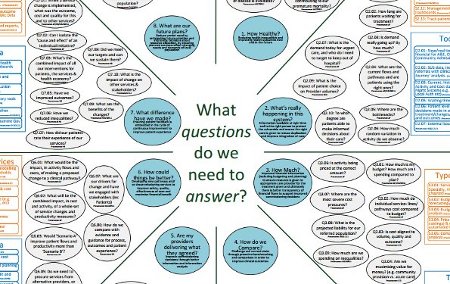
Feeling ill and need to see your doctor. Well here’s a bit of draft helpful advice under the Lansley reform measures. Click on the link above and get a big surprise. Just a simple commissioning guide so the NHS can smoothly run to help meet David Cameron’s ” NHS is in my DNA ” pledge.
This was sent to me as part of the big response to the NHS London board diagram of how the NHS will look which I published on Sunday night. I can verify its contents and it comes from @nhs_supporters and the respected and informed Health Service Journal. It makes interesting bedtime reading.
This appears to lay out a few guidelines. By the time they have answered all these questions I suspect you might be dead. Notice that GPs will have to send in monthly accounts and that a lot of computer programmes (more waste on IT) will be employed to work out the mix of services. It sound a nightmare to me.
But I am sure you will be eternally grateful to the huge cut in bureaucracy needed to answer all these points. Have a good time at your doctor’s surgery. Or alternatively why not e-mail Mr Lansley himself on lansleya@parliament.uk and ask him to go through the process with you. He claims to have spent five years thinking all this up. Pity he didn’t bother to tell the voters at the election.









 Westminster Confidential