
This blog arose from the recent case highlighted by the Health Services Journal of Dr Susan Gilby, the former chief executive of the Countess of Chester hospital in giving evidence to the Thirlwell Inquiry about the resistance from senior NHS people she faced trying to admit mistakes there. This is the hospital where a nurse Lucy Letby was found guilty of murdering seven babies and is now trying to get the case reconsidered. The CEO ultimately left the trust in late 2021, shortly after Letby’s trial began. An employment tribunal this month found she had been unfairly forced out by the trust and Mr Ian Haythornthwaite, the former chairman because she had raised concerns about his bullying behaviour. He resigned after the verdict.
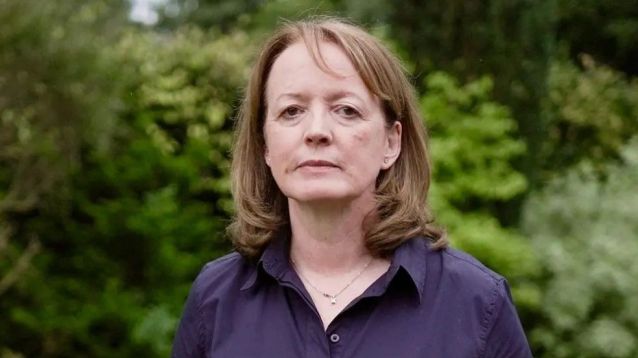
Dr Susan Gilby is brave. Her experience is in keeping with many others who have raised concerns including patient safety issues. Dr David Drew’s comments ( See HSJ 08.44, 25 Feb) are spot on: the whole play book is sanctioned from above (NHSE and probably higher). Some colleagues and I have spoken to NHSE on several occasions (including in person, at Wellington House, SE London). We have nothing to show for it other than placations and weaselly words. Action, there is none.
Regarding NDAs (anon HSJ 13.39) in relation to healthcare and the NHS, they should be banned. They are “lawful” means of concealing (potentially very important) evidence which therefore cannot be tested in court. That’s the raison d’être of NDAs, isn’t it? And this is England, in the 21st century! And yes, Sir Robert Francis tried but was evidently misguided (see his 290 odd recommendations!). Jeremy Hunt did nothing to improve the “status” of NHS whistleblowers; if anything he made it worse by ignoring the problem and trying to belittle them.
On the Lucy Letby case there are now several authoritative sources seriously questioning the safety of the judgment (see Google). Let us hope that these processes will be allowed to evolve openly and unhindered.
It is high time the NHS leadership, politicians (West Streeting MP, SoS Health, are you listening?) reviewed the whole process of the treatment of NHS whistleblowers (they are “canaries in the coal mine”, right?).
If Trusts were banned from dismissing a doctor (or any Healthcare worker) who has “blown the whistle” or raised patient-safety issues (not “because” they have raised those concerns as that is banned by PIDA) it would save £millions. It would avoid hugely expensive law firms (of course taxpayer funded in the rôle of defending a Trust), Employment Tribunals and all the disastrous personal and professional consequences these Tribunals’ ill-considered decisions may lead to. Another consequence would be to eliminate the unfair and unnecessary loss of competent and sorely needed highly skilled doctors, (see Dr Chris Day’s case, Health Service Journal and elsewhere – its beyond belief but true). Training a doctor takes years, dismissing them takes minutes.
Employment tribunal system unaccountable
The Employment Tribunal system is unaccountable (well, if it is, it is to another branch of the judiciary, the Employment Appeal Tribunal process; marking one’s own homework?). It is heavily biased and has no place evaluating or investigating “patient safety issues” which it doesn’t understand. Neither does it understand the modus operandi of the NHS and medical matters (I won’t rehearse those arguments here – but for a start no offences have been committed and no laws broken by raising safety issues). In fact, raising safety concerns is not only strongly encouraged by professional medical bodies, but also part of a doctor’s code of conduct.
Internal management of “whistleblowing” matters are unregulated and unsupervised by an independent body. They are akin to “marking your own homework” because they are directed by the Trust CEO and perhaps some “chums” who can be relied on to give a favourable opinion. This is hardly appropriate, is it? WB may lose their jobs, their careers, £0000’s. Their professional and personal lives may be destroyed all in a process funded by the taxpayer. How is that “fair and open justice”? It is not!
The last thing a WB wants to do is go to an Employment Tribunal presided over by a “dodgy” ET Judge who delivers questionable judgments and pay “dodgy” law firms £000s for a <3% of winning (whatever “winning” means; if it comes it usually does so at the end of a spiral of losing first ET, appeal at EAT, lose EAT appeal. A “win’ may mean the case is referred back to the ET and round and round we go! This is the gist of things anyway. No wonder dismissed doctors are strongly advised (not by lawyers of course) to give the ET circus a miss, save their hard-earned money instead of paying extortionate fees to law firms and take the less stressful path of getting on with their lives. (NB The Tribunal step could be all but eliminated at a stroke by banning dismissal of a doctor who has raised patient safety issues).
If a Hospital Trust doctor raises patient safety concerns, history tell us they are very likely to suffer serious detriments in the form of restrictions, disciplinary hearings, pay cuts, referred for MHPS investigations concerning contrived allegations of incompetence or whatever, and suspensions as part of a vindictive reaction of Trust management who have (for some reason) taken offence. Instead, should they not be promptly investigating and correcting the shortcomings, how they were raised and by whom? If these adverse rill-informed reactions can be stopped there is hope for progress. One consultant, a colleague, was submitted to a flawed MHPS process (using an external agency) which supported the Trust’s claims of “incompetence” by alleging the doctor was not “fit-for-purpose”. (Further information provided upon request). As far as I know the confabulated charge of “not-fit-for-purpose” does not exist in (English) Employment law, but it was accepted without question by the Trust and the doctor was dismissed. As the saying goes, “You pays your money and you takes your choice”, (Aldous Huxley, Brave New World). The Trust had achieved its aim – to secure dismissal of a “difficult” doctor through what can only be described as a “corrupt” process. I asked people at NHS England if the charge of not “fit-for-purpose” was legitimate. NHSE claimed it was. I’ve searched online and checked with lawyers and found nothing to support its legitimacy. Ten years later that doctor is still fighting for their career. (And no doubt many others).
New laws and regulations to deal fairly with whistleblowing issues are URGENTLY required! The whole process is corrupt and in serious need of a profound and far-reaching review. The current system is ineffective but, more importantly, it is destructive.
All those interested in WB, particularly in the NHS, should read Roger Kline’s LinkedIn article (see 07.29). https://www.linkedin.com/pulse/nhs-hr-leaders-what-would-you-have-done-when-susan-gilby-roger-kline-jlvfe/?trackingId=IT70HHjXTru3VkRS5nkaEw%3D%3D
Also see my blog about the role of Clare McLaughlan when she was questioned at the Thirwell inquiry.
Make a one-time donation
Make a monthly donation
Make a yearly donation
Choose an amount
Or enter a custom amount
Your contribution is appreciated.
Your contribution is appreciated.
Your contribution is appreciated.
DonateDonate monthlyDonate yearlyPlease donate to Westminster Confidential
£10.00




























 Westminster Confidential