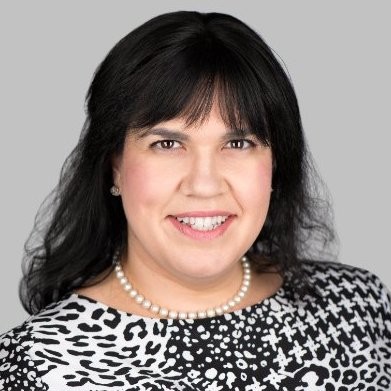
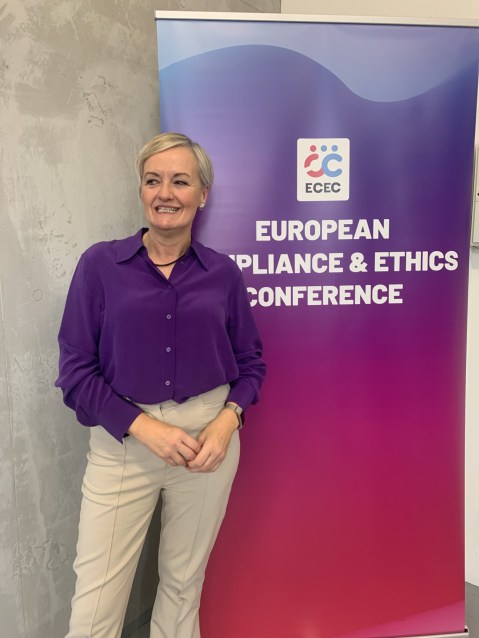
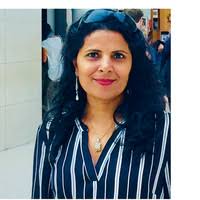
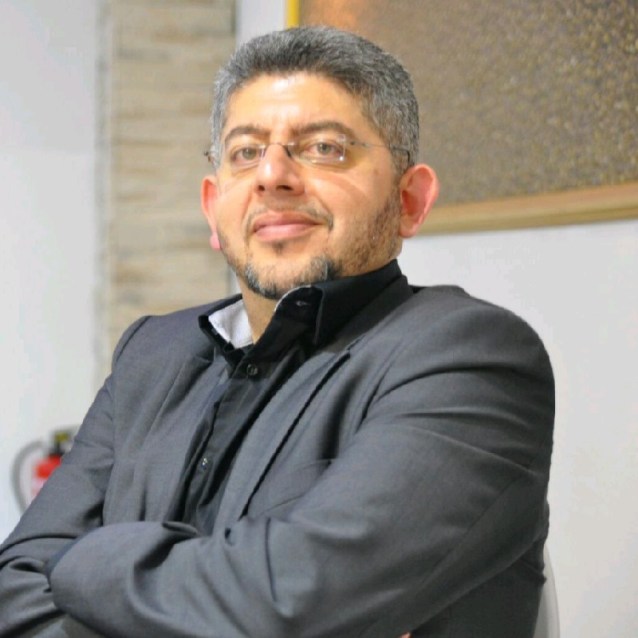
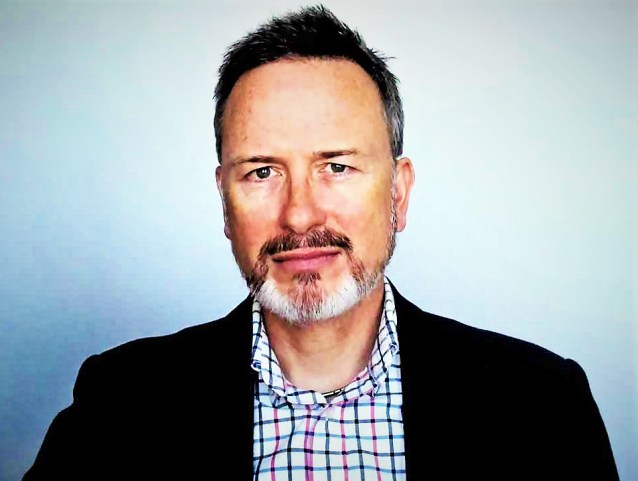
Nadia Motraghi KC – from Old Square Chambers, barrister for the Epsom and St Helier NHS Trust
Judge rules her case had ” no prospect of success” and she was ” unreasonable ” to pursue the claim
UPDATE: The figure was amended when Usha received the judgement from exclusive of VAT to including VAT – that reducing the total figure to be paid to £20,000 instead of £24,000.
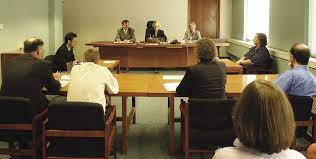
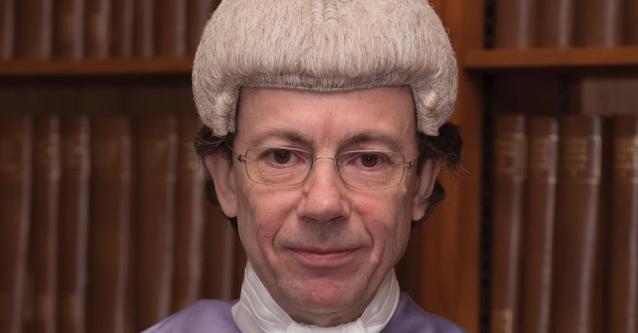
Employment Judge Ms EJ Mclaren today ordered Dr Usha Prasad to pay Epsom and St Helier University NHS Trust £20,000 in a hearing she did not attend due to ill health which had not been accepted by the tribunal.
The decision is a pyrrhic victory for the trust, Capsticks solicitors, and a barrister, Nadia Motraghi, from Old Square Chambers, who had originally sought to claim £150,000 but had their claim reduced to £20,000 – the maximum that can be charged in a summary hearing. Much of the money will be swallowed up in fees charged to the trust by lawyers, Nadia Motraghi, and Capsticks solicitor Jessica Blackburn, who have already made nearly £100,000 between them from pursuing Dr Prasad on behalf of the trust. See my blog on the paper submitted by Capsticks to the tribunal here.
The handling of this case in my view is yet another example of why employment tribunals are totally unsuited to investigating whistleblowing cases.
For a start two judges have taken totally different views of whether Dr Prasad was fit to plead. Judge E J Baker basically decided that a doctor’s note was not good enough to prove she was ill. But only last month acting regional judge Katharine Andrews decided on a fresh doctor’s note to cancel another hearing involving the trust on the grounds that Dr Prasad needed a long rest and should not face any hearing until next April. It makes judicial decisions by non medically qualified judges seem like a lottery. This of course was not mentioned by Nadia Motraghi in the hearing as it would have undermined her client’s case.
Second the inequality of arms in these hearings. Dr Prasad has already spent a small fortune on lawyers in some of the hearings. So I know she decided she would not be represented by a brief at this hearing because if she lost it would cost her nearly double the cash -nearer £40,000. For the trust unlimited taxpayer’s funds can be spent on lawyers and it is not their money. Not bad for a trust that is already in financial difficulties – just cancel a few operations instead. I also note other lawyers offer a capped fixed fee if a private company is bringing a complex case against an employee – otherwise they would not get the business.
So it is rather hollow for the trust to claim as the judge solemnly pronounced – this is a big cost to a public authority caused by a case ” which had no prospect of success”. It is a big cost because the trust deliberately chose to use some of the most expensive lawyers in town – Old Square Chambers – and fell for paying for 21 lawyers from Capsticks.
Now Nadia Motraghi, whose submission was accepted in full by the judge, painted Dr Prasad as being a ” Jeckyll and Hyde ” character – not mature enough to realise her case was going nowhere and making repeated claims of unequal pay, racism and sexism she could not substantiate but turned into a totally different person when it came to paying the costs. She told the tribunal that she was very intelligent and capable of earning at least £116,000 a year as a good cardiologist and with a house that had gone up £300,000 in value which could be sold. She also used the fact that she was very popular in the Yorkshire hospital she had worked while being clinically restricted at Epsom. Any objective person might ask how come her talents weren’t equally recognised in Epsom.
Now the final issue is the whistleblowing claim. I had wondered why Jessica Blackburn, in a letter to her, had insisted it lacked any merit. Nadia Motraghi gave the game away. She had she had not produced any evidence to justify a risk to patient safety – no emails had been produced to prove this.
Then I remembered the judgement of Tony Hyams -Parish, which was used to justify the costs by judge E J Baker after he dismissed all her claims. There WAS pretty convincing evidence of a serious breach of procedure in an ” avoidable death ” of a heart patient and it was admitted by Dr Richard Bogle, head of the cardiology department. The death in the hospital was never reported to the coroner. You can read about this on my blog here. You can then read about the Hyams-Parish judgement. You can see it here.
What you will notice is that the evidence in the hearing is never covered in the judgement. Now judge Hyams-Parish, to borrow Nadia Motraghi’s words, is an intelligent man. He would know there are no record of the hearing and the judge’s notes are secret. So by not mentioning this in his judgement it is erased from the public record as if it never existed. Only the fortuitous chance that a journalist was there – and that is now very rare – is there a record. So that blog is the only record that it happened.
So it is not surprising that the trust can confidently claim there is no whistleblowing. The judge has been very helpful to the trust by expunging it from the record. As I wrote at the time this decision was a stain on British justice.
You may wonder why Dr Prasad, a whistleblower, did not turn up and the tribunal was unable to contact her. You can read the statement from Dr Ward here:
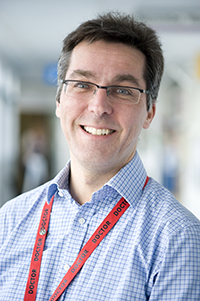
Dr David Ward, a retired cardiologist and supporter of Dr Prasad. put up a statement during the hearing in the tribunal chat box on he knew Dr Prasad was not attending :” I believe it is my duty as a consultant physician and longstanding colleague and witness to her state of mind throughout these prolonged proceedings to draw attention to the Tribunal that she is not fit to plead. She is in a state of extreme distress such that she is not able to attend. This hearing will cause further detriments to her health. I believe her GP has written a letter to this effect. “
Today he issued a further statement: “
“I wish to point out that the stress that has been experienced by Dr Usha Prasad throughout these proceedings was evident at the hearing in November 2021 before Mr Hyams-Parish. I know that Dr Prasad and the journalist, Mr David Hencke, have asked for the audio-visual recordings which I am sure would confirm this.
2Her inability to recall events, emails, or to refer to documentation within the extensive bundle, whilst giving oral evidence is because of extreme distress. She was not merely tired, but suffered from mental fatigue, which leads to loss of concentration when “put on the spot” under cross-examination in public at a hearing.
“I consider it is my professional obligation to point this out and would suggest that the audio-visual record of the proceedings of November 2021 are made available to provide objective evidence of the points I have made. It goes without saying that any costs awarded against Dr Prasad would be very damaging to her current state of mind and health. “
Make a one-time donation
Make a monthly donation
Make a yearly donation
Choose an amount
Or enter a custom amount
Your contribution is appreciated.
Your contribution is appreciated.
Your contribution is appreciated.
DonateDonate monthlyDonate yearlyplease donate to Westminster Confidential
£10.00




 Westminster Confidential