
Lawyers threaten the Judicial Conduct Investigations Office with a judicial review over failure to investigate Judge Lancaster

The logo of the JCIO Pic Credit: Ministry of Justice

The 13 claimants who allege bullying and misogyny by judge Philip Lancaster, most of them women, took their complaints against the JCIO to a new level last week when their all women team of lawyers issued what is known as a ” letter before action” to the investigatory body.

Their lawyers, DFG, standing for Deighton, Pierce and Glynn, have given the JCIO until Monday to reply or face action for a judicial review.

The statement in their letter reads in bold type: “By this Group Complaint, we are therefore requesting the JCIO to open a proper investigation into the cases of all these complainants on the grounds that it is now clear that Judge Lancaster has repeatedly engaged in misconduct in his judicial role over many years.

The misconduct consists of regular bullying of litigants-in-person and legal representatives, including shouting, harsh and inappropriate personal criticisms, intimidation and interruption of evidence.
We make clear that if this longstanding pattern of Judge Lancaster’s misconduct is not properly investigated by the JCIO we intend to challenge that decision by way of judicial review.

As I reported in Byline Times earlier this year ( see the article here) the Good Law Project first announced it was backing the then ten women who had faced bullying and misogynist comments from the elderly judge. Since then they have been joined by men who say they faced the same bullying tone from the judge who sits on the Leeds employment tribunal.

Judge Lancaster

The campaign began after the treatment of Alison McDermott, the now famous whistleblower, who exposed bullying and harassment at Sellafield nuclear waste facility, only to be bullied and rudely treated herself by judge Lancaster and lawyers representing Sellafield and the Nuclear Decommissioning Authority.

Judge Barry Clarke

Barry Clarke, President of the Employment Tribunal system, claimed she was fit to lodge a complaint — despite having no medical qualifications and ignoring a GP’s note saying she was suffering from severe clinical depression. He used this self-made “diagnosis” to deny her an extension, effectively blocking any investigation into Judge Lancaster, even as serious complaints from others were piling up.

The ramifications of what has happened since are causing serious problems for the nuclear waste plant and the judiciary. MPs on the Public Accounts Committee are now sceptical of claims by the top executives at the plant that there is no bullying or harassment and one MP, Anna Dixon, the new Labour MP for Shipley, and a member of the PAC, demanded in public that the chief executive of Sellafield apologise to her for the way Sellafield has behaved to her.

Harriet Harman Pic Credit:BBC

Meanwhile, Baroness Harriet Harman is conducting a separate investigation, with the support of the Bar Standards Board, into sexual harassment at the bar and in the judiciary — and has reportedly taken a direct interest in the Lancaster complaints.

Lawyers have demanded the JCIO does a complete and thorough investigation into Judge Lancaster.

1 A comprehensive review of all complaints submitted against Judge Lancaster, including those previously dismissed without investigation.
2 Statements from each complainant to ensure their full accounts are properly recorded and considered.
3.Interviews with relevant witnesses — including legal professionals, medical experts, accredited journalists, and public observers who attended the hearings and submitted complaints or documentation.
4 Consideration of the Employment Appeal Tribunal’s formal criticisms of Judge Lancaster’s conduct as part of the evidentiary record.
5 An analysis of Judge Lancaster’s written judgments to identify recurring patterns of reasoning, tone, and language indicating systemic bias. We have found consistent indicators of gender bias in descriptions of female claimants versus male respondents, including demeaning language, unsupported
character judgments, and disparate procedural treatment.
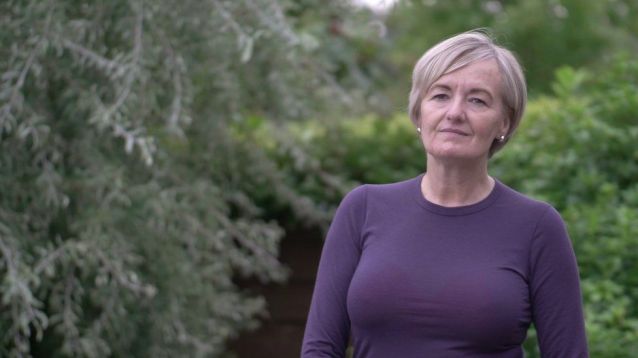
Alison McDermott

The JCIO originally said it did not comment on individual cases but now says it considers complaints carefully.

This is not the view of the complainants, their lawyers, and soon I expect if this gets more coverage, the general public.

One-Time
Monthly
Yearly

Make a one-time donation

Make a monthly donation

Make a yearly donation

Choose an amount

£5.00
£10.00
£20.00
£5.00
£15.00
£100.00
£5.00
£15.00
£100.00

Or enter a custom amount

£

Your contribution is appreciated.

Your contribution is appreciated.

Your contribution is appreciated.

DonateDonate monthlyDonate yearly

Please donate to Westminster Confidential

£10.00

Top judicial body challenged by Information Commissioner to take freedom of information requests over complaints against judges

John Edwards, Information Commissioner

A ground breaking decision by the Information Commissioner which would lead to the end of secrecy around the behaviour of judges will soon be tested in one of the highest tribunals in the country.

For years the Judicial Conduct Investigations Office, which, among other matters investigates complaints against judges, has claimed it is a private independent body which is not subject to the Freedom of Information Act, which covers the rest of Whitehall and the courts. It tells anyone who puts in a request that a reply will be discretionary and refuses to give the information.

And the Ministry of Justice, which is subject to the Freedom of Information Act, if asked the same information sidesteps the issue by saying it doesn’t hold the information.

Now John Edwards, the Information Commissioner, has blown the JCIO’s defence apart by saying it is a public body and like the rest of government should have to answer freedom of information requests.

Information Commissioner backing complainants

By doing so, he is backing at least two complainants who have taken their cases through tribunals plus numerous other people who have sought to get into the public domain how many judges are subject to complaints. The whole matter is going to be settled in an appeal to the Upper Tier Tribunal after a judge ruled that the decision by the Information Commissioner has to be included in the proceedings.

The Ministry of Justice, on behalf of the JCIO, is seeking to squash the decision. No date has been fixed yet for the hearing.

The Information Commissioner’s says: “the Lord Chancellor and the Lord Chief Justice (now Lady Chief Justice)are jointly responsible for judicial discipline’. The JCIO, therefore supports not just the Lord Chief Justice but also the Lord Chancellor in relation to such matters.

“This highlights how the structure of the JO and JCIO is not simply to support the judiciary, with wider public functions included within its ambit. The Commissioner further notes that the Judicial Appointment and Conduct Ombudsman, the statutory office sitting at the head of the complaints process of which the JCIO is part, was added by parliament to the scope of FOIA. In the Commissioner’s view, it seems unlikely that it would have concluded that the operation of part of this process should fall in scope of FOIA, with others outside of it.”

“Based on the summary above, the Commissioner’s conclusion is that the JCIO is part of the JO, which, while operating at arms length in practice, is still part of the MOJ for the purposes of FOIA.
In light of this, it is not necessary for the JO or JCIO to be listed separately in Schedule 1 FOIA for it to be within scope of the legislation.”

He adds:” Any information request made to the JCIO is effectively a request made to the MOJ and should
be treated as such. This is important in order for the MOJ to carry out its functions under FOIA, and to enable individuals to exercise their statutory right to public information.”

Judge Philip Lancaster

The Information Commissioner’s decision is very important because of its context that judges are being protected by senior members of the judiciary from any scrutiny about their behaviour. The BBC and this blog have already reported that judge Philip Lancaster, an employment judge, has received as many as 12 complaints from women who have appeared before him that he is patronising, biased and rude towards female litigants. See my blog here.

Barry Clarke, President of the Employment Tribunals in England, steadfastly refuses to entertain any criticism of his judges thereby blocking any information about complaints. And Baroness Sue Carr, the Lady Chief Justice, appears to be equally protective.

So this ruling while not likely to see the naming of judges will be able to provide the context of just how many complaints there have been and upheld and show the scope of the problem.

One-Time
Monthly
Yearly

Make a one-time donation

Make a monthly donation

Make a yearly donation

Choose an amount

£5.00
£10.00
£20.00
£5.00
£15.00
£100.00
£5.00
£15.00
£100.00

Or enter a custom amount

£

Your contribution is appreciated.

Your contribution is appreciated.

Your contribution is appreciated.

DonateDonate monthlyDonate yearly

Please donate to Westminster Confidential

£10.00