Euan Hutton, chief executive of Sellafield, found himself being called to apologise in public to whistleblower Alison McDermott by her local MP, Anna Dixon at a highly charged hearing of the Commons Public Accounts Committee last week.
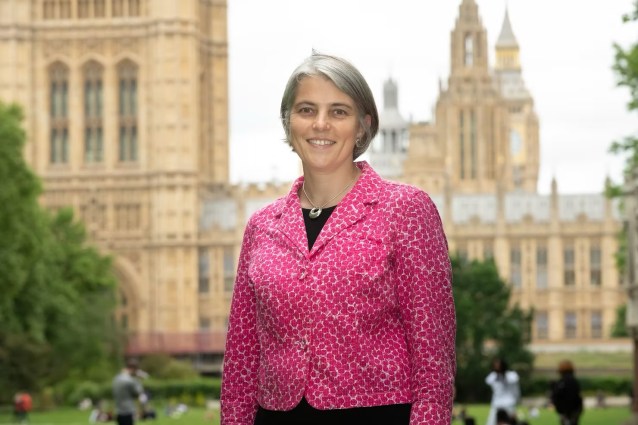
Anna Dixon MP
The chief executive was clearly embarrassed to face questions about spending such a lot of public money to silence the whistleblower after she produced a report about the toxic culture of bullying and harassment at the UK’s biggest nuclear waste plant.
Alison McDermott, a well respected management and diversity consultant, had faced a series of tribunals and costs hearings.which cost Sellafield over £750,000 by employing top flight lawyers.The main hearing was before judge Philip Lancaster, a judge now facing complaints from 10 women, including Alison, for his patronising and misogynist approach to female litigants who appear before him.
Anna Dixon,Labour MP for Shipley, raised the issue at the beginning of the hearing which was to examine Sellafield’s record so far in running down the waste facility over the next 100 years.
She pointed out that Alison had been head hunted through Capita to work for Sellafield and was then employed directly because of her excellent work. After she produced a report revealing a toxic culture of bullying and harassment at Sellafield this all changed and she was removed from Sellafield.
She told him :” I understand that at that time you did not invoke your whistleblowing policy or take a statement, as required by your own policy. Instead, you spent some £750,000 on legal fees. Perhaps you would confirm that. You refused mediation for three years, and pursued Alison for costs twice and lost on both occasions. As you will know, the remit of this Committee is concerned with the proper ethical use of public funds. As the new CEO, Mr Hutton, I would ask you whether you think this was a good use of public money.”
….” I have seen the treatment of other whistleblowers, which is similar to the treatment of my constituent, that has serious detriment to health, mental health and indeed professional reputation. Alison, as you probably recognise, is sitting here in the public gallery. I recognise that you are not willing to say very much. I am disappointed in that, because most of this is historic and in the public domain. I wonder whether you might apologise to her for the way that she has been treated by Sellafield.”
Mr Hutton replied implying that the situation in Sellafield then was ancient history.
“Over the last seven or eight years now, we have made really big strides forward in addressing some of the issues that there were at that time. You might say that I would say that but, in the most recent staff survey, which concluded, I think, a fortnight ago—I only say “I think” because I cannot remember whether it was a fortnight ago—we have seen significant improvement.”
Anna Dixon concluded: “I am going to come back later and challenge whether these problems have really completely gone away. I do not think that I heard an apology, but I hope you will at least agree to meet with me and my constituent, Alison. “
Since the hearing Alison McDermott has written an open letter to Mr Hutton, David Peattie, group chief executive of the Nuclear Decommissioning Authority and Paul Vallance, a non executive director of the NDA saying:
“The PAC’s examination has now raised serious questions about your leadership and your organisations’ management, culture, and safety practices.
I’ve made no secret of the toll this has taken on me. But each time I was faced with the choice between comfortable silence and speaking the truth, I chose the latter— without hesitation. That decision is one I will always carry with quiet pride. I can look myself in the mirror, sleep peacefully, and carry a clear conscience—something that is priceless.
I can’t help but wonder: how do you reconcile your actions?
What kind of man do you see when you look in the mirror? “
The PAC has now to produce a report following the hearing. I somehow think it will not be a glowing endorsement of practices at the UK’s biggest waste facility.
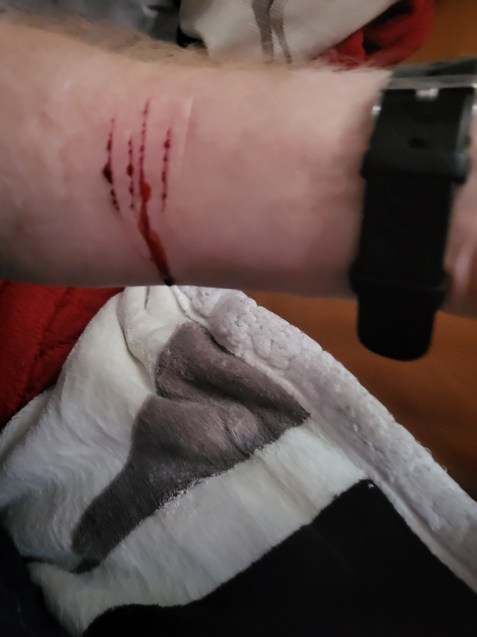
This picture is emblematic of the desperate straits some whistleblowers end up after they raise safety issues. They find themselves facing persecution by their bosses, horrendous costs they cannot afford for taking a case to an employment tribunal and put under extreme pressure by lawyers to sign an agreement taking away they rights to ever talk about the safety problem again and in this case lose their legal right to put in a Freedom of Information request or Subject Access Request to Sellafield for the rest of their life.
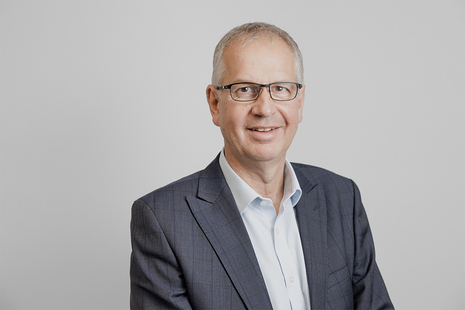
David Peattie, chief executive officer of the NDA Pic credit: gov.uk
This picture was sent as a last gasp plea to David Peattie, chief executive of the Nuclear Decommissioning Authority; Euan Hutton, chief executive of Sellafield; David Vineall, Sellafield’s group chief people officer, the Office for Nuclear Regulation and Claire Coutino, former Tory secretary of state for energy security. Only Claire Coutino expressed concern enough to want to meet the whistleblower but she was persuaded by her civil servants not to do so. We now have a new energy secretary, Ed Miliband following Labour’s landslide election victory, and I am planning to contact him to draw his attention to how whistleblowers are treated at Sellafield.
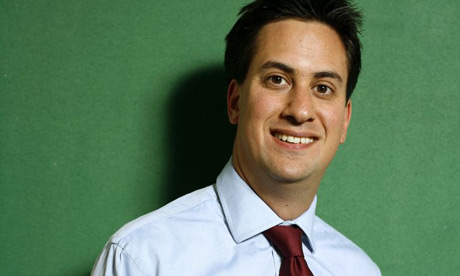
Ed Miliband, Labour’s new energy security secretary
To protect his privacy I am not naming the whistleblower after publishing such a personal and disturbing picture. But another source thought it was in the public interest to share a large file of emails and documents which reveal his correspondence and the reaction of the most senior figures inside Sellafield and the NDA.
The man involved was a loyal Sellafield employee for decades- in a potentially highly dangerous nuclear waste site where over 140 tons of plutonium is stored including from nuclear military waste warheads – and he was one of a large number of people employed to secure safety at the plant.
Some eight years ago he began to raise safety issues leading to what is said to be a highly critical issue. An email sent to the Office for Nuclear Regulation, the watchdog body, outlines his story.
After raising this at a whistleblower pre meeting in 2022 followed by a meeting with the former chief executive, Martin Chown, he suddenly found he was subject to an internal disciplinary inquiry by Sellafield based on the bogus claim that he had brought alcohol on the premises which is strictly forbidden at Sellafield. Terrified that they would try to pin this false claim on him, the employee voluntarily went to a local police station and submitted to a blood test, which revealed that he had zero alcohol in his system.
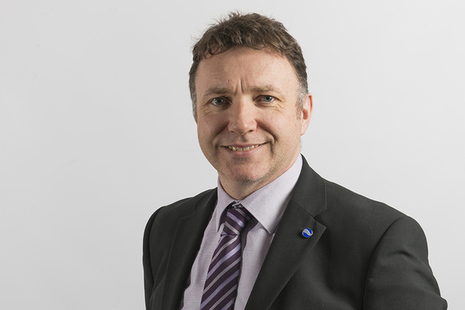
Euan Hutton, chief executive of Sellafield Pic credit: Gov uk
When he challenged this pointing out that this could be verified by the plant’s security cameras it was found that the film when he entered the plant had been “inadvertently wiped “. If this is correct, then this is terrifying lapse in security for Europe’s most dangerous nuclear site and fuels existing concerns about Sellafield being prosecuted for criminal offences for IT breaches. An inquiry under his senior manager, concluded against him and he was served with a ” final written warning.”
The then HR manager, Emily McDonnell, who claimed she saw the employee drinking alcohol on site, is notably the same individual involved in Alison McDermott’s whistleblowing case. McDonnell accused McDermott of poor performance, but her word document supporting this claim was missing. At McDermott’s ET hearing, it was revealed that McDonnell had written her complaint letter on a personal computer and “forgot to save it,” leading the ICO to rule the letter unlawful. This pattern is striking: in both cases, McDonnell made accusations with evidence that was either missing or questionable. Ms McDonnell now holds down a senior HR role at BAE systems in Barrow in Furness – I wonder if her new employers are aware of her involvement in these two key cases?
David Vineall, human resources director, Sellafield. Pic credit: gov.uk
The employee decided to go to an employment tribunal claiming detriment under the whistleblowing legislation. But after a one day preliminary hearing as a litigant in person he found it too much.– at the forefront of his mind was the also way Sellafield relentlessly pursued Ms McDermott for costs for three years, without remorse – see link here.
He told the Office for Nuclear Regulation: ” I gradually realised that I was woefully ill-equipped, both psychologically, and in terms of the necessary skills, and expertise to present and argue my case. The remorseless pressure from Sellafield Ltd was understandably taking its toll, and after a prolonged period of relentless pressure, including sustained pressure to sign a highly questionable, and restrictive COT3, ( equivalent to an upgraded non disclosure agreement) I capitulated and withdrew my Employment Tribunal claim, I could not face the prospect of facing a judge, and Sellafield Ltd.’s QC in court.”
Emma Mills, DLA Piper Pic credit: DLA Piper
So he withdrew his claim and was immediately served with a costs order for £14,000 so Sellafield could recover the costs of the hearing. The woman solicitor behind both the costs order and the non disclosure agreement was DLA Piper lawyer, Emma Mills. She is the same lawyer who assisted barrister Deshpal Panesar in the costs case against another Sellafield whistleblower, Alison McDermott. In that case, Judge Robertson dismissed all the grounds used by Sellafield and the Nuclear Decommissioning Authority against McDermott to recover costs and refused to grant any of the £20,000 claimed, stating there was no basis for Panesar’s claim that McDermott had acted dishonestly. (see link here)
The papers show how much Emma Mills was claiming. She was paid £243.14 an hour for attending the 2.6 hour hearing, £232.22 an hour for preparing the case and another £243.14 an hour for dealing with other matters connected to the case. Altogether she earned over £8600 and the whistleblower was expected to pay the bill.
Banned from making FOI and subject access requests to Sellafield
She was also behind the drafting of the highly restrictive non disclosure agreement. As well as silencing the whistleblower it demanded he withdrew a complaint he had lodged with another standards regulator, the Chartered Institute of Personnel Development about HR staff. This came after Ms. McDermott being fired after she submitted a report in 2018 highlighting serious dysfunction in the HR department, raising questions about what they are trying to hide about HR operations. Under it his right to use freedom of information and subject access reports about Sellafield was banned. I quote he was required “to withdraw any and all outstanding data subject access requests and/or Freedom of Information requests” and not pursue any further grievances.
As he said: “A COT3 that limits my ability to exercise my statutory rights under the Freedom of Information Act 2000 (FOIA) and the General Data Protection Regulation (GDPR) could be considered an undue restriction.” He also wrote to David Vineall, Chief People Officer at the NDA (Sellafield’s governing body) – how could he possibly condone the employee being told that he could not speak to his own regulator, the CIPD?
Driven to despair after reaching out to the most senior people at the NDA, including Group People Officer David Vineall, the CEO of the NDA, Peattie and the CEO of Sellafield, Euan Hutton, he was left without support. Hutton refused to intervene, claiming he could not halt the legal process for costs. On November 16 last year, following numerous emails to Hutton that highlighted his acute distress and pleaded for the withdrawal of the costs threat, he self-harmed. Hutton maintained it was a matter for the lawyers. Even after top officials and Ms. Mills saw photographic evidence of his distress, no immediate action was taken.
He said: “Following my self-harming incident, it took Sellafield Ltd nearly two and a half months to withdraw the ET court costs application order. This delay can only be seen as a deliberate attempt to exploit my vulnerability, and extract a concession. Sellafield Ltd.’s delay in withdrawing the threat of court costs unnecessarily prolonged my mental anguish, but they were not finished with me”.
He was informed this year by Manchester Employment Tribunal that Sellafield had withdrawn it costs threat.
But then he was left at home, cut off from access to Sellafield and had his enhanced sick pay withdrawn by his line manager. His manager is insisting he should have a voluntary medical check with the company to see if he is ” fit for work”. Sellafield are now saying he cannot cope and from April 24 this year he has received no money from the public company.
“My manager has now placed me on involuntary sick leave, and against my will. This action is particularly concerning as he cited extracts from my emails relating to the fact, I felt unable to cope, and inappropriately linked it to my disability as justification for placing me on sick leave.”
“My doctor has diagnosed work-related chronic stress, and is in agreement that Sellafield Ltd are responsible for my chronic medical condition. My condition now impacts every aspect of my waking life. I am already on medication to manage my condition, even so, I am constantly anxious and in a state of worry, finding it ever harder to concentrate, or sleep. The stress and anxiety are socially debilitating, and over time I have become ever more cynical, and I have largely withdrawn from friends, avoiding company and socialising.
“At times I cannot see a way forward, and feel helpless, and this feeling of dread has intensified over time. I don’t know where to turn for help, and who I can trust. I regard the constant reminders of where I can get help from Sellafield Ltd, as suspicious and disingenuous.”
In the meantime the bosses in charge of Sellafield say it is a wonderful place to work. In various YouTube videos, Euan Hutton, the chief executive and former mental health champion, espouses the importance of treating people with kindness, yet his actions towards this employee are anything but. He says that “kindness is putting in the time to think about how different people act differently, that’s what kindness is all about”.
A spokesman for Sellafield faced with an article in The Guardian about the toxic culture there, published last December, just after this employee had self harmed said: “There is no place for bullying and harassment at Sellafield. We do not tolerate it and where we find it, we take action. If anyone has information related to employee misconduct we urge them to come forward so we can investigate.
“We’re committed to ensuring all of our employees are respected, included, and able to perform at their best.
As for the protective disclosure about nuclear safety by this employee as far as I know nothing has been done about it.
One aspect of the second recent cost hearing against whistleblower and human resources consultant Alison McDermott by Sellafield and the Nuclear Decommissioning Authority which was not covered is the cost to the public and us the taxpayer.
During the hearing Deshpal Panesar, KC Sellafield’s lawyer from Old Square Chambers, rather pompously told the hearing that the fact Sellafield was claiming £20,000 off Alison was ” to protect the public purse”. He and the Nuclear Commissioning Authority which was also claiming £20,000 made a huge point that her “unreasonable behaviour” by pursing them at a tribunal meant she should pay a penalty.
What is now emerging from Freedom of Information requests is that the cost to bring this action far outweighs the money they will receive even if they are 100 per cent successful.
Both nuclear giants have already spent a huge sum – nearly £700,000 of taxpayer’s money – fighting Alison, whose consultancy was terminated, after her report revealed bullying and fear among staff at the nuclear site in Sellafield.
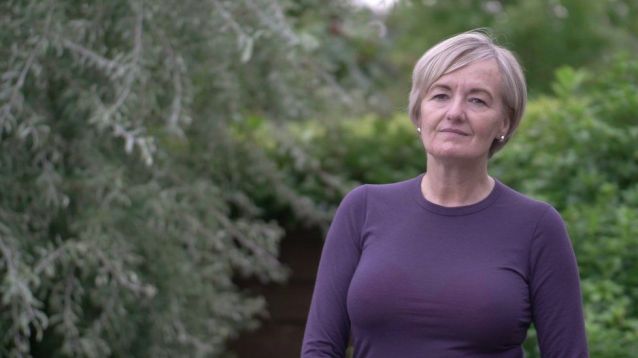
Alison McDermott
Now it is known from FOI that both organisations have spent £59,000 between them on preparing the case for the second hearing on top of money they had already spent for the first costs hearing. This doesn’t include the cost of hearing itself which is about another £20,000 considering Sellafield’s lawyers Deshpal Paneser. KC charges £5500 a day for the hearing and Emma Mills, from DLA Piper, who charges £3000 a day . The NDA employed another barrister, Rachel Levene and solicitors Pinsent Mason. Plus there were paralegals at the hearing.
Now one would think that after a High Court judge had ruled that the first costs decision was ” unsafe” and said his view should be taken into account by judge Stuart Robertson, who has heard the second hearing, there would be pause for thought. Both nuclear organisations are also lucky they will not face an appeal. So any sane organisation would decide to leave it there.
Instead we have the economic madness, which no commercial company conducting a risk assessment would follow, of throwing more money at bringing a second case when there is not the slightest chance of getting their money back. Indeed even if they were 100 per cent successful they stand to lose £40,000 and that is by no means certain they will get that. It is only that it is our money from the taxpayer they can throw it around like confetti.
So why are they doing it? The decision must have been endorsed by Euan Hutton, the new chief executive.
Despite previously serving as a Mental Health Champion alongside Ms. McDermott to foster a kinder and more supportive work environment, Mr. Hutton is now relentlessly pursuing costs against her.
In various YouTube videos, Mr. Hutton espouses the importance of treating people with kindness, yet his actions towards Ms. McDermott are anything but. He actually says that “kindness is putting in the time to think about how different people act differently, that’s what kindness is all about” [second video from 20 seconds onwards]. By hounding her for costs related to her whistleblowing for the second time, he has subjected her to immense stress and anguish, betraying the values he once claimed to champion.
Now Sellafield receives £6.7 million daily from taxpayers. Mr. Hutton’s decision to waste these funds on a vindictive legal battle against a whistleblower is an egregious misuse of public money. It is a slap in the face to taxpayers who trust Sellafield to use their contributions responsibly.
The Guardian has reported that the National Audit Office will investigate Sellafield’s substantial expenditure.
Mr. Hutton should be held accountable for his actions, which have caused harm to Ms. McDermott and undermined Sellafield’s commitment to employee wellbeing and to a culture of openness.
But perhaps this is the real reason for using public money in this way is to silence anybody else who might be thinking of exposing the dark secrets inside Sellafield. She is not the only whistleblower.
I approached Sellafield and the NDA about this waste of money but both said
“These issues are still subject to legal proceedings. We cannot comment further at this stage.”




 Westminster Confidential