Labour to grant Orgreave inquiry and new Hillsborough law in manifesto pledges

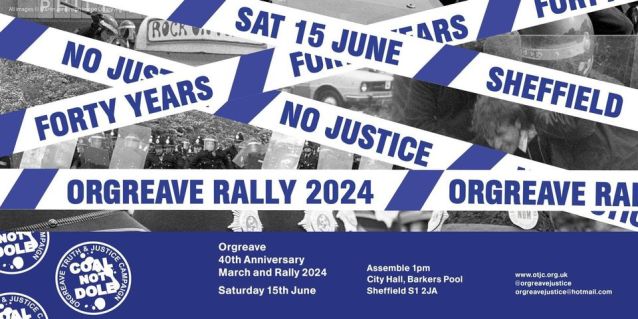
Orgreave rally being held in Sheffield tomorrow by the Orgreave Truth and Justice Campaign

Campaigners who have fought for years for justice following the infamous ” Battle of Orgreave” during the miners strike and the Hillsborough tragedy have convinced Labour to introduce a new law and hold a long demanded inquiry.

The decision, in the small print of the manifesto, to hold an inquiry into the 1984 “Battle of Orgreave ” where 6000 police fought striking miners picketing a coke plant, has been demanded for years by the Orgreave Truth and Justice Campaign and is now in Labour’s manifesto for the next Parliament.

The decision comes at a key moment when a new documentary on Orgreave will be screened at the Sheffield DocFest on Sunday. The director, Daniel Gordon of Strike: An Uncivil War, has wanted to make the film for a decade after seeing links between South Yorkshire Police handling of the strike and the treatment of families of the 97 Liverpool football fans who died when an overcrowded stand collapsed at Hillsborough in 1989. He gives an interview here to the BBC.

Any such inquiry is likely to be forensic into the police methods used against the miners. My own book on the miner’s strike, Marching to the Fault Line, written jointly with author and playwright Francis Beckett, points a finger at Peter Wright, then chief constable of South Yorkshire Police, who died in 2011, who after Orgreave, wrote a memo released to us under freedom of information, called for Arthur Scargill, to be prosecuted for conspiracy. The memo reached ministers but was blocked by the Director of Public Prosecutions for lack of evidence. Other very limited circulated memos, show that Thatcher, and Cabinet ministers Leon Brittan, Norman Tebbit and Peter Walker had drawn up a strategy in advance for this big confrontation with the pickets with Ian MacGregor , head of the Coal Board and Bob Haslam, chair of British Steel.

Labour’s decision to call for an inquiry has one extraordinary and unlikely precedent. Some nine years ago Theresa May, met with the Orgreave Truth and Justice Campaign, to set up such an inquiry.

As my blog reported then: “Theresa May agreed to meet an extraordinary delegation of Labour MPs, lawyers, ex miners through the Orgreave Truth and Justice Campaign ( see their website here) at the end of July and has agreed to accept  a detailed legal submission from Mike Mansfield and three other distinguished barristers arguing for the case to set up an independent inquiry.”

This never happened because Theresa May’s successor as home secretary, Amber Rudd, blocked the inquiry.

Bishop James Jones – who chaired the Hillsborough Independent Panel Pic Credit: BBC

The other significant promise by Labour which could have wide ranging ramifications, is a long demanded implementation of the Hillsborough Law, sought after the independent panel inquiry by Right Revd James Jones, the former Bishop of Liverpool, which forensically examined the tragedy.

This would introduce a duty of candour for all public officials – similar to the professional duty for doctors in the NHS – and say they had to co-operate and assist any public inquiry investigation. It would also provide that taxpayers money will be available for the victims or the bereaved needing legal representation at any inquiry. Effectively this would provide a level playing field between the authorities – who are already funded by the taxpayer – and those who were affected by any future scandal. This has a widespread application – and would affect future inquiries into NHS failings and would have been extremely helpful to those at the Grenfell, Contaminated Blood, and Sub Postmasters inquiries.. Also it would make it very difficult for officials to try and conceal the truth as it would be against the law.

Given that Labour are under fire for producing a cautious and lacklustre manifesto in other areas I am surprised the party has not highlighted these changes. There are also plans to reform the House of Lords, strengthen the independence of the Prime Minister’s adviser on ministerial interests, curb MPs having second jobs and set up an independent Ethics and Integrity Commission. Why have we not heard more of this from Sir Keir Starmer?

One-Time
Monthly
Yearly

Make a one-time donation

Make a monthly donation

Make a yearly donation

Choose an amount

£5.00
£10.00
£20.00
£5.00
£15.00
£100.00
£5.00
£15.00
£100.00

Or enter a custom amount

£

Your contribution is appreciated.

Your contribution is appreciated.

Your contribution is appreciated.

DonateDonate monthlyDonate yearly

Please donate to Westminster Confidential

£10.00

Travelogue Bermuda: A country inspiring Shakespeare and Mark Twain but mired by a racist past

It is one of the more curious facts  revealed by Bermuda’s national museum. Bermuda may be the inspiration for Shakespeare’s The Tempest. Seafarers tales told in Southwark taverns at the turn of the seventeenth century are thought to have inspired the playwright to create a story about a magical island.

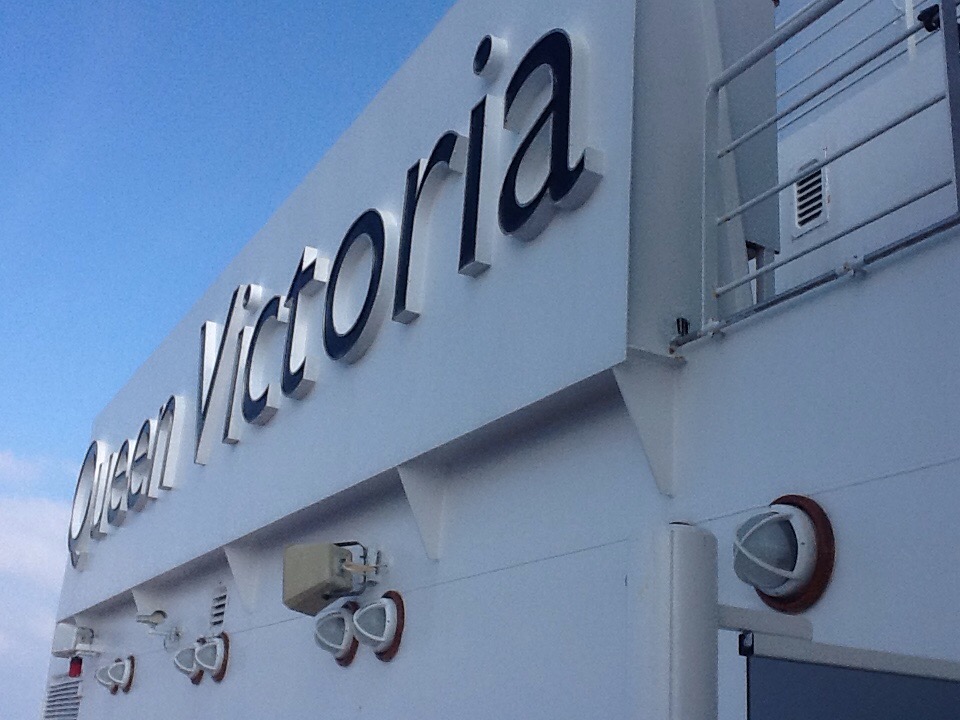
Bermuda is named after an Spanish sea captain Juan de Bermudez who sailed past them in 1503 but never claimed them. It was a British ship the Sea Venture en route to Virginia which hit a storm- just like the Queen Victoria on this trip – but in this case was wrecked off the island in 1609 that led to the country becoming a British colony. But unlike other islands it was uninhabited and the sailors believed that just like in the Tempest that it was haunted by spirits and couldn’t wait to build new ships to get off it. Only three years later was it settled.

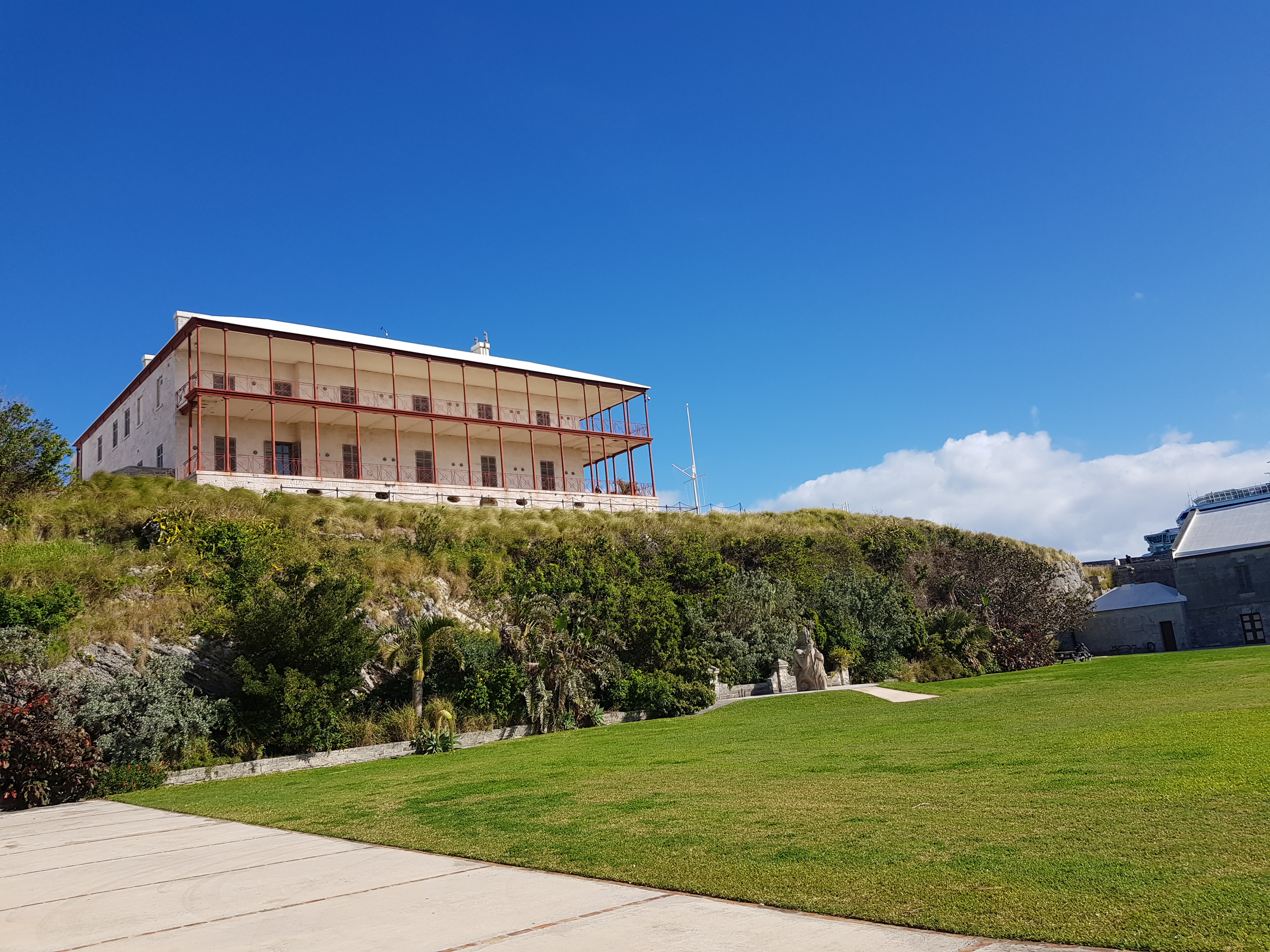
The history of the island is outlined in an eclectic collection of artefacts housed in a former British Royal Navy commissioner’s nineteenth  century mansion overlooking the Dockyard abandoned by the British in 1951. The mansion remained derelict for 20 years until restored by the Bermuda government.It is worth a visit see picture above.

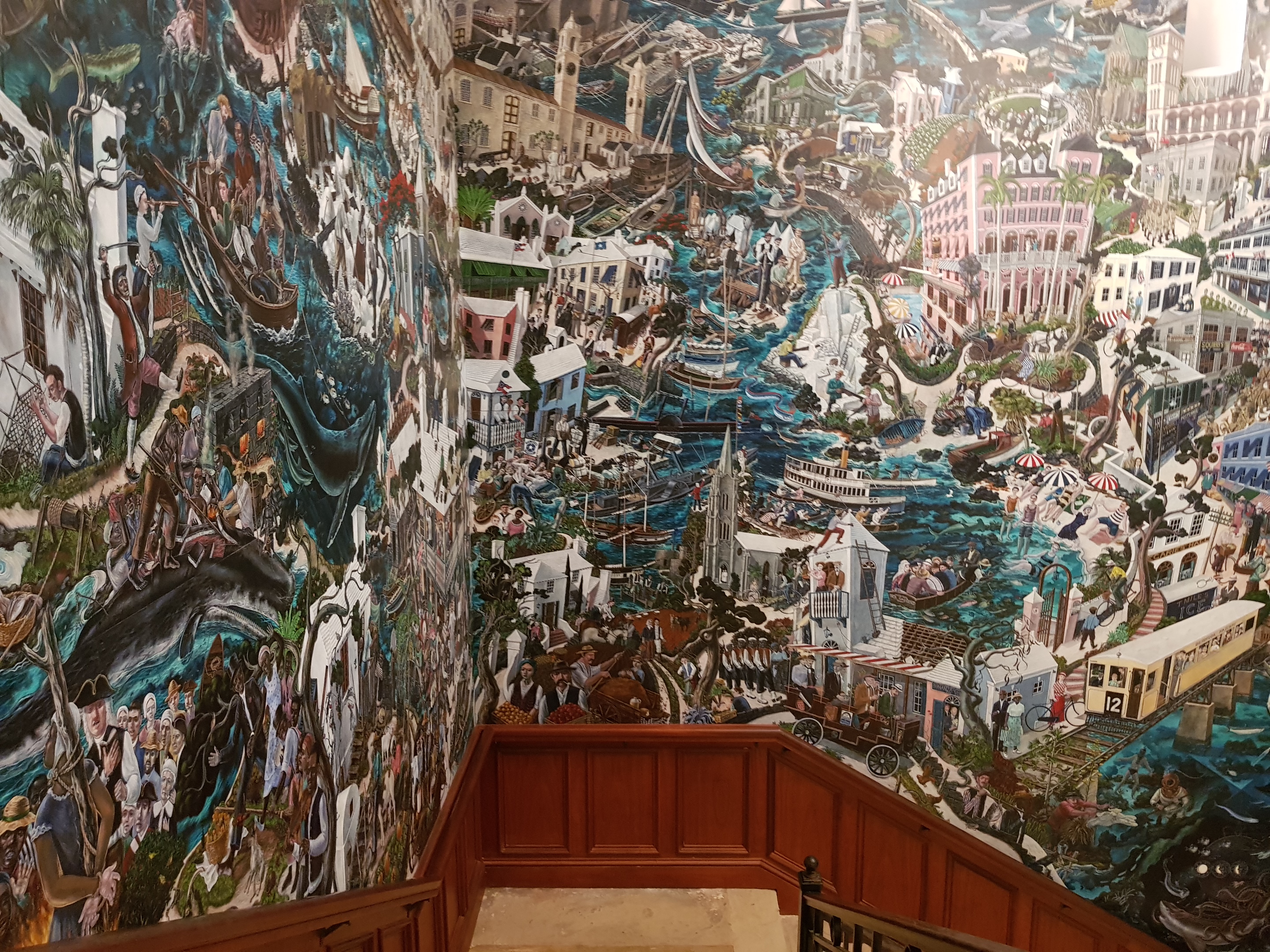
The museum tells a warts and all history of the island, its role in two world wars, the development of tourism, its racist and slave ridden past and the rush to recover sunken treasure  from the numerous ships wrecked on the rocks . It also houses in the old keep ponds a conservation project to save dolphins.It has an extraordinary mural t

Depicting the island’s history by a contemporary artist covering a whole stairwell.

The story of the island’s racist and slave past is graphic. At first there was little racism but the rise of the slave trade in the eighteenth century lead to the removal of rights and restrictions put on the Portuguese who settled there from the Azores . Slavery was abolished in 1834 but attitudes remained. As late as the 1960s the now closed Bermuda Railway had an apartheid system reserving the best seats for whites. The Portuguese settlers ,mainly farmers,were barred from taking some top professional jobs until as late as the 1980s.

Tourism attracts more Americans than Brits with the island being originally popularised by US author Mark Twain who raved about it. The development of air travel, low income taxes and the American connection fostered by new bases set up in the Second World War to fight the German U boat menace, made it a big destination for US tourists. Wealthy Hollywood film stars moved there. So although officially British it is far more American and celeb orientated.

Mind you if history repeats itself it could end up as a new home for Prince Harry and Meghan who have abdicated their Royal roles. Any vacancy coming up soon for the governship of Bermuda?