
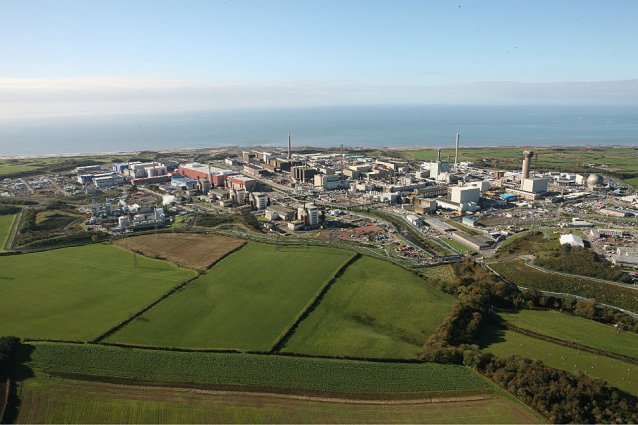
A very disturbing story is emerging from Sellafield about attempts by the management and its lawyers to make whistleblowers sign away their rights to make freedom of information and subject access requests to their organisation or face large costs bills through the employment tribunal system.
This attempt – when I checked with the Information Commissioner’s Office – is outside the law as Parliament gave all UK citizens the inalienable right to make FOI requests to public authorities and subject access requests. No public sector organisation can ask a person to withdraw a subject access request or an FOI request let alone use it as bargaining chip in litigation at an employment tribunal.
Yet lawyers either through total ignorance about the FOI Act or a deliberate attempt to con whistleblowers threatened with costs into giving up their rights under British law appear to be using this as a tool to harass whistleblowers.
The misuse of FOI legislation has emerged in two whistleblower cases involving Sellafield and the Nuclear Decommissioning Authority. One is well known – the case of Alison McDermott, a human resources and diversity consultant, who has been involved in a long battle with the nuclear authorities after they attempted cover up a toxic and bullying culture.
The second which I covered recently involved the tragic case of a whistleblower who self harmed when threatened by Sellafield with costs after he withdrew a claim at an employment tribunal.
Documents from Sellafield that I have seen reveal that a legal document drawn up by their lawyers and Emma Mills, a partner with DLA Piper, an international law firm, included this demand:
“The Claimant hereby further agrees …to withdraw any and all outstanding data subject access requests and/or Freedom of Information requests.”
For good measure it added that he was “to withdraw any complaint made to the Chartered Institute of Personnel and Development (CIPD).”
The withdrawal of FOI requests is directly linked to Sellafield’s claim for £14,000 costs against him after he withdrew his claim at the tribunal. If he does the legal document reads: “The Respondent hereby confirms that it shall immediately write to the Employment Tribunal in the terms of the letter at Appendix withdrawing its outstanding application for costs against the Claimant in relation to the conduct of the Tribunal Claim.”
Luckily the whistleblower was savvy enough not to agree to sign this. As he wrote to the management:
“A COT3 [ name of the document] that limits my ability to exercise my statutory rights under the Freedom of Information Act 2000 (FOIA) and the General Data Protection Regulation (GDPR) could be considered an undue restriction.”
When I put what had happened at Sellafield to the Information Commissioner’s Office this was the response from a senior press officer: “Everyone has the right to ask an organisation for copies of the personal information held about them. As well as the right to request recorded information held by public authorities.“
“There is no option in data protection or freedom of information law for organisations to remove these rights for an individual, and the ICO would intervene where requests were not being handled in line with the law. “
Sellafield are now saying: ” Sellafield Ltd have not breached any legal requirements, and involved ACAS as an intermediary.
“The individual is not subject to any restrictions preventing them from making an information request under either FOI or data protection legislation.”
That is correct but would not have been had the whistleblower signed the agreement.

I contacted Emma Mills , the partner with DLA Piper, who was paid by Sellafield, to draft the agreement directly, pointing out that she did not seem to know what the Freedom of Information Act says by drafting such a demand which appears to be outside the law. She has not responded.
Now there is another issue where the Nuclear Decommissioning Authority (NDA) lawyers have linked applications for FOI’s and subject access requests to a cost hearing against a whistleblower.
During a cost hearing against Alison McDermott two more lawyers, Jonathan Coley of Pinsent Masons and Rachael Levene, a barrister with Nine StJohn Street chambers, which accused her of being disruptive, abusive and vexatious in bringing a case against the NDA, cited FOI and DSAR requests as costing the authority a lot of expense. The accusation read to recover costs: “Submitted four Data Subject Access Requests and six Freedom of Information Requests over the last three years, the majority of which were complex and involved significant work and additional legal time and cost by the Second Respondent to answer. “

The £20,000 cost claim was thrown out by a judge at a recent hearing but again this claim shows total ignorance of FOI legislation.
The correct procedure if the NDA wanted to challenge the cost of the FOI requests ( it can’t charge people for subject access requests) would have been to raise the cost issue when she submitted them not tag the costs to the authority at a later hearing to intimidate the whistleblower. The NDA had granted the requests – it can’t then demand reimbursement later. Of course if it had at the time Alison would have the right of appeal right up to the Information Commissioner’s Office and knowing her determination would have had no problem in doing so.
I suspect that the behaviour of these lawyers to restrict people’s rights to use freedom of information and subject access requests could be more widespread than we know – because of the secrecy surrounding non disclosure agreements. It appears they are backed up by the Solicitor’s Regulation Authority if they do so but that is for another story.
I would make two points. If you are presented with an NDA containing such restrictions send it to the Information Commissioner’s Office before you sign it. Secondly if you have had attempts as a whistleblower to silence you by restricting your rights under this legislation let me know.
Make a one-time donation
Make a monthly donation
Make a yearly donation
Choose an amount
Or enter a custom amount
Your contribution is appreciated.
Your contribution is appreciated.
Your contribution is appreciated.
DonateDonate monthlyDonate yearlyPlease donate to Westminster Confidential
£10.00
•
 Westminster Confidential