Mother and former coroner hold Harley Street protest over radiologist’s mistake that may have contributed to the death of Gaia Young

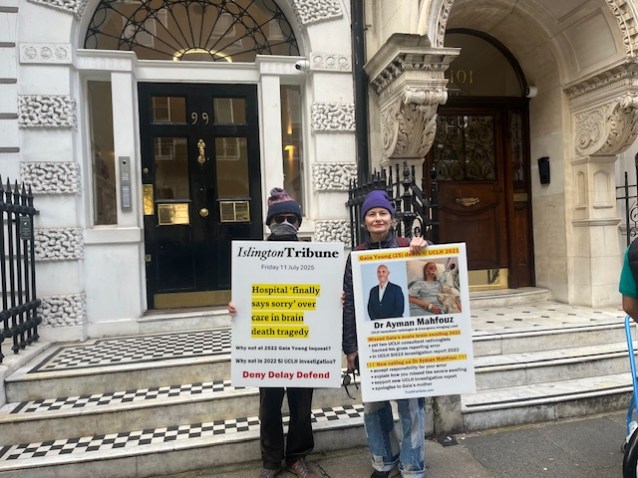
Dorit Young and an ex coroner on a vigil in Harley Street.

Last year I reported on the tragic death of talented 25 year old Gaia Young 17 hours after she was admitted to University College Hospital with severe headaches. Her mother Lady Dorit Young was subject to an entirely unsatisfactory and unsympathetic coroner’s inquest by Mary Hassell which let the hospital off the hook saying the cause of death was unknown. You can read my original blog here.

The coroner blocked Lady’s Young’s attempt to get independent evidence from a neurologist but since then she has managed to get an independent neuro-radiologist and neurologist’s report and UCLH have opened a further review into her tragic death.

The protest vigil on September 15 was sparked by the findings of the neuro radiologist who examined the CT scans of Gaia’s brain. It showed quite clearly even to a lay person, according to Dorit ,that the first scan taken and I quote ” there is a gross cerebral and cerebellar swelling. There is effacement meaning ( ” literally meaning ‘ rubbed out’: these fluid spaces should be visible but cannot be seen).”

Gaia Young

This is the opposite to the consultant radiologist who examined Gaia’s scan who said: “The ventricles and basal cisterns are patent…Impression No acute intracranial finding.”

The independent consultant’s diagnosis was confirmed by Dr Charles House, the medical director, when he met Dorit and compared Gaia’s scan with a normal brain scan.

The consultant radiologist who examined this first scan was Dr Ayman Mahfouz, who was on duty at UCLH at the time Gaia was admitted. Dr Mahfouz, has a private practice in Harley Street.

His entry on the private practice site says he  has specialist expertise in breast, gynaecology and general imaging.

He undertakes all aspects of breast imaging including mammographic (plain, contrast enhanced and 3D), Ultrasound, MRI and CT diagnostics. He performs all ultrasound and stereotactic breast related procedures including vacuum excision.

Dr. Ayman Mahfouz is a designated appraiser for doctors at UCLH and has previously been elected as a regional representative for doctors in training at the Royal College of Radiologists. At the time of Gaia’s admission he  held the role as Emergency Imaging Lead for UCLH.

Gaia’s mother would like to contact him about the scans but so far he has not responded. She does not know what pressure he might have been under at the time or how much time he took to examine the scan. I did ask UCLH about whether he wanted to say anything about this but there was no response to my question.

UCLH did issue a response about the review into Gaia’s death.

A UCLH spokesperson said: 

“We met with Lady Young and apologised that Gaia’s care fell below the high standards we strive to provide. We sympathise greatly that the cause of her beloved daughter’s death four years ago is still unknown.  

“We are committed to learning from external opinion and scrutiny and have commissioned a range of independent experts to explore further the circumstances surrounding Gaia’s death. We agreed with Lady Young the scope of the reviews and the experts who will undertake them.   

    “We await the outcomes of all the external reviews to understand if further lessons can be learned and acted upon.”

Dorit’s vigil last month caused more than a flutter on Harley Street. The clinic at 99 Harley Street called the police and also alerted its own security guards. When the one man patrol car turned up with flashing blue lights the policeman turned out to be incredibly polite and said no-one was breaking the law so long as the entrance to the premises and pavement was not blocked.
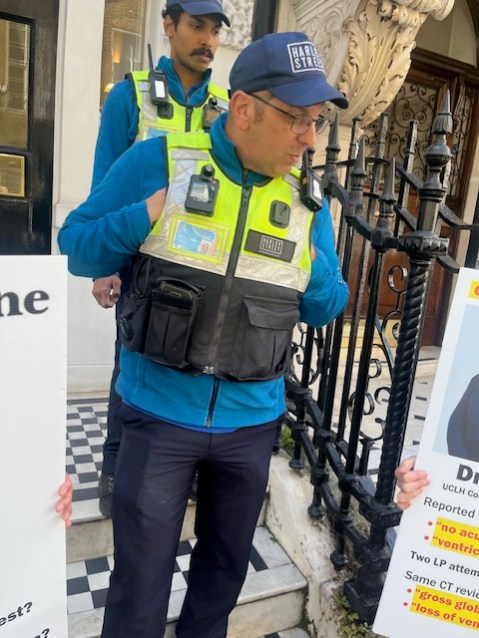
The friendly security guards curious about the case

Then two security guards turned up, saying they had been informed by a member of the public that large numbers of people were demonstrating there. It turned out to be just three people and they were remarkably friendly and polite when they heard about the circumstances. They didn’t mind having their pictures taken.

The one person who didn’t turn up was the doctor and one of his private practice colleagues politely remonstrated with us that this was not the right way to do things and Dorit should arrange a meeting with the hospital. It was pointed out to him she had been reprimanded by the Trust on various occasions for trying to contact clinicians having cared for Gaia. She never received an answer. The Trust never offered a meeting with any of these doctors.

Gaia’s case has been taken up by an Islington councillor, Dr Hannah McHugh. She wrote a strongly worded opinion piece for her local paper, The Islington Tribune. You can read it here.

She says:” As an Islington councillor, I’ve supported Lady Young in this painful journey. It has revealed something of concern to us all: when things go wrong in our healthcare system, the path to truth is too often long, difficult, and unjust. Tragedies become injustices.”

Slowly but surely the facts about Gaia’s death are coming to light. But so far it has taken four years to achieve with no help from coroner Mary Hassell.

This to me is a general problem across the NHS. Rather than acknowledge to patient’s relatives that mistakes have been made, trust managers initially go on the defensive and are prone to cover up what went wrong and who was responsible. It is only people with guts and determination like Dorit who are prepared to fight for years until they get answers that the true facts start to come to light.

One-Time
Monthly
Yearly

Make a one-time donation

Make a monthly donation

Make a yearly donation

Choose an amount

£5.00
£10.00
£20.00
£5.00
£15.00
£100.00
£5.00
£15.00
£100.00

Or enter a custom amount

£

Your contribution is appreciated.

Your contribution is appreciated.

Your contribution is appreciated.

DonateDonate monthlyDonate yearly

You can also donate to Westminster Confidential via Pay Pal on the link below.

https://www.paypal.com/ncp/payment/865JAS3QJ3

How a leading teaching hospital and a coroner failed a young woman who was brain dead 17 hours after being admitted to A & E

Gaia Young

Case for a new inquest after coroner Mary Hassell failed to find adequate explanation for her death

This is an extremely tragic tale of what happened when a 25 year old healthy and talented woman, Gaia Young, was rushed to accident and emergency with severe headaches only to die of an unexplained brain condition and doctors have yet to correctly diagnose what was wrong with her.

The failure by one the country’s leading teaching hospitals, University College Hospital in London was compounded by an utterly abysmal inquest conducted by coroner Mary Hassell. She patronised and showed no empathy for her bereaved mother, Lady Dorit Young, who had lost her only child ,Gaia, and failed to properly investigate her death. The full story is on the Truth for Gaia website.

Now more than three years after her death there is still no explanation of what led to this terrifying and tragic event which is why there must be a fresh inquest that can get to the truth of what really happened.

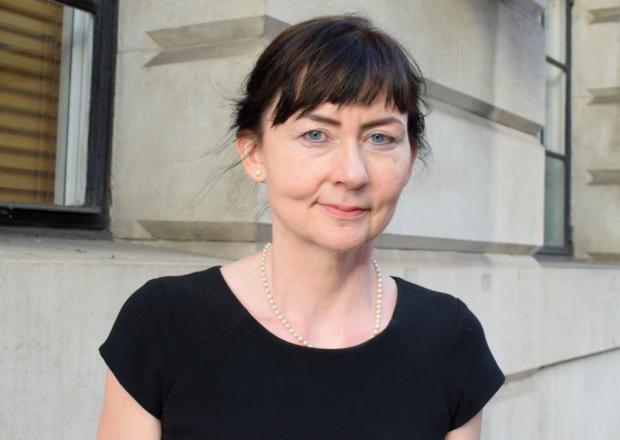
Mary Hassell the coroner pic credit: Archant

Gaia Young was admitted to the hospital with a headache ,vomiting and became confused while waiting at the hospital after a perfectly normal day when she had gone shopping and cycling. Her sudden admission to A&E came at a weekend when many doctors are off duty and was seriously understaffed at the time. She had two CT scans of the brain which led to doctors deciding they would conduct a lumbar puncture to diagnose what was wrong.. The on call radiologist who examined the scan was not a specialist neuro radiologist and thought the scan was OK so a lumber puncture was a normal procedure..

The first attempt at the lumbar puncture, was done by a doctor under supervision who had done very few lumber punctures, did not work. So it was decided to attempt a second one which sadly led to her death as the brain was ” coned ” – pushed into the neck. Just before this the neurologist registrar was concerned when she saw Gaia’s CT head scan. She worried that the CT might show brain swelling and consulted with a neuroradiologist and consultant neurologist at Queens.
It emerged later that a specialist neuro radiologist could see subtle differences in the CT scan that meant there could be raised intra cranial pressure. If that was the case a lumbar puncture would not be undertaken because it was too dangerous . Also if she had a fundoscopy – a eye check that examines the retina and the back of the eyes – it would have showed raised intra cranial pressure. That did not happen.

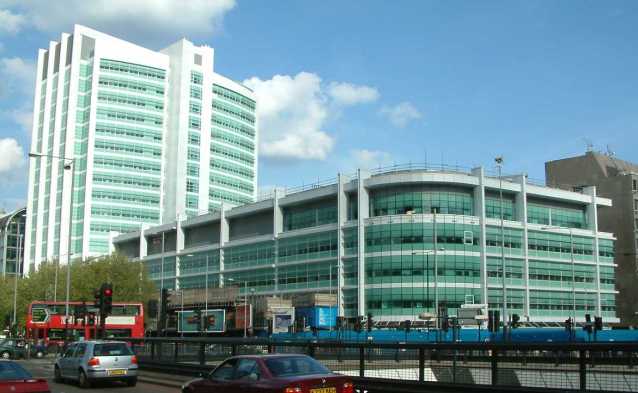
University College Hospital

The tragedy is that University College Hospital is a centre of excellence and has access to top class neurologists. And nearby is University College, London whose faculty of brain sciences is judged to be the best in Europe and will get new facilities shortly. That this happened in a part of London where there is such expertise in the study of the brain is doubly tragic.

After considerable pressure from Dorit Young, university College Hospital says it will do a further investigation but has only just started it. A statement from the hospital said: “We understand the sudden death of a loved one has a lasting impact and offer our ongoing sympathies to Gaia’s mother.   

   “In 2022, we agreed to commission a range of independent experts – a neurologist, neuro-ophthalmologist, neuro-intensivist and neuro-radiologist – to explore further the circumstances surrounding Gaia’s death. We agreed with Lady Young the scope of the reviews and the experts who will undertake them. In August 2024, she consented to releasing some of Gaia’s medical records but further consent is needed so the reviews can begin. 

“We are committed to learning from external opinion and scrutiny and will share the reports with Lady Young. We have already developed new clinical guidance and training following our internal investigation.”   

It is the failing of the inquest held in 2022 that has added so much stress to Dorit, Gaia’s mother. The coroner is an independent judicial officer, appointed by the local authority, whose main role is to decide the cause of death. In this case Mary Hassell failed. Part of the problem is that nearly all coroners are not medically trained so they could find evaluating medical evidence beyond their skill set. And hospital trusts are aware of this and could decide to limit evidence available at an inquest. It is up to the coroner to probe that evidence to get to the truth. She is also expected to allow the bereaved to participate in the hearing.

Not only did that not occur at Gaia’s inquest but the coroner positively blocked Dorit’s request to bring independent medical evidence from a neurologist by refusing to hear it.

Instead the evidence concentrated on the findings by the post mortem of how she died and not on the original cause of why she died.

As she says:” Professor Al-Sarraj’s report [ he did the post mortem] is detailed and descriptive of the brain injury as a secondary event; it does not provide an explanation of a primary event. It provides a description of the pathology of tissue at the time of death; it does not necessarily provide an explanatory
pathogenesis in time but rather the description of an end point. Accordingly, the cause of death remains unknown.”

Independent expert barred by the coroner

When the inquest was held there were no independent experts giving evidence other than the two pathologists; there were no independent clinicians to give evidence on the care provided. The hospital was permitted to investigate itself in an independent judicial process; there was no external scrutiny.
The coroner backed the trust opposing her request for an independent neurologist and other experts to attend.Instead it left the trust to choose its own experts and this did not include a neurologist.

Before the inquest was held the hospital wrote to Dorit saying:
“The purpose of the serious incident investigation is primarily to review the care of your daughter and to identify any learning. We do not have the same purpose as the Coroner who needs to determine the cause of death.”
As she said; “This denotes an astonishing lack of medical curiosity for a leading clinical and research
institution. It is crass. I am surprised that UCLH consider that it does not need “to determine the cause of death”; this position conflicts with the papers which considers the risk for the recipient of a liver from brain dead donors.” Gaia’s organs were donated.”

Worse was to follow at the hearing. Dorit wanted to make an impact statement on her daughter’s death. This was refused by the coroner. It is on the Truth for Gaia website.

In it she says “It felt like Coroner Hassell favoured her ‘local’ hospital; she breached principles of proper inquiry and natural justice. I am still waiting to receive the Court approved list of documents upon which it relied in reaching its judgement. If the Coroner had taken my submission into account, her inquiry might have taken a proper course in considering a differential diagnosis, but the one-day hearing barely scratched the surface of the complex medical issues of Gaia’s death. This predictably led to an inconclusive determination, adding nothing to understanding how Gaia died, nor whether her death was avoidable.”

She wanted to publish the transcript of the hearing. Again the coroner refused threatening her with contempt of court and imprisonment if she did. The coroner was overruled by the chief coroner.

The coroner declined to comment after I put the complaints about her behaviour to her.

Dorit wrote to the Attorney General complaining about the handling of the hearing by the coroner and the failure to produce a witness statement that was subsequently available after the inquest. Officials replied that this” may amount to a reason to seek a fresh inquest.”

Lessons do need to be learned from this whole debacle. For a start procedures at the hospital should be changed even if this was a rare case. A decent coroner would have recommended some. But overall it shows up the weakness of a system whereby a hospital can first say it’s not their job to investigate the original cause of a death but a matter for the coroner and then not present enough evidence for the coroner to reach a judgement. Both the coroner and hospital have failed Dorit. This is a case of miscarriage of justice – people have a right to know the cause of death of a loved one and the public need to know to get a remedy should there be a repetition of this tragedy in similar circumstances.

One-Time
Monthly
Yearly

Make a one-time donation

Make a monthly donation

Make a yearly donation

Choose an amount

£5.00
£10.00
£20.00
£5.00
£15.00
£100.00
£5.00
£15.00
£100.00

Or enter a custom amount

£

Your contribution is appreciated.

Your contribution is appreciated.

Your contribution is appreciated.

DonateDonate monthlyDonate yearly

Please donate to Westminster Confidential

£10.00