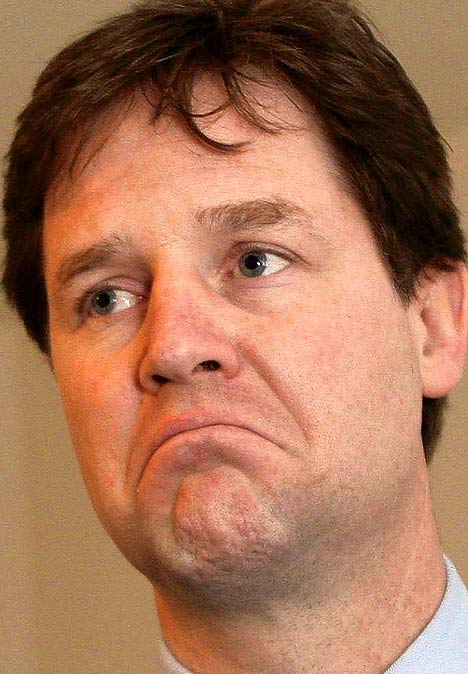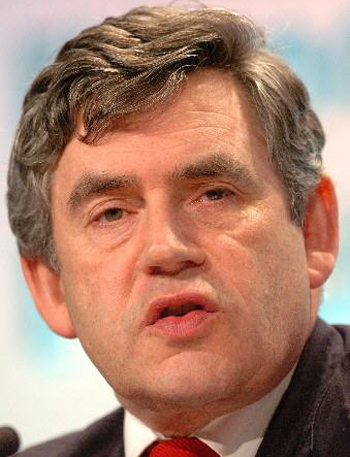
Vain Vince v. Bruiser Balls and Calamity Clegg

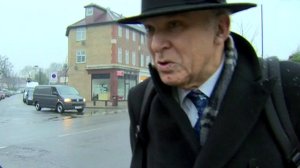
Vince on the prowl: pic courtesy BBC

Vince on the prowl: pic courtesy BBC

As we start gearing up to the next general election political parties always make extravagant claims that they will win. The reality at the moment is neither the two biggest parties – Labour or Tory – are likely to get an overall majority. The intervention of UKIP and the fact that the Liberal Democrats are likely to cling on in their strongholds – even if they lose seats – has seen to that.

That’s why the rather bizarre reconciliation between Nick Clegg and Ed Balls is particularly interesting. For whatever the  parties are saying publicly, everyone knows the Liberal Democrats will be talking to Labour as well as the Tories.And they will start worrying who is going to get what in any new coalition.

In  a story on Exaro News  earlier I illustrated this – from information obtained  from two independent  Westminster sources – one in the Labour Party and another in the Liberal Democrats – about the real reason why Ed Balls and Nick Clegg – who until now both publicly say they loathe each other – are kissing and making up.

 The answer is a premeditated power grab from Vince Cable, the current business secretary, to get  the chancellor’s job  from a somewhat unpopular Ed Balls. It appears according to both sources that the last thing Nick Clegg wants even if he were to remain deputy PM.

According to the Liberal Democrat source ” Vain Vince ” – once shadow chancellor for the Lib Dems – fancies the post but such a move would be anathema to both Clegg and Balls. Cable. The main reason is Cable’s tendency to keep things to himself . As the Lib Dem put it :

“It is no coincidence that Vince Cable and Gordon Brown were both young members of the Labour party in Scotland at the same time. They were very similar in keeping things to themselves,” said the source.

The insider recalled Clegg’s irritation with Cable as shadow chancellor. Clegg would complain to colleagues that he had to wait until Cable went on BBC Radio 4’s Today programme to find out what the party’s economic policy was on a particular issue.

While Balls interest would be to get Clegg on side fuelled by the fact that his leader, Ed Miliband is warming towards Nick Clegg after they regularly met socially at last year’s Olympics.

The ability of politicians to scheme like rats in a sack is one of the more unenviable sides of Westminster politics. Getting the electorate to trust politicians is one thing. The fact that they don’t trust each other – especially among people in their own party – is quite another.


Why I’m going to vote NO to AV

Putting a No Vote into the ballot box

I support progressive electoral reform. The present system does need changing. It normally delivers firm government but does not  necessarily represent the collective views of the country. The present system normally allows one party with the largest minority of votes  to implement its manifesto, but at least we have a good idea what this means when they are elected.

If we are going to move to proportional representation it will mean that we will have to trade the clarity of a manifesto for a compromise. But I am only willing to do this if the voting system – as to a large extent it does in Scotland and Wales – genuinely reflects the view of the electorate. In other words a serious dose of proportional representation.

 AV leaves us with the chance of  a botched government elected by a botched electoral system. Rather than taking into account  the votes of all the people and topping up Parliament to reflect this, it allows a small minority of people to exercise their choice twice at the expense of the majority of people who will only be able to use their first preference. In many places it won’t apply at all.

In my own seat, Herts South West, for example, Tory David Gauke, was returned with 54.9 per cent of the vote, so AV will be irrelevant here. And if it was just below 50 per cent, it would be second preferences of an independent, BNP and UKIP candidate in that order, that would have been redistributed.

In East Ham it is more pronounced with ex Labour minister Stephen Timms being returned with 70 per cent of the vote –  a majority of 27,826-the largest in the country. No AV there and 30 per cent of the  electorate ignored. Similarly  foreign secretary William Hague had 62 per cent of the vote in Richmond, Yorkshire and Gordon Brown would be unaffected in Kirkcaldy with 64.5 per cent of the vote. And also for that matter David Cameron, Dominic Grieve and John Hayes (all 58-61 per cent).

It would have made a difference in Watford (Tory gain from Labour) and won with only 34.9 per cent of the vote because all three main parties were close (the Lib Dems came second) and the bottom three shared only 5.6 per cent of the vote. But why should  your second preference  count in Watford but be barred in next door Herts South West?

Supporters of AV say it is a step in the right direction towards full PR but I wonder whether it could make matters worse. And I am afraid that the performance of Nick Clegg and Vince Cable in government does matter. They got elected on a manifesto that they stood on its head as part of the negotiations to get power, particularly in the grotesque way they pledged to abolish student tuition fees but instead tripled them.

I think they are unaware of how damaging this has been to politics-confirming the view that people will cynically promise anything to get elected  but can’t be trusted in government. No doubt at the next election they will pledge to defend the NHS and then proceed to abolish it once they are in power. Clegg has actually left people believing he is a serial liar ( reports on the doorsteps in Dacorum include people saying they will never vote Liberal Democrat again ).

They also failed in negotiations with the Tories to use a referendum to offer the public a full choice for electoral reform. So the choice is only first past the post versus  bastarised PR – AV. We are not even given a chance to vote on the system used by Scotland or Wales.

 I have been disenfranchised by these shenanigans so I will stick to the present system and wait for a government to be elected that will offer real choice for electoral reform.

Death and rebirth? of Liberal Democrat England


Nick Clegg - not quite 100 per cent bad news

Today’s humiliating result for the Liberal Democrats -coming sixth with just 8.25 per cent of the vote in Barnsley,Central is a harbinger of a deeper change facing British politics.

Anybody keeping abreast of local  council election results in Labour strongholds will not have been at all surprised to see this collapse of a party  that has broken many of its election promises and got in bed with Labour’s traditional enemy -the Tories.

All that has happened is the Parliamentary lobby has caught up with a dramatic collapse of Liberal Democrats in working class towns and urban areas.

Less than a month ago a Liberal Democrat decided to stand in Worksop for Bassetlaw council and came bottom of the poll with 28 votes. Labour gained the seat from the Tories with 1174 votes. Other pathetic Liberal Democrat showings in the last six months include 67 votes in Bromsgrove, 45 votes in Wednesbury,98 votes in Swindon  and an incredible 10 votes in Rossendale in Lancashire.

 Labour should be pleased because in some of these pathetic showings it is enabling them to take seats from the Conservatives including coming back in Camborne, Cornwall. In other places like Warrington and Liverpool where they are taking seats directly off the Lib Dems they are being returned  with thumping majorities.

But before everybody gets carried away  with the total destruction of the Lib Dems  there is another story going on  in many (not all) Conservative rural areas. Here slowly but surely the Lib Dems are making GAINS against incumbent Tories in their heartland seats.

Examples  this year include two gains from the Tories -in rural Shropshire and Conwy in Wales. While at the end of last year the Lib Dems took a seat on Fareham council from the Tories with a swing of nearly 30 per cent since the May general election.

 Another surprising gain was in rural Newdigate in Surrey where the Lib Dems took a seat from the Conservatives in their Mole Valley heartland. And they beat the Tories to gain a seat on Bodmin Town Council when an independent stood down.

Of course not every result fits in this pattern, the Tories did gain a seat in South Lakeland from the Lib Dems (where Labour got a pathetic 32 votes) and the Lib Dems did take one seat from Labour in Truro in the same period.

But there does seem to be a bit of a pattern from these scattering of results which will be really tested in May. The scenario appears to be that the Lib Dems will be massacred in major cities by Labour and their collapse in other urban areas will probably cost the Tories control.

But in rural areas it looks like the Lib Dems could hold their own and even, if well organised, make gains from the Tories.

 Nick Clegg’s  and David Law’s realignment of the Liberal Democrats as a right of centre libertarian party appears to be giving confidence to Tory voters to trust them in their traditional heartlands while making Labour the only left of centre show in town. That could make a seismic shift in British politics.

Election debate: Why you should treat Dave,Nick and Gordo like dodgy car salesmen

nick clegg:pic courtesy daily mail
gordon brown:pic courtesy apoliticus
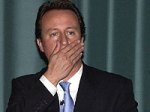
david cameron: pic courtesy greenpeace

Tonight is the last time you can see the three party leaders go head to head before polling day. The subject for the last TV debate on BBC1- the future of the economy – could not be more important for you, your family and your future.

 This time don’t treat the clash like watching the X factor. Instead think of your vote as the equivalent of writing a very big cheque at a car showroom for a dream motor or at a department store for a designer kitchen. You are going to spend a lot of money. You want a good product that lasts, is not going to cost you a bomb to service or repair, and some guarantee that you can afford to pay for it.

Now treat the three party leaders not as politicians but like the salesmen you would encounter on the forecourt or in the shop and take a very critical view of how they pitch their sale to you.

On the economy you already have your own independent Which? report provided by the Institute for Fiscal Studies about the huge hidden failings in the product. Look it up before the debate. In short you will discover, just like many salespeople, the politicians may not have deliberately lied, but they have seriously misled you about the huge cost of the product you are about to buy.

They have not told you the price they will charge you to bail out the bankers either in lost services or higher taxes and charges.

 The scale of their deception is highest among the Tories, pretty bad from Labour and slightly better from the Liberal Democrats.

David Cameron – the smoothest of the salesmen – has concentrated on the nice extras you will get from the Tories – an extra £3 a week for married families, no extra bills on your national insurance, a freeze on your council tax.

But he has not told you how you are going to cope with a whopping £52.4 billion in public spending cuts- beginning weeks after May 7. It’s like 

a salesman diverting you to look at the car’s funky stereo system while not telling you the motor does five miles to the gallon.

To get such cuts the Tories will have to go much further than anything they have said. You are looking at things like a dramatic rise in the retirement age – not their stated 66 but more like 70 – or doubling commuter rail fares if they  have to remove the transport subsidy. Or VAT will have to go up. Their unfunded cuts are the largest of any party.

 Labour’s salesman, grumpy Gordon Brown, has promised to exempt front line staff in the NHS, schools and the police from cuts. What he hasn’t told you is that this means you are going to face much steeper cuts to find the £52.1 billion of savings from other departments like local government, the arts, housing, transport, social security and  defence .And this is on top of higher national insurance. Or again VAT will go up. The problem with Labour is that you have to pay more to safeguard what they have promised to exempt and this will happen from next April.

The Liberal Democrats salesman genial Nick Clegg is the nearest the IFS find to being anywhere near honest. They have to find the lowest sum – some £34.5 billion.

They may not have to introduce more tax increases but they will have to introduce more cuts. Their policy sees a meaningful tax cut worth £700 a year to anybody earning between £10,000 and £113,000. Those earning less than £10,000 including many pensioners on low incomes will be exempt from tax altogether.

Better off families with children will lose out on child tax credits, lose their child trust fund and the NHS, schools and the police will not be exempt from cuts unlike Labour. What you have from the Liberal Democrats is the nearest to a consumer product guarantee but you still don’t know the call out charges.

By the end of the debate it is likely that none of the leaders will have  genuinely spelled out the real cost of their policies to tackle the deficit. It is up to you to decide which is the least worst option. Unlike a disgruntled shopper, you can’t entirely walk away because you are going to get one of the products anyway.

You also should not forget that these were the people who conned you over their expense claim system and you should not allow them to con you again. Also ignore the distractions over hung Parliaments, that is a problem for the politicians not you.

Remember also there are other candidates standing from the Nationalists,Green Party, UKIP and independents. It’s your vote.

This blog also appears on the UK site  of MSN’s general election feature page.
Has Cameron blown it?

Cameron- what's going wrong: Picture courtesy Greenpeace

In an election that began competing with the Icelandic volcano for volatility and unpredictability, it is probably tempting fate to write any epitaph for David Cameron midway through the campaign.

 Yet what has become clear is that Dave has not “sealed the deal” with the electorate and has squandered a ten point plus lead which should have ensured that he easily formed a government on May 7, albeit with a small majority.

If he fails he faces a damning post mortem by his party but the seeds of his own potential destruction have been around before the campaign even started. They lie in the weakest links in his own shadow cabinet- George Osborne, his chancellor, and Chris Grayling, his shadow home secretary.

The  rise in Liberal Democrat support following the first debate is not so surprising when you compare the quality of the two key spokesmen backing Clegg with their Tory counterparts-Vince Cable dominates Osborne and Chris Huhne, a former leadership contender, outsmarts Grayling. The weakest link in the Liberal Democrats was until then Clegg who? Then came his first performance on our TV screens, reinforced by the second.

Osborne has been tainted ever since a Parliamentary investigation into the undeclared funding for his office during the last session (Tenth report  Standards and Privileges Committee. Conduct of Mr George Osborne HC 560) revealed that it had received some £487,000 of donors’ cash to fund his office from high fliers in the city and a scion of the Rothschild family.

What is extraordinary is that these huge sums to fund research and the access he had to brains in the City have failed to produce an economic policy to challenge Labour. Instead there seems to have been a combination of policies that would particularly benefit the donors (the big hike in the threshold for inheritance tax), a rush to introduce public spending cuts and a claim that a £6 billion jobs tax would snuff out the entire economic recovery..

The latter appeared to be holed last week when Sir Terry Leahy, the head of Tesco’s, announced he was not supporting a Tory co-ordinated call to cut the job tax – but was creating 9000 new jobs in the UK despite it. No explanation from Mr Osborne on that one.

Grayling has been effectively marginalised by Cameron during the campaign. He is symbolic of the fault line dividing the attempt by the leader to present a new “green blue” caring Tory agenda and the traditional Tory “ slash and cut taxes” backwoodsman – still the majority of old Tory voters. Expected to toe the new party line on gay tolerance, his mask slipped when he defended a Christian B&B owner turning away a gay couple.

Grayling is an Old Tory in New Conservative clothing – and the electorate are rumbling this. They don’t know where the Tory party really stands or if they are traditional Tories, what they stand for. This made the vacuous “Time for Change” slogan open to easy hijack from Nick Clegg.

Of course, Cameron might just bounce back to squeeze a minute majority by polling day, but time is now against him. Votes can be cast by post from this week so by the time the third debate takes place  it will be too late to sway millions.

The right wing press attack on the Liberal Democrats also had a fatal flaw – the majority of the new voters attracted to Clegg are the internet savvy under 35 generation.They don’t buy the papers anyway, so it would have zilch influence.

Whatever happens in this election – short of a miracle doubling of the Tory lead- Cameron has thrown away the Tories best chance for 13 years.

This blog is also on the Progress website.