The extraordinary failure by the Solicitors Regulation Authority to police lawyers who misuse non disclosure agreements to silence whistleblowers and employees

If you were thinking of complaining about your employer’s solicitor trying to force you to sign a NDA barring you from complaining to the police, another regulator, or ban you from making freedom of information (FOI) requests or subject access requests to your company or public body, you might as well not bother.

For new figures released this year following a request under the SRA’s voluntary Transparency Code (it is not signed up to FOI) reveals how miniscule the action over misused NDAs is taken by the SRA that polices over 167,000 practising solicitors.

Over the last four years, believe it or not, action has only been taken in less than FIVE cases where NDA’s are involved out of the 10,000 complaints about solicitors received by the SRA every year.

Figures released to David Change (he is on X @DavidChange12) where the sole complaint was about the misuse of Non Disclosure Agreements amount to just 41 over the last four years. Of these 13 were not investigated and there were fewer than five warning letters issued over the four year period, similar for letters of advice, and public and private rebukes. In some years the SRA was almost completely inactive. In 2023 it is issued just what looks like one public rebuke. For the first five months of this year it says it has had just one complaint and taken no action so far.

Sellafield

One of the complaints I know about involving a whistleblower in Sellafield, the nuclear waste site, the documents I have seen, show that solicitor Emma Mills, a partner in law firm DLA Piper, had tried to force the person to sign away his rights to make FOI and Subject Access Requests to Sellafield and withdraw a complaint to a regulatory authority about the company’s human resources department. The SRA replied to him that she had behaved correctly without it looks like bothering to investigate further. Yet the Information Commissioner’s Office told me that asking anybody to withdraw FOI’s or SAR’s was outside the law.

The SRA’s figures do contain a caveat. They did not check whether among cases whether the complaint against other activities by solicitors included a complaint about misusing NDA’s, so the figure could be higher. It was too expensive under FOI guidelines for them to check further.

The fact that there is a problem with the misuse of NDA’s is not disputed. A snapshot of the present situation was put together by the Legal Services Board and published this year.

Concealed illegal activity included harassment and discrimination

The report said: “Examples of alleged illegal activity reported by respondents as having been concealed by NDAs included unlawful harassment and discrimination (e.g., on the grounds of sex, race, disability
and maternity), sexual assault and abuse, fraud and tax evasion. Many respondents reported NDAs being related to employment disputes. In defining misuse, some respondents questioned whether NDAs should ever be used to conceal misconduct, prevent a victim of wrongdoing from seeking support or reporting to regulatory or law enforcement bodies.”

The report was a snapshot – for example there was just one case cited involving the NHS – when certainly health trusts use them more widely to cover up scandals in the health service. It showed that many employees pushed to sign NDA’s, felt an imbalance of power between their knowledge of what they were signing and the company’s lawyers and were bullied into signing NDA’s. Others felt the firm did not care about their mental state or threatened them with facing an employment tribunal where the company’s lawyers would expose their failings.

There was also a mismatch between the fine words of the evidence given by the SRA to the Legal Services Board who showed they understood that lawyers did pressurise people to sign NDA’s and the actions it took when it received a complaint as shown by these statistics.

What this pointing to is a change in the law governing the issue of Non Disclosure Agreements which should be outlawed if they contain any reference to people losing rights given by Parliament to make FOI or subject access requests or complain to any regulatory authority including the police and HMRC.. What is clear from the Legal Services Board report is that many employees are totally unaware of their rights which can then be exploited by dodgy companies and irresponsible public authorities. As for the SRC this record of handling complaints is abysmal.

One-Time
Monthly
Yearly

Make a one-time donation

Make a monthly donation

Make a yearly donation

Choose an amount

£5.00
£10.00
£20.00
£5.00
£15.00
£100.00
£5.00
£15.00
£100.00

Or enter a custom amount

£

Your contribution is appreciated.

Your contribution is appreciated.

Your contribution is appreciated.

DonateDonate monthlyDonate yearly

Please donate to Westminster Confidential

£10.00

Judge quashes £10,000 costs order against rail safety whistleblower

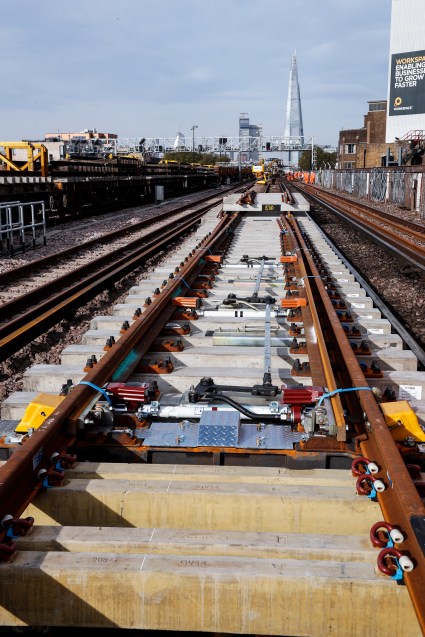
One of Vossloh Cogifer UK Ltd biggest projects: Supplying 149 sets of points outside London Bridge Station Pic credit: Network Rail.

Nigel Midgley, a former employee with Vossloh Cognifer, a private contractor to Network Rail, who was dismissed after he reported rail safety issues to the Health and Safety Executive, today got a £10,000 costs order quashed by a judge at an Employment Appeal Tribunal.

VCUKL is a wholly owned subsidiary company of Vossloh Cogifer a French managed but German owned global company. VCUKL’s Managing Director is Mrs Wendy Anne Preston and its main customer is Network Rail.

The judge ruled that the UK based company had been wrong to with hold from an employment tribunal, part of a email sent by Edward Flanaghan, head of Gosschalks Solicitors in Hull, to Mr Midgley offering to settle the case without going to a tribunal.

Instead it left the first and last two paragraphs out of the letter, sending a redacted version to the tribunal omitting the offer but painting a nasty picture of Mr Midgeley as a failed probationary employee who was sacked but used whistleblowing complaints to explain his dismissal. It told the tribunal that these had no merit and Mr Midgley had no chance of winning his case.

Judge Martyn Barklem however ruled that the omission of the offer by the employer to settle the case changed the whole picture presented to the tribunal and would have not led to the award of costs. He also saw it as an attempt to stop a litigant in person, who was not a qualified lawyer, to abandon the case. He pointed out that no judge had decided that Mr Midgley did not have a case. The company also tried to argue that Mr Midgeley should not have disclosed the unredacted letter to the employment appeal tribunal because it was covered under legal privilege. This was rejected by the judge.

David Stephenson, Pic Credit: Doughty Chambers

Mr Midgley’s case was taken up by an advocate, David Stephenson from Doughty Chambers, whom the judge praised for his succinct presentation of the issues. The company did not employ a lawyer in person to present their case but gave a written submission. The judge revealed their non appearance was for commercial reasons as it would have cost them more than £10,000 to be represented. This highlights what is wrong with public authorities like the NHS and Sellafield which have access to unlimited sums of taxpayer’s money to pursue whistleblowers like cardiologist Usha Prasad and human resources consultant, Alison McDermott, through the tribunal system, while a commercial company would cut its losses.

More disturbing stuff about NDA’s

There is more disturbing stuff about the way lawyers from Gosschalks and the private rail company behaved in Mr Midgeley’s case. He was strongly supported by his wife, Keely Midgley, over his whistleblowing claims and treatment by the company. She sent a large volume of emails to directors of the company and posts were put up on Linked in. The company then threatened Mr Midgley with harassment proceedings unless it stopped.

But the most disturbing part of the proceedings was the COT3 agreement which the company wanted him to sign written up by their lawyers.

Among the provisions were: “The Claimant will not publish, cause, assist or knowingly permit to be published (including but not limited to by his wife) in any media whatsoever, any article or comment relating to his employment with the Respondent, or its termination, or the existence or terms of this agreement.  The Claimant will not contact by any means any customer, supplier, employee, consultant, advisor or other organisation with which the Respondent has a professional relationship in respect of any matter whatsoever.”

It also banned him from approaching the Information Commissioner or making any data subject request. ” The Claimant will not make any further Data Subject Access Request under the General Data Protection Regulations ((EU) 2016/679) (GDPR) or the Data Protection Act 2018 or other legislation and agrees that any existing or ongoing such request should be treated as withdrawn. The Claimant will not make any complaint to the Information Commissioners Office in respect of Subject Access Requests and further waives any civil claim for damages in respect of breaches of data protection legislation.”

The proposed agreement led a firm of lawyers, Marjon Law, to disagree on Mr Midgley’s behalf.

“We would contend that Mr Midgley is entitled to use all documents that were read to or by the court, or referred to, at a hearing which has been held in public. To that end, we do not believe that the draft undertaking for him is reasonable or appropriate. In any event, Mr Midgley should be able to disclose documents from the Claim for the purpose of:
(a) reporting a suspected criminal offence to the police or any law enforcement agency or cooperating with the police or any law enforcement agency regarding a criminal investigation or prosecution;
(b) doing or saying anything that is required by HMRC or a regulator, ombudsman or supervisory authority;
(c) whether required to or not, making a disclosure to, or co-operating with any investigation by, HMRC or a regulator, ombudsman or supervisory authority regarding any misconduct, wrongdoing or serious breach of regulatory requirements (including giving evidence at ahearing);
(d) complying with an order from a court or tribunal to disclose or give evidence;
(e) disclosing information to HMRC for the purposes of establishing and paying (or recouping)
tax and National Insurance liabilities arising from his employment or its termination; or
(f) making any other disclosure as required by law.”

The company’s lawyer’s disagree and said this was only guidance and could be ignored.

If I take this with moves to silence whistleblowers at Sellafield through non disclosure agreements this suggests that lawyers seem to think they can force litigants in person to shut up about matters that affect public safety whether in the NHS, Sellafield or on Network Rail.

One-Time
Monthly
Yearly

Make a one-time donation

Make a monthly donation

Make a yearly donation

Choose an amount

£5.00
£10.00
£20.00
£5.00
£15.00
£100.00
£5.00
£15.00
£100.00

Or enter a custom amount

£

Your contribution is appreciated.

Your contribution is appreciated.

Your contribution is appreciated.

DonateDonate monthlyDonate yearly

Please donate to Westminster Confidential

£10.00