Time for a full scale investigation into the abusive and bullying behaviour towards women by Judge Philip Lancaster

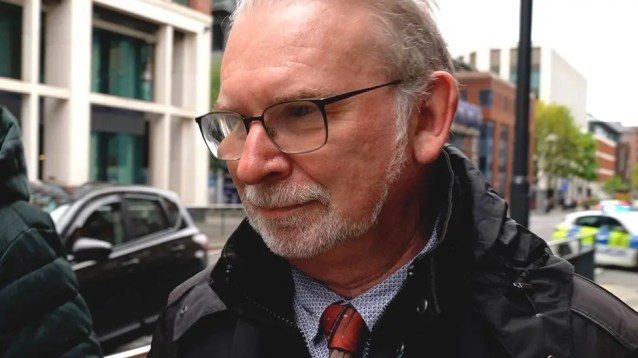
Judge Philip Lancaster Pic Credit BBC News

New revelations by the BBC TV journalist Michael Buchanan today show what appears to be serial bullying and abuse towards women claimants by Judge Philip Lancaster at employment tribunal hearings

His news report today reveals that eight women have now separately come forward to say they were badly treated when they presented their cases before the judge since 2018. They describe their experience before him as “patronising, degrading, psychologically abusive, and misogynistic.”

The 67 year old judge who presides over employment tribunal hearings in Leeds is often rude and abrasive towards women and in one case even suggested that a claimant had mental health problems.

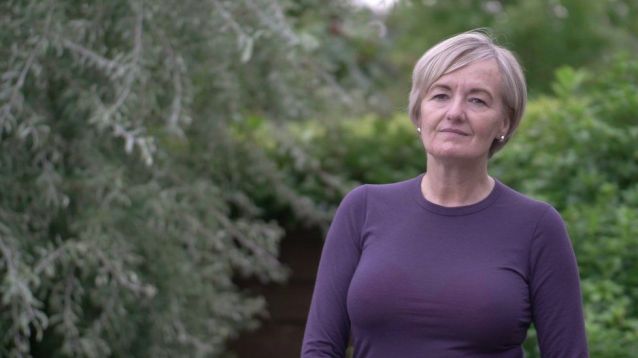
One woman claimant Angela Gates brought a case of disability discrimination and constructive dismissal against her employer in 2021.

She says a hearing in front of Judge Lancaster made her feel “like a villain being prosecuted”.

She says: “I felt I couldn’t give my side on anything.”

The four-day hearing was held on Zoom, and Ms Gates, 53, says Judge Lancaster regularly shouted at her, repeatedly telling her to be quiet. She says his behaviour was “appalling and degrading, verging on psychological abuse”, adding: “I don’t believe I’ve been given a fair trial.”

Another woman, who wished to remain anonymous, had similar treatment over a constructive dismissal and unfair treatment case.

“He made my life hell “

She said: He made my life hell,” she recalls. “He’d put his hands on his head, and appeared disinterested in what I was saying. He repeatedly asked why I was asking [my employer’s witnesses] particular questions and raised his voice numerous times. I felt useless.” She is now appealing the ruling.

Seven women are now planning to contact their MPs about their treatment as it is virtually impossible to complain about a judge as the system is rigged against them. You can refer a case to the Judicial Conduct Investigation Office or previously complain to Judge Barry Clarke, President of the Employment Tribunals in England and Wales. Or even to the Senior President of Tribunals, Sir Keith Lindblom. All seem set up to protect judges not complainants. Barry Clarke refused to act and Sir Keith ignored it.

Judge Barry Clarke, President of Employment Tribunals in England and Wales – protecting judge Lancaster from complaints

In a letter written by Alison McDermott, a management consultant, who complained about the way Judge Lancaster treated her in her case against Sellafield and the Nuclear Decommissioning Authority, to Adam Jones of the Judicial Conduct Investigation Office she says:

“It is simply not tolerable the way this judge has conducted himself, whether it is arbitrarily excluding the public, treating me less favourably, allowing bullying in the courtroom, treating me with hostility and contempt, ignoring evidence, attempting to block evidence, actually blocking exploration of evidence, vilifying me, acting partially, and failing to document procedural matters.

” I urge you, therefore, to conduct a thorough investigation into what went so badly wrong in my case and to exhibit, transparency and accountability – behaviours which the legal profession professes to uphold. I sincerely hope that I and the other key witnesses mentioned in this letter of complaint will be interviewed, as would occur with any other formal complaint or grievance investigation. In my experience as a consultant with over 20 years investigating organisational cultures and problems, it is not washing dirty linen in public that causes a problem but allowing it to fester in plain sight.”

Of course the office had no intention of doing such a thing. Judges, as I reported yesterday, are protected because the notes on the cases are kept private even when they are the only official record of the tribunal hearing. It is impossible to get hold of the evidence that would prove a judge was biased and judge Clarke would not reveal how many complaints he has received.

05/07/2024. London, United Kingdom.Chancellor and Secretary of State for Justice, Shabana Mahmood. poses for a photograph following her appointment to Cabinet by Prime Minister Sir Keir Starmer in 10 Downing Street. Picture by Lauren Hurley / No 10 Downing Street

So this leaves the Lord Chancellor to act but as I reported yesterday it is almost impossible to write to her directly – without officials in the ministry of justice or the judiciary intervening.

I would have thought Shabana Mahmood, a highly successful woman with an ethnic minority background, should ask for an investigation into Judge Lancaster. Many of the women who complained about him are from ethnic minorities as well. None of them should have had to put up with such egregious treatment and does the Lord Chancellor want to preside over system where a judge can treat women as dirt.

One-Time
Monthly
Yearly

Make a one-time donation

Make a monthly donation

Make a yearly donation

Choose an amount

£5.00
£10.00
£20.00
£5.00
£15.00
£100.00
£5.00
£15.00
£100.00

Or enter a custom amount

£

Your contribution is appreciated.

Your contribution is appreciated.

Your contribution is appreciated.

DonateDonate monthlyDonate yearly

Please donate to Westminster Confidential

£10.00

Ministry of Justice and Lady Chief Justice Dame Sue Carr refuse to explain the lawfulness of withholding official ET court records

05/07/2024. London, United Kingdom.Chancellor and Secretary of State for Justice, Shabana Mahmood. poses for a photograph following her appointment to Cabinet by Prime Minister Sir Keir Starmer in 10 Downing Street. Picture by Lauren Hurley / No 10 Downing Street

By David Hencke and Alison McDermott

Direct complaint to the Lord Chancellor signed by 150 people is being blocked by officials at the Ministry of Justice

Whitehall and the judiciary are engaged in an extraordinary exercise to block, obfuscate and deny there is a legal issue over the public release of judge’s notes where they amount to an official record in employment tribunals.

We are now in the absurd position of Barry Clarke, the President of Employment Tribunals in England and Wales, both admitting the judge’s notes where tribunals are not recorded are the only official record but saying at the same they must remain private because they are personal notes under the Data Protection Act.

Employment tribunals are already in transition. After a new practice ruling the aim is that all hearings will be recorded but that is not happening yet in many cases. Also transcripts of the hearings can be made available but litigants have to buy them at huge cost and are not provided before the six weeks deadline to appeal. So what’s the point of them ?

But for a majority of tribunals the only official record is the judge’s notes – which can be used by appeal judges when they are adjudicating on an appeal to guide them. Barry Clarke has recently ruled that they are the official record but the public, press and both parties involved in a case cannot see them.

Thus the one vital official record of what the judge has recorded about the case is kept secret – contrary to any policy of transparency and open justice. It also means judges are not open to scrutiny, could be biased against either the claimant or defendant, are out of step with other European court systems and in the days of digital recordings, keep an archaic system of hand written notes. It also means if there are complaints against judges – the secrecy of the notes means the judge can withhold the information to prove it which is very helpful to an errant judge.

So what is legal position of this which allows this type of official record to be withheld? This is the question that led Alison McDermott, a former ET complainant against Sellafield, and 150 other people to wrote to the Lord Chancellor demanding an explanation, using the examples I have quoted and many more.

The letter is here. But guess what? You can’t send it direct to the Lord Chancellor’s Office or even to the Lord Chancellor as an MP unless you are a constituent in Birmingham, Ladywood. Instead you can only write to the ministry of justice and hope it can be passed on.

Dame Sue Carr: Pic Credit: Rory Lindsay

So Alison McDermott and I decided another tack. I put questions into the Ministry of Justice press office to ask for explanations. Alison had previously been told by Dame Sue Carr, the Lady Chief Justice that the only way she would get answers was to go to the Appeal Courts – an incredibly expensive business. This is also absurd as it puts the onus on the claimant to get a ruling to clarify the law and makes a lot of money for lawyers. Most people are not involved in tribunals so why should they be denied from knowing where the law stands?.

These are the questions I put to the Ministry of Justice which it refused to answer:

1.Does the MoJ agree that an official record of legal proceedings, including Employment Tribunal hearings, must be made available to parties and the public?

 2.Which specific law or authority allows judges to withhold their notes from ET proceedings, given that  ET President  Barry Clarke has recently confirmed that these notes serve as the official record where no other record exists?

3. If no such law or authority exists will the MoJ commit to releasing all judges’ notes? 

 4.. If not, does the MoJ acknowledge that judges’ notes cannot be considered the official record, as official records must be accessible?

5. In the absence of an accessible official record, does the MoJ agree this breaches the right to a fair trial under Article 6 of the Human Rights Act?  If not, what is the justification? 

6.  Why is the MOJ suggesting  that this can be resolved by individual appeals, as proposed by the Lady Chief Justice to Ms McDermott, rather than providing a clear policy response that would benefit all ET users?

Answer came there none. The ministry declined to answer any questions and said it was a matter for the Judicial Office to answer the questions.

I put the same questions to the Judicial Office press office. I heard nothing for a week and then sent them a reminder. The initial response was to refer them back to the Ministry of Justice until they suddenly realised I had already contacted them.

The office then sent a reply. This is it.

“We have answered the questions we can from a judicial perspective (see below) but other questions are for not for us and you may wish to ask other parts of Government.

Parties involved in an Employment Tribunals are given decisions following a hearing. If the decision is a judgment, the Tribunal will either give an oral judgment with reasons or reserve its decision and give a written decision at a later date. ” It goes on to quote existing rules and procedures.

So here we have it. They haven’t answered my questions. There is a failure to confirm what the lawful basis is for a judge to withhold the official record of an ET hearing and they have side stepped whether the refusal to do so breaches the right to a fair trial.

Judge Barry Clarke, president of the England Wales employment tribunals- an outlier with Europe advocating secrecy

Alison using AI found how outdated and Nethanderal this is compared to other advanced democracies. In France, Germany, Spain, the Netherlands, Sweden, Belgium and Italy all parties have access to the judges’ notes. This leaves the UK as an outlier, failing to provide basic transparency in proceedings that can have life-altering consequences. .

It added: “The practices in these European countries generally support greater transparency and access to court records, including judges’ notes, in employment cases. This trend aligns with principles of fair trial and effective appeal rights, as parties are given the opportunity to fully understand and, if necessary, challenge the basis of decisions made against them.”

The conclusions using AI are very powerful;

“The current state of the UK’s employment tribunal system is untenable and legally questionable. It operates on a contradiction that undermines the very principles of justice it’s meant to uphold. The solution is clear, legally grounded, and non-negotiable:

  1. Judges’ notes must be released to all parties.
  2. All hearings must be recorded.
  3. These records must be made accessible to all parties involved.
  4. These steps are essential for maintaining the integrity of the UK’s legal system, ensuring compliance with human rights law, and upholding the principles of natural justice and open courts. The time for obfuscation and delay is over. It’s time to resolve this legal paradox and restore faith in our justice system. Release the notes, record the hearings, and let justice be truly seen to be done.”

Only in the UK do we pursue a policy of secrecy masquerading as privacy to cover up official records, frustrating claimants and respondents in employment tribunals, and protecting judges from any scrutiny that could effectively challenge them. What a backward country we are. A judicial review can change this and looking at procedures in Europe eventually lead to a well deserved adverse ruling against the UK in the European Court of Human Rights. We understand that the Lord Chancellor holds the copyright to all court records so she can decide to release them.

One-Time
Monthly
Yearly

Make a one-time donation

Make a monthly donation

Make a yearly donation

Choose an amount

£5.00
£10.00
£20.00
£5.00
£15.00
£100.00
£5.00
£15.00
£100.00

Or enter a custom amount

£

Your contribution is appreciated.

Your contribution is appreciated.

Your contribution is appreciated.

DonateDonate monthlyDonate yearly

Please donate to Westminster Confidential

£10.00
Time to ask the Lord Chancellor to intervene to make employment tribunal transcripts available and release judge’s notes

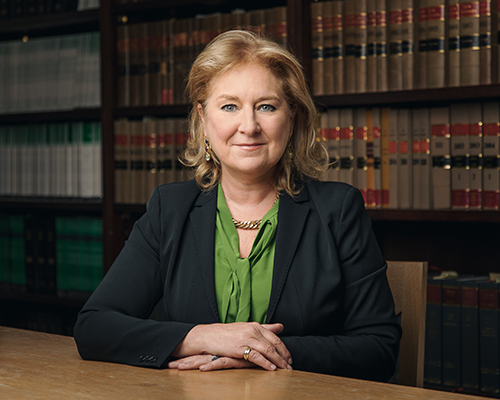
Shabana Mahmood, Labour’s new Lord Chancellor

Please sign letter by whistleblower to Shabana Mahmood

Two years ago some 317 people agreed to sign a letter to Sir Keith Lindblom, senior president of the tribunals, calling for transcripts and recordings of employment tribunal cases to be made available.

Employment tribunals appeared to be one of the few legal proceedings where records were not kept and claimants and whistleblowers – often appearing as a litigant in person – were put at a big disadvantage against big corporate companies, NHS trusts, powerful public bodies like Sellafield, who employed expensive barristers, often using taxpayer’s money, to discredit employees and whistleblowers bringing cases against them.

The companies and public bodies could afford – unlike a litigant in person – to employ notetakers or paralegals – so they had their own records – so if a person appealed against a tribunal verdict – he or she was at a big disadvantage.

Within just seven days we had backing from well over 300 people – from a former economic adviser to No Ten Downing Street, Sir Adam Ridley, 80 medical consultants, numerous GPs, nurses, teachers, to a former deputy groundsman at the Chelsea Pensioners hospital, a lorry driver, an actor, writer and a poet. This suggests there is a wide ranging feeling that there is something wrong in the justice system.

Judge Barry Clarke, President of the Employment Tribunals in England and Wales

Barry Clarke, the head of the employment tribunals in England, responded to the letter by announcing, where possible, employment tribunal proceedings would be recorded, so they would be transcripts of the proceeding.

But now two years later this has proved to be a Pyrrhic victory – hence the need for a fresh letter. It has also reached an impasse with the top judges in the employment tribunal digging their heels in to prevent further change. Thus only an appeal to the Lord Chancellor can remove this obstacle.

What has happened is that where tribunals have recorded proceedings, obtaining a transcript, if a judge allows it, costs thousands of pounds, well beyond the means of most claimants.

Where there is no recording the only record of proceedings is the judge’s notes. Judges have jealously guarded releasing this to the public – but it is the only record a judge covering an appeal in the case will see.

First it took a considerable time for the judiciary to concede this was the official record – arguing it was a private and personal note. Now Barry Clarke has conceded this is an official record of the case but does not want this released to the claimant, the public or the press. This hardly fits with the image that Britain’s legal system is proud of its reputation for ” open justice.”

Alison McDermott

Alison McDermott, a whistleblower who challenged Sellafield over its toxic culture towards its employees, has drafted a letter to go to the Lord Chancellor. You can read her blog and the text of the letter here . All you have to do is text Yes to Alison if you want to sign.

Last time the strength of feeling of the need for change was very high. My blog on the campaign is here. It also lists the 317 who signed. This time Alison is not planning to publish all the names.

One-Time
Monthly
Yearly

Make a one-time donation

Make a monthly donation

Make a yearly donation

Choose an amount

£5.00
£10.00
£20.00
£5.00
£15.00
£100.00
£5.00
£15.00
£100.00

Or enter a custom amount

£

Your contribution is appreciated.

Your contribution is appreciated.

Your contribution is appreciated.

DonateDonate monthlyDonate yearly

Please donate to Westminster Confidential

£10.00