Dumped: The 50swomen who will get nothing after after a botched and divisive WASPI campaign

The new Labour government took until nearly Christmas to announce that it was not going to give the 3.5 million remaining 50s women a penny in compensation for their six year wait for a pension.

The result I am sad to say could have been predicted as both Labour and the Conservatives were determined from the start to avoid a pay out by delaying tactics and a refusal to discuss mediation.

It was left to MPs to continue the fight whose parties were either not in a position to pay out the money because they were not in government or didn’t have the power to pay out state pensions in the first place.

This is both a scandal and a tragedy for the women. They have been let down by ministers, the judiciary, civil servants,the Parliamentary Ombudsman, MPs, and even some of their own advocates, especially by bad decision making by WASPI, who took a route to secure compensation that was bound to fail.

Liz Kendall

Ministers have continually procrastinated over the pay out- either by claiming the Ombudsman’s report was so complex they had to study it in detail – the Tories under Mel Stride, then works and pensions secretary or Labour – under Liz Kendall, his Labour successor, that she needed more time..

The judiciary also played their part in delaying any decision and ignoring whether there had been discrimination against the women despite Margaret Thatcher signing up to the UN convention on the Elimination of All Forms of Discrimination Against Women in 1986. Only one judge, the Hon Justice Lang, a woman judge born in the 1950s, got the significance of the challenge facing this group of women by accepting all the issues raised by barristers Michael Mansfield and Catherine Rayner that it was age and sexual discrimination as well as maladministration. She understood the simple fact that although the decision was taken in 1995 to raise the women’s pension age to be equal with men, it was only now that the effects were being discovered.

The rest of the judiciary in the High Court and the Court of Appeal rejected this and the Supreme Court took the insulting decision that the case was out of time – having spent years already going through the court system.

Civil Servants in the Department for Work and Pensions were equally hostile – they didn’t believe in the women’s case, didn’t want to pay them and one senior civil servant went as far to accuse the women of committing fraud by wanting to claim.

The then Parliamentary Ombudsman.Sir Robert Behrens, produced a mouse of a report, reneged on his duty to make recommendations on the maladministration issue, leaving it to MPs knowing that ministers and civil servants were hostile to any payment.

Most MPs facing a prolonged lobbying campaign from WASPI, organised by Higginson Strategy, came behind the Ombudsman’s weak report and ignored the discrimination issue and later a proposal for mediation.

Making matters worse

To make matters worse the campaign for restitution was divided and split into various groups wanting different things and disagreeing over personalities. There was no united front. WASPI tried to control the agenda by focusing on maladministration. This was a false move as anybody would have known that the Parliamentary Ombudsman in the UK, unlike other countries, can be ignored by government and it cannot enforce its recommendations. So when the weakened report for partial maladministration came out, ministers knew they need not abide by it.

Why I supported Backto60 and CEDAWinLaw, is because they were prepared to put their money where their mouth was, did go to court and employed international experts to make their case, like Dr Jocelynne Scutt, a former Australian judge, to produce a well argued report showing that the case involved discrimination. What is appalling is that issue has been ignored by the national media who have airbrushed any mention of such a solution.

Later CEDAWinLAW moved to get mediation between the groups and the government – and invited everyone to joint them. WASPI looked at it and refused – I can only assume they don’t want any mediation to solve the issue.

Instead they are still flogging the dead horse of the Ombudsman’s Report – which the Government has already rejected- to MPs on the All Party group examining the issue and to the Commons works and pensions committee which is investigating the issue.

The result is I am afraid the women will still get nothing. Only by making a move for mediation will they get anywhere. And they will have to raise the money to force it through the courts as ministers don’t want to know. I know there is already an organisation prepared to act as mediators. What we need is the resolution of people to act or live forever without getting one penny out of the DWP.

One-Time
Monthly
Yearly

Make a one-time donation

Make a monthly donation

Make a yearly donation

Choose an amount

£5.00
£10.00
£20.00
£5.00
£15.00
£100.00
£5.00
£15.00
£100.00

Or enter a custom amount

£

Your contribution is appreciated.

Your contribution is appreciated.

Your contribution is appreciated.

DonateDonate monthlyDonate yearly

Please donate to Westminster Confidential

£10.00
Sexual harassment at work to be treated as a whistleblower complaint under new employment law

But no answers from the ministry on plans to cost and scope the establishment of an Office of the Whistleblower

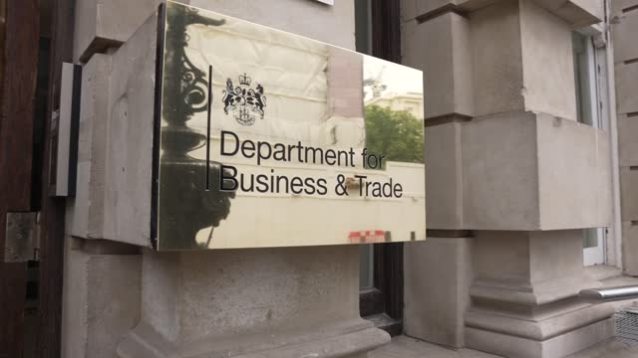
The Department for Business and Trade is changing the law to strengthen the right of people to report sexual harassment at work by making it a protective disclosure under whistleblowing legislation.

Bizarrely this measure was missed by mainstream media when the bill was published last month with most of the coverage being devoted to the measure improving employees rights in the job market and repealing some of the Tory legislation restricting trade union actions.

But there is a section of the new bill devoted to strengthening the rights of people who suffer sexual harassment at work. It proposes a three pronged attack to change the current law.

First it is strengthening the duty of employers to do something about the issue by amending the Equality Act to say they must take ” all reasonable steps ” to stop it happening.

This change has already been noted by lawyers who take up sexual harassment cases since it significantly reduces the wriggle room for employers to get out of any responsibility.

The new bill spells out what specific actions employers should take and will be further covered in regulations to be issued by ministers. These include carrying out assessments to deal with sexual harassment, publishing company policy, and drawing up reporting and complaints procedures.

The definition of sexual harassment is also extended to say “that sexual harassment has occurred, is occurring or is likely to occur“. ( my bold emphasis)

The second big change is that employers would have to act if a third party is sexually harassing their employee opening up the ground to take action if there are subject to unwanted sexually offensive social media attacks or customers are sexually harassing their employees.

The final big change is to incorporate reporting of sexual harassment as a protected statement under whistleblowing legislation by amending the 1996 Employment Relations Act so it is covered by PIDA.

A Department for Business and Trade spokesperson said:

“We’re committed to making workplace rights fit for the modern workplace and that’s why the Employment Rights Bill will strengthen whistleblowing protections, including women who report sexual harassment at work.

“We encourage workers to speak up about wrongdoings to their employer or a regulator and we will ensure they’re protected if they’ve been dismissed or treated unfairly for doing so.” 

There is a really good blog on sexual harassment changes in the law, including some prior to the new bill, by Mandy Bhattal, a senior solicitor at Leigh Day. The link is here.

While this is good news, especially for women, there are certain caveats to be made. The main one is that if a person ends up being dismissed or feels she has to leave her job, the case is likely to go to the employment tribunal system. It is fact that some male employment judges appear to be patronising and offensive towards women. I am thinking of the way judge Philip Lancaster treated whistleblower Alison . McDermott, during her case involving Sellafield. Eight women have complained about they way he treated them in different cases.

Nasty playbooks by barristers at employment tribunals

Secondly there is a rather nasty playbook used by barristers and solicitors engaged by employers to deal with whistleblowers at employment tribunals. They discredit them by bringing up other matters unrelated to the whistleblowing issue. This includes suggesting the person is a bully or cannot work with their colleagues. I fear a new playbook being invented to present the woman as a flirt or leading men on to undermine her case.

Indeed looking at the bill altogether employment tribunals are going to be central to the implementation of the new laws and safeguards for workers – increasing the need for their procedures to be reformed as I have said before.

Office of Whistleblower silence

Last week Baroness Jones of Whitchurch, the new junior minister at the Department for Business and Trade, took peers by surprise, by suddenly announcing the ministry was evaluating whether to set up a new Office of the Whistleblower, a demand long pressed by Whistleblowers UK, headed by Georgina Halford Hall. Their site is https://www.wbuk.org . WBUK is also doing a national survey of whistleblowers experience and perceptions which will lead to a detailed report to develop proposed improvements to the UK Whistleblowing Framework. The link for the survey is here .

She told peers in answer to a question from Liberal Democrat Baroness Kramer:” With regard to an office for the whistleblower, there are a number of ideas around this. We are looking at the role and remit that such a body could have. There will be a need to look at the cost, role and function of a potential new body, but we are looking at all the ways we can ensure that whistleblowers are protected at the workplace, as they should be. “

Baroness Kramer had previously promoted a bill to create such an office.

Baroness Jones also gave an answer to hereditary peer, Lord Cromwell, on non-disclosure agreements.

She told him “We have already noted the concerns about the misuse of non-disclosure agreements. We share his concern, because they are being used to silence whistleblowers and cover up sexual harassment and discrimination. I stress that there are existing legal limits to how NDAs can be used in an employment context, which means they are void and unenforceable in certain circumstances. The use of NDAs is not something we would support and, if there were ways of limiting it, we would do so.”

I contacted the ministry’s press office about Baroness’s Jones remarks. I asked them for the timetable for reviewing the need for an Office of the Whistleblower, whether there was a plan for a consultation paper on the idea and when such a review would report.

Answer came there none, it was completely ignored and instead I was told about the new measures affecting sexual harassment.

I am rather surprised. Either Baroness Jones had gone off piste or the civil servants at the ministry aren’t keen on this. I don’t believe she would have risked making such a statement which is reported in Hansard and is now permanently on the record. So we have a mystery. I am sure campaigners will follow this up.

One-Time
Monthly
Yearly

Make a one-time donation

Make a monthly donation

Make a yearly donation

Choose an amount

£5.00
£10.00
£20.00
£5.00
£15.00
£100.00
£5.00
£15.00
£100.00

Or enter a custom amount

£

Your contribution is appreciated.

Your contribution is appreciated.

Your contribution is appreciated.

DonateDonate monthlyDonate yearly

Please donate to Westminster Confidential

£10.00

The 3.3 million women “pensioners” who can’t get a penny from Theresa May

Today I am putting up on my website a  documentary film  released today made by the Backto60 campaign who have interviewed women now in their early 60s who suddenly found that they weren’t going to get their pension when they retired at 60. Some of them sadly have committed suicide, some have thought of committing suicide.

They are angry at both the coalition and present Tory government decided to change the pension age without any notice so they can plan. They are the people who have worked all their loves and brought up families, often sacrificing their opportunity to work. Some have even put extra money into their pension, only to find they won’t get it until they are 66.

The government shows no sign of giving in to them – in fact ministers like David Gauke, the  works and pensions secretary, have frozen other benefits instead- and if the Tories had a majority now would be pressing to end winter fuel allowances, free bus passes and the triple lock that guarantees pensions will  rise by 2.5 per cent a year.

There is a  contribution from Ken Loach, the radical film maker and pensioner himself, who made the searing film, I, Daniel Blake, about the trials and tribulations of being on social security after you have lost your job.