The £20,000 benefit bonus rewards for the metropolitan elite at the Department of Work and Pensions

neil couling

Neil Couling – £145,000 a year

CROSS POSTED ON BYLINE.COM

Last week I had a story in the Sunday Mirror about top bonuses and pay rises for five of the most senior  and well paid civil servants at the Department of Work and Pensions over the last two years.

The information was published in the annual report and accounts  of the DWP released last month. These same accounts were qualified for the 29th year  running according to the the National Audit Office – because of fraud and error in payouts to claimants rendered them inaccurate and wrong.



Sir Robert Devereux pic credit Twitter

Sir Robert Devereux – £190,000 a year Pic credit : Twitter

The bonuses announcement came at the same time as 31 Labour MPs had called for a pause in the roll out of the ministry’s new Universal Credit  programme – which replaces five benefits – because of reported chaos in its administration leaving some claimants without money for up to six weeks. One of those 31 MPs, Kevan Jones, who represents Durham North said the bonuses were a ” reward for failure”.

He described them as “an insult to many of my constituents who are already living on the breadline. In my constituency they plan to introduce this in November which could leave thousands of people without money in the run up to Christmas.”

mayank-prakash_square

Mayank Prakash £220,000 a year including £20,00 bonus Pic credit: DWP Digital

Within days of the publication of the story the FDA ( the First Division Association) which represents the top civil servants attacked the article in a report in Civil Service World.

Jawad Raza, FDA national officer for DWP, said officials should not be used as targets by political opponents of the system simply for doing their jobs.

“The suggestion that these civil servants have been ‘rewarded for failure’ shows a blatant disregard for the facts regarding their pay and

Jeremy Moore pic credit

jeremy moore – £135,000 plus £20,000 bonus

wilfully misrepresents the true complexity of their roles,” he said.

“Senior civil servants have delivered billions of pounds worth of savings since 2010 with an ever reducing workforce. These are highly skilled professionals working in challenging circumstances and they deserve to be adequately remunerated without having their names and faces spread across news pages.”

Sorry Jawad I think there is more to this.

The five civil servants are Sir Robert Devereux, permanent secretary at the Department of Work and Pensions; Neil
WAxtX_a1

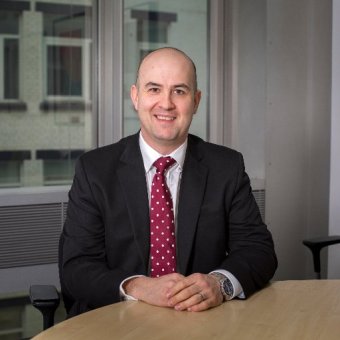
Andrew Rhodes – £140,000 a year plus £15,000 bonus

Couling, director general of universal credit; Jeremy Moore, director of strategy; Mayank Prakash, director general of digital technology and Andrew Rhodes, director of operations have received between £10,000 and £20,000 each .They are nearly all paid more than Theresa May, the PM.

The bonuses were awarded for “ top performance “ and “ leadership “when the rest of Whitehall is limited to one per cent pay rises and many benefits have been frozen.

Sir Robert last year received up to £20,000 extra on a salary of up to £185,000 a year. This year he hasn’t received any bonus but his basic salary has moved to £190,000 a year.

Neil Couling, who is directly responsible for universal credit, got a bonus of up to £20,000 last year on a salary of £125,000 a year. This year instead of a bonus his salary has jumped by £20,000 to £145,000 a year.

Mayank Prakash, director of digital strategy has received a bonus of up to £20,000  this yearon top of salary of £200,000 taking his annual salary to £220,000 .

Jeremy Moore, director of strategy, has received bonuses two years running –  totalling up to £40,000 over the two years – taking his total salary to £155,000 a year.

Andrew Rhodes, director of operations has received a £10-15,000 bonus this year, taking his salary to £155,000 a year. He also claimed £37,600 in travel expenses.

The ministry insist that all these pay rises were decided objectively by line managers.

In a statement it said:

Line managers are required to make an evidence-based and objective assessment over whether objectives have been met, not met or exceeded. 

 Individual performance is assessed by the individual’s line manager through an appraisal discussion, with supporting evidence from a range of stakeholders.

But apart from Sir Robert – whose bonus was decided by Sir Jeremy Heywood, the Cabinet Secretary – the Department declined to say who these line managers are and which outside organisations and people recommended they should get bonuses. The bad news for the DWP is that Kevan Jones plans to table a Parliamentary Question next month to find out who.

Now the FDA has a point that compared to the top of the  private sector they are badly paid. A report put out by the House of Commons library revealed that the top 3000 bankers are ALL earning over £884,000 a year – which makes £20,000 sound small beer. But if anything that reflects that huge growth of inequality in Britain.

At other end of society how effective are these five top men ( note they are all men) in delivering what they are supposed to do. All are responsible in one way or another for the delivery of Universal Credit.

At present they are using Newcastle-upon-Tyne – to roll out the full effect of Universial Credit.

Catherine McKinnell , Labour MP for Newcastle North, said:“ My office has been deluged with complaints from constituents about a Universal Credit system that is clearly struggling to cope and failing to deliver the support that claimants need in anything like an orderly or timely fashion.”

Her debate can be read here.  Suffice to say it reveals a very sorry picture. The  new IT system means people can’t talk to a human. It has  a verification process that requires claimants to produce photographic identification such as a passport or driving licence, “which many simply do not possess and certainly cannot afford, even though some have been in receipt of benefits for several years.”

“I also have numerous examples of Universal Credit claims being shut down before they should be; of documentation being provided to the DWP, at the constituent’s cost, and repeatedly being lost or even destroyed; and of totally conflicting, often incorrect, information being provided to constituents about their claims.”

For a time the ministry effectively banned MPs from taking up cases by making impossible verification demands before they would talk about it.

What this shows to me is a growing disconnect between the people at the top – who are computer savvy, have nice centrally heated homes, no problems with bills, can afford expensive holidays, and can’t conceive of anyone not having a passport – designing a system for poor, dispossessed, desperate people without any understanding of how the world works for them.

It was this disconnect between the elite and the poor  in the USA that led to the rise of Donald Trump and I suspect this huge gulf between the Metropolitan elite – whom top Whitehall civil servants are part – and the provincial poor is in the end going to propel Jeremy Corbyn into Downing Street.

 

Edintfest: 70 years of challenge and innovation

edinburgh inetrnational festival - Rhinoceros

CROSS POSTED ON BYLINE.COM

This year the Edinburgh International Festival celebrated its 70th anniversary . So did I.

The opera, music, dance and drama festival tends to be overshadowed by the huge Edinburgh Fringe with its thousands of zany, rude, comical and political shows. But the international festival with its world class productions never fails to either stimulate or challenge you – even if you live near London  and can already see a very wide range of productions.

I have been a recent convert  attending the festival – starting post early semi retirement when I left the Guardian in 2009 – before that I was sometimes expected to stand in for the dead season of political coverage in mid August or went on a family holiday.

But what constantly surprises now my wife and I do try to go every year is the extraordinary range of productions. I have been entertained, moved, frightened and only occasionally bored by what we have seen. This year was no exception, even if underlying some of the themes has been the rather alarming and dangerous state of the world in 2017.

No more so than the joint Scottish and Turkish production of Rhinoceros  – Eugene Ionesco’s Theatre of the Absurd play – drawing from his experience of the rise of Fascism and authoritarianism in Romania in the 1930s. It is very, very funny but it tells of the growth  and attraction of authoritarian rule by people being turned into Rhinoceri until only one person was left. It was particularly poignant that it was a joint production with the DOT theatre company from Istanbul, given the rise of Erdogan.

Equally dramatic for anyone who likes flamenco music was the Maria Pages Company production of Yo, Carmen – an energetic and beautifully choreographed performance partly using Bizet’s music from Carmen. This eight all women group  also had a strong Feminist message that women were not there just to please men.

Surprisingly disappointing was the premiere of Alan Ayckbourn’s new play   The Divide- a  Dystopian  sci fi picture of Britain after the Plague in the 22nd century. This was a diminished world of separated men and women – but it suffered from following a similar theme to the recent Handmaiden’s Tale on TV – and in two parts was over long and more of a narrative than a drama. This will come to London at the Old Vic next year. Not everybody stayed including us.

Anoushka Shankar – daughter of the late Ravi Shankar – also pursued a ” shock and awe” theme in her loud and strobe lighting musical story of the refugee crisis. Classical Indian music it was not – but a  Westernised performance with an electric sitar.

As interesting was the supporting act – A gawwali ( Arabic meaning word of the prophet says the programme)  performance singer – Faiz Ali Faiz- with a male chorus, two harmoniums, a tabla and handclappers is sung rather like an Indian repetitive raga.  The sacred music dates back 700 years to the Sufi mystics. The performance was also a political statement against Muslim fundamentalism which bans singing. It was a complete revelation to us in more ways than one – since it had not been billed by the Festival when I booked the tickets.

Finally there was the revival of the Incredible String Band – the 60s psychedelic folk band – with one of its original members, Mike Heron, who with musical friends and relations, turned the clock back 50 years to a less troubled time, with both spirited and poignant performances. In its time incredibly innovative music and still powerful today. An avid follower in the audience told me to watch out for Trembling Bells, a more recent Glasgow psychedelic folk group, who occasionally join forces with the band.

One parting shot – since my wife became disabled following a stroke four years ago- access to events has been important. She doesn’t now need a wheelchair but can only walk slowly and needs rails -particularly on stairs to keep her steady. The Edinfest venues  vary from good- the Lyceum and Usher Hall – to antiquated – the Kings Theatre – and more difficult, the Playhouse. Unfortunately at the Playhouse we were allocated seats in the circle  which had no rails to get there- and if it had not been for one of the helpful ushers and a member of the public – she could easily have fallen. This put her off returning for the Incredible String Band concert.

But overall such different, innovative and challenging stuff in just six days is why the international festival is really worth seeing. Happy 70th birthday Edinfest and long may it continue !


The train driver who averted a major disaster on a London commuter line in nine seconds

s300_Watford_tunnel_landslip

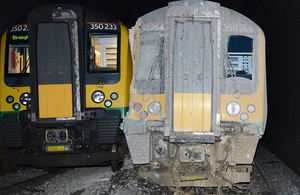
The two collided trains in the Watford Tunnel.Pic credit: British Transport Police

An accident  report out today on the landslip at Watford that derailed an early morning  London Midland commuter train last September reveals the importance of having properly  trained staff  on our railways.

It reveals that without prompt action by the driver there would have been large number of casualties and possibly fatalities when another commuter train running in the opposite direction collided with the derailed train.

It also shows having a guard on the train meant that passengers on the service who had not been injured got immediate reassurance and help after the driver was trapped in the cab following the accident.

The report praises both the driver and the guard for the way they handled the accident – caused by heavy rain leading to a landslip on the line just inside the entrance to a tunnel at Watford.

Simon French, Chief Inspector of Rail Accidents said:

 ” The collision of a passenger train with a derailed train in Watford tunnel on the morning of 16 September last year serves as a reminder of why everyone in the railway industry continues to work so hard to manage risk – the collision of two trains in a tunnel is a scenario we all hoped never to witness.

The derailment of the 06:19 service from Milton Keynes could so easily have led to a catastrophic sequence of events were it not for two notable factors. The first was the sheer professionalism of the driver who, within moments of becoming derailed, had the presence of mind to apply the brake and then transmit an emergency message using the train’s ‘GSM-R’ radio. His actions alerted the driver of a train approaching in the opposite direction who immediately applied the brake. As a consequence, the northbound train had reduced speed from 79 to 34 mph before striking the derailed train a glancing blow. This reduction in speed may well have made a big difference to the eventual outcome.

The second mitigating factor was the slotting of one rail of the track in the gap between a gearbox and a traction motor on three of the axles, so preventing the derailed train deviating any further into the path of the approaching train. This unintended consequence of the train’s design probably made the difference between a glancing blow and something closer to a head-on collision.

The report reveals that the driver had just nine seconds to alert the oncoming train after his train had been derailed – but as a result it certainly saved lives.

The circumstances of the crash are also a grim warning in the age of climate change given that very heavy rain caused the landslip at exactly the same spot  as another landslip in 1940.

The rail accident investigators found details of the earlier landslip in Network Rail’s archives but unfortunately the  management of Network Rail had not alerted people  who had  been working on removing vegetation and trees in the cutting on the need to  revamp an old drainage system.

The report also reveals that had there been a serious accident access by the emergency services to the scene would have been difficult and there did not appear to be any plan for organising a major rescue should an accident happen in the Watford tunnels.

All this suggests to me is that ministers and privatised railway companies – such as Southern railways – who want to save money by continually cutting staff should be wary of doing so. It could cost lives and passengers need help and reassurance should the unexpected happen on their daily commute.


The collapse of the local press: A disaster facing local democracy

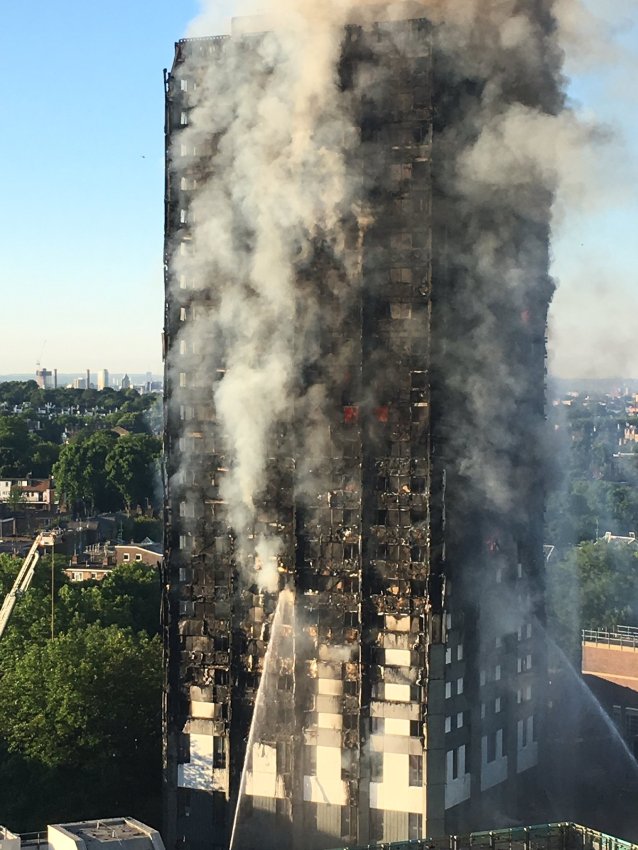
Grenfell_Tower_fire_morning

Grenfell Tower: The next morning Pic credit: Wikipedia

I recently wrote a piece for the National Union of Journalists campaign,Local News Matters fighting to keep local newspapers alive. While much time has been devoted to the plight of the national press losing swathes of staff, not enough attention has been given to the almost total collapse of local news reporting.

The catalyst was the appalling Grenfell Tower fire which erupted with a huge loss of life, and why ,until then, nothing had been written about it. The fire not only destroyed a community but exposed the appalling lack of local reporting in the months leading up to the fire.

The local residents association – the Grenfell Action Group – had been warning of fire safety issues in Grenfell Tower and other blocks of flats as long ago as 2013.

But they had been ignored and when their blogs got too critical they were threatened by  the solicitor to the Royal Borough of Kensington and Chelsea with defamation proceedings unless they took down the critical posts.

The reason why their concerns went unreported was entirely due to the state of the local press. As Grant Feller, a former reporter, wrote in Press Gazette
In 1990 there would have been two rival papers the Chelsea News and the Kensington News and a team of ten reporters looking at everything in the borough.
“But today there is no-one there. There is a newspaper that cares for Londoners, reflects London and does its bit for London – and that’s the Evening Standard. But it doesn’t do these types of stories.”
Indeed there are only two on line papers Kensington Chelsea and Westminster Today and the Kensington and Chelsea Times. Both are mainly life style and leisure publications. The KCWT contained just one article on the Tower disaster culled from coverage already broadcast by the BBC. The Kensington and Chelsea Times had one original story by a named reporter when the fire had taken hold and one story on an appeal for the victims.
This is not unusual. A damning submission from the NUJ to Sadiq Khan, the Mayor of London, gives details of the parlous state of the capital’s papers and their reporting abilities. It warns that events are not being properly covered, staff have been slashed to the bone, pay is appalling with many journalists not able to afford to live in London in rented accommodation yet alone get a mortgage. The situation is similar in the rest of the country.
Ex editors feel the same. Mike Gilson, who has had a stellar career in regional and devolved national journalism from the Portsmouth News to the Brighton Argus and from The Scotsman to the Belfast Telegraph, recently quit the Argus after trying to revive good investigative local journalism.
In article in the Press Gazette quoting from an essay he wrote for a book Last Words? How Can Journalism Survive the Decline of Print? he says :
“In Brighton searing images and accounts of the Shoreham Air Show tragedy last year, as an out-of-control vintage aircraft sped from a clear blue sky into unsuspecting motorists on the A27, were online before journalists, photographers and writers, had even made it to the scene.
But we still need journalists with the time, training and passion to avoid this ever-increasing deficit. No amount of digitally empowered bloggers, many of them diligent thorns in the side on a range of issues, will make up for the loss of professional reporting.
In some towns courts, council meetings and trust boards are all going unreported now.”
Now some of the slack has indeed been taken up by the growth of bloggers and citizen journalists. But however good these people are they are not a substitute for a well staffed paper with ten fully paid reporters covering a local community.
Bloggers just like the Grenfell Action Group are also vulnerable to being picked off by powerful people and threatened with defamation if they criticise wealthy powerful individuals or even public bodies. The case of the Camarthenshire blogger,. Jacqui Thompson, who was threatened with losing her home after a bitter legal dispute between her and the chief executive of her local council, Mark James. is an example. He used public money to sue her and fight a counter claim despite criticism from the National Audit Office in Wales. She is still left with paying out £25,000 over a dispute that began with her filming the council.
Frankly this means that people in powerful positions are beginning to realise they can get away with things that ought to be investigated by an independent press. Whether it is local corrupt deals, appalling child sexual abuse claims or people being bullied and harassed by the wealthy, those in authority and criminals knowing they have a 90 per cent chance of getting away with it.
The conclusion is obvious. If we don’t do anything to stem the collapse of local reporting we will have a democracy in name only, with no substance because nothing will be reported.