Stuff the poor to help the elderly:Hunt moves to adopt Lansley’s bad plan for the NHS

Andrew Lansley: let’s kill off the poor to help the elderly

Update: The new NHS Commissioning Board announced this week it was proceeding with scrapping the existing formula from next April – by adopting a flat rate increase  for funding this year. It also announced it will ” conduct an urgent fundamental review of the approach to allocations, drawing on the expert advice of ACRA and involving all partners whose functions impact on outcomes and inequalities.” This will come into force in 2014-15.

In fact this will mean a redistribution to areas with large numbers of elderly people at the expense of poorer areas like the North East of England, Central Manchester  and Salford and the London borough of Tower Hamlets. All this will be in place for the run up to the next general election.

Fresh from creating chaos as part of his so-called NHS ” reforms” Andrew Lansley has let slip another dastardly plan to cope with the genuine burgeoning costs of a growing elderly population.

Basically it’s very simple: Take away  the NHS cash from the poorest parts of England and give to the relatively affluent seaside resorts and the suburbs.

I am indebted to hawk-eyed reporter David Williamson at the Health Services Journal ( behind a pay wall at http://bit.ly/K7dceG ) for spotting a virtually unreported speech in London during the Parliamentary recess to new commissioning bodies who will  be spending the NHS cash from next year.

He told them they “should be looking at what is in… population data that is likely to give rise to a demand for NHS services”.

“What is likely to make the biggest difference, therefore? Actually it’s elderly population, who were not in substantial deprivation”.

He added :“Some of the lowest spending on stroke and cancer services were in areas with high elderly populations such as Fylde and Eastbourne, places where there were quite a lot of older people who weren’t poor”.

What Lansley is proposing – and the Department of Health is helpfully not making his speech available on its website is seismic in NHS terms. Ever since Clement Attlee set up the NHS, its main aim has been to improve the life chances of the poor most of them die long  before affluent and middle classes.

The Royal College of Nursing in the North East and Newcastle MP former Labour minister, Nick Brown, have spotted exactly what it means.

As Glen Turp, regional director of the RCN put it: “It is well-known that in areas of social disadvantage, local populations experience higher incidents of heart disease, cancer, emphysema, diabetes, as well as a range of other diseases caused in part by our industrial history and the work that our communities undertook. Health outcomes are directly linked to poverty and inequality, and to use age as the measure rather than inequality is simply the wrong thing to do. ”

To ram home his point: “The shocking truth is that if you live in Chelsea and Westminster in London, a man can expect to live to 86 years of age. However, in Hendon, in Sunderland, male life expectancy is only 69. That’s a 17 year difference. It’s nothing short of obscene, and frankly that is what the NHS funding formula should be all about.”

For those interested in more details Tom Gorman has tweeted me a map – showing some of the changes – the link is http://goo.gl/dyuGe .

Lansley plans to be even nastier in the way he plans to implement it. He intends to deny the government is doing it by tipping the wink to a quango  – the Advisory Committee on Resource Allocation which recommends how NHS budgets should be split up.

At the Conference, Lansley gave the game away: “The advisory committee will do this, I won’t— the number crunching should get progressively to a greater focus on what the actual determinants of health need” and that “Age is the principal determinant of health need”.

But there is also a cynical political side to this. By withdrawing money from poor areas, he can halt  the trend of living longer among mainly Labour voters, save the pension bill by ensuring that if they die off at 69 or even younger, they will in future not even need to receive a state pension.

But in the sunlight uplands of mainly Tory areas, the cuts that will inevitably come will be blunted or services improved in time for the 2015 election. And it won’t cost him an extra penny, all the money will be taken from Labour areas.

The formula is almost a Tory right winger’s wet dream.  Ed Miliband’s supporters dying off as they wait for operations in Labour seats, and the prospect of Tory and Liberal Democrat voters living longer and longer in Chelsea, Bournemouth, Eastbourne and Torquay.

Perhaps Mr Lansley should be told what we think of this. His emails are: lansleya@parliament.uk  and andrew.lansley@doh.gov.uk. If that fails perhaps the faceless people who sit on this quango, the Advisory Committee on Resource Allocation, should be contacted. Interestingly, the Department of Health, has not updated their membership since 2008 and archived the list. Perhaps Mr Lansley doesn’t want us to know.

After all , should Mr Lansley be allowed to get away with literally killing off the opposition.

Lansley’s outrageous ban covering up risks in his NHS reform

Today the information commissioner publishes his findings to Parliament on the outrageous veto by Andrew Lansley in preventing publication of the NHS risk register.(see – report here http://bit.ly/MfEPVi )

The health secretary would have us believe that the public and the press are so naive that they must not be seduced in his words  by ” sensationalised reporting and debate ” of its findings.

In other words this is all right from Cabinet ministers and senior officials to read all the risky details  of his reforms – but the public must be treated like children, not capable of understanding the issues. What patronising piffle!

What I really suspect is that Mr Lansley does not want the public to read the full facts – something that when in opposition his Cabinet colleague, transport secretary,Justine Greening, rightly disagreed when it came to the risks of building a further runway at Heathrow.

But now in government it is of course all different, no one must know the real consequences of Mr Lansley’s decisions. I am delighted that Chris Graham, the Information Commissioner, stood firm on this one.

 But I suspect this decision is all part of an attempt by the government to row back on freedom of information. It fits in with Lord O’Donnell’s claim that if this goes on – it will have a chilling effect on discussion. The establishment both in the form of Jack Straw, Tony Blair and now Andrew Lansley, would love a world where we all lived in deference to ministers and senior civil servants.

No doubt charges for FOI will soon follow. Frankly if the government is planning to revert to a closed society, there is one simple solution. The risk register must be leaked.

Coleman Update: Final Humiliation – Now facing the sack by true blue Barnet

A report tweeted by the editor of the Barnet Times series is forecasting final doom for Brian Coleman tonight Thursday)- when his own Tory group removes him from his Cabinet  environment portfolio. (see http://bit.ly/Jhqe8h)

This means is less than seven days his income from the taxpayer will be slashed from over £120,000 – to just £12-14,000 a year. For the very first time his income level may justify his subsidised fixed rent two bedroom flat he rents from Finchley Methodist church charity.

He still keeps the chairmanship of an important Barnet Council committee on the budget and spending – but he will no longer get his £38,000 Cabinet salary.

Boris Johnson seems to have taken the sensible decision to keep him away from the London fire authority after his big defeat at the hands of the electorate which saw Andrew Dismore defeat him by 21,000 votes.

How  the mighty are fallen – Thank God for democracy and transparency.

Bye,Bye Brian..beaten by braveheart Barnet bloggers

Brian Coleman: Thrown out by voters in Barnet

The emphatic defeat of Brian Coleman in the London Assembly elections – a larger than life bully in true blue Barnet – was one of the defining features of the London Assembly elections.

 He was knocked out of the seat by Labour comeback kid, Andrew Dismore,  an “awkward squad” former MP for Hendon, whose campaigning skills and determination when he was a MP was  well-known in Parliament. So he shouldn’t have been surprised that Dismore would pursue every voter.

Victor Andrew Dismore: Former awkward squad MP

But there is no question in my mind  why 2012 was so different to 2008 for Brian Coleman –  apart from the political climate that favoured Labour last night but also saw Dismore perform far better than Livingstone.

Coleman had a unique skill to anger  nearly every group in the borough  – whether the small shopkeeper, the motorist,home owners (over parking),the local firefighter, the trade unions, struggling single parents, religious groups, journalists, – and when there was a chance to throw him out they could hardly wait to do so.

But he had relied on a cash strapped local press to bully his way often unreported and rarely held to account by his local Tory group, who seemed to live in ” shock and awe” of whatever he said next.

But the difference between 2012 and 2008 is that he couldn’t get away with it so easily – because of the rise of the blogosphere. Five local bloggers including a larger-than-life figure blogging as Mrs Angry;a guy with a head for figures – Mr Mustard; John Baldy and the Barnet Eye  and Barnet Bugle took him on – and wouldn’t let him get away with it. I should also add – Mr Mustard has reminded me -Mr Reasonable and Vicki Morris.

 He also faced a pretty lively campaign from the Fire Brigades Union – both in Barnet and across London – because of his passion for privatisation which got him far too closely connected to AssetCo, the near bust and badly run owner of London’s fire engines.

 In my view – though this  can’t be scientifically proven – the coverage of the blogosphere changed hearts , minds and eventually votes  in Barnet. They were read by large numbers of people (the one I did as an armchair audit on his expenses,home, and allowances, attracted well over 3000 hits)

Coleman himself was a large dinosaur when it came to the net – he needed young Tories and officials to tell him how to operate a computer – so he didn’t realise what was coming.

Coleman is one of the first councillors  to be thrown out following bad coverage on the net. The very ” armchair auditors” that David Cameron and Eric Pickles are keen to promote – came out and devoured their protegé on the London Assembly. Grant Shapps, the computer savvy local government minister, should be proud to see people held to account in this new way.

If the Tories believe in real democracy the one decision Boris Johnson should take is not to use his power to re-instate Coleman as an appointed councillor in any way to the London Assembly. The people of Barnet and Camden have spoken.

Coleman’s last stand in a sweet shop

Image

Yet more extraordinary scenes involving Brian Coleman are reported by the Barnet Press (http://ow.ly/aCVrT) – caught on CCTV haranging a sweet shop owner over the local council’s controversial parking scheme. Mr Coleman went down a parade of shops demanding posters were removed.

Reporter Daniel O’Brien’s story out yesterday says”:Anna Constantiou, who owns Rapunzel hair salon, in High Street, Barnet, said she was shocked when Mr Coleman came into her store demanding she remove a poster with the message “Sack Brian.”

“He said, ‘I want you to take it down right now. I find it offensive,’” said Mrs Constantiou. “I said it’s my opinion and I don’t agree with your parking restrictions. I can’t afford to park near here.”

However, she said she felt she had no choice but to take it down the poster.

“He was going mad and shouting,” she said. “He was right in my face and wouldn’t leave when I asked him. He was intimidating.”

Michael Kentish, owner of sweet shop Hopscotch also received a visit from Mr Coleman.

Mr Kentish said he had put up the political posters, as he believes the “rushed” removal of parking meters from car parks had had a dramatic effect on high street footfall. ”

His CCTV caught the scenes.

Frankly after all the rows over his huge expenses and free gifts, the botched privatisation of London fire brigade, attacking single parents, you would think a Tory seeking  re-election would not start a row with local shopkeepers- core Tory voters. You’d also think that making parking really difficult would not endear him to Barnet Tories either.

 Does he really want to be sacked by the electors of Camden and Barnet tomorrow? Perhaps I have missed his secret agenda- he wants a life outside politics. Mr Coleman has refused to comment to the press.


Those magnificent recycling men and their flying machines

Jumbo jet awaits its fate in the Cotswolds

 Pictures:Tony Hutchings

In the depths of the countryside in the Cotswolds there is an amazingly good story about a recycling success that no-one has noticed. Jets as young as seven years old from major airlines like easyJet are being ” parted out” and 100 per cent recycled in a green revolution started as a family business.

Your Boeing 737 is having its engines, flying gear, brakes, seats re-used as spares for other aircraft. The lightweight aluminium is being turned in beer cans and artists and sculptors are buying plane spare parts to turn into standard lamps, mirrors and coffee tables.

another jet awaits its fate

The full story is in this week’s Sunday Times magazine but here are some of the amazing pictures of the people taken by my Berkhamsted friend and photographer Tony Hutchings. He can be contacted at www.tonyhutchings.co.uk.

Planes at ASI's scrapyard in the Cotswolds

Politically this an extraordinary good news story. The firm ASI (Aircraft Salvage International ) -see their website at http://www.airsalvage.co.uk/  is run by father and son team Mark and Bradley Gregory and has created some 40 or more jobs from scratch. The ” green ” revolution enables all the  plane parts to be reused and means that passengers are now flying in brand new more fuel-efficient jobs when they go on holiday.

Star Wars feel to the stripped inside of a jet

The author pretends to be a pilot

The government should be shouting this success from the rooftops, the environmentalists should be pleased and questions should be asked why the much larger motor industry has recycling rates at much lower recycling rates and still a blight on the countryside.

 At the moment there is just silence on these remarkable achievements.

Scandal of John Shannon and Brian Coleman: Unacceptable faces of capitalism and politics

John Shannon: dismissed by his own firm

This blog has followed  relentlessly the unfolding drama of  AssetCo, the company in charge of London and (until last week) Lincolnshire’s fire engines, which nearly went bankrupt last year and had its shares suspended until recently on the stock exchange.

But nothing can compare with the latest revelations in a dry annual report on the AssetCo website (link for anoraks who want the lot is  http://bit.ly/HVeFEN ). This much delayed report for an 18 month period – it had to be produced to allow its shares to be retraded- tells the real story behind the company’s near collapse which saw its share price drop from 60p to junk stock 1.75p. It has now emerged that dividend payments may have been unlawful, the company has been seriously ripped off by its former chief executive and the accounts were false for both 2009 and 2010.

 Revenue had been overstated by a massive £18.6m and a claimed operating profit of £17.4m was actually an operating loss of £11.4m.

But the company still owes banks a massive £43m – despite creditors taking a 78 per cent hit and its auditors, Grant Thornton  (also owed most of their fees) resigning.Even the restated figures cannot be guaranteed and PriceWaterhouseCoopers,who independently audited the firm, have qualified these accounts. Grant Thornton incidently missed all this -just as they did over MetPro-Barnet’s bust private security firm-bankrolled by Barnet Council.

As the company itself says:”errors include the effects of mathematical mistakes, mistakes in applying accounting policies,oversights or misinterpretations of facts, and fraud.”.

Worse it is quite clear that the only major source of money for the firm in Britain is the council taxpayer in London which is keeping  it afloat to the tune of £3om a year. Even here banks are going to have  to give another bail out and Lloyds have a massive interest because they currently own the London fire engine that comes out on call.

 This is where the scandal of Brian Coleman, the Tory chair of the London Fire Brigade, and John Shannon its former chief executive come in.

Coleman was entertained at least four times by Shannon and accepted an expensive Christmas hamper from Harvey Nicks (see the armchair audit of Brian Coleman in previous blog) and has been AssetCo’s cheer leader.

Now it is clear from this report that Shannon was dismissed by the board of AssetCo because of this financial shenanigans.

I quote: “The new board have been informed that under the stewardship of Mr. Shannon and Mr. Flynn there was a lack of transparent reporting, requests for information were ignored, and related party transactions were entered into without full board approval. The new board cannot be certain that all issues have been captured.

Mr Shannon was dismissed as an employee for breaches of fiduciary duty and whilst the company has not carried out a full investigation, as previously announced in May 2011 in connection with the claims against the Company by Messrs Shannon & Flynn in support of the winding up petition, it identified counter claims against John Shannon of £4.6 m and also counter claims for breach of fiduciary duty of £3.4m against Frank Flynn.

Frank Flynn was the chief financial officer and a mate of John Shannon.

The report reveals that Shannon and Flynn also shared the bulk of a £847,000 pay out in dividends that are probably illegal. And Shannon before he was dismissed managed to up his salary and benefits to a staggering £492,000 and Flynn got an unapproved £30,000 redundancy payment.

Even worse they appears to a dodgy property loan amounting to £1.5m to Shannon. This involved a property company called Jaras.

 The report says: “In respect of the ‘Jaras’ transaction, AssetCo have reviewed internal communications between the date in December 2009 when the £1,500,000 was first paid, and finalisation of the 2010 audited accounts,the management and statutory accounts for the business occupying the property and concluded that:

a) on an arms length basis it would be difficult to substantiate effectively paying six years rent in advance in respect of the property,

b) the payment was originally classified as a Directors’ Loan and was subsequently reclassified as

prepaid rent in order to satisfy audit disclosure requirements, and

c) the business occupying the property is now in Liquidation. ”

It adds: “there is sufficient doubt that either Jaras (where a Receiver has been appointed) or John Shannon will repay the amount.”

The report also reveals that London AssetCo which has assets of the London fire brigade has been moved to another off the shelf company and the firm’s  Middle Eastern operations (see another blog they are servicing the military in the United Arab Emirates)  are now based in a Bermuda tax haven, to keep them secure from any other collapse in Britain. Wise move, as Lincolnshire have sacked AssetCo.

Brian Coleman: AssetCo cheer leader and entertained by John Shannon

The real scandal in this story is that this woefully badly run company has been kept afloat by politicians in London. Coleman and Gareth Bacon should shoulder this blame -with their blind belief that privatisation is the only answer.

 But Coleman is more culpable because of his personal  links with Shannon and acceptance of gifts from a man  now dismissed from the firm. Shannon may get away with all this but you do have a choice next month to make sure that Coleman never darkens the London fire brigade again.

Removal  would be a service to  Londoners  and you have a vote at the Greater London Assembly elections in Barnet and Camden.

Thomas Hardy: Kept far from the madding crowd

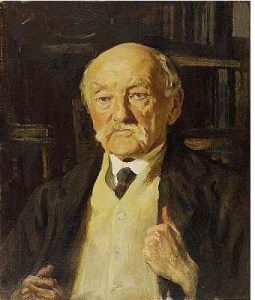
Thomas Hardy: An A list celeb neglected by the National Trust: Pic caption courtesy victorianweb.org

In a year when Britain celebrates Charles Dickens 200th birthday another great British author,Thomas Hardy, is suffering outrageous neglect by one of the great guardians of our heritage, the National Trust.

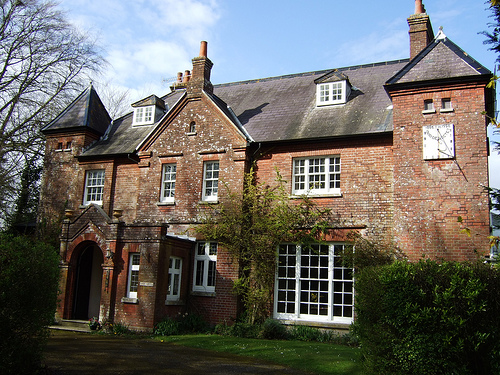
The author’s birthplace in Higher Brockhampton, just outside Dorchester and his rather grander home, Max Gate, where he died in 1928, on the  outskirts of Dorchester, are both owned by the National Trust.

You could however be forgiven if you knew nothing about both the humble cottage and the grand home of the author of Far From the Madding Crowd. For the new National Trust 2012 guide gives just a short mention of the birthplace and  is positively misleading about the bigger home  Hardy, also a qualified architect, designed himself.

 Readers  searching for the opening times for the birthplace cottage  can find them  in the guide-Wednesday to Sundays 11-5  but don’t  go looking for when to visit Max Gate- you are told to ring the trust’s West Dorset Office  instead.

What the guide doesn’t tell you  is that Max Gate is open exactly the same times as his birthplace – but the NT couldn’t get its act together in time to tell anybody this year.
Max Gate: Hardy's hard to find home

All this is compounded by a daft decision by the Highways Agency  responsible for erecting tourist signs  giving people directions to both places. These brown signs are meant to direct people to places of interest – and most National Trust properties get one.

But not Mr Thomas Hardy. The two homes  are both  just off the busy A35 on  its approach to Dorchester and on the Dorchester by-pass and managed by the Highway Agency. But look for sign on the A 35 in vain. There are none.

And the irony is in the case of Max Gate millions of motorists pass within 100 yards of the property totally oblivious of  its existence.

But as the Highways Agency says on its website: ”

All authorities limit the number of signs allowed. This is for road safety reasons, as too many signs can be confusing and distract drivers, and for environmental reasons – too many signs could harm the countryside or street scene.”

Of course this could be remedied by Dorset County Council -in charge of tourism and signage off the major highways – but they have done nothing. Not a sign in sight in the centre of Dorchester on how to get  to Max Gate. Indeed there are more directions for dinosaurs and  a Tutankhamen exhibition ( not  part of Dorset’s heritage but I stand to be corrected) than poor neglected Mr Hardy. His study, restored at Dorset County Museum  does get a mention, but unfortunately the opening hours of museum do not coincide with those at the National Trust.

Idyllic but simple birthplace of Thomas Hardy

Hardy is as much part of out literary heritage as Dickens or Jane Austen. In his time he was the equivalent of an A list celeb –  according to the excellent visitor’s book kept at Max Gate – which records visit to his home from Robert Louis Stevenson and composer Gustav Holst. His novels have translated into memorable films, Julie Christie’s performance in Far From the Madding Crowd, being one.

Yet it would appear – despite valiant efforts from enthusiastic volunteers at Max Gate ( predating Cameron’s equivalent of the Big Society) – the powers that be at the National Trust, the Highways Agency and Dorset County Council care little about one of the country’s literary giants.

 Something should be done. I urge people – frustrated like me on the search for Thomas Hardy – to email them in protest at their neglect. The director general of the National Trust is Dame Fiona Reynolds. Her mail is fiona.reynolds@nationaltrust.org.uk . The chairman is Sir Simon Jenkins, journalist and author and can be contacted at simon.jenkins@guardian.co.uk.

The minister responsible for the Highways Agency is Mike Penning. His direct e-mail is mike.penning@dft.gsi.gov.uk  and the chief executive of Dorset County Council is David Jenkins. His e-mail is  d.h.jenkins@dorsetcc.gov.uk .

It is time that this shameful neglect ended. One would have thought Dorset would want to celebrate rather than hide one of its famous sons. It does bring tourist revenue to the county.  And the National Trust might have just a more than passing interest in encouraging more visitors.

Response from Mike Nixon,secretary of the Hardy Society:

 “I hope it doesn’t come as too much of a surprise that we at the Hardy Society are very aware and can identify with your frustrations you detail on your blog.
I have myself  been involved with a ‘working group’ for a couple of years under the promising title of ‘Hardy Country’, whose members include the National Trust/West Dorset Disrict Council/Dorset County Council etc etc etc!!
We have discussed on a number of a occasions the lack of ‘brown’ signs and lack of promotion of Max Gate.
In fairness to the NT, their national handbook had to go to the printers very early, apparently before the Max Gate opening times had been agreed regionally.
They have this year (and last year) issued an attractive booklet entitled ‘Discover Hardy Country’, which links in Hardy’s birthplace/Max Gate and T.E.Lawrence’s, Clouds Hill, just up the road near Wareham. This is helpful.
There is now a strong working relationship developing between us here at the Society and the NT,including regular meetings.
What I can’t be so positive about is your accurate comments on the ‘brown sign’ debate. I think I raised this on behalf of the Society 3/4 years ago, so far to no avail! ”

 Response from the National Trust:

Nicola Andrews, Assistant Director, Operations (Dorset and Wiltshire) writes:  “The National Trust firmly believes that Hardy was a novelist and poet of the greatest merit, and we are passionate about finding ways to deliver increased access and public benefit from the Hardy places in our care.  We are committed to improving the experiences at both Hardy’s Cottage and Max Gate. As you noted, we are blessed with having wonderful teams of volunteers and staff who help us achieve this. The teams at Hardy’s and Max Gate are fantastic….

When tenants moved out of Max Gate in late 2010, and in line with our desire to increase access, we took the decision to trial opening the full building to the public rather than re-letting it. This was a challenge because we do not own the original contents, were faced with an empty house to interpret, and the loss of rental income. We are realistic in our ambition for Max Gate. It will never be a big visitor attraction because of its location in a quiet residential area.  That said, our aim is to make it a fantastic experience for all those who do visit.  After a year’s trial, we took the decision to continue opening the full building and through the support of generous benefactors and supporters we are slowly furnishing the house and bringing it back to life as it might have been when Hardy himself was there.  

At Hardy’s Cottage, we are working with Dorset County Council and other partners on a bid to the Heritage Lottery Fund for a project to significantly improve visitor facilities and interpretation on site. We hope this bid will be successful, but in the meantime we have recently represented the interior of the cottage drawing out the stories of Hardy’s time there much more clearly. You did not mention your thoughts on the interiors in your blog, but we hope you found the presentation a significant improvement on your previous visit. Our vision is to enable people to experience both the Cottage and Max Gate as they might have been when Hardy and his family lived there: to enable people to sit by the fire with a cup of tea as Hardy and his family would have done; to bring to life his poems and novels encouraging people to immerse themselves in them in his studies and other writing spaces. 

We are also committed to the partnership which is developing and promoting the broader Hardy offer in Dorset, as outlined by Mike Nixon in his response to you. I am sorry you found it difficult to find Hardy’s Cottage and Max Gate.  Signage from the A35 is outside our control but has been a frequent point of discussion between ourselves, the Council and the Highways Agency. We agree that from a visitor’s perspective, and to help us enable as many people as possible to enjoy the Hardy legacy, good signs from the A35 would be invaluable and we would very much like a trial of this. 

We are conscious, however, that there is a delicate balance to be struck when introducing such signage.  Both properties are small in size and cannot cope with large numbers of visitors, both are located in quiet residential areas, Max Gate has no car park and Hardy Cottage visitors make use of the small Council car park at the end of the track.  So, whilst we are keen to trial signage from the A35 and would welcome Highways support for that, we also recognise that we will need to monitor the pressure this causes on the sites and to keep it under review. .. I feel it is unfair to say that we don’t care about this literary giant. We do care, and we would encourage people to visit themselves and form their own judgement. ”

Response from the Highways Agency:

Sean Walsh writes :”I’ve looked into the signing for both sites. Although neither is signed from the trunk road, Max Gate House is adjacent to the A35 junction with the A352 (known as Max Gate junction) and has a brown sign just off the A352 on the local road.  Higher Bockhampton, where his birthplace is located, is signed from the A35 at Cuckoo Lane junction and Stinsford roundabout (in both directions), and I understand that there are signs for “Hardy’s Cottage” on the local roads.

I’m pleased that you’ve noted on your blog that the Agency has to limit the number of signs on its network, both in road safety terms as too many signs can cause a distraction/confusion, and because they can detract from the countryside and street scene.  If you’ve not already seen them, the current rules regarding tourism signs are also on our website at http://www.highways.gov.uk/business/32118.aspx .    I’m not aware that the National Trust has applied for brown tourism signs on the trunk road for these two Hardy sites, although under current guidelines it is unlikely that either would meet the criteria for signing. However, the Government’s approach to the provision of brown signs is under review, with the objective of ensuring that signing policy best reflects the needs of both drivers and the tourism industry. It is expected that the review will be completed and revised policy issued later in the year, although I can’t be more specific than that at the present time.   “
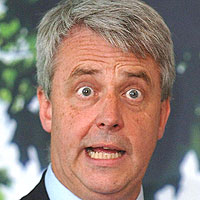
Exclusive: Millionaire Francis Maude: the bad bill payer

Francis Maude: Difficulties in paying his taxpayer funded bills on time

Do you fall behind with the gas and lecky?Forget to pay your TV licence and struggle to pay charges? Well spare a thought for poor struggling millionaire Francis Maude who just can’t seem to get his act together when it comes to paying his bills.

The man  was rightly castigated  last week over his ill-judged and downright dangerous public advice to stockpile jerry cans. But there is another side to his character which is equally surprising – his record for paying bills on time.

Hidden on the Parliamentary website following the great expenses scandal is an extraordinary documentation of the time when he owned a flat  in Imperial Court in Kennington, south London between 2007 and 2009. ( anoraks can peruse all Francis Maude’s bills at http://bit.ly/Hbu1Vo )

At the time he was severely criticised by the Daily Telegraph ( see http://tgr.ph/HkjDGC ) for purchasing the flat for £430,000- with a £345,000 mortgage- and claiming all the interest when he owned a house outright in Denny Crescent nearby. As a previous blog disclosed he also got a mortgage on this house and let it out to Tory special advisers – Maude’s madrassa – as it became known.

What the documents also  reveal is an amazing lax attitude to paying his gas, electricity  and telephone bills and service charges.  Not just  the delays in paying out the cash but being threatened with disconnection  and legal action for non-payment.

In August 2007 he was threatened with a termination notice for not paying a £36 telephone bill.

At the beginning of 2009 he received a letter from Kevin Roxburgh, head of energy debt collections, at British Gas because he hadn’t paid his £188.24 gas bill for over a month. The letter asks whether he has payment difficulties and tells him about direct debit.

EDF his electricity supplier also suggests he might like to pay by direct debit because of his overdue payments.

Finally he is threatened with legal action for an overdue bill of over £2600 from his landlords. They write to him warning that his long delay has already led to administration charge of £29.37.

The letter warns:” We request that you settle the amount outstanding within 14 days of the date of this reminder in order to avoid incurring additional costs or further legal action.”

The irony about this is that all his bills were being paid anyway by the taxpayer – he didn’t have to pay a penny as he could claim them back through his Parliamentary expenses.

Yet somehow he couldn’t  get his act together to send them a cheque. Finally the records show that he learns there is something easier called direct debit – and two years after moving into the flat actually sets up direct debit payments for his TV licence and  utility bills. This man is supposed to be a world-class banker -the ex md of Morgan Stanley. And he is charge of getting more efficiency in business payments to the government. God help us.