Tribunal of the Absurd Part Two: Dr Chris Day loses his whistleblowing appeal

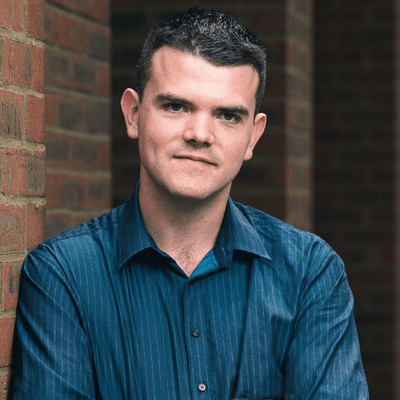
Dr Chris Day

For those with long memories some 32 months ago I wrote a disparaging blog about justice in employment tribunals after sitting through yet another hearing involving Dr Chris Day’s ten year whistleblowing battle against the Lewisham and Greenwich NHS Trust. So shocked I was over the way justice was meted out to Dr Day that I labelled it as the Tribunal of the Absurd – liking it to a Harold Pinter play that could be set in a court room.

This was the tribunal that revealed that lawyers and the Trust had held back evidence which should have been given to him and his lawyers years ago; that the chief executive of the trust, Ben Travis had lied under oath about a virtual board meeting and other matters to discuss his case, and that a senior communications officer of the trust, David Cocke, had gone into the trust’s offices at 5.0 am and destroyed 90,000 emails which could have been relevant to his case. The latter happened while the hearing was taking place and he then failed to appear as a witness.

Yet the judge Anne Martin ignored all this and exonerated the trust’s case against Dr Day. To remind readers the original claim was a serious patient safety issue – two people had died in the intensive care unit of Woolwich Hospital where he was working because of serious mistakes by other staff. Yet the trust for reputational reasons has always denied this really happened.

Now a long time later – the courts take ages to progress issues – a judge at an employment appeal tribunal has largely rubber stamped her decision and found against Dr Day and rejected an application to return legal costs to the British Medical Association to compensate for the extra days of hearing caused by the destruction and concealment of evidence. Worse than that during the hearing Dr Day’s reputation for telling the truth about a previous hearing was called into question. It was like the second house in the theatre of the absurd.

Mr Justice Sheldon who presided over the hearing found only two faults. He thought the tribunal should have ruled on whether the trust was wrong not to remove disparaging comments about Dr Day sent to MPs and the press after concerns were raised by the watchdog body, the Care Quality Commission was a detriment to Dr Day. And it criticised the tribunal for misinterpreting one area of employment law.

But the judgment adds: “The Employment Appeal Tribunal concluded that the errors were immaterial to the outcome, as the Employment Tribunal had correctly found that the protected disclosures did not materially influence the Respondent’s actions. The appeal against the Costs Judgment was also dismissed, with the Employment Tribunal’s reasoning found to be within its discretion and supported by the evidence.”

It refused to return the case to another employment tribunal for reconsideration.

What this means is that the trust’s actions in this case have been exonerated by a higher court. Mr Ben Travis is regarded as a credible witness despite not telling the truth under oath about the board meeting.

And Mr Cocke’s destruction of 90,000 emails while thought to be ” troubling” are largely exonerated setting what could be a dangerous precedent in other whistleblowing cases for people in NHS trusts and private companies to destroy evidence that should be passed under discovery to the claimant. They can now cite this judgment.

What was also amazing and bizarre was that the judge accepted from Daniel Talbot Brown KC , instructed by lawyers Capsticks, an argument used in another legal case which said that tribunals could take a benevolent view of the proceedings and if they did not comment on a finding it did not mean they had not considered it.

This seems to go against forensic testing of arguments put forward at a hearing – where both sides must probe for the truth. If they do this and a judge decides not to comment on the issue, surely this more like a dereliction of duty than anything else.

This judgment marks a bad day for whistleblowers and good day for bureaucrats who want to hide the truth. It shows that even if you have the support of medical experts to back your judgment and the support of two prominent former politicians, Jeremy Hunt, the former health secretary and Norman Lamb, a former health minister, this counts for nothing in the eyes of judges.

Perhaps the judges prefer the judicial theatre of the absurd to life in the real world.

One-Time
Monthly
Yearly

Make a one-time donation

Make a monthly donation

Make a yearly donation

Choose an amount

£5.00
£10.00
£20.00
£5.00
£15.00
£100.00
£5.00
£15.00
£100.00

Or enter a custom amount

£

Your contribution is appreciated.

Your contribution is appreciated.

Your contribution is appreciated.

DonateDonate monthlyDonate yearly

Please donate to Westminster Confidential

£10.00

Are there flaws in the new guidance for General Medical Council investigations?

Dr Andrew Hoyle

Reforms without addressing core issues may lead to persistence of key flaws  or omissions in any future changes with risks to patients

Last month I wrote about the government proposing the first major reforms for 40 years in the running of the General Medical Council. My blog was meant as a warning to ministers to scrutinise the changes very carefully because I was sceptical, after talking to a number of doctors, that there were flaws in the changes. You can read the blog here.

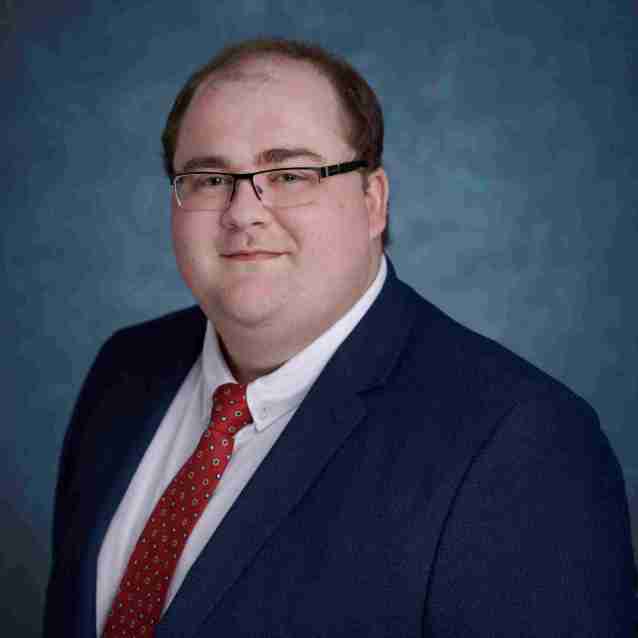
Now the GMC has published its new guidance by Dr Andrew Hoyle, an assistant director in the GMC’s Fitness to Practise Team He is both a doctor and a barrister.

In a high minded piece on Linked In and in a blog ( see the article here) he promises greater clarity and consistency .. and fair, flexible and compassionate fitness to practise processes. He also emphasises the GMC’s duty under the 1983 Medical Act to protect, promote and maintain the health, safety and well being of the public, promote public confidence in the profession and promote and maintain professional standards and conduct by doctors.

Now from the patient’s point of view how is this being enacted by a change to one simple process?

The first point is drawing up guidance for the decision makers on whether to proceed. There is a comprehensive list of issues to consider for the decision makers whether to start an investigation into a doctor. But the response to the concern raiser, the guidance does not specify who the decision makers are. Are they fully competent in the field or even sub-field of medicine practised by the doctor to make a sound judgment  about clinical matters? I have heard from some doctors that this is not always the case. On the question of accountability should it not be made public who made the decision and their qualifications to do so. This would reassure the public and the patients that it had been properly investigated.

The current process’s most crucial step, the  “initial triage and closure of concerns” relies on the “opinions” of the GMC postholders who in turn rely on managers. There is no mandatory requirement to immediately investigate serious harms or near miss issues that may have led to consequences to that or other patients.

This is particularly relevant as there is also the issue of the seriousness of the concern. The guidelines suggest that if there is evidence of repeated bad practice this should be relevant to striking off doctors. But there is a second flaw in this process. How does the GMC know about a bad doctor? The answer is because he or she is reported to the GMC by the responsible officer – normally the medical director or chief medical officer of the trust or far less by patients and or colleagues who are more in the know of bad practices but are fearful of consequences. See article in the Lancet.

Therefore the issue the GMC knows about may not be the first one and the GMC cannot verify it with the current approach neither can the complainant know of all issues. 

From earlier blogs I have found this process to be flawed – either because the responsible officer has targeted a doctor who has raised whistleblowing issues – whether patient safety or fraud – to discredit a perfectly good doctor – the case of Usha Prasad, a former cardiologist at St Helier and Epsom hospital is a current example – or covered up bad practice to save the reputation of the trust or private hospital.

The most egregious example of the latter is the case of Mr Ian Paterson, a breast and general surgeon, now serving a 20 year prison sentence after performing unnecessary operations on hundreds if not thousands of unsuspecting patients until a lawyer brought a civil case against him.

The public inquiry into his practice concluded “They were then let down both by an NHS trust and an independent healthcare provider who failed to supervise him appropriately and did not respond correctly to well-evidenced complaints about his practice.”

It went on: “The recall of patients did not put their safety and care first, which led many of them to consider the Heart of England NHS Foundation Trust and Spire were primarily concerned for their own reputation. Patients were further let down when they complained to regulators and believed themselves frequently treated with disdain.”

Imagine how different the outcome for hundreds of patients if this had been first reported by a responsible officer to the GMC – life changing needless operations would have been stopped rather than covered up. What the GMC should demand is that the management of NHS trusts and private hospital groups have to sign a ” duty of candour” putting them on par with doctors who raise complaints. This would require them to notify the GMC about the practices of the doctor involved and meet the legal requirement that the GMC has to protect patients and promote higher standards in the profession. Otherwise the assessment of a serious repeated bad practice is a hollow gesture in many cases.

 However if the GMC has been and appears it is continuing to rely on the Responsible Officers to provide a response can the GMC’s decisions be evidence-based  and safe for public. Even if a small minority of doctors are unsafe or dishonest,  the impact on the patient and profession must be the core of decision.

The third point is when a doctor acts inappropriately or unsafely that can be investigated by the GMC personnel but who are potentially not being regulated by any one and via a process built on reliance on an RO and in at times without transparency or evidence verification and opinion based decisions are taken that can affect lives This does not appear to be a safe approach as multiple scandals continue to occur; suggesting concerns are not really reaching the GMC due to its current system or are being ignored.

The current concern management requires a complete overhaul and not just superficial tweaks

Since I started looking at this issue I have been contacted by doctors across the country about the GMC and I intend to follow this up in a future blog.

One-Time
Monthly
Yearly

Make a one-time donation

Make a monthly donation

Make a yearly donation

Choose an amount

£5.00
£10.00
£20.00
£5.00
£15.00
£100.00
£5.00
£15.00
£100.00

Or enter a custom amount

£

Your contribution is appreciated.

Your contribution is appreciated.

Your contribution is appreciated.

DonateDonate monthlyDonate yearly

Please donate to Westminster Confidential

£10.00

Exclusive: Hundreds of low paid NHS workers cheated out of their rightful pensions in hospital trust blunder

St Helier Hospital

The trust running St Helier and Epsom hospitals in South London and Surrey has admitted it has deprived hundreds of its lowest paid workers their rightful NHS pensions for up to seven years due to a major blunder by its management in signing them up to the wrong scheme.

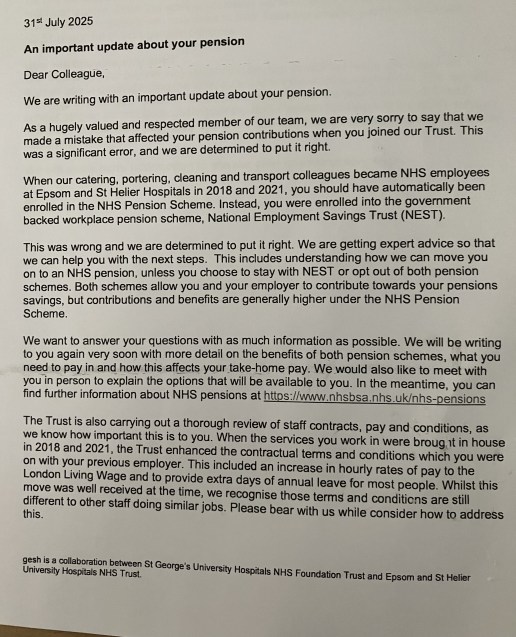
A letter sent out two weeks ago to catering staff, porters, delivery and transport drivers and cleaners admits it made ” a significant error” when it took the workers back in house in 2018 and 2021 from private contractors.

The move at the time was welcomed by staff as it gave the lowest paid staff higher pay than the going rate by private firms.

It has now emerged that instead of automatically signing staff up to the NHS pension scheme the workers were signed up to an inferior government backed workplace pension scheme, the National Employment Savings Trust (NEST).This pension scheme is aimed at small businesses as well as large private employers.

The letter says that benefits and contributions to the NHS pension scheme are higher.

The trust now part of the St George’s, Epsom and St Helier University Trust employs 5000 staff in the two hospitals – a sizeable number will be low paid staff. The trust will have to compensate workers for this error and has called in the Government Actuary Department to help estimate the scale of the problem which could cost several million pounds at a time when the NHS is squeezed in trying to bring down waiting lists.

The letter also reveals that the new trust has ordered a review of all staff contracts, pay and conditions as a result of the error. It now appears that there are differences between staff doing the same jobs with some receiving extra days leave than others and others on different pay rates.

There is also a suggestion of racism over Sunday working for low paid workers One rate seems to apply for many people from black and ethnic minority workers of £13.86 an hour while Agenda for Change workers, who are mainly white, get £26.31 an hour.

There appears to be a high level of dissatisfaction among lower paid workers with a ballot result for strike action for porters and cleaning staff by their union, the United Voices of the World, just announced of 98 per cent wanting to go on strike. This suggests workers are very unhappy working there.

The trust has one of the highest paid chief executives in the country, Jacqueline Totterdell, who gets £340,000 a year. She and her predecessor, Daniel Elkeles, now chief executive of NHS Providers, were in charge when these errors were made. Jacqueline Totterdell is planning to step down as the NHS faces a big reorganisation under the health secretary, Wes Streeting.

The letter is here:

Letter sent to staff
One-Time
Monthly
Yearly

Make a one-time donation

Make a monthly donation

Make a yearly donation

Choose an amount

£5.00
£10.00
£20.00
£5.00
£15.00
£100.00
£5.00
£15.00
£100.00

Or enter a custom amount

£

Your contribution is appreciated.

Your contribution is appreciated.

Your contribution is appreciated.

DonateDonate monthlyDonate yearly

Please donate to Westminster Confidential

£10.00

Guest blog: Dr David Ward’s prescription for Wes Streeting’s promised reform to protect whistleblowers

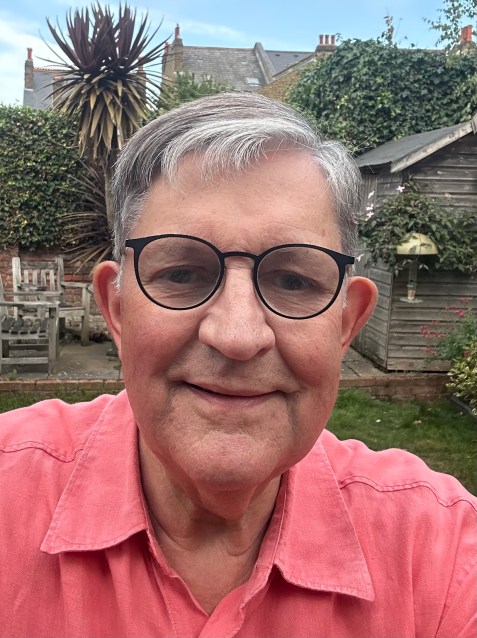
David Ward, retired consultant

Wes Streeting, the health secretary has promised new protections for whistleblowers but do they go far enough? Dr David Ward gives a detailed list of proposals that the NHS should implement and calls for lawyers and courts to play no part in the process.

NHS whistleblowers are obliged by law to raise patient safety concerns and are punished having done so. (Arising out of conversations with other doctors particularly members of Justice For Doctors. https://www.justice4doctors.co.uk ).

1. All “whistleblowing” issues should be formally logged by the Trust (hospital) in which they have arisen and in a statutory, independent central register which is open to scrutiny and auditable. Isn’t an audit trail essential for regulatory and financial reasons?

2.Hospitals should be banned from dismissing a doctor who has raised safety concerns as they are obliged to do by MHPS, Duty of Candour laws and the Hippocratic Oath. This is a simple idea which could be implemented without complex regulatory amendments. Devices such as dismissal by “Some other substantial reason or “SOSR” are convenient for the dismissing Trust to bury all sorts of evidence. NDAs are another trick which could impede investigation of evidence. It reeks of “dodginess”

3.Hospitals and their managements should be compelled by statute to urgently investigate concerns raised by a whistleblower. Failure to do so could be regarded as some sort of Tort because harm to patients could (and probably will) recur. (The concerns cannot be investigated if they are not known, doh!). Investigations should be conducted independently not by internal personnel because these are known to be biased (no, really?). External investigators (whether MHPS or otherwise) can be paid large sums by the Trust. The results are not infrequently “favourable” to the Trust. A new, more open and accountable system should be introduced.

4.The problems reported by a whistleblower should be remedied as soon as possible to reduce the risk of further harm. This hardly needs stating, does it? But a remedial approach (even if it is instigated) nearly always takes second place to hyper-investigation (persecution) of the doctor who has reported the problem. Imagine if such vigour could be directed toward correcting any shortcomings, improving processes, enhancing safety and so on. It could even save money as well as improving patient safety. “A stitch in time….”
5.NHS Trust Managers should be formally regulated by a statutory independent body. They should be subject to regulatory bodies just as the medical professions are – and disciplined if they “manipulate” the truth. There are examples of “wild west behaviour” by managers which would be stopped immediately if regulation were in place.
6.“Maintaining High Professional Standards” (MHPS) investigations are internal and unregulated. (See St Helier Hospital saga on this blog). “Marking one’s own homework” comes to mind. Investigators can be “hired guns” who will produce a report favourable to the Trust for a “fee” (taxpayer funded of course). Corrupted or what? (Let me be clear, I am not suggesting any cause-and-effect relationship between the fees paid and an outcome “favourable to the Trust”). Data about any of these matters which are prevalent all over the NHS is, unsurprisingly, not available (see 1).

7.Stop the wastage of £millions of taxpayers’ money on lawyers defending Trusts at Employment Tribunals against the unfunded “claimant” (the solution is at 2). This egregious inequality of arms should be disallowed but if (2) was implemented it would not arise. Another way of putting this is “stop persecuting whistleblowers who are doing their duty”. It is the Tribunal system which endorses a Trust’s decision to dismiss a doctor (if the dismissed doctor seeks the support of a Tribunal he is unlikely to succeed: see 15) . (How much taxpayer funded money is expended on law firms supporting Trusts against the claims of a dismissed doctor? This is my FOI request February 2023:

Expenditure by NHS Trusts defending allegations by “whistleblowers”

The answer was “DHSC does not hold information relevant to your request”. Perhaps not but I am willing to bet it is kept somewhere.

8.Lawyers and Courts have no place in the investigation of patient safety issues (see 2 and 6). Lawyers have little or no appreciation of health issues and the operation of a hospital. They are not best placed to investigate patient safety issues which are, unsurprisingly, central in whistleblowing cases.

9.Patient safety is prime. There should be no stigmata or detriments attached to raising patient safety concerns. Failure to raise or conceal a concern could be an offence.
10.Non-disclosure agreements (NDAs) about safety issues should be banned. They may be abused to conceal safety evidence. Information which is not disclosed cannot be tested can it. Could this be an intended (or unintended?) consequence of NDAs?
11.PIDA 1996 (section2, 47b (1): “A worker has the right not to be subjected to any detriment by any act, or any deliberate failure to act, by his employer done on the ground that the worker has made a protected disclosure”. So, no whistleblower can be dismissed because they have “made a protected disclosure” as that is forbidden by PIDA. But they can be dismissed (conveniently) “having made such a disclosure” just not for that reason. Usually one of the 5 “fair” reasons for dismissal is invoked including, “committing some form of misconduct” and “SOSR” (see 13). (See the case of Martyn Pitman on this blog). The section of PIDA referred to above is a loophole which is open to (possibly deliberate) misinterpretation. Perhaps it was written like this for a reason, who knows. Shouldn’t the loophole be closed and PIDA updated?

12.Is the Dunning-Kruger effect (qv) relevant?  Yes. It could apply to elements and procedures of the British Establishment – such as the Judiciary and the Employment Tribunal system. “The Dunning–Kruger effect is defined as the tendency of people with low ability in a specific area to give overly positive assessments of this ability”. (Wikipedia). Take a moment to think about D-K in the context of the treatment of whistleblowers. It rings true, doesn’t it.

13.Dismissal of an employee can be for any one of the 5 reasons specified in the Employment Rights Act 1996, Section 98. The last of these is “SOSR” or “some other substantial reason” which need not be specified (obviously) which is very convenient (see 11). Some reasons are specified but these are not exclusive and there is no need to specify a reason – which is why this clause exists, right? I need not enlarge on why this is another fudge but it is open to abuse. The notable observer and blogger, Dr Minh Alexander has ascertained (via an FOI request) that over 10,604 staff were dismissed by the “SOSR” method between 2010 and 2018 (Yes, she does provide a detailed breakdown of the figures, see link). This is a staggering statistic which surely points to a profound failure of process.

The Dismissal of over Ten Thousand NHS Staff via ‘Some Other Substantial Reason’

14.Resurrect the “problems of whistleblower persecution” for debate in Parliament with an emphasis on “protection”. I believe several proposals are under consideration including some by the Rt Hon Wes Streeting MP, Secretary of State for Health and Social Care, who will become a hero to many if he achieves what is required.

15.Doctors who have been whistleblowers and subsequently dismissed are well advised to avoid the legal profession. One thing that does emerge from my exploration of this fraught topic is that doctors (as a retired medic I can speak for this profession) who have been “dismissed” should not go anywhere near a law firm or engage the Employment Tribunal process for all the reasons I need not enumerate here. Fewer than 3% who do so will emerge victorious. Some have been bankrupted by the process. Open and fair justice? I don’t think so

Who are the ultimate losers in all this ? You may ask why make such a fuss? I will answer directly. It’s not primarily about the Judiciary, or the Employment tribunal system, or hospital managements, or even doctors and healthcare staff. On the contrary it is fundamentally about sick people, or “patients” when they seek medical advice. It is these “end-users” of the NHS who suffer when doctors (or any HealthCare professionals) who speak up about patient safety (aka whistleblowers) are subjected to kangaroo courts and persecution culminating in their dismissal and whose lives are consequently ruined: loss of a career, loss of self-esteem, disruption of family life, possible financial ruin (lawyers bills really are “astronomical”), and even more extreme consequences. If you think I am exaggerating read the story of Mr Martyn Pitman FRCOG, Consultant Obstetrician a man of high integrity and whistleblower who lost his career at the whim of a Tribunal sitting before a judge who probably has no idea what a Fallopian tube is. The Tribunal stated:

“Our issue was never about the concerns raised by Mr Pitman, but about concerns

raised by others of disruptive behaviour and then a breakdown in working

relationships. These factors are damaging in any workplace, but in a healthcare setting, which is by its nature an intense and pressurised environment, their destabilising effect

is even more serious.” https://www.theguardian.com/money/2023/oct/29/whistleblowing-cost-hampshire-doctor-dearly-after-he-loses-tribunal

The judgment refers to “bullying and undermining behaviour” or similar 6 times but the word “concerns” appears 123 times. Have I made the point?

Anyone who knows anything about the modus operandi of Employment Tribunals will see through this obfuscatory gobbledegook immediately. I doubt even the Tribunal persons who wrote it knew what they were talking about. What is happening to justice in this country?

David Hencke at Westminster Confidential dissects the absurdity of Judge Gray’s “reserved judgment” in this case. https://davidhencke.com/tag/judge-jonathan-gray/

One-Time
Monthly
Yearly

Make a one-time donation

Make a monthly donation

Make a yearly donation

Choose an amount

£5.00
£10.00
£20.00
£5.00
£15.00
£100.00
£5.00
£15.00
£100.00

Or enter a custom amount

£

Your contribution is appreciated.

Your contribution is appreciated.

Your contribution is appreciated.

DonateDonate monthlyDonate yearly

Please donate to Westminster Confidential

£10.00

A horrendous tale: How a strapping lad was injured for life at work and then fell victim to corporate power and unfair justice

Happier times. Matthew Reynolds (right) enjoying a drink with his late dad, Howard, before his horrendous accident

Matthew Reynolds was a strong strapping lad who earned good money – £80,000 a year – as a welder at the Tata Steel works in Port Talbot, South Wales. He had already bought his own flat and his future was bright.

Then one day as he was welding steel a large heavy refractory brick in the roof of the works came loose and fell 150 feet hitting him on the side of his back. His injuries confined him at the time to a wheelchair, cost him his well paid job, and damaged his spine so he can’t easily move his neck and caused other painful injuries. He had to sell his flat in Port Talbot at a loss ( it was up a flight of stairs) and move back home with his mother in rural Lincolnshire. Today he can barely hobble around, needs help to dress himself and has very little likelihood of getting another job.

This story is not about his injuries -horrendous as they are – but what happened when he tried to claim compensation from Tata Steel so he could live a reasonable life as a disabled person who would always need expensive help and care.

Any reasonable person would expect a multinational company run by a billionaire to pay substantial compensation, especially as the incident had to be reported to the Health and Safety Executive and the company admitted liability.

But in today’s world corporate responsibility is not that straightforward or even ethical. Tata Steel appear to employ health insurers to assess their responsibility and the offer made to Matthew was less than his annual salary – over £50,000 – for a lifelong injury. The figure based on 6 per cent of his claim was recommended by Tata’s health insurers – either coincidently or in line with initial payments offered to sub postmasters.

Just £9500 initial compensation for being left in a wheelchair

As a result he has had to use the county court system for the last SEVEN years to put in a claim and it remains unpaid at the moment. The only money he has received is an initial interim payment of £9500.

Tata, Dousan Babcock, who were managing the site, and Primetals Technologies Ltd- combined to oppose his claim seem to be relying solely on the initial assessment made at accident and emergency department in October 2018 which found no bones were broken but there was serious damage to soft tissue. However three independent specialist doctors have linked other serious damage to himself to the accident. Three and half years later, Mr Caspar Aytott, of Cheltenham Spine Centre found the severe pain had spread from his lower back into his flank, up to his chest into the shoulder and neck with difficulty raising his left arm. This is despite having physiotherapy and two spine injections which had no effect.

Then a rheumatologist found 20 months later that he still had chronic pain and was suffering from fibromyalgia and post traumatic stress disorder due to the accident. A third independent doctor, Karen Simpson, who examined him found he had damaged nerves and wanted him to have rehabilitation which he never got.

Matthew Reynolds today -now aged 45

What was clear was that he was not returning to full health and getting worse not better. In the meantime his case was dragging on through the slow county court system, which has been heavily exposed by the Commons Justice Committee in a recent report. See my story on this blog here.

During the proceedings that followed his solicitor, supposed to be a family friend who offered to take his case on a ” no win, no fee” basis gave him spectacularly bad advice. This included him cancelling his GMB union subscription, not getting a crucial Health and Safety Executive report on the accident and losing all his original wage slips so a judge could not give him a substantial interim payment at another hearing.

So bad was his role that a judge took a rare decision to remove him from representing Matthew on the grounds of bad communication and mismanagement. There is even an allegation that while representing Matthew he was trying to arrange a dinner with Tata’s leading solicitor in London, Leanne Conisbee.

Matthew and his mother Denniel were meanwhile getting poorer by the minute, racking up the maximum on Matthew’s credit cards, their house faced repossession and a huge bill from their solicitor for handling their case. His mother ended up taking a equity loan on the house. They now rely on food banks to eat and have to pay court fees for every hearing in his case. They have an old Fiat 500 to get around with an adapted front seat as Matthew is in pain if he bends his back.

In desperation Matthew from a wheelchair supervised some men at work to get money for the fees. He did not declare this to court and the lawyers for Tata were tipped off and pounced accusing him of being ” fundamentally dishonest” for not doing so.

After the solicitor had been taken off the case the bundles were returned to Matthew. Included was an email sent to Rodney Fern, a barrister who had tried to prevent the solicitor being removed from the case, which revealed the dirty tricks being prepared by Tata against Matthew.

It read: ” the insurers, as you rightly say, are going to try and starve Matthew Reynolds out. They are not going to withdraw the application on fundamentally dishonesty as this is to be used as a bargaining tool. although it is without any substance.”

Tata’s lawyers said he was ” fundamentally dishonest” in court

I saw it used at Doncaster County Court this year when Matthew tried to get an interim payment. It had to be refused by a sympathetic judge because the law says anybody judged to be ” fundamentally dishonest” cannot be paid. The barrister for Tata was determined he would not get any money.

The situation has now escalated. Last month Matthew asked for a longer period as a litigant in person to prepare for this week’s hearing. He wanted a longer hearing of 10 days, wanted to call 16 extra witnesses including people who witnessed the accident and professional medical people.

All this was refused by both the circuit judge William Hanbury, a former property and local government barrister and senior circuit judge, Mark Gargan. Seven years ago Mark Gargan was found to have given a wrong judgment by the court against a terminally ill claimant in a personal injury claim against a firm when he threw out his case claiming he and his lawyers had ” flagrant disregard” for the rules. The case was reported in the Law Society Gazette here.

Official Portrait: Lee Pitcher MP Pic Credit: Laurie Noble Photography

The judge took the decision despite receiving a letter from Matthew’s new Labour MP, Lee Pitcher, who represents Doncaster East and the Isle of Axholme.

In it he points out that Matthew, through no fault of his own, has lost his lawyers and is now fighting three large corporations having to navigate ” complex legal proceedings at significant financial and emotional cost”.

He adds: ” it is difficult to see how this can be viewed as a fair and balanced process. That an individual in such a vulnerable position should be left to fight such a case unaided, while the companies involved have already accepted liability, raises serious questions about access to justice.”

“Mr Reynolds has shown remarkable courage in pursuing this case and deserves to be treated with dignity and fairness without.”

His GP also sent a letter to the court saying Matthew was in no fit state to conduct the case and the hearing should be delayed but this was rejected by the judge. Using rather twisted logic the judge rejected this saying even with a delay Matthew would still be in the same state of health in the future – something the big corporations are trying to deny in their case.

He was sent 1500 pages of evidence from the three corporations and given 10 days to digest it and respond before the hearing. He told the judge: ” OK I’ll give these barristers/ solicitors a welding manual. I’ll set them up, give them the equipment ..you’ve got 5-10 days to go for a perfect weld.”

The hearing never went ahead this week. Both Matthew, who had a week of sleepless nights, and his pensioner mother were too ill to attend and drive to the court in Sheffield. I contacted the clerk to the case to find out what would happen next but was told there was no hearing for the rest of the week.

The only new development is that lead solicitor, Leanne Conisbe from Clyde and Co in the City of London has submitted a 74 page victim impact statement – claiming that she and not Matthew had suffered as a result of organising the case. The judge has ruled out his mother putting in a four page victim impact statement.

One-Time
Monthly
Yearly

Make a one-time donation

Make a monthly donation

Make a yearly donation

Choose an amount

£5.00
£10.00
£20.00
£5.00
£15.00
£100.00
£5.00
£15.00
£100.00

Or enter a custom amount

£

Your contribution is appreciated.

Your contribution is appreciated.

Your contribution is appreciated.

DonateDonate monthlyDonate yearly

Please donate to Westminster Confidential

£10.00

Will health minister Karin Smyth spot the need for more radical reform of the General Medical Council to protect clinicians and ultimately patients?

Karin Smyth – health minister responsible for professional regulation reform

The new Labour government is embarking in the first reform of the professional regulation of the General Medical Council for 40 years. This welcome development comes after the GMC extended its scope to cover physician and anaesthesia associates at the end of last year. In theory it will allow the GMC more flexibility to change its rules and allow less adversity among fitness to practice cases involving doctors thus avoiding referrals to the overloaded and often unfair employment tribunals. It also abolishes an arbitrary rule that prevents it looking at cases that are more than five years old.

From my observations of recent complaints against doctors who raise patient safety cases and conversations with doctors who are concerned about referrals to the GMC the whole process needs a radical overhaul. It is also an overhaul that requires some political intervention.

How the GMC handles individual complaints against doctors is by no means transparent. Nor is the GMC directly accountable for their failings and omissions and its workings can be manipulated by individual health trusts. I am about to give you two different examples,

Many doctors think the complaints system is flawed because of a practice of referring the case to the so called ” responsible officer ” to handle it. The responsible officer is often the person who has brought the complaint in the first place – the chief medical officer of the trust. Now the chief medical officer is not what the public might think – the ultimate person protecting medical standards on behalf of patients. He is part of the trust’s management team whose main purpose is to protect the reputation of the trust which may not be in the interest of patients. So surely this is a conflict of interest?

NHS Managers labelled one doctor ” too passionate about patient safety”

There was also an extraordinary experience of a whistle-blower who was a warned by local managers against being too “passionate about patient safety.”

And does the GMC do a thorough job when it investigates.? Doctors are sceptical. In one example it appears the complaints about serious safety issues, were closed at the first step and  not even seen by GMC clinician. The bald reply from the GMC confirmed that to be the case; neither the team had nor did they seek any advice or expert opinion.

The GMC’s current practices enable its staff without clinical knowledge to close clinical concerns in such manner or only with hospital managers’ response, even when the concerns about the said managers are known to the GMC. In one example it appears the complaint was not even seen by fellow clinicians.

Given the whole point, according to many of the doctors who have raised patient issues, is the worry that either patients have already been harmed or more are left  at risk of being harmed by such poor medical practice,  these do not appear to be safe concern closure processes for a regulatory body.

Dr Usha Prasad

There is another side and here I can quote an actual case – as it came up in an employment tribunal – the removal of cardiologist Dr Usha Prasad from the then Epsom and St Helier NHS Trust ( now merged with St George’s Hospital in Tooting, south London.)

Here the GMC faced with 41 complaints from the trust who wanted her removed did do a thorough investigation and checked with very senior cardiologists and exonerated her -including revalidating her working for the next five years.

But the trust’s chief medical officer, Dr James Marsh , refused to accept this, making the fatuous statement that the trust’s medical standards were ” higher than the GMC’s “. This is also ironic as the doctors from that organisation are being revalidated by, no one else but the GMC.

Where a doctor is revaluated the rules should be changed so in those circumstances the GMC’s decision is binding and final and this requires a politician to intervene to make sure this happens. An individual chief medical officer should not have the power to wreck a doctor’s career if their complaint to the GMC is utterly rejected. and not formally appealed against.

I would be very interested to see if other doctors have had similar experiences in both these areas and doctors can contact me on my website  ie either concerns were dismissed without due consideration or the GMC decision was ignored by the managers.  All contact will be treated in confidence unless the doctor wishes to go public.

This is a once in a lifetime reform and we need to get it right for both the benefit of the doctors and the safety of patients who entrust their lives to the NHS.

Karen Smyth, the minister of state for health, has a huge list of responsibilities from this area to cancer care and hospital car parking. The list is here. She needs to focus on this and ask pertinent questions.

One-Time
Monthly
Yearly

Make a one-time donation

Make a monthly donation

Make a yearly donation

Choose an amount

£5.00
£10.00
£20.00
£5.00
£15.00
£100.00
£5.00
£15.00
£100.00

Or enter a custom amount

£

Your contribution is appreciated.

Your contribution is appreciated.

Your contribution is appreciated.

DonateDonate monthlyDonate yearly

Please donate to Westminster Confidential

£10.00

Dysfunctional County Courts are a failure for civil justice, damning MPs report

Norwich County Court

Yet another arm of the court system has failed millions of people who want justice because it is totally dysfunctional, a scathing report by MPs warned this week.

The Commons Justice Committee describes the county court system as the ” Cinderella ” of civil justice, a finding that might be similarly applied to readers of this blog to those experiencing the employment tribunal system.

The report calls for an ‘urgent and comprehensive, root-and-branch’ review is required to address systemic delays and entrenched inefficiencies across its operations. It reveals a decade-long digital Reform programme has fallen well short of its ambition, leaving a myriad of incompatible systems and outdated paper-based processes. It still only covers 23 per cent of cases while the rest of the court cases rely on paper or a mixture of digital and paper.

Andrew Slaughter, the Labour chair of the justice committee, described the situation as one of the most serious problems and said the county court system was ” living in another world” compared to the rest of the country.

The scale of the mess is breath taking and it does not surprise me.

The report says: “We found that the situation in the County Court is dire and requires urgent attention. The court estate is in a state of significant disrepair following years of “chronic underfunding,” with regional variation remaining a perennial issue, and the operations of the court having been failed by a
dysfunctional attempt at digital reform. The Committee found that the problems would be all the greater without the commendable efforts of court staff to operate a system that fails to provide access to justice”

The report describes buildings subject to rat infestations and still containing asbestos and wondered if any of the £220 million allocated to rebuilding the court system had been spent on county courts.

Other problems include access to the courts which amounts to a postcode lottery and the retention of staff when facing a big turnover of people. Examples of the first problem included some courts like Barnet and Romford not responding to inquiries and Mansfield County Court; Brentford County Court;
Darlington County Court ;Edmonton County Court; Hertford County Court; Lewes Combined Court Centre; and Taunton Crown,County and Family Court not permitting people in wheelchairs to access the courts.

The report points out that many people bringing cases to court are litigants in person and says the problems people face needed to be addressed.

The report says: “Despite persistent calls, litigants-in-person are not adequately supported through the court process. The language used in court applications is inaccessible, court procedure is not explained, and there is limited support available. The insufficient data collection on the prevalence of litigants-in-person means the Ministry of Justice cannot understand how to direct and provide the support needed.”

The report reveals that five decades ago in the 1970s this issue was raised and still nothing has been done about it.

I am at present monitoring one case at Sheffield County Court involving a young welder, Matthew Reynolds, who got life changing injuries after a heavy refractory brick fell 150 feet from the roof of the steel works at Port Talbot. The case has been going on for five years and he still has not adequate compensation as the case is dragged through the county courts in Doncaster and Sheffield. He is facing as a litigant in person expensively paid KC’s by Tata Steel, Babcock and an insurance company who while admitting liability don’t want to pay anywhere near the money he needs for the rest of his life. I intend to write up the full story as it proceeds through the county court system.

Andrew Slaughter, described his case as ” an extreme one”.

His committee is planning to look at the whole issue of legal aid across the legal and inquiry system after the previous Conservative government slashed billions from the legal aid budget.

Andrew Slaughter MP Pic Credit: Official Portrait Parliament

Andy Slaughter MP said: The conclusions of our report make for stark reading: the County Court is a dysfunctional system, that has failed adequately to deliver civil justice across England and Wales. It is the ‘Cinderella service’ of the justice system, evidenced by the reviews currently underway into both sentencing and the criminal courts, while there is a fundamental absence of any equivalent process across civil justice.

With over a million claims each year and a vast jurisdiction, the County Court is where most citizens and businesses encounter the justice system, yet it is beset by unacceptable delays, recruitment and retention issues across frontline staff and the Judiciary, and a complex “patchwork” of paper-based and digital systems.

The causes of the inefficiencies and delays in the County Court are chronic, following years of underfunding, yet what is unclear is how HM Courts and Tribunals Service (HMCTS), together with the Judiciary and the Ministry of Justice, intends to address such a serious situation.

“Justice delayed is justice denied. The Justice Committee recommends an urgent and comprehensive, root-and-branch review of the County Court launched by Spring 2026 to establish a sustainable plan for reducing the systemic delays and inefficiencies entrenched across its operations. It is not tenable to continue without fundamental reform.”

One-Time
Monthly
Yearly

Make a one-time donation

Make a monthly donation

Make a yearly donation

Choose an amount

£5.00
£10.00
£20.00
£5.00
£15.00
£100.00
£5.00
£15.00
£100.00

Or enter a custom amount

£

Your contribution is appreciated.

Your contribution is appreciated.

Your contribution is appreciated.

DonateDonate monthlyDonate yearly

Please donate to Westminster Confidential

£10.00

Top London coroner faces accusation of tampering with an inquest audio and a judicial review on the handling of her hearing into the death of an ITV journalist

Senior coroner Mary Hassell Pic credit: Archant

Judge blocked her attempt to keep her name secret during the hearing

A highly controversial senior coroner is facing serious allegations that she or her staff removed parts of a transcript and recording of her hearing into the death of a talented and hardworking ITV news editor Teresa McMahon who was found hanged at her home four years ago.

Mary Hassell found that she committed suicide and ruled out that she was subject to ” coercive control” by her ex boyfriend, Robert Chalmers, an NHS estates employee, who had previous convictions for violence. Mary Hassell believed the words of the pathologist ,Dr Mohammed Bashir, who examined the body but kept no photographic evidence and discounted domestic violence and Greater Manchester Police who decided from the start that no crime had been committed and never took any photographs either at the scene of her death.

Throughout the hearing this version was challenged by Teresa’s aunt, Lorna McMahon, who was frequently interrupted by Mary Hassell when she raised questions about the competence of Greater Manchester Police in handling the investigation into her niece’s death.

I was present at the hearing at the hearing with many other journalists. My report on it is here.

Yesterday’s hearing at the Royal Courts of Justice was meant to decide whether the court could give her permission to bring a judicial review into Mary Hassell’s hearing claiming her conduct was irrational and procedurally unfair in coming to her verdict.

Teresa McMahon

But the hearing took a completely different turn under Mr Justice Stephen Morris when Lorna McMahon, having obtained both the transcript and audio recording of the hearing said parts of both, covering descriptions of previous violence against her niece by her ex boyfriend had been omitted.

It also emerged from correspondence I have seen from Mary Hassell’s lawyers and a public ruling by a previous judge Mr Justice Kerr, that the coroner had tried to get her name kept out of the public domain during the hearing.

Her lawyers claimed ” it was customary” to be not named. She wanted it done under ” the slip rule” which meant there would be no hearing about the application. The judge ruled this procedure could not used in this way and rejected her application because it raised issues of ” open justice”.

When Mr Justice Morris heard Lorna McMahon’s evidence he weighed up whether to continue the hearing or adjourn it to allow her complaint to be properly looked at and for her to provide evidence from other people at the original hearing – including members of the public and journalists – to back up her claim.

All sides in the case agreed it was an extremely serious allegation which could be viewed as a criminal case of perverting the cause of justice.

Her own lawyer, Jonathan Glasson KC, agreed as such and but added by adjourning the case until the late autumn it meant that the accusations against the coroner were left hanging over her for some weeks.

The judge also made it clear by adjourning the hearing it did not mean that he was convinced about Lorna’s case and said she would need more evidence.

The directions he gave are worth reporting in full:

IT IS ORDERED THAT

  1. The application for permission to apply for judicial review is adjourned

2. By 4pm on 12 August 2025, the Claimant is to file and serve a witness statement, verified by statement of truth, identifying any and all parts of what was said at the hearing of the inquest by the Defendant on 5 December 2024 (“the Hearing”) which she contends have been omitted from the audio recording of the Hearing provided to the Court and the Claimant by email dated 14 July 2025 at 513pm and sent by Payne Hicks Beach LLP (“the Audio Recording”).

3. At the same time as filing and serving her witness statement pursuant to paragraph 2 above, the Claimant is to file and serve any and all witness statement evidence from others (including witnesses called at the Hearing and/or members of the press and/or members of the public) in support of her contention that parts of what was said at the Hearing have been omitted from the Audio Recording.

4 By 4pm on 9 September 2025, the Defendant is to file and serve a witness statement, verified by statement of truth, in response to the evidence filed and served pursuant to paragraphs 2 and 3 above, to include an explanation as to how the Audio Recording was produced.

5.By 4pm on 23 September 2025, the Claimant, if she so wishes, is to file and serve a written statement stating whether, and if so, why, she seeks a further oral hearing for directions in respect of the matters covered by paragraphs 2 to 4 above.

6.As soon as possible thereafter, the matter is to be placed before a judge (if possible, Mr Justice Morris) on the papers to consider directions for the progress of the case, and in particular whether there should be a further oral hearing dealing with the matters covered by paragraphs 2 to 4 above, taking account of all necessary reasonable adjustments.

7 The case to be reserved to Mr Justice Morris, if possible.

8. Costs of the adjournment and of the matters raised above reserved

This is the second recent case where there has been controversy about Mary Hassell’s handling of inquests.

Earlier that year she held an inquest into the tragic death of Gaia Young,25, who  was rushed to accident and emergency at University College Hospital with severe headaches only to die of an unexplained brain condition and doctors have yet to correctly diagnose what was wrong with her.

Again Mary Hassell  patronised and showed no empathy for her bereaved mother, Lady Dorit Young, who had lost her only child ,Gaia, and failed to properly investigate her death. The full story is on the Truth for Gaia website. She even blocked her from making a statement at the inquest. I reported that hearing and you can read about it here.

The treatment of both relatives led to a protest outside the coroner’s court during Teresa’s inquest. Pictures are below.

One-Time
Monthly
Yearly

Make a one-time donation

Make a monthly donation

Make a yearly donation

Choose an amount

£5.00
£10.00
£20.00
£5.00
£15.00
£100.00
£5.00
£15.00
£100.00

Or enter a custom amount

£

Your contribution is appreciated.

Your contribution is appreciated.

Your contribution is appreciated.

DonateDonate monthlyDonate yearly

Please donate to Westminster Confidential

£10.00

The story of a Berkhamsted Quaker arrested for protesting about designating Palestine Action as a terrorist group

Sue in the pink dress joining the demonstration on July 5. She later was holding a placard when she was arrested. Pic Credit: London Evening Standard.

My view about the Government’s hasty decision to designate Palestine Action as a terrorist organisation was disproportionate and unwarranted.

It is saying the people who damage property to protest about Britain’s armed support for Israel are equivalent to the Manchester Arena concert bomber who set out to kill and maim as many people he could enjoying a pop concert. This is plainly a ridiculous comparison. If the authorities want to take action against people who damage planes there are already plenty of laws in this country from criminal trespass to criminal damage that could be used. And it is absurd to say anybody peacefully demonstrating in favour of this organisation should go to jail for 14 years.

So unusually I have given space to one of our local people to describe her feelings about being arrested and bailed for demonstrating in front of Ghandi’s statute in Parliament Square last week. She has distributed this to Quakers and I thought it deserved a wider audience. She has not been charged with anything yet so it is reasonable to report this. Journalists who follow the law more closely than me say the fact she hasn’t been charged is because it will have been referred to the Crown Prosecution Service to consider what to do as there are lesser charges that can be brought. Many of the people arrested were elderly and likely to die in prison if the full terrorism sentence was served.

Here is Sue Hampton’s tale:

I was arrested on July 5 at the feet of Gandi’s statute

I was arrested on Saturday 5th July at the feet of the Gandhi statue in Parliament Square, along with three Christian Climate Action friends, among more than twenty others. We were arrested under Section 13 of the Terrorism Act, within hours of the proscription of Palestine Action, for holding a placard that read I OPPOSE GENOCIDE (and) I SUPPORT PALESTINE ACTION. When interviewed at a police station I told the solicitor that I would like, in answer to each question, to say, “I am a lifelong pacifist, a Quaker and follower of Jesus.” Emotionally I regret to say I took his advice and stuck with “No Comment”. After being kept twelve hours I wasn’t charged but given bail conditions and told to report back to Wandsworth Police Station on October 2nd. In my cell I experienced unusually deep peace as well as profound grief.

Palestine Action is a nonviolent direct action group. The Filton 18, still on remand many months after blockading an arms factory, and those who recently disabled a fighter jet with paint, believe in peace and justice. Many Friends will remember Sam Waldron taking a similar action at an RAF base and being acquitted, and before that, the Ploughshares women who damaged a plane destined for East Timor. My own first arrest some years back was for locking on with two other Quakers to block the road to the London Arms Fair. UNICEF says that 50,000 children have been killed or injured in Gaza, yet our government continues to support Israel by supplying parts for missiles, by sharing military intelligence and training Israeli soldiers – while refusing to condemn the war crimes of Netanyahu’s government as genocide. Incredibly, thirteen members of the UK Cabinet, including Keir Starmer, Yvette Cooper and David Lammy, have received gifts from that government.

By lumping Palestine Action together with two violent organisations in the proscription bill, our own government skewed the vote. I seriously believe that the outcome would have been different had our MPs been voting separately on each group. Indeed, my own MP has implied that under those circumstances she would have made a different decision. This is not justice. It isn’t honourable. Like the BBC’s biased new coverage and their decision not to show the documentary they commissioned on medics being targeted in Gaza, it’s wrong.

That’s why I took a spare placard on Saturday and sat with my principled activist friends. I hadn’t been allocated one, and if asked in advance I might, or might not, have been daunted by the potential custodial sentence (up to 14 years) but I wanted to support the protest with a badge. Will people be arrested for wearing badges or T-shirts in support of Palestine Action, for sharing posts on social media, for using any public platform to speak the truth that proscribing a nonviolent protest group is unjust? Although an immediate appeal failed to prevent the law being passed, I do believe that the proscription will eventually be declared unlawful. More importantly, a peaceful resolution to the conflict may yet be found, and the real terror will end.

One-Time
Monthly
Yearly

Make a one-time donation

Make a monthly donation

Make a yearly donation

Choose an amount

£5.00
£10.00
£20.00
£5.00
£15.00
£100.00
£5.00
£15.00
£100.00

Or enter a custom amount

£

Your contribution is appreciated.

Your contribution is appreciated.

Your contribution is appreciated.

DonateDonate monthlyDonate yearly

Please donate to Westminster Confidential

£10.00

Yet another potentially dangerous leak at Sellafield nuclear waste plant

The giant Sellafield site

The Sunday Mirror reports today of yet another potentially serious leak affecting worker safety at Sellafield which was not publicly released two years ago.

A whistleblower told the paper that an elevated level of nitrogen which can cause asphyxiation was released in the most dangerous building on the site – the Magnox nuclear storage facility which is also leaking contaminated water into the ground.

As I reported in Byline Times last month the 100 year clean up is already 13 years behind schedule and £20 billion over budget and its own nuclear safety experts say is becoming increasingly unsafe. The article is here.

What is disturbing is that the whistleblower told the newspaper. “It was most serious because it could have killed somebody. The whole point of having all these safety procedures is to stop people breathing in inert gas, so we can evacuate before there’s a chance of breathing it in.”

The source said the leak in May 2023 was raised as an incident report and “was of a level that needed to be escalated”. But it was not escalated, according to the whistleblower, who added that “no lessons were learned”.

The source said: “There is no confidence or trust in the senior management now. We are dealing with nuclear waste and people are afraid to speak up. The problem is that people are being victimised if they report safety issues.

“Or they are escalated to managers who then try to cover them up or sweep them under the carpet. And that is a really dangerous culture in a place like Sellafield.”

This new disclosure just comes after a report from the Commons Public Accounts Committee that was highly critical of the management at Sellafield and the oversight of the dangerous site by the Nuclear Decommissioning Authority. It was also highlighted safety issues as the buildings reach the end end of their life span and MPs were sceptical of claims by the senior management that relations with staff are improving and a toxic culture of bullying and harassment had been stopped.

Officially Sellafield told the paper:”This was reported and investigated swiftly and thoroughly. Our regulator was informed in line with established protocols,” they said. “Our Safecall system remains independent providing a safe and confidential reporting system for the whole of the NDA group.

“Whistleblowers are respected, protected, and valued and we actively encourage employees to report matters of concern. Without exception, issues raised are taken seriously, investigated appropriately, and treated confidentially. We strongly advise anyone with a concern about a safety event or investigation to report it so we can act on it.”

They added that during routine testing of a nitrogen delivery system in the Magnox Swarf Storage Silo in 2023, a control valve was opened causing a ‘brief increase in flow and pressure of nitrogen’.

‌ The paper reports that Ex-Sellafield HR consultant Alison McDermott raised safety concerns in an employment tribunal in 2021. The management ended and her contract and spent hundreds of thousands of pounds of taxpayers’ money to undermine her concerns at employment tribunals.

Alison McDermott

Alison, who lives near Ilkley, West Yorks, said: “In my experience, leaders cover up problems and lash out at people who speak out. That’s a terrifying state of affairs at a nuclear site. In my 30 years in HR it’s the most secretive, punitive toxic culture I’ve ever experienced.”

To my mind it suggests that Sellafield still has a very long way to go to convince Parliament and the public that they are handling safety issues properly at this plant.

One-Time
Monthly
Yearly

Make a one-time donation

Make a monthly donation

Make a yearly donation

Choose an amount

£5.00
£10.00
£20.00
£5.00
£15.00
£100.00
£5.00
£15.00
£100.00

Or enter a custom amount

£

Your contribution is appreciated.

Your contribution is appreciated.

Your contribution is appreciated.

DonateDonate monthlyDonate yearly

Please donate to Westminster Confidential

£10.00