Ground breaking conference launches a fightback against racism in the UK by uniting diverse groups from the police, NHS and education

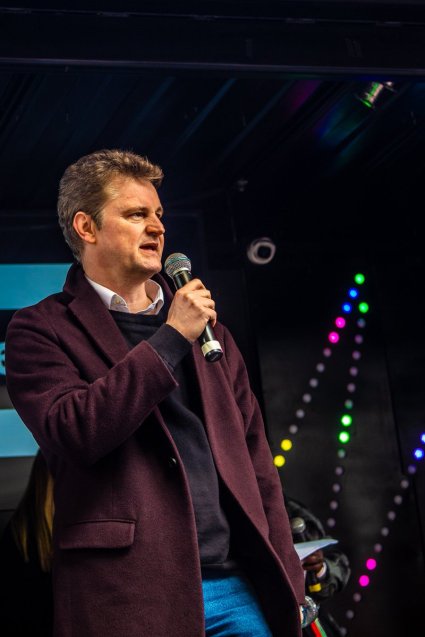
Lawrence Davies at a previous rally

Last week I attended a conference which aims to unite diverse groups fighting racism to form a national campaign to stop the rising tide of prejudice, harassment and ideological views that portray black and brown people ( especially immigrants) as a threat.

The conference was organised by the law firm Equal Justice Solicitors whose chief executive Lawrence Davies made an impassioned speech at the end saying “no ” to all these traits and go on the offensive to get real integration in this multi racial country.

The response is opportune as the forces backing discrimination are rising high here and in the United States. Donald Trump is abolishing any approach that backs diversity, equality and inclusivity and Reform, who are expected to do well in the local elections this week, are committed to abolish the Equality Act, leave the European Court of Human Rights and will need to leave the UN Convention on the elimination of all forms of discrimination against women and girls, which Margaret Thatcher agreed to join in 1986.

Lawrence Davies put up a blog on his newsletter The Intercessor and it very much reflects what he said at the conference so I am reproducing most of it here as it covers a lot of issues and has good examples.

He wrote:”Obviously, at present we are in the midst of an invisible war. The “culture wars” were quietly declared by the Conservative government in 2020. Their aim was to prevent black people empowering themselves by mobilising and using the energy from the #BlackLivesMatter movement to become a political force, such as that which helped the Democrats win the November 2020 election.

“It is an ideological war. Those who do not accept the alleged British way of life (“white is right”) are to be humiliated, made to feel unwelcome, harassed and invited to leave Britian. DEI is to be ended. Unconscious bias training is to stop in the civil service. White (northern working class) people are to be viewed as the real victims, not black people or women. Diversity (and equality) has gone too far. The term “Institutional Racism” is unhelpful and must not be used by the EHRC in any report findings. Black ministers (NB: who ideologically see no racism) were deployed to implement the war tactics to deflect from and provide deniability from their innate racist motivation.

One chess move in that war was the decision by the institutionally racist Home Office (which oversees the institutionally racist Met Police) to implement  the Hostile Environment – a policy of deliberately seeking to make the Windrush generation uncomfortable and unwelcome living in the Britain.

Another was to label all illegal immigrants as criminally minded threats to our way of life and culture.

It started in 2016, although ideologically decades before that. The anti-foreigner element to the Brexit campaign was a rallying call to lone wolf social media racists and incels alike.

Racial harassment at work rose from 16% to 31% in the period of 2016 to 2020. It has become much worse since then.

We had race riots in the summer of 2024. Every alleged crime committed by a black person was taken as a justification to visit personal injury on the whole black community, be it in Southport or anywhere else, due to racist stereotypes about aggressive black people. They are all the same. They have it coming etc.

By contrast, every heinous crime committed by white people of course did not lead to any attacks on the majority white community.  The ideologically motivated, Andrew Tate loving, Kyle Clifford was not stereotyped as the danger that white people pose to others.

Reform UK promised in its manifesto to abolish the Equality Act 2010, removing all legal protection against racism at work, in education and in health services. They believe, like Jeremy Clarkson, in the white man’s right to call a black person a “N…” at work or in a hospital, without accountability, or liability.

In any non-racist, civilised country, the  Law should of course protect the black community from such racism.  However, our Law does not. 30% of black people suffer racism at work but only 1% feel sufficiently safe and empowered to utilise their rights under the Equality Act 2010. 99% of racist incidents therefore are simply suffered and not formally complained of. Any Law that 99% of victims are too afraid to use is NOT fit for purpose.

No incentive for organisations or corporations to change

Of the 4% (within that 1%) who exercise their rights and win, they win small and the employer does not change. It is statistically more likely that the racist co-worker or manager will be promoted rather than sacked. Awards for racism which would attract $10 million compensation in the USA attract an award of less than £12,000 in the UK. There is no economic incentive for corporations and organisations to change culturally over a £12,000 award.

Public inquiries into the worst racist cases from the Lawrence Report to Casey Report in 2023 have uncovered the obvious Institutional Racism but led to no real or structural change.  In fact, matters are regressing. Doreen Lawrence told me that the police are as bad now as they were in 1993.

In any event “landmark” Employment Tribunal cases do not effect structural change. They just enthuse the claimant and the lawyers who believe that such case do lead to change. But 99% of victims of the new rights won’t exercise them. Metaphorically successfully sailing a boat across a hostile ocean, and against the constant current, to land somewhere (hopefully) safe does not change the presiding structural current, or get close to freezing the Moon – that invisible power, wealth, influence controller.

Meanwhile, Racists are becoming emboldened. That’s exactly what happens when the Law does not work to protect people at work, or outside work.

Wayne Hammond (white) called John J Campbell (black, Union official) a “fucking monkey” at work (Sheffield Teaching North Hospitals NHS Foundation Trust) in a heated discussion about union subscription deductions from wages. The Employment Tribunal found that the remark at work was not made by Hammond in the course of his employment and that the Trust had taken all reasonable steps to prevent such remarks being made (even though it is clear that the steps had not prevented the racist abuse), so neither the Trust nor Hammond were liable.

On 20 March 2025 the Employment Appeal Tribunal rejected the union (UNISON) backed appeal. The union failed to challenge the ET Decision on the grounds that it was perverse.

So the current Law permits a black worker to be called a “fucking monkey” at work provided the conversation is about union matters and the Trust has carried out all reasonably practicable preventative steps to prevent such racist conduct.

The current Law also says that if you are called an “N” at work and pinned to the wall by your manager in front of witnesses it is not perverse (legally wrong) for you to receive only £2,500 in compensation. Nor is it perverse for the appeal court to opine that awarding more than £20,000 in punitive damages would bring UK Law into disrepute, whereas in fact the opposite is true.

The current Law says I can (randomly) scream at you at work and cause you to have a mental breakdown and you have 3 years to sue me but if I (deliberately) scream racist abuse at you causing the same injury you only have 3 months less a day to sue me.  Of course, the Law says you have 6 years to sue me if I sell you a defective television…..

Betty Knight posted a post on LinkedIn which tagged a former colleague and effectively stated that the senior team at the college was racist (having previously won a claim at the ET that her constructive dismissal was an act of racial harassment). One white employer (then the head of HR) said she felt harassed by that posting and rather than blocking Betty, instead, chose to report her to the police for criminal harassment. The aggressor said that she did so on her own phone, from her car in the car park, and her employer knew nothing about it and had not authorised the reporting. The ET found that extremely aggressive conduct was not done in the course of the perpetrator’s employment.  The matter is on appeal. Either the EAT will find that (allegedly) popping out of the office to report a black person to the police for a LinkedIn post, that LinkedIn itself had no issue with, is part of the employer’s responsibility under the current Law or it will not. In either case, the current Equality Act 2010 is not fit for purpose. No Law that 99% of race victims fail to utilise protects the race victim. The fear of retaliation and the knowledge that Justice will be very expensive and unlikely to be achieved (4%) means that we have only  cosmetic rights.

We need a new Inequality Act to be implemented as soon as possible to tackle the rising and ideologically driven racial harassment and tackle the underlying and long-standing structural racism.

In the last year, a black man shopping in an ASDA in London, with a black elderly friend who had had a stroke, was surrounded by plain-clothed security staff and asked about their intentions, being the only black customers in the store. He was then asked if he knew how to lift a voodoo curse from a white person.

Similarly,  a black women made her way around Tescos with her daughter only to be surrounded by security staff and asked about her intentions, again being the only black customers in the store. When she complained a manager/supervisor apologised for the matter and offered her “a “bunch of bananas”, smirking at her.

None of the racist white Tesco or ASDA staff concerned were dismissed.

So reading this post, you may feel that won’t happen to me,  and as only 25% of British people admit to be very or a little racist, you may (hopefully) avoid being targeted and harassed at work, but know if unfortunately you end up working with or for a racist colleague, once you complain you will be retaliated against because the current Law does not prevent retaliation,  or the original racist act, any more than the training the Sheffield Trust did. In fact it permits and encourages it.

Anyone telling you that you have rights not to be racially discriminated against is lying. Yes, there are rights but almost all are unable and/or too afraid to exercise them. A right is not a right unless it is enforceable, and can be exercised safely.

Further, 95% of black school children face racist banter and harassment at school. So the next generation, will face a far more racist world than you did. Racist banter is becoming normalised. It is destroying black lives, and people’s sense of safety and damaging their mental health.

As our society becomes more intolerant under the hate-mongering by Reform UK and BRUV (Andrew Tate’s political vehicle to become PM – NB: 27% of men under 40 years of age believe his misogynistic views of women are correct and kids are 5 times more likely to view violence against women as legitimate having viewed his literature).

So do YOU feel safe at work, in education, in the NHS, when contacting the police, online and offline?

What more can WE do to ensure black people, women and the community as a whole are safe from racist sexist (RaX) people?

Finally, if 25% of British people remain admittedly racist, hopefully that means than more than 50% are not racist and therefore in fact that being British no longer means being racist. Because cultures evolve. So being British no longer means being slave-owners or profiting from the slave trade. Or where the rape of an unmarried girl or women is seen as a criminal rape and no longer viewed as damage to property. Our culture did evolve into a fair and more tolerant (ie: less racist), diverse community but war has been declared on that evolved culture and they want to drag us back to the 1970s culture (and some want to drag us back into chains).

It is time to say NO.

NO more.

Be safe, and prosper, “
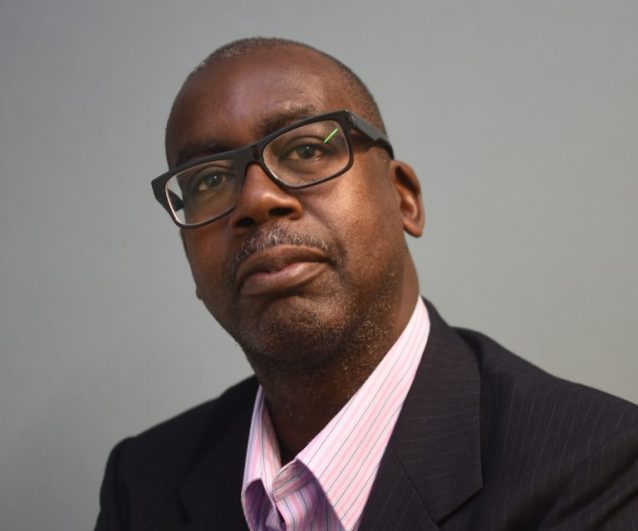
Professor Patrick Vernon

Among those who spoke at the conference were Professor Patrick Vernon, pro chancellor at the University of Wolverhampton and board chair of the Birmingham and Solihull Trust; Professor Miranda K Brawn Ahmed who is chair of People, Culture and Education Committee on Guy’s and St Thomas NHS Foundation Trust, veteran race discrimination campaigner Lee Jasper, Andy George, president of the National Black Police Association; Roger Kline, research fellow at Middlesex University; Hira Ali, an author and Ritka Wadhwa, founder of Cultural Intelligence. All were determined to make a big change so expect some strong action soon.

Three were good examples from the audience notably at Waltham Forest council where the executives and managers were being held to account over cuts and redundancies to make sure black people were not unfairly treated.

Please donate to Westminster Confidential

£10.00

Film reveals Israel deliberately killing doctors and paramedics in Lebanon and Gaza under guise of attacking Hamas and Hezbollah

This week the International Court of Justice at The Hague begins a week long public hearing into whether Israel has broken international law in occupied Gaza through its brutal treatment of civilians, medics and aid workers and the Israeli ban on the United Nations aid organisation UNWRA.

Last week I attended a documentary film screening and discussion event organised by the media group Middle East Eye and the International Centre of Justice for Palestinians. The documentary was a searing account of the life and death of paramedics and doctors trying to save lives as Israel bombed the Muslim quarter of Beirut and the villages of Southern Lebanon. The panelists included doctors and volunteers who had worked in Gaza, and an international law expert who made it clear that these attacks were against international law.

The film by Middle East Eye was made with the co-operation of Lebanese workers and an extremely brave woman reporter, Hind Hassan, who embedded herself with emergency ambulance teams going to the latest bombings in Southern Beirut and the surrounding villages at great risk to her own life.

The “double tap” killings

What she discovered was that the Israelis were using a particular brutal bombing technique known as the ” double tap”. First they bombed a building and followed what happened using drones. Then they came back and bombed again just at the moment when ambulances and paramedics arrived to try and rescue victims. The only intention of the second bombing was not to kill Hezbollah but to kill doctors and paramedics at the scene.

The film also showed that many paramedics and doctors slept in Beirut’s hospitals so they could be on call immediately a bomb dropped during the night. The Israeli’s bombed their sleeping quarters killing a number of them. You can watch the video of the film at the top of this article.

The Israeli’s claim the reason they bomb ambulances is that they are used by Hezbollah to transfer arms and missiles not to rescue people – even cartoons are used to illustrate this. The reporter saw no evidence of this when she was working with the ambulance teams and frankly it would odd to load up an ambulance going to a bombed out zone with weapons – they need the space to take back casualties.

The discussion that followed included first hand accounts from medics who had worked in Gaza including Dr Ghassan Abu Sittah, a renowned humanitarian plastic surgeon, who has worked in conflict zones and in Gaza. He has been banned by Israel from returning to the Gaza strip. Dr Victoria Rose, an NHS plastic surgeon and the chair of the UK’s Specialty Advisory Committee on Plastic Surgery Training, who volunteered to work in Gaza and Yasmine Ahmed, UK director of Human Rights Watch.

Some of the statistics that came out during the discussion were terrifying. All Gaza’s hospitals have either been damaged and destroyed, some 512 schools and 12 universities destroyed, 52,000 people killed and some 5,700 people who are now the lone survivor of once large families. The medics and paramedics have been decimated – there are only two pathologists left alive in Gaza and many teachers and journalists have been killed. if all that is not genocide, what is it? It also suggest that the recent killing of Gaza ambulancemen to be dumped in a mass grave is not some professional mistake but part of a strategy to degrade the country and make it uninhabitable.

As I often do on my blogs there is a full report of the panel discussion on Youtube which I have embedded here. It is over an hour long but it will give a proper flavour of the event.

Video of the panel discussion

Please donate to Westminster Confidential

£10.00
The continuing saga of muddle, delay and lack of accountability over the appointment of a new Parliamentary Ombudsman

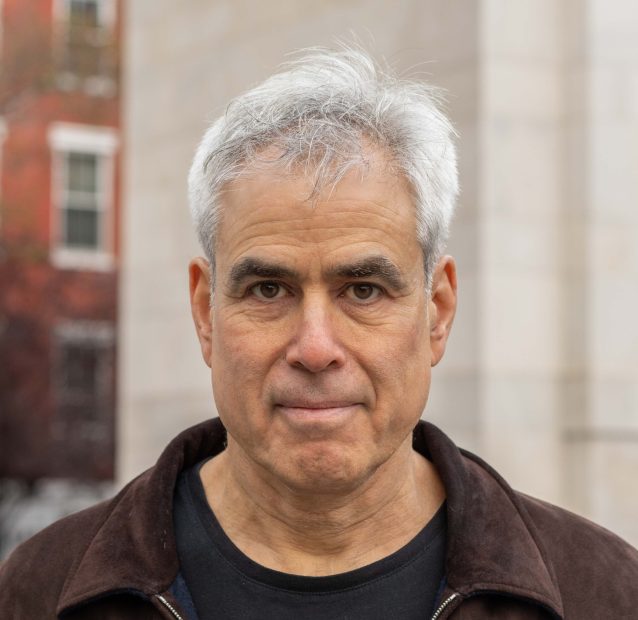
Paula Sussex – a Microsoft Teams picture

You may not have noticed but the UK Parliament and the National Health Service has not had a permanent Ombudsman to handle complaints for more than a year.

Ever since for some unexplained reason the former PM Rishi Sunak blackballed the first choice, Nick Hardwick, a former chair of the Parole Board, for the job despite going through a thorough selection process, interfering with a body which is independent of government, it has been rudderless without a permanent boss. See my blog on this here.

To solve the problem the Parliamentary Ombudsman’s office appointed an interim candidate, Rebecca Hilsenraft, then chief executive, after a meteoric rise since joining the organisation from the Equality and Human Rights Commission, who at least could adjudicate on complaints.

But they would have known then that her appointment would end on March 31st this year – a year after the last permanent Ombudsman, Sir Rob Behrens, retired. You would think that would have given them plenty of time to find a successor and go through a thorough selection process. But Oh no, by the time she reverted back to her old job, nobody had been appointed.

As a result the press office had to issue this statement:

“We are currently awaiting news on the appointment of a permanent Ombudsman.

“Our dedicated staff remain committed to delivering an important service for the public.

There may be a small number of cases we are unable to progress without an Ombudsman in post. Caseworkers will directly contact any complainants whose cases are affected.”

Checking their website yesterday there has not been one new press release nor any new decision of cases announced since April 1.

Then suddenly last week it was announced that the Public Administration and Constitutional Affairs Committee were to hold a pre appointment meeting this week for a new Ombudsman. Extraordinarily the name was kept secret from the public record until this Tuesday.

I gather it was at the request of the favoured candidate, Paula Sussex, because it appears she had not told told her present employer, she is chief executive of OneID, that she had clinched the job.

Now yesterday there was a hearing. The current chairman of the committee, Tory MP, Simon Hoare, recused himself from the hearing as he had sat on the selection board leaving Labour MP, Lauren Edwards, to take the chair.

It was a very underwhelming event both from the appearance of the favoured candidate and the MPs questioning. For a start four MPs did not attend and those who did were mostly newbies whom I thought had yet to get in their stride.

The candidate herself appeared to know little about the working of the PHSO system and even less about the NHS. She appeared to be a management and process person steeped in working for the private sector rather than a person concerned about policy. This was noticed when she was chief executive of the Charity Commission when a profile of her highlighted this. The article is here.

She was also wary of journalists. The same article noted: “she has declined to give interviews: she is said to be unused to dealing with the media, disconcerted by the amount of press attention the commission attracts and confirmed in her reluctance to speak by any coverage she perceives as negative.”

Considering she admitted during the hearing that the Parliamentary Ombudsman had too low a profile – it strikes me she is going to have to be more proactive with the media if she wants to change it.

Her previous jobs have involved her as a consultant on new technology, working at a top level at the transactional Students Loan Company and for private industry.

Her most recent role is as a non executive director with the Infected Blood Compensation Authority which will ” sadly”, as she said, to have to give up. Given her sparse knowledge of the workings of the Parliamentary Ombudsman’s Office I was rather surprised she did not mention that her fellow non executive director is none other than Sir Robert Behrens, the last Ombudsman, who could have given her great detail about its inner workings.

Also it is rather ironic that this body – which despite its name is a private contractor not a public body- is to face a recalled two day hearing next month of the Infected Blood Inquiry under Sir Brian Langstaff because of public dissatisfaction with its handling of compensation and a slew of other complaints. Jenni Richards KC , the inquiry’s counsel, has just published a huge list of issues. See here.

Given some of these issues will be the very bread and butter work that a Parliamentary Ombudsman and Health Service Ombudsman would have to handle, someone might ask why she presided in an organisation that now faces such searching questions for not doing its job. Of course its minutes aren’t published so we won’t know whether she raised such issues or went along with the management.

Altogether I am sceptical of whether there will be great change at the Parliamentary Ombudsman’s Office and I am afraid her attitude and the lax scrutiny by the one committee that can hold it to account will mean any great change.

The committee of course do not agree and think she is wonderful. This is their conclusion In a report published after the hearing.

“We are satisfied that Paula Sussex has the personal independence and professional skills necessary to fulfil the high profile, demanding and varied role of Parliamentary and Health Service Ombudsman. Paula
Sussex is an excellent candidate with a track record of organisational transformation with a focus on improving the effectiveness and external reputations of the organisations she has led. Her professional
background and experience as Chief Executive will aid her in giving the PHSO direction and certainty. We wish her every success in this role.”

Some 114 people applied for the job at a salary of between £171,000 and £189,000 a year -42 per cent were women.

Please donate to Westminster Confidential

£10.00

Generation Dumbed Down: Smart phones are destroying teenagers ability to read, write and study maths

Jonathan Haidt

Yesterday I attended an extraordinary lecture by Jonathan Haidt ( pronounced height) a US social psychologist revealing extremely worrying trends following the invention of smart phones on kids education’s prospects.

It showed both in the UK and the US that educational attainment – far from rising – is dropping and that issues like mental illness and self harm are rising.

His research can precisely connect the emergence of the ubiquitous smart phone and a dramatic change in attainment in schools, increased loneliness among teenagers, who then become vulnerable prey to malevolent influencers or in the most extreme cases tricked by criminals and paedophiles.

We are all aware of teenagers being glued to their phones – even when walking down the streets – and might have thought this is a passing phrase with nothing to worry about. This research suggests otherwise.

Situation in UK worse since Covid lockdown

Part of the increase in isolation comes from this present generation’s experience of the Covid pandemic and lockdown. One might then expect to see some bounce back when life returned to normal. But his research shows the opposite, the situation in the UK and US is worse post Covid.

The main players in this are undoubtedly short videos on Tik Tok, Snapchat and Instagram – which provide addictive instant distraction and gratification for teenagers, and make more detailed lessons studying books or complicated maths formula seem boring. Add this to the distractions of X Box computer games and kids can – and sometime do – have 24 hours glued to screens only to be tired and irritable the next day.

Jonathan Haidt pointed out in his lecture that puberty is also the time when the brain develops new connections allowing teenagers to understand more complex concepts and ideas as well as emotional development. But fed on a permanent diet of addictive videos and porn is not helping the brain to develop and probably damaging it.

Given the power of Big Tech to influence politicians – brilliantly illustrated recently when a victorious Donald Trump was surrounded by billionaire tech barons- can we do anything about it?

The answer according to him is yes. Schools can play a big role in curbing the rot by banning the use of phones while teenagers are learning. My daughter, who teaches at a private school in Luton dealing exclusively with kids who have been expelled from other mainstream schools, all phones have to be handed in at the beginning of the day and returned when they leave. Even the staff are restricted from using phones so as not to set a bad example to the kids there.

Schools – and there are by no means enough of them – that have done this according to his research have seen a dramatic increase in educational attainment in English, maths and science and a dramatic decrease in disrupted lessons making it easier for teachers to do their job.

Sir Keir Starmer should be concerned

The government ought to be concerned about this. Sir Keir Starmer, has set great store on increasing the skills of a new generation so he can get the growth needed to boost jobs and the economy. But it is being undermined by this trend where the latest generation are being continually distracted by what they see on their smart phone. Employers are not keen to take on people whose spend time exclusively on their phones and as a result have worse literacy and mathematical skills.

For those who want to follow this up you should go to Jonathan Haidt’s website https://www.anxiousgeneration.com/ where his research team has all the details you need to know about this trend and its implications seem to have passed us all by.

Please donate to Westminster Confidential

£10.00
Mass use of phones

Teens in circle holding smart mobile phones – Multicultural young people using cellphones outside – Teenagers addicted to new technology concept

AI instantly speeded up my NHS medical treatment – but MPs say government has a long way to go to achieve universal provision

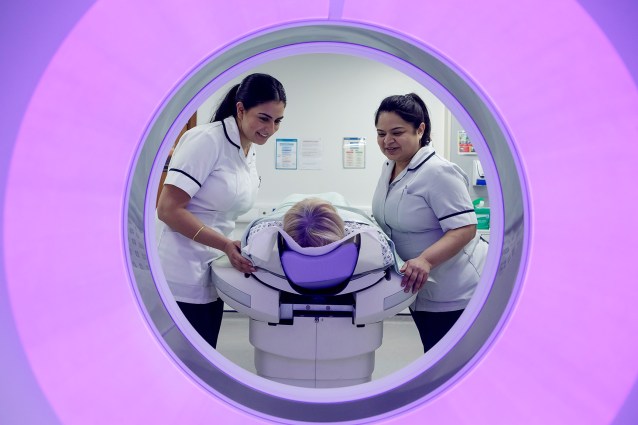
Scanner at the Paul Strickland Scanner Centre charity at Mount Vernon Hospital

I am currently being monitored by the NHS after having day surgery last year to remove a melanoma on my lower back. As part of the cancer recovery treatment I am being checked every three months at Mount Vernon hospital with both a CT and MRI scans to make sure there is no recurrence and having my skin checked by a dermatologist at Hemel Hempstead hospital.

Two weeks ago I had both scans at the Paul Strickland Scanner Centre, run by an independent charity, at the hospital. Imagine my surprise and nervousness when the CT scanner said to me as I was about to go home to stay behind because doctors were taking a look at my CT scan.

Then Luke, a junior doctor at Mount Vernon, turned up to tell me the scan had discovered blood clots in my lung. What was really amazing to me it had been discovered because the scanners at the charity use AI to check CT scanner. The AI showed up something was wrong which led the radiographer to examine the scan more closely to reveal multiple blood clots.

As a result I got instant medical treatment instead of waiting for the standard 14 days for the results of the scan to come back. The doctors and nurses gave me a through check on the spot – blood pressure, an ecg, a blood sample and checks on my breathing before prescribing blood thinners to start treatment that night.

Undetected blood clot produced no serious symptoms

If it was not for AI for the last two weeks I would have had a untreated blood clot on my lung without me knowing anything about it. It was virtually symptomless apart from a dull pain in my upper back when I was driving which I had put down to old age rather than anything else.

What I didn’t know is that Paul Strickland Scanner Centre, a charity which relies on donations, is at the cutting edge of linking AI with radiology. Its first introduction of new AI linked scanners was in 2022 -way ahead of other centres.

At the time Mr Will McGuire, the Deputy Superintendent for MRI at Paul Strickland Scanner Centre, said:“It’s the first time we have used deep learning, often referred to as artificial intelligence, as part of the image acquisition. The scanner software has been trained on thousands of scans. When the radiographer runs the scan, the scanner takes less data from the patient and the ‘Deep Resolve’ software then basically fills in the gaps based on its knowledge. The software packages we will get will both reduce ‘noise’ on scan images and provide radiologists with a better definition image.”

New uses for ” Deep Resolve ” software which could benefit kidney, prostate and breast cancer patients are also being pioneered this year. For the first time MRI scans could analyse bone structure as well as soft tissue speeding up treatment and reducing the need for both CT and MRI scans. The charity is planning to demonstrate this new technique at the European Congress of Radiology this year.

The initiatives by the charity show how dramatic the use of AI could transform services inside the NHS to benefit patients and provide services. I gather from Hillingdon NHS Trust where the hospital is based – though it is run by the East and North Hertfordshire NHS Trust – that there is also a trial using AI among hospitals in North West London to provide instant information after chest X rays which would speed up treatment.

The latest information on the state of public provision of AI came from a report by the Commons Public Accounts Committee after a National Audit Office report reveal very uneven provision.

The report concluded that the government is facing significant challenges to introduce AI across Whitehall and the NHS – with out of date computer systems and a big shortage of skilled staff.

It says :”For AI to be used well, it needs high quality data on which to learn …too often Government data are of poor quality, and often locked away in out-of-date, or ‘legacy’, IT systems, which are partially defined as “an end-of-life product, out of support from the supplier, [and] impossible to update…” An estimated 28% of central government systems met this definition in 2024. Approximately a third of Government’s 72 highest-risk legacy systems still lack remediation funding. The report warns that there are no quick fixes here, and calls for funding for the remediation of this kind of technology to be prioritised.”

“Another barrier to the safe and effective adoption of AI by Government are longstanding and persistent digital skills shortages. Around half of roles advertised in civil service digital and data campaigns went unfilled in 2024, and 70% of Government departments report difficulty recruiting and retaining staff with AI skills. The PAC has long raised concerns about digital skills gaps in Government, and is sceptical that the Department for Science, Innovation and Technology’s (DSIT) planned digital reforms will address the problem.”

Government’s ” sclerotic digital architecture”

Sir Geoffrey Clifton-Brown MP, Chair of the Committee, said:“The Government has said it wants to mainline AI into the veins of the nation, but our report raises questions over whether the public sector is ready for such a procedure. The ambition to harness the potential of one of the most significant technological developments of modern times is of course to be welcomed. Unfortunately, those familiar with our Committee’s past scrutiny of the Government’s frankly sclerotic digital architecture will know that any promises of sudden transformation are for the birds.

“A transformation of thinking in Government at senior levels is required, and the best way for this to happen is for digital professionals to be brought round the top table in management and governing boards of every Department and their agencies. I have serious concerns that DSIT does not have the authority over the rest of Government to bring about the scale and pace of change that’s needed. We hope the recommendations in our report aid the Government in succeeding in bringing public sector systems into the 21st century for their users, where other efforts have failed.”

Perhaps MPs on the committee and NHS government ministers should go and visit the Paul Strickland Scanner Centre at Mount Vernon Hospital in Northwood and see how they have pioneered linking AI to radiology. It is anything but sclerotic and ministers might learn how to avoid some of the pitfalls of the great transformation they are promising. Many patients, including me, would be very grateful if they did.

Please donate to Westminster Confidential

£10.00
An appeal for ten brave women who want to challenge a bullying employment judge

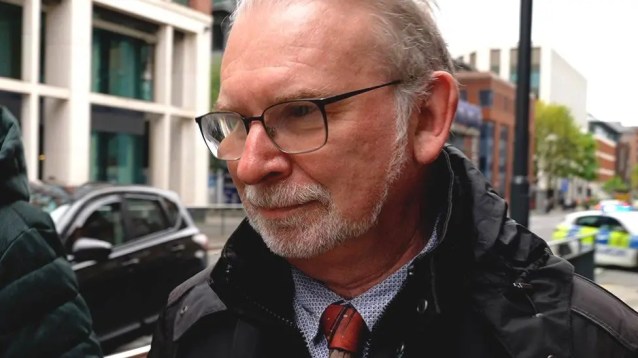
Judge Philip Lancaster

I don’t usually run appeals for money on my blog but I am making an exception in this case because of the huge injustice in the employment tribunal system that allows some judges to insult, berate and patronise women who come before them.

if you want to donate this is the link. DO NOT CLICK ON THE YELLOW BUTTON ON TOP OF THE PAGE WHERE IT SAYS DONATE – as this will go to the general fund for the Good Law Project and not to the women. INSTEAD SCROLL DOWN AND CLICK ON DONATE BY CARD.

To do so they have to get a judicial review against the Judicial Conduct Investigation Office which is both refusing to investigate their complaints and ironically believes it is above our freedom of information laws so it doesn’t have to answer any questions from the press or the public on simple facts like how many complaints there have been against judges. This view is not shared by the Information Commissioner who ruled it should comply with FOI but the Ministry of Justice is planning to appeal this decision.

The case the women want to bring is not just against the bullying Judge Philip Lancaster – but against the whole employment tribunal system which doesn’t allow access to judges’ notes and does not produce court records for all cases and even when it does makes sure it is very expensive to get hold of them.

The women’s case has been taken up by the Good Law Project but the women still have to raise some £13,OOO to cover legal opinions. So far they have raised just over £5000. The case was covered by me in Byline Times here. Now it has been taken up by the BBC programme Look North.

You can see their report below.

BBC Look North coverage of the complaints against Judge Lancaster with interviews with Alison McDermott and Dr Hinaa Toheed.

The treatment of management and diversity consultant Alison Mcdermott, by Sellafield who spent £750,000 on top flight lawyers to oppose her claim at an employment tribunal presided over by judge Lancaster led to her local MP Anna Dixon to request an apology from Sellafield’s chief Euan Hutton at a recent Parliamentary hearing. None was forthcoming.
Dr Hinnha Toheed, a GP, tells how she was shouted at 16 times by Judge Lancaster during a maternity discrimination hearing
She says: “Judge Lancaster shouted at me 16 times, called my case an “omnishambles” before we had even begun, and showed open bias and contempt throughout the hearing. The experience was devastating. My barrister formally documented his behaviour and submitted a written statement to support my complaint. Yet despite this evidence, the system protected him — and he remains in post to this day.”

She is one of two doctors and a nurse who have put in complaints about Judge Lancaster.

These women need support to get to the position of bringing a judicial review because of the enormous cost of doing so – another barrier against people being able to challenge the judiciary. Their legal team include Emily Soothill of Deighton Pierce Glynn, Dr. Charlotte Proudman, and a prominent King’s Counsel have agreed to capped fees. But they need this money to be able to pay for this advice – and that is why there is a need for this crowdfunder.

II have chosen not to call for any donations for my site on this blog so the money can go direct to the women.

Latest interviews on Salford City Radio on developments over mediation for 50swomen

Last week Salford City Radio’s Ian Rothwell devoted a whole programme to the CedawinLaw case for mediation to solve the impasse of compensation for the 50swomen who faced a six year delay in getting their pension. Three speakers discussed the issues. Jocelynne Scutt, a former Australian judge and anti discrimination commissioner for Tasmania, gave an update description of the present legal position and how you do not have to court to start a mediation process. Janice Chapman ,a 1950s woman, gives a heart rending account of how women have already been discriminated against before they got their pension and then had to wait six more years before they could get it and how alternatives to work longer are often not possible. I give an interview questioning the wisdom of Waspi’s legal case for partial maladministration and how the All Party Group on State Pension Equality is moving towards insisting that all groups campaign together rather than the division between Waspi and all the other groups which has bedeviled the issue for years.

Here are the three interviews:

Please donate to Westminster Confidential

£10.00
MP calls on Sellafield chief executive to apologise to whistleblower after spending £750,000 to silence her

Euan Hutton, chief executive of Sellafield, found himself being called to apologise in public to whistleblower Alison McDermott by her local MP, Anna Dixon at a highly charged hearing of the Commons Public Accounts Committee last week.

Anna Dixon MP

The chief executive was clearly embarrassed to face questions about spending such a lot of public money to silence the whistleblower after she produced a report about the toxic culture of bullying and harassment at the UK’s biggest nuclear waste plant.

Alison McDermott, a well respected management and diversity consultant, had faced a series of tribunals and costs hearings.which cost Sellafield over £750,000 by employing top flight lawyers.The main hearing was before judge Philip Lancaster, a judge now facing complaints from 10 women, including Alison, for his patronising and misogynist approach to female litigants who appear before him.

Anna Dixon,Labour MP for Shipley, raised the issue at the beginning of the hearing which was to examine Sellafield’s record so far in running down the waste facility over the next 100 years.

She pointed out that Alison had been head hunted through Capita to work for Sellafield and was then employed directly because of her excellent work. After she produced a report revealing a toxic culture of bullying and harassment at Sellafield this all changed and she was removed from Sellafield.

She told him :” I understand that at that time you did not invoke your whistleblowing policy or take a statement, as required by your own policy. Instead, you spent some £750,000 on legal fees. Perhaps you would confirm that. You refused mediation for three years, and pursued Alison for costs twice and lost on both occasions. As you will know, the remit of this Committee is concerned with the proper ethical use of public funds. As the new CEO, Mr Hutton, I would ask you whether you think this was a good use of public money.”

….” I have seen the treatment of other whistleblowers, which is similar to the treatment of my constituent, that has serious detriment to health, mental health and indeed professional reputation. Alison, as you probably recognise, is sitting here in the public gallery. I recognise that you are not willing to say very much. I am disappointed in that, because most of this is historic and in the public domain. I wonder whether you might apologise to her for the way that she has been treated by Sellafield.”

Mr Hutton replied implying that the situation in Sellafield then was ancient history.

Euan Hutton, chief executive Sellafield Pic credit: gov.uk

“Over the last seven or eight years now, we have made really big strides forward in addressing some of the issues that there were at that time.
You might say that I would say that but, in the most recent staff survey, which concluded, I think, a fortnight ago—I only say “I think” because I cannot remember whether it was a fortnight ago—we have seen significant improvement.”

Anna Dixon concluded: “I am going to come back later and challenge whether these problems have really completely gone away. I do not think that I heard an apology, but I hope you will at least agree to meet with me and my constituent, Alison. “

Since the hearing Alison McDermott has written an open letter to Mr Hutton, David Peattie, group chief executive of the Nuclear Decommissioning Authority and Paul Vallance, a non executive director of the NDA saying:

“The PAC’s examination has now raised serious questions about your leadership and your organisations’ management, culture, and safety practices.

I’ve made no secret of the toll this has taken on me. But each time I was faced with the choice between comfortable silence and speaking the truth, I chose the latter— without hesitation. That decision is one I will always carry with quiet pride. I can look myself in the mirror, sleep peacefully, and carry a clear conscience—something that is priceless.

I can’t help but wonder: how do you reconcile your actions?

What kind of man do you see when you look in the mirror? “

The PAC has now to produce a report following the hearing. I somehow think it will not be a glowing endorsement of practices at the UK’s biggest waste facility.

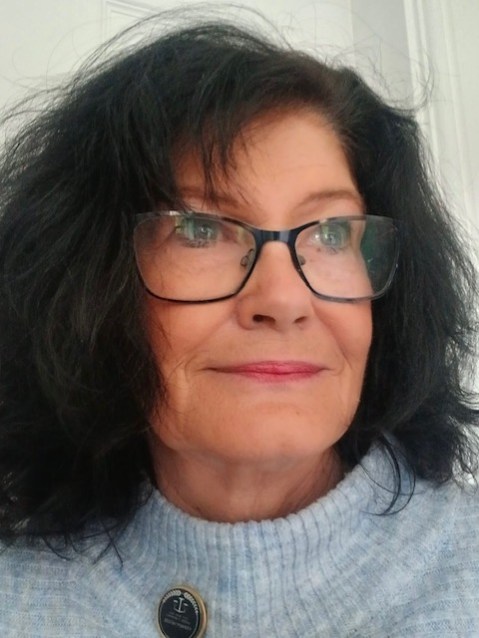
Alison McDermott

Please donate to Westminster Confidential

£10.00

Exclusive: Top executive who offered secret deal to cover up whistleblower case gets promotion to new national role in the NHS

Daniel Elkeles, moving from CEO of the London Ambulance Trust to NHS Providers. He is the former chief executive of the Epsom and St Helier NHS Trust.

In May Daniel Elkeles will become the £240,000 a year chief executive of NHS Providers, a membership body that covers all hospital, mental health, ambulance and community trusts. His job as NHS Providers will be to “to deliver high-quality, patient-focused care by enabling them to learn from each other, acting as their public voice and helping shape the system in which they operate.”

He will also following the demise of NHS England be a key link between the trusts and Wes Streeting, the health secretary, and the PM Sir Keir Starmer, whom he met in his present role as CEO of the London Ambulance Service.

His brief as NHS Providers say is to “build effective relationships with key stakeholders in central government, with regulators and across healthcare; champion member interests and raise their profile positively in the media.”

His appointment was lauded in the trade magazine the Health Service Journal, while the chair of NHS Providers, Professor Sir Terence Stephenson, said:

“He will spearhead our new strategic vision and help members deliver improvements for patients, service users and the communities they serve during a period of immense change and challenge in the health service.

“We have been through a robust process to find the right individual to provide leadership and support for our members, to influence key decision makers, and inspire and lead our staff team, reflecting our values and our commitment to becoming an anti-racist organisation.”
The HSJ went further saying: “During his time at Epsom and St Helier, Mr Elkeles led on plans, and secured funding, to build a brand new £500m specialist emergency care hospital in Sutton.

He also oversaw a “significant improvement” in patient care, quality, finance and leadership, culminating in the organisation being rated as “good” by the CQC.

The CEO also led on initiatives to improve culture and morale, resulting in Epsom and St Helier having strong scores in the staff survey in measures about equality, diversity and inclusion, as well as staff health and wellbeing.”

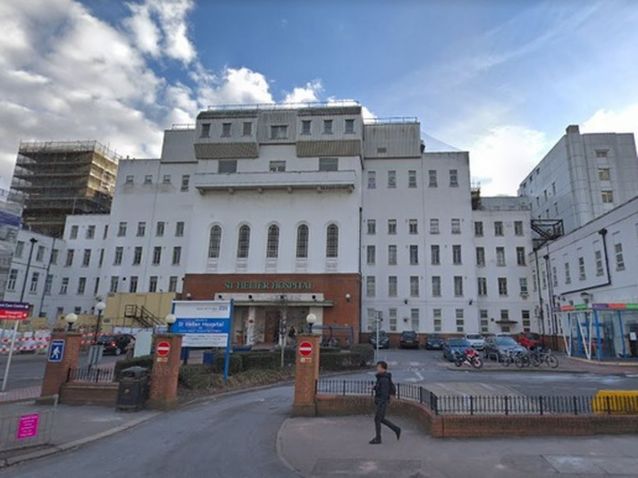
St Helier Hospital

What is missing from this plaudit is that the main hospital in that trust, St Helier, is falling down and in desperate straights with leaky roofs, brown water in the taps, and nothing is going to be done to replace it until 2036 under Labour’s current hospital building programme. Nor does Mr Elkeles appeared to have done anything much about it when he was chief executive.

But far worse this ” robust process” to select him as the best person for the job seems to have missed two rather key and worrying incidents in his career at St Helier. One led to prolonged employment tribunal hearings, the other reached the desk of Sir Robert Behrens, the former health service commissioner.

The employment tribunal case involved an extremely competent doctor who was dismissed after being branded as ” unfit for purpose” – a legal term that doesn’t exist for people -at a hearing organised by the trust. I am not naming her in this article but people may find part of the story familiar to readers of my blog.

What I am concentrating on is the role of the chief executive in dealing with her case.

Among the papers released for the tribunal were private emails between Mr Elkeles and her, which then became public documents.

In one Mr Elkeles offers a deal for her to leave the trust and escape what would amount to a disciplinary hearing if she drops any action against the trust.

He wrote: “We ensure MYT[ Mid Yorks NHS Trust] agree that you can go there and we jointly set up with them the required training and support
2) ESTH will pay your salary for a period of 6-12 months (to be agreed) whilst you are at MYT
3) At the end of the agreed 6-12 months period ESTH will no longer be your employer
4) ESTH agree to cease the MHPS process[ this was a hearing questioning her competence]which means we can find a way to ensure you are re-validated (not my area of expertise but i am sure there will be a
way)
5) You need to drop all the actions you are taking against ESTH.
If we can agree this then I would hope that everyone can move forward positively.”

When she refused to do this he wrote back: “I made a proposal on how to provide a constructive ending to this process on Friday. I did not expect to receive this type of reply from you which in my view does nothing to try and find a solution to this issue but just perpetuates the current impasse we seem to have reached. I therefore withdraw my offer and any input from me as CEO to resolve this informally. The hearing that is scheduled for Monday and Tuesday next week should continue as planned and reach whatever conclusion the panel believe is appropriate.”

What he was asking was that she withdrew any allegations against the trust of sexism and racism ( she was the sole woman at that level in that department and from an ethnic minority) and also hide a whistleblower claim about an avoidable death of a heart patient there which the trust admitted later in public they avoided reporting to the local coroner.

Her lawyer also produced statistics showing that despite the trust employing, like most London trusts, a very diverse range of people, it did not have a very good record in treating them.

As far as validation was concerned the General Medical Council revalidated her anyway – despite multiple claims of incompetence from the trust which were all dismissed by an independent medical expert asked to examine them.

The second case which involved the widow of a patient who died in agony at St Helier Hospital with nurses refusing to give him pain relief was covered on my blog. You can read the case here.

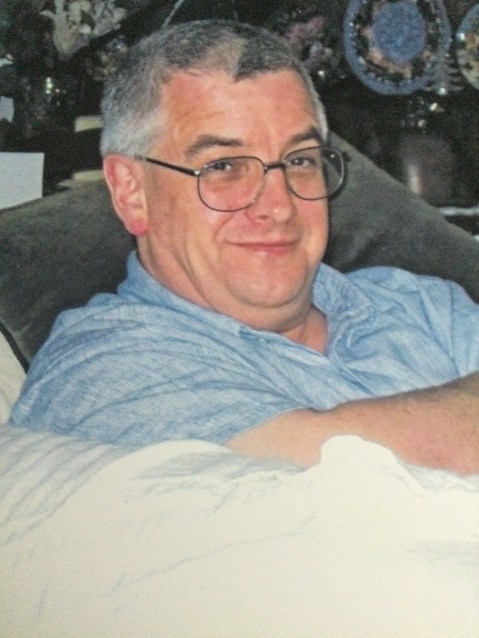
Robert Sheppard: Left to die in agony by St Helier Hospital

Her complaint to the Health Services Commissioner about his treatment led an apology from the chief executive but other matters by the management were brushed under the carpet. This included the fact that Robert Sheppard had picked up a bacterial infection called klebsiella which attacks people with a weak immune system and it was never notified by the hospital to the authorities, In fact his initial death certificate which would had to be provided by the hospital’s doctors airbrushed out that he had the infection.

Wendy , his widow, said:” Dying with dignity was something not given to Robert. I will never forgive St.Helier Hospital. It’s failures towards Robert were ‘swept under the carpet’ by the Hospital management.  My complaints were misconstrued to make St.Helier look in a better light and incidents that happened weren’t recorded in Robert’s medical notes so I am told. “

All this raises questions about how Daniel Elkeles will do in his new job. Will he really speak truth to power or will he bury issues from public scrutiny to protect the reputation of the NHS trusts , who are his members? Will patient safety and equality and race issues be tackled with vigour or sacrificed to make sure his organisation gets a good press.

Please donate to Westminster Confidential

£10.00
Department of Transport excludes over one million disabled drivers from the green car revolution

Electric car charging at home, Clean energy filling technology. Pic credit:www.freepik.com

A damning report from MPs today reveals that 1.2 million disabled drivers have been blocked by the government from being able to use electric charging points cars at motorway service stations and garages.

While the UK is on target to increase the number of charging points for the growing number of electric cars not one of the 73,000 charging points reaches accessibility standards laid down by the government for disabled people to use them.

The reason is that to install disabled friendly charging points has been left as a discretionary option for installers rather than a mandatory requirement by government.

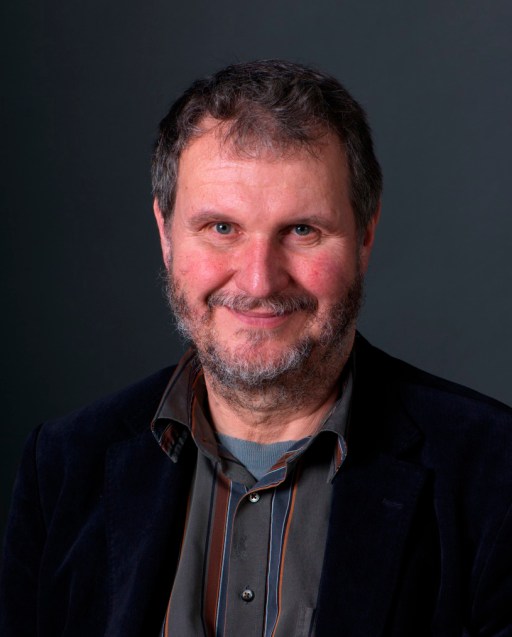
Sir Geoffrey Clifton-Brown MP

Sir Geoffrey Clifton Brown, the Tory chair of the Commons Public Accounts Committee, said: “It is of deep concern that the needs of disabled drivers are being ignored. Not a single charge point in the country is currently fully accessible. We are risking baking a serious injustice into the fabric of a major part of our national infrastructure. Government similarly needs to understand how to remedy financial inequalities for those who have no choice but to use public charge points. Our report therefore challenges the Government – it must move at pace to overcome current delays and encourage take-up, while taking the time to ensure no-one gets left behind in this all-important shift to the future.”

The report warns: “Many disabled people are reliant on their cars as existing public transport does not adequately cater for their needs. Failure to address problems with the uptake of the standard will mean that the public charge point network will continue to develop without meeting the needs of drivers with disabilities.”

The treatment of disabled motorists reflects the disparaging attitude both the last Tory and the present Labour government seem to have for disabled people. Rail travellers are similarly badly treated with patchy provision to access station platforms and the London underground is only partly accessible with Euston underground been seen as the worst station in Europe. Compare this to the excellent provision for disabled people on public transport in Singapore, Sydney, Adelaide and Rio. I have had a good experience taking my late wife in a wheelchair round these cities.

And it comes at a time when the new government is planning a £6 billion cut in disabled people’s benefits and is expecting the disabled to get to work without providing proper facilities for them to travel there.

The treatment of the disabled is just one criticism of the present electric charging provision. The report found a very uneven distribution of electric charging points round the country. London, where ministers mainly live, has 250 charging points per 100,000 of the population. While Northern Ireland has just 36 per 100,000 population – suggesting that people taking their electric car on holiday there might have problems. In England the worst areas for provision were the North West, including the Lake District and the East Midlands, including Lincolnshire.

Most charging points are in urban not rural areas and there is also a problem connecting charging points to the national grid – which suggests that when they are used more widely we might find them running out of juice.

The previous government set aside £950 million to do this – but the report reveals nothing has yet been spent as pilot projects were subject to delays.

There is also an economic problem with public charging points paying 20 per cent VAT while those who have the space for a home charger paying only 5 per cent VAT. So it is much more expensive to use public chargers.

There may be a further problem for the many people who live in terraced houses who install an electric charger and then put cables across the pavement and roads to charge their parked cars.

So much for the green revolution which we are all promised. It is certainly happening, but not been managed well and disabled people are just an after thought as far as policy makers are concerned.

Please donate to Westminster Confidential

£10.00