How EU law hobbled Parliament investigating worst mis-selling scandal in history

CROSS POSTED ON BYLINE.COM

The scandal of the mis-selling of Personal Protection Insurance is well known as one of the worst financial scandals in history.

Some 12 million people have received £22.5 billion in compensation from  unnecessary Payment Protection Insurance (PPI) schemes sold to gullible people.

And to compound it a National Audit Office report  (NAO) last week highlighted how cold calling claims management companies had ripped off £3.8 billion and £5 billion of the compensation paid for work which could be done by claimants for free.

What might also shock people – particularly in the current debate over whether we should quit the European Union – is the revelation by the NAO  that it could not complete the investigation  to its satisfaction because a European Union directive banned Parliament from getting confidential information. I have written about this in this week’s Tribune magazine.

The situation is this. As well as finding out the scale of the problem the NAO wanted to know -on behalf of you the taxpayer – whether the public watchdog the Financial Conduct Authority had done its job its ensuring the many banks and financial organisation had smartened up their acts to prevent a repetition.. Particularly as they are fears that there could be a new scandal involving the mis-selling of annuities and pension schemes.

The FCA had collected this information but refused to hand it over to Parliament’s watchdog.. The reason it turned out is that the Financial Services and Markets Act 2000 combined with EU law restrictions prevents them obtaining the information from the FCA.

As the NAO said: “ This limits our ability to reach a judgement on the FCA’s value for money, as we could not carry out a full assessment of the effectiveness of the FCA’s actions…. we have only limited evidence on how the FCA’s actions have changed firm behaviour, and how effective its redress schemes have been in providing compensation to consumers.”

The NAO tried to get around this by contacting some 20 banks and financial companies and asking them to volunteer to disclose the information. Fifteen did reply but five including two of the companies with the largest number of complaints, Barclays and British Gas Services, declined to provide any information.

The 15 who did reply included HSBC Bank plc; Lloyds Banking Group; MBNA Limited; Nationwide Building Society; NFU Mutual Insurance Society and Santander UK plc.

But a NAO spokesman said: “The information we got from the others while helpful, didn’t enable us to carry out a full assessment of the effectiveness of the FCA’s actions.”

What  is the EU doing putting  the interests of banks above people and Parliament. The NAO is now asking the Treasury to pass a law allowing it some access to this information but it will have to bow to EU law on how much can be revealed.

I am not a supporter of Brexit but it seems to me there is something very wrong here that needs changing. I am surprised that the vociferous campaigners for a No vote have not latched on to this – even if it is in the small print of the report. The NAO is obviously an independent source with no axe to grind over Europe. But it has provided campaigners who say we are not in control of our country with a very potent example on a very serious issue.


How the Legal Ombudsman’s Office ripped off the taxpayer with a £1m irregular incentive scheme

CROSS POSTED ON BYLINE.COM

What  would you think if the organisation that handles your complaint against a poorly performing solicitor or barrister was itself ripping you off as a taxpayer?

That  is the extraordinary situation in the Office of Legal Complaints or Legal Ombudsman for the last six years where well over £1m extra cash has been paid to its staff  without approval from anyone just to keep them from taking jobs in the private sector.

This was exposed last month in a  virtually unreported disclosure from the National Audit Office. I have written it up for Tribune magazine this month.

The office handles tens of thousands of complaints every year from the general public about poor service from legal professionals – whether it is over conveyancing,personal injuries, wills or family disputes. What emerged about what was going in this office of over 200 people has led to resignation or dismissal  ( whether you take his version or the Ministry of Justice’s ) of its £167,000 a year head, Adam Sampson  who has been described by his permanent secretary as “ not a fit and proper person” to continue  as an accounting officer to Parliament.

He presided over what the NAO called a ” novel and contentious” irregular payment scheme which saw its top officers and the rest of his staff benefit from pay enhancements well beyond anything else available in Whitehall currently suffering pay freezes and one per cent pay rises.

The two unauthorised pay schemes were aimed to retain legal staff who might be tempted to leave and join the private sector. One for senior executives was according to the annual accounts “a benefit in addition to salary and was ­believed by the OLC at the time to be necessary to attract and retain the best candidates nationally to senior posts within the organisation”. Some £33,000 was paid out the last financial year – ­altogether some £348,000 has been paid over six years.

The second scheme for general staff allowed up to an extra 3 per cent to be paid on top of their salaries to encourage them not to leave to join the private sector. This cost nearly £900,000.

Neither scheme was authorised by the Ministry of Justice and neither was spotted for four years either. Successive Lord Chancellors -Kenneth Clarke and Chris Grayling didn’t notice.

On top of this there is suggestion of  alleged expenses fiddling by the chief executive.

The report said an arrangement from 2009 assumed “Mr Sampson to be living in Birmingham [where the OLC offices were based from January 2010] despite his only spending up to two nights a week in Birmingham away from his London home.”

The claims involved train fares which could not be solely justified for business use between London and Birmingham.

The Ministry has reported him to the tax authorities for not declaring them as a benefit in kind. Altogether he had received over £27,000 in benefits in kind over the last two years in office.

What is extraordinary is that the two schemes are still in existence today and the Treasury is still trying to end them this year. The reason is that the contracts drawn up by lawyers are so watertight that the Treasury is having difficulty unravelling them.

One can only say that if the lawyers at the Office of Legal Complaints spent as much time providing a good service to the  public as they did in drawing up lucrative contracts for themselves Whitehall would be a much better place.

Did Boris steal Ken’s best ideas for London?

The site Londonlovesbusiness is rather an extraordinary place to find an interview with Ken Livingstone which is actually sympathetic to the former Labour mayor and critical of Boris Johnson.

But two articles  by Robyn Vinter in the past week give Red Ken a lot more credit than Blue Boris. You can find them here  and here . The second include a statement from Boris’s spokesman  listing all the things Boris says he has done for the capital.

Basically the articles say it was Red Ken who originally put forward the idea for Crossrail, London Overground. the Olympic Games and  what became to be known as Boris Bikes.

And there is also an extraordinary claim by Ken that you won’t find much evidence in City Hall archives that he was responsible for any of them.

The reason is he says is: “One of the things Boris’s team did once they won in 2008 was go through all the dates and records and websites at City Hall and remove my name from all of them and it took some time doing that.”

We have all heard that history is always written by the victors but to  change the actual archives used for people to research history is a step too far.

Given we have a key election for Mayor this year I put up links to these articles so people can judge for themselves before casting their vote.


How Kenneth Clarke and Chris Grayling’s failed commercial venture cost us the taxpayer over £1m

CROSS POSTED ON BYLINE.COM

An extraordinary report published by the National Audit Office today on ” Just Solutions” – the commercial arm of the Ministry of Justice set up by former Lord Chancellor Kenneth Clarke – reveals that taxpayers have lost over £1m on the failed venture.

Remember this was promoted by Chris Grayling so the Ministry of Justice could make money by selling prison expertise to regimes with appalling judicial systems like Saudi Arabia and Oman. It was closed down by Michael Gove when he became justice secretary after the election.

Now the NAO reveals that not only was this unethical but it actually cost the taxpayer money. Indeed one can see how desperate the government might have been to sign a  £5.9 m contract with Saudi Arabia and further contracts with Oman – as this would have been the only way it could have made a profit out it.

Instead over four years  from 2012 to this year  it lost £302,000, £390,000 £317,000  and £141,000 respectively. leading to a £ 1,150,000 cumulative loss for the taxpayer.

And its scope was much wider than people realised with projects in Nigeria, the Seychelles, Libya, Estonia, Mauritius, Bermuda, the Cayman Islands as well as private study visits to drum up business in China, Bangla Desh, Turkmenistan and India.

As the NAO found: ” The cost of setting up JSi exceeded the income generated by completed contracts. We estimate that JSi’s costs were approximately £2.1 million from 2012 until its closure, including £239,000 on consultancy services. Therefore JSi made a net loss of approximately £1.1 million in this period. This is due, in part, to the decision to withdraw from prospective arrangements with Saudi Arabia and Oman.”

The report discloses that it had big plans for Oman.

“The initial proposal, Phase 1, was for a small piece of work to critique the plans of an
existing prison and was valued at £98,000. This was expected to be followed by work
to develop a new prison in Oman, Phase 2, valued initially at approximately £4 million
but later negotiations increased this to £7.8 million. In addition, preliminary discussions
were held in 2014 with the Omani government around a national training programme.”

Grayling also spent £6500 fighting off a judicial review  of its activities before the organisation was closed by Michael Gove.

This is all a far cry from the boasts in the Ministry of Justice six monthly report saying it was all contributing to the ministry’s budget and supposed to be saving the taxpayer money. Instead it was racking up debts.

This a sorry tale for anybody who has a shred of ethics and thought Britain should not be helping regimes that flog and behead offenders. Bur the fact that it lost money doing it is  a  further damning indictment of the government and Chris Grayling.

As Meg Hillier, chair of the public accounts committee, said yesterday:  “When Just Solutions International was closed down it had made an overall loss of £1.1 million despite a commitment that it would be self-funding by April 2013.

“Despite being a commercial venture, it generated less than £1 million income over three years.

“I am concerned by the loss of taxpayers’ money on this failed venture, and the Ministry of Justice’s ongoing work with countries with questionable human rights records.”


Theresa May’s new immigration official: the private landlord

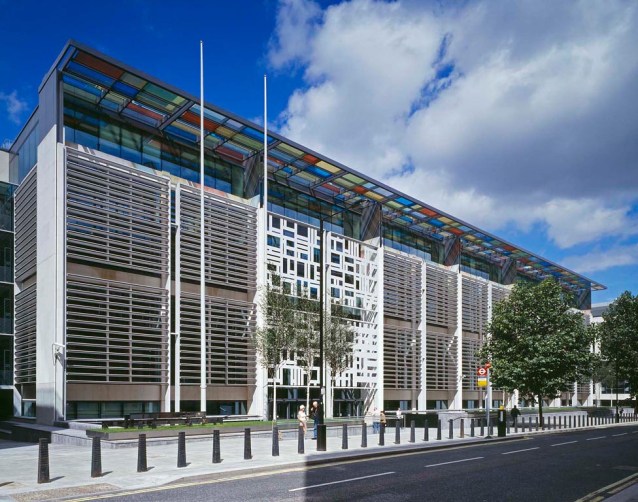
Home Office 2005

Home Office HQ: running ” an ineffective and possibly racist ” scheme

CROSS POSTED ON BYLINE.COM

On Monday Britain’s immigration officials are to be swelled by millions of new recruits – an army of private landlords.

February 1 marks the day landlords  and any private home owner  who takes in lodgers will be expected to act as immigration officers and check the immigration status of anybody renting a room. British, Swiss and EU citizens are exempt. But anyone with a foreign sounding name, black face or Aussie or American accent will immediately  be under suspicion.

Failure to do so will mean that private landlords  face a fine of  up to £3000 (less for a first offence) and even once they are registered the landlord faces another fine if he or she fails to tell the Home Office when the lodgers’ visa runs out.

According to James Brokenshire, the immigration minister, it is all very easy and should prove no burden to millions of British citizens who let out rooms or have buy to lets.

As he says “Ahead of the scheme’s roll out, we have been working very closely with an expert panel to make sure their feedback is taken on board and to design a scheme that is as simple and light touch as possible. Many responsible landlords have already been undertaking similar checks – these are straightforward and do not require any specialist knowledge.”

Apart from his insult to thousands of professionally trained immigration staff, James Brokenshire’s comment is wide of the mark. As I wrote in Tribune magazine last week the scheme is so simple that the Home Office’s  so called new ” simple guide” for landlords issued on January 8 was suddenly withdrawn and archived seven days later.

The reason became very clear. it was pretty complicated and required landlords to be able to distinguish between fake immigration papers and real ones.

The government’s brilliant test run has proved not to be so. Trialled in the West Midlands in places like Birmingham, Wolverhampton and Sandwell, it turned out that half the landlords never registered and it was difficult to find out who was taking lodgers. Some people relying on agents decided the best thing was not to take any foreign people at all, and the dangers of racism was obvious.

This suggests it could be difficult to enforce, particularly over lodgers. Nobody need be registered if they are staying less than three months. The rules say tenants leaving most of their belongings in a property for more than three months or are registered to vote or with a local doctor would have to be checked. And will  cash strapped local councils have time or inclination to check.

They also want landlords to certify the documents are genuine, the picture is of the immigrant and to be wary of damaged documents.

In my view this another example of the government dumping its responsibility to check immigrants coming into Britain on to the general public rather than having an effective and well staffed Borders Agency in the first place.

But it will also be ineffective. My  knowledge is limited  and is mainly through connections to the Kurdish community after my daughter married a Kurdish asylum seeker – who now has a UK passport.

But it seems clear to me that each community sticks to its own – and is a mixture of people who have British passports, are awaiting asylum applications, and are illegal. The  accommodation arrangements  for the latter  are informal and wouldn’t be covered by the new Immigration Act as no contracts would be signed. So unless Mr Brokenshire is going to ask the police to raid the house of every former immigrant in England he will never  discover what is really happening.

Instead he has dumped a bureaucratic system  on millions of law abiding citizens as a ” window dressing ” operation to cover up his government’s failure to police the immigration system itself.


Sneaky and Naive: The Department of Health’s plan to raise care home inspection fees

Care quality Commission

CROSS POSTED ON BYLINE.COM

While MPs were enjoying their Christmas break the Department of Health sneaked out a consultation paper planning a massive increase in compulsory inspection fees for care homes, privately provided ambulance services and hospitals.

As part of the spending settlement the ministry has decided to recoup the present £120m  a year subsidy given to cover compulsory inspections made by the Care Quality Commission. Altogether the ministry want to recoup some £780m over a ten year period. I have written about this in Tribune magazine

There is a subsidy is because the CQC has had to up its game and do more through inspections after the scandals exposed by  the Robert Francis report into Mid-Staffordshire NHS Foundation Trust and the Winterbourne View private home for people with learning difficulties exposed by BBC Panorama.

The Treasury wants to abolish this subsidy on the grounds that it must recover all the costs of inspections rather than part of them.. Superficially this sounds fine as NHS trusts will not to have to pay for the inspection of their own hospitals and ambulance services. Neither will 94 per cent of GP surgeries.

However increasing privatisation and outsourcing of services by local authorities and health trusts to private firms means that the bill for the inspections which already run into thousands of pounds could fall on councils and trusts who commission the services.

The paper reveals that 90 per cent of  care services are already privatised and privatisation is increasing in the NHS with private ambulance providers becoming the norm and mental health provision and other services being outsourced.

To try and justify this civil servants have tried to tell ministers that this could have nil effect on health provision.

This naive view is bolstered by the belief that care homes s will accept a cut in their profits to prevent an adverse health outcome caused by councils and health trusts having to cut the number of people sent there because of the increased cost of inspection fees.

This is contradicted by negotiations for the present year’s fee increases. The paper says:

“There is a risk that any increases in fees could have a destabilising effect on providers, as many providers are facing a tough financial climate, with increased running costs and reductions in income. During the CQC’s consultation into their fee levels for 15/16, 80% of providers opposed the proposed 9% fee increases for this reason. “

This is hardly surprising given that to run a care home on a profit, they already pay staff little more than the minimum wage and cash strapped councils are unlikely to pay them any more for residents. It puts into question whether running a care home  is a suitable business for the private sector. Soon they will soon have to pay the living wage. So would anyone believe they will absorb higher inspection fees into their profit margins.


The paper also discloses that the review will mean they will cut inspection fees for private dentists as they make a profit. It then naively assumes that the dentist will pass on the saving to patients. Does anyone believe that?

Whoever drew up these proposals cannot really live in the real world – no wonder ministers are told what they want to know rather than face reality themselves.


Is a £1 million fine a drop in the ocean for Thames Water?

thames water

Thames Water’s pollution started all of this with a £1m fine

CROSS POSTED ON BYLINE.COM

Today the Environment Agency is rightly triumphant in celebrating a £1 million fine against Thames Water for polluting the Grand Union Canal for  nine months in nearby Tring.

This is the highest fine imposed by the courts ever in history according to a release from the Environment Agency. But is it really going to hurt Thames Water apart from the bad publicity?

First of all the case. It was brought by the Environment Agency after Thames Water caused repeated discharges of polluting matter from Tring STW (Sewage Treatment Works) to enter the Wendover Arm of the Grand Union Canal in Hertfordshire between July 2012 and April 2013.

In May Thames Water pleaded guilty before Watford Magistrates Court to two charges under the Environmental Permitting (England and Wales) Regulations 2010. On Monday 4 January, at St Albans Crown Court the company was ordered to pay a fine of £1 million, costs of £18,113.08 and a victim surcharge of £120.

Their report goes on:

“The court heard that poorly performing inlet screens caused equipment at the works to block, leading to sewage debris and sewage sludge being discharged into the canal. The inlet screens should take out the majority of sewage debris referred to as ‘rag’ from the process, but the screens had repeatedly failed in this case.”

And it adds: ” The Environment Agency received complaints from the Canal and Rivers Trust and from the general public about pollution in the canal. Officers attended the site on several occasions, they saw sewage debris including panty liners and ear buds in the vicinity of the outfall.”

Thames Water now says it has put matters right at a cost of only £30,000 but it seems to have taken a rather long time to do it. In the meantime it put anglers and boaters at risk from infection.

It also frankly was heaping a lot of shit (literally) on volunteers who are working to restore the rest of the Wendover Arm of the canal so that it can be used again by anglers and boaters. You can see their work here.

Yet put in context the £1m fine with Thames Water’s activities. The latest interim  half yearly figures from the company show it had a turnover of £1 billion, made a £200 million plus profit and paid out  interim dividends of £25m. So the £1 million fine is just 0.5 per cent of six months profit.

And if taken on a yearly basis – the last full year profit was £364m of which £169m was distributed in dividends. Investors include pension funds and the Chinese.

More interestingly the Thames Water chief executive Martin Baggs entire package well exceeds the £1m fine. The accounts for 2014-15 show his package in the company is over £2m for services to the group. His £460,000 salary is boosted by £53,000 in benefits including a £36,000 housing allowance, £15,000 for a company car and £2000 private medical insurance. He has long term bonuses worth over £1m with payouts of nearly £350,00 planned for the next three years. And he has a handsome £115,000 contribution to his pension.

Put all this together and perhaps £1m should be the minimum Thames should pay for any pollution they cause.Perhaps fines of £10m or a personal deduction from fat cat salaries should also be included.

The public may be pleased with the level of the fine – but for the company it seems but a  few drops from its bank balance.

Armchair Audit: Sir Philip Dilley, the dilatory flood maestro

sir philip dilley

Sir Philip Dilley Pic credit: gov.uk

CROSS POSTED ON BYLINE.COM

UPDATE JANUARY 11: Sir Philip resigned as chair of the environment agency today and will leave at the end of January. He will now have time to concentrate on his other directorships, play more golf and tennis, and spend more time in Barbados.

His resignation statement said: “I want to be clear that I have not made any untrue or misleading statements, apart from approving the statement about my location over Christmas that in hindsight could have been clearer.”

He also attacked the media for pursuing him but as Liberal Democrat leader Tim Farron said:“Many staff gave up their Christmas Eve, Christmas Day and New Year’s Eve. Their boss should have joined them. It seemed to many that this organisation was bereft of its formal leadership when it was most needed.” 

Conservative MP for Ribble Valley Nigel Evans said Sir Philip had now made the “right judgement call”.


So  Sir Philip Dilley, David Cameron’s appointment to replace Lord Smith as chair of the Environment Agency, couldn’t tear himself away from sunny Barbados to turn up to see first hand the failure of his agency to cope with Storm Desmond and Frank.

Today the man who attacked former Labour Cabinet minister Chris Smith for not turning up soon enough to see the disastrous floods on the Somerset levels is rightly being pilloried in the press for deciding to spend time with his family than see any of those unfortunate flood victims.

What was disingenuous as the Telegraph reported is that his press office hid the fact that home – at the age of 60 – is a luxury villa in Barbados and not in the UK. He has a flat in Marylebone, London.

He of course says “Everyone be everywhere all the time ” but then that is not surprising given the man has ten directorships, including his own company to run, as well as posts on the board of the Department for Environment, Food and Rural Affairs and Imperial College, London.

And the money – £100,000 a year for a three day week – is of course chicken feed compared to the sums of money he was getting at his last big job as executive chairman of the Arup Group Ltd – the £1 billion international civil engineering business – says he and his fellow 12 directors shared £5.75 million between. the highest paid director – presumably Sir Philip – got a magnificent £864,000 a year – including a very useful sum paid into his pension – which at the age of 60 he can start drawing down.

His Who’s Who entry declares his married his wife, June. late in 2003 and has three sons, and spends time playing golf and tennis in sunny Barbados. He also is a wine buff and opera lover.

To give him credit the Portsmouth born man  made his way up in Arup from a graduate engineer to chairman.

He is also one of David Cameron’s favourite businessman sitting on the Prime Minister’s Advisory Group from 2011 to 2013. He accompanied the Prime Minister on trade missions to India, China and Russia and was a guest at a state banquet given by The Queen for the Indian President.

So perhaps it is not surprising that he can’t devote too much time to this nuisance issue of flooding -but the salary must be a very useful sum to supplement his pension.


Revealed:The ten job Tory who couldn’t live on £110,000 a year

Mark Simmonds

Mark Simmonds; Ex Africa Minister with ten jobs. Pic Credit: venturesafrica.com

CROSS POSTED ON BYLINE.COM

Some 16 months ago Mark Simmonds, then MP for Boston and Skegness, resigned as Foreign Office minister for Africa and caused a huge stir in the media.

As reported here his reason for going  and standing down as an MP last May was because he found the new restrictions on Parliamentary expenses ” intolerable” and his £110,000 a year income -including employing his wife as secretary- and he couldn’t afford a second home in Central London.

“The allowances that enable members of parliament to stay in London while they are away from their families – my family lives in Lincolnshire in my constituency – does not allow me to rent a flat that could accommodate my family. So I very rarely see my family and I have to put family life first and every single parent listening to this will hopefully understand,” he told the BBC.

As this article shows he had done well out of the previous expenses system selling his Putney home in south London for £1.2m ( which taxpayers covered his mortgage interest payments)in 2010 to buy a 7 bedroom listed abbey in Lincolnshire with a swimming pool and 15 acres of parkland. His Lincolnshire home appears to have been put on the market now for £1.2m but recently withdrawn.

Now in the rush of documents released in the  last days of Parliament the Advisory Committee on Business Appointments – which vets ministers and senior civil servants appointments for possible conflict of interest -has disclosed that since he left the ministry he has had permission to take no fewer than ten jobs.

I have an article in Tribune this week on this.

The ten jobs are Adviser to Bechtel, an international civil engineering company; honorary vice president of Fauna and Flora International; non executive director, African Potash; senior strategic adviser to the private health company, International Hospitals Group; managing director, Kroll, a risk strategy company; chief operating for Counter Extremism project; chairman of the advisory board for Invest Africa; strategic adviser to First, an international organization; non executive deputy chairman of the Commonwealth Enterprise and Investment Council and chief executive officer of his own company, Mortlock Simmonds Ltd, a commercial property firm based in Mayfair, London. All but one are paid.

Three of the firms, Bechtel, Invest Africa and the International Hospital Group, he met while he was a minister.

According to ACOBA all the meetings were so the minister could understand their work.

ACOBA say of Bechtel: “ Mr Simmonds did meet Bechtel, as the company wanted to explain what its activities were around the world and to see how best it could use its UK-based expertise in developing markets. However, they also noted that Mr Simmonds was not involved in any departmental policy, the award of grants or regulatory work affecting Bechtel, and that the FCO had no concerns with this appointment.”

However the companies do find his job as a former Africa minister very helpful. As Kroll’s chief executive officer, Emanuele Conti, put it: ” His unique blend of experience gained in business and politics over many years will further strengthen our capabilities in Africa.”

Similarly  African Potash Executive Chairman Chris Cleverly said, “His significant political experience, particularly within Africa, will be invaluable as we continue to roll-out our integrated fertiliser operations, finalising the current agreements we have in place and negotiating future contracts.”

(Incidently another non executive director is former Labour Cabinet minister, Lord Peter Hain)

Invest Africa, as its limited access  website shows  it is a global private members  club for institutions, private equity and wealthy family clients, who want to invest in Africa. Speakers at private events include Cherie Blair, Bob Diamond, former Ceo of Barclays and the King of Ashanti, a wealthy Ghanaian investor. It also organises private business visits to Africa with the help of the Foreign Office.

Simmonds also has previous connections with the private health industry. Before he became a minister he was an adviser to Circle Health, a private  health company. He also took up to £50,000 a year from his own company.Circle Health walked away from running Hinchingbrooke Hospital in Huntingdon.

The former minister is prevented from lobbying any government ministers or departments until August next year. After that he is free to lobby as many of his former ministerial colleagues as he likes.

What does this say about British politics. Nothing he has done is illegal and he has obviously been scrupulous in telling ACOBA about all his job offers or they could not be easily traced.

However to my mind this seems to be symptomatic of the state of British politics at the moment where for some MPs it is just another business career . A different way to make a lot of money and garner valuable contacts and connections. And probably becoming so common place at the top that some people won’t even see it worth reporting.


How a Whitehall mandarin wanted to add insult to injury for redundant steel apprentices

Martin Donnelly, permanent secretary at Department of Business, Innovation and Skills, wanted to stop paying apprentices when they were sacked

Martin Donnelly, permanent secretary at Department of Business, Innovation and Skills, wanted to stop paying apprentices when they were sacked

CROSS POSTED ON BYLINE.COM

The appalling destruction of Britain’s steel industry with the loss of  4000 jobs  -a fifth of the workforce in just one month- has been bad enough.

Ministers have accepted that there appears to be little they can do against the Chinese dumping of steel – and that the steel industry will have to slim down to meet the drop in world wide demand. The trouble is that this decision will mean that it will be Britain that will be getting rid of its industry while governments in the rest of the world decided to keep their steelworks.

But if that was not appalling enough what has happened to a new generation of apprentice steel workers – hoping for a new career in manufacturing. They have been thrown on the scrapheap with other workers -just like the mineworkers.

So it is extraordinary as I reported in Tribune last week that Martin Donnelly, the permanent secretary at the department for business,innovation and skills, proposed that apprentices  should sacked on the spot and unlike other workers receive no more pay or even redundancy.

In a letter to his political boss, Sajid Javid,the business secretary, Mr Donnelly said the cost – some £1.7m of taxpayer’s money – was not justified in Redcar where the steel works closed.

Quoting Treasury rules he wrote: “The required appraisal process concludes that this would not offer value for money even after taking into account the very real economic challenges facing apprentices in the Tees Valley at this time.

“It is the case that apprenticeship training offers a value for money investment… I am also concerned that spending at this level would be repercussive, and might create an unhelpful precedent.”

In this case Sajid overruled him saying “I have to weigh that assessment against the broader objectives of government; including our commitments to localism, and our aim to build confidence in apprenticeships.

“Furthermore, the apprentices of Teesside face a very extreme situation and one which, in my judgement, requires an exceptional and urgent public sector response that is equivalent to the scale of the challenge.”

This struck me as a very mean view for a mandarin to take  – and obviously he was worried it would create similar requests in Scunthorpe, the Midlands and Scotland where other jobs have now been lost.

But it is certainly harsh just to cut off money to apprentices – and the minister was right to overrule him.