Judge Lancaster – the same judge who vilified the now vindicated Alison McDermott- a Sellafield whistleblower over bullying and nuclear safety issues
Judge Philip Lancaster – the controversial employment judge – already facing 16 complaints – nearly all from women – about his handling of their tribunal cases – has now been revealed as having helped a health trust to cover up patient deaths.
An investigation by Michael Buchanan, the BBC’s social affairs correspondent, released yesterday revealed that police are investigating heart patient deaths at Castle Hill Hospital near Hull. His full report which contains disturbing treatment of patients and a “cover up” of the circumstances of their deaths from relatives is here.
The employment tribunal case heard by Judge Lancaster centred around the safety of a procedure called Trans-Catheter-Aortic Valve Implantation (TAVI) – a keyhole surgery method to replace a defective aortic valve in the heart to predominately elderly patients,
The case had been bought against Hull University Teaching Hospitals Trust by consultant cardiologist Dr Thanjavur Bragadeesh, then clinical director of the hospital’s cardiology department, because he had raised safety concerns about the implementation of the procedure which had led to patients deaths.
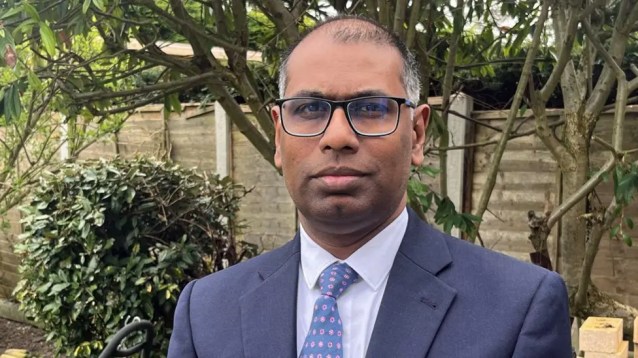
Dr Bragadeesh
He had first raised the issue in 2020 to little effect and took the trust to the tribunal as a whistleblower in 2023. In fact he was demoted following raising the issues.
Ranged against him were the trust’s chief medical officer, Dr Makani Purva and three consultant colleagues, Dr.Joseph John, Dr Kumar Chelliah and Dr Manish Ramlall.
He brought 29 claims of detriment and 13 protective disclosures. All detriment claims were dismissed by Judge Lancaster as either being out of time or failed claims which were legally irrelevant.
As a result it was never publicly revealed until yesterday by the BBC that at least 11 patients died following procedural failures, with some death certificates failing to mention the surgery at all. Families were never told the truth. Independent reviews confirmed catastrophic decision-making and a mortality rate three times the national average.
Despite Dr. Bragadeesh’s concerns being validated by external reviews, including those by the Royal College of Physicians, the tribunal did not adequately engage with this substantive evidence. The failure to consider corroborative findings from reputable bodies suggests a potential bias in favour of the employer and a reluctance to hold the institution accountable.
Certainly the Judge Lancaster’s judgement reflects this highlighting similar omissions and gas lighting of whistleblowers as seen in other judgements – notably Judge Tony Hyams Parish ignoring the General Medical Council’s revalidation of whistleblower Dr Usha Prasad, then a cardiologist at Epsom and St Helier Trust and the avoidable death of a heart patient. And Dr Bragadeesh is described as having a ” bullying and undermining attitude” to other consultants – just as Dr Martyn Pitman, the obstetrician, who raised patient safety issues in the maternity services at Hampshire Hospitals NHS trust, was portrayed when he lost his tribunal case.
Alison McDermott
Yesterday also saw the damning findings of the Commons Public Accounts committee on Sellafield which showed that Sellafield had paid out £377,000 to staff to end labour disputes and had issued 16 non disclosure agreements to staff to cover up complaints. This vindicated Alison McDermott’s portrayal of the place at risk over nuclear safety and a bullying culture.
Still Sellafield and the Nuclear Decommissioning Authority are using the findings of Judge Lancaster’s flawed judgements to gaslight her.
In a joint public statement they said: “This case has been thoroughly litigated through an Employment Tribunal, Employment Appeal Tribunal (EAT) and the Court of Appeal. It was found that the claims made against Sellafield Ltd in this case were entirely without substance, and there was no basis for claims against the NDA.”
Try telling that to the MPs who wrote the report on Sellafield who say they are not convinced by claims that everything is OK or to the Department for Energy who admonished both organisations and said they must crack down on bullying.
There is a much wider issue to all of this. It is the question of the public accountability. Judge Lancaster is being protected by the Judicial Conduct Investigations Office. Despite a growing pile of complaints from women and from Dr Bragadeesh about his behaviour at tribunal hearings, it refuses to act on any of them. It is also fighting the Information Commissioner to prevent the public and press being able to put in any freedom of information requests.
By doing so they risk bringing the judicial system into disrepute and in my view they lack a moral compass.
If they continue to do this, they are acting as a party to suppressing patient safety in the National Health Service and in the case of Sellafield, because it is such a contaminated and dangerous place, putting the general public at risk.
Baroness Sue Carr, the Lady Chief Justice, and Shabana Mahmood, the Lord Chancellor, who both receive advice from the JCIO, should be wary about ignoring these developments, because at some stage they are going to come back and bite them.
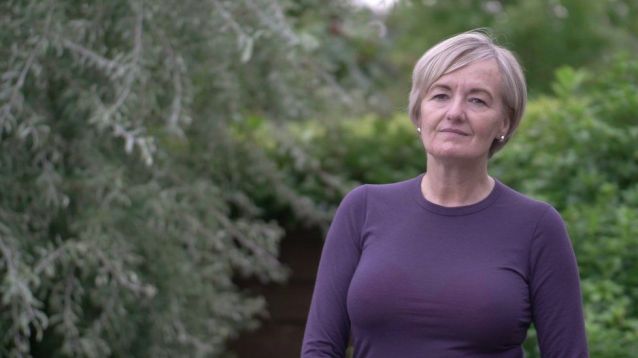
Euan Hutton, chief executive of Sellafield, found himself being called to apologise in public to whistleblower Alison McDermott by her local MP, Anna Dixon at a highly charged hearing of the Commons Public Accounts Committee last week.
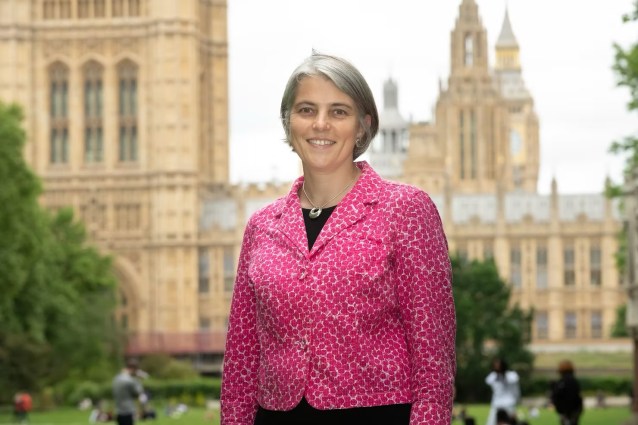
Anna Dixon MP
The chief executive was clearly embarrassed to face questions about spending such a lot of public money to silence the whistleblower after she produced a report about the toxic culture of bullying and harassment at the UK’s biggest nuclear waste plant.
Alison McDermott, a well respected management and diversity consultant, had faced a series of tribunals and costs hearings.which cost Sellafield over £750,000 by employing top flight lawyers.The main hearing was before judge Philip Lancaster, a judge now facing complaints from 10 women, including Alison, for his patronising and misogynist approach to female litigants who appear before him.
Anna Dixon,Labour MP for Shipley, raised the issue at the beginning of the hearing which was to examine Sellafield’s record so far in running down the waste facility over the next 100 years.
She pointed out that Alison had been head hunted through Capita to work for Sellafield and was then employed directly because of her excellent work. After she produced a report revealing a toxic culture of bullying and harassment at Sellafield this all changed and she was removed from Sellafield.
She told him :” I understand that at that time you did not invoke your whistleblowing policy or take a statement, as required by your own policy. Instead, you spent some £750,000 on legal fees. Perhaps you would confirm that. You refused mediation for three years, and pursued Alison for costs twice and lost on both occasions. As you will know, the remit of this Committee is concerned with the proper ethical use of public funds. As the new CEO, Mr Hutton, I would ask you whether you think this was a good use of public money.”
….” I have seen the treatment of other whistleblowers, which is similar to the treatment of my constituent, that has serious detriment to health, mental health and indeed professional reputation. Alison, as you probably recognise, is sitting here in the public gallery. I recognise that you are not willing to say very much. I am disappointed in that, because most of this is historic and in the public domain. I wonder whether you might apologise to her for the way that she has been treated by Sellafield.”
Mr Hutton replied implying that the situation in Sellafield then was ancient history.
“Over the last seven or eight years now, we have made really big strides forward in addressing some of the issues that there were at that time. You might say that I would say that but, in the most recent staff survey, which concluded, I think, a fortnight ago—I only say “I think” because I cannot remember whether it was a fortnight ago—we have seen significant improvement.”
Anna Dixon concluded: “I am going to come back later and challenge whether these problems have really completely gone away. I do not think that I heard an apology, but I hope you will at least agree to meet with me and my constituent, Alison. “
Since the hearing Alison McDermott has written an open letter to Mr Hutton, David Peattie, group chief executive of the Nuclear Decommissioning Authority and Paul Vallance, a non executive director of the NDA saying:
“The PAC’s examination has now raised serious questions about your leadership and your organisations’ management, culture, and safety practices.
I’ve made no secret of the toll this has taken on me. But each time I was faced with the choice between comfortable silence and speaking the truth, I chose the latter— without hesitation. That decision is one I will always carry with quiet pride. I can look myself in the mirror, sleep peacefully, and carry a clear conscience—something that is priceless.
I can’t help but wonder: how do you reconcile your actions?
What kind of man do you see when you look in the mirror? “
The PAC has now to produce a report following the hearing. I somehow think it will not be a glowing endorsement of practices at the UK’s biggest waste facility.
Electric car charging at home, Clean energy filling technology. Pic credit:www.freepik.com
A damning report from MPs today reveals that 1.2 million disabled drivers have been blocked by the government from being able to use electric charging points cars at motorway service stations and garages.
While the UK is on target to increase the number of charging points for the growing number of electric cars not one of the 73,000 charging points reaches accessibility standards laid down by the government for disabled people to use them.
The reason is that to install disabled friendly charging points has been left as a discretionary option for installers rather than a mandatory requirement by government.
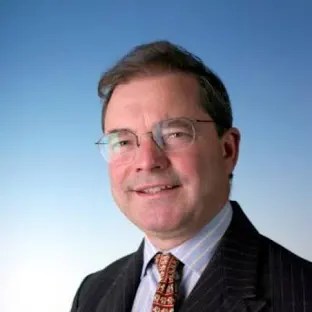
Sir Geoffrey Clifton-Brown MP
Sir Geoffrey Clifton Brown, the Tory chair of the Commons Public Accounts Committee, said: “It is of deep concern that the needs of disabled drivers are being ignored. Not a single charge point in the country is currently fully accessible. We are risking baking a serious injustice into the fabric of a major part of our national infrastructure. Government similarly needs to understand how to remedy financial inequalities for those who have no choice but to use public charge points. Our report therefore challenges the Government – it must move at pace to overcome current delays and encourage take-up, while taking the time to ensure no-one gets left behind in this all-important shift to the future.”
The report warns: “Many disabled people are reliant on their cars as existing public transport does not adequately cater for their needs. Failure to address problems with the uptake of the standard will mean that the public charge point network will continue to develop without meeting the needs of drivers with disabilities.”
The treatment of disabled motorists reflects the disparaging attitude both the last Tory and the present Labour government seem to have for disabled people. Rail travellers are similarly badly treated with patchy provision to access station platforms and the London underground is only partly accessible with Euston underground been seen as the worst station in Europe. Compare this to the excellent provision for disabled people on public transport in Singapore, Sydney, Adelaide and Rio. I have had a good experience taking my late wife in a wheelchair round these cities.
And it comes at a time when the new government is planning a £6 billion cut in disabled people’s benefits and is expecting the disabled to get to work without providing proper facilities for them to travel there.
The treatment of the disabled is just one criticism of the present electric charging provision. The report found a very uneven distribution of electric charging points round the country. London, where ministers mainly live, has 250 charging points per 100,000 of the population. While Northern Ireland has just 36 per 100,000 population – suggesting that people taking their electric car on holiday there might have problems. In England the worst areas for provision were the North West, including the Lake District and the East Midlands, including Lincolnshire.
Most charging points are in urban not rural areas and there is also a problem connecting charging points to the national grid – which suggests that when they are used more widely we might find them running out of juice.
The previous government set aside £950 million to do this – but the report reveals nothing has yet been spent as pilot projects were subject to delays.
There is also an economic problem with public charging points paying 20 per cent VAT while those who have the space for a home charger paying only 5 per cent VAT. So it is much more expensive to use public chargers.
There may be a further problem for the many people who live in terraced houses who install an electric charger and then put cables across the pavement and roads to charge their parked cars.
So much for the green revolution which we are all promised. It is certainly happening, but not been managed well and disabled people are just an after thought as far as policy makers are concerned.
An alleged horse murder, police protection at a parish meeting and council office and notice board defaced with hated filled graffiti
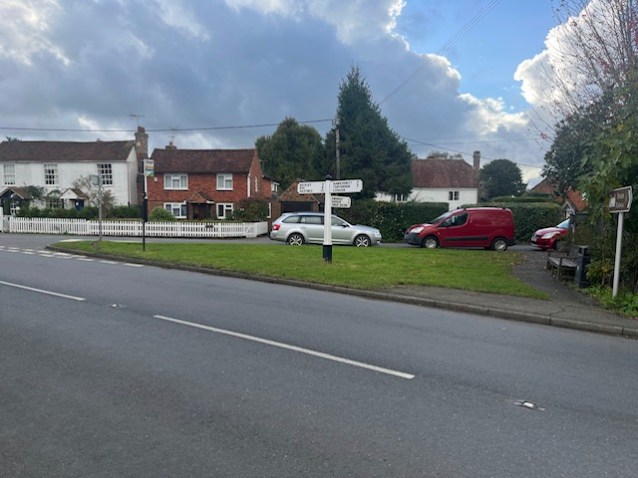
You could not imagine a more bucolic English scene. Beautiful rolling Sussex countryside, white painted country cottages, a heritage steam railway running by the village and Bodiam Castle, an imposing moated medieval ruin dominating the valley.
But this quintessential sleepy English village hides some of the most vicious in fighting by former and sitting parish councillors and their friends involving hate filled Facebook posts, false allegations, dodgy contracts, one sided council investigations, favours for friends, while Sussex police and the Rother District Council try to pretend nothing is happening here.
If this was inner city London or Birmingham such battles would be factional or party political. But here it is not politics but rival personalities who either want to control events or who are convinced dirty business is afoot in secret meetings.
A Midsomer Murders village?
If there is a script for this story it could either be an Agatha Christie novel or an episode of Midsomer Murders. So far only a grazing horse has died, but given the tensions here one wonders whatever will happen next.
So how has this happened? The trigger for all this is a remarkable pot of gold given to this little village by the former Tory Cabinet minister Michael Gove. As levelling up secretary he approved a massive £1.4 million loan in 2019 to enable the parish council to purchase a former Blue Cross animal rescue centre so the village could use its ample green acres for community use.
There had been much consternation in the village when the Blue Cross decided to close and sell the site as the original land had been donated by a local farmer and it was a valued part of the village as well as providing much employment.
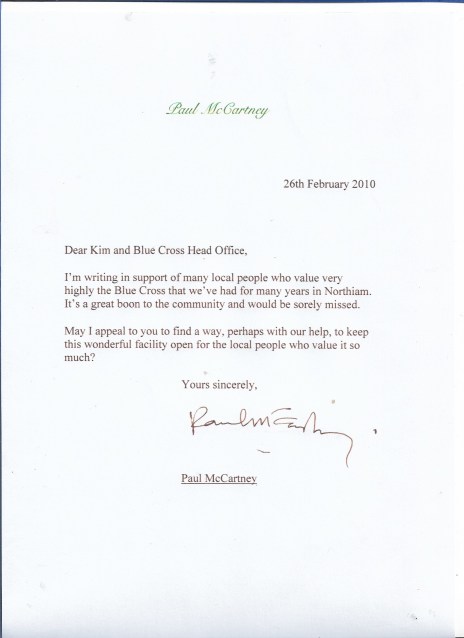
The parish council was united in wanting this centre. Before they bid to buy it former Beatle Sir Paul McCartney came to the village with the chief executive of the Blue X centre to see if it could be saved. He even offered to underwrite the cost but the organisation was determined to close it.
His earlier letter of support for the Blue X Centre before it closed is here:
The purchase of this 34 acre greenfield site has meant that all the residents face an extra parish council precept on top of their council tax to pay back a Public Loans Work Board loan backed by the Treasury for the next 50 years.
Horses looked after by Lauren Sapsted graze on the former Blue X site – known as St Francis Fields
The row emerged about what to do with the land once it was owned by the council. At the time when all was sweetness and light a proposal was drawn up by then councillor Penny Farmer with the aim of providing local facilities for local people with talk of a riding school, workshops and local people being allowed to graze their own horses and allowing a small number of new houses to rent to local people who couldn’t afford Sussex’s rocketing house prices. These would have been built on an ‘exception site’ basis and was limited to an initial build of six.
Then councillor Penny Farmer, who has an equine background was also asked to provide costings of how the stabling and grazing could be made to work so that government loan would be affordable while allowing public use and her costings were included in the proposal to the government, to help convince them to grant the loan. The proposal and map of the huge site is here–https://docs.google.com/document/d/1PJLomhPMtDrIGl3yNsnQofsjlJDopvPcRQcYpiIW_24/edit?pli=1
The first sign of things going wrong was when it was decided to hand over the running of the site to a non profit making Community Interest Company with a clause saying the directors could take profits from developments on the site and it was allowed to keep all the revenue from the site to spend as it saw fit.
The big issue with the CIC is that as a corporate body, it has cost the parish council more money than they have created or put back into the project. The Parish Council “grants” them £1500 a year, they use an office and storage space as well as land owned by the Parish Council rent free which the council could otherwise rent out and they have not achieved anything the Parish Council couldn’t have done itself despite not having “power of competence”. Last financial year – they got double the grant -two tranches of £1500. They also rent unknown land/buildings on the site to unknown people for £1460 a year – there is no record as to who or what this is all about at the Parish Council; it has never voted or agreed to this use. The latest accounts are here.
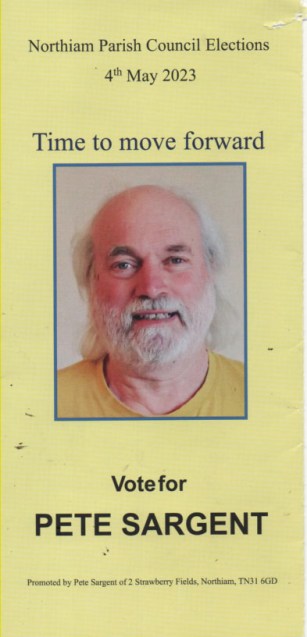
Pete Sargent
When it was set up it soon emerged that other councillors had different ideas and one in particular Pete Sargant, who chaired the council at the time and is still a member, was seen by opponents as the ” village Godfather figure”. He is a smooth talking man with a lot of friends in the village but rather like Macavity in the musical Cats it is his friends who do a lot of the arrangements. Macavity is not there.
Pete Sargent said: “Several of them stated that they would be interested in helping set up the CIC and so I called them all together and asked them if they would like to set up the company, which they duly did. They chose themselves.”
This is not entirely true. Judith O’ Connor, the chair was tipped for the post in advance while Carolyn Pierce, previously a councillor, who had worked on the Blue X rescue centre for 20 years, was denied a post when she requested one. It is said by Jon Streatfeild. a former chairman of the council ,that Sargent kept the book with the directorships to himself for six months until all the posts were filled, mainly to members and friends of his in the local Bonfire Society and the Village Hall Trust.
Later when one councillor, Ben Dallimore, in 2022 demanded to see the minutes kept at the parish council office, the then clerk to the council, Nicola Ideson, threatened to call the police, started messing up files and tried to make out she was being physically threatened and harassed and pushed him out of the office. He had the foresight to have recorded the conversation and when she complained he made it clear he had recorded it. In February 2023, she contacted the Information Commissioner’s Office to say that as a Parish Councillor, he had recorded her at work and she wanted a copy of the data. After some arguing back and forth with the ICO about the nature and purpose of the recording, he gave her an edited copy of the recording which only contained her information..
It soon emerged there was a reason for this secrecy. For instead of planning new community facilities the first thing that happened was an approach to a housing developer suggested by retired architect, Julian Luckett, partner of Judith O’Connor, who chairs the CIC and an administrator of the Northiam Facebook page.
Jennifer Owen Construction Ltd, a local firm, had already built expensive £500,000 four bedroomed detached homes in the village, and was contacted by Pete Sargent’. He said: “I contacted Mr Malcolm Edmonds, the MD of Jennifer Owen Construction Ltd to discuss possible options on part of a field to which they owned the access. This plot was less than one acre in size, so 3% of the total site rather than 33% as suggested. Initial contact was by email due to lockdown and so a site meeting was impossible. A year later when I was no longer a Councillor he made contact again. I forwarded their email to the new Chair of the Council and the Chair of the CIC, both of whom decided that they did not want to follow it up at that time.”
This turns out not be quite true. A memo from Georgina Jackson, a later parish clerk, reveals there was a secret meeting with the firm to develop one field where there was access and it was not to build cheaper rented homes for ordinary local people but expensive new homes.
Sargent had also written an internal report where other areas of the site could be considered as ‘brown field’ and therefore considered for development. This was in spite that he had given assurances, including in TV interviews and in emails to the government, that the proposed purchase of the site was to save it from development, as well as providing a community asset.
The development foundered because the firm discovered the homes would have to be marketed as leasehold because the parish owned the land and it would not get the best price. The firm was also worried it would have to go out to competitive tender and it could lose the contract. The company was not interested in developing the whole site, despite rumours to the contrary.
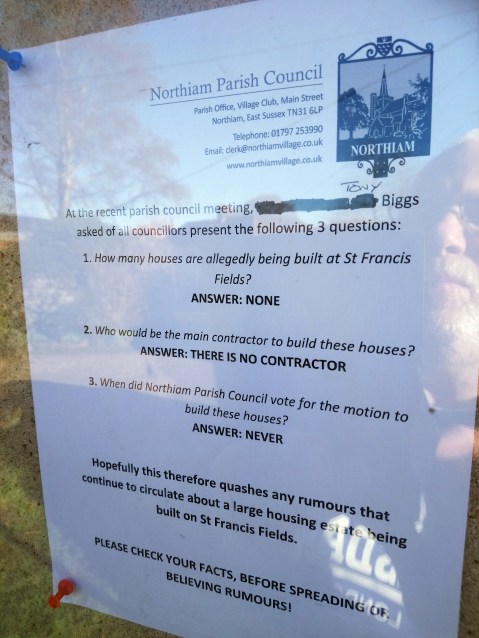
A fake Northiam Parish flyer was put out to worried residents about this when news leaked out.
The clerk took legal advice about this and was advised this would have been illegal if they had gone ahead and the parish council could have been prosecuted for breaking the terms of Gove’s loan.
But there was a much bigger row on the horizon that was to lead to nasty consequences for anyone who objected. During the pandemic a decision was made to lease 10 acres of the site to a horse trader, Lauren Sapsted, who would keep horses for wealthy owners, on the site, while at the same time blocking a local resident who wanted to graze her two horses on community owned land.Several other local horse owners were also turned away. The exclusivity clause in Sapsted’s lease meant that local residents were barred from using much of the site and none of the equine facilities including the sand schools, even though they were funding it through the council tax.
The deal only open to her was she would pay the parish £12,000 a year to lease the land and the parish council even agreed to pay half her £3000 legal costs and she would pay a small sum every month to repay the loan. It was renewable. The loan was not disclosed to the full council. It turned out that the deal could have been illegal because it broke procurement rules and a planning restriction by Rother District Council that forbade commercial activity on the land. Pete Sargent defends it as done during the pandemic and claims that 50:50 arrangement on legal fees is ” common practice”.
Events took an extraordinary turn when the lease came up for renewal . After her horse died Lauren Sapsted demanded the parish paid for security cameras to be put up on the land which costing £14,000 – more than the annual rent. The parish council demurred in drawing up such a contract but unknown to them Sue Schlesinger, chair of the parish council at that time and sister in law of the famous Hollywood director, John Schlesinger who made Midnight Cowboy, secretly made a separate contract granting this without telling the council after Lauren asked her to do it.
The security cameras never came and the shenanigans over the two contracts were too much for Lauren and she left 18 months later leaving the parish with no income and moved her business elsewhere. Sue Schlesinger resigned but has lately been re-elected to the council.
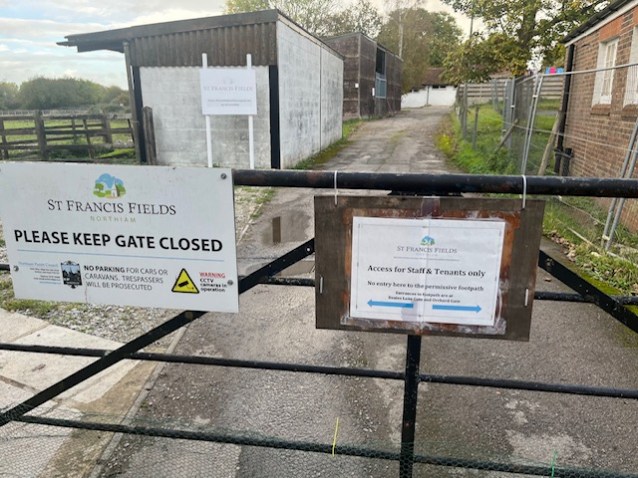
Entrance to Lauren’s Sapsted’s leased business
Lauren still claims her horse was murdered today and the two former councillors are to blame.
There was also a nasty consequence to all of this. When Lauren discovered Alice, a valuable pregnant horse, had been found dead, she was convinced it had been murdered in the night and blamed two councillors, Penny Farmer and Jon Streatfeild , a former chair of the council, for killing it because she had been erroneously told that they wanted to take over her business. Councillor Robert Maltby, a friend of Sargent, gave Lauren the report which he obtained from Sargent of Penny’s 2019 submission, which had originally been requested by Sargent, saying it was her current plan in 2022.
The murder allegation was not just village gossip it was put up on the Northiam and Nearby Facebook page by Lauren on the 16th May 2022.The site administrator, none other that CIC Director Judith O’Connor allowed this post to remain.
You can also see the shock of local people who now believed they were scumbags. Lauren called Sussex police asking them to open a murder investigation. They found no evidence. To do this the councillors -one of them a middle aged lady – would have got up in the dark middle of the night and tramped across fields. Two people questioned this. One, Ben Dallimore, a former councillor, was up in the middle of that night because he and his wife had a new baby. Their house is close to the field and they heard nothing. Another resident was surprised because if strangers were nearby, their dogs immediately start barking. They heard nothing either.
Jon Streatfeild – former chairman of Northiam Parish Council
Then the real harassment began. The parish managed to get sympathetic support from two top officials at Rother District Council to investigate then councillors Penny Farmer and Jon Streatfeild. Lorna Ford, chief executive, and Lisa Cooper, a monitoring officer, got a lawyer from Chichester District Council to prepare a report saying Streatfeild was guilty of leaking the confidential contract with Sapsted which revealed the arrangements for the lease and it was not in the public interest. They paid the lawyer £12,000 for the report but there are no records of their agreement or how much time was spent on the report which sounds highly irregular for a local authority. The finding contradicted later legal advice obtained by Jon Streatfeild that said the deal with Sapstead broke the law – so it was in the public interest for this to be released.
Separately when the police inquired about concerns brought by Jon Streatfeild about what was going on at Northiam, Lorna Ford sent emails to the police that everything was fine there.
Another report was commissioned by the parish council – at a cost of another £12,000 from an independent firm – which was skewed not to include any investigation into the relationship between the parish council and community interest company – which was central to the development and subject of concerns. This was prepared just before a public meeting in Northiam where Streatfeild and Farmer were treated as pariahs, including being spat at by people who believed they were horse murderers.
So bad was this meeting that at a future hustings meeting in the village last year Sussex Police arranged security to protect them – Penny Farmer , a former police officer, was so worried she did not attend.
Last year Streatfeild was defeated in the parish elections as most people believed the allegations. But he also had to put up with further stress. His front garden was sprayed with weedkiller, a parish noticeboard was covered in graffiti denouncing him, and two stalkers appeared to harass him at his place of work.
One, Michael Court was served with an adult ASBO by the police to keep good conduct for the next two years. Another Richard Smith, an ex policeman, came into the pub where he worked part time and denounced him in front of all the pub customers – obviously hoping he would get the sack. But this has not happened.
All these details of the harassment has been put to the police and the Rother District Council. The official statement from Sussex Police is completely defensive.
Rosie Ross, divisional commander at East Sussex police replied: “As a journalist you will know the rules around personal data and sharing of such data. This request is in the context of named individuals and actions we may have taken to either safeguard or sanctions used, as and such cannot be shared. Even if it were a Freedom of Information request, it would be exempt under s40 FOIA for these same reasons.”
We actually didn’t need to put in a request as we have seen the terms of the order against Michael Court and there were plenty of witnesses to the incidents.
Rother District Council was equally defensive.
A Rother District Council spokesperson said: “The district council has a duty to put in place arrangements to manage complaints against elected members for the town and parishes. We deal with all code of conduct complaints diligently and fairly in relation to all complainants, and we believe we have done so in this case.
“It would not be appropriate to comment in detail on individual code of conduct complaints as they are confidential.
“However, we have repeatedly advised Mr Streatfeild and others of the limited powers that Rother District Council has to become involved in matters relating to other councils, especially with regards to matters such as the Blue Cross Site. We have advised Mr Streatfeild how best to pursue those complaints via organisations which do have the power to intervene, including the police.”
Rother District Council have not investigated any complaints brought against Peter Sargent, even though he helped instigate the proposed development of the land after publicly stating that the loan was for a community asset, lent parish council money without the knowledge of other councillors to help cover Sapsted’s legal bills which is unlawful and brought a complaint for criminal damage on the site, on the very day that we visited it to research this article and witnessed no such criminal damage.
Again we have seen all the details involving the Rother District Council officers involved and have published this in the public interest.
One bizarre reaction from Sussex Police was to suggest the complaints went to the National Audit Office, the Parliamentary watchdog that scrutinises Whitehall. Since the abolition of the Audit Commission by the Tories, which did scrutinise parish councils as well as larger bodies, there is no body that has the power to regulate local government.
As a result the NAO said it could not conduct inquiries into parish councils like the now defunct Audit Commission. But Adeel Shah, the NAO’s FOI and Correspondence Officer gave Jon Streatfeild very useful advice. He said the answer was to go to the external auditor of the council and helpfully looked up who was responsible.
Now the external auditor, PKF Littlejohn LLP, based in London, is looking at Northiam Council following two separate complaints. One is from Penny Farmer, which is challenging the whole way the council is managing its budget and whether certain earmarked funds, such as for a sewer outlet, are being raided, and whether the parish could run out of money.
Ben Dallimore on holiday
Another is from Ben Dallimore, another former councillor, about how money has been promised to Wealden Traditional Construction Ltd for the design plans of the new Football Pavilion to be claimed back from S106 ( money given by builders Persimmon )held by Rother DC. The contract to build the new pavilion will be worth £300,000.
Now the main employee of this company is local villager John Cusden, who plays for Northiam Football Club. His application was supported by retired architect, Julian Luckett and Pete Sargent. Companies House records show that his own company, Wealden Design and Build Limited has just gone bust and is in the hands of a liquidator. The new company is registered at the same address in Rye that the old company recently moved to. It has one new director, Charles Dawson, but its website praises the work of John Cusden over the last 10 years when he was director of the bust company.
A letter from the external auditor has now raised 11 procedural issues that led to the granting of the money which the council must answer. It also discloses that the external auditors may have received more than two complaints.
Mr Dallimore is now facing the same treatment as meted out to Jon Streatfeild. He has been recording council meetings and did some filming after one was held in private. The council are now discussing with Rother District Council whether they can impose restrictions on his activities by imposing the equivalent of an adult ASBO.
Mr Sargent did not want to comment on these complaints. His case is that he is the victim of harassment not the other councillors. The only evidence we could find about this is that someone scratched on the council office that it was ” The Bank of Pete Sargent” – of which there is no evidence that he has ever taken money for himself.
We have done this long special report to illustrate what has happened to local government at parish pump level now there is no official scrutiny by national bodies and local media has disappeared in this part of East Sussex. The irony is the lack of scrutiny has led to people putting too much on the internet so there are a wealth of documents to stand up exactly what has been going on in Northiam.
Michael Gove has left the new Labour government plans to revive a smaller version of the Audit Commission to regulate local government again. The new government need to act not only to police the growing number of technical bankruptcies in big local councils but to ensure that smaller bodies don’t end up being run by cliques helping each other out. The police and bigger authorities are obviously not up to the job and the NAO has much bigger fish to fry in policing waste and dodgy deals in Whitehall.
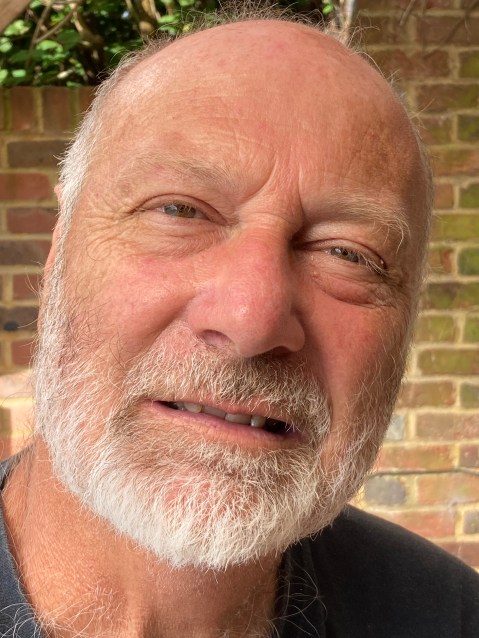
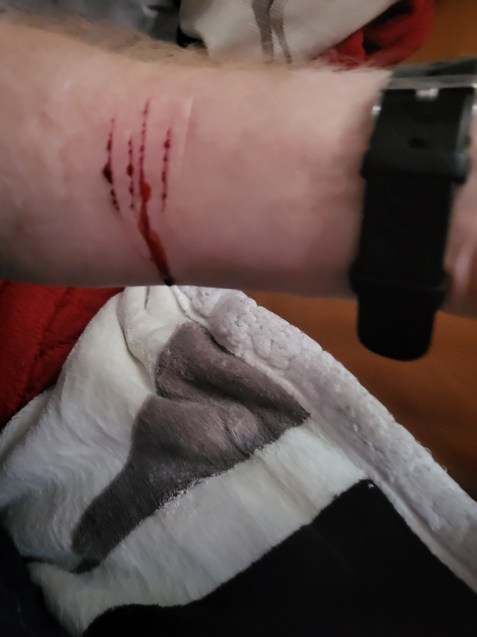
This picture is emblematic of the desperate straits some whistleblowers end up after they raise safety issues. They find themselves facing persecution by their bosses, horrendous costs they cannot afford for taking a case to an employment tribunal and put under extreme pressure by lawyers to sign an agreement taking away they rights to ever talk about the safety problem again and in this case lose their legal right to put in a Freedom of Information request or Subject Access Request to Sellafield for the rest of their life.
David Peattie, chief executive officer of the NDA Pic credit: gov.uk
This picture was sent as a last gasp plea to David Peattie, chief executive of the Nuclear Decommissioning Authority; Euan Hutton, chief executive of Sellafield; David Vineall, Sellafield’s group chief people officer, the Office for Nuclear Regulation and Claire Coutino, former Tory secretary of state for energy security. Only Claire Coutino expressed concern enough to want to meet the whistleblower but she was persuaded by her civil servants not to do so. We now have a new energy secretary, Ed Miliband following Labour’s landslide election victory, and I am planning to contact him to draw his attention to how whistleblowers are treated at Sellafield.
Ed Miliband, Labour’s new energy security secretary
To protect his privacy I am not naming the whistleblower after publishing such a personal and disturbing picture. But another source thought it was in the public interest to share a large file of emails and documents which reveal his correspondence and the reaction of the most senior figures inside Sellafield and the NDA.
The man involved was a loyal Sellafield employee for decades- in a potentially highly dangerous nuclear waste site where over 140 tons of plutonium is stored including from nuclear military waste warheads – and he was one of a large number of people employed to secure safety at the plant.
Some eight years ago he began to raise safety issues leading to what is said to be a highly critical issue. An email sent to the Office for Nuclear Regulation, the watchdog body, outlines his story.
After raising this at a whistleblower pre meeting in 2022 followed by a meeting with the former chief executive, Martin Chown, he suddenly found he was subject to an internal disciplinary inquiry by Sellafield based on the bogus claim that he had brought alcohol on the premises which is strictly forbidden at Sellafield. Terrified that they would try to pin this false claim on him, the employee voluntarily went to a local police station and submitted to a blood test, which revealed that he had zero alcohol in his system.
Euan Hutton, chief executive of Sellafield Pic credit: Gov uk
When he challenged this pointing out that this could be verified by the plant’s security cameras it was found that the film when he entered the plant had been “inadvertently wiped “. If this is correct, then this is terrifying lapse in security for Europe’s most dangerous nuclear site and fuels existing concerns about Sellafield being prosecuted for criminal offences for IT breaches. An inquiry under his senior manager, concluded against him and he was served with a ” final written warning.”
The then HR manager, Emily McDonnell, who claimed she saw the employee drinking alcohol on site, is notably the same individual involved in Alison McDermott’s whistleblowing case. McDonnell accused McDermott of poor performance, but her word document supporting this claim was missing. At McDermott’s ET hearing, it was revealed that McDonnell had written her complaint letter on a personal computer and “forgot to save it,” leading the ICO to rule the letter unlawful. This pattern is striking: in both cases, McDonnell made accusations with evidence that was either missing or questionable. Ms McDonnell now holds down a senior HR role at BAE systems in Barrow in Furness – I wonder if her new employers are aware of her involvement in these two key cases?
David Vineall, human resources director, Sellafield. Pic credit: gov.uk
The employee decided to go to an employment tribunal claiming detriment under the whistleblowing legislation. But after a one day preliminary hearing as a litigant in person he found it too much.– at the forefront of his mind was the also way Sellafield relentlessly pursued Ms McDermott for costs for three years, without remorse – see link here.
He told the Office for Nuclear Regulation: ” I gradually realised that I was woefully ill-equipped, both psychologically, and in terms of the necessary skills, and expertise to present and argue my case. The remorseless pressure from Sellafield Ltd was understandably taking its toll, and after a prolonged period of relentless pressure, including sustained pressure to sign a highly questionable, and restrictive COT3, ( equivalent to an upgraded non disclosure agreement) I capitulated and withdrew my Employment Tribunal claim, I could not face the prospect of facing a judge, and Sellafield Ltd.’s QC in court.”
Emma Mills, DLA Piper Pic credit: DLA Piper
So he withdrew his claim and was immediately served with a costs order for £14,000 so Sellafield could recover the costs of the hearing. The woman solicitor behind both the costs order and the non disclosure agreement was DLA Piper lawyer, Emma Mills. She is the same lawyer who assisted barrister Deshpal Panesar in the costs case against another Sellafield whistleblower, Alison McDermott. In that case, Judge Robertson dismissed all the grounds used by Sellafield and the Nuclear Decommissioning Authority against McDermott to recover costs and refused to grant any of the £20,000 claimed, stating there was no basis for Panesar’s claim that McDermott had acted dishonestly. (see link here)
The papers show how much Emma Mills was claiming. She was paid £243.14 an hour for attending the 2.6 hour hearing, £232.22 an hour for preparing the case and another £243.14 an hour for dealing with other matters connected to the case. Altogether she earned over £8600 and the whistleblower was expected to pay the bill.
Banned from making FOI and subject access requests to Sellafield
She was also behind the drafting of the highly restrictive non disclosure agreement. As well as silencing the whistleblower it demanded he withdrew a complaint he had lodged with another standards regulator, the Chartered Institute of Personnel Development about HR staff. This came after Ms. McDermott being fired after she submitted a report in 2018 highlighting serious dysfunction in the HR department, raising questions about what they are trying to hide about HR operations. Under it his right to use freedom of information and subject access reports about Sellafield was banned. I quote he was required “to withdraw any and all outstanding data subject access requests and/or Freedom of Information requests” and not pursue any further grievances.
As he said: “A COT3 that limits my ability to exercise my statutory rights under the Freedom of Information Act 2000 (FOIA) and the General Data Protection Regulation (GDPR) could be considered an undue restriction.” He also wrote to David Vineall, Chief People Officer at the NDA (Sellafield’s governing body) – how could he possibly condone the employee being told that he could not speak to his own regulator, the CIPD?
Driven to despair after reaching out to the most senior people at the NDA, including Group People Officer David Vineall, the CEO of the NDA, Peattie and the CEO of Sellafield, Euan Hutton, he was left without support. Hutton refused to intervene, claiming he could not halt the legal process for costs. On November 16 last year, following numerous emails to Hutton that highlighted his acute distress and pleaded for the withdrawal of the costs threat, he self-harmed. Hutton maintained it was a matter for the lawyers. Even after top officials and Ms. Mills saw photographic evidence of his distress, no immediate action was taken.
He said: “Following my self-harming incident, it took Sellafield Ltd nearly two and a half months to withdraw the ET court costs application order. This delay can only be seen as a deliberate attempt to exploit my vulnerability, and extract a concession. Sellafield Ltd.’s delay in withdrawing the threat of court costs unnecessarily prolonged my mental anguish, but they were not finished with me”.
He was informed this year by Manchester Employment Tribunal that Sellafield had withdrawn it costs threat.
But then he was left at home, cut off from access to Sellafield and had his enhanced sick pay withdrawn by his line manager. His manager is insisting he should have a voluntary medical check with the company to see if he is ” fit for work”. Sellafield are now saying he cannot cope and from April 24 this year he has received no money from the public company.
“My manager has now placed me on involuntary sick leave, and against my will. This action is particularly concerning as he cited extracts from my emails relating to the fact, I felt unable to cope, and inappropriately linked it to my disability as justification for placing me on sick leave.”
“My doctor has diagnosed work-related chronic stress, and is in agreement that Sellafield Ltd are responsible for my chronic medical condition. My condition now impacts every aspect of my waking life. I am already on medication to manage my condition, even so, I am constantly anxious and in a state of worry, finding it ever harder to concentrate, or sleep. The stress and anxiety are socially debilitating, and over time I have become ever more cynical, and I have largely withdrawn from friends, avoiding company and socialising.
“At times I cannot see a way forward, and feel helpless, and this feeling of dread has intensified over time. I don’t know where to turn for help, and who I can trust. I regard the constant reminders of where I can get help from Sellafield Ltd, as suspicious and disingenuous.”
In the meantime the bosses in charge of Sellafield say it is a wonderful place to work. In various YouTube videos, Euan Hutton, the chief executive and former mental health champion, espouses the importance of treating people with kindness, yet his actions towards this employee are anything but. He says that “kindness is putting in the time to think about how different people act differently, that’s what kindness is all about”.
A spokesman for Sellafield faced with an article in The Guardian about the toxic culture there, published last December, just after this employee had self harmed said: “There is no place for bullying and harassment at Sellafield. We do not tolerate it and where we find it, we take action. If anyone has information related to employee misconduct we urge them to come forward so we can investigate.
“We’re committed to ensuring all of our employees are respected, included, and able to perform at their best.
As for the protective disclosure about nuclear safety by this employee as far as I know nothing has been done about it.
Taxpayers left with a £1 million bill as whistleblower Alison McDermott wins case not to pay nearly all “unsafe” costs
Sellafield and the Nuclear Decommissioning Authority were all but humiliated in a court judgement in their second attempt to get costs against whistleblower human resources consultant Alison McDermott for exposing bullying and alleged sexual harassment at the plant.
The Nuclear Decommissioning Authority (NDA) and Sellafield failed entirely to get any costs for its main contention that Ms McDermott had acted ” unreasonably” throughout the case. The only award for costs was £5000 shared between Sellafield and Heather Roberts, Sellafield’s human resources director, where the tribunal believed Ms McDermott had been unreasonable in alleging crucial metadata was ” tampered with” by a DLA Piper lawyer, Emma Mills, acting for both of them.
I watched the hearing and it was very clear that Alison McDermott, appearing as a litigant in person with no legal representation, was cool, collected and precise in putting forward her case why she should not pay costs while the opposing highly paid legal team were making absurd over the top claims against her and defaming her character. No wonder these expensive lawyers lost the case and the plot.
The long running case has cost the taxpayer around £1m to bring through the tribunal system and this last costs hearing alone landed Sellafield and the NDA with a £100,000 bill for the taxpayer just to recover £5000. Her findings in her report, commissioned by Sellafield itself, have made national news in the UK and Norway, because it raises nuclear safety issues.
Judge Robertson was critical of the two barristers acting for Sellafield and the NDA and the way they handled the case.
Rachel Levene KC Pic Credit: Chambers and Partners
He found Rachel Levene, who acted for the NDA, had failed to produce any substantive arguments that Ms McDermott should meet £20,000 of the costs. The £3000 a day barrister tried to argue that Ms McDermott was misconceived in bringing the case, had lied in her evidence and ” deliberately exaggerated her evidence” throughout the proceedings. This was rejected by the judge. She put forward six allegations against her which were all rejected for not being specific enough.
He said “Ms Levene couches her allegations in the most general terms. As to allegations (1) and (4), she makes no specific case about the unreasonableness of the claimant’s complaints to the solicitors’ regulatory body or her Freedom of Information or Data Subject Access Requests or why such matters, which did not arise in the course of the proceedings, should lead to a costs sanction against the claimant in the proceedings.As to allegations (2), (3) and (6), Ms Levene makes no case that any specific applications for disclosure against the second respondent were unreasonable. She makes no case as to why the application to strike out the second respondent’s response based on failures in disclosure was unreasonable. She does not explain in what specific ways she contends that the claimant’s amendments to her claims were unreasonable.
The judge also accepted that Ms McDermott was right to turn down an offer of £160,000 to drop the case from the NDA- which Ms Levene tried to make as an example of “unreasonableness”.
Deshpal Paneseer KC Pic Credit: Old Square Chambers
Judge Robertson was also critical of Sellafield’s barrister, Mr Deshpal Paneseer, KC, from Old Square Chambers, who also attacked Ms McDermott for being ” fundamentally dishonest” only using more extravagant and denigrating language. Despite the EAT judge previously saying Ms McDermott was not dishonest he persisted un this. He also contended that her case had “no prospect of success” from the start and that she should not have made serious allegations against very important people.
The judge ruled:” The Tribunal was not persuaded by Mr Panesar’s assertion that the claimant’s allegations were particularly serious because of the standing of the individuals about whom they were made. All allegations of whistleblowing or victimisation are serious and there was nothing unusual about the individuals in this case.( my emphasis) Mr Panesar KC made too much of this. Second, Mr Panesar KC submitted that the claimant had been untruthful in multiple fundamental regards…..But the Tribunal has not found that the claimant pursued claims had no reasonable prospect of success and the first and third respondent’s second application for costs fails.”
One key ruling from this tribunal is that Judge Lancaster, who heard the original case , said she was not a whistleblower. This hearing reaffirmed that one of her complaints about sexual harassment was a protective disclosure – confirming she was a whistleblower. Judge Philip Lancaster’s attitude towards women is also under fire as he is facing complaints from women who have appeared before him at previous employment tribunal hearings.
This was the second time Sellafield and the NDA had tried to get costs from her – even after a High Court EAT judge had already ruled that the costs imposed at a previous hearing were “unsafe” so the nuclear bodies should have known they had little chance of success. As it is the money they have recovered is not even enough to pay for a day of Mr Paneseer’s charges which run at £5500 a day.
There is an extraordinary twist over the metadata Sellafield and Heather Roberts were awarded costs of £5000 against Ms McDermott for alleging their lawyer had ” tampered with it”. The metadata produced at the last minute in the tribunal case after Emma Mills, a DLA Piper oawyer said she had overlooked because of an oversight.
The metadata included criticism of Ms McDermott had been produced on the home computers of Sellafield staff – putting at risk the security of the nuclear plant. A complaint to the Information Commissioner’s Office led to the criminal prosecution of Sellafield and it was found guilty this week.
Hubris of the directors
Frankly this whole proceeding against Ms McDermott by Sellafield and the NDA shows the hubris of the directors of both organisations. The lawyers must have been encouraged to over-egg their case against her, leading the judge to throw it out. Any sensible organisation already warned by another judge that the costs were ” unsafe” would have had cause to think again. Instead they ploughed ahead because they knew the taxpayer would foot the bill. I also think this was a deliberate ploy to cause more distress to Ms McDermott because they hated her findings about the way the nuclear waste plant was run. It may also be aimed at frightening anybody wanting to raise issues like sexual harassment, bullying and nuclear safety. This is not a good place for any business, let alone one dealing with such dangerous materials as nuclear waste.
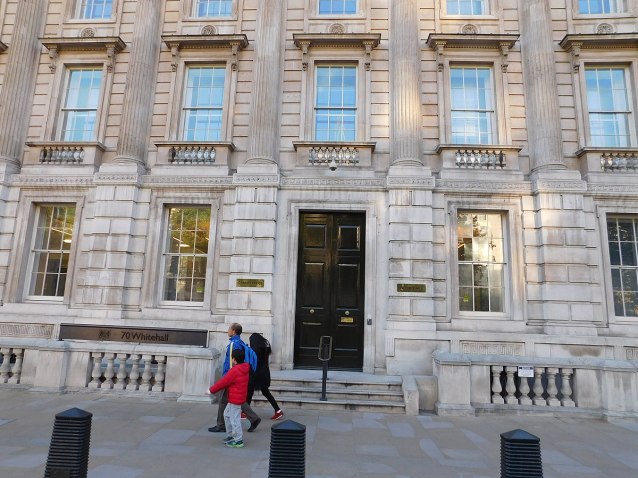
Cabinet Office – 70 Whitehall Pic credit: Wikipedia Commons
The day after Parliament went into recess a damning Public Accounts Committee report exposes why Whitehall like the National Health Service has such an appalling record in dealing with whistleblowers.
The Cabinet Office, the ministry at the apex of power and responsible for co-ordinating all government policy should be interested in improving public service is turning a blind eye to any concerns that are raised by whistleblowers when things go wrong.
The Cabinet Office is supposed to collect data on whistleblowing across Whitehall but the report reveals it is making remarkably slow progress in doing so.
The report says: “There are some key metrics missing, such as data on “ongoing cases” and the length of time an investigation takes, making it difficult to understand whether cases are taking too long and why that might be the case. “
“The current data collection also does not ask for data on the treatment of whistleblowers which would help indicate whether whistleblowers are being treated fairly. Furthermore, some of the existing data collected lacks detail, for example the data shows that less than 5% of investigated concerns lead to changes in policies or procedures which suggests a lack of action is taken in response to concerns.”
40 per cent of Whitehall whistleblowing cases are about fraud
It goes on: “there is a lack of data analysis and sharing of insights regarding whistleblowing across of the civil service. The Cabinet Office does not utilise its central position to analyse the cross-government data it collects. It appears that 40 per cent of the whistleblowing cases involve fraud “but there is no further detail beyond this categorisation so the Cabinet Office do not understand why this is the case.”
“A ‘speak up’ environment is not yet embedded throughout departments to encourage people to comfortably raise concerns. There are still negative perceptions of whistleblowing which can create barriers to achieving the right environment for speaking up. The annual Civil Service People Survey in 2022 had a median organisational score of only 52% of people agreeing they ‘think it is safe to challenge the way things are done in my organisation’. So nearly half think it is not safe.
The report says the Cabinet Office and other departments do not seek feedback from whistleblowers and so are missing vital insights into the effectiveness of the process.
“We have seen no clear indications that any departments routinely seek feedback directly from whistleblowers. Some feedback can be given to departments through their Nominated Officers (senior members of staff who are nominated to receive and consider concerns), but it is not collected in a formal or systematic way for it to be informative and there are limitations with anonymous whistleblower.”
The report calls for a radical shake up across Whitehall with a serious approach from the Cabinet Office to monitor what is going on.
Ray of Hope
There is one ray of hope from one organisation that worked with the National Audit Office and obviously takes whistleblowing seriously – that is the Maritime and Coastguard Agency which is principally concerned with safety at sea and environmental protection. It is a Department for Transport agency. In evidence to MPs it has developed a strong whistleblowing policy and takes cases from both staff and members of the public including ships crew.
A fishing vessel Pic Credit: HM Coastguard UK
The external cases were mainly categorised under danger to the environment or health and safety related issues. These cases included safety of vessels in UK ports, failure to meet the obligations under the Maritime Labor Convention (noise and rest hour disturbance), untrained ship crew and fraudulent issue of seafarer competence certification.
Unlike health trusts the anonymity of whistleblowers is protected throughout theinvestigation and their names kept from the board of the agency.
The evidence says: “A recent example of protecting the identify of a whistleblower was following a report of health and safety concerns in relation to coastguard rescue equipment in one location. In order to protect the identify of the whistleblower the health and safety investigation manager reviewed equipment at more than one location. Similarly where there have been reports of potential travel and expense claim and government procurement card irregularities, spot checks across several employee claims have been undertaken to avoid identifying the whistleblower.”
As a result last financial year there were 34 whistleblowing investigations – 27 from staff and seven from members of the public.
“The internal cases during 2023-24 covered breaches of the civil service code, conflict of interest, recruitment irregularities, possible fraud, Health & Safety, Safeguarding of employees, Security breach, misuse of official position/ influence by improper pressure, GDPR breach and offer of a bribe. Of the 27 cases, four were not classed as Whistleblowing but “Speak Up” and were referred to MCA HR.
“The external cases during 2023-24 were health and safety issues on passenger vessels, potential security/ GDPR breach by an MCA contractor’s employee, security/environmental issue referred to the Joint Maritime Security Centre, a referral to the National Crime Agency and a modern day slavery report transferred to the appropriate authorities via Gov.Uk”
This appears to be exception rather than the norm. But it shows that if whistleblowing was taken seriously in Whitehall and the NHS far more serious safety issues could be investigated and fraud stopped. This lack of interest in whistleblowing – and the negative attitude towards doctors who report patient safety issues in the NHS – is a nasty blot on our public services. It does nothing to protect the public either.
This week I paid a lightening visit to the Labour Party Conference in Liverpool and found a remarkably changed and brutally focused party.
Out had gone any commitment to state ownership, hugely expensive pledges to spend, spend, spend and in had come a sharp focus on bread and butter issues like cutting hospital waiting lists and building lots of homes for generation homeless..
There was also a brutal message from Sir Keir Starmer that the party would be raising very little on new taxes- beyond taxing non doms and VAT on private school fees. Everything was going to depend on growing the economy from its present feeble state to pay for new public spending. If that fails the whole Labour project will collapse once they are in government – a big hostage to fortune.
What was also noticeable was the huge presence of corporate firms and large charities and ngos – never have I seen such numbers in the exhibition hall and its overflow corridor.
The main reason why Labour is being cautious is the state of the British economy post Brexit. Although Brexit was never mentioned by the Labour leadership, the chaos and incompetence of the present Tory government ( now also emerging in the Covid inquiry) has virtually torched the British economy, now bedevilled with a cost of living crisis and high inflation. And they can’t blame the EU. But it is worse than that – the chopping and changing in government policy -illustrated by scrapping HS2 at Manchester during their conference last week and delays in the net zero programme – has even bewildered their business allies who don’t know where they are and how they should plan.
That is why they see a Labour government as a better bet than the Tories. It is ironic that after all the attacks on Jeremy Corbyn turning Labour into a cult – it is now the Tories that are turning into one – with their obsession with opposing trans rights, boat people, cancel culture and recreating the UK in the image of the 1950s. No wonder much of business ran off to Liverpool.
David Blunkett; Official House of Lords portrait
I did attend two very interesting fringe meetings during my short stay. Both illustrated the new order at Labour. One organised by the TUC was on the subject of tackling Britain’s skill shortages among the workforce. It was addressed by Steve Rotherham, the Labour Metro Mayor of Liverpool; Bridget Phillipson, Labour’s shadow education secretary; Labour peer David Blunkett; and chaired by Kevin Rowan from the TUC. What was impressive was that the TUC and David Blunkett had drawn up a very detailed plan to tackle the crippling skills shortage – often overlooked by politicians – and Bridget Phillipson, was keen to implement it. It included scrapping the very low wage of £5.28 a n hour for apprentices and replacing it with the minimum wage and radically changing the funding programme to tackle skills shortages and prevent employers exploiting it for cheap labour. If Labour are serious in doing this, it will be fundamental to economic recovery.
An even bigger eyeopener was a fringe meeting organised by Labour’s environment campaign, Chaired by a Westminster Labour councillor , the campaign had both the head of forests, from Global Witness and a Aviva, the private insurance company on the panel. It turned out that both Global Witness and Aviva had been working together to ensure UK legislation that would stop British firms contributing to global deforestation by de investing in companies that did this. Even this it appeared had been opposed by the Tories.
One extraordinary meeting I did not get into was on the controversial future of rail to be addressed by Labour’s shadow transport secretary, Louise Haigh. Organised by Lodestone Communications, whose clients include US whiskies, the Countess of Chester Hospital ( not best to advertise this at the moment) and IT firms, it was private but important enough for the general secretaries of ASLEF and the RMT to attend. I was told it shouldn’t have been advertised in Labour’s conference programme and been placed there by mistake. Very intriguing.
Women born in the 1950s who have faced a six year delay in their pension would have been pleased by a motion which was passed by Labour’s women’s conference. It commits the next Labour government to fully implement in law the UN Convention on the Elimination of All Discrimination Against Women (CEDAW) and ensure equal pay for women is fully implemented. We shall see if Sir Keir Starmer makes this a manifesto commitment.
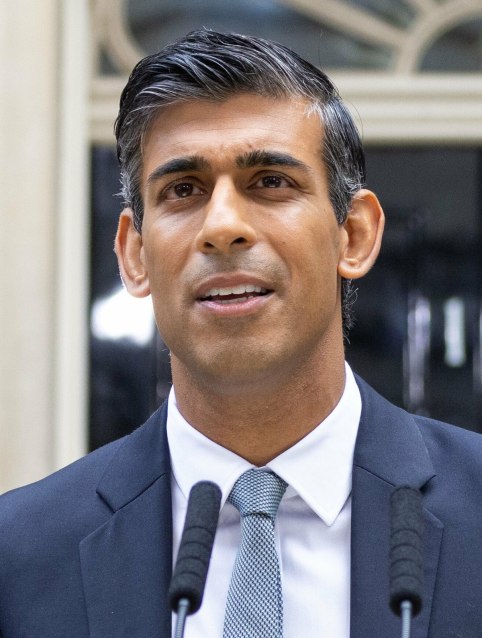
” Dishy Rishi” or our new Maharajah Pic Credit : Lauren Hurley / No 10 Downing Street
Increasingly desperate about his poll ratings the Prime Minister has turned to dumping green policies as Europe burns. The Tories managed by just under 500 votes to hold Boris Johnson’s old seat of Uxbridge and South Ruislip and claimed that stirring up the introduction of new charges for the ULEZ ( Ultra Low Emissions Zone) being extended to all vehicles entering Greater London helped them hold it. Keir Starmer, the Labour leader, bought the argument.
For the record two other reasons also contributed to counter that view. Despite ULEZ the Green Party polled 893 votes taking more than enough votes from Labour to deny them the seat. And the seat has a substantial Indian minority – who are thrilled to have an Indian PM – with many mothers dubbing him “Dishy Rishi” as they see him as a trailblazer for the future community.
But Sunak’s short term populist stance on these issues aimed at the “boy racer” motorist vote is going to have a devastating effect on the health and lives of ordinary people. In the space of a week the PM has signalled he is against ULEZ, against 20mph speed limits, against restrictions on cars in residential neighbourhoods and in favour of a massive expansion of oil and gas in the North Sea. If he gets more desperate I can see him dropping the ban of new diesel and petrol cars and promising the combustion engine will live forever in the UK.
Bill Esterson Labour’s business and industry spokesman Pic credit: Industry Forum
And none of this is good for long term planning for business to transition to net zero as Labour’s shadow business and industry spokesman, Bill Esterson points out. It could even damage our own car industry as every country we export is switching to electric cars.
As he says: “Over 70% of our car exports go to markets that have already set a phase-out date of fossil vehicles.
Other countries are committed to the transition away from fossil fuels. And they are keeping their commitments.”
All these measures will damage the health of people and cost lives. That is why I think he deserves the title of the Road Kill PM – the roads of the UK will not only be littered with dead wildlife but dead and injured children and pedestrians.
Take the ULEZ zone itself. This is as much a public health issue as an environmental one. Children have died in London because of it so Sadiq Khan is right to introduce it. And the Tories are hypocritical about the zone – it was demanded by Grant Shapps, as transport secretary as part of a cash settlement to bail out Transport for London during the Covid crisis. So it could be called the “Grant Shapps” ULEZ zone as much as Khan’s.
In France ineligible cars are BANNED not charged in Ulez zones
Also drivers chaffing at paying the charge should know that this initiative is not confined to the UK. If they drive to France on holiday they will find they are not charged but banned from driving in a growing number of big city centres and could be fined. And all eligible cars and motorbikes have to carry a clean air sticker or you cannot drive in France.
No wonder doctors have written Sunak and Khan to say.
“Air pollution affects every one of us from before we are born into old age. It not only causes respiratory conditions such as asthma, but also heart attacks, heart arrhythmias, strokes, child developmental disorders, lung cancer and dementia.
“Ulez works. It has already saved lives and prevented many illnesses and hospital admissions.”
As for reviewing 20 mph limits in cities including London. There is no question that will result in more deaths and injuries.
Road crash Pic credit: Brake, road safety charity
Brake, the road safety charity, says:
“A vehicle travelling at 20mph would stop in time to avoid a child running out three car-lengths in front. The same vehicle travelling at 25mph would not be able to stop in time, and would hit the child at 18mph. This is roughly the same impact as a child falling from an upstairs window.
The greater the impact speed, the greater the chance of death. A pedestrian hit at 30mph has a very significant (one in five) chance of being killed. “
Latest statistics for London show the number of collisions has reduced by 25% (from 406 to 304), and collisions resulting in death or serious injury have also reduced by 25% (from 94 to 71), demonstrating the huge impact of lowering speeds to 20mph on many roads.
But for Rishi Sunak to get his votes back and stay in power obviously a few more children or pedestrians killed or maimed every year are a price worth paying. Anyway he seems to go most places by helicopter.
Then there is the big boost to finding North Sea oil with 100 new licences to be issued by the government. Again this is going down the wrong track. The North Sea is not the only place being explored when I was in Namibia a big exploration was under way near Walvis Bay which could yield an enormous new field. At some point the big increase in electric vehicles is going to meet the burgeoning supply of oil and as demand for oil falls so will the price until it becomes uneconomic.
The security claim is rubbish too – since it will be traded on the open market. What is true is that Rishi Sunak’s family firm Infosys will personally benefit every time BP gets a licence as they signed a deal with the oil giant just before the exploration licences were announced. His wealthy family will see the petrodollars rolling in, the more BP win concessions. No doubt the cash will be hidden in some offshore tax account so we won’t know about it.
Next month Rishi Sunak will be in Delhi for the G20 summit and the press there is already very excited about him coming there. Politico Europe is already suggesting he will be mobbed by ecstatic Hindus. And the Times of India has heralded his arrival in Downing Street as a move from ” Empire to the Rishi Raj”. Others see this as revenge for Britain’s Imperial past ruling India. Now Rishi rules over the British people instead.
The choice of helicopters for Rishi Sunak from Maharaja Aviation
Given his penchant for exorbitant expensive helicopter rides over mundane journeys by rail or road I have found the perfect charter company for his travel. It is called Maharaja Aviation and runs a fleet of helicopters. He can fly like a modern fabulous wealthy maharaja across India dispensing baubles to the masses. And in the meantime he can forget the country he rules with its sky high mortgages and rents, sewage in the seas and rivers, food inflation and its demonising of other foreigners who try to seek sanctuary on its shores.
Please donate to Westminster Confidential so I can continue to report independently on issues of the day.
A visit to Namibia’s extensive desert reveals an extraordinary unique environment probably not repeated anywhere else on earth.
Huge sand dunes near the coast compete with an enormous desert plain dotted with prehistoric plants and an unparalleled moonscape next to mountains full of uranium.
First the sand dunes. Just outside the port of Walvis Bay lie large sand dunes favoured by quad bike fraternity. We visited this first and saw how popular they were.
Sand dune outside a quad bike centre Quad bikes
Next we passed the resort of Swakopmund A German colonist resort which still contains many of its original buildings.From here there is a huge desert plain where you find prehistoric plants.
One of the German style hotels in Swakopmund
The star of the plants is the Welwitschia mirabilis a prehistoric plant that can live for 3000 years and grows just two large leaves that often split into pieces in the arid desert. Extremely slow growing there are male and female plants which attract desert living insects and beetles .They live only inland in the Namib desert and in the wilder parts of southern Angola.
Female prehistoric plant which has red green cones observed by tourists on our tripMale prehistoric plant
Life can exist in the desert because a fog moves from the coast during the night creating enough moisture for animals like the springbok and jackals to find moisture from plants including the dollar plant a succulent that stored water in its leaves.There are also sidewinder snakes and scorpions but fortunately are all asleep in their burrows during the day.
The most dramatic area is the rocky moonscape where nothing appears to live but in fact hides an oasis in a dried river bed that has existed since 1849.
the arid desertMoonscape of Namibiathe oasis bar restaurant and camping site
In the distance are mountains where Namibia’s huge reserves of uranium can be mined.Now all the main mines are owned by the Chinese according to our guide.The uranium is exported to China for its civil nuclear programme. Curiously another big Namibian export is marble to Italy so perhaps not all Italian marble is home mined.
























 Westminster Confidential