Exclusive: Top law firm writes to Mel Stride inviting him to start mediation talks on restitution for 50swomen

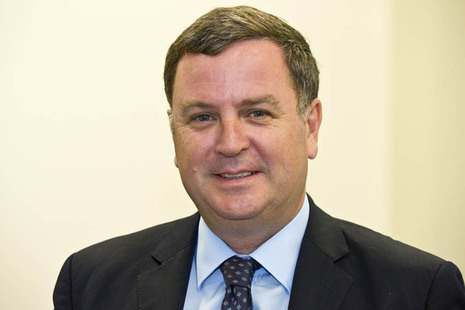
Mel Stride, Secretary of State for Work and Pensions

One of London’s top law firms has written to Mel Stride, the work and pensions secretary, inviting him to agree to mediation talks to end the long suffering impasse on awarding compensation to the now 3.5 million 50s born women who had to wait another six years before they got their pension.

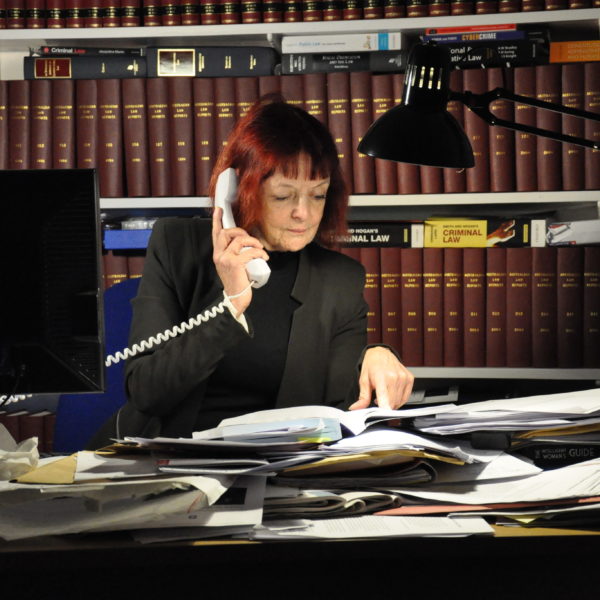
Garden Court Chambers, which takes up human rights issues, has a specialist role in mediation. Next month it will be hosting a seminar evaluating the use of mediation in the Court of Protection, which makes and regulates decisions on behalf of people who don’t have the mental capacity do so, publishing research done by Dr Jaime Lindsey of Essex University.

The law firm has a long history of looking at women’s equality issues and two years ago hosted a people’s tribunal looking at the full implementation in the UK of the UN Convention on the Elimination of All Discrimination Against Women (CEDAW) which Lady Thatcher ratified in 1986.

Six barristers and leading KC’s from the firm gave their time pro bono to advise on the legal arguments and took evidence from witnesses. The pro bono support was seen as unprecedented at the time. Each session was chaired by a panel of senior lawyers from the firm. They were ” counsel assisting ” to Dr Jocelynne Scutt, the former Australian judge and anti discrimination, who chaired the hearings.
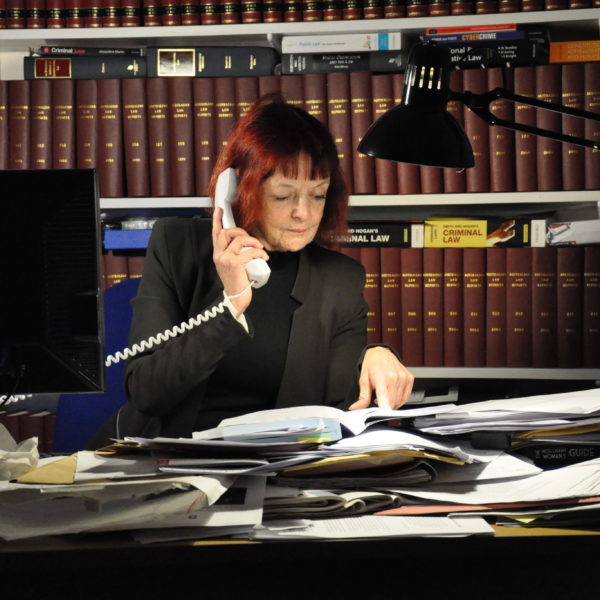
Dr Jocelynne Scutt

Dr Scutt also chaired a one day inquiry which looked into the long standing plight of 50s women who were having to wait for their pension. Dr Elgun Safarov, vice chair of (CEDAW) from Geneva, gave evidence. She is in the UK teaching law at Buckingham University.

Dr Scutt’s report into the issue was published at the end of November and concluded that there was direct discrimination of women for all pensioners born after 1950 but those born up to 1960 had to bear the full brunt of the change.

Dr Scutt said: “What my report says is that women born 1950s were directedly discriminated against because they were targeted to bear the full impact of the change from 60 years, so as to equalise the retirement age with men’s retirement age. Most had no notice, or inadequate notice, of the change so suffered egregious economic hardship, stress, anxiety and psychological trauma as they had to change retirement plans and try to negotiate staying in their jobs or getting a new job in a time frame that was unrealistic or impossible to do.”

It has also to be taken into account that 9.8m men were given 5 years free auto credits to retire 5 years early, aged 60, whilst the state pension of 3.8m 1950’s women was twice deferred, by stealth, and they were then coerced back to work for up to another 6 years having been denied the promised similar auto credits awarded to men.

Dr Scutt hand delivered the report to Rishi Sunak at Downing Street just before it was published. It was also delivered to Robert Behrens, the Parliamentary Ombudsman, who is currently involved in a long inquiry into how much the women should be compensated after finding partial maladminstration.

CEDAWinLAW.com sent the judge’s report to Garden Court Chambers and briefed the law firm on the issue. and asked them whether this injustice would benefit from mediation talks.

The law firm has now written to Mel Stride inviting him to consider impartial mediation talks as a further pro bono move.

This move chimed in with MPs who have been calling for an an Alternative Disputes Resolution talks. Sir George Howarth, Labour MP for Knowsley and Lloyd Russell-Moyle, MP for Brighton, Kemptown and Peacehaven, have already written to Mr Stride.
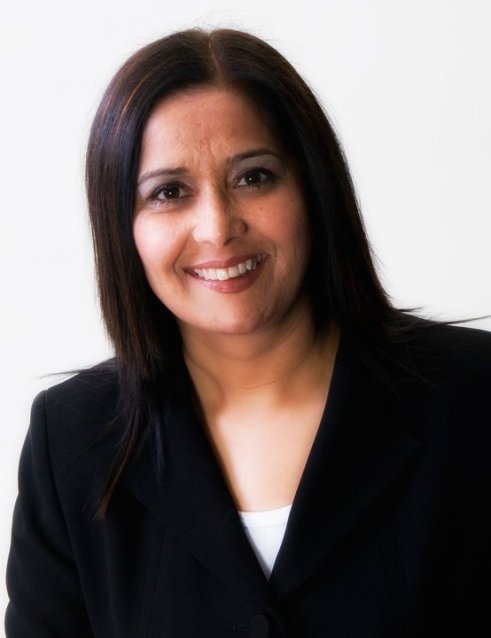
Yasmin Qureshi, Labour’s women and equalities shadow minister

Yasmin Qureshi, Labour shadow women and equalities minister, has added her voice saying ” 50s women have been left in the lurch” and drawing Mr Stride’s attention to the judge’s report’s conclusion:

‘Government and Parliament have a responsibility to face up to and acknowledge the grave wrong done. There is no room for obfuscation or quibbling. Historical discrimination requires relief. There is a moral imperative to right this wrong. The law is on the side of the 1950s-born women. 1950s born women alone are the group targeted.This is a debt of law and honour. Full restitution is the only proper legal, ethical and moral outcome.’

Some 50 MPs from the Labour Party to the Scottish National Party, Plaid Cymru, the SDLP, Alba and the Democratic Unionist Party support Sir George’s initiative.
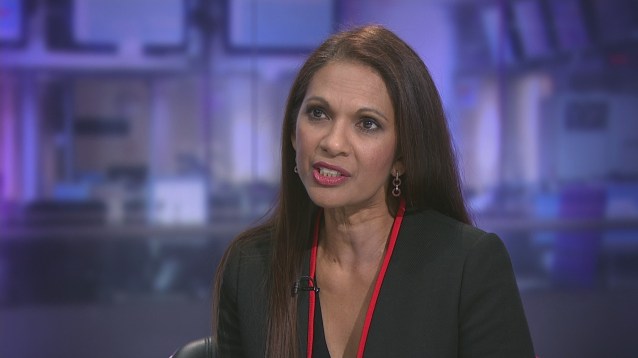
Gina Miller when she was interviewed by Channel 4

At the same time the campaigner, Gina Miller. leader of the True & Fair Party, and best known for her fight with the government over Brexit, has accepted an invitation to advocate with CEDAWinLAW on behalf of all 1950’s women victims.

Finally Ms Rebecca Hilsenrath, Chief Executive Officer of the Parliamentary Ombudsman’s office, has agreed she will meet Joanne Welch, from CEDAWinLAW.com. A date has to be agreed between both parties.

This is the statement issued by CEDAWinLAW:
“CEDAWinLAW.COM takes this welcome opportunity to thank The Hon Dr Jocelynne Scutt AO for her ongoing treasured pro bono counsel.

Today, Gina Miller, Leader, True & Fair Party, welcomes CEDAWinLAW.COM’s announcement below and has accepted our invitation to join us as we advocate for 1950’s Women with said matters in hand.

Garden Court Chambers impartial invitation letter to Mediation Talks with Joanne Welch, Founder, CEDAWinLAW.COM, [on behalf of all 1950’s Women out of The Judge’s Report] has been sent to the Rt Hon Mel Stride MP, Secretary of State for Work & Pensions.

Ms Rebecca Hilsenrath, CEO, PHSO, has invited Ms Welch to meet with her.”

Please donate to my blog so I can continue my forensic reporting on this and other issues.

One-Time
Monthly
Yearly

Make a one-time donation

Make a monthly donation

Make a yearly donation

Choose an amount

£5.00
£10.00
£20.00
£5.00
£15.00
£100.00
£5.00
£15.00
£100.00

Or enter a custom amount

£

Your contribution is appreciated.

Your contribution is appreciated.

Your contribution is appreciated.

DonateDonate monthlyDonate yearly

Please donate to Westminster Confidential

£10.00

Labour MP takes up scandal of the 9.8 million men who got free national insurance credits while women got nothing

Lloyd Russell – Moyle MP : Pic Credit: Labour South East

A Labour MP is challenging Mel Stride, the Work and Pensions Secretary, to ” correct the imbalance ” that allowed up to 9.8 million men to claim free national insurance contributions from the state while 50s born women were stopped from claiming anything.

He is the first MP to raise this issue, disclosed on this blog three years ago, directly with the Secretary of State. See here.

This huge subsidy only came to light when one of my readers ,Myfanwy Opeldus, one of 3.8 million women facing a six year delay to get her pension, got the admission from the ministry through a Freedom of Information request. three years ago.

Originally introduced in the 1980s by Margaret Thatcher and Sir Geoffrey Howe, the former Tory chancellor, to cut down the employment figures. men aged 60 got ” auto credits” – free national insurance payments- towards their state pension if they did not claim unemployment benefit.

Meant to be a temporary measure men could still claim this right up to 2018. Women born in the 1950s were promised to be able to claim this once the coalition government started raising the pension age from 60 to 66 but it was never implemented.

Mel Stride Works ands Pensions Secretary

The MP writes : “Recent revisions by the Department for Work and Pensions reveal that 9.8 million men received “auto credits” for pension eligibility—more than double the previously disclosed 4.65 million. This is particularly unsettling in comparison to the six-year pension delay faced by 1950s born women. The lack of transparency surrounding these payments for nearly four decades deepens these concerns. The timing of this disclosure, following a Court of Appeal hearing, underscores the need for prompt action. The substantial “auto credits” provided to men since 1983 to encourage male employment reveal an imbalance requiring correction.”

Mr Russell-Moyle is one of the MPs backing a bid to settle the long running disputed over compensation for the now 3.5 million women ( 300,000 have since died) by holding an alternative dispute resolution, hearing with the government. which is championed by Sir George Howarth, the Labour MP for Knowsley. This solution is being promoted by the CEDAWinLaw People’s Tribunal following a report by the former Australian anti discrimination commissioner, Dr Jocelynne Scutt, which says the UK broke international law by not compensating the women.

It is also a speedy way to resolve the problem compared to WASPI’s solution to get the Parliamentary Ombudsman, Rob Behrens, to recommend compensation which has been mired in delays and disputes for years.

This is the full test of his letter:

Please donate to Westminster Confidential to allow me to continue my in depth reporting.

One-Time
Monthly
Yearly

Make a one-time donation

Make a monthly donation

Make a yearly donation

Choose an amount

£5.00
£10.00
£25.00
£5.00
£15.00
£100.00
£5.00
£15.00
£100.00

Or enter a custom amount

£

Your contribution is appreciated.

Your contribution is appreciated.

Your contribution is appreciated.

DonateDonate monthlyDonate yearly

Please donate to Westminster Confidential

£10.00

Revealed: The battalions of Capsticks lawyers employed to pursue whistleblower consultant cardiologist Dr Usha Prasad

Dr Usha Prasad

The adjournment on Wednesday of the costs hearing against whistleblower Dr Usha Prasad provided welcome relief for embattled and mentally stressed consultant cardiologist dismissed by the Epsom and St Helier University NHS trust.

But before the case was adjourned by judge Mrs E J McLaren ( and the trust’s claim cut from £180,000 to £24,000) Capsticks had submitted a breakdown of their costs to the judge. They had to do this to get the trust’s costs back and it provides a rare public insight into the length lawyers go to pursue whistleblowers at the trust’s behest.

Remember all the money spent by the trust comes from you the taxpayer and is used by the management of the trust to pursue whistleblowers rather than provide more patient care. And also remember again that in 99.95 per cent of all employment tribunal cases the employee is not asked to pay the employer’s costs.

So the £172,000 bill presented by Capsticks to the tribunal makes very interesting reading. It reveals that at various times no fewer than 20 lawyers and paralegals were involved in countering Dr Usha Prasad various claims. They were paid anything from £82 to £160 an hour. They included two partners on £160 an hour, three in house barristers two on £160 an hour and one on £120 an hour;, two legal directors again on £160 an hour, four senior solicitors on between £130 and £160 an hour; three solicitors on £143 and £120 an hour, two trainee solicitors on £96 an hour and five paralegals on £82 an hour.

Counsel Fees for the barrister Miss Nadia Motraghi totalled £50.775 .These were for a Preliminary Hearing on 30.09.21 and a brief and refresher on a Final Hearing on 01.11.21 for 16 day hearing.

Jessica Blackburn, senior solicitor at Capsticks Ltd

The biggest payout among the 20 lawyers working for Capsticks was to Jessica Blackburn, a senior solicitor who was promoted half way through the case, earned over £47,000 in fees for pursuing Dr Usha Prasad. There is a profile of her on this site here. She was the most combative in her approach , ignoring her doctor’s plea for a postponement and telling her everything she had claimed, including the whistleblower case over an ” avoidable death ” of a heart patient was ” without merit”.

In contrast Dr Usha Prasad could only afford one barrister for part of the time and relied on a friend and fellow consultant Dr Philip Howard to support her pro bono. Otherwise she was a litigant in person facing a team of 20 lawyers.

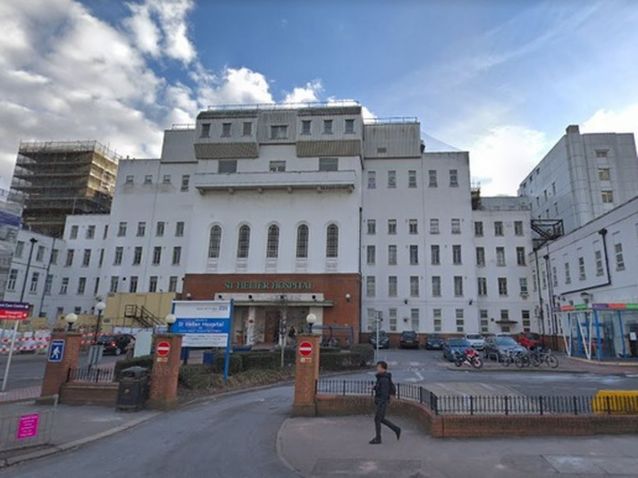
St Helier Hospital

What is the most disturbing is that the Epsom and St Helier University NHS Trust can ill afford to spend hundreds of thousands of pounds of taxpayer’s money pursuing a consultant cardiologist. She had to spend 28 months in the office on ” restricted clinical duty” while the trust investigated 43 cases against her. They sent them to the General Medical Council which not only exonerated her but extended her licence to practice without the need for further revalidation. Any sane person would have decided then and there to drop all this and reinstated her after the GMC findings.

Instead they continued what can be only described as a vendetta against her putting her under more and more stress until she was barely able to cope attending another tribunal hearing.

Meanwhile the trust is building up debts – the latest board meeting in July revealed it is £35 million in the red ( up from £27 million in April). Patients waiting for cardiac procedures, mainly imaging, and reviews are having to wait longer and the waiting list is growing – up from 2551 in July 2022 to 2901 in April 2023 -according to the NHS waiting list tracker.

Until this started Dr Usha Prasad who had been there since 2010 had seen 15,000 patients and had no complaints. If she had been reinstated the waiting list might not be so high and more patients would have been treated. And all this taxpayers money would not have been wasted if the trust had decided to use their own hr management to sort this out without going to a tribunal.

Councillor Ross Garrod, Labour leader of Merton Council

Meanwhile the growing deficit has led the trust to plan closing St Helier’s emergency department, maternity services and children’s in patient services provoking fury from residents. Councillor Ross Garrod, leader of Merton council, has called for re-assessment of the impact of this and a campaign group has been set up to fight the proposals. The website is here.

It’s time the trust got its priorities right. Stop spending hundreds of thousands of pounds fighting whistleblowers and spend more time and energy in running your services better.

Please donate to my blog so I can continue my forensic reporting on cases like Usha’s.

One-Time
Monthly
Yearly

Make a one-time donation

Make a monthly donation

Make a yearly donation

Choose an amount

£5.00
£10.00
£20.00
£5.00
£15.00
£100.00
£5.00
£15.00
£100.00

Or enter a custom amount

£

Your contribution is appreciated.

Your contribution is appreciated.

Your contribution is appreciated.

DonateDonate monthlyDonate yearly

Please donate to Westminster Confidential

£10.00

50s women: Waspi getting nowhere with the Parliamentary Ombudsman who announces he plans to quit

Rob Behrens, Parliamentary Commissioner to stand down in March.

Promise of an early resolution for the £3.6 million 50s born women to get compensation for their delayed pensions appear to have been dashed with no movement from the Parliamentary Ombudsman to solve the problem.

Despite a court agreement in May to revise the final report on compensation for the women to correct what Waspi calls the Ombudsman’s “legally flawed” decision to award minimum compensation for the women who have lost up to £50,000 by the six year delay they faced when the pension age was raised from 60 to 66, nothing has happened. Waspi has raised £147,500 from the public for a judicial review of the decision which never happened.

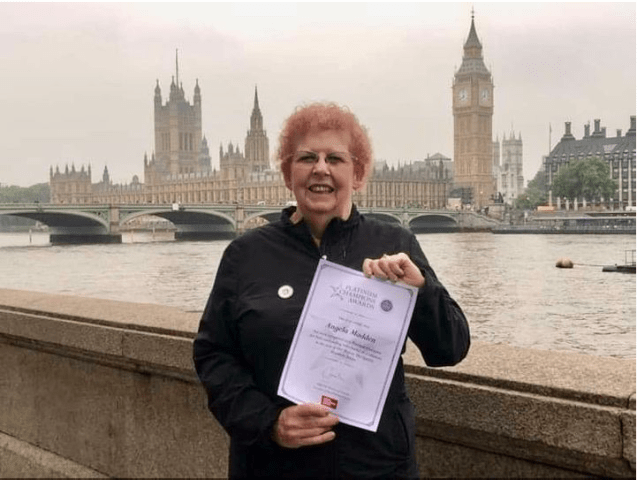
Angela Madden, chair of Waspi

The Waspi statement in May was very confident the organisation could hold Robert Behrens, the Parliamentary Ombudsman’s feet to the fire and get great concessions for the women. At a Labour Party Conference meeting last year, Angela Madden, chair of Waspi, said she would expect women to get £10,000 a year compensation. See my blog here.

What a contrast with the downbeat statement a few days ago.

“”WASPI are disappointed and frustrated by the length of time that the Ombudsman is taking to rewrite his Second Report on the injustices cause by DWP maladministration. The Court Order requiring that reconsideration was sealed on 12 May 2023. It is unclear precisely what has been done since then.

” We can confirm that neither we nor, as far as we are aware, any of the sample complainants have been contacted to comment on a draft, or on anything new that the Ombudsman has gathered from the DWP. That opportunity to comment is guaranteed by the Court Order, which suggests that finalisation of the report is still some way off.”

In desperation Waspi have got their lawyers, Bindman’s, to write to the Ombudsman. But as their statement says:

 “We have not had the courtesy of a reply. We also have asked for a meeting with William Wragg MP, the Chair of the  Public Administration and Constitutional Affairs Committee (PACAC), to whom the Ombudsman reports. That meeting has yet to take place.”

Failure to reply is quite common from the Ombudsman’s Office. BackTo60, who have repeatedly told the Ombudsman that he should have to consider whether the failure to compensate the women is in breach of international agreements signed by the UK government which ratified the UN Convention on the Elimination of All Forms of Discrimination against Women (CEDAW),.

Dr Jocelynne Scutt

This argument is particular powerful following the report by Dr Jocelynne Scutt, the former Australian anti discrimination commissioner and judge, which found it was in breach of CEDAW and was clearly discriminatory against the 50swomen.

Now while it might be convenient for the government and the Ombudsman to pretend this report doesn’t exist, the findings are being taken seriously by the committee implementing the convention in Geneva who have to do a report to the UN on Britain’s compliance with it. Given the Ombudsman’s public pride of his role on the international scene with other Ombudsmen his reputation could easily be sullied if he is found to have ignored an international convention.

But perhaps he doesn’t care. The other major development while Waspi was awaiting his report is that he is to step down from the job next March. He announced this in his annual report published on July 20 which he said was his valedictory report.

This means when Parliament comes back in September the emphasis will switch to finding a successor, drawing up a short list and having the new Ombudsman’s appointment scrutinised and approved by Parliament via the Public Administration and Constitutional Affairs Committee.

What should worry Waspi, which chose to go down this route, is there must be a temptation to delay his findings so his successor has to sort it out. Also even if he does come out with his findings before he leaves, it will be up to his successor to persuade the government to implement them. Given by then Parliament will be engulfed with preparations to fight the next general election, the government might be tempted to push it into the long grass or make vague promises in the hope of garnering votes.

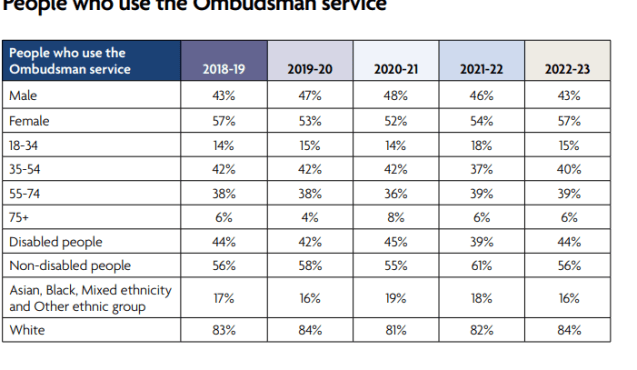
The annual report provides some interesting facts and figures on the operation of the Ombudsman’s Office. A table reveals who uses it showing more women than men complain to the Ombudsman and the main age groups are between 35 and 74 and 84 per cent are white.

The report also reveals disabled people are heavily reliant on it. When one looks at the breakdown of the board however, there is not a single person with experience of a disability on it, which means the disabled have no voice at the top of the organisation. The board has one gay member and three people from ethnic minorities.

The organisation fares well in the employment of women both among its staff and the board as 59 per cent of staff and 58 per cent of the board are women. Disabled people form 13 per cent of the staff just above gay people and just below people from ethnic minorities.

The report also shows that some £588,000 of taxpayers money was spent on management consultancy last year compared with just £22,000 the previous year. This does seem an extraordinary amount of money from a budget which the government has limited.

Please donate to Westminster Confidential to allow me to continue my forensic reporting.

One-Time
Monthly
Yearly

Make a one-time donation

Make a monthly donation

Make a yearly donation

Choose an amount

£5.00
£10.00
£20.00
£5.00
£15.00
£100.00
£5.00
£15.00
£100.00

Or enter a custom amount

£

Your contribution is appreciated.

Your contribution is appreciated.

Your contribution is appreciated.

DonateDonate monthlyDonate yearly

Please donate to Westminster Confidential

£10.00

Campaign to end discrimination against women reaches Downing Street

Rishi Sunak gets a report on why women are still hugely disadvantaged in decision making across the world

Video from Downing Street where Jocelynne Scutt hands in the report on Women, Power and Decision Making to Number Ten

Here is a video taken yesterday when Jocelynne Scutt, a former Australian judge and anti discrimination commissioner and now an academic in the UK, handed in a report to the Prime minister detailing how women are still at a huge disadvantage to men in taking key political decisions in the UK and the rest of the world. She says the position of women is ” lamentable” in the UK

The report by the UK based Cedaw in Law, the organisation which is working with the Geneva based UN Convention on the Elimination of All Forms of Discrimination against Women and Girls (CEDAW). to put pressure on the government to implement in full the convention ratified by Margaret Thatcher in 1986.

The campaign covers everything from the 1950s born women battle for full restitution of their delayed pensions when the age went up form 60 to 66 to the dearth of women MPs and peers in Parliament.

At the moment we seem to be going backwards with Labour having an all white male prospective Parliamentary candidate list for five pending by-elections and former premiers Boris Johnson and Liz Truss putting forward an overwhelming number of men to be new peers in their resignation honours lists Even the Supreme Court which took on a big role under its former woman president, Brenda Hale now has 11 male judges and just a token woman judge.

As the report says : “…overlooking women’s right to equal participation in decision-making leads to an ignoring of, and ignorance about, women’s economic rights, health and wellbeing. Worse, it shows how the failure to ensure women’s participation in decision-making can lead to a wilful failure of government to consider the impact of policy decisions and law-making on women and women’s rights generally.

We also discovered that the rules governing the delivery of petitions and reports to Downing Street had changed. Previously when Backto60 and trade unionists had delivered petitions to Downing Street it was allowed for people to make a short speech. Now under Rishi Sunak speeches that criticise the PM cannot be made from the steps of Downing Street. We did not discover this until both me and Jocelynne Scutt had made them.

Please donate to Westminster Confidential to allow me to continue my reporting on issues often ignored by mass media.

One-Time
Monthly
Yearly

Make a one-time donation

Make a monthly donation

Make a yearly donation

Choose an amount

£5.00
£10.00
£20.00
£3.00
£9.00
£60.00
£3.00
£9.00
£60.00

Or enter a custom amount

£

Your contribution is appreciated.

Your contribution is appreciated.

Your contribution is appreciated.

DonateDonate monthlyDonate yearly

Please donate to Westminster Confidential

£10.00

Official – Work till you drop: Women in their 50s expect to have to stay in work long after retirement age

The Office for National Statistics – the independent official body which produces official figures for work and inflation in the UK – has come up with some alarming predictions for women born in the 1950s 1960s and 1970s.

They show that post the Covid pandemic there has been a big drop among women expecting to have enough money to retire and enjoy a life of leisure on their pensions. As a result a significant proportion of women now aged 50 to 65 are planning to stay in work – either with reduced hours or full time when they reach the retirement age of 66.

An organisation called Rest Less, which acts a community and an advocate for the over 50s, has analysed these figures and estimates that nearly one in two women pensioners now expect to have to continue working after retirement age.  Either they will work their existing hours (13%) or work with reduced hours (31%).

Huge inequalities between men and women’s pensions

The main reasons for this is pensioner poverty among women and huge inequalities between men and women when it comes to their pension pots. Not only are women less likely to get full state pensions – often they have missed years – than men but there is a big discrepancy in private pensions. The ONS figures show while 78 per cent of men will fund their retirement with a private pension, only 68 per cent of women have one. And the inequality goes on and on. Some 47 per cent of men will fund their retirement through savings, compared to 40 per cent of women. And only seven per cent of men will rely on funds from their partner, while 18 per cent of women will rely on their partner to help fund their retirement.

These figures were compiled 10 months ago in September last year. I hear that the ONS does not plan to update them since the survey was a ” one off” following Covid. Curiously a lot of publicity was given to people dropping out of the workforce when they got to 50 – I can only think that the majority must have been men or women married to men with a very good private pension.

Stuart Lewis, Chief Executive of Rest Less, commented: “Years of gender based earnings disparity has resulted in a large pension savings gap between men and women, leaving many women in their 50s and 60s in real financial precarity.  Nearly half of women aged 50-65 said they plan to continue working in some capacity after reaching state pension age – a number that is likely to have risen even further given the subsequent cost of living crisis.

…..“‘In the last recession of 2009, women could retire at 60 and receive the state pension; today it is 66.  Many women aged 50-65 are stuck between a rock and a hard place – they struggle to find work due to age discrimination or a lack of flexible work opportunities but they are too young to claim their state pension putting them in a vulnerable financial position as they approach retirement. Whilst the state pension age for men and women may now be equal, this data shows that the retirement fortunes of men and women remain anything but equal.”

One person who is caught in this trap is Back to 60 campaigner Michaela Hawkins known as Mac to her friends

Michaela Hawkins

“.I was forced to stay in work longer than I wanted to or hoped for. 
“My husband is 10yrs older than myself so was relying on retiring at 60 so we could enjoy some quality time together. When SPA was raised this devastated our plans.  It would have meant if I retired before receiving my SP we would have had to survive below the breadline. 
“Austerity along with the pandemic put untold pressure on both myself and husband. I was transferred to work in care home from Day services during Covid. As my husband was in high vulnerable category during this time you can imagine the stress this put on both ourselves. 
“Another reason why I felt stressed also is because as a woman gets older her body is not the same. The physical aspects of working in care sector takes its toll.  When you come home from work you feel exhausted. But if you’re caring for loved one or helping out your children with childcare which I done both you have got no time for any sort of quality life.” 

now tax allowance frozen

“Now the Tax allowance that’s been frozen.  Now I’m retired I’ve been hit with a tax bill for over £1300  on top of cost of living crisis this is going to push many 50s women over the top. “

UPDATE : Since then there has been another demand for £1300.

Mac writes:

“I then received a letter saying I owe them a further £1,300. If this wasn’t payed then they would get in touch with debt collectors.

It took me 2 1/2 hrs to get through to tax office to query this.
It couldn’t be done online.
Although I disputed the amount I owe they were insistent that I did owe that amount.
I was then put through to debt management. Who I got to say was accommodating. But the problem is when older people receive letter from HMRC saying they will bring in debt collectors or as people our age call them bailiffs they become confused and frightened. 
Then to be put on hold for that length of time is again frustrating to say the least. 
When you think how HMRC is quick to chase up pensioners who in good faith think they payed their fair taxes and are chased up and then you got those who knows how to play the system get away with it. It makes me so angry.”

Certainly Backto60, which campaigns for full restitution for all the 1950s women who lost up to six years of their pension, is inundated with stories of women living on the poverty line, unable to heat their homes properly or use their ovens to cook because they can’t afford the fuel bills.

Instead the government concentrates on getting everybody back to work rather than seeking to compensate people who have already worked for decades and now should be able to put their feet up if that’s what they want to do without fear of paying the bills.

Please donate to Westminster Confidential to allow me to continue my reporting.

One-Time
Monthly
Yearly

Make a one-time donation

Make a monthly donation

Make a yearly donation

Choose an amount

£5.00
£10.00
£20.00
£3.00
£9.00
£60.00
£3.00
£9.00
£60.00

Or enter a custom amount

£

Your contribution is appreciated.

Your contribution is appreciated.

Your contribution is appreciated.

DonateDonate monthlyDonate yearly

Please donate to Westminster Confidential

£10.00
DWP in 2022: Record underpayments, record benefit fraud and deleted child benefit records

Last year I reported that the national audit office had qualified the Department for Work and Pensions accounts for the 34th year running because they were inaccurate and it couldn’t balance the books.

Auditor General threatens to refuse to pass pension accounts next year if DWP carries on like this

But this year the DWP has surpassed itself – it is now the 35th year that the DWP has had its accounts qualified.

Benefits overpaid officially fell a little from the pandemic year – £8.2 billion instead of £8.6 billion- but when you strip out the extra cost of living payments – they are much higher than the pre pandemic year of 2019 -£7.8 billion compared to £4.4 billion – a massive increase.

Most of the fall in the amount DWP overpaid benefits related to fraud in Universal Credit. The amount of Universal Credit that DWP overpaid fell from 14.7% (£5.9 billion) of expenditure in 2021-22 to 12.8% (£5.5 billion) in 2022-23. But again compared to the pre pandemic year of 2019 this was a rise.

DWP estimates that Universal Credit claims started after the COVID-19 peak (March to June 2020) were overpaid by 13.1% in 2022.This remains significantly higher than the 9.4% that it overpaid all Universal Credit claims in 2019-20.

The reduction is mainly due to a fall in the level of self employment claimants and the reintroduction of rules designed to prevent self employed claimants understating their income.

On average 33% of Universal Credit claims were incorrect in 2022-23,equivalent to 1.6 million claims. Most of these claims (24% of all Universal Credit claims) were overpaid.

The report says: “Around 40% of overpaid claims were to people with no entitlement to any payment at all, which is equivalent to 10% of all Universal Credit claims. Some of these were marginal cases where small amounts of undeclared income or claimant circumstances (such as attending hospital) made the whole claim invalid. However, some other claims were overpaid as much as £1,800 per month; some were completely fictional; and some related to serious and organised crime.”

Pensioners lost hundreds of millions of pounds in underpayments

The record underpayments of pensions and benefits topped £3.3 billion. A large number were caused by people claiming Personal Independence Payments who had not updated the DWP about their increased medical needs.

But it was pensioners who were cheated by the DWP into not receiving their full pension entitlements that is worrying the National Audit Office.

The report says: “The level of State Pension underpaid by DWP has been trending upward for six years to 0.6% (£670 million) in 2022-23. Most of these underpayments (£580 million) were a result of official error. DWP believes that part of the increase is due to changes in how it measures State Pension error and that its previous estimates may have been understated. This brings the total fraud and error rate for State Pension, including overpayments, to 0.7%.

I will keep the gross level of incorrect payments in State Pension under review and may have to include State Pension in my regularity qualification in future years if the estimated rate continues to rise.”

There is £1.2 billion owed to 165,000 married pensioners, widows and those over 80- all caused by official errors in the past. It will take until the end of 2024 before everyone is paid.

And now the DWP has discovered another 210,000 pensioners owed up to £1.5 billion because officials did not record their right to paid national insurance contributions while looking after children

The report says; “These issues affect people (mostly women)who received Child Benefit before 2000 and whose National Insurance record was not updated to reflect periods of HRP (Home Responsibilities Protection) they were entitled to. DWP cannot begin to correct cases until HM Revenue & Customs (HMRC), which administers both National Insurance and Child Benefit records, corrects the National Insurance records and notifies DWP.
“HMRC intends to begin work to identify people who may have missing HRP in autumn 2023 and will write to them to invite them to apply for missing periods of HRP to be added to their National Insurance record.”

However it turns out that HMRC have destroyed many of the people’s records.to meet Data Protection laws so it may not be able to find them.

Then there are 10 million people claiming Universal Credit have not been updated properly – a small proportion of these may have also been underpaid their State Pension. HMRC began correcting records in February 2023 and expects this work to be completed by the end of March 2024.

The report adds; “DWP has still to determine how many people have been underpaid and by how much they were underpaid. Of those missing the Universal Credit National Insurance credits, 137,000 have already reached State Pension age.

Roll call of this year’s DWP top officials and their bonuses and pensions

Meanwhile the DWP continues to pay out bonuses to senior staff. Peter Schofield, the permanent secretary, did not take a bonus this year and his pension payments were half last year’s at £16,000. His full package is £210,000 a year compared with £240,000 the previous year.

Neil Couling, the change director who is responsible for universal credit, got a £5000 bonus and had a £52,000 deduction in his pension pot, in a year when he presided over record fraud over universal credit.

Debbie Alder, director of people, got a £15,000 bonus, and put £59,000 into her pension pot, giving her a package worth £200,000 this year.

Jonathan Mills, responsible fo the Labour policy at the DWP, left in June with a £5000 bonus. He is now director of energy markets and supply at the Department for Energy Security.

Nick Joicey, director general of finance who earned £80,000 for five months is now chief operating officer and second permanent secretary of Defra. He is also the husband of Rachel Reeves, the shadow chancellor.

Simon McKinnon, director general and chief digital officer, who left in April 2023, Got a final year bonus of £15,000 and £62,000 in his pension pot, taking his final package to £240,000. He was responsible for reorganising the DWP’s system to bring it back in house.

Amanda Reynolds, director of service excellence, also got a £15,000 bonus and £61,000 into her pension pot, taking her package to £240,000 for providing what some claimants and pensioners would claim was hardly a first class service.

Katie Faringdon, director general for disability, health and pensions, got no bonus but had a £175,000 package including £44,000 into her pension. Over the last two years she has put pension benefits worth £131,000 into her personal pension fund. I am sure the millions of pensioners facing delayed pensions and still waiting to be reimbursed for mistakes by officials into their pensions will be pleased for her!

Please donate to Westminster Confidential to allow me to continue my forensic reporting.

One-Time
Monthly
Yearly

Make a one-time donation

Make a monthly donation

Make a yearly donation

Choose an amount

£5.00
£10.00
£20.00
£3.00
£9.00
£60.00
£3.00
£9.00
£60.00

Or enter a custom amount

£

Your contribution is appreciated.

Your contribution is appreciated.

Your contribution is appreciated.

DonateDonate monthlyDonate yearly

Please donate to Westminster Confidential

£10.00

Britain is becoming disconnected – 1 million people quit broadband because of the cost of living crisis

pic credit: Andrew Neel

A report published today from House of Lords savages the government’s failure to tackle digital exclusion when ministers have promised the country will become a world leader in digital technology.

Figures in the Communications Committee report are absolutely astounding.

It says: “1.7 million households have no mobile or broadband internet at home. Up to a million people have cut back or cancelled internet packages in the past year as cost of living challenges bite. Around 2.4 million people are unable to complete a single basic task to get online, such as opening an internet browser. Over 5 million employed adults cannot complete essential digital work tasks. Basic digital skills are set to become the UK’s largest skills gap by 2030″.”

The most disturbing figures came from Citizens Advice which has picked up that people are cancelling or reducing internet packages. This means we are going backwards. The report cites Which? for showing that on top of higher fuel, food, council tax, rail fares. broadband and mobile phone providers are upping their prices year on year by between 14 and 17 per cent.

Paltry 5 per cent of eligible people get a social tariff

There are social tariffs for the poorest on Universal Credit but they don’t seem to be marketed well by the broadband providers. They are taken up by a paltry 5.1 per cent of the people who are entitled to claim them – representing 220,000 of around 4.3 million eligible households. Monthly costs are lower -around £10-£15 rather than £30 or more but not low enough for the poorest who could only pay between £4 and £7 a month. The peers suggest VAT could be abolished on them to help and BT Openreach which has a near monopoly on connecting people could reduce its charges as well.

The breakdown of where the digital excluded are follow a familiar pattern. The largest number are in ” Red Wall” areas – the North East of England and also in Wales and Scotland. Internet connectivity doesn’t help either – there is a double whammy effect in the North East – Darlington and Middlesbrough are cited as having poor internet. The lowest number are in London and the South East. Age and disability is a factor as well. There is a significant drop in those not connected to the internet or having a smartphone for people aged 55 and above. But there are also a small minority of young people and those in their 30s and 40s who are also not fully connected.

Why does all of this matter? According to the report the failure of the government to update its digital inclusion policy since 2014 and its lethargic response to the problem will hit plans both by the Tories and Labour to grow the economy.

Government’s priority ” not credible”

The peers’ findings are savage.

“The Government’s contention that digital exclusion is a priority is not credible. Its flagship digital inclusion strategy is almost a decade old. Formal cross government evaluations seem to have stopped. Working groups have been disbanded. Interventions to help with internet access are too timid. The
Government cannot be expected to solve everything but it can achieve much by showing interest in driving change against clearly defined objectives. We have no confidence that this is happening. Senior political leadership to drive joined up concerted action is sorely needed.”

Liam Halligan, a Daily Telegraph columnist and journalist for GB News, giving evidence put it more vividly:

He said solutions were ““Just not sexy. Ministers like talking about unicorns and AI. They like being photographed with the tech bros in T-shirts and sand shoes, rather than dealing with what is a necessity of life now.

Baroness Stowell of Beeston: Official Portrait House of Lords

“ Baroness Stowell, Chair of the Communications and Digital Committee said:

“We have found a distinct lack of leadership in Government to tackle this issue. It is shocking that a digital inclusion strategy has not been produced since 2014 and the Government sees no need for a new one. It is vital we get a grip of this now.

“The cost of living crisis has made access to the internet unaffordable for many. We need urgent action to ensure people aren’t priced offline.”

A spokesman for the Department for Science, Innovation and Technology said:

“We are committed to ensuring that no one is left behind in the digital age. Steps we are taking include putting essential digital skills on an equal footing in the adult education system alongside English and maths.

“To boost access, we have worked closely with Ofcom and the industry to bring a range of social broadband and mobile tariffs, available across 99% of the UK and starting from as low as £10 per month, and our £5 billion Project Gigabit has already resulted in 76% of the UK being covered by gigabit broadband, up from just 6% at the start of 2019.”

Unless something is done quickly the future is bleak. A sizeable minority of people will soon be excluded from society altogether. Already 90 per cent of jobs are only advertised on line, bank branches are closing down and pressing people to open on line accounts. Ticket offices for trains are closing. Some 75 public services are planning to go digital and already some councils will only deal with people on line for applying for blue badges – even though many disabled people have no internet.

And future government policies are going to be based on machine learning information – which will effectively exclude those not on the internet. Cynically that is one good way to deal with the poor and the old – make them disappear so you don’t have to provide anything for them.

But in the end digital exclusion will hit the British economy very badly and we will all suffer. And those boastful and complacent ministers will see their world leading plans turn to ashes.
Please donate to Westminster Confidential to allow me to continue my forensic reporting.

One-Time
Monthly
Yearly

Make a one-time donation

Make a monthly donation

Make a yearly donation

Choose an amount

£5.00
£10.00
£20.00
£3.00
£9.00
£60.00
£3.00
£9.00
£60.00

Or enter a custom amount

£

Your contribution is appreciated.

Your contribution is appreciated.

Your contribution is appreciated.

DonateDonate monthlyDonate yearly

Please donate to Westminster Confidential

£10.00

Will a DWP £1 billion digital “transformation plan” for health assessments of disabled benefit claimants be a new disaster?

The National Audit Office last week gave its verdict on plans by the Department for Work and Pensions to digitalise and transform all the health assessments of disabled people claiming benefit and Personal Independence Payments (PIP) by 2029 and raised serious concerns whether it would work..

This is not a minor matter for the disabled. Some 3.9 million working age people claim these benefits and those claiming both PIP and the Employment and Support Allowance have to pass two health assessments. By 2025-6 the number of claimants is estimated to rise to 5.8 million. Every year private contractors assess nearly two million people. There also has been a rise in people claiming ESA as a result of the pension age for women going up from 60 to 66 and for men from 65 to 66.

As usual this report appears to have had little coverage in the national media -despite the millions of people that will be affected.

High risk of delay, cost overruns without achieving benefits

Gareth Davies, the head of the NAO, said:

“While the Programme is ambitious and has the potential to make savings and improve the experience of those being assessed, the scale and complexity of the transformation leaves it at high risk of delay, cost overruns, and of not achieving the intended benefits.”

He called for the department to revise its business plan for the £1 billion scheme and for more transparency so that perhaps even MPs can understand its implications.

At present disabled people have to provide multiple documents and fill in long forms to claim and the system is unpopular. The new system will digitalise the process, cut out duplication but will still depend on private contractors assessing whether people are unfit enough to claim.

Therese Coffey, former DWP secretary of State

Appeals over claiming PIP are unnecessarily high with decisions by the private firms being overturned and there have been cases where people turned down for disabled benefits have died and the DWP under Therese Coffey covered up reports about this. See this report in the Disability News Service.

The transformation is going to take place alongside new five year contracts for three private companies, Capita. US company Maximus, and Australian firm Ingeus worth over £1.6 billion with an IT contract to Atos to provide the computer back up. Nearly all the companies (except Ingeus) have been linked to claimants deaths as an article in Disability News Service reveals.

Limited testing of system using state appointed medical advisers

At the same time there is going to be a limited state provided service in London and Birmingham where the DWP will employ medical assessors directly. The aim according to the NAO report is to ” test and learn ” the new system and pass on the information to the contractors.

The NAO is sceptical whether this twin approach will work in time for the national 2029 launch as the contracts awarded to these firms will not be flexible enough to make changes without no doubt further expensive negotiations.

One of the main aims of the scheme is to save public money through digitalisation and the DWP estimates a £2.6 billion saving up to 2035. One wonders though whether all the disabled people will be able to use computers to apply on line ( all PIP applications will be on line) eventually. Can they download apps etc and do they all possess smart phones?

Once again I am going to be sceptical about this – particularly after the NAO’s report on Making Tax Digital which it revealed has been subject to long delays and huge increases in costs. Given other areas I have covered in the DWP I have little confidence they can get things right.

Please donate to Westminster Confidential to allow me to continue my forensic reporting

One-Time
Monthly
Yearly

Make a one-time donation

Make a monthly donation

Make a yearly donation

Choose an amount

£5.00
£10.00
£20.00
£3.00
£9.00
£60.00
£3.00
£9.00
£60.00

Or enter a custom amount

£

Your contribution is appreciated.

Your contribution is appreciated.

Your contribution is appreciated.

DonateDonate monthlyDonate yearly

Please donate to Westminster Confidential

£10.00
Revealed: The great public ignorance about your state pension

State pension banner when the new pension came into force in 2016

One of the key complaints made by the 3.6 million 50s born women is that they didn’t know about the six year delay in the rise of the pension age for women from 60 to 66 until it was too late. This along with direct discrimination against women caused by the absence of a level playing field with men for that generation of women to pay national insurance contributions is behind this long battle with the government.

Now a report published today and sent to me reveals that these 3.6 million women are by no means alone. It implies that the majority of people in the UK today have little knowledge or understanding of how the state pension system works. A research report from the Policy Institute of Kings College, London commissioned for Phoenix Insights, a think tank for a large savings company, reveals that many people have misconceptions about the system. When these are pointed out they are unhappy about the current level of the pension and are concerned about how vulnerable people can live.

The research is not based on mass questionnaires but by taking 100 people in London and Birmingham and giving them detailed information at workshops after receiving a talk from former Liberal Democrat pensions minister Steve Webb. This enabled them to put forward policy changes they would like the government to enact.

Steve Webb gave a presentation to the group

The biggest misconception comes from how people think they have built up their pension. Some, believe it or not, think they just get an automatic full pension, when they reach retirement age provided by the state. One said: ““I thought when you retire everyone is entitled to the pensions. I don’t know why…I thought this is what happens.”
 But the majority believe by paying national insurance contributions all their working lives they have built up their own personal pension pot which they are entitled to get when they retire. This is a complete lie. Their money is instead used to pay people already retired to get a pension.

People are not stupid about state pensions – just misled

People are not stupid in believing this because the way the scheme works makes it look like that. Your level of pension depends on your national insurance contributions and you don’t get anything until you have made ten years contributions and only a full pension after 35 years. Anybody who contributed to a private pension scheme. would think that because that is the way they work..

Rather worryingly nearly half the people thought they had a a basic knowledge of how the pension system works and were embarrassed when they realised they didn’t.

When all this had been explained to them, the report reveals people thought the present system did not deliver an adequate pension for everybody.

As the report says: “The study identified five main knowledge gaps covering most of the core elements of how the state pension system works: the number of years of National Insurance contributions needed to qualify for the full state pension, eligibility criteria, the value of payments, what the “triple lock” is, and how the state pension differs from workplace savings.”
 The people’s conclusion was that the state pension was inadequate for anybody to live on without being able to top it up with a workplace pension, a private pension or property assets. Some retirees among the 100 people said unsurprisingly that the cost of living crisis had made a big impact.

People also thought that vulnerable people needed more help -particularly those with health issues who could not work – and either the level of benefit should be higher or they should be able to draw a pension earlier than the official retirement age.

People had bought into the government’s argument that the retirement age should rise because people are living longer – even though at the moment longevity has stalled and started to fall in poorer areas.

Phoenix Insights said: ” When we talk about longevity, we are looking at a long term view of life expectancy in the context of comparing to previous generations. Long-term life expectancy improvements mean that the pensioner population is projected to increase by over 5 million, rising from over 12 million today to over 17 million by 2070 (DWP, 2023).”

I thought this report is rather damning of the failure of successive government to explain how the state pension works or so many people would not be so ignorant. And it might suit governments that this remains so – or it would create a groundswell for much higher pensions.

But it is also a damning indictment of the minority of people who try and blame the 50swomen for not realising about the pension changes that have left so many people in poverty. They may well be the very people -unless they are pension experts – who are ignorant themselves and get a shock when pension day dawns.

One-Time
Monthly
Yearly

Make a one-time donation

Make a monthly donation

Make a yearly donation

Choose an amount

£5.00
£10.00
£20.00
£3.00
£9.00
£60.00
£3.00
£9.00
£60.00

Or enter a custom amount

£

Your contribution is appreciated.

Your contribution is appreciated.

Your contribution is appreciated.

DonateDonate monthlyDonate yearly

please donate to Westminster Confidential

£10.00