Lord Reed: The Supreme Court President backing the government against the people

Lord Reed of Allermuir, President of the Supreme Court. Pic credit: judiciary.com

An influential all party report by peers and MPs published last week (see my report in Byline Times) found nine recent judgements by the Supreme Court were favouring the government over the individual.

The change appears to have taken place after Lord Robert Reed became President in 2020 replacing Baroness Brenda Hale of Richmond. It also follows a change in the composition of the court which is now almost exclusively male with just one token female judge out of 10.

The judgements of Lord Reed are hostile to women’s and children’s rights

I have since investigated further and found other cases where Lord Reed’s judgement have struck down opponents to Boris Johnson’s government particularly if they involve campaigning groups and they affect the welfare of women and children.
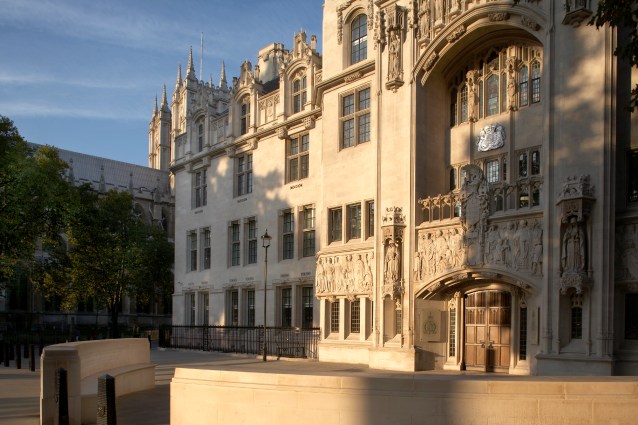
External view of the Supreme Court Pic Credit: Supreme Court

In one judgement he stated: “challenges to legislation on the ground of discrimination have become
increasingly common in the United Kingdom. They are usually brought by campaigning organisations which lobbied unsuccessfully against the measure when it was being considered in Parliament, and then act as solicitors for persons affected by the legislation, or otherwise support legal challenges brought in their names, as a means of continuing their campaign.”

This as the report points out ” reflect the executive talking point that litigation is used by “activist lawyers” to “conduct politics by other means”. Such a comment could easily have been made by Priti Patel, the home secretary.
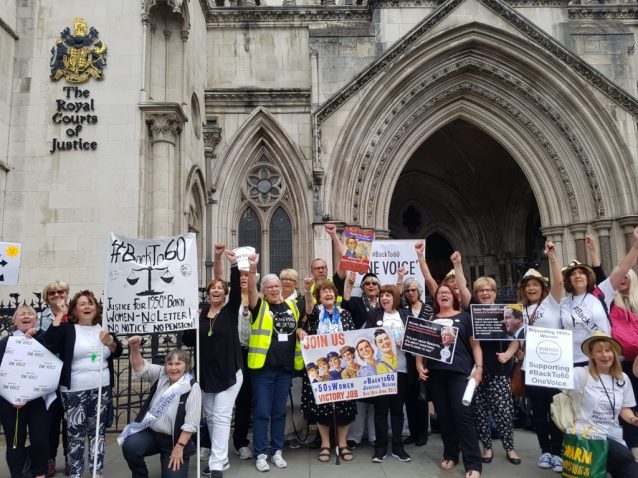
BackTo60 outside the High Court in better times

Now this view may well explain a decision not mentioned in the report concerning the fate of a judicial review brought by the BackTo60 organisation on March 30 2021. This is the case readers of this blog will be familiar (Delve and another v. Secretary of State for Work and Pensions)- involving a long standing campaign to gain full restitution for 3.8 women born in the 1950s who faced up to six years delay in getting their pensions. Since this ruling the Parliamentary Ombudsman has found partial maladministration in the arrangements for implementing this policy.

Lord Reed and two other male judges decided to refuse to hear the case at the Supreme Court saying the delay in bringing the proceedings was unarguable.

Now this is strange given that the Hon Ms Justice Lang – had granted the case for a judicial review on all grounds -and lawyers had been allowed to argue their case at the High Court and the Court of Appeal even though they lost. The only people who were really angry about the decision were government ministers at the DWP.
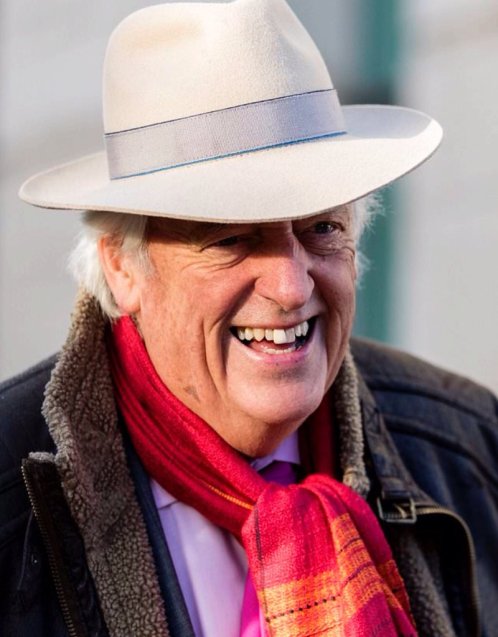
Michael Mansfield, QC ” activist lawyer”

Michael Mansfield QC who argued the case for Backto60 said the Supreme Court’s was a “paper thin refusal”.

In my opinion the real reason may well have been that Lord Reed loathed campaigning groups like BackTo60 and hated well known ” activist lawyers” like Michael Mansfield. Also his decision would not affect a single man -only elderly women would suffer.

The second case which is in the report concerned another case brought by women and children about the government’s two child limit on tax credits and benefits for children. Again it involved the DWP. The claimants had used the UK’s ratification of the UN Convention on the Rights of the Child to argue discrimination. Lord Reed ruled in July 2021 that this was ” out of order” and the UN convention could not be used in arguments because the UK Parliament had not passed specific legislation to implement the convention. This was precisely the opposite of what he argued in 2015.

Lord Reed backed government savings over helping children

But worse than that his judgement gave away his hostility to the plight of women and children.

 “The Court concludes that the two child limit has an objective and reasonable justification, notwithstanding its greater impact on women. The measure pursues a legitimate aim: to protect the economic wellbeing of the country by achieving savings in public expenditure and thus contributing to reducing the fiscal deficit. It was inevitable that, if that aim was to be achieved, there would be a disproportionate impact on women, since women are disproportionately represented among parents responsible for bringing up children  Parliament decided that the disproportionate impact of the two child limit on women was outweighed by the importance of achieving its aims. There is no basis on which the Court could properly take a different view.”

The third case, not mentioned in the report, involves the Scottish government’s attempt to introduce legislation to implement in full the UN Convention on the Rights of the Child. This alarmed Boris Johnson who did not want the Scottish Government implementing a convention that the UK had ratified which he felt should be done, if at all, by the Westminster Parliament.

I wrote about this here. The Supreme Court sided in October 2021 with the UK government blocking the Scottish Government doing this which also meant that other planned legislation implementing UN conventions on discrimination against women (CEDAW), ethnic minorities and the disabled would be stalled.

Lord Reed’s decision tore up part of the SNP manifesto

This decision led by Lord Reed again limited rights for women and children but also tore up the Scottish National Party manifesto pledge to introduce legislation. Ironically given all the fuss over judges being accused by the Daily Mail of being ” enemies of the people”, it makes Lord Reed, a Scottish judge who would know all about Scottish politics, an enemy of the Scottish voter who had elected the SNP government and expected them to fulfill their promises.

My conclusion is both Boris Johnson and Dominic Raab, the Lord Chancellor, literally know they have a friend at court, the highest court in the land. They know they can introduce what restrictive legislation they want, and provided it is passed by Parliament, the most powerful judge in the land’s loathing of campaigning groups, will help them get their way. And women who only have a marginal role in the Supreme Court, better not expect any help either from a man who appears to have a bit of a misogynistic streak when it comes to backing their corner.

Please donate to Westminster Confidential so I can continue my investigations and forensic analysis.

One-Time
Monthly
Yearly

Make a one-time donation

Make a monthly donation

Make a yearly donation

Choose an amount

£5.00
£10.00
£20.00
£3.00
£9.00
£60.00
£3.00
£9.00
£60.00

Or enter a custom amount

£

Your contribution is appreciated.

Your contribution is appreciated.

Your contribution is appreciated.

DonateDonate monthlyDonate yearly

please donate to Westminster Confidential

£10.00
Judge backs DWP to deprive tens of thousands of elderly women of extra pensions

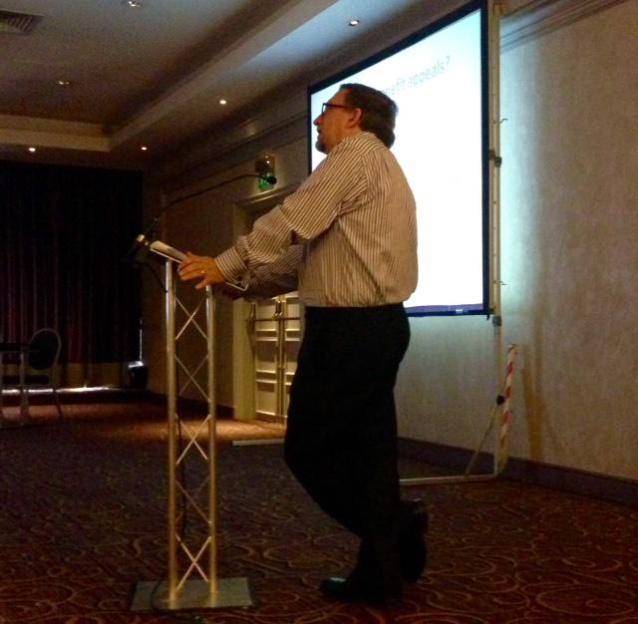
Judge Nick Wikeley giving his ” top tips for tribunal representatives on benefit appeals” at a study day.

Pic credit: Twitter

But his judgement admits national insurance is ” institutionally sexist”

Last month Judge Nick Wikeley, an administrative court judge, backed the Department for Work and Pensions to stop the pay out of millions of pounds to the most elderly pensioners in the country just as the ” cost of living crisis” started to hit home.

He took the decision on technical grounds despite his ruling conceding that the national insurance system was ” institutionally sexist” and that the women involved were likely to be the poorest pensioners in the country.

The case has considerable echoes with the one brought by BackTo60 for full restitution for the loss of their pensions after not being given enough notice of the raising of the pension age from 60 to 65.

Hugh Mercer QC Pic credit: Essex Court chambers
jane Russell Pic credit: Essex Court Chambers

It was brought by an 83 year old pensioner just known as Mrs GM with the pro bono backing of two barristers, Hugh Mercer QC and Jane Russell, both from Essex Court chambers. The DWP employed Julian Mitford QC and Ms Naomi Ling, who represented the DWP in the BackTo60 case.

Like all pensions cases it is complicated but also shocking. Her appeal contains a rule change for pension claimants brought in 2008 under Gordon Brown’s Labour administration.

Until 2008 women who claimed their own pension under the old pension system were also entitled to a second pension based on their husband’s NI contributions the moment he retired. But they had to claim it in their own right and the onus fell on the husband to tell them.

Labour changed this archaic system but did not backdate it

From March 2008 Labour changed this archaic system and women automatically received a second pension when their husband retired. But it was not backdated.

Mrs GM is one of those women in the first group. She got her pension in 1998 and her husband retired in 2000. She did not realise she should claim the second pension until 2017 – 17 years later. The DWP awarded her the second pension but only backdated it by one year. She has lost 16 years of her second pension. The pension is worth £82.45 a week.

Her case was she should be entitled to all her lost money =- either to 2008 when the law changed – or on human rights grounds and direct and indirect sex discrimination way back to 2000 when her husband retired.

The hearing turned into a battle between the DWP – which didn’t want to pay it- and human rights lawyers who thought she should be paid.

Sir Steve Webb

Sir Steve Webb, the former Liberal Democrat and coalition pensions minister, weighed in on her side while the DWP produced a star expert witness – Mr Lyndon Walters, a policy advisor to the DWP’s Decision Making and Appeals Team who was familiar with all the detail of the changes.

Sir Steve’s case centred around DWP policy and its failure to inform women properly about pension changes. The judge commented:

“The Webb W/S [Witness Statement] particularises the ways in which women, and especially married women have been, and to some extent still are, disadvantaged by the old system of retirement pensions, and seeks to quantify those affected. There are, with respect, undoubtedly a number of very well-made points in the witness statement, but they are primarily relevant to high level policy considerations. Understandably enough, and despite his distinguished ministerial career, there is much less about the nitty-gritty (or granular) operational issues underpinning the Department’s pragmatic approach.”

Indeed this moved to the heart of the judgement. The judge was more interested in the internal problems the DWP had in paying out pensions than the justice women were entitled to get the pension in the first place.

This showed up in the extraordinary support by the judge for the arguments put forward by Lyndon Walters.

The judge argued: “The Walters W/S makes out a compelling case for why the 2008 amendment took the exact form that it did. Mr Walters explains the general approach taken to encouraging claims for benefits , the practical considerations and rationale behind the introduction of regulation and the difficulties that would have lain in the way of extending the benefit of the 2008 amendment to those married women whose husbands had already become entitled to their Category A pension before that date In particular, he shows how it was that the advent of new IT systems enabled the Department to assess whether the wife of a Category A pension claimant was herself entitled to a Category B pension at the time of his Category A claim without the need for a separate claim being made. This is an informed and authoritative account that outweighs the Webb W/S, which lacks the same level of granular detail.”

Too difficult and expensive for the DWP to compensate the women

Very simply Walters had argued that it was too difficult and expensive for the DWP to inform the women of their rights. “Mr Walters explains, there was no functionality on the system to alert us to those women who were already entitled to have claimed for their category BL pensions but had not done
so” He concludes:

To identify these individuals, we could have run a search, or ‘scan’ in 2008. However, the task of performing such a search and reviewing the records of those identified, then contacting all of these
individuals and dealing with their entitlements would have been a significant additional burden on the Department, when the purpose of the PTP programme was to try to improve the efficiency and productivity of the system.”

The arguments over human rights were dismissed as peripheral – rather like in the 50swomen case the lawyers had argued: this was “unlawful discrimination on grounds of sex to inform a husband of a wife’s rights and then to reproach a wife of not availing herself of her rights”.

But then the judge admits: “Even so, although Mr Mercer did not employ such terminology, the label of institutional sexism may not be out of place in describing the national insurance scheme. This is undoubtedly, the context for the gradual amelioration of the position of women, and especially
married women, in relation to contributory benefits, including provision for their access to Category B pensions.”

And he further admits that it is like that the majority of women who have lost out in that age group could be among the poorest pensioners with the lowest pensions.

Frankly the judge’s decision in this case is remarkably complacent and far too favourable to the DWP. He seems to be more interested in the problems the DWP would have tracing the women than the loss the women have suffered under what was an archaic system. He is also far too complacent about the pace of redress for women who have suffered discrimination. That is another reason why we need to implement the UN Convention against all forms of discrimination against women (CEDAW) in full to stop this leisurely progress to righting centuries of discrimination. There will be hearing in July see the website for more information. This is particularly poignant in this case as the people involved are coming to the end of their lives.

A thank you to one of my readers Jeff Roberts, for drawing attention to this judgement. You can read it in full below.

Click to access UA_2021_001262_RP_CP_317_2021c.pdf

Please donate to Westminster Confidential to allow me to continue my investigative work.

One-Time
Monthly
Yearly

Make a one-time donation

Make a monthly donation

Make a yearly donation

Choose an amount

£5.00
£10.00
£20.00
£3.00
£9.00
£60.00
£3.00
£9.00
£60.00

Or enter a custom amount

£

Your contribution is appreciated.

Your contribution is appreciated.

Your contribution is appreciated.

DonateDonate monthlyDonate yearly

please donate to Westminster Confidential

£10.00

Employment Tribunal open justice campaign : Sir Keith Lindblom’s office replies to lack of fairness and transparency in hearings

Sir Keith Lindblom, Senior President of Tribunals Pic credit : gov.uk

Last month over 320 people signed a letter to Sir Keith Lindblom, Senior President of Tribunals and the heads of the the employment tribunals in England, Wales and Scotland protesting that tribunals do not keep records or transcripts of their hearings.

The letter signed by senior NHS consultants, doctors, nurses, journalists, whistleblowers and wide range of members of the public sought reforms to the system because of the one sided nature of the hearings particularly in whistleblowing cases – where a litigant in person does not have the resources as a well funded employer.

Transcripts are not available unless the judge gives permission to the parties to take full notes and the only official document is the judge’s decision which can miss out facts given in the case.

Cases involve patient safety, bullying and discrimination

Many of the cases involve issues like hospital and patient safety, bullying, harassment, racial and sex discrimination where a claimant is sacked for suggesting anything has gone wrong rather than the issue being sorted.

Now the official reply from his office acknowledges a number of key facts that people have suspected but have not had confirmation.

First it admits no guidance exists on the use of transcripts and judges don’t have to use them. “There is no provision in the Rules or the Employment Tribunal Regulations that requires hearings to be recorded or transcripts to be produced.”

Second it admits that it is now possible to record hearings as many hearings are held on-line following both a courts modernisation programme and the Covid 19 pandemic.

Judge Barry Clarke, president of the employment tribunal service for England and Wales

And the most positive point in the reply suggests the most senior people are considering changes to the the system.

“The Presidents of the Employment Tribunals are giving consideration to recordings and transcripts in the context of video hearings, where there is a facility to make a recording and which are now used to a greater extent as a result of the HMCTS reform programme and the experience of the pandemic. This is in contrast to most in-person hearings. In most venues where Employment Tribunal hearings take place, recording equipment is not installed, and so no recording can be made. In a few locations in England and Wales, the Employment Tribunal is co-located with a court jurisdiction where such equipment is installed, and where that is so, its use is encouraged.”

The rest of the letter is unsurprisingly a defence of the present system.

“The overriding objective of the Employment Tribunal Rules of Procedure is to deal with cases fairly and justly. That includes, so far as practicable: ensuring that the parties are on an equal footing; dealing with cases in ways which are proportionate to the complexity and importance of the issues; avoiding unnecessary formality and seeking flexibility in the proceedings; avoiding delay, so far as compatible with proper consideration of the issues; and saving expense. Most Employment Tribunal hearings are held in public. Any consideration of an order to prevent or restrict the public disclosure of any aspect of the proceedings must give full weight to the principle of open justice, and, like any judicial decision on a matter of case management, would be amenable to appeal.”

Litigant in person may bring a friend or relative to take notes

“It is also possible to take a note of the proceedings, and a litigant in person may bring a friend or relative with them to the, tribunal to act as a notetaker. Judges invariably allow this, and indeed encourage it.
Litigants in person are also regularly signposted to services such as Support Through Court which can assist with notetaking. “

It goes on: “”The Employment Tribunals provide detailed written reasons explaining the factual and
legal basis of their decisions. Any appeal is based on the judgment and supporting reasons, and the Employment Appeal Tribunal will not accept a transcript in place of written reasons. If at appeal the parties cannot agree what was said in evidence, the Employment Appeal Tribunal may ask the judge who heard the case to answer questions in writing about the evidence on a particular issue or issues. When that happens, both parties will be provided with the document the judge sends in response. In accordance with its Practice Direction, the Employment Appeal Tribunal may also, if it wishes, obtain the judge’s notes of evidence on any disputed matter, which will then feature in the appeal bundle.”

Whistleblowers are at a disadvantage

The problem with this defence is that it doesn’t seem to be reflected on the ground. Many whistleblowers say they feel at a disadvantage particularly if they wish to appeal a decision and they haven’t got a transcript to raise points that are not mentioned in the judgement. And most whistleblowing hearings are far from informal occasions – employers use forensic barristers whose questioning of whistleblowers would not be out of place at an Old Bailey trial.

It also raises some interesting questions. If recording facilities are available at on-line and hybrid hearings why are they not used? Or while obviously judges only use notes, do other court officials use them unofficially to check facts for judges? There has to be change in the employment tribunal system to bring it up to the 21st century and the HM Tribunal and Court Service need to explain how they intend to bring this about.

After publication of this blog a circuit judge publicly backed the recording of all hearings.

Kaly Kaul QC said: “As a Judge in a Crown Court where proceedings have been recorded ever since it replaced shorthand writers, it is unfortunate that every Court is not recorded. Teams and Cloud Video platform have recording facilities. In addition we have recording onto micro SD cards so that any material played in court is automatically recorded so that the Jury can retire with it. It is imperative that proceedings are recorded. It cannot be that difficult to put in place.”

Please donate to Westminster Confidential to allow me to continue my forensic investigations and campaigns for justice.

One-Time
Monthly
Yearly

Make a one-time donation

Make a monthly donation

Make a yearly donation

Choose an amount

£5.00
£10.00
£20.00
£3.00
£9.00
£60.00
£3.00
£9.00
£60.00

Or enter a custom amount

£

Your contribution is appreciated.

Your contribution is appreciated.

Your contribution is appreciated.

DonateDonate monthlyDonate yearly

please donate to westminster Confidential

£10.00

Revealed: A new generation of women face pension inequality

Pic credit: Siemens pension scheme

Just before the Parliamentary recess the House of Commons library produced a new report on pension inequality showing how a new generation of women will lose out again to men unless action is taken now.

The report- The Pension Gender Gap – makes stark reading for millions of women now in work. The focus in this report is on the hurdles facing women to get an equal pension with men.

The main hurdle is the private pension or second pension women receive to top up their state pension. It quotes a Women’s Budget Group pre-Budget Briefing which says that: ‘Private pension schemes, promoted and subsidised by UK governments, are the main reason for the gender gap in pensions, placing women at a disadvantage due to their domestic roles and lower pay’.

The pay gap – still at 7.9 per cent – between men and women is basically discriminating against women getting the same pension as men. When the Conservative government set up the auto-enrollment scheme for a workplace pension in 2012- funded by employers and employee contributions – they excluded anyone not earning enough to pay national insurance.

While it increased the chances of women getting a private pension ( from 40 per cent in 2012 to 86 per cent in 2020) their savings fall away after they reach 35 because they are bringing up children and often take part time work.

As the report says: “The design of automatic enrolment widens the gap between lower and higher earners in retirement and disadvantages those in second jobs.”

Women who take part time work or multiple part time jobs are simply excluded from getting a second private pension partly paid by their employer.

Some low paid women may never get a work pension

And those who never earn enough at work – there are an estimated 500,000 of them nearly all women – never get a second pension at all.

As the Association of British Insurers told MPs on the Commons Work and Pension Committee: “Women disproportionately work in lower paid jobs; 75% of those earning under the £10,000 AE earning trigger are women. They also make up the majority of multiple job holders, as much as 64%. This is significant as their total income could be over the AE earnings trigger, but as it is divided across multiple jobs they will not be automatically enrolled into a pension.’

Fortunately it looks like the Department for Work and Pensions is planning to do something about this though we may have to wait a couple of years before this happens.

A DWP spokesperson said :

“Automatic enrolment has helped millions more women save into a pension, with participation among eligible women in the private sector rising from 40% in 2012 to 86% in 2020 – equal to that of men. Our plans to remove the Lower Earnings Limit for contributions and to reduce the eligible age of being automatically enrolled to 18 in the mid-2020s will enable even more women to save more and start saving earlier.”

But this isn’t the only barrier. The report highlights three other issues, affordable child care, pension rights for divorcees and monitoring pension equality.

On child care the report highlights demands by the trade union, Prospect and the People’s Pension, one of the larger pension trusts, both call for help with child care including tax relief for the care of the under two year olds and a local authority grant for 3 and 4 year olds.

Make pension savings a compulsory part of a divorce settlement

The Pension and Lifetime Savings Association call for the law to be changed so pension rights have to be considered in divorce proceedings.

“The government should consider changing the law to ensure that pensions rights are considered on a mandatory basis as part of divorce. Currently pensions may only be considered if there is a financial settlement considered by the courts. The process of pension sharing on divorce could also be better streamlined to remove friction and delay for all parties.”

And finally the Government Equalities Office should impose a mandatory requirement on the DWP to publish gender pension gap statistics and then draw up proposals to speed up ending the gap. The GEO did not want to comment on this.

There is one ray of hope arising from the new state pension introduced in 2016. It has narrowed the gap between men’s and women’s state pensions. Women got 82pc of men’s pension in 2016. By 2020 it had narrowed to 92pc. But the DWP could not tell me when it would be 100 per cent.

Unless action is taking speedily a whole new generation of women are going to lose out to men. No one wants to suffer the fate of 50swomen who have been so badly treated again. They are already worse off because of the abolition of the second pension in 2016.

Chris Thompson, a retired pension expect, pointed out both men and women lost out over auto-enrollment. “Between 2012 and prior to 6 April 2016 when the new state pension started people were also paying into the state second pension if they were not contracted out.

” From the 6 April 2016 people ceased accruing state second pension so are now much worse off than under the old state pension system. A low earner about £46 pw worse off and a high earner about £67 pw. Another thing to remember is that losses do not take into account loss of inherited and derived rights, loss of GMP indexation if contracted out or increase in NI due to loss of NI rebate.”

Please consider donating to Westminster Confidential to allow me to continue my forensic investigations and monitor issues.

One-Time
Monthly
Yearly

Make a one-time donation

Make a monthly donation

Make a yearly donation

Choose an amount

£5.00
£10.00
£20.00
£3.00
£9.00
£60.00
£3.00
£9.00
£60.00

Or enter a custom amount

£

Your contribution is appreciated.

Your contribution is appreciated.

Your contribution is appreciated.

DonateDonate monthlyDonate yearly

Please donate to Westminster Confidential

£10.00

Judge covers up “avoidable death” of heart patient and General Medical Council revalidation of Dr Usha Prasad to dismiss her whistleblowing case

Employment Judge Tony Hyams-Parish Pic credit: dmhstallard.com

Publication of avoidable death scandal at Epsom and St Helier University Health Trust leads to another relative coming forward and queries about a former senior staff member in Jersey

An employment judge has thrown out Dr Usha Prasad’s whistleblowing case and all her allegations of victimisation, sex harassment, and sex and race discrimination.

She is also facing a costs claim of an astounding £150,000 plus VAT via the law firm Capsticks from the Epsom and St Helier University Health Trust.

A letter from Capsticks says: ” The Respondent has incurred very substantial costs indeed in defending the unmeritorious proceedings, of in excess of £150,000 plus VAT. The costs incurred correlate to the Claimant’s unreasonable conduct and the unmeritorious nature of her complaints.”

Judge Tony Hyams-Parish’s judgement is long on the detail of all the various top management’s moves against Dr Prasad which led to an unprecedented 28 month suspension from clinical duties and remarkably short on any evidence given by her and her witnesses. He exonerates the actions of the senior management and ignores claims by any of her witnesses. And given he goes into such detail it is rather surprising he doesn’t mention that Daniel Elkeles, the former chief executive of the trust, offered to abandon the internal disciplinary proceedings against her if she dropped the tribunal case against the trust.

Indeed the most twisted part of his judgement is what he leaves out. Take the issue of the GMC revalidation of Dr Prasad. This is his purple passage:

“The Tribunal was invited to consider was the outcome of the claimant’s hearing before the GMC. The GMC began an investigation into the claimant which concluded in March 2021 with no further action to be taken. The claimant continued to state throughout this hearing that she had been exonerated by the GMC, suggesting that their conclusion must cast doubt on the actions and motivations of the respondent. However, the Tribunal found it difficult to draw any such conclusions from the GMC outcome. The Tribunal was not shown the content of the GMC referral or the case examiner’s report. Whilst the GMC and the respondent were looking at the same cases, their remits were likely to be quite different. In any event, the Tribunal was not shown sufficient evidence to decide either way.”

Really? The GMC judgement was entirely based on a list of 43 complaints submitted by the trust and obviously the trust expected it to be endorsed by the GMC. Instead it was sent to very experienced cardiologist in Middlesbrough who had worked at Papworth Hospital and he could not find anything wrong. And not only was this finding approved by the GMC, they revalidated her – taking away the power of the trust to do this. Given many doctors feel they are not well treated by the GMC, this was a remarkable outcome. The GMC was telling the trust to get stuffed.

Dr Usha Prasad with the former chief executive of the trust, Daniel Elkeles

The second area is the glossing over of the main whistleblowing claim. It centred around the avoidable death of a 76 year old man, Mr P, from heart failure, partly caused by negligence, muddle and poor communication at the trust. Dr Usha Prasad, who had no part in the care of the patient, was asked to review the case as an independent person. Evidence was given that an attempt was made to get Dr Prasad to rewrite her findings which included that the death should have been reported to the coroner and the Care Quality Commission. At the hearing Dr Richard Bogle, former head of the cardiology department, admitted that this should have been done – basically saying Usha Prasad’s judgement was right.

But this has been airbrushed from the judgement. If I hadn’t been there to report the case, no one would be the wiser that this happened.

Judge Tony Hyams-Parish disrespectful to dead man’s family

Not only to do I find this a gross omission but in my view the judge is being disrespectful to the man’s family by removing the details of the whistleblowing case. It is though he is thinking so what, a 76 year old dies, who cares?

But Judge Hyams-Parish knows he is on solid ground to ignore all this. He has already told Usha Prasad there is no recording or transcript of the proceedings, and his judges’ notes will never be released. So his judgement is the only record. And it is criminal offence if anyone has a recording.

Judgement a stain on British justice

My view is that this judgement is a stain on British justice which is supposed to be the epitome of ” fair play” and full transparency.

Instead it appears to me to more akin to Russian and Chinese justice .Here there is a semblance of justice but the result is a foregone conclusion. What appears in this case is the forces of the Establishment have been marshalled to intimidate and destroy an individual for the benefit of state power.

One good result of the publicity is that a relative of another person who died at St Helier hospital has come forward to me to investigate their case. And what happened at St Helier seems to have been picked up in Jersey, where this blog has a small circulation, and queries are being raised about a former senior manager at St Helier.

Please donate to my blog to continue my forensic investigations

One-Time
Monthly
Yearly

Make a one-time donation

Make a monthly donation

Make a yearly donation

Choose an amount

£5.00
£10.00
£20.00
£3.00
£9.00
£60.00
£3.00
£9.00
£60.00

Or enter a custom amount

£

Your contribution is appreciated.

Your contribution is appreciated.

Your contribution is appreciated.

DonateDonate monthlyDonate yearly

Please donate to Westminster Confidential

£10.00

Delays, miscalculations and unanswered calls: How the DWP is cheating first time pensioners

Chaos inside the Department for Work and Pensions

As 1950s born women finally get their first pension at the age of 66 a new problem is emerging.

The chaos inside the DWP , which is coping both with new applications for pensions and having to pay back over 100,000 people who it cheated out of their pension in the past, has now spread to first time pensioners. As already revealed by this blog the DWP has secretly put through a ” drop and go” scheme and decided to prioritise simple cases – nearly always men – over complicated ones, such as widows entitled to past Serps payments to their husband’s pension and divorced women.

As a result the pension help line can’t cope, staff handling cases have not been properly briefed, and barely properly trained. People are starting to wait months beyond the due date when they get their pension. And when they get it the calculations can be wrong.

Pauline Hinder

To illustrate this scandal one of my blog readers, Pauline Hinder, a 1950s born woman, who has kept meticulous records of her pension entitlement, and is a supporter of BackTo60, kept a diary of her trials and tribulations with the Department for Work and Pensions in trying to get her correct pension.

The story does have a happy ending but only because a former Liberal Democrat pensions minister, Sir Steve Webb, intervened on her behalf. Until then she was at a dead end.

DWP’s pension estimate was less than half Pauline was entitled

If that hadn’t happened she would have lost tens of thousands of pounds over the lifetime of her pension. They offered her a pension of just under £69 a week. Her real pension entitlement was £141.84 a week -more than DOUBLE the money they offered her.

Unlike many people she had records which could prove what they should pay her. But getting through to the DWP proved impossible.

As her diary reveals : “

 “rang  08007310469 opt 2 then opt 4then opt 2 

Spoke to Lee 10.20 He said I had to ring  08007317898 ‘new claim’ option – even though I’ve already made my claim!

Rang 08007317898 New claim opt 2 Then Hold for advisor

“Spoke to a polite man Anthony He was working from home ..but saw they’d received my letter of 6 pages of evidence to prove my entitlement was double their official pension quote yet couldn’t say when they’d received it. He said he’d flag it up to check but it would take 4 weeks…..I asked when 4 weeks started – he said today!  

“I said no!  Unacceptable – I’d phoned and written early in January and it was a 6 week response time then..

“I insisted a manager call me back  I explained that the DWP had already underpaid a raft of earlier womens’ pensions and made amends/still making, without interest or compensation.  Have they learned nothing – or are they committing corporate fraud as they are now repeating the same mistakes with a new generation of applicants. 

” He was polite but batting me off with hogwash”

“He requested a callback within 24 hours for me. He was polite but batting me off with hogwash about no one to speak to, no supervisor blah blah. ..but he did put me on hold for a couple of minutes so I guess he was contacting someone from his home.  “

As she says: “The DWP telephone line was useless….working from home, no managers, no access to screens telling them where matters were at.  I sent all copies of my historical records supporting my correct position and their error in January and to date I have had no acknowledgement of that correspondence receipt but I know they’ve had it because I asked in one of the several pension helpline calls I made!  The last helpline call I made I insisted a manager called. 

” They called about an hour later but I think I was dog walking and missed the call. You can phone the number but it has a pre-recorded message saying they wanted to speak to me but they’ll call if they need to.  They didn’t call again….”

Former pensions minister Sir Steve Webb intervention meant it was sorted in 24 hours

In desperation she turned to Sir Steve Webb, the former pensions minister in the coalition government.

He intervened by calling the DWP on her behalf.

Sir Steve went to a Pensions Customer Care Manager called David at the DWP.  He was very helpful and genuinely empathetic. 

 Sir Steve was involved and job done in under 24 hours.  Written apology in 48 hours and revised pension award in 72 hours.  

An apology from the DWP showing the right pension

Sir Steve told me: “I’ve generally tried to help a small number of existing and new state pension recipients where they have got stuck on a complex issue or where there appears to be an unresolved underpayment.

“In Mrs Hinder’s case she had clearly understood the rules and spotted when a more recent state pension forecast (and award) was far below the correct amount.   I passed her details on to DWP who quickly accepted that an error had been made.

“I do remain concerned that despite all the focus on historic state pension errors, errors are still being made on new claims.   Whilst Mrs Hinder’s case relates to quite a narrow and specific issue (a special concession for women who paid the ‘reduced stamp’) a more common error I still come across is newly retired widows who are not getting the inherited SERPS they are due from a late husband on top of their own new state pension   It’s a trickle rather than a flood, but, as we know, only a small percentage of a very big number is a lot of individual cases.”

My take on this is that Pauline Hinder showed amazing initiative and finally got her pension. But Sir Steve Webb cannot be expected to intervene in every case as he wouldn’t have time to do his day job. What we need is proper system with enough trained staff to do the job. It is quite clear we haven’t got one and ministers are to blame, They should sort it.

One-Time
Monthly
Yearly

Make a one-time donation

Make a monthly donation

Make a yearly donation

Choose an amount

£5.00
£10.00
£20.00
£3.00
£9.00
£60.00
£3.00
£9.00
£60.00

Or enter a custom amount

£

Your contribution is appreciated.

Your contribution is appreciated.

Your contribution is appreciated.

DonateDonate monthlyDonate yearly

Please donate to Westminster Confidential

£10.00

A right wing aristocrat to fight ground breaking £180,000 tribunal ruling against him for “arrogant and misogynistic” treatment of two pregnant staff

Sir Benjamin Slade

The Court of Appeal is expected to hear an extraordinary case soon involving a wealthy aristocrat who says he is descended from Charles II and his treatment of two of his employees who were sacked from his upmarket wedding business at his stately homes after they became pregnant.

Since the case the wedding business has been closed down after Devon and Somerset Fire and Rescue Service issued two prohibition notices on one of the venues, Maunsel House, because of “inadequate means of escape from first and second floors due to lack of escape signage, lack of emergency lighting and lack of fire separation.” He has been ordered to install fire escapes.

Surcharge of 25 per cent imposed on compensation package

Sir Benjamin Slade is now appealing a ruling from an Employment Appeal Tribunal which not only ordered him to pay compensation for unfair and constructive dismissal , injury to feelings of the two women and aggravated damages, but imposed a 25 per cent surcharge on the awards for breaching the employers’ code of practice by ACAS. The total compensation for both women came to just short of £180,000. The surcharge ruling is particularly significant as it lays down rules for similar surcharges in other cases.

Maunsel House Pic credit: BBC

The two women, Melissa Biggs and Roxanne Stewart worked on his wedding business where people could hire Maunsel House and Woodlands Castle near Bridgewater and Taunton in Somerset. Roxanne Stewart, was a deputy manager and Melissa Briggs, an admin assistant. Both became pregnant at about the same time.

What followed was that both of them found themselves dismissed without full statutory maternity and holiday pay and wages after first being transferred to a new company – without their knowledge- which only employed both of them and had no money to pay them. Their pregnancies were said to be ” highly inconvenient” for Sir Benjamin .

The tribunal used unusually strong language against Sir Benjamin including accusing him of refusing to hear Melissa Biggs grievances and subjecting Roxanne Stewart to a ” spurious and vindictive disciplinary process” on ” trumped up ” charges. Sir Benjamin was said to have made ” entirely fanciful” allegations against her. They were also critical of his agent, Andrew Hamilton.

” one of the most egregious acts of discrimination possible”- tribunal

The first employment tribunal hearing described the process involving Roxanne Stewart as “one of the most egregious acts of discrimination possible”. The timing of the suspension, in the advanced states of her pregnancy, was “designed… with her then vulnerability in mind, to have maximum effect on her” The suspension and dismissal were then pursued with the “motivation… of driving her out of employment”.

She gave birth prematurely and within the weeks following that birth ,her baby was in intensive care”.

When giving evidence to the ET, Sir Benjamin “made wide-ranging and lurid allegations about the claimants and their relatives, without any substantiation whatsoever, in respect of their character, financial position and other matters”. The ET found that these allegations were “entirely fanciful and prompted by a desire on his part… to ‘throw some dirt’ at the Claimants.

The appeal tribunal held in London and president over by a High court judge, Mr Justice Martin Griffiths, threw out a case from Sir Benjamin to say he should not pay the surcharge. He said he would appeal.

He told me: ” The sum I am being asked to pay is totally disproportionate given the staff were paid about £20,000 a year. I am not against people getting pregnant, indeed I have been helpful to other staff who became pregnant. I think the judge was left wing.”

The Sun ran a flattering article on him after he ” auditioned” for a ” breeder” to get him a son and heir

Sir Benjamin has a controversial back story. He is 75, a hereditary baronet, but has no heir. He recently advertised for a young wife as a” breeder” as he wanted two sons – an heir and spare – to succeed him.

He listed his requirements for the perfect ‘breeder’. She should be taller than 5ft 6in – ‘preferably 6ft 1ins or 6ft’ – aged between 30 and 40, and possess a gun licence. ‘Scorpios, drug users, lesbians, communists and Scots need not apply,’ he told the Daily Mail.

His quest for a wife led to a big sympathetic feature in The Sun by reporter Georgette Culley who ” auditioned” to be his wife and stayed overnight in Maunsel House. The feature is here.

He let out his other property Woodlands Castle only to find it then became the centre of a massive police investigation when a huge cannabis farm was found in the roof. Questioned by the police he denied any knowledge about it.

A Vietnamese man, Trung Nam Pham, 39, of no fixed address, was arrested after the drug bust. He appeared before Taunton Magistrates’ Court last June and was remanded in custody pending a crown court hearing.

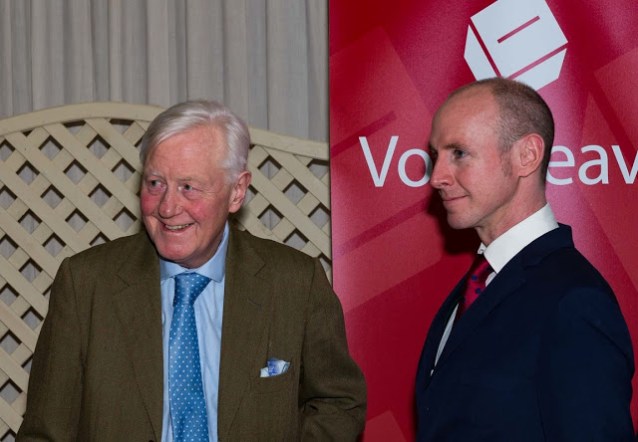
Sir Benjamin with Daniel Hannan, then an MEP. at Woodlands Castle. From his old website

Sir Benjamin is on the right of the Conservative Party. During the Brexit campaign he hosted a lunch for Daniel Hannan, then a Tory MEP for 84 people in Woodlands Castle to promote Vote Leave.

Now he is waiting his appeal – has not paid the two women any of the compensation – though he says he has made up their wages and the statutory maternity pay. His wedding business – at £3000 a time -has collapsed – first hit by Covid 19 and then by the prohibition order from Devon and Somerset fire services.

Please donate to Westminster Confidential so I can continue my wide ranging reporting

One-Time
Monthly
Yearly

Make a one-time donation

Make a monthly donation

Make a yearly donation

Choose an amount

£5.00
£10.00
£20.00
£3.00
£9.00
£60.00
£3.00
£9.00
£60.00

Or enter a custom amount

£

Your contribution is appreciated.

Your contribution is appreciated.

Your contribution is appreciated.

DonateDonate monthlyDonate yearly

please donate to Westminster Confidential

£10.00

Exclusive: Parliamentary Ombudsman stalls maladministration investigation for 3.8 million 50s women denied pensions

Robert Behrens, Parliamentary Ombudsman

Robert Behrens, the Parliamentary Ombudsman, has halted his maladministration investigation until at least the end of next month leaving 3.8 million women who have delayed pensions having to wait even longer to find out whether he will recommend any compensation.

The women are all born in the 1950s who lost up to £50,000 each when their pension age was raised from 60 to 66 and were not properly informed by the Department for Work and Pensions. The Ombudsman found that for 28 months from 2005 they were victims of maladministration. This is contested by many of the women who believe that from 1997 when Peter Lilley was social security secretary and advised by his civil servants to launch a campaign to alert women what was to happen in 2010 so they could prepare for it. He ignored that and numerous women have told me they were not aware of the change then. The Ombudsman has refused to re-open the first stage of his investigation to look at this again.

Disclosure buried half way through updated website statement

The disclosure of the latest delay is buried half way through an update on the situation on the Ombudsman’s website published on February 18. The link to it is here.

The key words are:

“It is not possible to say how long it will take to reach a conclusion. How long an investigation takes varies depending on its complexity and the amount of evidence to review.

We have asked DWP to send us further evidence by the end of March 2022. We cannot progress stage two of the investigation without that evidence.” ( my emphasis)”

This statement was news to the six original complainants and many other women who assumed that the second stage of the inquiry – whether any of the women are entitled to compensation for this injustice – who assumed that the inquiry which has taken years was proceeding however slowly not that it had been halted.

In fact the whole situation surrounding this part of the Ombudsman’s inquiry is rather suspect. There is not supposed to be the need for more evidence so what have the DWP to provide.

The inquiry has also taken fresh evidence from Mps on the 50s Women State Pension Inequality APPG arguing that the Ombudsman should get a minimum of £10,000 each. Their submission goes over ground already covered by complaints from the original six women who raised the issue.

On top of that it appears that Waspi Ltd and the Pension Reform Alliance are trying to dictate the agenda and exclude any argument for full restitution for 50s women. Some of their members have argued that even if full restitution is mentioned they won’t get any compensation at all.

Some 60 MPs have now backed a Parliamentary motion by Labour MP Ian Byrne calling for full restitution which is the position of BackTo60 and ” We Paid In You Pay Out ” women’s justice group. Some of the MPs who backed this are said to have had calls from Waspi groups asking them to withdraw their names as they told them they didn’t want full restitution.

While all this is going on there is another issue of whether and when the DWP will reply to the Ombudsman. The Ombudsman is relying on outdated legislation to handle this case and he cannot compel the DWP to reply by the end of next month.

DWP ignored deadlines in previous cases

The DWP has ignored deadlines set by the Parliamentary Ombudsman in previous pension issues. The most notable was a case over compensation for people who had not been properly informed that they would lose their index related guaranteed minimum pension if they worked in the private sector.

Robert Behrens gave the DWP three months to arrange notices for people to apply for compensation after he ruled that two complainants were entitled to it.. The DWP ignored the Ombudsman and TOOK NEARLY TWO YEARS before doing anything about it. The ministry also ignored his proposals for a remedy.

I have asked the DWP whether they will reply by the end of next month but have had no response to my question.

Instead they issued this statement:

“The Government decided over 25 years ago that it was going to make the state pension age the same for men and women as a long-overdue move towards gender equality.

“Both the High Court and Court of Appeal have supported the actions of the DWP, under successive governments dating back to 1995, and the Supreme Court refused the claimants permission to appeal.”

Back to 60 came back last night criticising the statement saying that their arguments for a judicial review were granted at the time and the Supreme Court used the argument that their case was ” out of time” for the court to hear it -not that the original arguments were wrong or else the judicial review would never have been granted in the first place.

The DWP is understood to feel it is inappropriate to comment further while the Ombudsman is investigating.

All this is yet another blow for these badly treated women who may still have to wait years before they see any money. Indeed by then the Ombudsman will have left. Under the outdated legislation the Ombudsman should retire from his post at the end of next month. But the government appear to have extended his term in office for another two years against what is laid down in the 1967 legislation.

Please donate to my blog Westminster Confidential to allow me to continue my forensic investigations.

One-Time
Monthly
Yearly

Make a one-time donation

Make a monthly donation

Make a yearly donation

Choose an amount

£5.00
£10.00
£20.00
£3.00
£9.00
£60.00
£3.00
£9.00
£60.00

Or enter a custom amount

£

Your contribution is appreciated.

Your contribution is appreciated.

Your contribution is appreciated.

DonateDonate monthlyDonate yearly

Please donate to Westminster Confidential

£10.00

Boris Johnson: Labour solely to blame for the maladministration over 50swomen pensions

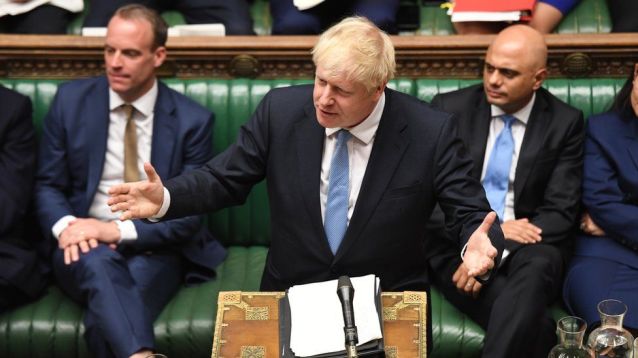
Boris Johnson at PMQ;s Pic credit: Jessica Taylor House of Commons

Boris Johnson is planning to weaponise the sad plight of 3.8 million 50s born women by blaming Tony Blair’s Labour government solely for the maladministration in not informing them about the six year delay in getting their pensions.

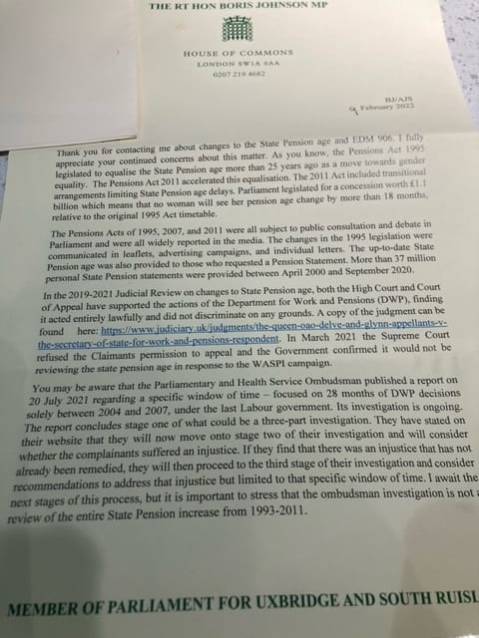
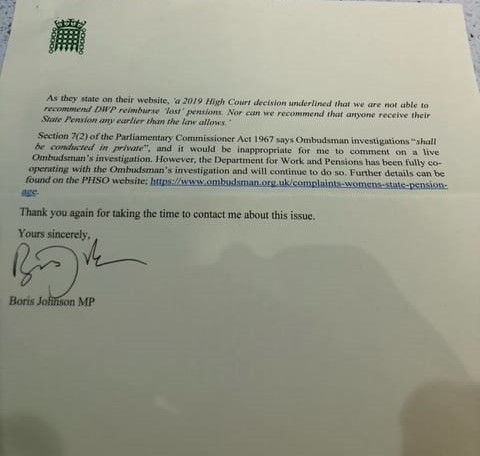
In a letter to one of his constituents, Anne Taylor, the PM provides his first detailed comment for some time on the plight of the pensioners. It comes as Parliamentary activity is being stepped up. The all party group of MPs on 50s women state pension inequality for women is pressing the Parliamentary Ombudsman to propose compensation of £10,000 for each woman. A Parliamentary motion by Ian Byrne, the Labour MP for Liverpool, West Derby, calls for full restitution for all 50s women, worth up to £50,000 for some, has been signed by 52 MPs.

Mr Johnson justifies blaming Labour by seizing on the finding of the Parliamentary Ombudsman, Rob Behrens, who found that there was maladministration over a 28 month period from 2004 and 2007 solely under a Labour government.

He points out that the Ombudsman’s investigation has to go through two further stages and still has to consider whether there has been an injustice. Only then will it move on to discussing compensation and he insists that this will be ” limited to that specific window of time.”

” I await the next stages of this process, but it is important to stress, that the ombudsman investigation is not an entire review of the State Pension increase from 1993 -2011.”

Actually he is wrong here, as the Ombudsman did consider the wider period but as I have written in an earlier blog, one of the flaws of his findings, was that it exonerated Whitehall action in the earlier period, including when Peter Lilley, then social security secretary, ignored warnings by civil servants of the need to inform the women.

He is also wrong about the court judgement when the Court of Appeal rejected a judicial review and the Supreme Court refused to hear BackTo60s case. He cites WASPI in this case and seems to think they were calling for a review of the pension age to 60. This insults both groups.

Boris Johnson has changed his mind on the issue. In a blog in 2019 I wrote about his two faced approach – first supporting women during his Tory leadership campaign and then dropping them after the court decision.

What is disturbing about this latest letter is that it offers little hope of any support for their case from the Prime Minister. It also suggests that he is building up ammunition to accuse Labour of being responsible for all the mistakes – hoping they will stay mum for fear that he will accuse Keir Starmer of being responsible for the women’s plight.

Bizarrely the Ombudsman’s findings leave him aiding and abetting the PM’s stance. It also means those hoping for a quick decision on compensation from the Ombudsman are going to be very disappointed as the PM will hope it is dragged out for years.

As for his constituent Anne, this is her view: ‘Having less than 2 years to prepare for a 6 year hike was shocking enough.  Nothing could have prepared me for the way I have felt since, I have literally had my hair turn grey, lost my sense of self and felt like a second class citizen. I had no idea how aged I would become in this time. I have 6 months of my sentence to go, I will never forgive this and successive governments for not giving back our earned dues’.

Boris Johnson’s letter

Please donate to Westminster Confidential to allow me to continue my forensic investigations

One-Time
Monthly
Yearly

Make a one-time donation

Make a monthly donation

Make a yearly donation

Choose an amount

£5.00
£10.00
£20.00
£3.00
£9.00
£60.00
£3.00
£9.00
£60.00

Or enter a custom amount

£

Your contribution is appreciated.

Your contribution is appreciated.

Your contribution is appreciated.

DonateDonate monthlyDonate yearly

Please donate to Westminster Confidential

£10.00

Exclusive: The great DWP rip off – Not one person out of a potential 11 million has won compensation for losing thousands of pounds of extra pension

Peter Schofield, DWP permanent secretary Pic credit: gov.uk

Those who follow my blog may remember I have been highlighting a horrendously complicated story of the plight of people who contracted out of SERPS but were told they would receive an index linked guaranteed minimum pension. This arrangement was scrapped when the new state pension was introduced in 2016 for anyone in the private sector – but remains for public sector workers.

This decision was never debated in Parliament or included in the Pensions White Paper and has meant the government got away with not paying out anything from a £1000 to tens of thousands of pounds over the lifetime of their pension, depending on how long they were contracted out by their employer from the old SERPS scheme. The numbers could be as high as 11 million and women would be the worst affected.

Rob Behrens Parliamentary Ombudsman

The Parliamentary Ombudsman, Robert Behrens, was asked to investigate and concluded that there had been maladministration and two people shared £1250 compensation. Unlike the row over the 50s and 60s born women who lost out by not being informed by the government over the rise in their pension age, no record exists, as far as I can find out, of the ministry repealing this provision in the 2014 Pensions Act.

In September 2019 the Ombudsman gave the ministry three months to sort out this issue. He asked the ministry to “review and report back on to us on the learning from this investigation, including action being taken to ensure that affected individuals receive appropriate communication from the DWP about their state pensions. “

The DWP ignored the Ombudsman’s request and only last August -in the middle of the summer recess – put up a fact sheet to inform people. There is no reference to the Ombudsman’s report, and the fact that people could be entitled to compensation. There is no mechanism for people to apply for the compensation and the notice was not even accompanied by a press release. The figures used to say how much people underplayed what people lost. And the Ombudsman wimped out of pressing the government to do anything.

Stephen Timms MP, took up the case and sought answers from the DWP

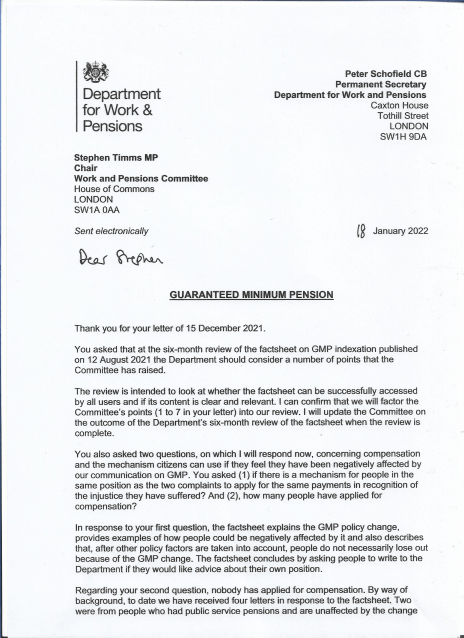
Now this month the results of these devious ploys have been revealed in a letter to the Commons Work and Pensions Committee after Stephen Timms, its chairman, took up their cause.

Not ONE person in the UK has received any compensation and only four people have written to the Department about it. None of the four were entitled to extra money. Given the deliberately obscure way the fact sheet was constructed and the lack of a mechanism to apply for compensation – it is hardly surprising. The Department is also insisting that these people are better off- because the triple now double lock – has given them more money. But that is a universal payment and pales into insignificance when you think of thousands of pounds many of the people have lost.

I expect Therese Coffey, the Secretary of State and Guy Opperman, the pensions minister, were probably holding a joint celebratory karaoke session in their offices – as they had avoided paying out an extra penny to the people they had deprived of compensation.

Therese Coffey, Secretary of State Pic credit: Twitter

The level of deception was heinous given that Chris Thompson, a reader who has enormous knowledge about GMP, had put in a freedom of information request to find out how many people had contacted the DWP to request compensation. He was told it was ” too expensive ” to give him the information. What mendacity by officials, how expensive is it to tell them that nobody got it and just four applied.

This sorry tale bodes ill for the 50swomen who are fighting for compensation for a similar pension maladministration – it is obvious that officials and ministers in this case have perfected a procedure to be as obscure as possible and not create any mechanism to claim compensation. Also they can’t rely on the Ombudsman to stick by them – in this case he wimped out and didn’t even hold the DWP to the fire to do what he asked them.

This is yet another example of a ministry that has no interest in justice and can rely on bamboozling the public and fake excuses for not replying to freedom of information requests.

Peter Schofield, permanent secretary at the DWP, has promised a review of the fact sheet now. I am not holding my breath.

The letter – the horrendous disclosure is at the bottom

Please donate to my blog to allow me to continue my forensic investigations.

One-Time
Monthly
Yearly

Make a one-time donation

Make a monthly donation

Make a yearly donation

Choose an amount

£5.00
£10.00
£20.00
£3.00
£9.00
£60.00
£3.00
£9.00
£60.00

Or enter a custom amount

£

Your contribution is appreciated.

Your contribution is appreciated.

Your contribution is appreciated.

DonateDonate monthlyDonate yearly

Please donate to Westminster Confidential

£10.00