Can Whitehall promote innovation, efficiency and AI technology to help overcome the crisis in providing public services?

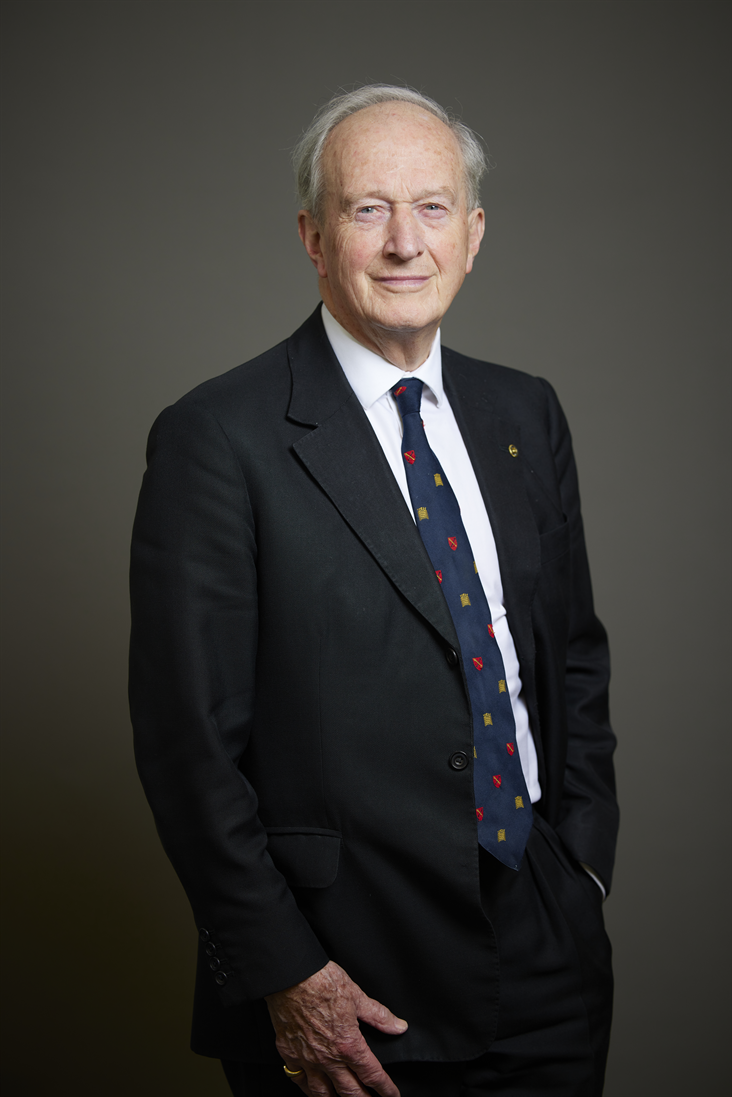
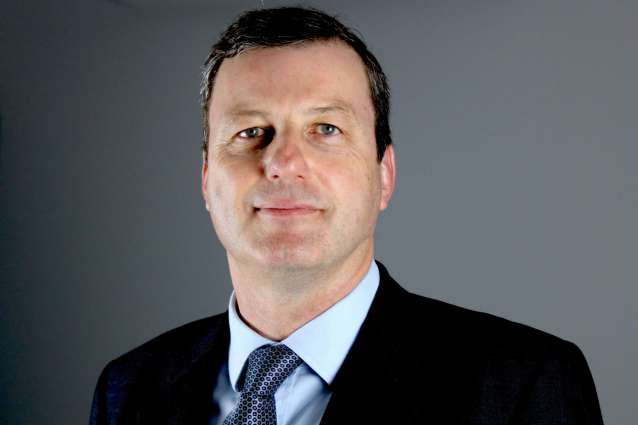
Gareth Davies, head of the National Audit Office

Head of the National Audit Office raises pertinent questions about the future direction of Whitehall in annual speech

Anybody reading the latest tranche of reports from the National Audit Office and the Commons Public Accounts Committee could be forgiven for thinking the UK is living in a dystopian world. Indeed fiction writers could use their reports as a basis for a dystopian novel or a new TV series.

The problem is that it is not fiction, it is factual based evidence.

Never in my 40 years of reporting the NAO have I seen so many things run by Whitehall going wrong. Yes we have had scandals, waste of public money and even corrupt deals exposed by them. But the last tranche of reports almost beggars belief.

Simultaneously we have had the biggest backlog of building maintenance, totally £49 billion, the largest ever NHS waiting lists for operations, the Home Office admitting it has made 1000 mistakes and wasted tens of millions on acquiring sites for housing asylum seekers, half the local authorities in England on the verge of bankruptcy, outdated computer systems without proper security protection, record homelessness, and a huge backlog of people waiting for special education places or treatment in psychiatric hospitals.

Innovate or die

It is against this background that Gareth Davies, the head of the National Audit Office, addressed a well attended meeting yesterday in Parliament of MPs, peers, former permanent secretaries, academics and journalists.

While he did not use my journalistic hyperbole, his message was a simple one to Whitehall, innovate or die. And although the NAO is strictly non party political, there was an underlying message to the present government, sharpen your act or lose the next election.

As he put it: “we have a new Parliament and a new Government, but many of the same problems of rising demand and not enough money to quickly fix the gaps in key public services. We also face other challenges that risk causing widespread disruption, from global instability and climate change to public health emergencies and cyber threats.”

NHS needed fundamental reform

He was particularly critical of the department for Health and Social Care and the NHS, the biggest employer in the UK.

” Figures from NHS England in May last year showed it was still 8 per cent lower in productivity in 2023/24 than before the pandemic and much work is underway to address this.”

He went on later: ” In the last few months, our reports on supporting children with special education needs and NHS financial sustainability both identified the need for fundamental reform in the face of rising demand and costs, alongside unsatisfactory outcomes. This means tackling the causes of avoidable demand and allocating resources in a redesigned system where they can have maximum impact on outcomes.”

He is pleased that Whitehall is piloting AI but also warned that new technology is not the whole answer to greater productivity. He also emphasised that ministries need to employ the best skilled people – notably recently in the need for people with good computer skills and capable of negotiating good procurement deals.

He is also wanted Whitehall to concentrate on tackling resilience to protect the country. This included fighting cyber attacks and the risk of future pandemics. He revealed the NAO would soon publish a report looking at the international and domestic implications of protecting the UK from another pandemic like Covid 19 which came from abroad.

Civil servants must be less risk averse

Finally he wanted civil servants to be less risk averse and try out well managed schemes, dropping those that don’t work quickly.

His solution was summed up in four succinct points.

  • First, a clearly articulated risk appetite and a spread of investments, to maximise the chances of success in innovation
  • Second, harnessing new technology as I’ve already mentioned
  • Third, a culture of fast learning and evaluation, stopping failed experiments quickly and scaling up successes
  • Finally – and close to home for us – an accountability and scrutiny framework that encourages well-managed risk taking

” It’s no coincidence that innovation thrives in times of crisis, such as when lives are at stake. Organisations rapidly adjusted their risk appetites during the pandemic to meet urgent needs,” he said.

He pointed that Whitehall fears that they would hung up to dry by MPs and the press if they failed was now no longer true -instead MPs on the public accounts committee were now more critical of civil servants who failed to look at new ways of tackling problems rather than following safe bureaucratic procedures.

So what are the NAO doing themselves?  “our refreshed strategy from 2025 to 2030 takes fully into account the risk appetite set for the range of innovative projects. We will continue to look for and highlight positive examples of innovation, including where unsuccessful initiatives have been stopped in favour of more promising ones. As well as featuring these in our reports on departments and organisations, we will publish what we learn across government as part of our programme of lessons learned reports.”

AI is also coming to the NAO so auditors can spend more time making professional judgements on department’s performance and less time on manual exercises.

Talking to people who attended afterwards it was clear that MPs and academics are well aware that innovation is necessary or we will not be able to deliver public services to meet growing demand. MPs seemed especially aware that the NHS was not functioning properly – whether it was their local health trust – or the bureaucracy at the top. MPs have already publicly criticised the top management of the NHS for being complacent.

Over the next five years how Whitehall balances the money needed for innovation and risk taking against the perennial problem of working in a public sector which has been neglected for too long and needs ” first aid” to keep going will be crucial. Whitehall should treat the present state of public services as a national crisis which can only be tackled by radical innovation.

One-Time
Monthly
Yearly

Make a one-time donation

Make a monthly donation

Make a yearly donation

Choose an amount

£5.00
£10.00
£20.00
£5.00
£15.00
£100.00
£5.00
£15.00
£100.00

Or enter a custom amount

£

Your contribution is appreciated.

Your contribution is appreciated.

Your contribution is appreciated.

DonateDonate monthlyDonate yearly

Please donate to Westminster Confidential

£10.00

How Claire McLaughlan got promoted to review Lucy Letby in 2016 two years after the NHS was told she had to apologise for distorting whistleblower Dr Chris Day views in a major health trust investigation

Claire McLaughlan

Her role in the Lucy Letby case comes out in a savage cross examination at the Thirlwall inquiry

Claire McLaughlan may not be nationally known but has great influence in the NHS. She has become the “go to” person when health trusts want to deal with what they see as troublesome doctors raising inconvenient issues such as patient safety and helping trusts to discredit whistleblowers who do this. Her career has included being head of fitness to practise at the Nursing and Midwifery Council and as associate director at the National Clinical Assessment Service. Her work for NHS also includes being a lay member of the Performance Advisory Group and chair of the Performance List Decision Making Panel, which assigned people to internal NHS inquiries. . For more information I have written up her profile here.

She gave evidence last week to Lady Justice’s Thirlwall Inquiry, which is investigating what went wrong at the Countess of Chester hospital that led to the murder of babies by nurse Lucy Letby. She claimed she has great expertise in examining doctors, dentists, pharmacists and nurses behaviours and attitudes when they were facing complaints.

Lucy Letby Pic credit: BBC and Cheshire Constabulary

She was called to the inquiry as a lay reviewer appointed by the Royal College of Paediatrics and Child Health. She was asked to review the maternity department at the Countess of Chester Hospital. She was part of a team led by Dr David Milligan, a retired neonatal paediatric consultant; Dr Graham Stewart, a paediatrician from Glasgow and Alex Mancini, a neo natal nurse, representing the Royal College of Nursing.

The review, invited by the Countess of Chester medical director, Ian Harvey, came before the involvement of the police but after consultants who suspected Lucy Letby had been threatened by the management after they raised concerns.

Given her evidence that at one stage she was in a position to review 300 doctors including their competence while she was at the National Clinical Assessment Service it is rather remarkable that in two cases covered by this blog – Dr Chris Day, then a junior doctor at Woolwich Hospital and Dr Usha Prasad, a cardiology consultant at Epsom and St Helier Trust(now combined with St George’s), she has a history of distorting facts to the detriment of their careers. More of that later.

At the Thirlwall inquiry, Ms McLaughlan was skewered by the experienced barrister, Nicholas de la Poer, from New Park Court chambers who previously appeared at the Manchester Arena bombing and Grenfell Tower inquiries. In many cases, she couldn’t recall or answer his persistent questions.

Nicholas de la Poer KC Pic Credit: New Park Court chambers, barrister for the Thirlwall inquiry

From the start he challenged her about her statement that she was a “non practising barrister” – and what that meant she could have practised as a barrister in the past. He pointed out Sue Eardley, the head of health policy at the Royal College of Paedriatrics, “appears to have ascribed some considerable significance … to the fact that you were a qualified barrister when being asked about your experience of legal process. In fact, is this fair: your experience as a barrister would not have involved you engaging in any legal process,” he suggested.

His questioning effectively revealed that she had given a misleading impression to the Royal college in 2014 particularly as she had to change her description to being an unregistered barrister in later years.

She could not answer why the person who engaged her for 14 reviews for the college from 2014 had that impression.

It then emerged from her and other witnesses that prior to the review coming up to the Countess of Cheshire the team were never told that consultants had raised complaints that babies there could have been murdered. It was sprung on them 12 hours after they arrived.

This is significant because a review by a Royal College cannot take place if there is suspicion of misconduct or criminal behaviour. It has to be cancelled immediately but it wasn’t.

Claire McLaughlan’s response to this was that while doctors had raised this possibility, people said that Lucy Letby was a good nurse, therefore it should not have been cancelled. She later went on to attack one of the consultants who did.

“Well it is possible to be a good nurse and murderer?” was the lawyer’s response. She also claimed she was given false assurances by the trust.

Lack of empathy for the parents of the dead babies

The questioning was also revealing about Claire McLaughlan’s views on her role of safeguarding patients and the public interest. When quizzed about that she claimed she had a wider role and unlike other witnesses never expressed regret about the babies’ deaths and the effects on the their parents. She was rather vague about her own safeguarding training.

When it came to the crunch about the doctor’s concerns about the deaths of the babies she depicted Dr Steve Brearery’s concerns as a personal rather than a professional judgement. Cross questioned by the lawyer she insisted:

“In my opinion I cannot speak for the whole team. This was the personal view, feelings, interpretation of
one person regarding Ms Letby, it was not based on fact and was uncorroborated. Even now I would not consider his view as objective or impartial as he was too involved, too close to the situation and had a conflict of interest.”

She went on to attack him for preparing a rota sheet showing who was on when a baby died.

“It’s not normally the role of somebody of that doctor’s status and experience to have any involvement,
is my understanding, in the rostering of staff. And therefore I would not have — I wouldn’t have called it
his professional role for him to take on the analysis that he apparently did of those rosters.”

Later when questioned by Lady Justice Thirlwall herself she claimed the document could have been manipulated because she had not seen the source of the material.

It was also revealed that she tried to get the report for ” balance” to say that some of the babies died because of congenital problems without any medical knowledge- but this was not included.

Frankly her evidence seems to betray a prejudice against doctors, a lack of empathy for patients, and it was obvious that her preferred solution would have been to treat it as an internal disciplinary matter run by the human resources department. This would have chimed with what the trust wanted to do as one non executive director said to ” contain it.”

She also seemed to suffer a loss of memory and recall about what documents she had seen and conversations that had taken place. There was also a rather bizarre incident about how she got hold of Lucy Letby’s telephone number. She couldn’t explain why and thought someone else might have put it there.

She has previous form with other doctor’s and consultants. One of the most egregious cases involves Dr Chris Day a whistleblower who is still fighting as ten year old battle with Lewisham and Greenwich Health Trust, after he reported two avoidable deaths in the intensive care unit at Woolwich Hospital.

She interviewed Dr Day on behalf of the trust and I’ll let his pleadings tell the story. The way she distorted the interview was sent to Department of Health, the courts and senior people at the top of the NHS who took no action.

Also evidence submitted by ,Dr Sebastian Hormaerche, a consultant anaesthetist, severely criticised Claire McLaughlan’s investigation and safeguarding in this case, not commenting on two serious incidents.

In Dr Usha Prasad’s case, a well qualified cardiologist who was popular with patients who was also whistleblower over an avoidable death at Epsom Hospital, was dismissed. Claire McLaughlan presided over an internal hearing and decided she was ” unfit for purpose.” No such ruling exists in employment law. To decide this she ignored the fact that the General Medical Council revalidated her to work anywhere in the NHS as a competent and well qualified doctor. But no doubt Ms McLaughlan thought that was just a personal rather than a  professional view.

One can only wonder how many other doctors have suffered from Claire McLaughlan.

The full day’s evidence from Claire McLaughlan and others is here.

Judge reserves judgement on whether a top legal firm should pay wasted costs for hiding documents that removed 54,000 English doctors from the UK’s legal whistleblowing protection in the Public Interest Disclosure Act

Dr Chris Day

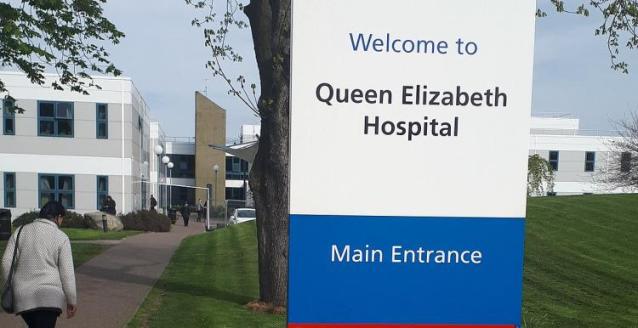
The latest in the long saga of employment tribunal hearings involving whistleblower doctor Chris Day and his ten year fight for justice over patient safety following the avoidable deaths of two patients in the intensive care unit at Queen Elizabeth Hospital, Woolwich ended with a judge reserving her decision.

This particular hearing concerned the role of top NHS lawyers Hill Dickinson, who were paid public money to draft commissioning contracts each worth tens of millions controlling the employment of junior doctors at every NHS trust in the country. As a result some 100 people observed the hearing on line over two days – more than could be accommodated in any of London South Employment Tribunal courts.

Directly involved in the case is the now defunct body Health Education England (HEE) which used to fund, commission and govern the employment and training of all English doctors on their path to hospital consultant or GP at NHS health trusts before it was merged with the rest of the NHS bureaucracy as part of NHS England.

Hill Dickinson was engaged by HEE to draw up a series of contracts called Learning and Development Agreements which were drafted in 2014 underpinning the £2 billion commissioning relationship between HEE and NHS Trust that was concealed from the courts in Dr Day’s case until last  week’s hearing.

But the existence of these contracts — which exposed as false the denial from HEE made by Hill Dickinson that HEE had substantial influence over doctors – were kept from the courts during the long battle by Dr Chris Day over over the loss of his career and claims of deliberate concealment of patient safety issues,

Journalist’s Freedom of Information request was crucial

A freedom of information request put in by the indefatigable investigative journalist, Tommy Greene, resulted in the very LDA contract being disclosed that was in force during the time of Dr Day’s case between Lewisham and Greenwich NHS Trust and Health Education England . This came after Dr Day had agreed to no less than 3 separate settlement agreements one of which designed to protect all lawyers in the case from wasted costs arising out of misconduct. 

This week’s wasted cost hearing was triggered by Tommy Greene’s discovery in July 2019. The hearing had been delayed for over 4 years by the London South Employment Tribunal since Dr Day’s original application. Since all the way back in 2015 and the all the way up to the Court of Appeal in 2017 and down again to the ET in May 2018,  HEE and Hill Dickinson clung to the false factual submission that all contemporaneous documents showed Dr Day’s claim that HEE had substantial influence over the terms of engagement was fanciful.

The wording of the 2014 contract strengthened the power of the postgraduate dean employed by HEE who could end the career chances of an aspiring junior doctor who wanted to become a consultant as well as withdrawing money from a trust who was employing him. This included the power to delete a doctors National Training Number or as Dijen Basu KC, Hill Dickinson’s lawyer, admitted “a career death sentence”.

Yet HEE and Hill Dickinson powered by public money went all the way up to the Court of Appeal to argue that HEE had no substantial influence over a doctors career and that Dr Day’s claim that they did was fanciful. At the EAT level this resulted in Dr Day being threatened for costs for effectively defending whistleblowing for the nation’s doctors

Much of this week’s hearing was taken up with the semantics of whether these contracts really meant the HEE had the upper hand or whether the trust was still really the employer. The Court of Appeal had ruled that both the HEE and the trust were employers. Hill Dickinson admitted the ruling was a game changer but tried to argue it did not apply to Dr Day’s case as he had been employed under an earlier version.

Dr Day argued that if the documents had been shared by Hill Dickinson and HEE at the time of earlier hearings it would have saved taxpayers a fortune and him and his wife 10 years- hence the argument to claim back ” wasted costs” from Hill Dickinson because of all the legal fees spent.

Dijen Basu KC Pic credit: Serjeants’ Inn Chambers

Dijen Basu, barrister from Serjeants’ Inn chambers and a qualified doctor, cross questioned Dr Day about the difference between what is known as the ” gold guide” for junior doctors and the contract — implying he should have worked out for himself the existence of the hidden LDA contracts or could have used the Gold Guide himself to win the case.

Dr Day pointed out that it was Health Education and  Hill Dickinson’s case from the 2015-2018 that the Gold Guide made fanciful Dr Day’s claim that HEE had substantial influence and also made the point that the ” Gold Guide” was worded as mere guidance on how doctors should be dealt with by NHS Trusts while the LDA was a proper contract that gave HEE a right to sue any NHS Trust if the LDA terms were not met.

michael wright, partner Hill Dickinson

Michael Wright, a partner with Hill Dickinson, even tried to argue in the hearing that the new contract was not a contract because of the rule in the NHS that different branches never sued its each other so it couldn’t be upheld in the courts. He was rather shot down when it was clear that HEE had the power to withdraw all the money given to trusts if they broke the detailed rules over the training of junior doctors which is just as powerful.

In his witness statement to the tribunal Mr Wright said he first had no knowledge of LDA’s as they were drawn up by the firm’s commercial department not his department. When he did have knowledge he thought they were irrelevant which is his explanation why they were not handed over to Dr Day’s solicitors. After the Court of Appeal ruling which said both HEE and the trust were employers, he still argues that they are just a further extension of the ” gold guide” which is seen as guidance. Much of what really happened was clothed in secrecy as he claimed legal privilege not to disclose discussion that had gone on between Hill Dickinson and HEE.

Judge Kathryn Ramsden

Mr Basu also argued that Dr Day was out of time to pursue this case, which had already failed during a previous strike out hearing on wasted costs. See the Byline Times article on this. He said that the 2014 changes to the LDA came after he left, and urged the judge to throw out the claim because a three day summary hearing was not enough to deal with such a complex issue. He also appeared to suggest to the judge, Kathryn Ramsden, that if she ruled in Dr Day’s favour, she could be overruled by a higher court citing a House of Lords case. Is he prepared to go to Supreme Court over this?

Andrew Allan KC

It took Andrew Allan, KC, funded by supporters on Crowdjustice, o put in real context what Dr Day had had to put up with in his ten year struggle.

In his closing submission he said: “Whistleblowers in the NHS are stamped upon – it happens in case after case – in which extra hurdles are added to the already numerous hurdles in Part IVA
of the ERA[ Employment Relations Act] 1996 – the first is that you must be rich enough fund endless
litigation; the second is that you must have sufficient stamina to survive years of litigation – the second is that you must be perfect – because any imperfection will be seized upon and never let go – the tactic is to attack the whistleblower – they are obsessive – they are litigious – can’t let an injustice go – not the sort of people who get on in the NHS
” The skeleton argument on behalf of Hill Dickinson is a case in point – most of it is taken up in a partisan account of C’s [ Chris’s] litigation which – and frequently inaccurate – such as the comment about him having got nowhere in the EAT.. and is largely irrelevant a comment that C made about LJ Simler (as she was then) in 2020 is a favourite stick to beat C with – what possible relevance it could have to this application is unknown.
And it came back again in My Learned Friend’s oral submission –
These attacks are now routine – that C has had to prepare a ‘smears / misinformation document in anticipation of the same old points being trotted out.” See the smear file on Dr Day’s whistleblowing site on the hearing here.

Dijen Basu’s new smear against Dr Chris Day

And guess what ! At this tribunal a new smear against Chris was laid before the judge and Chris Day was not even asked about during his 4 hours of cross examination  by Dijen Basu so he could reply.
In his late submission to the tribunal Dijen Basu accused Dr Chris Day of failing to refund £55,000 he had received in an earlier costs ruling to his Crowd Justice Fund implying he had pocketed the money.

His submission said: “he accepts that he has raised £470,490 for the crowd funding of his legal costs through Crowd Justice Limited (www.crowdjustice.com) and he has failed to show a single penny
being refunded to Crowd Justice Limited on his behalf, e.g. when HEE paid him £55,000 in
respect of his earlier employment tribunal costs which shows £284,719.61 then received (mostly) from Crowd Justice Limited, the £55,000 from HEE and £3,700 from Dr. Day, being entirely gobbled up by legal fees and disbursements, none of which was a refund to Crowd Justice Limited).”

This allegation was refuted by Crowd Justice Ltd itself who pointed out that none of the money raised to Dr Day goes to himself and is instead paid directly to law firms recognised by the Solicitors Regulation Authority. I am told Hill Dickinson and its law firm were informed this allegation was not the case by Crowd Justice Ltd

Andrew Allan’s and Elizabeth Grace’s submission covers this and can be read in full here.

Yet Dijen Basu went ahead. Given he works as a leading barrister for Serjeants’ Inn Chambers, he should have known this himself. He also markets himself as the go to barrister for chief constables up and down the country for handling police work. I would have thought they might express a bit of a surprise that he chose to influence a judge by using what is false information in a tribunal case.

The next stage in Dr Chris Day’s long fight will be an employment appeal tribunal on July 1 and July 2 next year. He will appeal the extraordinary case where employment judge Martin ignored the destruction of 90,000 emails by a management witness during the hearing against his former employer, Lewisham and Greenwich NHS trust and took no action. She has since wisely retired. My report on the hearing that led to the appeal is here. My verdict on judge Martin’s case – the tribunal of the absurd – is here.

For a full list of legal submissions and witness statements see Chris Day’s whistleblowing site. The link is here.

The rest of my coverage of Dr Day’s case is here.

One-Time
Monthly
Yearly

Make a one-time donation

Make a monthly donation

Make a yearly donation

Choose an amount

£5.00
£10.00
£20.00
£5.00
£15.00
£100.00
£5.00
£15.00
£100.00

Or enter a custom amount

£

Your contribution is appreciated.

Your contribution is appreciated.

Your contribution is appreciated.

DonateDonate monthlyDonate yearly

Please donate to Westminster Confidential

£10.00

How come an NHS Trust can win a national diversity award when its ethnic minority staff are reporting bullying and discrimination?

This weekend Lewisham and Greenwich NHS Foundation Trust won a national award for its diversity and inclusion just after a still to be published national staff survey reveals a high level of dissatisfaction about discrimination and bullying among its employees.

The trust which has one of the highest proportion of ethnic minority staff in the country is one of the Excel HPMA award winners. The award is sponsored by a major law firm, Mills and Reeves, which deals with personal injury cases including medical negligence. It is one of a number of law firms sponsoring national NHS awards. Other sponsors include Capsticks for NHS innovation; Bevan Brittan for digital analytics; Browne Jacobson, for employee engagement; and Hill Dickinson for excellence in culture and talent. Ironically, three of the firms are involved in persecuting whistleblowers revealing patient safety issues – two, Capsticks and Hill Dickinson, were leading lawyers for the Lewisham and Greenwich Trust in the continuing ten year battle with Dr Chris Day, who highlighted two avoidable deaths in Woolwich Hospital’s intensive care unit. His long running case resumes at an employment tribunal later this month.

The survey shows the huge difference between the UK breakdown of the current population as referenced by the Office for National Statistics. This stands as 84 per cent white and 16 per cent from ethnic minorities. It also varies enormously from the average picture of an NHS trust. 78 percent of staff in NHS trusts are white, only 43 per cent are white at LGT. Nearly 24 per cent are black British , African and Caribbean compared 14 per cent in average and Asian and British Asian are over 26 per cent of staff compared to nearly 4 per cent in the average NHS Trust.

One of the trust’s two major hospitals.

Given this breakdown when asked about whether staff were discriminated by their boss, the trust comes out as worse than average for a NHS trust and similarly in regards to career progression. Also there is a particularly bad result when they were asked how patients, relatives and the public treated them. Interestingly white people – who are a minority in the trust – had a significantly higher rating for satisfaction about future career promotions than ethnic minorities employed there.

Nor do the staff say they would recommend a friend or relative to have treatment in the trust’s hospitals – this is also below average.

When asked whether staff would leave the moment they found another job, some 20 per cent working there said yes – this compares with just over 15 per cent for the national average. And nearly a quarter of the staff said they would look for another job within 12 months – compared to just over a fifth on average.

Morale at the trust has got worse over the last year while there has been a slight improvement in the NHS as a whole.

However the 10 people employed on the trust’s board rate themselves as one of the best in the country.

There is also a big difference in morale among medical staff and ancillary staff. A BMA survey in 2022 produced some startling results

“Have you personally experienced any instances of bullying, harassment or discrimination within the last 12 months?” they were asked. 44% replied yes.

“If you have personally experienced bullying, undermining, harassment or discrimination in the past 12 months, did you report the incident(s)?”43% replied they had reported this and no satisfactory action had been taken.”

“Why did you not report any instances of bullying, undermining, harassment or discrimination?

42% replied they did not believe action would be taken. 26% replied they felt it would be held against them

All this suggests that this award must be more of a paper exercise than the reality there. I would have expected that the trust would be rated as one of the best in some instances. But this does not appear to be case. No doubt the media department there will praise the award to the highest level, executives will congratulate themselves and the law firms will delight in the glory. But it doesn’t look as though it was really deserved.

One-Time
Monthly
Yearly

Make a one-time donation

Make a monthly donation

Make a yearly donation

Choose an amount

£5.00
£10.00
£20.00
£5.00
£15.00
£100.00
£5.00
£15.00
£100.00

Or enter a custom amount

£

Your contribution is appreciated.

Your contribution is appreciated.

Your contribution is appreciated.

DonateDonate monthlyDonate yearly

Please donate to Westminster Confidential

£10.00

House of Lords slams scrapping of winter fuel allowance for 10.8 million pensioners in advance of Commons debate this week

Lord Hunt of Wirral, chair of the Lords secondary legislation committee and a former energy minister under Lady Thatcher’s government Pic credit: Official Portrait House of Lords

UPDATE: Government got policy through the House of Commons by 348-228 on September 10. Tories, Lib Dems, Greens, Scot Nats, DUP, Alliance and Reform voted against. Some 53 Labour MPs abstained, one Labour MP voted against.

SECOND UPDATE: A Conservative motion regretting the means testing of the winter fuel allowance and the lack of transparency by Labour was passed by 164 votes to 132 in the House of Lords on Wednesday evening. An attempt by a former Tory pensions minister,Baroness Altmann to annul the cut was heavily defeated.

Infected blood victims may also face further delay for compensation say peers

Peers have slammed the government’s planned means testing of this year’s £200 and a £300 winter fuel allowance for the over 80s which will leave 10.8 million out of 12.3 million pensioners with no money before Christmas.

The Lords secondary legislation committee – which scrutinises laws introduced by government by issuing new regulations which have to be approved by Parliament -is severely critical of the changes, the lack of information, the by passing of proper scrutiny by a government appointed advisory committee and lack of evidence of any research by the Department for Work and Pensions of the effect of the changes.

The committee represents a wide range of peers in the House from Tories, Labour, Liberal Democrat and crossbench peers Including former Labour minister, Tom Watson.

Peers see no need for the urgency to get the change into law by September 16. “We are unconvinced by the reasons given for the urgency attached to laying these Regulations and are particularly concerned that this both precludes appropriate scrutiny and creates issues with the practicalities of bringing in the change at short notice,” the report says.

baroness Altmann

The criticism comes as Baroness Ros Altmann, a former Tory pensions minister, has said she will move a fatal motion in the Lords next week , a drastic power rarely used, to block the government implementing it.

The report points out that winter fuel allowances will continue to be paid this year for people who quit the UK to live in an EU country before 2021. It is likely to be abolished after this year for people who moved to Switzerland, Norway, Liechtenstein and Iceland.

The government are trying to mitigate its effect on the poorest pensioners by encouraging the 880,000 who are entitled to pension credit, to claim. To do this they have to fill in a 243 question form and if they have over £10,000 savings -including money hidden in their homes – get a reduced form of pension credit. So far there has been a five per cent increase in uptake according to the DWP.

The Lords are scathing about this situation.”We are concerned that the Regulations may cause potential inequalities between low income pensioners claiming benefits and low income pensioners not claiming benefits, and it is not clear whether DWP has assessed this risk,” says the report.

The campaign to attract more pension credit claimants is causing admin problems for the DWP with the result that other people due to get pension credit are facing a nine week delay in getting the money, the report reveals. So the government are penalising the poorest as a result of the campaign.

The report also reveals that those on Universal Credit or who live abroad may need to make a claim
for the Winter Fuel Payment. The deadline for making a claim for 2024–25 is 31 March 2025, and claims can be made by post from 16 September 2024 or by phone from 10 October 2024.”

The report also highlights that all pensioners will be hit by the rise in energy prices and many more will start paying tax because of the freezing of personal tax allowances which will go on until 2028.

Keir Starmer and Rachel Reeves are both breaking traditional consultation and witholding information of the effect of the policy change from MPs and peers.

The report says: “All benefits regulations are required by law to be considered by the independent Social Security Advisory Committee (SSAC). This is generally done in advance of the legislation being laid. In this case, the Minister has opted for the urgency provision that allows SSAC consideration to be
retrospective. Since this might be perceived as bypassing SSAC scrutiny, we asked the DWP what, if any, effect an adverse report from that Committee would have after the Regulations have already come into effect. DWP responded that, in line with their legal duty, ministers would lay the report before Parliament, and should the report contain recommendations, lay a statement before Parliament alongside the report. It remains unclear what the practical impact of any statement might be on Regulations which
will have already come into effect.

Compensation for Infected Blood victims

Peers in the same report have slammed the government regulations permitting compensation payment to infected blood victims, promised with great fanfare by ministers.

The committee’s report said: ” We found the Explanatory Memorandum (EM) to the Regulations overly
complex and technical, while lacking basic information about the policy such as how those infected can apply and from when, how long claims will take to be processed, when successful applicants can expect payments to be made, and the basis on which each claim will be assessed.”

The peers castigate the civil servants for not producing a report in simple, plain English and cast doubt on whether promises by the new government to start payment by Christmas will be fulfilled.

They also accuse the Cabinet Office of witholding information about the process.

“We are concerned that the Cabinet Office is withholding information on the impact and cost of
the Regulations until after the time for Parliamentary scrutiny has passed, which is unacceptable and circumvents proper scrutiny of the Regulations. We have not been given a reason why the costs could
not be published ahead of the budget. The House may wish to pursue the issue of costs further.”

The lesson from both the issues raised in this report is that this new government is not in control of Whitehall and allowing civil servants to evade proper scrutiny on the measures they are introducing. Either ministers are being inept in not following proper procedures or this is a deliberate decision not to provide MPs and peers with information allowing them to scrutinise the new government’s decisions.

Sir Keir Starmer says he is expecting to be the most unpopular Prime Minister of modern times. He is certainly knows how to go about it.

One-Time
Monthly
Yearly

Make a one-time donation

Make a monthly donation

Make a yearly donation

Choose an amount

£5.00
£10.00
£20.00
£5.00
£15.00
£100.00
£5.00
£15.00
£100.00

Or enter a custom amount

£

Your contribution is appreciated.

Your contribution is appreciated.

Your contribution is appreciated.

DonateDonate monthlyDonate yearly

Please donate to Westminster Confidential

£10.00

Capsticks behind move to remove judge from tribunal hearing after he slammed NHS commissioning body for hiding documents from claimant

John Webster : NHS executive criticised by employment judge

UPDATE: Since publishing this article I have learned that no fewer than four Capsticks lawyers were involved in trying to remove the judge and that the firm was representing BOTH the Integrated Health Board and the NHS human resources firm. Both would have known that there were draft grievance documents that had not been disclosed to the tribunal.

The law firm Capsticks – which has a national contract with the NHS to handle employment tribunal cases – was behind an attempt to remove a judge from hearing a constructive dismissal case involving a senior official at a NHS clinical commissioning group in Norfolk.

The case – highlighted by BBC Norfolk yesterday- led the judge calling for disciplinary action to be taken against senior staff at the board for the way they treated and lied to the claimant.

Mr Clive Rennie, an assistant director, won his case for constructive dismissal against NHS Norfolk and Waveney Integrated Care Board – the successor body to the Norfolk and Waveney Clinical Commissioning Group who had previously employed him.

But not before the tribunal had spent days wrangling to get draft grievance documents which the group said did not exist while the author of the documents, NHS human resources manager Steve Stavrinou, sat at the back of the hearing, not saying a word.

He had been called in by the commissioning group to prepare the grievance papers from NHS Arden and Gem Support Unit which provided HR Services to the group. At first the existence of the draft papers were denied and then excuses such as the managing director being on holiday were used to deny the judge’s order to deliver them.

Judge Postle’s judgement, which was published yesterday, reveals that suddenly there was an application to make him recuse himself from the tribunal. The request came from Capsticks, who were the solicitors for both NHS Arden and Gem Support Unit. and for the Integrated Care Board

Until then, as the judge noted, the person from Capsticks had not been present at the tribunal to hear the proceedings but called for the judge to go.

Alistair Kernohan – Capsticks

Alistair Kernohan of Capsticks,, was in fact the partner, based in Leeds made his case by email.. Un fact Capsricks came to hearing mob handed. Both Miss Whiteley and Miss Aslam were present all the time. They were then joined by Nicola Butterworth, who sat the back of the tribunal. According to Capsticks website. ” Nicola undertakes a broad range of employment litigation work, including unfair dismissal, discrimination and whistleblowing claims. She advises pre-claim and at all stages during the litigation process. Nicola is undertaking a regular secondment at one of the firm’s clients, working closely with the HR team.” Looking at the judgement it looks like the judge did not know she was also there.

Mr Kernohan said: “Employment Judge Postle has demonstrated the premature formation of a concluded view in the Claimant’s favour without properly considering representations from the Respondent and before the Respondent has been able to put forward its evidence.

“Employment Judge Postle’s inappropriate conduct, tone and disparaging comments towards the Respondent and its representatives, has crossed the line between what is tolerable and what is impermissible, to the extent that his comments would give an appearance to the fair minded and informed observer that there is a real possibility that the Employment Judge will carry into his judgment the scorn and contempt his words and behaviour convey.

“Employment Judge Postle has made unnecessary and inappropriate criticisms of the conduct of the Respondent and its representatives which he has expressed in absolute terms, which failed to leave open the possibility of him considering an explanation, despite not having heard or in some cases even invited evidence or submissions from the Respondent’s representative.

“Employment Judge Postle has allowed and facilitated inappropriate conduct of the proceedings by the Claimant’s representative, allowing such conduct to go unchallenged despite representations made by the Respondent or even, on occasion, failing to allow the Respondent the proper opportunity to
make representations.”

Marsha Robinson and Neil Ashley of Paladin pic credit: East Anglia in Business

The judge asked Mr Neil Ashley, Mr Rennie’s counsel to comment and records it in his judgement

He told the court: “It is important that we are astute enough to identify that any evidence that such an Application made can be used as a device for a party which finds itself in difficulties because of the
quality of its case.
Mr Ashley went on to say that he has been practising for 24 years and he had never seen such deplorable conduct on the part of the Respondent’s Solicitors. He stated that rarely has he seen such a
‘car crash’ of a case presented before a Tribunal.
Mr Ashley went on to say that at the outset, the Tribunal was told by a Solicitor Advocate that there was no drafts of the Investigatory Report and none had ever existed. This was echoed audibly by
Miss Aslam, Solicitor.”

“Two Officers of the Court sat here and told the Tribunal that a 20 page perfectly polished Report had never been the subject of any drafting. This is absurd to the extreme and obvious to us all that it cannot be and no doubt Miss Whitely ( the board’s solicitor) made the statement recklessly and off the cuff without any thought to what she was saying. It was, to my mind, utterly untruthful.”

Miss Whitely did not want to make any comment to the tribunal, relying on Capsticks, to deliver the blow.

The judge and his two members of the tribunal then discuss the matter and unanimously rejected Capstick’s claims.

“There was no disparaging comments towards the Respondent or its Representative, it was simply a case of asking, what is happening about the third party Order for disclosure, concerns about prevarication, delay and the frustration of the Tribunal that the Respondent / its Representative, were doing nothing to advance the process in getting disclosure from the third party.”

The judge went on to be highly critical of John Webster, then director of strategic commissioning at the CCG, who reneged on a promise to allow Mr Rennie to leave and lied to him about the outcome. “Clearly, there had been a conspiracy all along going on behind the scenes,” The judgement stated the tribunal had “found him disingenuous, unconvincing”.

He was also critical of Mr Stavrinou.” Truth is alien to him.”

The successor body has now apologised to Mr Rennie. Mr Webster is now stepping down as deputy chief executive of the Cambridgeshire and Peterborough NHS trust.

Doctors who follow this blog will be interested in the role of Capsticks here – given they have also played a prominent role in recent whistleblowing cases – in Dr Chris Day’s case against Lewisham and Greenwich NHS Health Trust where 90,000 emails that could have helped him were destroyed by a NHS trust witness at the time of the hearing and in Dr Usha Prasad’s case where they initially tried to pursue her for £180,000 costs.

Unfortunately the judges in these cases sided with the trust and took no action over completely unacceptable behaviour or ignored evidence. We need more judges to take a stronger stand against Capsticks bullying tone as Judge Postle did in this case.

One-Time
Monthly
Yearly

Make a one-time donation

Make a monthly donation

Make a yearly donation

Choose an amount

£5.00
£10.00
£20.00
£5.00
£15.00
£100.00
£5.00
£15.00
£100.00

Or enter a custom amount

£

Your contribution is appreciated.

Your contribution is appreciated.

Your contribution is appreciated.

DonateDonate monthlyDonate yearly

Please donate to Westminster Confidential

£10.00
Historic conference at the Royal Society of Medicine on Patient Safety paves way for campaign to protect whistleblowers from trusts in the NHS

Yesterday a conference of doctors, patients and journalists held at the prestigious Royal Society of Medicine in London highlighted the appalling treatment of doctors by NHS management who raise patient safety issues to protect patients. Examples were given from doctors who had been dismissed after they raised patient safety issues and how trust managers spend unlimited funds on lawyers to make sure they lose employment tribunal cases, sometimes even aided by the judges hearing them.

The conference arranged by Justice for Doctors, a new organisation representing many of the affected doctors, coincided with a series of articles in The Daily Telegraph, which showed that these are not isolated cases but involve doctors right across the country and is a national problem which trusts are trying to hide.

One of the main organisers is David. E. Ward,, a retired cardiologist from St George’s Hospital, South London, who has already written two guest blogs on this site. I have included his planned closing statement to the conference as a fresh blog from him as it succinctly sums up all the issues that were raised.

By David Ward

First, I would like to thank all the contributors to this historic meeting. In a way it is a celebration of all those oppressed whistleblowers who have spoken up for patient safety.

I would personally like to thank my friend Professor Somerville who has been a driving force behind this and many other ideas to stand up for whistleblowers. Jane and I have been trying to set up a second meeting about Patient Safety for 5 years following the first one in March 2019 when we re-enforced our personal campaign to expose – and do something about – the appalling treatment of doctors who speak up for patient safety also known as ”whistleblowers”. During our campaign we met the Justice for Doctors group who helped to organise this meeting

In the past 3 decades a Hospital Trust with its senior management has accrued the powers to destroy a doctor’s career by imposing restrictions, suspensions, referrals to regulators (GMC, CQC) and, astonishingly, an unfettered power to dismiss. These major life-changing decisions are arbitrary and undertaken, incredibly, without any independent or regulatory oversight. For dismissal, “get out” is apparently sufficient.

Allegations against the victimised doctor may be based on made-up and unsubstantiated claims. If major criteria for dismissal cannot be met there is always the “loophole” of “some other substantial reason” which conveniently does not exclude but also does not mandate any additional explanation.

Doctors who see poor practices, faulty equipment, processes (and the like) are obliged to speak-up by Duty of Candour (HSCA 2008 reg 20). But by speaking up but they may put their careers at risk as we have seen so many times recently.

The “The National Guardian” program introduced by Sir Robert Francis and intended to accommodate doctors who speak-up, evidently does not function as intended. It’s called “marking your own homework”.

Investigations into a whistleblower together with their concerns should be independent of the Trust in which they work and be seen to be so. But evidently, they are not. Furthermore, the Trust managements who make these decisions are themselves unregulated. That doesn’t seem right? Does the phrase “judge, jury and executioner” come to mind? Managers should also be regulated, shouldn’t they?

Arcane procedures such as MHPS appeal hearings can be overseen or conducted by “dodgy” external “agencies” some of which claim spurious credentials. These agencies are, in effect, “hired guns” available and willing – for a fee – to “confirm” the Trust’s unfounded allegations and to assist their aims – to dismiss the “troublemaking” doctor; not because of “incompetence” but because the doctor has “annoyed” Trust management by raising concerns about Patient Safety or something else. The reactions of management are often vengeful, as we have seen.

I know of at least one of these agencies which has appropriated and misunderstood (in a written formal report) the phrase not “fit-for-purpose” to describe a doctor in support a Trust’s decision to dismiss. The agency seemed totally unaware that this is not only fictitious nonsense but possibly libellous. No such phrase exists in English Employment Law. Unfortunately, NHS England has also been duped. I know because I’ve asked – in person.

The Judiciary, in the form of Employment Tribunals may be called into action if the dismissed doctor seeks to restore their career via this route. This is a bad choice by the victim as the evidence confirms. Only 3% of Claimants, “win” – not the most apt word – in this system. Put another way, 97% lose! Is that “open and fair justice”? I think not. Some of the judgments are beyond comprehension.

There are many practices which seem grossly unfair, perhaps deliberately. Some obvious ones stand out:

1. Inequality of arms; the law firms acting for the dismissing Trust are funded by each of us – the taxpayer. The Claimant, the doctor, healthcare worker will have no external source of funds except  perhaps by “crowdfunding”. Furthermore, if they lose their case, they may required to pay not only their own legal fees but the law firm’s fees too! That’s not fair. I can show you some law firm invoices which would shock you. The phrase “inequality of arms” doesn’t touch it.

2. “Cost threats” are a notorious device employed to, shall we say, “persuade” a claimant to withdraw their claims before, during or after a Tribunal. It’s another weapon deployed by the Respondent, the dismissing Trust, to force the claimant to surrender and withdraw their claims.

3. Non-disclosure agreements or NDAs, are devices designed to conceal the devious practices used to threaten the claimant (and, as it happens, to suppress evidence). They have no place in inquisitorial proceedings in this context. They should be banned.

4. The Public Interest Disclosure Act (PIDA) 1998; I quote: a worker has the right not to be subjected to any detriment by any act, or any deliberate failure to act, by his employer done on the ground that the worker has made a protected disclosure.

In other words, a doctor cannot be dismissed, for example, for raising patient safety concerns. So, any dismissal has to be attributed to another perceived misdemeanour.  Read any recent case and it is evident that the “whistleblowing” or “patient safety” concerns were discounted and irrelevant to the dismissal. It was about an “attitude”, a “manner of speaking” and similar unquantifiable and, in most cases, unverifiable attributions. Ask one of the presenters today.

5. At a time of great need for medical expertise, doctors are still being persecuted and dismissed having committed NO offence. The law firms which spend so much public money to pursue the claimants should have no place in any procedures which are primarily about patient safety. Furthermore, the concerns and the person who raised them should be formally registered and documented, including all steps taken towards a solution. This is not happening. Doctors who raise concerns about patient safety are treated like criminals! This must stop!

6. Last but not least the patient safety concerns, the very things that trigger most of these shenanigans. What happened to those? Well, they get buried and forgotten don’t they. What a wonderful system. All that waste of public funds to destroy a doctor’s career instead of correcting potentially dangerous practices. That is why a register is needed.

The problem is a nationwide one of the same gravity as the “Great Post Office Scandal”. Perhaps NHS whistleblowers need a TV drama-documentary because we have seen how that shifts public opinion and awakens the media with unprecedented force. I’ve already draw up a potential cast list!

Last, there should be a searching, durable, logical and legally sound review of the treatment of ALL whistleblowing related laws and processes. Whistleblowers are the canaries in the coalmine. They do society a favour. They should be praised – not persecuted.

This is the 21st century! What country do we live in?

Thank you all for attending. Thank you to all those who presented. And particular thanks to Dr Salam Al-Sam, Dr Azhar Ansari and the Justice for Doctors group.

UPDATE: Who came and Who didn’t send anyone

Newspapers who sent a reporter: Times, Guardian, Daily Mail, Standard,

Major media who sent a reporter: Sky News 

Major media one would have expect to send reporter:

BBC, ITV, GBNews, LBC

Major regulatory professional bodies who were notably unrepresented: (very bad show I think especially as some of their members Fellows were major subject dig the WB scandal). If they didn’t know or just couldn’t be bothered –  it’s shameful, either way!

BMA, CQC, GMC, Royal Colleges (all of them, Physicians, Surgeons, Obs and Gynae), National Guardians Office (FTSUG), HMCTS (at least they could have send a junior barrister), Law firms; all those with an obvious interest in oppressing Claimants

One-Time
Monthly
Yearly

Make a one-time donation

Make a monthly donation

Make a yearly donation

Choose an amount

£5.00
£10.00
£20.00
£5.00
£15.00
£100.00
£5.00
£15.00
£100.00

Or enter a custom amount

£

Your contribution is appreciated.

Your contribution is appreciated.

Your contribution is appreciated.

DonateDonate monthlyDonate yearly

Please donate to Westminster Confidential

£10.00
Judge holds hearing to decide whether Dr Usha Prasad unfair dismissal case can go ahead

Dr Usha Prasad

Dr Usha Prasad, the whistleblower cardiologist sacked by the Epsom and St Helier University Hospital Trust, was back at an employment tribunal yesterday to fight for a hearing that she had been unfairly dismissed.

The public hearing was delayed for nearly two hours because 400 pages of legal papers from the trust could not be immediately accessed to be read by the judge. So both sides spent three hours presenting oral evidence instead.

The successor trust, St George’s, Epsom and St Helier Hospital Group, is seeking to strike out her case saying a decision at a previous tribunal by Judge Hyams-Parish, which came down in favour of the trust over her claims of discrimination, victimisation, harassment and whistleblowing meant it should be the end of the matter.

Miss Rehana Azib, QC, for the trust argued that her dismissal was the consequence of the failure of her claims and there was no need for a further hearing.

To add to the confusion in the day Dr Prasad said a decision that the case should go ahead had already been taken in September 2022 – more than 18 months ago. . She said Judge Balogun had already rejected an attempt by the trust to strike out this further hearing and ordered that the case will be listed for a case management hearing for 2 hours and a separate full hearing listed for 3 days. “

She was told by the present judge that this ruling had been reconsidered by the judge. However it is extraordinary that Miss Azib excluded the letter saying the trust’s first strike out was unsuccessful from the trust’s bundle for the hearing. Dr Prasad had received no notice that this had been changed but yesterday’s hearing still went ahead.

Rehana Azib KC: Pic credit: Keble College, Oxford

Miss Azib, KC from 2, Temple Gardens Chambers, based nearly all her entire case against Dr Prasad on Judge Tony Hyams-Parish’s judgement. She also tried to extricate Jacqueline Totterdell, group chief executive of the trust, from the case brought by Dr Prasad by arguing she was not chief executive at the time at the time of her dismissal. She has however continued to authorise lawyers to pursue Dr Prasad. There followed an argument that her post represented the main body of the trust. Ms Azib told the judge that to bring a case against her personally rather than the trust would cause her stress and be time consuming from her other duties.

I covered the Hyams- Parish judgement at the time. My blog on his judgement is here.

Judge Christina Morton

The most dramatic part of the hearing came when Dr Prasad, challenged by Miss Azib’s statement that none of actions by the trust were judged by Hyams-Parish to have been connected to her whistleblowing claims, produced a stream of examples.

This included an attempt by Dr. James Marsh, now group deputy group chief executive, to water down her whistleblowing report on the ” avoidable death ” of heart patient, Mr P, which the trust confirmed at the Hyams-Parish hearing had never been reported by Richard Bogle, head of cardiology to the coroner or the Care Quality Commission. Her refusal to do seemed to lead to her internal disciplinary hearing..

She pointed out that there was no independent expert at the hearing to examine the case against her, all the people were colleagues of Dr Marsh and his wife in both NHS and private practice. A list of what turned out to be vexatious cases of her failures sent to the General Medical Council by the trust was compiled by Dr Marsh’s close colleague. They were thrown out by the GMC who exonerated and revalidated her to work anywhere in the UK. Judge Hyams-Parish did not want to see their report.

The most telling example was an email from the then chief executive of the trust Daniel Elkeles, offering to abandon the internal disciplinary proceedings against her if she dropped the tribunal case against the trust which contained the whistleblowing claim. He would help to revalidate her so long as she left the trust.

She also pointed out that she was banned from any clinical duty and told to stay in the office for 28 months before the disciplinary hearing and her dismissal. Since she saw 2,000 cardiology patients a year, this meant that the NHS – which was also hit by the pandemic- was depriving thousands of patients seeing a consultant whom the GMC had judged was perfectly competent to do her job.

As you will see in my contemporary blog on the Hyams-Parish judgement I noticed the judged ignored the plight of Patient P and the evidence of the letter from the chief executive to her at the time

She also accused lawyers for the trust of witholding information and misleading previous court hearings – particularly not revealing that when she could not attend a hearing the text of a doctor’s letter explaining why. The respondent’s lawyer also told the judge that Dr Prasad hadn’t submitted ” any particulars of her claIm” over this case yet she had submitted them to the respondent last April. She also didn’t tell the judge Usha’s detriment case had been listed for an appeal.

The accusations led Miss Azib to remind the judge that serious allegations had been raised in ” an open hearing.”

I got the impression that the lawyer and the judge would have much preferred this hearing to have been held without the public and the press being present. It is a good example of why there ought to be more coverage of what happens at employment tribunals.. The judge is reserving judgement.

Facts surrounding the case

The trust has engaged and paid 33 lawyers to pursue Dr Prasad over the last six years at a cost of hundreds of thousands of pounds to the taxpayer.

Nearly 10,000 NHS cardiology patients in South London and Surrey have been deprived of being treated by Dr Prasad while she was restricted from doing any clinical work.

One-Time
Monthly
Yearly

Make a one-time donation

Make a monthly donation

Make a yearly donation

Choose an amount

£5.00
£10.00
£20.00
£5.00
£15.00
£100.00
£5.00
£15.00
£100.00

Or enter a custom amount

£

Your contribution is appreciated.

Your contribution is appreciated.

Your contribution is appreciated.

DonateDonate monthlyDonate yearly

Please donate to Westminster Confidential

£10.00
Why babies now could face brain damage at the health trust that sacked whistleblower obstetrician Mr Martyn Pitman

Dr Martyn Pitman

Thousands of followers of this website may remember last year’s nine blog coverage I gave to the employment tribunal over the sacking of whistleblower Mr Martyn Pitman at Hampshire Hospitals NHS Foundation Trust (HHFT). He lost the hearing. He was belittled and and repeatedly insulted  by the former head of chambers, Mark Sutton of Old Square Chambers, including calling him a ‘freelance agitator,’ only to later be forced to retract that slur. Sutton, who picked up a big share of the £650,000  taxpayer funded legal fees pay out to represent the trust, approached the ET by portraying Mr Pitman as something of a tyrant, an assessment clearly not shared by his previous colleagues, who actually worked with him, attending in numbers at the hearing, or indeed by his thousands of  social media supporters

 Mr Pitman was sacked because it was said his employment there was ” a present danger to patient safety ” by the former chief medical officer of the trust, Lara Alloway. It was also claimed that his relationship with the Trust’s senior management had ‘irretrievably broken down”. Yet it was he who had raised patient safety issues which was stomped on by non-clinical senior midwifery managers, despite identical concerns also being raised a few months later by several senior clinical  midwives.

Dr Lara Alloway now chief medical officer for Hampshire and the Isle of Wight Integrated Care Board

Well now a year on, following Mr Pitman’s dismissal, it is revealed that there is a ” present danger to patient safety ” in the maternity wards at the trust – a more than five fold increase in the number of babies delivered there with labour-related hypoxic brain injury (Hypoxic Ischaemic Encephalopathy: HIE) many of which may have been preventable.  According to the Trust’s latest on-line patient information approximately 5,700 babies are delivered across its 3 sites.

The trust had an extremely low rate of HIE until now


In the final year of Mr Pitman’s Consultant tenure at HHFT, prior to his formal dismissal, the HIE rate across the Trust was reported as  0.5 per 1000 deliveries – equivalent  to less than 3 babies per annum. In 2023, the year following his dismissal, the rate increased, in a previously unprecedented fashion, to 2.5 per 1000 deliveries, equivalent to 14 babies per annum.

Of course the trust dispute this – even though it was published in a very thorough article by Sirin Kale for Guardian Society. The full article is well worth a read and you can link to it here.

The trust communications department described the article as misleading. A statement said:

 “There are instances in Ms Kale’s reporting where we believe her reflection of the facts is misleading. This interpretation of the data fails to provide the reader with the wider context required to understand it. It therefore runs the risk of unreasonably undermining public confidence in a service which is safe and performing well. To avoid misleading the public we would strongly suggest that your article must explain that the rate of HIE in live births with Hampshire Hospitals is well within the normal limits.”

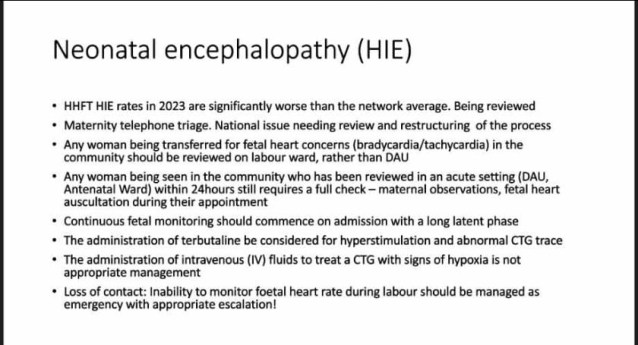
I might have believed them but for an internal power point presentation at a clinician led Neonatal Morbidity and Mortality meeting held at the trust in February. Reproduced below it says precisely the opposite to what the communications department is claiming – that cases of HIE are ” significantly worse than the network average”. It also proposes tough action to combat it. If people are to believe there is no problem and everything is safe – such action speaks volumes.

This particular issue at the trust was one of the problems raised by Mr Pitman in 2019 when he made his whistleblowing complaint in early 2019.

He told me:”  I had a specialist interest in fetal monitoring, CTG interpretation and labour management optimisation. Throughout my period of tenure I was responsible for cross-site staff teaching of fetal /CTG monitoring and had developed a regional reputation for my expertise in this area. For several consecutive years I had been praised for playing a significant role at RHCH in minimising the HIE rates down to commendably low levels well below the network and indeed national average for 2 consecutive years. For instance, we achieved the enviable statistic of not having a single poor maternity outcome attributed to CTG misinterpretation. This dramatic deterioration, in a critical maternity  outcome metric, that I was passionate about and had successfully devoted my focus and clinical attention to, to have occurred within the 12 months since my dismissal will certainly not have escaped the attention of  either the senior midwifery managers or the Trust’s senior management.”

Indeed significant events back in 2019, that led to Mr Pitman’s formal investigation and eventual dismissal included a a dispute between him and the midwifery managers about the dangers of sub-optimal fetal monitoring, including the potential pitfalls of assessing the baby’s heart rate using hand-held dopplers (intermittent auscultation) and confusing the baby’s heart rate with that of the mother.

He told me:” I was concerned that deteriorations in the standard of fetal monitoring and, particularly midwifery complacency in this regard in what were thought to be low-risk mothers was a developing concern and that if it was not addressed would lead to worse outcomes and, potentially increased baby injury (HIE) and death rates. This warning was completely and utterly ignored by the senior midwifery management. ” Such concerns have been highlighted repeatedly in other units across the UK, including the recent reviews undertaken by Donna Ockenden”.

What he predicted and was striving to prevent, by making practice recommendations, in the April 2019 Fetal Monitoring Guideline meeting has now happened. Instead of supporting him moves were made to silence him and to get him out of the way.

He said: “The very evening after this, unusually confrontational and adversarial, guideline meeting was when I was first ‘invited’ to a meeting which eventually developed into my formal disciplinary investigation. The senior midwifery managers had decided that my attempts to prevent their dangerous normalisation agenda had to be stopped

Two terrible baby births at Winchester hospital

Worse then happened, within just a week of this fateful meeting. As well as the tragic case raised in Sirin Kale’s article distressing case,  where a baby was deprived of oxygen throughout labour and delivery . This second baby was delivered within just hours of the case featured in Sirin Kale’s Guardian article. Mr Pitman was the Consultant on-call in the Winchester Maternity Unit when both these tragic cases were delivered but, as they were midwifery-led, as they were believed to be ‘low-risk,’ neither he nor the Obstetric team had been directly involved in their care, until the ‘crash-calls’ were put out.

He said: a ” supposedly entirely low-risk healthy baby, maintained under solely midwifery-led care, was born moribundly unwell from HIE and needed to be urgently transferred to Southampton Hospital for brain cooling. The Head of midwifery, my principal complainant, who had been in the guideline meeting would have come into work the following Monday, been informed of these 2 cases, that there were huge issue with the intrapartum monitoring of them both, realised that this put her in a challenged position and given my concerns and the practice changes that I had been recommending just the previous week. This appears to have prompted her to escalate her concerns about me into a formal complaint, rather than an issue that could and should have been addressed by mediation. The timeline of events, at this time, was very telling”

So where does leave the maternity services at Winchester and Basingstoke hospitals? The trust has been on a public relations drive inviting the local BBC TV station, BBC South, into the maternity wards BEFORE it published these worrying figures on babies delivered with HIE.  This was arranged and was broadcast less than a month before the concerning increased HIE rates were presented.

Here’s a video of the report:

BBC South Today broadcast on maternity services at Hampshire Hospitals NHS trust on 4th January this year chief executive Alex Whitfield tells viewers it is safe

Since then the trust has promised an internal , rather than , perhaps far more appropriate, independent external inquiry – rather the same philosophy as the Post Office used to say their Horizon computer project was sound when sub postmasters were being jailed for false accounting.

The most tragic outcome is that there are potentially parents in Hampshire who face a lifetime of worry worry and expense caring for children, who may have suffered avoidable labour-related hypoxic brain injuries. One also has to wonder what the level of medical negligence claims associated with these cases could, potentially, extend to? This could have been prevented if the trust was doing its job. Given the state of social care in this country this is a very serious state of affairs. You cannot say the trust were not warned by Dr Pitman. The then interim chief medical officer was Dr Nick Ward, a consultant paediatrician whose expertise is in paediatric nephrology.

So does the top management carry some blame? I put it to the communications department that Alex Whitfield, Lara Alloway ( now CMO at Hampshire and Isle of Wight Integrated Care Board), the midwifery management team, and Steve Erskine, chair of the trust board did. I got no comment on this but given what appears to be their complacent attitude to what is happening there I really wonder whether they do care about anything except the trust’s reputation.

On May 2nd one of the foremost experts on inquiries into maternity care Mr Bill Kirkup, has been invited to give a lecture at the trust. He has investigated baby deaths in the Morecambe Bay Trust and in the East Kent Trust. I wonder what my former colleague on the Gosport War Memorial Hospital independent panel will have to say about the Hampshire Hospitals NHS Foundation Trust.

One-Time
Monthly
Yearly

Make a one-time donation

Make a monthly donation

Make a yearly donation

Choose an amount

£5.00
£10.00
£20.00
£5.00
£15.00
£100.00
£5.00
£15.00
£100.00

Or enter a custom amount

£

Your contribution is appreciated.

Your contribution is appreciated.

Your contribution is appreciated.

DonateDonate monthlyDonate yearly

Please donate to Westminster Confidential

£10.00

Guest blog: Time to regulate the all too powerful NHS Trust managers

They act as ” judge, jury and executioner” when whistleblowers raise patient safety issues

By David Ward, a former consultant cardiologist at St George’s Hospital, Tooting, London

All staff working in the healthcare professions should be regulated for very obvious reasons. Most of them are but NHS Trust managers (non-medical) are not. Why? Given that managers have enormous and disproportionate powers to initiate investigation, (enlisting private investigators is not unknown) restrict activities, refer to disciplinary hearings and regulatory bodies such as the GMC [ General Medical Council ] and the CQC, [Care Quality Commission] suspend and dismiss healthcare staff – most notably well-meaning, hardworking doctors for raising concerns about patient safety – shouldn’t managers should be regulated just like other NHS workers?

Doctors are obliged to raise concerns if they see problems which may affect patient safety (Duty of Candour, Reg 20 HSC Act 2008 and 2014) pejoratively called “whistleblowing”. It is a matter of patient safety. We know that the reactions by Trust managements to doctors raising concerns can destroy careers and family lives. Suicides of staff under persecution are not unknown. A few courageous people may resort to the corrupt Employment Tribunal process after dismissal. Trusts spend £millions (yes, really!) to defend their untenable self-appointed positions as “judge, jury and executioner”. Where does this money come from? You and me, the taxpayer. Does the victim (whistleblower) have equal access to such resources? Of course not! In fact, they are often sent the bill (aka a cost threat, a merciless device not worthy of a civilised society and in this context used to force the claimant to concede the case) for the huge legal expenses of the Trust’s lawyers. (I’ve seen a well-known law firms’ cost sheet, it’s mind-blowing).

Who initiates the actions that can result in these disastrous consequences? Yes, the Trust managers; sorry, but it’s true. (OK, sometimes medical managers are complicit as we have seen in recent dismissals – shame on them). This process must be taken away from management and regulation could incorporate this. As many recent cases illustrate, PIDA (1998) forces a Trust to deny that “whistleblowing” had any part of a dismissal despite the prior narrative being clearly laden with raising patient safety concerns. It urgently requires updating.

No winners in this egregious process

There are no winners during these egregious processes. Trusts are deprived of money that would be better spent on care. Doctors and nurses who have families to support but may be left without employment even in times of severe need such as the recent pandemic, their careers and family lives in ruins. Mental problems are not uncommon, why wouldn’t they be? Doctors who are required to cover for suspended and dismissed colleagues have to put in more hours. Dismissed doctors often find it difficult to get work in other Trusts. I know of cases where the management at the index Trust interferes with (including preventing) the appointment of a whistleblowing doctor elsewhere.

Managers (and their acolytes) should be banned from acting as “judge, jury and executioner”*. That’s not in keeping with open and fair justice, is it? (Human Rights Act,1998, Article 6). Stop disciplinaries just initiate prompt investigation (thereby reducing risk of further harms) of the concerns, analogous to the inquisitorial French system of discovering the facts – not the damaging adversarial approach prevalent at present in these situations.

Stop trusts wasting £millions on law firms

No wasting £millions on law firms and costly (very costly) barristers, no claimants (victims) forced to sell the family house, move abroad, give up the profession, no months of waiting for court hearings (often many, recurring over years – I know of at least 2 cases of dismissed doctors whose cases in the Employment Tribunal system have dragged on for a decade or more), less mental illness.

Pastoral care for staff who raise concerns? That would be a constructive, cost effective and beneficial alternative approach, wouldn’t it?

Just one last thing: in any given Trust does anyone remember the patient safety concerns that triggered all the iniquitous nonsensical sequence of particular events, what they were about and whether steps have been taken to rectify the deficiencies which led to the concerns in the first place (which may have included avoidable deaths)? Have they been documented other than by the person who initially raised the concerns? Were they formally registered? I doubt it. They are usually buried in a fog of emails and shrouded by a cloud of managerial vengeance directed toward the whistleblower. Perhaps some of the simple and inexpensive ideas mentioned here could be explored.

Does anyone really think that NHS managers should be exempt from regulation?

There is of course one simple solution: ban the suspension and dismissal by Trusts of medical staff who raise patient safety concerns in good faith. They are doing society a favour. *The Political State of Great Britain, for October 1717, Vol.XIV:398]

One-Time
Monthly
Yearly

Make a one-time donation

Make a monthly donation

Make a yearly donation

Choose an amount

£5.00
£10.00
£20.00
£5.00
£15.00
£100.00
£5.00
£15.00
£100.00

Or enter a custom amount

£

Your contribution is appreciated.

Your contribution is appreciated.

Your contribution is appreciated.

DonateDonate monthlyDonate yearly

Please donate to Westminster Confidential

£10.00