now with full cast of characters to appear before MPs

davidhencke's avatarWestminster Confidential

On Monday BBC chiefs will appear before Parliament’s most powerful committee, the Commons Public Accounts Committee.

They will be there to answer questions on the vexed question of employing people through personal service companies to avoid paying tax and national insurance at source.

The BBC will be joined be civil servants from Whitehall and local government who have all been exposed of using this device to employ people and avoid paying tax and national insurance at source.

The scandal was first exposed by me on the ExaroNews website (http://www.exaronews.com)  and BBC Newsnight when it was discovered that Ed Lester, the Student Loans chief, had used this device to be paid £182,000 a year.

The furore that followed led Danny Alexander,Chief Secretary to the Treasury, to launch an inquiry which discovered that another 2500 civil servants were using the same device across Whitehall. The review’s findings were also leaked to…

View original post 440 more words

Ex Met Police snapper to face Leveson Inquiry over cash offers to public officials

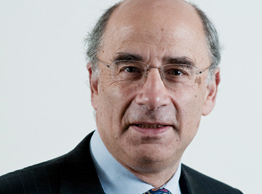
Lord Justice Leveson ; Pic courtesy Leveson Inquiry website

Update: There is a report today (wednesday) on the exaronews website (http://www.exaronews.com ) of today’s hearing where Matt Sprake  defends himself.

 Matt Sprake, the former Met Police forensic police photographer, has been summoned by Lord Leveson to appear  before his inquiry.

This follows the exposure by me on Exaro News website (http://www.exaronews.com)  and with Oliver Wright in the Independent last week.( http://ind.pn/M48suc ) which  revealed his http://newspics.co.uk  website was offering to pay thousands of pounds to police, prison and probation officers for tips on celebs having affairs. There is a new article on the site now.

Just to remind readers – as he has taken it down now – the wording included  the phrases:

Officials are told: “All sorts of people have been paid thousands of pounds by us for giving information that leads to a picture being sold or a story being written, are you a doorman, police worker, civil servant, probation officer, prison officer, nurse? Make some extra money without anyone ever knowing…”

The agency website has endorsements from the picture desk of The People, the red-top Sunday tabloid, OK magazine, the celebrity title, and the Press Association, the national news agency.

In a section headed “news exclusives”, the agency tempts public officials to provide details of “a scandal” or, “where a prominent person is living or what they get up to,” or, “a celebrity having an affair”.

“You can earn yourself good cash now by calling… 24 hours a day and remember, nobody ever needs to know it was you that told us!”

Mr Sprake’s forthcoming appearance was announced on the Leveson inquiry website this afternoon. Among those appearing on the same day – next Wednesday – will be Max Mosley.

Lawyers for the Levenson Inquiry had asked to see the articles on Exaro News and the Independent after they appeared. They have also examined his website.

So next Wednesday Mr Sprake will be able to explain in public exactly what is going on. He has also put a complaint into the Press Complaints Commission against the Independent  about  last week’s article. I look forward with interest to the next event.

Why Margaret Hodge must hold the British Tax Avoidance Corporation to account: Updated

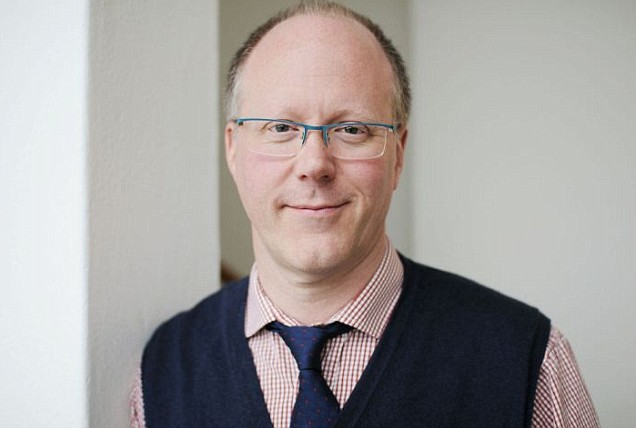
George Entwistle, new director general. Time to tackle tax avoidance? pic courtesy: Metro

On Monday BBC chiefs will appear before Parliament’s most powerful committee, the Commons Public Accounts Committee.

They will be there to answer questions on the vexed question of employing people through personal service companies to avoid paying tax and national insurance at source.

The BBC will be joined be civil servants from Whitehall and local government who have all been exposed of using this device to employ people and avoid paying tax and national insurance at source.

The scandal was first exposed by me on the ExaroNews website (http://www.exaronews.com)  and BBC Newsnight when it was discovered that Ed Lester, the Student Loans chief, had used this device to be paid £182,000 a year.

The furore that followed led Danny Alexander,Chief Secretary to the Treasury, to launch an inquiry which discovered that another 2500 civil servants were using the same device across Whitehall. The review’s findings were also leaked to Exaro and BBC Newsnight.

Less well covered is that the BBC and local government were up to the same thing . Until now both sectors have got away with it. on Monday they can be called to account and should be.

The BBC has enjoyed the protection of Jeremy Hunt, the culture secretary, and as never been required to disclose the full picture.  Indeed the biggest disclosure came from David Mowat, a former member of the public accounts committee, who  found out through a freedom of information request that the BBC employed 3000 people- more than the whole of Whitehall – through personal service companies. And none of these were journalists who are exempt from FOI because they are regarded as ” talent.” So the full  picture is bound to be much,much bigger.

Similarly Eric Pickles, the communities secretary, has not followed through vigorously what is going on in local government.No attempt has been made to probe tax avoidance at the London boroughs of Barnet, Hackney and Hammersmith and Fulham or the blatant disregard for employing people directly on the Isle of Wight.

Monday will be a great opportunity for the terrier instincts of Margaret Hodge, Richard Bacon, Stephen Barclay, Meg Hillier and Fiona Mactaggart to name but a few to ask a few very pointed questions and demand explanations from the BBC and town halls. I hope they will not disappoint and not be put off by Whitehall  sniping about the way they question witnesses.

The BBC after all would not exist if it did not receive licence  fees from taxpayers and even non taxpayers. Its new director general George Entwistle, should make the Corporation becoming more transparent as a priority. Over to you, Margaret.

Since this has appeared a full cast list of people  summoned to appear has been announced. They are:

 Carolyn Downs, Local Government Association, Zarin Patel, Chief Financial Officer, BBC and David Smith, Head of Employment Tax, BBC; Sir Nicholas MacPherson KCB, Permanent Secretary, HM Treasury, Howard Orme, Finance Director, Department of Business, Innovation and Skills, Lin Homer, Chief Executive and Permanent Secretary, HMRC and William Hague, Executive Director, Efficiency and Reform Group, Cabinet Office.

Followers of the story might be interested to know that documents released to me  under Freedom of Information point to Harold Orme being directly connected to the controversial appointment of Ed Lester, head of the Students Loan Company, with the knowledge that he would not have any tax or national insurance directly deducted by the Student Loans Company. This is a good call by the committee.

Exaro  News will have a story up on their website  on Monday evening –  after the committee has met.

Exposed: The Ex Met Police snapper’s website offering “cash for celeb scoops” to public officials

Matt Sprake: Trying Out the PM’s chair in the Cabinet Room in the 1990s while on the Met Police pay roll. Pic courtesy his Facebook page

Given the Leveson Inquiry is in full swing  can  you imagine this appearing on  a website supplying the national media – from the People to the Press Association?

” Do you know of a story, a scandal, something that made you interested, chances are that a newspaper will pay for that information.  Do you know where a prominent person is living or what they get up to, is a celebrity having an affair that you know of, do you know anyone who’s on reality TV?  You can earn yourself good cash now by calling 01277 (deleted) 24 hours a day and remember, nobody ever needs to know it was you that told us!

All sorts of people have been paid thousands of pounds by us for giving information that leads to a picture being sold or a story being written, are you a doorman, police worker, civil servant, probation officer, prison officer, nurse?  Make some extra money without anyone ever knowing…

Never go direct to a newspaper, come to us, it’s what we do, we are better positioned to get you much more cash. ”

The full story  on this is available  at http://www,exaronews.com   and on the Independent at http://ind.pn/M48suc. Since the disclosure the website has been rapidly redesigned and the page taken down but the website page is captured on the exaronews.com website.

Part of his agency’s website is devoted to its “surveillance photography”, offering a menu of services, including “covert foot follows”, “covert vehicle follows” and ”remote technical surveillance”.

“You can utilise the very same skills that are used by the security services and the police,” clients are promised.

“Our surveillance team has worked for and been trained by various police and government surveillance agencies within the UK. If you need it photographed without being seen, we are your experts.”

So what is the  explanation of the managing director  of  http://newspics.co.uk ,  ( one Matt Sprake, whose company is owned by his wife, Marion, described in her Companies House return as a banker.

According to him  the wording on his agency’s website was “just advertising” aimed at the “general public”.

He said that he would have removed it by now but for the fact that his website is “broken” and cannot be edited because the company that created it went bust.

“We are in the final stages of a company redesigning our website,” he said. “If there was a way of changing it, believe me, I would.” That seems to have  happened remarkably quickly after  the story was published.

On the social-media website, Myspace, he puts his income at between £100,000 and £150,000 a year.

Sprake continued: “I used to work for a specialist department at the Met in Scotland Yard looking, basically, at terrorism work. The level I was working at involved very covert stuff.

“I got out after 10 years. You are limited on the number of years you are allowed to do, so I am now doing other work. But I have still got all that training that is very handy to have.”

He also claimed his staff adhered to the Press Complaints commission code and his site promised to do surveillance work which would be covered by the Code.

The PCC were not so impressed – a spokesperson pointing out the code covered editors of papers not agency photographers.

I tried to contact Trinity Mirror publisher of The People- whose editor has already given evidence to Leveson . Their pages are all over his website including the page offering cash to public officials. But answer came there none.

One cannot  wonder why the reputation of the media is at such a low with such behaviour. If Sprake is telling the truth, it seems to me the height of folly and hubris  in these troubled times to put this on a website. If he is not this is exposing something else that is not particularly savoury and very worrying for ethical standards in the media and the people who are supplying him.

Guido Fawkes/Harry Cole v Tom Watson/Sunny Hundal: The changing blogosphere

Paul Staines – aka Guido Fawkes – poshed up for Leveson inquiry. Pic courtesy: intimes.co.uk

Two and a half years ago when this website was set up  blog hits were at best in hundreds worst in tens.

Now blog hits are best in thousands and worst in hundreds. But last week saw a significant turning point. Not only were they a record number of hits that week -but  more important  it is where they were coming from.

Two of the biggest hits in the past – the post on whether Labour could be go bankrupt because of interest payments to Blair’s donors- and Maude’s Madrassa- the story of Francis Maude’s letting arrangement to Tory special advisers – hit large numbers because they were mentioned on Guido Fawkes (Paul Staines) website. I admit the initial success of this ex Guardian hack’s website was boosted by the  free market Tory right.

 Last week the blog revealing  the leaked memo (first and only in full on  http://www.exaronews.com ) from Nick Chapman, chief executive of NHS Direct, admitting they couldn’t get contracts and the excessive strip searching of Afro-Caribbean women  and abusive and appalling treatment of a gay man at  Gatwick Airport were ignored by Guido.

Tom Watson MP in reflective pose.Pic courtesy: The Guardian

Yet because  the NHS Direct memo taken up on Twitter by Sunny Hundal (of Liberal Conspiracy) and Tom Watson MP ( with 25,000+ and 83,000 followers each) the NHS Direct blog – over 5000 and still rising –   is now the first blog beating the Labour Party crisis blog on 4,345. The Gatwick Airport blog -on 2120 was also boosted by appearing on Political Scrapbook and taken up by the Pink Paper and the international gay community.

To me this tells me two things. The right wing’s  dominance of the blogosphere is at an end- it is now a healthy level playing field between the right and left fighting over the political issues of the day.

 Second it raises an interesting thought. If the growth of the blogosphere  fuelled by Twitter and Facebook continues like this over the next two years – are the Leveson# hearings on media control an irrelevance?

The irony is that new formal controls over the official media be in place on a declining industry  while the  expanding blogosphere will become the place where issues are debated. Tom Watson’s followers are almost the equivalent of the number of Independent readers and Guido Fawkes at 75,000 is not far off. I have a far more modest 3142.

I suspect no politician  – Tory, Labour, UKIP or Liberal Democrat – would dare impose controls over the  blogosphere. To do so would risk a Tahrir Square style rising from both Left and Right.

Updated Exclusive:: Home Secretary says Gatstrip scandal will be taken seriously

The disclosures on this website and in the Tribune magazine at the weekend over the strip searching of Afro Caribbeans and the atrocious treatment of a gay man  by border staff at Gatwick Airport will be taken seriously by Theresa May, the home secretary, I was promised today.

Given the widespread interest- with 1700 hits so far and still counting and from the US, Australia and Europe – this is the least I would expect.

I took the opportunity of her appearance at the House of Commons Press Gallery lunch today (Tuesday) to question her about the findings in the report by John Vine, the independent chief inspector of the UK Border Agency.

She seemed not to be quite au fait with the detail but did respond positively to the issue. She said that Mr Vine was meant to be the Home  Secretary’s source for what is happening on the ground at ports and airports and she always took up his recommendations.

 Given that Mr Vine has made it clear that the behaviour there could have breached the Equalities Act that is good news.

She added: ” I always take the recommendations of Mr Vine seriously and in this case I expect the findings to be taken very seriously. We will respond to his recommendations.”

I shall wait the outcome with interest. The next question is what is the position of the Equalities and Human Rights Commission on this scandal. Given that it is headed by Trevor Phillips, of Afro-Caribbean descent, I expect to see some action here very soon.

Scrap red tape, silence a whistleblower

Whistleblowers under threat

 MPs begin to debate the government’s new  Enterprise and Regulatory Reform bill today (monday). Buried in this legislation in Clause 14 is a plan to limit people with employment contract disputes using the whistleblowers law.

The reasoning behind it is explained in the latest House of Commons Library report on the bill. It says:

“In March 2012, the Department issued its annual employment law review which stated: It has come to light through case law that employees are able to blow the whistle about breaches to their own personal work contract, which is not what the legislation (Public Interest Disclosure Act (PIDA)) was designed for.

Clause 14 would ensure that only disclosures that are in the public interest would attract protection under the whistleblowing provisions of the Employment Rights Act,1996.”

Superficially this sounds quite reasonable.  Whistleblowing legislation should not be used for personal contract disputes. But the way the government is going about this it could sound the death knell for potential whistleblowers just at a time when they are most needed.

Think for one second. A company gets a complaint from a whistleblower about a  nefarious practice. What better way to frighten a whistleblower than by going to the courts claiming this is not in the public interest and demanding a hearing before a judge. The company can then rubbish the whistleblower using the absolute privilege afforded by court hearings for maximum publicity  by claiming the complainer is  a bad worker, in breach of contracts etc – damaging the whistleblower’s reputation.

 There then follows a long dispute about what should be a public interest test – since this until now is only used in Freedom of Information Act disputes in tribunals – with different  judges  defining it in different ways. As Lord Touhig, a whistleblower champion said in a Lords debate: ” This would make a field day for lawyers.”

But there could be another agenda. The government’s fast track privatisation programme for public services has already led to  whistleblowers revealing bad practice as shown in the recent private hearing of the House of Commons Public Accounts Committee. There I am told two Tory MPs put pressure on the committee not to hear in public whistleblowers’ allegations about bad practice in A4e, the private work provider, which has £200m of Department of Work and Pensions contracts.

The next day the Daily Telegraph leaked some of  their evidence and Chris Grayling, the minister for work but one suspects sympathetic to  A4e, used an appearance on BBC Newsnight to cast doubt on the motives of the whistle blowers.  Has he got DWP files on them I wonder or did A4e brief his press office or special adviser?

Now the Guardian’s splendid Rajeev Syal is reporting that Osita Mba, who blew the whistle on former Revenue chief  Dave Harnett’s secret  tax deal for bankers Goldman Sachs, has found himself being investigated by the criminal investigations unit of  Revenue and Customs. (see http://bit.ly/Mo5oXF )

It seems to me that people should back the campaign by Cathy James, chief executive at Public Concern at Work (http://www.pcaw.org.uk )  to stop this piecemeal change. At the very least the clause should be redrafted to define what should be excluded as a personal contract rather than submitting everything to a public interest test. Otherwise the public have every right to believe that the government has something very different in mind. 

Lansley’s outrageous ban covering up risks in his NHS reform

Today the information commissioner publishes his findings to Parliament on the outrageous veto by Andrew Lansley in preventing publication of the NHS risk register.(see – report here http://bit.ly/MfEPVi )

The health secretary would have us believe that the public and the press are so naive that they must not be seduced in his words  by ” sensationalised reporting and debate ” of its findings.

In other words this is all right from Cabinet ministers and senior officials to read all the risky details  of his reforms – but the public must be treated like children, not capable of understanding the issues. What patronising piffle!

What I really suspect is that Mr Lansley does not want the public to read the full facts – something that when in opposition his Cabinet colleague, transport secretary,Justine Greening, rightly disagreed when it came to the risks of building a further runway at Heathrow.

But now in government it is of course all different, no one must know the real consequences of Mr Lansley’s decisions. I am delighted that Chris Graham, the Information Commissioner, stood firm on this one.

 But I suspect this decision is all part of an attempt by the government to row back on freedom of information. It fits in with Lord O’Donnell’s claim that if this goes on – it will have a chilling effect on discussion. The establishment both in the form of Jack Straw, Tony Blair and now Andrew Lansley, would love a world where we all lived in deference to ministers and senior civil servants.

No doubt charges for FOI will soon follow. Frankly if the government is planning to revert to a closed society, there is one simple solution. The risk register must be leaked.

Exclusive: Millionaire Francis Maude: the bad bill payer

Francis Maude: Difficulties in paying his taxpayer funded bills on time

Do you fall behind with the gas and lecky?Forget to pay your TV licence and struggle to pay charges? Well spare a thought for poor struggling millionaire Francis Maude who just can’t seem to get his act together when it comes to paying his bills.

The man  was rightly castigated  last week over his ill-judged and downright dangerous public advice to stockpile jerry cans. But there is another side to his character which is equally surprising – his record for paying bills on time.

Hidden on the Parliamentary website following the great expenses scandal is an extraordinary documentation of the time when he owned a flat  in Imperial Court in Kennington, south London between 2007 and 2009. ( anoraks can peruse all Francis Maude’s bills at http://bit.ly/Hbu1Vo )

At the time he was severely criticised by the Daily Telegraph ( see http://tgr.ph/HkjDGC ) for purchasing the flat for £430,000- with a £345,000 mortgage- and claiming all the interest when he owned a house outright in Denny Crescent nearby. As a previous blog disclosed he also got a mortgage on this house and let it out to Tory special advisers – Maude’s madrassa – as it became known.

What the documents also  reveal is an amazing lax attitude to paying his gas, electricity  and telephone bills and service charges.  Not just  the delays in paying out the cash but being threatened with disconnection  and legal action for non-payment.

In August 2007 he was threatened with a termination notice for not paying a £36 telephone bill.

At the beginning of 2009 he received a letter from Kevin Roxburgh, head of energy debt collections, at British Gas because he hadn’t paid his £188.24 gas bill for over a month. The letter asks whether he has payment difficulties and tells him about direct debit.

EDF his electricity supplier also suggests he might like to pay by direct debit because of his overdue payments.

Finally he is threatened with legal action for an overdue bill of over £2600 from his landlords. They write to him warning that his long delay has already led to administration charge of £29.37.

The letter warns:” We request that you settle the amount outstanding within 14 days of the date of this reminder in order to avoid incurring additional costs or further legal action.”

The irony about this is that all his bills were being paid anyway by the taxpayer – he didn’t have to pay a penny as he could claim them back through his Parliamentary expenses.

Yet somehow he couldn’t  get his act together to send them a cheque. Finally the records show that he learns there is something easier called direct debit – and two years after moving into the flat actually sets up direct debit payments for his TV licence and  utility bills. This man is supposed to be a world-class banker -the ex md of Morgan Stanley. And he is charge of getting more efficiency in business payments to the government. God help us.

Why charging for Freedom of Information requests will be utterly wrong

Freedom of Information: Charges will put it under threat

This blog was written for the London School of Economics British politics and policy website (the link is http://bit.ly/H7C8lD) and is now up on the site. I have reproduced it here for my followers who may miss it  at the LSE.

It must be very tempting in these times of austerity for government to introduce charges for freedom of information (FOI) requests. Tempting it might be but it would be utterly wrong.

Giving evidence to the Commons Justice select committee’s post legislative inquiry into the FOI Act, I got the strong impression that some Conservative MPs might want to do this. The example of the Republic of Ireland which has introduced charges for requests, internal reviews and appeals to the Information Commissioner, has provided an excuse.

The fact that the new act has been a resounding success with the public, journalists and also private businesses is not a reason to introduce charges. My reasons for not going down this road are not such much to do with limiting the public’s right to know – although as Ireland has shown – this would be the inevitable consequence. They are more fundamental.

As a taxpayer I am obliged – I have no choice – to fund public services from my income. Therefore if I wish to know whether my money has been spent wisely and people have taken the right decisions – I should have the right to ask questions and ferret for information. As a journalist rather than a private citizen I have more time to do this – it is part of my job – and the information I discover can be communicated to thousands, if not millions, of people.

As one recent example showed – the disclosure under FOI that Ed Lester, the chief executive of the Student Loans Company, had found a legal way to avoid tens of thousands of pounds of tax – it can even lead to alerting ministers to something they were unaware.

To introduce charges would in effect be double taxation. I would be charged once for providing the service and again if I wished to find out what officials and ministers had done with my money. This is why I believe it is unacceptable.

A more subtle variant of charging is a suggestion that private citizens still receive the free service but commercial organisations like the media, private firms and official bodies paid the cost of the request – which could be anything up to £600. Again it would unfair and also unworkable. Businesses, law firms and the media – unless they are near bankrupt – pay their share of taxes to the government and again would be charged twice for seeking to find out how and why their money was spent.

It would also be completely unworkable to run such a two tier system. There is nothing to stop me as a journalist, or indeed any business person, asking a friend to put in a FOI and getting it sent to their address. And there is no way officialdom could find out, unless they subject every private requester to a ninth degree inquisition every time they asked a public body for information.

It would be a nightmare scenario for the public sector to police and make officials extremely unpopular with the general public. It might even lead them to face legal complaints, such as falsely accusing individuals of avoiding charges.

What is required urgently is an extension of the freedom of information act to the private sector when it provides public services. The government has an active policy of encouraging private providers – whether charities, mutual or commercial companies – to provide public services. Francis Maude, the Cabinet Office minister, in an address to the Policy Exchange think tank said that turning state provided services into mutuals owned by the staff might indeed be as widespread as privatisation of state industries in the 1980s Thatcher government.

At present the mechanism for extending FOI to new bodies is rather cumbersome – requiring a designation under the Act by ministers – usually following a consultation period. This is woefully inadequate to cope with a major shift from public to private sector providers in Whitehall, local government and the NHS. One simple solution would be to include a standard clause in any private sector provider contract saying that if the company accepted public money to run a public service they would automatically be subject to FOI requests about that particular service.

No doubt they would be a howl of protest from the business community about new burdens and costs to running the service, but given the multi million pound size of most contracts it would be a small price to pay. And if it was a standard contract it would mean that there would be a level playing field for contractors bidding for the work. It could also be confined only to the services they provided in the public sector and not to normal business contracts.

This would bring within the scope of FOI private train operators and bus companies who take taxpayers subsidies but are at the moment outside the act. It would also encourage these bodies to provide a more efficient service since they would have an incentive not to encounter the wrath of the travelling public every time they failed to provide a public service.

The public could also question and challenge the companies when they cut service provision to prove they had a case and also ask for detailed policy on protecting public safety. Similarly, it would provide the public with some protection as the NHS expands the use of private hospitals for operations as they are outside the scope of the act.

The act does require an overhaul in this area. But MPs on the committee should resist the temptation to call for charges to use the act as this would be unfair to the general public and to taxpayers. The right to demand information on services you are required to pay for without being charged is a fundamental human right that should be non-negotiable, even in the present financial climate.