A senior employment judge has intervened to try and force whistleblower consultant cardiologist Dr Usha Prasad, who is now ill, to attend the Croydon costs hearing on Wednesday where she will face a £180,000 bill after losing an employment tribunal case.
Judge Omar Khalil has ignored a letter from her GP warning that she is under severe mental stress after years of appearances before employment tribunals, being referred to the General Medical Council which exonerated her but then lead to an internal inquiry run by the Epsom and St Helier University NHS Trust which tried to brand her as ” unfit for purpose” as a human being because it had to say she was an excellent doctor.
Her disclosure that the trust covered up an ” avoidable death” of a heart patient at the trust by not reporting it to the coroner was confirmed by Dr Richard Bogle, the head of cardiology , during an employment tribunal hearing.
But judge Tony Hyams-Parish, mindful that there are no records kept of tribunal hearings, expunged this disclosure in his judgement which rejected all her claims.
Dr Usha Prasad has asked for a postponement because she doesn’t feel well enough or capable of defending herself against expensive lawyers hired at the taxpayers’ expense by Epsom and St Helier University NHS Trust. She hasn’t the money now to employ a barrister to defend her at the hearing.
Dr P Bailey, her GP in Wakefield has written to the costs tribunal saying “”She is experiencing physical and emotional signs of distress…. she does not feel in an appropriate state of mind at present to represent herself in the process currently.”
“… I would be grateful if her current mental state was taken into account regarding scheduling and potential postponement.”
The regional judge and tribunal are refusing to take any notice of the GP’s plea.
In reply Lynn Head, for the tribunal says today:
“Acting Regional Judge Khalil has asked me to write to the parties. The claimant’s application to postpone the Costs hearing listed for 23 and 24 August 2023 is refused. The Hearing has been listed since 8 March 2023 and the dates should thus have been reserved from receipt of that notice. “The Tribunal has previously addressed that an outstanding EAT appeal relating to liability is not a reason in itself not to proceed with a Costs Hearing. The question of enforcement of any Costs Order (if made) is a separate consideration pending an outstanding appeal. “The claimant’s request for notes has also received judicial consideration previously, more than once. No details have been proved of the claimant’s important meeting.
“The claimant could have provided dates of unavailability of his counsel (shortly after the Tribunal indicated it would be listing a Costs Hearing (17 February 2023), as the respondent did, but the claimant did not do so. The Tribunal has considered the claimant’s medical evidence dated 18 August 2023 but in the light of the listing of this Hearing since 8 March 2023, the claimant could and should have made arrangements for alternative representation if her previous Counsel was unavailable. A postponement would cause a considerable delay before the panel could reconvene. That is not an overriding objective. The Liability Hearing took place in November 2021.” At this stage it is not clear whether Dr Prasad can or will attend the hearing. The presiding judge will then have to decide what to do.
Please donate to Westminster Confidential to allow me to continue my forensic reporting.
Jessica Blackburn is the senior solicitor and driving force behind the bid by Epsom and St Helier University NHS Trust(ESHUT) to get record £180,000 costs against Dr Usha Prasad, the whistleblower cardiologist who was dismissed by the trust for her disclosures.
As reported earlier a hearing like this is extremely rare, as in 99.95 per cent of all employment tribunal cases no complainant pays any of the employer’s costs – much to chagrin of big employment law firms like Capsticks.
She was educated at the highly selective Wallington High School for Girls and graduated from the University of Southampton Law School in 2014. She took two postgraduate legal practice courses at the private University of Law in London and got a distinction. She was a trainee solicitor at RadcliffesLeBrasseur , a law firm now part of Weightmans. She took a job as a qualified solicitor with Capsticks in 2018 and was promoted to a senior associate three years later. A native English speaker, among the languages she has is elementary knowledge is Yoruba, a West African tribal language. She also played a senior role in Capsticks celebrations of Black History Month last year.
Claire McLaughlan ,chairs MHPS inquiries
At Capsticks she specialises in defending health trusts and the police and cites dealing with whistleblowers as one of her specialities. She is also involved in advising trusts running complex doctor cases under the national framework, Maintaining High Professional Standards in the Modern NHS – internal hearings like the one already held by ESHUT over Dr Usha Prasad chaired by Claire Mclaughlan that came to the bizarre decision that she was “unfit for purpose”.( see my blog here and here.)
Her top tribunal case cited on her page is one heard by Judge Auerbach in 2021 between Mr Abgeze and Barnet, Enfield and Haringey Mental Health Trust ( judgement here) over the controversial issue of people’s rights in zero hours contracts. Mr Abgeze, who was on a zero hours contract, was suspended and then reinstated by the trust. But because he was on a zero hours contract he was unable to apply for shifts and claimed compensation. Judge Auerbach threw out his claim.
She writes: “This will be a welcome decision to NHS Trusts, and other organisations that have similar casual worker arrangements.”
Certainly as this week’s cost hearing approaches there is a big stand off between her and Dr Usha Prasad who under increasing stress and suffering health issues and asked for a postponement. But it looks like that either Jessica Blackburn doesn’t believe her (despite a doctor’s note) or does not want to believe her and doesn’t want her schedule for the historic case delayed.
Forensic details of Usha Prasad’s finances demanded by Capsticks for the health trust
This is the letter she sent demanding details of Dr Prasad’s finances to make sure she will be ready to pay the £180,000.
“We write in respect of the hearing to determine the Respondent’s costs application against you listed by the Tribunal for 23 and 24 August 2023. The Trust has incurred in excess of £150,000 plus VAT in legal costs in defending your claims (2 and 3), which were all dismissed.
On 19 June 2023, we wrote to you in the following terms:
“As part of the Tribunal’s consideration of the Respondent’s costs application, the Tribunal may take into account your financial means. Therefore, please can you disclose by 23 July 2023, any evidence of your means if you intend to rely on this at the costs hearing, so that this information can be contained within the costs hearing bundle.”
To date we have received nothing. We are not clear whether this is because, if you are ordered to pay costs, that your position is that you would be financially able to meet any order made by the Tribunal, or, on the other hand that you have elected not to disclose any information.
We remind you that under Schedule 1, rule 84 of the Employment Tribunals (Constitution and Rules of Procedure) Regulations 2013, the Tribunal may (but is not required in all circumstances) take into account a paying party’s ability to pay.
Ability to pay
84.In deciding whether to make a costs, preparation time, or wasted costs order, and if so in what amount, the Tribunal may have regard to the paying party’s (or, where a wasted costs order is made, the representative’s) ability to pay.
If you intend to argue (or might do so, depending on the level of costs awarded) that you would not be financially able to meet the terms of any costs award, if so ordered, the Respondent requests you urgently provide supporting information and evidence of the same.
This should include:
· information about your present level of income and remuneration as well as of what you have earned since the liability judgment; any property you currently own (whether in whole or in part, whether land, buildings or otherwise), any investments, and the content of any bank / building society or similar accounts and any other information relevant to your ability to pay an award of costs. This information should cover assets worldwide not only in the UK.
· You should also provide information and evidence regarding your financial commitments such as rent/ mortgage.
· Evidence to support the information provided should be provided.
· As regards your employment related earnings, pay slips, P60s, tax returns or record of invoices paid through agencies or similar and any current or recent contract of employment, or for your services.
· As regards bank accounts, savings and investments, including ISAs, this should include copies of your recent bank (etc) statements. Downloaded statements or screenshots from a bank (etc)’s website are acceptable.
· The Tribunal will need to understand your current financial commitments, therefore if you have any loans, mortgages, or other regular payments made such as rent or utilities, documents in support of the same (e.g. mortgage statement, loan agreement/payment schedule, rent payments) should be provided.
· Where you own one or more properties you should identify the approximate current value of the property concerned and the balance of any mortgage.
· Please can you also confirm your current employment/engagement status, including whether the number of hours worked and whether that if permanent or temporary (and if so on what basis) and your residential address.
Threat judge will be told if she does not provide the information
The Respondent will draw this letter to the Tribunal if the information and evidence requested is not supplied prior to the hearing but where you contend (whether in writing, or at the hearing) that your means should be taken into account by the Tribunal. It is important that the Respondent understands your position in good time prior to the hearing. In addition, we urgently request confirmation of your position regarding your financial means in order to address this issue in written submissions, the absence of which is delaying completion.
We look forward to receiving confirmation of your position, together with the requested documentation where applicable, as a matter of urgency.”
When she sent the doctor’s note Jessica Blackburn ignored it. You can see what detail Capsticks want – and other whistleblowers facing cost hearings say they have not received such detailed demands.
I informed Jessica Blackburn I was proposing to write a profile of her. Capstick’s press office replied that she could not comment at this time.
Please donate to Westminster Confidential so I can continue my forensic reporting.
It is a fact that among the tens of thousands of employment tribunals held every year claimants do not have to pay their employers costs in 99.95 per cent of all cases.
Therefore it is absolutely extraordinary that Dr Usha Prasad, a whistleblower cardiology consultant at Epsom and St Helier University NHS Trust is facing a special costs tribunal next week for an astonishing £180,000 claim from her employer at the London South tribunal in Croydon.
Even in rare cases where costs are sought the maximum is £20,000 and the level of proof has to be very high. The claimant has to be seen to have been acted “vexatiously, abusively, deceptively or otherwise unreasonably” or has brought proceedings deemed to be misconceived.
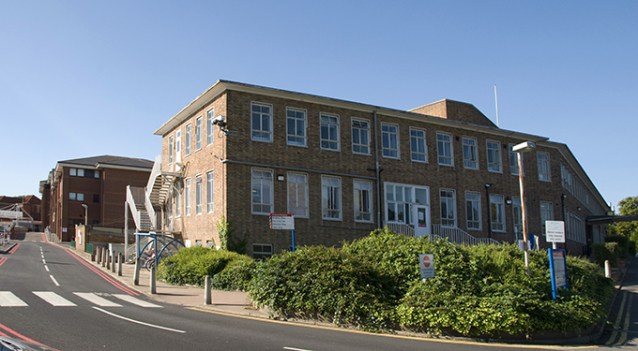
Epsom Hospital part of the Epsom and St Helier NHS Trust
However it is looking like that where whistleblowers are sacked and go to an employment tribunal more and more judges have agreed to hold cost hearings so the public body can recover some or all of its costs. And lawyers acting for these bodies threaten huge costs against whistleblowers to deter them from proceeding further. This has been used against Dr Chris Day in his decade long battle against the Health Education Executive and Greenwich and Lewisham NHS health Trust over patient safety and , against Dr Duffy, author of ‘Whistleblowing in the Wind’. Non NHS whistleblowers also face this. More recently this involved a case against Alison McDermott, a management consultant, at Sellafield and the Nuclear Decommissioning Authority (NDA), who exposed a raft of bullying, harassment and other grave failings at the nuclear plant.
Alison then faced a £40,000 cost hearing – both bodies sought the maximum figure – with judge Lancaster refusing to accept she was a whistleblower- only to have his decision declared ” unsafe” by a judge at the high court. He determined that the costs were unsafe and must be ‘quashed.’ HHJ Auerbach also overruled Judge Lancaster and confirmed that Alison was whistleblower. A FOI has revealed that Sellafield and the NDA have spent an extraordinary sum – £660,000 resisting that she was a whistleblower.
Unbelievably Sellafield and the NDA have just sought to reinstate the cost hearing again with the same judge who made the ” unsafe” costs ruling which has already been thrown out by the higher tribunal. Which of course sends a chilling message to any would be whistleblowers at the most dangerous nuclear site in Western Europe.
In Dr Usha Prasad’s case the trust and its lawyers, Capsticks, have gone one step further by getting a hearing next week wanting the judge to order a £180,000 costs finding against her.
Now in researching whether this has happened before – the only case I found which is highlighted by the Association of Costs Lawyers is Gosalakkal v University Hospitals of Leicester NHS Trust, where the paediatrician who made a series of whistleblowing claims walked out of the costs assessment hearing and ended up being ordered to pay £82,000 to the trust. This went to appeal in 2019 and the judge was criticised for misunderstanding the whistleblowing nature of the case and the initial award was quashed. It turned out there was a breakdown of relationships among consultants there as well, a disciplinary hearing and he was dismissed. He left Leicester and got a new job in the United States.
Judge Heap ruled in April 2017 that she could do this citing rule 78 of tribunal regulations set in 2013 which allows her to exceed the £20,000 limit by having a detailed costs assessment or send it to a county court to decide. I am pretty sure Capsticks will be citing these rules and the case next week.
I am sure the Association of Costs Lawyers would have highlighted any higher settlement than this so this will make the Dr Prasad hearing a new record for tribunals pursuing whistleblowers for costs. The biggest sum ever awarded at an ET tribunal to an employer was £432,001.85 in a dispute between Copthorne Hotels and a Mr Tan who had withdrawn any whistleblowing claims.
The problem for Dr Prasad is that these hearings specifically rule out discussing the merits of previous tribunal hearings in her case. She has had enormous support from other practising colleagues at the Epsom Trust trust. You only have to look at a website to see the appreciation of her work at Pinderfields General Hospital in West Yorkshire to see pages of praise from patients. These were made while the case against her was being pursued by the Epsom and St Helier NHS Trust.
She has still to await the official result of an employment appeal tribunal hearing against her case claiming perversity and bias and error of law by the judge involved ( see below) and the trust has secured a costs hearing in just over five months while the average wait for the overloaded employment tribunal system to hear a case is now 335 days. She has been refused access to the judge’s notes to defend herself and her barrister who appeared for her previously is not available to defend her.
Judge Tony Hyams -Parish
The judge who heard her case Tony Hyams-Parish, threw out all “her allegations of victimisation, sex harassment, and sex and race discrimination” and ignored in his judgement the admission from the trust that it had failed to report to the coroner an ” avoidable death” of a heart patient treated by another doctor and tried to get her to change a report on the incident. My reports of this part of the hearing is the only record that it happened. See it here and here.
Capsticks have seized on this to write to her saying :” The Respondent has incurred very substantial costs indeed in defending the unmeritorious proceedings, of in excess of £150,000 plus VAT. The costs incurred correlate to the Claimant’s unreasonable conduct and the unmeritorious nature of her complaints.”
What is also missing is that the trust put in 43 complaints to the General Medical Council to build up a case against her.. Every one of those complaints was thrown out by the GMC after a highly skilled cardiologist looked at them and she was automatically approved to continue working as a doctor without any further revalidation.
The BMA despite receiving letters of support from her medical colleagues has refused to give her any financial backing to fight this hearing, citing that it did not have a 51 per cent or more chance of success. In my view that is short sighted as far as I can see the hearing is about the costs incurred by the trust in fighting a whistleblower case and if they do not challenge this, they are leaving all their members to be hung out to dry by NHS trusts.
Not to put to fine a point on all this my thoughts are this has all the hallmarks of being a ” Kangeroo tribunal ” next week where a litigant in person, an excellent doctor, is being arraigned by legal heavyweights with little chance of being able to defend herself. Let’s see if this is true next week
Please donate to Westminster Confidential so I can continue my forensic reporting.
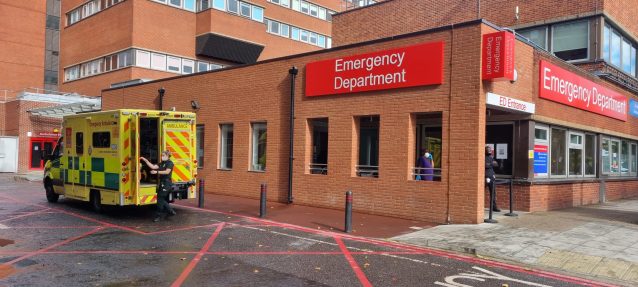
St George’s University Foundation Trust’s A & E department Pic credit: health trust
If you thought the NHS was at breaking point and want to know why – the National Audit Office have today provided a handy fact and figures guide to the decline of the country’s most cherished service.
A new report from Parliament’s financial watchdog charts the scale of both the failure of the NHS to respond to emergencies fast enough and the unprecedented demand from the public to use its facilities in the 13 years the NHS has been run by the Tories and the coalition government.
These are the startling figures:
711,881 A&E patients waiting over four hours from arrival to be admitted, transferred or discharged in December 2022, an all-time high. Since fallen to just over 550,000 in March this year.
90,998 ambulance handovers to A&E taking longer than 30 minutes in March 2023, equivalent to 25.9% of all ambulance handovers
32.0m reported number of appointments in general practice provided in October 2022, an all-time high, compared with 27.1 million reported in October 2018
92.3% general and acute hospital beds occupied during Q4 2022-23,representing record levels
88 seconds mean time to answer 999 calls related to health issues in December 2022, an all-time high
July 2015 the last time the NHS met its target for 95% of A&E patients to be admitted, transferred, or discharged within four hours of their arrival
8.4 million 111 calls answered within 60 seconds in 2021-22, compared with 11.2 million to 13.3 million between 2014-15 and 2020-21
1.27 million full-time equivalent NHS staff in February 2023, compared with the most recent low of 0.96 million in June 2013
£21.5 billion estimated annual cost in 2020-21 of providing the services reviewed in this report
Big variations in different regions in England
Delving deeper into the figures there are big variations in different regions of the UK. For example those being admitted, treated and discharged from A&E within four hours varied between 67.9 per cent in the East of England to 75.9 percent in the South East – both noticeably lower than the standard 95 per cent treated in that time just after the Tories got into power in 2011.
Similarly among ambulance response times there were wide variations. In 2021-22, the mean Category 1 (life threatening incidents like strokes and heart attacks) incident response time for the London ambulance service was 6 minutes 51 seconds compared with 10 minutes 20 seconds for the South-West ambulance service.,
In the same year the mean Category 2 incident response time for the ambulance service in the Isle of Wight was 26 minutes 20 seconds, compared with 1 hour 1 minute 57 seconds for the South-West ambulance service.
Some other points emerge why this is happening. The growing elderly population and general population increase in the UK is increasing demands on the NHS and effects of the Covid pandemic has left its mark.
More staff recruited but more off sick from stress
The government can claim it has recruited more NHS staff, including GPs and ambulance drivers. But this has been offset by more staff going off sick and more staff leaving the NHS because they can’t cope with the workload. I should not think the government’s attitude to keeping down pay rises in the middle of a cost of living crisis has helped either.
The government is promising a great £2.5 billion recovery programme and has allocated the extra money. But the NAO report says:
“More people than ever before are receiving unplanned and urgent NHS care every day. To support these services, the NHS is spending increasing amounts of public money and employing record numbers of people. Nevertheless, patients’ satisfaction and access to services have been worsening, suggesting there is no single, straightforward solution to improving what is a complex and interdependent system.”
The real test will come next winter -since the government is promising much better services by March 2024. If it fails it will just add to the multiple problems facing this government and increase the distrust between the public and politicians.
Please donate to Westminster Confidential to allow me to continue my forensic reporting.
A preliminary two day employment tribunal hearing has led to fresh revelations about the national role of one of the NHS’s top law firms, Hill Dickinson, that acted for Health Education England against whistleblower junior doctor, Dr Chris Day, in a case that has now been ongoing for 8 years and was also against the South London Trust Lewisham and Greenwich NHS Trust.
Day alleges Hill Dickinson failed to disclose over 200 commissioning contracts between Health Education England and NHS Trusts around England including a contract with Lewisham and Greenwich NHS. The significance is that these contacts proved Health Education England’s status as a second employer of junior doctors.
This is something that Health Education England and Hill Dickinson spent 4 years denying, between 2014 and 2018, at huge expense to the taxpayer in order to argue junior doctors out of whistleblowing protection.
This was in order to stop Dr Chris Day’s case ever being heard. The Tribunal were told that not one of these contracts was disclosed in the litigation and were obtained in 2019 by a freelance journalist, Tommy Greene who was writing about the case in the Telegraph. The scandalous focus of the hearing was that Hill Dickinson profited from not disclosing the contracts in litigation arguing that it was fanciful for Day to assert HEE as an employer of doctors.
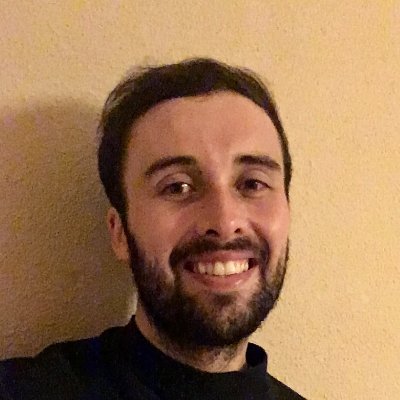
Tommy Greene freelance investigative journalist Pic credit: Twitter
The Judge was told that Tommy Greene had also found that Hill Dickinson were paid handsomely to draft the very contracts that were not disclosed most notably the one between HEE and Lewisham and Greenwich NHS Trust.
The Judge was referred to a complaint to the legal regulator from Sir Norman Lamb and Tommy Greene that set these details out.
And a debate in Parliament where the 2 MPs Justin Madders and Sir Norman Lamb further explored the matter;
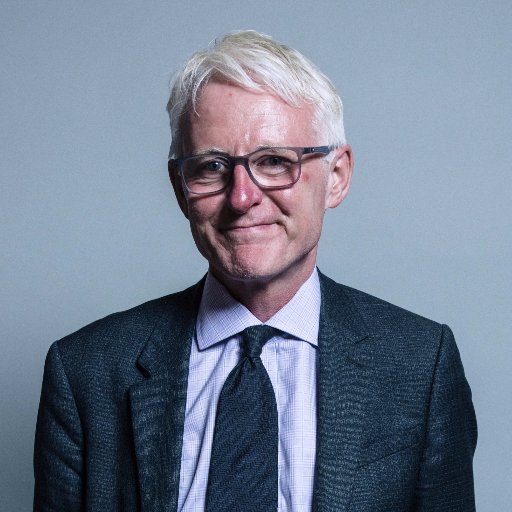
Sir Norman Lamb
Justin Madders stated;
“Health Education England effectively sought to remove around 54,000 doctors from whistleblowing protection by claiming that it was not their employer.”
Sir Norman Lamb stated;
“Is the hon. Gentleman aware that the contract between Health Education England and the trusts, which demonstrates the degree of control that Health Education England has over the employment of junior doctors, was not disclosed for some three years in that litigation? It was drafted by the very law firm that was making loads of money out of defending the case against Chris Day. I have raised this with Health Education England, but it will not give me a proper response because it says that the case is at an end. Does the hon. Gentleman agree that this is totally unacceptable and that it smacks of unethical behaviour for that law firm to make money out of not disclosing a contract that it itself drafted?”
Dr Day has fought an eight year battle with the Lewisham and Greenwich NHS Trust and Health Education England over protected disclosures about patient safety in the intensive care unit at Woolwich Hospital which associated with two avoidable deaths.
He recently lost a case against the trust despite it being revealed that hundreds of emails and documents had been withheld from him including notes of a crucial trust broad meeting which discussed and decided the fate of his case. Some 50,000 emails involving his case were also destroyed by a senior trust official, David Cocke, during the hearing. He was also due to be a witness in the case but never gave any.
This new hearing has been brought by Dr Day over ” wasted costs” in an earlier hearing after he was pressed to agree to a settlement with the trust which exonerated the NHS or face huge costs which would have lost him his family home.
Day was arguing that had he known the truth he would not have agreed to three separate compromise agreements made with the NHS, one of which protected all lawyers in the litigation from wasted costs stemming from misconduct and another that paid Day a £55k contribution of his legal costs which was only a fraction of what he spent resisting the false arguments in this case on HEE’s employer status.
At this hearing Day asserted that the settlements should be set aside after new information came to light following a freedom of information disclosure to investigative journalist Tommy Greene. The Judge at the hearing was also taken to references made by Tommy Greene and Sir Norman Lamb to fraud and other offences based on a legal opinion that had been instructed by Tommy Greene.
In this hearing the Judge only had to decide whether Day’s wasted cost claim against Hill Dickinson was strong enough to progress to a full hearing where Hill Dickinson would be subject to a disclosure order for all relevant documents and emails relevant to this dispute. Hill Dickinson argue the settlement agreements should prevent the case progressing to full hearing.
Andrew Allen KC
The hearing revealed that Hill Dickinson were paid to re-draft contractual agreements for 200 other trusts as well as Lewisham and Greenwich. The contract with highest values was revealed as £79m. As Andrew Allen argued: “The LDA disclosed nearly three years after the 2015 strike out hearing,(an outdated LDA not drafted by Hill Dickinson), showed that the 2nd Respondent[ Health Education England] was responsible for substantial terms under which the Claimant”. This was a position that had been plainly denied on multiple occasions in several courts. Andrew Allen KC continued;
” The entire basis for the strike out application had been false. The argument run by the 2nd Respondent that it was ‘fanciful’ to suggest that the party which substantially determined the terms and conditions of the Claimant’s engagement was or could have been the Respondent was completely wrong.”
Extraordinarily Hill Dickinson claim that the lawyers representing Health Education England in the case did not know about the new agreement and even other lawyers working for Hill Dickinson didn’t know about it.
Andrew Allen KC said: “Had the Claimant known then what he knows now, he would not have entered into an agreement which could stop him applying for costs against Hill Dickinson. It is in the interests of justice to permit the Claimant to progress this application. His full skeleton argument ishere.
Angus Moon KC pic credit: Sergeants’ Inn Chambers
Mr Angus Moon KC for the Health Education England argued that the non disclosure of the document was not relevant to Dr Day’s whistleblowing case. made no material difference to his case, and to throw out the agreement would break the finality of all agreements reached in courts. He also warned the press and the public reporting and observing the case that any reference to Hill Dickinson should not suggest that they had done anything wrong. He wanted Dr Day’s application struck out while Mr Andrew Allen, KC made it clear that this should not happen as the preliminary hearing could not investigate nor discuss the actions of Hill Dickinson without a full hearing at the tribunal.
Dr Chris Day’s Crowdjustice page explains more about what this hearing against Hill Dickinson was about with a link to the legal paper including Andrew Allen KC’s skeleton arguments. the link is:
Dr Day has recently published a Linked In article explaining the twists and turns of his 8 years of whistleblowing litigation. The link is here.
Background note: Hill Dickinson is a 212 year old law firm, founded in Liverpool and now a big international firm. Its famous cases included acting for the White Star line, owners of the Titanic when it faced claims in the US courts after it sunk and for Cunard, owners of the Lusitania torpedoed by a German U boat in 1915.It also employed one of the first women to become a solicitor, Edith Berthen, in 1927.
|Please donate to Westminster Confidential to allow me to continue my forensic reporting
A high powered peer review of the Parliamentary Ombudsman has exposed the hypocrisy and double standards of the present UK government towards people having the right to redress from bad and unfair public and NHS treatment.
The report released from an international panel of Ombudsmen , an academic and a UK housing ombudsman concludes with a polite but damning assessment of the failure of the government to keep its word to strengthen the Ombudsman’s powers. Members of the panel included both the Greek and Israeli Ombudsmen and a respected academic, Professor Robert Thomas, Professor of Public Law, University of Manchester.
The UK is a member of the Council of Europe Venice Commission which lays down what are known as the ” Venice Principles” – an international standard to guarantee the independence of the Ombudsman and the human rights of people to have direct access to the Ombudsman to make complaints about their treatment by public services.
The UK then co-sponsored a UN resolution incorporating these standards for the entire world – telling every country that Britain was in the lead on this issue.
But then under successive Tory governments of Boris Johnson, Elizabeth Truss and Rishi Sunak nothing has not only been done but ministers have taken active steps to thwart reform.
The most obvious example is Michael Gove, who used his power in the Cabinet Office, to block any bill-even a draft bill- coming before Parliament to the despair of the Commons Public Administration and Constitutional Affairs Committee (Pacac) which under a Tory MP wanted this to happen.
The situation is remarkably similar to the government’s attitude towards the UN Convention on the elimination of all discrimination against women and girls (CEDAW) which Margaret Thatcher ratified in 1986 and had still not been properly implemented 40 years on . This is now the subject of a review from the convention in Geneva which criticises the UK for not implementing it properly and is demanding answers.
The conclusions of the peer review couldn’t be clearer:
Professor Rob Thomas Pic credit: Administrative Justice Council
“The ‘Venice Principles’ lay down a set of international standards and principles on the protection and promotion of Ombudsman institutions. These have been accepted by the UK, as a member of the Venice Commission of the Council of Europe in 2019. They were also adopted by the UN in a motion co-sponsored by the UK Government in 2020.
” In several respects, PHSO’s legal framework complies with the ‘Venice Principles’, but not in other respects. PHSO’s statutory framework is now out of date and widely seen as being unnecessarily restrictive. PHSO is also out of line with other UK Ombudsman offices, which possess powers that PHSO does not. “This means that citizens in some parts of the UK do not have the same rights as others. We are aware that reform of the Ombudsman is a long standing and unresolved issue, although it has become an increasingly urgent matter which makes the work of PHSO more difficult. PHSO is doing everything it can reasonably do to make the argument for reform. What is required is action from the UK Government and Parliament. Any reform must maintain PHSO’s direct reporting line into Parliament to preserve its absolute independence from Government.”
Andreas Pottakis, Greek Ombudsman and President the International Ombudsman Institute -Europe
The report backs this up with a traffic light (red, amber, green) system of points where it measures the consistency and performance of the Ombudsman with the Venice principles.. Nearly all the red and amber points are caused by the failure of the government to legislate to strengthen the Ombudsman.
The government does not meet the principle that “Any individual or legal person, including NGOs, shall have the right to free, unhindered and free of charge access to the Ombudsman, and to file a complaint.” Instead a complaint has to be filtered by an MP or in the case of the NHS there has to be a “safe space” for administrators to look at the complaint before the Ombudsman can act.
There is no legal provision to protect whistleblowers who contact him. He, unlike his Welsh, Scottish and Northern Ireland Ombudsmen cannot initiate investigations. It is not clear whether he has full powers to force people to respond to him and certainly his recommendations don’t have to be followed by the government if he finds maladministration. There is not proper protection for his position by law and even the recruitment of a successor is limited, so not all people can apply.
Venice Principles give Ombudsman right to recommend changes to the law
The Venice Principles give him the right ” to have the power to present, in public, recommendations to Parliament or the Executive, including to amend legislation or to adopt new legislation” and this is definitely not allowed in England – otherwise he could go further on the case of the 50swomen who lost their pensions for up to six years.
Now you might think the Ombudsman would make a great deal out of this report to press the government to expand his powers or show up ministers for failing to keep their obligations to an international agreement they signed.
But the heading on his website is “World’s first official international ombudsman review finds UK service is robust and good value “. Yes the report does make good points about improvements in the running of the Ombudsman’s |Office but its fundamental objection is given muted coverage – buried down in the copy.
Further down the press release Rob Behrens, the Parliamentary Ombudsman, says: “The peer review rightly says that the UK is out-of-step with other modern Ombudsman services in terms of our statutory framework. Without powers of own initiative, I am hamstrung from investigating many systemic issues that no one is looking at. Legislative reform of the UK Ombudsman service would mean fewer barriers to justice and more opportunities to prevent injustice happening in the future.”
I think a more gutsy Ombudsman would fight his corner better -particularly as this government is on the back foot when it comes to defending decent public services and upholding standards in public life.
A more cynical explanation is that the government don’t want the public to have greater rights to complain as they are fearful of more bad administration and scandals coming to light But they want the rest of the world to think Britain is a beacon of good government in this area -knowing this is a lie.
Please donate to Westminster Confidential so I can probe reports like this and continue my forensic reporting.
An employment tribunal under Judge Anne Martin has thrown out whistleblower Dr Chris Day’s claims against the Lewisham and Greenwich NHS Trust after an eight year battle about patient safety at the intensive care unit in Woolwich Hospital.
In a bizarre ruling the judge has managed to discredit the evidence of Dr Day’s witnesses, including the present Chancellor of the Exchequer, Jeremy Hunt and two very senior medical experts.
She glossed over the disclosure of the deliberate destruction of 90,000 emails by the NHS Trust, which should have been provided as more evidence of what happened during the eight year long dispute.
She played down false evidence given under oath from the trust’s chief executive, Ben Travis, that there was no record of a board meeting which discussed his case and approved the settlement when a note of the meeting came to light. Evidence here.
She is remarkably sympathetic to David Cocke, the associate director of communications at the trust destroying the 90,000 emails, which is a criminal offence, and accepted the excuses of the NHS Trust to avoid him attending the court where he would be cross examined.
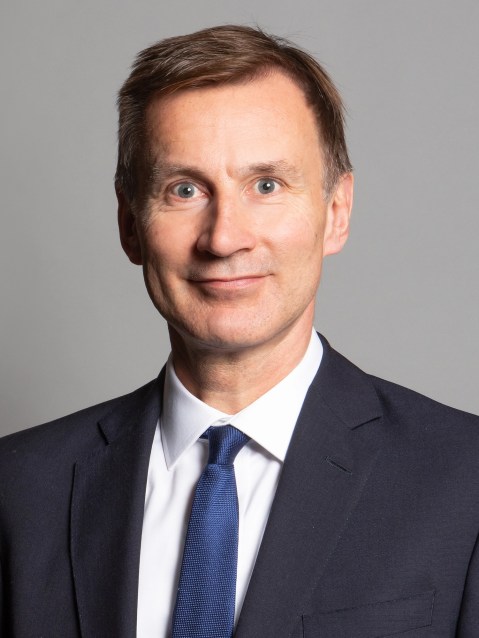
Jeremy Hunt; Official Portrait
She did have the opportunity to strike out the trust’s defence midway through the hearing when it became clear that large volumes of potential evidence had been withheld and destroyed but decided there was enough evidence to continue the case. Now with this judgement we know why – perhaps she didn’t want to hear anything else that would prevent her finding for the trust.
Despite a long rambling 67 page judgement Judge Martin’s findings are as notable for what they omit as much as what they disclose and seems to cast doubt in one instance on the integrity of Dr Day while accepting at face value anything put forward by the trust.
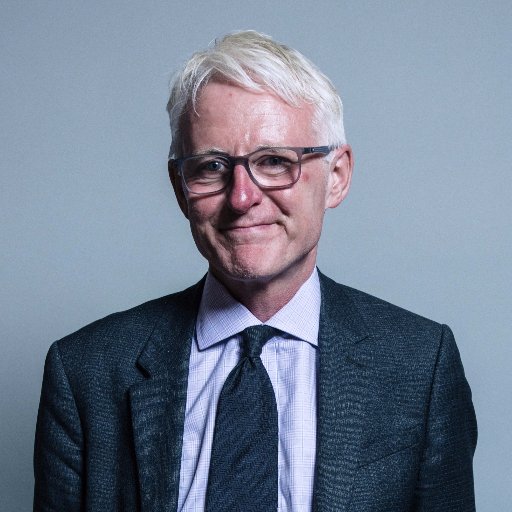
Sir Norman Lamb
Dr Day was backed by two prominent politicians Jeremy Hunt and Sir Norman Lamb, a former health minister. Early in the judgement she disposes of Jeremy Hunt’s evidence by saying ” it relates to what he was told by the Claimant about the protected disclosures he had made. It does not refer to the statements made by the Respondent which are the subject of this hearing. The Tribunal does not understand why his witness statement was put forward.”
This odd statement by the judge seems to suggest that Dr Chris Day told Jeremy Hunt t what to say – which I find hard to believe. I think Jeremy Hunt can make up his own mind and wouldn’t have given that statement if he hadn’t thought something was wrong. Sir Norman Lamb who was very vocal about the trust’s failings in treating Dr Chris Day – enough to want an inquiry – is said by the judge to have been treated ” fairly” by the trust.
Dr Megan Smith
The two medical witnesses Dr Megan Smith and Dr Sebastian Hormaeche were also dismissed as biased because they were supporters of Dr Chris Day’s whistleblowing activity. In fact Dr Day has never met Dr Megan Smith. She effectively demolished the case provided by the trust’s ” independent” consultant Roddis Associates, that staffing levels at the intensive care unit were adequate by quoting the national guidelines. She told the hearing;“You would not find an anaesthetist or ICU doctor in the country who would accept those ratios. There was a clear and present danger to patient safety – no question about that.”
Yet this fact- it is fact not a campaigning point by Dr Day – is ignored completely.
She said: “I have been a member of my hospital’s Serious Incident Review Panel and am currently the mortality lead for the department of anaesthesia with responsibility for investigating any patient deaths. I am also a practising barristerand I carry out expert witness work (primarily in the field of clinical negligence) for”. She linked Dr Day’s safety concerns at the ICU to the two deaths there.
When it comes to the treatment of Mr Cocke the judge almost turns somersaults to protect his activity. The passage where she describes him shows up her unconscious prejudice in favour of the trust.
“It was Mr Cocke who opened this can of worms. It was he who contacted Dr Harding [one of the doctors that Dr Day raised the issue of the icu) and he who forwarded the emails provided by Dr Harding to the Claimant. He has been open about deleting the documents.
” It was not a situation where he owned up only because he had been found out. This does not strike the Tribunal as the actions of someone who is mindset on concealing documents and lends some credence to his explanation.””
And on his non appearance:”The Tribunal’s view at that time was that considering the medical evidence from Mr Cocke’s GP there was no medical reason Mr Cocke could not give evidence and if he did not give evidence then this was a decision of the Respondent. Further medical information was then obtained which said that Mr Cocke was too unwell to attend to give evidence. Mr Cocke did not give evidence. On balance the Tribunal is satisfied that Mr Cocke was unfit to give evidence. “Whilst the members of this Tribunal are not medically trained, it appeared that the apparent contradictions raised by the Claimant were indicative of a progressing mental health issue and this taken together with the irrational act of deleting emails points to Mr Cocke being quite unwell especially as it was he who first provided extra documents that had not been disclosed. We do not doubt that Mr Cocke is ill, but accept that there is no independent medical information explaining the nature of his illness and how it manifests.”
First of all it remarkably prejudicial for a judge to describe the unearthing of documents that should have been provided four years ago in discovery as “a can of worms” and secondly it is remarkable for a judge to decide to excuse a criminal act as a mental health problem. That seems a job for a psychiatrist not a judge who admits she has no medical expertise.
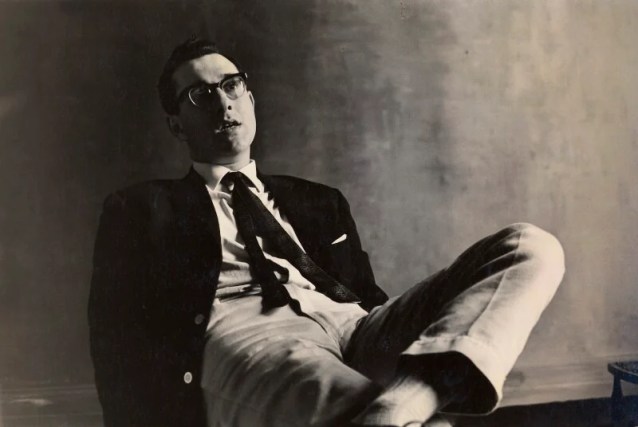
Harold Pinter: Pic Credit: National Portrait Gallery
Pulling this altogether this hearing would make a splendid play for the Theatre of the Absurd – it reads a bit like a plot by Harold Pinter than a serious contribution to judicial case law..
I hope some playwright considers putting together a play or TV drama on Dr Day’s epic eight year struggle for justice for patient safety. It should be dedicated to the two people who unfortunately died at Woolwich Hospital ICU and whom the trust prefers to forget.
I can’t imagine a more fitting place for Judge Anne Martin, Ben Travis and David Cocke to appear than a hard hitting and satirical play at the Edinburgh Fringe.
Dr Mike Roddis, (top) and left to right (below)Ms Claire McLaughlan and the Medical Defence Union logo
Doctors involved in high profile whistleblower cases have put in complaints to the Medical Defence Union over a day long virtual course in medical ethics run by a clinical management company that makes tens of thousands of pounds from NHS trusts challenging doctors who raise patient safety issues.
Tomorrow the MDU host a course run by Dr Mike Roddis of MJ Roddis Associates and Claire McLaughlan, who is also occasionally employed by M J Roddis, on medical ethics. I have already published a profile of Claire McLaughlan here.
Details of the course are here and the MDU is charging £249 a head (£149 for members) and it is already sold out.
The dispute over both Dr Mike Roddis and Claire McLaughlan involvement in the medical ethics issue comes from doctors who have been at the receiving end of reports written by both of them which are used by NHS health trusts to discredit whistleblowers at employment tribunal hearings. The work they do for trusts – in two recent cases – involve helping the trust to either downplay or dismiss the deaths of people in NHS hospitals.
This has led to highly critical letters going into the MDU from junior doctors and consultants including the Justice for Doctors organisation.
Dr Chris Day
One of the complainants is Dr Chris Day – currently awaiting the result of a tribunal covered by this blog into patient safety concerns at Woolwich Hospital, where two patients died in its intensive care unit because the Lewisham and Greenwich NHS Trust ignored national staffing guidelines for intensive care units.
Dr Mike Roddis and Claire McLaughlan produced a report for the trust entirely ignoring this.
Dr Day says that he is shocked that the MDU is employing two investigators implicated in the cover up of his whistleblowing complaint to lecture on medical ethics. Their report was heavily criticised by Dr Megan Smith, a consultant anaesthetist and witness at Dr Day’s employment tribunal hearing in June.
Her statement is here and there is a report on my blog here. She told the tribunal:
“You would not find an anaesthetist or ICU doctor in the country who would accept those ratios. There was a clear and present danger to patient safety – no question about that.”
Dr Usha Prasad
Dr Usha Prasad, a former consultant cardiologist at Epsom and St Helier University NHS Trust, has written in similar terms to the MDU.
She wrote; “Claire Mclaughlan was the Chair of the internal appeal panel, hired by Epsom & St Helier Hosptial and her involvement including one sided conclusion was greatly damaging to my career…
“I am shocked to find that the MDU are using the very same investigator implicated in the cover up of whistleblowing cases. The MDU is using them to present a seminar on medical ethics of all topics which is very worrying. “
Her case, among other matters, involved the ” avoidable death” “of a cardiology patient at the hospital which was not reported to the coroner.
David Ward and Jane Somerville, two distinguished retired consultants have written to the MDU about both cases.
“We are retired physicians supporting NHS whistleblowers. We are aware of the MDU’s invitation to Roddis Associates and Claire McLaughlan to participate in a meeting on the subject of Medical Ethics. We are alarmed and dismayed to say the least.”
” Ms Claire McLaughlan was hired by St Helier Hospital Trust to undertake investigations and chair a Maintaining High Professional Standards (MHPS) hearing for Dr Usha Prasad. The outcome, published in June 2020, recommended her dismissal from the NHS Hospital where she had been working as a consultant cardiologist for over a decade (and with numerous plaudits from patients and administrators).
“Some spurious and non-legal reasons were included in Ms McLaughlan’s written judgement recommending dismissal (these are the subject of an 3 inquiries which we have referred to the to the Ministry of Justice, the Tribunals President Barry Clarke and to the National Medical Director, Sir Stephen Powis). Given what we know about the conduct of these companies who claim to “help” doctors, we are extremely concerned about their ability to present meaningful, honest and understandable concepts in Medical Ethics.”
Justice for Doctors complains to MDU
The organisation Justice for Doctors has also complained to the MDU. A letter from doctors Salam-al- Sam and Azhar Ansari said:
“We learned to our disbelief that the MDU has invited Claire McLaughlan to talk about the subject of medical ethics at a shortly coming meeting.
“We write to express our serious concerns supported by more than 100 members of a group of doctors and other professionals known as Justice for Doctors. Many members were victims of those who made a fortune from NHS money by destroying the livelihood and reputation of intelligent, hardworking, and committed doctors simply because they did not remain silent when witnessing bad practices, bullying, fraud, and similar despicable acts on the NHS premises. Roddis Associates and Claire McLaughlan were hired for a fee originating from taxpayers which is supposed to be used for patient care to complete the acts of abusers of power in our NHS. We and members of Justice for Doctors urge you to reconsider your plan and ask you not to encourage such individuals to spoil the reputation of your good offices.”
The MDU did not wish to comment on the letters.
Please donate to Westminster Confidential to allow me to continue my forensic reporting.
The victory by whistleblower Dr Shyam Kumar, an orthopaedic surgeon, against his unfair dismissal as an part time inspector for the Care Quality Commission is just the tip of an iceberg scandal at both the CQC and the University Hospitals of Morecambe Bay NHS Foundation Trust.
His victory – I am glad to say reported by the BBC, the Guardian and the medical press- was only possible by his persistence in the face of obstruction by the body that is supposed to hold up standards of medical care to protect patients and the collusion of a trust to protect its own reputation.
He told the BBC: “”The whole energy of a few individuals in the CQC was spent on gunning me down, rather than focusing on improvement to patient safety and exerting the regulatory duties,”
“I was perceived as a troublemaker within the CQC, or as a thorn in their side. That’s what I believe. And they just ignored it. And finally, people got involved.”
The ruling at Manchester Employment Tribunal by Employment judge Mark Butler said he had received detriment for speaking out and awarded him £23,000 for injury to this feelings. Dr Kumar had not sought any other compensation.
The judge said:” There is evidence throughout this case….that the decision to disengage the claimant in this case (and the placing him on hold) has had a serious impact on the claimant’s reputation causing him injury to feelings. There were suggestions of misconduct by the claimant … where no evidence of this existed, and vague assertions of a breach of undefined values of the respondent … used in an attempt to justify the decisions made in this case, after the event” Instead the judge described Mr Kumar as a man with an untarnished reputation and expertise.
Dr X left a hip replacement patient never able to use her limbs
The detail of the concerns Dr Kumar found are deeply disturbing for patients. One involved Dr X whose two hip replacements on an elderly lady which overlooked the dislocation of her pelvis and she had to come back to accident and emergency unable to walk and his colleagues thought she would never be able to use her limbs again. When he raised this with the CQC and said a back review of Dr X’s cases should take place he was told the trust did not want to do this for reputational reasons.
When the Royal College of Surgeons did their own review much later into Dr X they found 26 out of 46 operations were matters of concern.
The judgement said:
a. some surgeries undertaken by Dr X were not completed to an acceptable standard b. some of the surgery and quality of care provided by Dr X was unacceptable. c. some clinical decision making to undertake surgery by Dr X was inappropriate. d. in some cases there was either no or a lack of evidence of a “Duty of Candour”
Dr Kumar was thanked by the associate medical director of the trust , Mr Damian Riley in 2021 for his work.
But at the time of the CQC inspection Dr Kumar faced a barrage of criticism from CQC officials, was effectively suspended from his job, and subject to racist attacks including being accused of being ” a traitor to his community ” for raising issues about Dr X’s competence by another trust doctor, Dr Sinha.
At a CQC focus meeting Dr Kumar was even falsely accused of deliberately creating NHS waiting lists so people would have to go privately – making extra money for doctors.
The CQC’s response was to side more with the trust than the whistleblower. This led Dr Kumar to write to the Chief Inspector of Hospitals, Professor Sir Mike Richards. complaining that “patient safety is being significantly compromised by the behaviour of some CQC staff.” He also complained he had been bullied and obstructed by CQC officials, his professional independence had been undermined and his whistleblowing concerns ignored.
The court upheld his protective disclosures. The judge also took a strong line in allowing the press access to all the documents in the case and also restricted an attempt by the CQC lawyers to restrict reporting of the Royal College of Surgeons report on the grounds that families had to be told first. The judge granted a very short restricted reporting period and was never challenged again.
The CQC in a statement said: “We accept the tribunal findings and have learnt from this case. We have already improved many of our processes and will continue to review these based on the findings to ensure we make any further necessary changes.”
Much wider issues than just this case
But there seems to me a much wider issue here about the behaviour of this particular trust and the role of regulation. This is not the first time this trust has been found wanting. There is the case of Peter Duffy, a consultant surgeon, working for the Morecambe Bay Foundation Trust. Faced with failures at the trust in the emergencies department he expressed concern for two patients who subsequently died from kidney sepsis.
One would have expected the Trust to have remedied the situation. Instead they turned on him rather than admit any failings. As he told Matthew Syed on Dispatches: ” I was on the receiving end of allegations of bullying, abuse and racism. And so what I hoped would be an attempt to raise standards became an investigation of myself”.
He was eventually proved right after an investigation disclosed multiple problems but not until after a five year toxic battle and now practices in the Isle of Man.
Inquiry chair Dr Bill Kirkup Pic credit: gov.uk
There is also the 2015 inquiry reportby Dr Bill Kirkup into Furness Hospital, run by the trust over the deaths of babies and appalling maternity care.
As he says in his introduction: “The result was avoidable harm to mothers and babies, including tragic and unnecessary deaths. What followed was a pattern of failure to recognise the nature and severity of the problem, with, in some cases, denial that any problem existed, and a series of missed opportunities to intervene that involved almost every level of the NHS.”
There is a disturbing pattern that repeats itself. Whistleblowers, whether doctors or families, raise serious life and death issues, are ignored, denied justice, bullied and attacked, using the power of the state to buy expensive lawyers to try and crush them -only for them to be proved right in the end. With the Dr Chris Day case due to report this month following an extraordinary employment tribunal hearing where evidence was destroyed, it remains to see whether this pattern can start to be broken .
Please donate to Westminster Confidential to allow me to continue my forensic reporting.
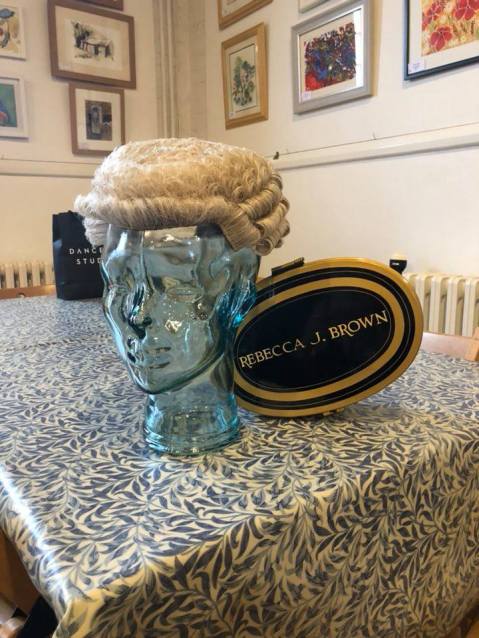
Judge Rebecca Brown’s wig on display at Milton Keynes Museum
A very poignant hearing for contempt by a mentally disturbed woman was held at Milton Keynes County Court last week presided over by Her Honour Judge Rebecca Brown.
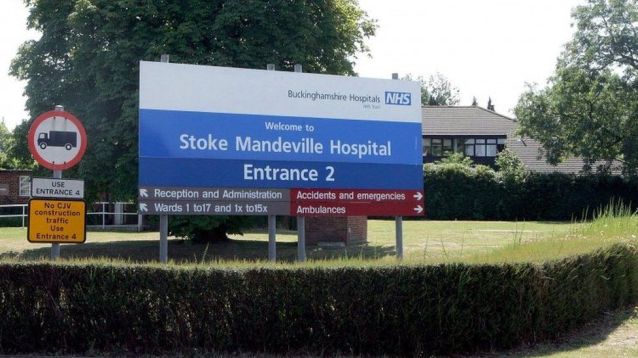
Gillian Marriott was facing a committal hearing brought by Thames Valley Police for breaching a court order made two years ago which banned her from contacting the emergency services or attending Stoke Mandeville Hospital in Aylesbury except in a genuine medical emergency. She is now facing two six month prison sentences and the possibility of a much longer prison sentence if she breaches the order for the next two years. She had already been remanded in custody before the hearing.
The judge took the decision in her absence and without any statement by her in her defence but she was represented by a lawyer.
I am highlighting this story because it neatly encapsulates in one episode what is going wrong with mental health treatment, what is happening to a pressurised NHS in the current crisis and the desperation of public authorities to deal with disturbed people by deciding that incarceration in a prison is the only solution. I don’t know the woman concerned but her situation is very well summed up by the judge in her ruling.
114 calls to 999 and 217 calls to the 111 services
Thames Valley Police who brought the case say she “has made 114, 999 calls and 217, 111 calls reporting various medical episodes. These have all been triaged and checked causing demand on the service unnecessarily” and had attended ” Stoke Mandeville Hospital on occasions which were not for genuine medical need. It is alleged that the defendant attended Stoke Mandeville Hospital on the 23rd of March 2022 claiming an overdose but all her vitals we checked and found to be normal.”
Stoke Mandeville Hospital Pic credit: BBC
The court were told she turned up at Stoke Mandeville claiming to have taken an overdose on “7th of April 2022 , 11th of April 2022 , 13th of April 2022 , 15th of April 2022 , 21st of April 2022 , 26th of April 2022 , 22nd of May 2022 and 3rd of June 2022.”
She also turned up at the accident and emergency department claiming she had taken an overdose on the 15th , 19th , 21st 27th , 28th and 29th of June 2022 and the 18th of July 2022.
She admitted turning up but claimed she had genuinely thought she was ill and needed treatment
Her psychiatrist, Dr Srikanth Nimmagaddam said in a statement to the court that she had ” a history of being brought up in an overprotective environment in the context of the death of her brother. She also feels that she suffered from emotional abuse, as her parents regularly adversely compared her with her deceased brother. She gives a history of problems at school and being sent to a special school. She gives a history of being severely bullied and discriminated at school, as she went to a special school. She gives a history that at the age of 11, she was raped by a person, who later blackmailed to harm her father. She had to withdraw the case and that resulted in being accused by the police of wasting their time. All this seems to have been extremely traumatic for her given her young age. She did some farm jobs until the age of 25, when she was married. One of her daughters was taken into care.”
He said “I believe there is clear evidence to suggest that she has a personality disorder – an emotionally unstable personality disorder of borderline type. The features of her personality disorder include impulsivity, including acting impulsively without considering the consequences; severe mood swings; chronic feelings of emptiness; uncertainty about her aims, objectives and goals in life; chronic low self-esteem; difficulties in sustaining relationships with a constant fear of rejection and abandonment; maladaptive coping mechanisms in the form of numerous acts of deliberate self-harm and of substance abuse.”
He ruled she was fit to plead and recommended a treatment programme that would not require a hospital admission but would require residential accommodation.
Some of the care plan unavailable because of resources
But Leanne Manning, Community Psychiatric Nurse, told the court: ” Some of the suggested aspects of the care plan are not available in terms of resources such as a residential placement. Ms. Manning thought supported accommodation would assist Ms. Marriott because it she may feel more supported and less isolated.“ Ms. Manning informed the court that Ms. Marriott could attend a number of courses at the Whiteleaf centre such as mindfulness classes, managing mood classes and managing and understanding your diagnosis classes. Ms. Manning also told the court that instead of telephoning 999 or 111, Ms. Marriott should first try to consider whether she really needs medical assistance by going through a checklist that she has. She can then telephone the Whiteleaf centre to speak to Ms. Manning or another worker or telephone a “social prescriber” who is based at the GP.”
The police’s lawyer took a hard line against her. Mr Garnett said: “the breaches were a deliberate flouting of the order and the breaches were serious and egregious.”
He argued that there was a high degree of culpability. No real mitigation has been put before the court because there is no evidence from Ms. Marriott. The evidence is that Ms. Marriott has refused to engage with any treatment plan which would assist her in her impulse control which would stop this conduct.”
Ms Marriott’s Lawyer, Mr Killen, said she would agree to go on the course but not move into residential accommodation.
He said” she values her independence too much and has lived in her current accommodation for a long time.”
The Judge said she had considerable sympathy and compassion for Ms Marriott but ruled that her actions amounted to a criminal standard that Ms. Marriott knew that she was making unnecessary calls and as such continued to add unnecessary burdens to the NHS whether it be A and E, ambulance drivers and other medical staff. But she said she had not done it out of malice more because of her vulnerability.
People may die because ambulances are being diverted to Ms Marriott – judge
“There is immense pressure on the NHS and emergency services and people may die because an ambulance is not available because it has been diverted to Ms. Marriott. I am satisfied that Ms. Marriott understands the terms of the injunction and knows that the number of callouts is unacceptable.”
Her judgement concluded: “The court therefore orders that Ms. Marriott serves a term of six months for the 999 and 111 calls and a further sentence of 6 months for the visits to Stoke Mandeville, each sentence to run concurrently and be suspended for two years until 22.8.2024. This court specifically warned Ms. Marriott that if she appears back before this court, has made no sustained attempt at engaging with work to address her behaviour and has carried on breaching the order, she is likely to receive a significant custodial sentence as well as serve the activated suspended sentence.”
Please donate to Westminster Confidential to allow meto continue by forensic reporting.








 Westminster Confidential