Rishi Sunak gets a report on why women are still hugely disadvantaged in decision making across the world
Video from Downing Street where Jocelynne Scutt hands in the report on Women, Power and Decision Making to Number Ten
Here is a video taken yesterday when Jocelynne Scutt, a former Australian judge and anti discrimination commissioner and now an academic in the UK, handed in a report to the Prime minister detailing how women are still at a huge disadvantage to men in taking key political decisions in the UK and the rest of the world. She says the position of women is ” lamentable” in the UK
The report by the UK based Cedaw in Law, the organisation which is working with the Geneva based UN Convention on the Elimination of All Forms of Discrimination against Women and Girls (CEDAW). to put pressure on the government to implement in full the convention ratified by Margaret Thatcher in 1986.
The campaign covers everything from the 1950s born women battle for full restitution of their delayed pensions when the age went up form 60 to 66 to the dearth of women MPs and peers in Parliament.
At the moment we seem to be going backwards with Labour having an all white male prospective Parliamentary candidate list for five pending by-elections and former premiers Boris Johnson and Liz Truss putting forward an overwhelming number of men to be new peers in their resignation honours lists Even the Supreme Court which took on a big role under its former woman president, Brenda Hale now has 11 male judges and just a token woman judge.
As the report says : “…overlooking women’s right to equal participation in decision-making leads to an ignoring of, and ignorance about, women’s economic rights, health and wellbeing. Worse, it shows how the failure to ensure women’s participation in decision-making can lead to a wilful failure of government to consider the impact of policy decisions and law-making on women and women’s rights generally.“
We also discovered that the rules governing the delivery of petitions and reports to Downing Street had changed. Previously when Backto60 and trade unionists had delivered petitions to Downing Street it was allowed for people to make a short speech. Now under Rishi Sunak speeches that criticise the PM cannot be made from the steps of Downing Street. We did not discover this until both me and Jocelynne Scutt had made them.
Please donate to Westminster Confidential to allow me to continue my reporting on issues often ignored by mass media.
The Office for National Statistics – the independent official body which produces official figures for work and inflation in the UK – has come up with some alarming predictions for women born in the 1950s 1960s and 1970s.
They show that post the Covid pandemic there has been a big drop among women expecting to have enough money to retire and enjoy a life of leisure on their pensions. As a result a significant proportion of women now aged 50 to 65 are planning to stay in work – either with reduced hours or full time when they reach the retirement age of 66.
An organisation called Rest Less, which acts a community and an advocate for the over 50s, has analysed these figures and estimates that nearly one in two women pensioners now expect to have to continue working after retirement age. Either they will work their existing hours (13%) or work with reduced hours (31%).
Huge inequalities between men and women’s pensions
The main reasons for this is pensioner poverty among women and huge inequalities between men and women when it comes to their pension pots. Not only are women less likely to get full state pensions – often they have missed years – than men but there is a big discrepancy in private pensions. The ONS figures show while 78 per cent of men will fund their retirement with a private pension, only 68 per cent of women have one. And the inequality goes on and on. Some 47 per cent of men will fund their retirement through savings, compared to 40 per cent of women. And only seven per cent of men will rely on funds from their partner, while 18 per cent of women will rely on their partner to help fund their retirement.
These figures were compiled 10 months ago in September last year. I hear that the ONS does not plan to update them since the survey was a ” one off” following Covid. Curiously a lot of publicity was given to people dropping out of the workforce when they got to 50 – I can only think that the majority must have been men or women married to men with a very good private pension.
Stuart Lewis, Chief Executive of Rest Less, commented: “Years of gender based earnings disparity has resulted in a large pension savings gap between men and women, leaving many women in their 50s and 60s in real financial precarity. Nearly half of women aged 50-65 said they plan to continue working in some capacity after reaching state pension age – a number that is likely to have risen even further given the subsequent cost of living crisis.
…..“‘In the last recession of 2009, women could retire at 60 and receive the state pension; today it is 66. Many women aged 50-65 are stuck between a rock and a hard place – they struggle to find work due to age discrimination or a lack of flexible work opportunities but they are too young to claim their state pension putting them in a vulnerable financial position as they approach retirement. Whilst the state pension age for men and women may now be equal, this data shows that the retirement fortunes of men and women remain anything but equal.”
One person who is caught in this trap is Back to 60 campaigner Michaela Hawkins known as Mac to her friends
Michaela Hawkins
“.I was forced to stay in work longer than I wanted to or hoped for. “My husband is 10yrs older than myself so was relying on retiring at 60 so we could enjoy some quality time together. When SPA was raised this devastated our plans. It would have meant if I retired before receiving my SP we would have had to survive below the breadline. “Austerity along with the pandemic put untold pressure on both myself and husband. I was transferred to work in care home from Day services during Covid. As my husband was in high vulnerable category during this time you can imagine the stress this put on both ourselves. “Another reason why I felt stressed also is because as a woman gets older her body is not the same. The physical aspects of working in care sector takes its toll. When you come home from work you feel exhausted. But if you’re caring for loved one or helping out your children with childcare which I done both you have got no time for any sort of quality life.”
now tax allowance frozen
“Now the Tax allowance that’s been frozen. Now I’m retired I’ve been hit with a tax bill for over £1300 on top of cost of living crisis this is going to push many 50s women over the top. “
UPDATE : Since then there has been another demand for £1300.
Mac writes:
“I then received a letter saying I owe them a further £1,300. If this wasn’t payed then they would get in touch with debt collectors.
It took me 2 1/2 hrs to get through to tax office to query this. It couldn’t be done online. Although I disputed the amount I owe they were insistent that I did owe that amount. I was then put through to debt management. Who I got to say was accommodating. But the problem is when older people receive letter from HMRC saying they will bring in debt collectors or as people our age call them bailiffs they become confused and frightened. Then to be put on hold for that length of time is again frustrating to say the least. When you think how HMRC is quick to chase up pensioners who in good faith think they payed their fair taxes and are chased up and then you got those who knows how to play the system get away with it. It makes me so angry.”
Certainly Backto60, which campaigns for full restitution for all the 1950s women who lost up to six years of their pension, is inundated with stories of women living on the poverty line, unable to heat their homes properly or use their ovens to cook because they can’t afford the fuel bills.
Instead the government concentrates on getting everybody back to work rather than seeking to compensate people who have already worked for decades and now should be able to put their feet up if that’s what they want to do without fear of paying the bills.
Please donate to Westminster Confidential to allow me to continue my reporting.
Last year I reported that the national audit office had qualified the Department for Work and Pensions accounts for the 34th year running because they were inaccurate and it couldn’t balance the books.
Auditor General threatens to refuse to pass pension accounts next year if DWP carries on like this
But this year the DWP has surpassed itself – it is now the 35th year that the DWP has had its accounts qualified.
Benefits overpaid officially fell a little from the pandemic year – £8.2 billion instead of £8.6 billion- but when you strip out the extra cost of living payments – they are much higher than the pre pandemic year of 2019 -£7.8 billion compared to £4.4 billion – a massive increase.
Most of the fall in the amount DWP overpaid benefits related to fraud in Universal Credit. The amount of Universal Credit that DWP overpaid fell from 14.7% (£5.9 billion) of expenditure in 2021-22 to 12.8% (£5.5 billion) in 2022-23. But again compared to the pre pandemic year of 2019 this was a rise.
DWP estimates that Universal Credit claims started after the COVID-19 peak (March to June 2020) were overpaid by 13.1% in 2022.This remains significantly higher than the 9.4% that it overpaid all Universal Credit claims in 2019-20.
The reduction is mainly due to a fall in the level of self employment claimants and the reintroduction of rules designed to prevent self employed claimants understating their income.
On average 33% of Universal Credit claims were incorrect in 2022-23,equivalent to 1.6 million claims. Most of these claims (24% of all Universal Credit claims) were overpaid.
The report says: “Around 40% of overpaid claims were to people with no entitlement to any payment at all, which is equivalent to 10% of all Universal Credit claims. Some of these were marginal cases where small amounts of undeclared income or claimant circumstances (such as attending hospital) made the whole claim invalid. However, some other claims were overpaid as much as £1,800 per month; some were completely fictional; and some related to serious and organised crime.”
Pensioners lost hundreds of millions of pounds in underpayments
The record underpayments of pensions and benefits topped £3.3 billion. A large number were caused by people claiming Personal Independence Payments who had not updated the DWP about their increased medical needs.
But it was pensioners who were cheated by the DWP into not receiving their full pension entitlements that is worrying the National Audit Office.
The report says: “The level of State Pension underpaid by DWP has been trending upward for six years to 0.6% (£670 million) in 2022-23. Most of these underpayments (£580 million) were a result of official error. DWP believes that part of the increase is due to changes in how it measures State Pension error and that its previous estimates may have been understated. This brings the total fraud and error rate for State Pension, including overpayments, to 0.7%.
“I will keep the gross level of incorrect payments in State Pension under review and may have to include State Pension in my regularity qualification in future years if the estimated rate continues to rise.”
There is £1.2 billion owed to 165,000 married pensioners, widows and those over 80- all caused by official errors in the past. It will take until the end of 2024 before everyone is paid.
And now the DWP has discovered another 210,000 pensioners owed up to £1.5 billion because officials did not record their right to paid national insurance contributions while looking after children
The report says; “These issues affect people (mostly women)who received Child Benefit before 2000 and whose National Insurance record was not updated to reflect periods of HRP (Home Responsibilities Protection) they were entitled to. DWP cannot begin to correct cases until HM Revenue & Customs (HMRC), which administers both National Insurance and Child Benefit records, corrects the National Insurance records and notifies DWP. “HMRC intends to begin work to identify people who may have missing HRP in autumn 2023 and will write to them to invite them to apply for missing periods of HRP to be added to their National Insurance record.”
However it turns out that HMRC have destroyed many of the people’s records.to meet Data Protection laws so it may not be able to find them.
Then there are 10 million people claiming Universal Credit have not been updated properly – a small proportion of these may have also been underpaid their State Pension. HMRC began correcting records in February 2023 and expects this work to be completed by the end of March 2024.
The report adds; “DWP has still to determine how many people have been underpaid and by how much they were underpaid. Of those missing the Universal Credit National Insurance credits, 137,000 have already reached State Pension age.“
jonathan Millspeter schofieldneil coulingnick Joiceykatie faringdonsimon McKinnonamanda reynolds- director service excellenceDebbie Alder
Roll call of this year’s DWP top officials and their bonuses and pensions
Meanwhile the DWP continues to pay out bonuses to senior staff. Peter Schofield, the permanent secretary, did not take a bonus this year and his pension payments were half last year’s at £16,000. His full package is £210,000 a year compared with £240,000 the previous year.
Neil Couling, the change director who is responsible for universal credit, got a £5000 bonus and had a £52,000 deduction in his pension pot, in a year when he presided over record fraud over universal credit.
Debbie Alder, director of people, got a £15,000 bonus, and put £59,000 into her pension pot, giving her a package worth £200,000 this year.
Jonathan Mills, responsible fo the Labour policy at the DWP, left in June with a £5000 bonus. He is now director of energy markets and supply at the Department for Energy Security.
Nick Joicey, director general of finance who earned £80,000 for five months is now chief operating officer and second permanent secretary of Defra. He is also the husband of Rachel Reeves, the shadow chancellor.
Simon McKinnon, director general and chief digital officer, who left in April 2023, Got a final year bonus of £15,000 and £62,000 in his pension pot, taking his final package to £240,000. He was responsible for reorganising the DWP’s system to bring it back in house.
Amanda Reynolds, director of service excellence, also got a £15,000 bonus and £61,000 into her pension pot, taking her package to £240,000 for providing what some claimants and pensioners would claim was hardly a first class service.
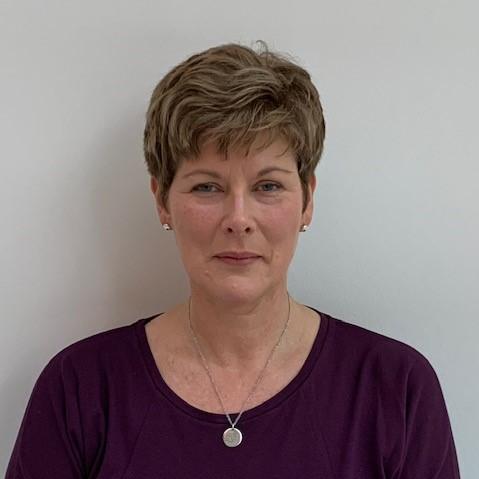
Katie Faringdon, director general for disability, health and pensions, got no bonus but had a £175,000 package including £44,000 into her pension. Over the last two years she has put pension benefits worth £131,000 into her personal pension fund. I am sure the millions of pensioners facing delayed pensions and still waiting to be reimbursed for mistakes by officials into their pensions will be pleased for her!
Please donate to Westminster Confidential to allow me to continue my forensic reporting.
Their misleading advice has cost retired workers dear
The Commons Public Accounts Committee this week published a damning report on a long running pension scandal which has seen retired pensioners lose hundreds of thousands of pounds from their pension pots because of misleading official advice given to them 27 years ago.
The pensioners were all employees of the AEA Technology – the state owned commercial arm of the UK Atomic Energy Authority – which was privatised in 1996 by Sir John Major’s Tory government.
This sorry tale took place almost at the same time as the government had implemented the 1995 Pensions Act which raised the retirement pension for 1950s women from 60 to 65 and the DWP has been found guilty of partial maladministration by Rob Behrens, the Parliamentary Ombudsman.
The Tory government gave AEAT employees just one month to exit their contributory Whitehall pension scheme for a new one with the company taking over AEA. 90 per cent of the staff did.
Crucial to this rushed decision was an independent report by the Government Actuary’s Department which told all staff that the scheme was as good as remaining in the state scheme and might even be better.
What it failed to tell people was that if the company went bust or the pension scheme failed all the staff would lose their guaranteed protection of their pension savings that is provided by the government. It would be transferred to the Pension Protection Fund, lose all their inflation protection up to 1997, and they would live for the rest of their lives with only a 2.5 pc annual increase in their pension.
Government Actuary’s report was secretly changed by UKAEA lobbying
According to the written evidence from an ex employee David Roberts, a freedom of information request has revealed that this ” independent” report was tampered with by AEAT and the UKAEA behind the scenes. They got it rewritten because it was not persuasive enough to get people to quit the government scheme .
He wrote:” The sections which have caused the complaints were significantly changed as the result of a telephone conversation between UKAEA and GAD on 5/11/1996. “
GAD also failed to undertake a risk assessment about the switch.
In 2012 AEAT which had already cut funding to the pension scheme went into administration. The company was bought by Ricardo, an American firm, who immediately divested all its nuclear work .Its headquarters of a new firm are now in California.
One would have thought they sacked employees could get redress but for the last 11 years they have got nowhere.
They are barred from complaining to either the Parliamentary Ombudsman or the Pensions Ombudsman.
Current legislation bars the Parliamentary Ombudsman from looking into case involving private pensions – and the government has just told the Commons Public Administration Committee there is no priority to change the law.
The case could come under the Pensions Ombudsman but there is a 15 year cut off point from when the event happened which blocks him from awarding any compensation.
Nobody in government takes responsibility
As the PAC report says:
“Nobody in government has taken overall responsibility for the case. There has been no independent review because the relevant ombudsman services have said they cannot investigate the information given to members in 1996, clearly highlighting that there are gaps in the routes of appeal people have for complaints about their pensions.”
The response from government since 2012 has been appalling. The DWP not only did not help but confused the issue. The report says: “In July 2013, DWP produced a factsheet summarising the complaints government had received and a response to each on behalf of the government. In February 2014, it then sent scheme members a further letter explaining that it was not responsible for the case.”
But it didn’t tell them who was and it turned out to be the Cabinet Office.
Sir Steve Webb- declined to help as pensions minister
Ministers were no better. Sir Steve Webb, then the Liberal Democrat pensions minister, would not intervene to change any rules to help the pensioners -saying if AEA Technology rules were changed it would affect other government services that had been privatised citing the BT pension scheme. He was actually wrong in this case, it is protected should BT go bust.
Two MPs tried to use private members bills to rectify the situation by changing the Ombudsman’s powers – but they were blocked by the Conservative government.
The government has escaped responsibility by never setting up an independent review of what happened and the Government Actuary’s Department has tried to avoid censure by saying their report was not the main reason why people switched their pension. This is contradicted by the employees who gave written evidence to the PAC.
people abandoned by an uncaring state
The whole saga is simply part and parcel of a government that cares little for the welfare of the ordinary citizen and tries to evade responsibility for its errors. Meanwhile people – who contributed to their pension and even put extra contributions to increase it – are just abandoned by an uncaring state. One person lost 40 per cent of their pension and all are affected by the cost of living crisis since they are not protected by the huge rise in annual inflation by the Pension Protection Fund.
Please donate to Westminster Confidential to allow me to continue my forensic investigations
State pension banner when the new pension came into force in 2016
One of the key complaints made by the 3.6 million 50s born women is that they didn’t know about the six year delay in the rise of the pension age for women from 60 to 66 until it was too late. This along with direct discrimination against women caused by the absence of a level playing field with men for that generation of women to pay national insurance contributions is behind this long battle with the government.
Now a report published today and sent to me reveals that these 3.6 million women are by no means alone. It implies that the majority of people in the UK today have little knowledge or understanding of how the state pension system works. A research report from the Policy Institute of Kings College, London commissioned for Phoenix Insights, a think tank for a large savings company, reveals that many people have misconceptions about the system. When these are pointed out they are unhappy about the current level of the pension and are concerned about how vulnerable people can live.
The research is not based on mass questionnaires but by taking 100 people in London and Birmingham and giving them detailed information at workshops after receiving a talk from former Liberal Democrat pensions minister Steve Webb. This enabled them to put forward policy changes they would like the government to enact.
Steve Webb gave a presentation to the group
The biggest misconception comes from how people think they have built up their pension. Some, believe it or not, think they just get an automatic full pension, when they reach retirement age provided by the state. One said: ““I thought when you retire everyone is entitled to the pensions. I don’t know why…I thought this is what happens.” But the majority believe by paying national insurance contributions all their working lives they have built up their own personal pension pot which they are entitled to get when they retire. This is a complete lie. Their money is instead used to pay people already retired to get a pension.
People are not stupid about state pensions – just misled
People are not stupid in believing this because the way the scheme works makes it look like that. Your level of pension depends on your national insurance contributions and you don’t get anything until you have made ten years contributions and only a full pension after 35 years. Anybody who contributed to a private pension scheme. would think that because that is the way they work..
Rather worryingly nearly half the people thought they had a a basic knowledge of how the pension system works and were embarrassed when they realised they didn’t.
When all this had been explained to them, the report reveals people thought the present system did not deliver an adequate pension for everybody.
As the report says: “The study identified five main knowledge gaps covering most of the core elements of how the state pension system works: the number of years of National Insurance contributions needed to qualify for the full state pension, eligibility criteria, the value of payments, what the “triple lock” is, and how the state pension differs from workplace savings.” The people’s conclusion was that the state pension was inadequate for anybody to live on without being able to top it up with a workplace pension, a private pension or property assets. Some retirees among the 100 people said unsurprisingly that the cost of living crisis had made a big impact.
People also thought that vulnerable people needed more help -particularly those with health issues who could not work – and either the level of benefit should be higher or they should be able to draw a pension earlier than the official retirement age.
People had bought into the government’s argument that the retirement age should rise because people are living longer – even though at the moment longevity has stalled and started to fall in poorer areas.
Phoenix Insights said: ” When we talk about longevity, we are looking at a long term view of life expectancy in the context of comparing to previous generations. Long-term life expectancy improvements mean that the pensioner population is projected to increase by over 5 million, rising from over 12 million today to over 17 million by 2070 (DWP, 2023).”
I thought this report is rather damning of the failure of successive government to explain how the state pension works or so many people would not be so ignorant. And it might suit governments that this remains so – or it would create a groundswell for much higher pensions.
But it is also a damning indictment of the minority of people who try and blame the 50swomen for not realising about the pension changes that have left so many people in poverty. They may well be the very people -unless they are pension experts – who are ignorant themselves and get a shock when pension day dawns.
While I have been away there have been significant developments in the long battle to get justice for the 50swomen who lost tens of thousands of pounds through maladministration, discrimination and lack of communication over the six year rise in their pension age.
Like everything in this long tortured tale the developments have not been straight forward.
Basically two separate initiatives have been launched. WASPI after first going along the route of seeking justice for 50swomen through Rob Behrens the Parliamentary Ombudsman, suddenly turned on him threatening him with a judicial review and launching a crowdfunder to fight him which raised nearly £150,000.
Alternative Disputes Resolution
Backto60, as the only organisation that campaigns for full restitution for the women, launched a plan to call for an Alternative Disputes Resolution, to negotiate a settlement with Mel Stride, the secretary of state for works and pensions, to end this long running dispute which has angered so many women who feel cheated by the DWP. This is backed by 54 MPs, petitions that have attracted 87,000 signatures and a Parliamentary motion.
Both the initiatives I suspect followed the leaking of the Ombudsman’s first and second stage reports on the issue on this blog. Without them becoming public the 3.6 million women affected would not have known the full and frankly paltry proposals by the Ombudsman to solve this dispute. And I have not forgotten senior people from Waspi pressing me to remove the posts so the reports would remain part of a private discussion between them, the Ombudsman and selected MPs rather than allowing the 3.6 million victims the opportunity to read them. And the second one is still not published.
The reason that I suspect WASPI turned is that it was becoming clear that the compensation would be meagre and limited – the DWP could decide ( as they have following other Ombudsman’s reports) that only the six complainants would automatically get compensation of £1000 and some 600 will have to fight for it .It looked a far cry from the promise by Waspi’s chief spokesman, Angela Madden at last year’s Labour conference of between £10,000 and £20,000 for everybody. That is still a lot less for many people owed up to £50,000.
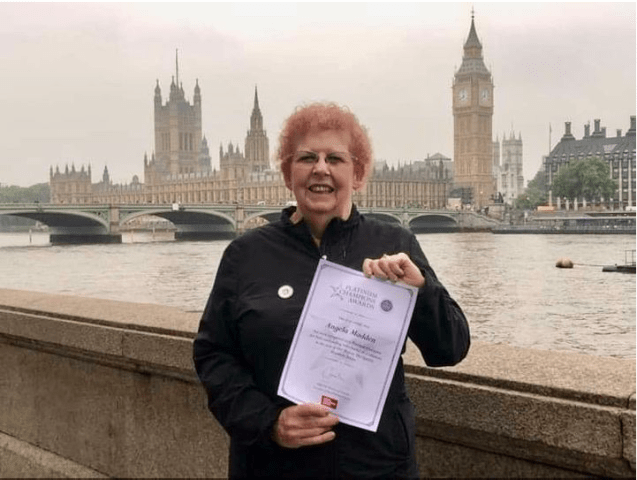
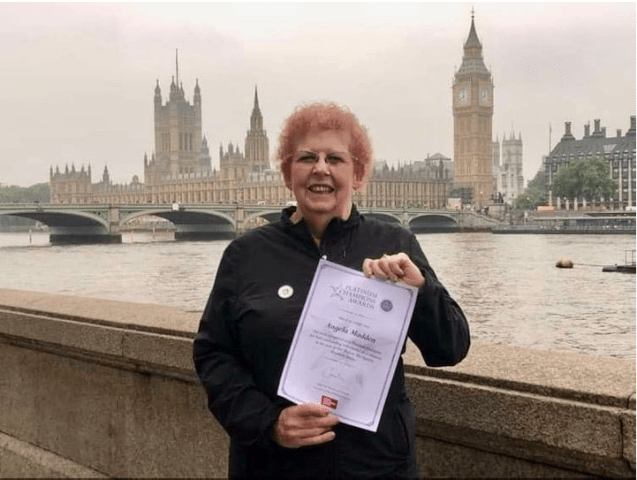
Angela Madden WASPI
Now developments have moved fast on this proposal. It is clear that WASPI, the Ombudsman and teams of lawyers from Bindman’s and Blackstone Chambers have come to a compromise which ended up in the high court last week. Reading the order from Judge Kirsty Brimelow it is clear that parts of the Ombudsman’s second stage report are quashed. These deal with the latter part of the report which rejected any financial compensation for women whose well being and life choices were affected by the delay and did not acknowledge the impact of the DWP pausing sending out letters to women.
The section was admitted by the Ombudsman to have been legally flawed by not taking everything into account.
Crowdfunder page
Since then WASPI have issued on their Crowdfunder page a series of ten conditions which ,it says, the Ombudsman should fulfill.
“WASPI will not be passively waiting for its outcome. At each stage we will be pressing the Ombudsman not only to complete his investigation in a way that is as rapid as possible but also thorough and fair. We will also be raising concerns about this with MPs, particularly those who sit on the Public Administration and Constitutional Affairs Committee (PACAC) which oversees the Ombudsman’s work. And we will turn to our lawyers for their expert input when responding to the Ombudsman’s draft reports and if we have concerns his investigation may be derailed again.”
The Ombudsman has been more cautious. He has agreed that he will show Waspi and the complainants his proposed changes and accept comments before finally presenting his report to Parliament.
A spokesperson committed them to looking at the report again adding” We don’t currently have a timeline, but we want to resolve the investigation as swiftly as possible, so any mechanism for remedy can be implemented for those affected.”
Now while this is happening Back to 60 pursued a different tack. The key issue for them has been the People’s Tribunal which looked into the plight of the 50swomen under the UN Convention on the Elimination of Discrimination against Women (CEDAW) Tribunal held last year and the judgement given by Judge Jocelynne Scutt which ruled that the women had suffered both maladministration and discrimination.
Jocelynne Scutt
Some critics have tried to say the tribunal and the report are irrelevant because they have no standing. Given that the deputy chair of CEDAW in Geneva gave evidence to it and the judge was one of Australia’s first discrimination commissioners, such criticism seems rather ridiculous. to put it mildly.
The judge took a strong view that Parliament had a moral duty to this. “Government and Parliament have a responsibility to face up to and acknowledge the grave wrong done. There is no room for obfuscation or quibbling. Historic discrimination requires relief. There is a moral imperative to right this wrong. The law is on the side of 1950s women.”
Sir George Howarth
Sir George Howarth, Labour MP for Knowsley, who chairs the Alternative Disputes Resolution project has already written to Mel Stride, asking to come to a meeting. The organisers have also invited Waspi who have not replied.
What is missing is what the DWP will do. It has registered as an interested party to the proceedings over the ombudsman’s report but did not send lawyers to the hearing last week.
Any question to ministers on these developments is met with the answer that it is ” neutral” and would not comment because of the legal proceedings.
This is not surprising , the DWP can’t commit to implementing the Ombudsman’s findings if it doesn’t know what they are. The proper procedure will be after the final report is published.
Will these initiatives work?
The stumbling block for Waspi is that the Ombudsman cannot compel the DWP to accept his findings – even if he does everything Waspi wants. This is one reason why legislation needs updating to strengthen his power which the government is reluctant to do.
The disputes procedure cannot get off the ground without the DWP agreeing to come either.
We could be left with a stalemate with the DWP playing one side against the other and sadly it will still mean women will not get the compensation they badly need. Difficult and confusing times lie ahead.
Please donate to Westminster Confidential
£10.00
One-Time
Monthly
Yearly
Make a one-time donation
Make a monthly donation
Make a yearly donation
Choose an amount
£5.00
£10.00
£20.00
£3.00
£9.00
£60.00
£3.00
£9.00
£60.00
Or enter a custom amount
£
Your contribution is appreciated. Please donate to continue my work
Readers of my blog will be familiar with the scandalous story of the billions owed to 50s born women who both suffered maladministration and direct discrimination over the raising of the pension age from 60 to 66.
But what has emerged over the past year appears to show that this is part of a pattern where pensioners and disabled people are frankly swindled out of their money by the incompetence, maladministration and meanness of top management and politicians who run the Department for Work and Pensions.
Far from the 50swomen being an isolated case where mistakes were made those at the top of the DWP administration appear to have a playbook to deprive people of their rightful pensions and benefits, especially if they happen to be women. Nearly all the cases hit women much worse than men and as I have highlighted before – men have had privileges denied to women – such as the long running auto enrolment scheme that allowed men to have their national insurance contributions paid by the state from 60 to 65 while denying women any such privileges.
One of the worse cases which saved the state billions was a decision not to pay out extra pensions to people whose firms had contracted them out of Serps – an old style second pension- so they lost out of a Guaranteed Minimum Pension still payable in the public sector. A lot will have been women
The blog I wrote on this – despite being fiendishly complicated to explain- attracted over 15,000 hits – yet only two people got any compensation as the DWP made it difficult to claim.
Time to sign this petition
Christopher Thompson, a retired expert on this, has put up a petition to Parliament to protest about this and restore the indexation, but sadly only 311 people have signed. If everybody who read the blog signed it it would force the government to have to explain to Parliament why they did it. So please sign if you can.
Then there was the case of 237,000 pensioners – again a lot of them women – cheated out of £1.46 billion from their pensions – by miscalculations by the ministry raised by former pensions minister, Sir Steve Webb. The department is slowly trying reimburse them – some have decades of extra pension owed -but it will take at least to 2024 before it is completed.
Now Sir Steve has found another scandal which only affects women who should have received credits for looking after children from the late 70s. He has launched a campaign Mothers Missing Millionsto try and get women’s pensions raised to make up the money – in one case a women was not credited with 14 years contributions.
And you have to add the scandal of the 118,000 disabled people put on a lower rather than benefit rate where the ministry has declined to compensate them – only giving money to the one person who complained to the Parliamentary Ombudsman. Even the Ombudsman has been silenced by the ministry who refuse to budge on this issue -leaving him appealling to MPs for help.
Time for an inquiry into the running of the DWP
What I am saying here is if you put all these cases together it is quite clear there is a pattern of underpayment and maladministration where the department do their best to avoid doing anything about it. It is without doubt discriminatory against women and suggests that ministers don’t want to pay them.
It is time women pressed all MPs to take up these issues. There is a strong case for an inquiry into the running of the DWP – there are too many cases for this to be just a coincidence.
Please donate to Westminster Confidential to allow me to continue my investigative work
Happy New Year. Last year My WordPress blog reached 304,297 hits with 218,257 unique visitors – compared to 286,840 hits and 203,099 visitors the previous year.
This figures does not include hits on my Facebook and Linked In sites which means the numbers are actually much higher though more difficult to exactly measure. Nor does this include my articles on Whitehall and Westminster for Byline Times. Byline Times is worth subscribing to for all the other independent journos who contribute to it.
Thanks to everybody who chose to read my stories and special thanks to those who kindly donated to my site. Last year I raised some £5600 via WordPress plus another £1600 through Paypal before charges.
The two campaigns I run on this site – the demand for full restitution for the 3.6 million women who lost out when the pensions age was raised from 60 to 66 – and valiant whistleblowers fighting for justice in the NHS and at the nuclear facility in Sellafield – attracted the most interest.
The Department for Work and Pensions emerged as the most hated ministry by pensioners and benefit claimants.
DWP most hated ministry
The biggest hit on the site was not from my campaign for the #50swomen but from the blog exposing the millions of people who have been swindled by the DWP out of a Guaranteed Minimum Pension. Here I was helped out by a retired expert on the issue Christopher Thompson who has tirelessly pressed ministers and the Commons DWP committee to do something about it. This attracted 15,281 hits.
Four blogs on the 50swomen campaign attracted over 10,000 hits – the highest being my report of the WASPI meeting at the Labour Party Conference which attracted 12,405. Myreport on the proposed remedies for the women by the Parliamentary Ombudsman which I and many women see as a betrayal attracted 10,054 hits. An opportunity to download the summary of the changes attracted 4,400 people to do so – adding a little to more transparency given only a selected few were supposed to see it.
Dr Day case was followed across the world
On the the whistleblower front I decided to do a daily report on the Dr Chris Day case – the appalling story of a junior doctor who lost his training place because he tried to expose patient safety dangers at an intensive care unit at Woolwich Hospital where two patients had already died. This was really old fashioned journalism when people used to cover courts regularly – in this case an employment tribunal – making the proceedings publicly accountable. It paid off not only with a big following of the blog here but thousands of people followed it on Linked In including doctors from Denmark, Australia, New Zealand, the US, Canada and Brazil. He lost the tribunal despite the health trust destroying 50,000 emails relating to its case that should have been examined by the tribunal. But the good news is that the British Medical Association is backing his appeal.
There is similar interest -including internationally – in the tribunal case of Alison McDermott who was commissioned by Sellafield to review its human resources policies and found appalling shortcomings and also in India and the UK in the fight by Dr Usha Prasad, the former cardiologist at the Epsom and St Helier University Trust, who was sacked after refusing to change a report on an ” avoidable death” there that should have been reported to the coroner. My thanks to two retired cardiologists, Dr David Ward and Jane Somerville for their help on these cases.
Whistleblower cases call into question the employment tribunal system
These cases have thrown up serious questions about the competence and bias of employment judges and called in question the entire running of the employment tribunal system and its failure to keep records of cases. I am now beginning to be inundated with dissatisfied people who feel they have been cheated by going to an employment tribunal.
This year has been a frustrating year for whistleblowers and for women seeking a just solution to maladministration and direct discrimination over the raising of the pension age. But there is no reason to stop reporting this – though I will be taking a long break at the beginning of this year only to come back reinvigorated.
One final point. A very small minority of people are trying to put up comments on this blog using false names from fake email addresses. I see some national newspapers are no longer going to put up comments on the web from people who don’t declare who they are. So from this year I will no longer carry comments from people who do this.
Please donate to this blog to allow me to continue my reporting.
Leaked document now published says nearly all not to get one penny compensation – despite his finding of partial maladministration – and WASPI appears to have covered this up
For those who want to see the full document or the few doubters that this can be true – you can read the document here [ google docs] or see below.
FreshUpdate: MPs on the Commons Public Administration and Constitutional Affairs Committee have taken up this story by writing to Rob Behrens asking for an explanation of the proposed remedy that has been sent to six complainants. Read the letter in fullhere.
The letter from Tory MP William Wragg, the chair, reads: ” We have received reports that women affected by the changes are expected to receive minimal, if any, financial compensation…
“I would therefore be grateful if you could clarify:
whether any decisions around financial remedies have been taken or communicated to thoseaffected;
whether there have been any changes in the expected timeline for the final report; and
whether there have been any changes in who will be eligible for compensation.”
In what must be the biggest betrayal of complainants since the Ombudsman was set up by Harold Wilson in 1967 Rob Behrens has put out proposals to deprive the vast majority of 1950s born women from any compensation for the maladministration suffered by being not personally informed about the rise in the pension age from 60 to 66.
The six people who complained will get £1000 each and another 600 who complained to the Ombudsman could get the money if the Department for Work and Pensions deign to pay them which on its present record seems unlikely. For the rest there is nothing.
This proposal is a far cry from the promise made by Angela Madden, the leading figure from Waspi, who told a fringe meeting at the Labour Party conference in September that payments of £10,000 to £20,000 each were a possibility for women who had missed out. See here. She has continually urged people to rely on the Ombudsman to sort this out – though recently has suggested a direct approach to the DWP to get a fair settlement because of the numbers of women dying.
A big emphasis has been highlighted by Waspi on making sensible demands and not going for full restitution – now on the basis of direct discrimination- as pushed by Backto60 and now by former judge Jocelynne Scutt, in her report.
Well this is the provisional settlement Waspi has got and it has not been worth the wait. Confidential proposals, seen by these blog, reveal this betrayal. It reads:
The Ombudsman’s proposed remedy -guaranteed £1000 offer to six people
“Our provisional view about remedy is that DWP should:
• publicly acknowledge maladministration in its communication about changes to State Pension age resulting from the 1995 Pensions Act and maladministration in its complaint handling
• publicly apologise for the impact that maladministration has had on the sample complainants and others similarly affected
* pay each sample complainant £1000 compensation for the injustice they have suffered
• establish and fund a compensation scheme to provide equivalent compensation [ie £1000] to anyone else who has suffered the same injustice as the sample complaints because of maladministration in its communication about State Pension age and its complaint handling
• provide an adequate and proportionate financial remedy to anyone who can evidence they suffered financial loss because they lost opportunities to make different decisions due to maladministration in DWP’s communication about State Pension age
• provide an adequate and proportionate financial remedy to anyone who can evidence they lost opportunities to add qualifying years to their National Insurance record because of DWP’s maladministration in not adequately using research and feedback about people’s understanding of the new State Pension to improve its service and performance.”
Now there are a barrel load of problems in this settlement. There also appears to be some level of deceit over recent pronouncements by the PHSO to Parliament and Waspi to the Daily Express and the Independent. First the proposed settlement. To get even this measly £1000 some 3.6 million 50s women have to both prove they didn’t get a letter and prove they lost opportunities to take different decision or lost out to pay in expensive sums to the DWP to build up their pension. Many of these women who were on the breadline would not have had the thousands of pounds of cash to do this.
Joanna Wallace destroyed all the complaining letters from 50swomen
Secondly very simply how do you prove you didn’t get a letter? The DWP has said it has no records and DWP’s so called Independent Case Examiner, Joanna Wallace, as I reported earlier -see here – has conveniently destroyed loads of letters she received complaining about this issue after being cleared of maladministration by the Parliamentary Ombudsman. It is almost as though there have been deliberate moves to make sure no evidence was available in advance of the Ombudsman’s decision.
I also found it extraordinary that the Ombudsman has put forward a remedy so quickly after being quizzed by MPs on the Commons Public Administration and Constitutional Affairs Committee last month. At the time – see my blog here – Amanda Amroliwala, chief executive of the Parliamentary Ombudsman, was closely questioned by MPs about the 50swomen investigation and said it could take until March before the full investigation and remedy were published.
To give her the benefit of the doubt perhaps she was so taken aback by the questioning from MPs she may have speeded it up. More suspicious minds might suggest she daren’t tell them what the Ombudsman had in mind because it would create a furore. The only public announcement by the PHSO since then has been it has completed stage 2 of the investigation but still has no remedy in mind.
Angela Madden, chair of Waspi, showcasing her Jubilee Pin for going “the extra mile to improve the lives of others”. Pic credit:Waspi
The other extraordinary behaviour has been by WASPI. An article in the Daily Express on Friday quotes WASPI saying this.
Angela Madden, chair of WASPI, said: “These latest findings confirm the previous conclusion of the Ombudsman that maladministration took place at the Department for Work and Pensions. “But nearly 18 months after the Ombudsman’s first report, we are still waiting for his conclusions on a remedy. This is becoming a lengthy examination of the blindingly obvious.”
Now by then people had been informed of the proposed remedy. Perhaps Angela Madden didn’t know. or perhaps she didn’t want anyone else to know because it is obviously too embarrassing for their campaign.
The Parliamentary Ombudsman’s press office said they were unable to comment was the investigation was on going.
But John McDonnell, Labour’s former shadow chancellor and a member of the Public Administration and Constitutional Affairs Committee, said: ” This offer is completely unacceptable. I shall be raising it immediately with the PACAC committee”. As Shadow Chancellor he had offered a £58 billion settlement over five years. I await a response from WASPI.
In the meantime Rob Behrens, the Ombudsman, according to his posts on Linked In has been literally glad handing with President Zelensky in Kiev at a special Europe wide human rights conference. Someone ought to ask him about the human rights of the 3.6 million 50s women who will now be cheated by him out of any decent settlement. The DWP must be cheering him on.
As a matter of the interest the pension age for women in Ukraine is 60 – six years below the current age in the UK. See this link.
Please donate to Westminster Confidential to continue myinvestigations
Rob Behrens, the Parliamentary Ombudsman, has asked the Commons Public Administration and Constitutional Affairs Committee (PACAC) to intervene on his behalf and summon the heads of the Department for Work and Pensions and the Environment Agency to appear before them to explain why they are ignoring his findings and refusing to compensate people.
The plea came during a hearing of the committee last week to examine the organisation’s progress and future plans to handle complaints. The committee also heard how the Ombudsman was hamstrung by the failure of the Cabinet Office to pass new legislation to give him greater powers and the latest progress in the 50swomen maladministration claim. More about this below. All these issues highlight weaknesses I have raised in previous blogs.
The DWP case involves 118,000 disabled people who suffered from years of benefit maladminstration . I wrote about this in August- see here. The complaint came from Ms U – via the London borough of Greenwich welfare rights office- who was put in the wrong lower category of the employment support allowance despite being in very poor physical and mental health with little or no savings The Ombudsman ordered the Department to pay her £7500 compensation and five years of arrears totalling £19,832.55 plus interest.
A National Audit Office investigation found that 118,000 people were in the same boat and should have been compensated alongside her following the Ombudsman’s ruling. But the DWP decided only to pay her and ignored everyone else. The pay out would have run to millions of pounds and the DWP decided it would ignore the Ombudsman because legally they can.
The second case involves one family but it is one of the most egregious cases I have heard in Whitehall. The case has been going on for 12 years and involves admitted maladministration by the Environment Agency over the issue of a water licence for a micro hydro project in Bradford on Avon, Wiltshire. The Earl family who renovated a tumbledown watermill to use for the scheme was supposed to receive substantial compensation decided by an independent assessor appointed by the Environment Agency. who bungled their case. The money owing could amount to £3m as interest has piled up and the EA has refused to follow through the Ombudsman’s finding for years.
John McDonnell MP
MPs also raised the issue of the Ombudsman’s lack of powers. John McDonnell, the former shadow chancellor and a Labour member of the committee, has tabled a question to the Cabinet Office asking why they have not introduced legislation to do this. The issue is raised in an earlier blog here.
Mr McDonnell asked Robert Behrens:”Can you explain the practical implications of the Government’s lack of support for legislative reform? How does that hold you back from adhering to the Venice principles, which the Government have signed up to ?”
He told him: “Two of my counterparts have the power of own-initiative investigation. In cases like Windrush, the maternity scandal in hospitals or the issues with mental health, we could go out and look at an issue without it being complained about. We could resolve that issue before it went to a long-standing independent or public inquiry. The peer review panel said that other ombudsman schemes in Europe use that and have used it in Covid to good effect.”
He went on: “If you have 16 public service ombudsmen in the United Kingdom, it means that people do not know where to go. It means the profile of my office and other offices is lower than it would otherwise be. That is not satisfactory in terms of being the only organisation in the public service that provides redress free of charge to citizens. That is very important.”
He added that he saw no reason why a government could not introduce a bill to do all this straight after the next general election.
MPs Question chief executive on 50swomen pension investigation
Amanda Amroliwala, chief executive of the Parliamentary Ombudsman, was closely questioned by three MPs, Ronnie Cowan, SNP, John McDonnell and Lloyd Russell-Moyle, both Labour, on the maladministration complaints over the delay in paying 3.6 million 1950s born women.
On Stage 2 of the report, which has already been leaked on this website see here, she said: “We have not finalised that stage of the report yet. We are in the process of receiving and analysing the very extensive comments that we have had from the Department and from the complainants who have brought the complaints to us”
RONNIE Cowan, SNP MP for Inverclyde
Under further questioning she added: “We are looking at how those will need to change the provisional views that are not yet public but that some individuals have had sight of. We will do that as soon as possible.” She would not commit a date for this report and the proposed remedy will be published except ” hopefully” between January and March next year. She was also quizzed on the level of compensation. Ronnie Cowan pointed out it could be anything from nothing to £10,000 but if it was maladministration only the top level was much less than £10,000 .She would not be drawn on how much this is likely to be.
John McDonnell reflected the frustration among MPs about the long delay in the Ombudsman producing a final report. “You can understand the scale of interest and concern there is amongst Members of Parliament. You will have seen that from the early-day motions. There is not an MP without a constituent who has been affected. The concern that people have is because of the age of many of our constituents. Some of them have already passed away. Others may not be here to receive any form of redress, if we delay beyond the next quarter of next year.”
There is another elephant in the room that was not discussed. If the DWP is refusing to pay 118,000 benefit claimants their compensation, why should they pay any of the 3.6 million 50swomen a penny beyond the six test cases who complained?
Please donate to Westminster Confidential to allow me to continue my reporting.













 Westminster Confidential