This week Salford City Radio hosted a special broadcast on the continuing plight of 50swomen and gave interviews to myself and Dr Jocelynne Scutt. Jocelynne also took a petition and letter to Downing Street yesterday calling for the government to implement in line with the UN Convention on the Elimination of all Discrimination against Women and Girls which has still not been fully introduced by successive British governments.
The key point is that mediation to solve the injustice facing some 3.5 million 50s women who waited more than six years to get their pension is possible under civil procedure rules. This was put to the Prime Minister and senior government lawyers in letters yesterday. CedawinLaw see they have a winning hand over this which is why the government don’t want to know over this.There is a team of mediators prepared to act.The All party group on state pension inequality has also raised the issue of mediation with Torsten Bell, the pensions minister but didn’t publish his response.
To emphasise again no legal challenge is required to initiate mediation.
A Top 500-ranked team of mediators is on standby to be considered for the neutral mediation role.
We learned from Waspi that post the Board’s withdrawal of its judicial review – and acceptance of £180,000 – the Government subsequently reneged on an understanding to initiate mediation solely with Waspi Limited.
CEDAWinLAW’s censored winning hand remains in play – no funds nor any legal challenge is required to do so – whilst The One Bright Light prepares to tell the story. Watch this space.
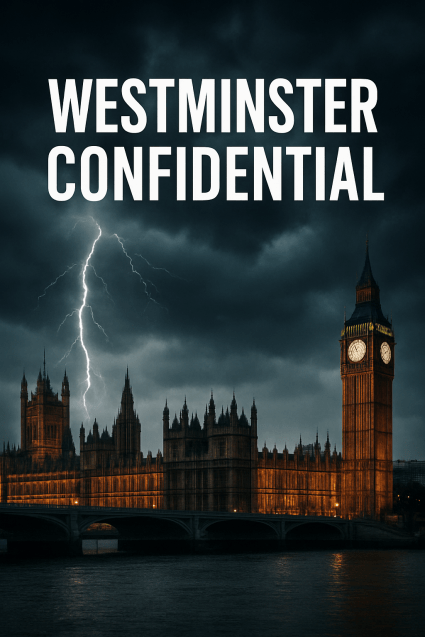
My AI generated picture of Westminster to go with the blog.
Hits on my blog reached just over 230,000 last year not including the full number on Facebook and Linked In which takes the reach of the blog to even higher figures.
The most startling change in 2025 was a sudden interest from China that began in August and finally petered out at the end of the year. Figures from China totalled 128,000 over a five month period with at one stage Beijing having more hits than London. Altogether some 40 Chinese cities downloaded stuff from my site.
What was particularly interesting was that there were old blogs and nearly all were concerned with the same issue – the plight of the 50s women who faced a six year delay in their pensions involving Back to 60, CedawinLaw and WASPI.
The largest number of hits were on a 2019 blog which was cross posted with Byline.Com on the date set for a judicial review won by Backto60. In one year this blog added 12,507 hits taking it to over 136,000.
The second highest hits came on my story that men who “retired” at 60 had all their national insurance contributions paid by the state until they reached 65. This gained another 8,744 taking it to over 83,000.
Other large hits were on the Downing Street pensions robbery, the court of appeal decision and the decision to appeal to the Supreme court.
Two blogs not concerned with the issue but led to large hits from China included the leak of Dame Janet Smith’s report into the BBC’s mishandling of the paedophile Jimmy Savile and a 2015 blog on my statistics that showed my blog on the secret hideout of singer Amy Winehouse and a dispute with David Aaronovitch had driven traffic to the site.
I have talked with people who have had dealings with China who suggest that this was a data scraping exercise connected to planned changes in China’s pensions policy. China has one of the lowest ages for women’s retirement in the world at 50. It is currently running a 15 year plan to raise women’s retirement ages from 50 to 55 and 58 and men’s from 60 to 63. It looks as though the Chinese were sussing out the opposition in the UK.
The blog attracted over 8000 hits from the US, and over 1000 from Germany and Ireland down to single hits from places like Angola, Brunei, Myanmar and Mongolia.
The other big growth was on Linked In whose stats are not fully recorded by WordPress. At the end of the year the organisation sent me a note saying I was in the top five per cent of contributors on the site. This is very pleasing as I have had large number of hits where I have taken up whistleblowing cases, unfair employment tribunal hearings, failures of accountability in the NHS and in the judiciary, and injustice for patients in both the NHS and the coroner’s service.
Since it is read by professionals I have gained a following both at home and abroad which is growing. Let’s hope 2026 sees the reach of the blog to new heights.
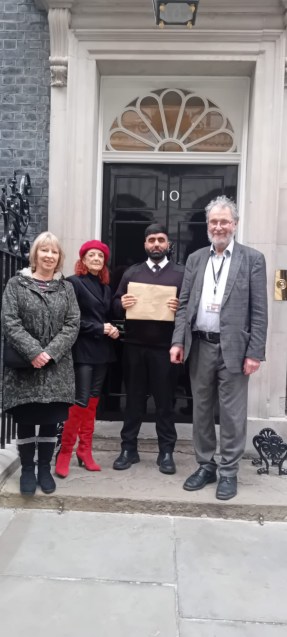
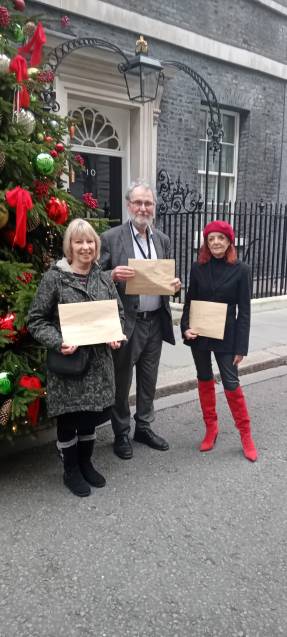
Cedar in Law delegation at Number 10 Downing Street. From Left to Right: Sharon Wheeler, Joycelene Scutt, No 10 doorman and David Hencke
Cedaw in Law returned to Downing Street yesterday to deliver letters to Sir Keir Starmer asking him to intervene in the latest battle to secure justice for 50swomen.
The delegation is repeating their case for mediation and recompense for the discrimination and maladministration over the big rise in the women’s pensions age for 50swomen. One of the letters which would have gone to DWP lawyers also reiterated that all women’s groups should be consulted under the review promised by Pat McFadden, the work and pensions secretary, not just a private arrangement between WASPI and the ministry. WASPI pulled out of their judicial review case to challenge the DWP over maladministration last week accepting a £180,000 payment in full and final settlement from the DWP.
Tonight Joanne Welch, the organiser for CedawinLaw, Jocelynne Scutt, the Australian judge who chaired a tribunal into the issue, and myself, a patron of Cedaw in Law and a lobby journalist, will appear on Salford City Radio, in the constituency of Rebecca Long Bailey, the Labour chair of the All party group on State Pension Inequality for Women.
The link to hear it is here and it is on Ian Rothwell’s show between 6 and 7 pm.
A rare but virtually unreported public hearing by the Privileges Committee on Budget Day revealed a sharp divide between the Parliamentary Ombudsman and the Charity Commission over the role of charities in safeguarding children and adults who have been sexually abused.
The hearing was sparked off by Parliament unanimously reporting the Charity Commission to the Privileges Committee after Stephen Hoare, the chair of the Public Administration and Constitutional Affairs Committee, decided the Commission had breached Parliamentary privilege by wanting to delay publication of the reports until after a judicial hearing being called by the Commission. I did a report here .
The reports which Parliament compelled the Ombudsman to publish with final conclusions covering complaints of a recent adult sex abuse case – Miss A – and a historic child sexual abuse at a school -Mr U.
Mr U later contacted my blog and waived his anonymity to give me a detailed account of what had happened at a Roman Catholic school in Blackburn when it was run by a paedophile priest. The blog about this is here.
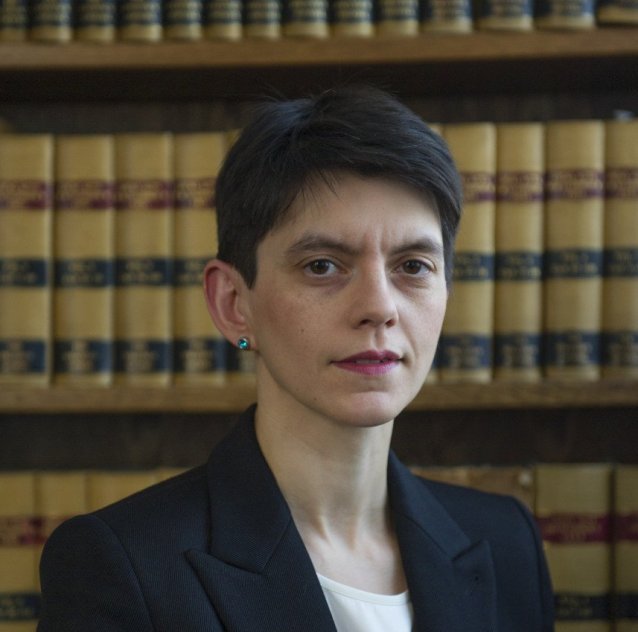
Saira Salimi, the Speaker’s Counsel
The hearing began with a statement on the issue from Saira Salimi, the Speaker’s Counsel.
She told the hearing: “This is quite a difficult case, because it does raise difficult questions about the relationship between parliamentary and legal accountability. There is a power conferring a discretion on a public authority to report in certain circumstances, and the report is made to Parliament. Although it looks at first glance like a function that might be reviewable by the courts, the interaction of parliamentary and legal accountability may mean that the decision is not justiciable.”
She said that if the issue of privilege had not been the raised the Parliamentary Ombudsman would have been inhibited from laying the reports before Parliament.
She added:” this is an unusual case where Parliament and the courts are on the same territory at the same time. That is not unprecedented but is unusual, because of the self denying ordinance that the House normally maintains in relation to matters before the courts under the sub judice resolution. It is my hope that our intervention in this case will assist both the courts and Parliament in carrying out their respective roles, which are constitutionally distinct ands equally important.”
Karl Banister, Director of Operations, Legal and Clinical and Deputy Ombudsman at Parliamentary and Health Service Ombudsman (PHSO). gave evidence.
He told MPs: “the[ charity] commission should have an independent person review Mr U’s case to consider whether the reasoning was adequately accounted for; consider whether the outcome would have been different; look for learning on how it engages in such cases;[and] look at its risk guidance;” Similar recommendations were made in Miss A’s case.
It is these recommendations that the Charity Commission is objecting to and says that the Ombudsman exceeded her powers and that such recommendations are unlawful.
He revealed considerable attempts were made at mediating the dispute.
“My assessment was that it was better not to provoke the commission to issue legal proceedings. It is obviously unattractive for two public bodies to be litigating. Were they to do so, they would likely get an injunction, and that would be an additional cost to the public purse.”
However in the end the Charity Commission decided to go ahead with a judicial review. it said:”“a declaration that the decision of 14 March 2025 is unlawful”—that is, our decision that it was not compliant—“that the 14 March decision is quashed, that the defendant pay the claimant’s cost of the claim or any other order the court considers appropriate. That is what the judicial review sought.”
The Public Administration and Constitutional Affairs Committee were informed and the Parliamentary Ombudsman stuck to its point that the Charity Commission had not fully complied with decision. It was then taken out of their hands and Mr Hoare, the committee chair, decided to raise the privilege issue and compel the reports to be published so the committee could consider them.
David Holdswoth, chief executive of the Charity Commission
The Charity Commission brought a team of people to hearing headed by the chief executive David Holdsworth.
He told MPs:”The decision of the PHSO in its letter of 14 March—that we should reinvestigate criminal matters already investigated by the police, the CPS or the wider criminal justice system but deemed not able to proceed—has grave implications, in our view, for anyone involved in running a charity and, indeed, for wider citizens’ rights under the criminal justice process. It is also our view that the ombudsman cannot retake regulatory decisions made by the commission to force a different conclusion, replacing our judgment with its own. It is for those reasons that we reluctantly sought to clarify matters through the courts.”
It soon became clear – and this was reinforced during the national Child Sex Abuse inquiry – that the commission regards the Commission as primarily an administrative and registration authority not an investigatory authority.
It was also clear MPs and the Speaker’s Counsel thought that the matter could have been cleared up at a meeting of the PACAC committee without going to the courts.
But Felix Rechtman, head of litigation at the commission said:”: We are not saying that the PHSO decision is just inappropriate. We go further: we say it is unlawful, and matters of law are reserved to the courts under our constitutional arrangement.”
It is quite clear this issue is going to run and run. The courts have not given the Charity Commission a date for a judicial review hearing yet. The commission will first have to get permission to bring the judicial review and then have a hearing. The next stage will be the Privileges Committee report on whether the Commission has committed a contempt of the House.
Glum whistleblower at an Employment tribunal. Picture created through AI
A research report published this July by the new Labour government has painted a devastating picture of the failure of the culture of the whistleblower system in the United Kingdom.
The report, originally commissioned by the Tories under Rishi Sunak, and undertaken by researchers at Grant Thornton, one of the big accountancy firms, pulls no punches. It reveals how whistleblowers, whether in industry, the NHS and other public bodies, see a failure by the courts, employers, and even those appointed to help them, to protect them.
The sad news is the report, commissioned by the Department of Business and Trade, looks like remaining on the shelf – and the one improvement planned by the justice ministry could make matters worse. It plans to appoint 50 new employment tribunal judges to handle an increase in whistleblowing cases, among other issues, following the implementation of the new Employment Rights Act. For those who follow my blogs, they will know, they are more than often part of the problem, not the solution.
For a start whistleblowers found the terms used to describe whistleblowers as vague and confusing.
The report notes that terms like “reasonable belief,” “public interest,” and “worker” are seen as subjective, vague, inconsistent, and narrow, creating uncertainty about whether protections actually apply. One whistleblower expressed surprise when an Employment Tribunal decided their concerns didn’t meet legislative requirements despite their employer telling them they did.
The majority of whistleblower participants reported feeling victimized by their employer after blowing the whistle. The research found that many whistleblowers believed the framework doesn’t provide effective protection in practice. The “protection” offered is essentially just the right to seek redress after harm has already occurred, not proactive prevention of retaliation.
Multiple barriers for whistleblowers
Multiple barriers existed for whistleblowers when their case came before an employment tribunal. These included:
Resource imbalance: They lacked time, money, knowledge, and skills compared to their employers Mental toll: The process was described as complex, draining, and requiring resilience many didn’t have Evidential burden: Proving detriment was directly related to their disclosure was extremely challenging Delays: Tribunals experience significant delays
Time limits: Strict deadlines created additional barriers
Unfair treatment: Limited access to evidence and risks around non-disclosure agreements
Lack of trust: Many didn’t believe tribunals would be balanced or deliver meaningful
Nor did whistleblowers find people designated to help them such as regulators much good.
They found they could not protect them from detriments or victimisation. Some were conflicted particularly where there had been regulatory failure.
Several whistleblowers stated it was “not easy” to blow the whistle internally: They found:
Little faith in the process based on previous experience
Fear of retaliation after hearing stories from others
Restrictions from non-disclosure agreements
Conflicts of interest when those receiving reports were implicated
Lack of independence in investigations
Concerns not being properly investigated or addressed
No feedback or perceived remedies
The report describes the huge tolls on whistleblowers. At employment tribunals,phrases from whistleblowers included: public execution,exhausting, beyond difficult, miserable. complex, ardous, horrible and abusive, soul destroying,toxic and unsafe.
Litigants in person fared worse with descriptions that they were not treated respectfully by judges, lawyers and other parties and that they were not impartial.
Many stated they would not blow the whistle again due to negative experiences
Cases that involved international jurisdictions were even more complicated with slow co-operation from countries and regulators abroad.
The report makes suggestions for change. These are:
create a central body for whistleblowing
ongoing engagement and research to assess and monitor all aspects of the GB framework
efforts to improve effectiveness should be multifaceted and monitored
improved mental health support for individuals
legal advice and a degree of financial security while the claim progresses
consideration of disincentives and incentives, for example implementation of a United States style reward system
I contacted the ministry about the report:
A Government spokesperson said:
“The Employment Rights Bill will strengthen protections for whistleblowers reporting sexual harassment at work and extend time limits for bringing tribunal claims from three to six months.
“We are also fixing the employment tribunal system by ensuring more cases are resolved before reaching them and recruiting more Employment Judges.”
They said that didn’t regard the report’s conclusions as firm recommendations and many of the suggestions were outside the remit of the ministry.
At the end of July I published a scathing report from the House of Commons Justice Committee on the appalling state of the dysfunctional county court system. MPs were so appalled that they demanded a root and branch inquiry into the system to address its myriad problems – huge waiting times to hear cases, court buildings infested by rats, lack of disabled access and a chaotic and incompatible digital system to handle cases. You can read it again here .
Now we have the ministerial response. And what a tepid, pathetic and apology for an answer it is from Sarah Sackman KC. It even incorporates a potential ” pork barrel” issue with somehow one of the few courts now undergoing modernisation is in her own Finchley and Golders Green constituency in North London.
She rejects the main finding of the committee – the call for the inquiry to deal with the problem.
She said: “Rather than focusing on a root and branch review of the County Court, the Government is keen to focus on taking tangible and practical steps to improve the operation of the County CShe rejects the main finding of the committee – the call for the inquiry to deal with the problem.
She said: “Rather than focusing on a root and branch review of the County Court, the Government is keen to focus on taking tangible and practical steps to improve the operation of the County Court – which will benefit everyday users – without further delay. We are already seeing these measures bear fruit with improvements to the timeliness of claims that got to trial, improving call waiting times, growth in small claims mediation and further improvement to case management and file transfer systems.”
Her so called improvements include a reduction in waiting times for Small Claims cases from 50.5 weeks a year go to an amazing 49.2 weeks up to July. A fantastic reduction of of 1.3 weeks – I am sure she being cheered to the rafters for that. While those waiting longer face a 72.4 week delay compared to 79 weeks a year ago. I am sure they appreciate that.
Meanwhile many litigants are facing wasted costs for travel, legal fees and subsistence to attend hearings that are ” overlisted ” or as the result of poor management of the courts and MPs thought they should be compensated. But for Sarah Sackman ” over listing ” is fine and she rejected any money to reimburse claimants.
Probably the most interesting revelation is the paucity of the programme to modernise the courts to bring them up to 21st century standards. Only three courts are currently being modernised- Norwich, Taunton and Barnet and there are plans for Reading and Blackpool.
The Barnet court project got funding in October 2024 – three months after Sarah Sackman had been appointed solicitor general and two months after she became justice minister. I may be being unfair to her but I do find it curious that of all the courts to get modernise first is in her constituency.
Barnet County Court, Regents Park Road, Finchley
When you compare this with the long list in the justice committee ‘of courts that don’t even provide wheelchair access – only Taunton is being modernised. So for disabled people there is no hope of admission to Mansfield County Court; Brentford County Court; Darlington County Court ;Edmonton County Court; Hertford County Court and Lewes Combined Court Centre to name a few.
She does accept a number of reforms to improve digital communication in county courts but again I wonder if these will just add to the different schemes already in operation. On litigants in person, she accepted that there should be more granular data on their cases and also that guidance for litigants should be improved . But I wonder how far this will go given the heavy criticism from MPs on how difficult it is for litigants in person to understand procedure.
Frankly this is a disappointing response from the new Labour government to tackle the enormous problems in the court service and Sarah Sackman as a KC should be well aware of this. But it seems to reflect the general public mood that Labour is failing to make an impact.
Pat McFadden, poses for a photograph following his appointment to Cabinet by Prime Minister Sir Keir Starmer in 10 Downing Street. Picture by Lauren Hurley / No 10 Downing Street
The 18 year old research report that derailed work and pension secretary Pat Mc Fadden and forced him to review his decision to pay nothing in compensation to 3.6 million 50s born women is a comprehensive and damning document. No wonder he didn’t go into details in his Parliamentary statement this week on what the Labour government then did not do to inform the women and the first cohort of men who faced a rise in the pension age.
The key finding by researchers on the exercise of sending 16 million letters with automatic pension forecasts was that it was a “ systematic failure to reach the target populations most in need of provision.”
The research is very thorough. It took over a year to do it. It involved covering 16 million letters. Researchers interviewed 11,690 people. It involved both the women in the target 50-59 age group and men aged 59-64. ( 2007 was the year it was revealed that both men and women faced the pension age going up to 66). But it also involved men and women aged 20-49 to see if they were aware of the pension changes.
The first fact discovered was that out of the 16 million letters sent out, staggeringly 11 million went unread.
The report said The APF ( automatic pension forecast) was least effective among those who most needed it:
Those with no pension knowledge: 16% readership
Those without pension provision: 25% readership
Younger people: 20-24% readership
Lower socioeconomic groups: 30% readership
This represents a systematic failure to reach the target populations most in need of intervention.
All the letters did was reinforce people better off people’s decision to take early action to safeguard themselves.
It said This suggests the APF largely reached people who would have acted anyway, providing little marginal benefit.
There was also a Self-Selection Bias.
Those who read the APF were systematically different:
64% already had basic/good pension knowledge
33% already had pension provision
Higher income and socioeconomic status
The APF appears to have reinforced existing advantages rather than closing gaps.
It concluded:” “This research provides rigorous evidence that mass information provision, while well-intentioned, has minimal impact on pension knowledge or retirement planning behaviour. The APF initiative reached 16 million people but meaningfully engaged only about 5 million, with measurable behavioural impact likely affecting fewer than 1-2 million.
It lays down three fundamental truths.
Information Is Not Enough Knowledge deficits are not the primary barrier to retirement planning. The research shows that those with the greatest information needs were least likely to engage with information provided.
Existing Advantages Compound The APF was most effective among those who already had pension knowledge, existing provision, higher incomes, and greater financial capability—reinforcing rather than reducing pension inequality.
Behaviour Change Requires Architecture, Not Just Information The minimal difference between APF and control groups demonstrates that passive information provision cannot drive behaviour change for complex, long-term decisions like retirement plan.
The report did tell ministers what they should do and why it was needed – that included specifically targeting the groups who did not respond in the future and running a systematic campaign to raise awareness of the change. As the Parliamentary Ombudsman found the result was maladministration.
DWP in ministerial flux
The ministry at the time was in flux. The year 2007 saw Peter Hain replaced by John Hutton – now both peers – as work and pension secretaries. The minister responsible for pensions changed as well from Mike O’Brien ( long left Parliament and working as a lawyer) and Dame Rosie Winterton.
There was zilch coverage in the media about its findings – the Iraq War was raging at the time – and it is not clear whether the report was kept for internal use anyway.
What will the impact be? First Pat McFadden says the review would not necessarily lead to the government paying out compensation. Secondly it could affect the judicial review brought by WASPI on the failure to act on the Parliamentary Ombudsman’s report and pay out compensation, as he said he had informed the high court about his decision to review the issue.
This could torpedo the hearing due on December 9 because judges may not want to hear the case if the minister says he is reviewing the situation.
As I have stated many times this would not have happened as CedawinLaw , the other main group campaigning for restitution for women, has said if they had applied instead for mediation and a court ruling to enforce it. But sadly WASPI has always refused to work with other groups wanting to create an impression in the media that they are the only people concerned about the issue.
Also the issue of past discrimination against these women as well as maladministration could have been included in the case. But Waspi do not seem to be bothered about this.
Not so transparent McFadden
There is one other issue to raise. Pat McFadden made a big issue of being transparent in his statement. But in fact he made it difficult for journalists to access this report. Normally when a minister makes a statement – and it will the case in the Budget – all the papers are available in the Vote Office to lobby journalists. In this case this paper was only available in the House of Commons library which can only be accessed by MPs. I would like to thank the anonymous MP who got me a copy.
Since then the library have allowed the report to be available to the public. The link is here.
Judge Barry Clarke who is president of employment tribunals in England and Wales
The English and Welsh Employment Tribunal system is operating under an extraordinary contradiction that strikes at the heart of judicial accountability: judges accused of misconduct can legally withhold the only evidence that exists against them.
This isn’t a bureaucratic quirk. It’s a fundamental breach of justice that’s destroying lives and making a mockery of the complaints system.
The Case That Exposes Everything
Employment Judge Philip Lancaster faces multiple misconduct complaints from whistleblowers, including Sellafield Whistleblower, Alison McDermott, and many others. The evidence needed to investigate these complaints? The judge’s own handwritten notes from the hearings in question.
Here’s where it gets explosive: Justice Secretary Shabana Mahmood has confirmed to MPs that where no audio recording exists, these judges’ notes constitute the official court record.
Yet Lancaster refuses to release the official court record. The very judicial notes that the Justice Secretary says are the official record. The only evidence that exists of what happened in his courtroom.
In other words, the judge accused of multiple breaches of misconduct and betraying his judicial oath has become the sole gatekeeper of the evidence against himself.
A System Designed to Block Scrutiny
Let’s be absolutely clear about what’s happening here. No other professional under investigation could do this:
Police officers can’t withhold bodycam footage when under investigation
Politicians can’t refuse to release official documents
Doctors can’t refuse to release patient notes
But Employment Tribunal judges can — and do — withhold their notes – the only record of proceedings, even when facing serious misconduct allegations and even though the Justice Secretary has categorically confirmed that the judicial notes are the official court record.
The President’s Defensive Wall
When I pressed Judge Barry Clarke, President of the Employment Tribunal, for answers to this blatant unfairness, the response was revealing. I asked direct questions:
Does he accept that judges’ notes are the official record, as stated by the Justice Secretary?
If yes, what legal authority allows Lancaster to withhold them?
If no, who can intervene?
Instead of answers, I received pages of case law about judicial independence — a concept that was never meant to shield judges from accountability when facing misconduct investigations. Clarke’s office has chosen to defend a practice that subverts open justice rather than confront a shocking flaw that undermines the entire tribunal system.
Clarke defended the practice as a matter of “judicial discretion.” But this is precisely the problem: access to the official court record should never be discretionary. It should be an absolute right. In every other court in the land, parties can obtain transcripts, recordings, or official records of proceedings. But in the Employment Tribunal, Clarke has normalised a system where individual judges become personal owners of public records, free to release or suppress them as they see fit. This isn’t about protecting judicial independence — it’s about placing judges above the law.
The fact that Clarke sees nothing wrong with a judge under investigation controlling access to evidence against himself reveals how deeply this corruption has infected the tribunal system. When the President himself cannot grasp that court records belong to the public, not to individual judges, we’re no longer talking about reform. We’re talking about a system that needs to be torn down and rebuilt from scratch.
“This Is Not Justice — It’s a Travesty”
For Alison McDermott, the Sellafield whistleblower, who is leading a judicial review against Employment Judge Lancaster, the situation is both personal and devastating:
“I was horrified to discover my hearing was not recorded. No audio, no video — nothing. Judge Lancaster, who is facing multiple charges of misconduct, is refusing to release the very evidence that could prove it. In any other profession, this would be seen as obstructing evidence. In the Employment Tribunal, they call it standard practice. We’re not asking for special treatment. We’re simply asking for the official court record of our own hearing. But in Britain’s tribunals, the accused judge gets to be the gatekeeper. When judges can keep secret notes, and then withhold those notes when under investigation, we don’t have a justice system. We have a closed shop where judges police themselves. .This is not justice. It is disgusting perversion of justice and a travesty that denies any possibility of a fair trial.”
The Deeper Rot
This scandal reveals three interconnected failures that should alarm anyone who believes in the rule of law:
First, many Employment Tribunals don’t record their proceedings. In an age where every high street shop has CCTV, our tribunals rely solely on judges’ handwritten notes — notes taken by people who receive no training in accurate record-keeping and face no monitoring of their note-taking abilities.
Second, these unverified notes become the official court record. Your career, your reputation, your access to justice — all hang on a judge’s personal scribbles. Yet you are denied access to them.
Third, when that judge faces investigation, they alone decide whether anyone can see those notes. The accused becomes the gate keeper of the very evidence needed to prove misconduct.
Why This Matters Beyond One Case
This isn’t simply about Judge Lancaster. It’s about a system that has abandoned its most basic principle: open justice. The latest annual report from the Judicial Appointments and Conduct Ombudsman – see here – show that there were 424 complaints against judges last financial year where people contacted the Ombudsman because they were dissatisfied. Of course only a few – 23 – were investigated – the vast majority being thrown out often because it breached the three month time limit for complaints to be heard.
Regional Judges and the President of the Employment Tribunal have also applied this three month deadline rigidly, striking out cases before their substance can even be tested. Campaigners say the effect is to silence victims and protect those in positions of power. And now Baroness Harriet Harman agrees.
Harriet Harman’s Independent Review of Bullying, Harassment and Sexual Harassment at the Bar [see here]was blunt about the flaws. In paragraph 34 she wrote: “There is no benefit in restricting complaints arbitrarily. Indeed, the only practical benefit it has is to protect those engaging in misconduct.” She added it was “surprising that the judiciary confirmed the reasonableness of this time limit after reviewing it as part of the consultation on judicial discipline in 2023.”
Courts must be open to scrutiny. Proceedings must be transparent. The court record. must be accessible. These aren’t optional extras — they’re the key foundations that separate justice from an abuse of arbitrary power.
The Question That Demands an Answer
Either the Justice Secretary is right that judges’ notes are the official court record — in which case Lancaster’s refusal to release them is a scandal that should trigger immediate intervention — or she has misled MPs about how the tribunal system actually works.
There is no third option.
The government cannot claim these notes are the official record while simultaneously allowing judges to treat them as private property, especially when facing misconduct investigations.
A System in Crisis
A tribunal system that allows judges to withhold evidence against themselves cannot command public confidence. A President who defends this practice rather than reforming it has failed in his duty. A Justice Secretary who knows this is happening but doesn’t act has abandoned her responsibility.
The principle is devastatingly simple: without access to the court record, there can be no proper appeals, no effective complaints process, and no real justice.
Until this changes, the Employment Tribunal will remain what it has become: a system where judges facing serious allegations can simply make the evidence disappear.
That’s not judicial independence. It’s judicial impunity.
And in a democracy that claims to value the rule of law, it’s completely unacceptable.
The full letter from his office is here if you want to read it.
The Parliamentary Ombudsman’s Office today published two reports into the Charity Commission’s handling of separate sexual abuse cases following Parliament’s rare privilege decision last week – see my report here– to compel Paula Sussex, the Parliamentary Ombudsman, to release them in the face of the Commission starting legal action to stop or delay publication.
Both reports highlight the failure of the Charity Commission to implement some of its findings and the total dissatisfaction of the two complainants – Lara Hall, 37 and Damian Murray, who is 66. Both decided to waive their anonymity. I will be publishing a separate follow up story on Mr Murray’s case after he contacted me – particularly after the local media failed to cover it. It is a truly shocking story.
The two cases are different. Lara Hall’s case involves the sexual exploitation by a trustee of a UK charity where she acted as a whistleblower.
Damian Murray’s case involved historic sexual child abuse by a prominent figure in the local community which was concealed by the charity and the college where he worked.
Lara said:
“The Charity Commission’s repeated failures have caused me profound pain and ongoing injustice. Instead of holding a trustee to account for appalling sexual exploitation, it questioned my experience and forced me to relive my worst trauma. How can survivors feel safe reporting abuse if they think they will be treated like I have?
“By trying to block Parliament from seeing the reports, the Commission attempted to avoid scrutiny – striking at the heart of accountability in our democracy. Even now, it refuses to accept responsibility or act to put things right.
“It is my hope that by bringing the reports to Parliament’s attention action will finally be taken. The Commission must urgently address safeguarding to protect vulnerable people. Right now, it is failing in its core duty.
“It is time for change, oversight, and accountability within the Charity Sector so what happened to me is never repeated. I call on Parliament to hold the Commission to account and restore public trust. People deserve to feel safe approaching charities, and they deserve a regulator that takes safeguarding seriously
Damian Murray said:“For over seven years the Charity Commission has refused to act upon my complaint about the concealment of child sexual abuse.
“The Charity Commission has doggedly resisted all efforts by me, and latterly the Parliamentary Ombudsman, to encourage it properly or promptly to discharge its statutory responsibilities, choosing rather to shield the charity and its Trustees from scrutiny and accountability.
“After much unnecessary time incurred due to this resistance, the Ombudsman’s report has now been laid in Parliament. I trust now that politicians will hold the Commission to account, where I as an ordinary UK citizen failed.
“By stark contrast with the Commission, I very much appreciate the careful, professional and empathetic way that the Ombudsman’s team have dealt with me and with the complex and consequential concerns I have raised.”
Parliamentary and Health Service Ombudsman CEO, Rebecca Hilsenrath KC (Hon) said:
“The Charity Commission indicated throughout our investigations that they did not agree with our findings. They have not complied with the bulk of our recommendations, despite our best efforts and our willingness to work with them to ensure compliance.
“It is important that the Commission provides a full apology for their failings and reassures Lara and Damian that they will put things right by complying completely with our recommendations. They have not done this so far.
“Our report has now been laid in the House of Commons, following the intervention of Parliament last week. The Commission had prevented us from doing so by bringing legal proceedings. We act on behalf of Parliament to hold Government and other national bodies to account for failures, and we have a responsibility to make Parliament aware of cases of non-compliance. I am pleased that Parliament has taken an interest in these cases and has given us the opportunity to bring them to the attention of the House so that it can intervene.
“The purpose of our investigations is always to encourage learning and service improvements. If an organisation looks at what went wrong, it will be able to stop the same mistake from happening again.”
The Charity Commission released a statement criticising the action of Parliament to order publication of the reports.
A spokesperson said: “We have long accepted that there are genuine and important lessons for the Commission to learn from these two sensitive cases, principally in the way in which we communicate with complainants, and we have made improvements to our processes as a result. We have previously apologised to both complainants.
The Commission undertook detailed reviews in each case, as set out by the Ombudsman, and concluded that the overall outcome in each case was sound. In the case of Ms Hall, we had already issued an official warning to the charity concerned.
But it is our view that by making the decision that we did not comply with certain recommendations in its reports, the Ombudsman has misunderstood our remit and overstepped its role, meaning that its decision making was unlawful.
We respect the work and authority of the Ombudsman, but it is vital that we, in turn, are enabled to do the job that Parliament set us.
We have worked hard to seek to resolve the matter with the Ombudsman directly, but this has not proven possible. For that reason, we have brought legal action at the High Court.
We have not asked the court to block the laying of any report before Parliament. We did, though, ask the Parliamentary committee to delay considering the reports to allow the courts to give judgment on our own and the Ombudsman’s statutory remits first.”
Simon Hoare MP, Tory chair of the Public Administration and Constitutional Affairs Committee
Exclusive: Report will reveal huge dispute over two reports into complaints of sexual abuse by charities supervised by the Commission
An extraordinary stand off between Parliament and the Charity Commission was revealed yesterday after Simon Hoare, Tory chair of the Commons Public Administration and Constitutional Affairs Committee, made a rare use of privilege to compel the Parliamentary Ombudsman, Paula Sussex, to publish a critical report into the Charity Commission next week after MPs were told the Commission was blocking its publication.
Lyndsay Hoyle, the Speaker, granted the request. It was the second one he has granted in four years – the last being from Angela Rayner, when she was in opposition in 2021 ordering the release of Government minutes of meetings between former Tory MP Owen Paterson, health minister, Lord Bethell and special advisers over the award of up to £777 million Covid testing contracts to Randox Laboratories, without competition who employed the MP as a consultant for £8333 a month.
MPs were told by Mr Hoare that the Charity Commission was blocking publication by going to judges and he wanted it reported to the Privileges Committee.
He said “The Charity Commission is bringing legal proceedings deliberately to prevent the laying of two reports before this House. That completely undermines the linkage between the ombudsman and this place, and …undermines our opportunity and decisions to look at any information that we deem to be of importance, or that matters to us, in order to allow us to advance policy.”
He claimed: “Members from across the House have privately raised with me concerns about decisions that the commission is taking. It is appearing to do so in a slightly abstract or perverse way, without any degree of accountability. That matter is separate from this motion, but it is important for all our arm’s length bodies, and particularly the Charity Commission, to understand that this House will not be bullied by arm’s length bodies seeking recourse to the courts to stop us doing our job properly, efficiently and professionally on behalf of all our constituents.”
He was backed by Tory frontbench spokesman Alex Burghart and junior Cabinet Office minister Georgia Gould.
The Charity Commission has put a different interpretation of events in a statement issued yesterday which is at the end of this blog. Basically it is saying it was not aiming to block publication.
Bizarrely Mr Hoare said he had no knowledge of the complaints by a Miss A and Mr U in the two reports and had not seen him.
But both are already in the public domain on the Parliamentary Ombudsman’s website. Both contain criticism of safeguarding over sexual misconduct. Miss A has publicly named herself as Lara Hall, aged 35, and is a survivor of sexual abuse and a whistleblower.
She says in the news report issued by the Ombudsman: ” “I feel institutionally betrayed by the Commission. It made repeated commitments to me to deregister the charity and said it would do all it could to disable the trustee from acting in the name of charity in future, but the Commission dramatically changed regulatory course. This left me feeling incredibly vulnerable and confused.
“I feel so thankful and humbled to the PHSO for its diligent and thorough investigation into my complaint. I’m disappointed at the lack of contrition from the Commission.”
Acting Parliamentary Ombudsman Rebecca Hilsenrath said “Our investigation uncovered a number of failings around the Charity Commission’s handling of serious safeguarding concerns. It is important that the Commission apologises for its mistakes and reassures Lara that it will put things right.”
The second report involving Mr U involves historic child sexual abuse by a charity and in a sixth form college run by a religious charity. The abuse was hidden by the charity and it involved priests including one perpetrator who has a building named after him and was given a celebratory mass when he died.
The report said:” Mr U had long suspected he had also been a victim of grooming by the perpetrator. He told us it was only the book written by the victim in 2017 that allowed him to confirm the abuse as such. He told us the apparent absence of other victims was part of the reason he gave the perpetrator the benefit of the doubt for many years. ” When he raised issues he was treated as a vexatious complainant. The full report is here.
The Charity Commission says:“The Commission is challenging a PHSO decision that we have failed to implement some of its recommendations in two specific cases. We are concerned that PHSO’s approach expects us to act beyond our legal remit, at odds with Parliament’s intentions, and undermines our ability to regulate independently and effectively.
“We sought to resolve these matters without the need for legal proceedings but have been forced to put these matters beyond doubt, for the benefit of both organisations in fulfilling our respective public duties. We are therefore seeking the guidance of the High Court via a public law challenge.
“We welcome proper Parliamentary scrutiny of our role and have not asked the courts to prevent PHSO from laying any report before it. We had previously invited PACAC to delay its consideration of any report from PHSO related to this case, pending the outcome of these legal proceedings.”
“We are mindful this matter has arisen from complaints of difficult personal experiences related to charities. We accepted there are some genuine lessons for the Commission to learn from these two sensitive cases, and we have made improvements to the way we communicate with complainants.”
“A charity should be a safe and trusted environment. As regulator, we are clear that keeping people safe should be a priority for all charities.”





 Westminster Confidential