Winter Fuel Allowance: Rachel Reeves relents on a policy Labour should never have done in the first place

05/07/2024. London, United Kingdom. Rachel Reeves, Chancellor of the Exchequer poses for a photograph following her appointment to Cabinet by Prime Minister Sir Keir Starmer in 10 Downing Street. Picture by Lauren Hurley / No 10 Downing Street

Last year the biggest hit on this blog was when I condemned the decision by Sir Keir Starmer and Rachel Reeves to abolish the winter fuel allowance for all pensioners except the poorest on pension credit. The blog went viral and currently stands at 188,400 with 129 comments.

The decision – one of the first by an incoming Labour government – was inept, stupid, ill thought out, and rushed – and showed that the Labour government was completely out of touch with its base and its reputation for helping the poorest.

There was a decent case for restricting the payment to the wealthiest members of society who did not need help with their fuel bills. But by setting the figure so low as £11,300 to get it and trying to get people to claim pension credit – which has been a policy failure for years – this was a serious own goal.

The decision to use regulations to do this was attacked by the House of Lords statutory instruments committee – when they examined the detail – and ministers by passed their own benefits advisory committee, the Social Security Advisory Committee, on the flimsiest excuse that they didn’t have time to do this to make sure it could be implemented as an emergency. The committee itself when it finally got to discuss the regulations pointed out it was perfectly capable to look at it at an emergency session. It did this when the last government introduced massive social security changes to cope with lockdown during the pandemic.

The optics also looked bad for any politician. Claiming they had found a huge black hole in government finances it looked as though the first people who would plug the gap were pensioners, many of them surviving on incomes less than £20,000 a year. Pensioners and the disabled also need warm homes in winter probably more than any other people and the government’s claim it was implementing the triple lock to raise pensions was no use in the winter. It would not be paid until the spring when temperatures begin to rise and some would be scrimping and saving to try and keep warm before receiving an extra penny.

The result came back to bite Labour in the spring council elections and Parliamentary by-election in Runcorn, when voters dumped Labour in droves turning to Reform, the Greens and the Liberal Democrats instead.

Labour MPs and activists found this was one of the most cited reasons why people turned against them during the election. As a result Reform could capitalise by gaining control of a swarth of county councils and some mayoralties. The Conservatives were still not trusted by people after their 14 years in government, but to be fair to them they never proposed to cut the winter fuel allowance in the first place.

Luckily for Labour it is four years to the next general election so there is a chance it might be forgotten how stupid they were after four winters. And the mechanism they have proposed to pay the allowance back to nine million pensioners is fair with those earning £35,000 or more having to pay back the money in their annual tax return. The big question is why they didn’t do this in the first place.

The overall policy will still save £450m versus the universal system. But £1.25bn of the £1.7bn projected saving when this policy was announced is gone. Rachel Reeves, the chancellor, was claiming she couldn’t have done this when the government came into power because of the state of the finances, but can now because the situation has improved. She will have to explain this big change in her statement to MPs this week.

In my view the government overall has lost a lot of support by targeting pensioners not only in this way but also in the way it has treated 50swomen who had to wait six years for their pension by completely rejecting any compensation for them and ruling out mediation. I am sceptical that the WASPI campaign will get anywhere by going to court to try and revive the now rejected Parliamentary Ombudsman’s report on partial maladministration.

The issue was always discrimination as well as maladministration and the Ombudsman’s report was a very tepid solution for those who lost tens of thousands of pounds.

And ministers are being dilatory in paying out money to HIV contaminated blood victims and those swindled by the Post Office computer scam. All these affect many in the same age group.

The government has got a lot to do to regain popularity to get a second term in office, but this U turn on the winter fuel allowance is only a start.

One-Time
Monthly
Yearly

Make a one-time donation

Make a monthly donation

Make a yearly donation

Choose an amount

£5.00
£10.00
£20.00
£5.00
£15.00
£100.00
£5.00
£15.00
£100.00

Or enter a custom amount

£

Your contribution is appreciated.

Your contribution is appreciated.

Your contribution is appreciated.

DonateDonate monthlyDonate yearly

Please donate to Westminster Confidential

£10.00
Film reveals Israel deliberately killing doctors and paramedics in Lebanon and Gaza under guise of attacking Hamas and Hezbollah

This week the International Court of Justice at The Hague begins a week long public hearing into whether Israel has broken international law in occupied Gaza through its brutal treatment of civilians, medics and aid workers and the Israeli ban on the United Nations aid organisation UNWRA.

Last week I attended a documentary film screening and discussion event organised by the media group Middle East Eye and the International Centre of Justice for Palestinians. The documentary was a searing account of the life and death of paramedics and doctors trying to save lives as Israel bombed the Muslim quarter of Beirut and the villages of Southern Lebanon. The panelists included doctors and volunteers who had worked in Gaza, and an international law expert who made it clear that these attacks were against international law.

The film by Middle East Eye was made with the co-operation of Lebanese workers and an extremely brave woman reporter, Hind Hassan, who embedded herself with emergency ambulance teams going to the latest bombings in Southern Beirut and the surrounding villages at great risk to her own life.

The “double tap” killings

What she discovered was that the Israelis were using a particular brutal bombing technique known as the ” double tap”. First they bombed a building and followed what happened using drones. Then they came back and bombed again just at the moment when ambulances and paramedics arrived to try and rescue victims. The only intention of the second bombing was not to kill Hezbollah but to kill doctors and paramedics at the scene.

The film also showed that many paramedics and doctors slept in Beirut’s hospitals so they could be on call immediately a bomb dropped during the night. The Israeli’s bombed their sleeping quarters killing a number of them. You can watch the video of the film at the top of this article.

The Israeli’s claim the reason they bomb ambulances is that they are used by Hezbollah to transfer arms and missiles not to rescue people – even cartoons are used to illustrate this. The reporter saw no evidence of this when she was working with the ambulance teams and frankly it would odd to load up an ambulance going to a bombed out zone with weapons – they need the space to take back casualties.

The discussion that followed included first hand accounts from medics who had worked in Gaza including Dr Ghassan Abu Sittah, a renowned humanitarian plastic surgeon, who has worked in conflict zones and in Gaza. He has been banned by Israel from returning to the Gaza strip. Dr Victoria Rose, an NHS plastic surgeon and the chair of the UK’s Specialty Advisory Committee on Plastic Surgery Training, who volunteered to work in Gaza and Yasmine Ahmed, UK director of Human Rights Watch.

Some of the statistics that came out during the discussion were terrifying. All Gaza’s hospitals have either been damaged and destroyed, some 512 schools and 12 universities destroyed, 52,000 people killed and some 5,700 people who are now the lone survivor of once large families. The medics and paramedics have been decimated – there are only two pathologists left alive in Gaza and many teachers and journalists have been killed. if all that is not genocide, what is it? It also suggest that the recent killing of Gaza ambulancemen to be dumped in a mass grave is not some professional mistake but part of a strategy to degrade the country and make it uninhabitable.

As I often do on my blogs there is a full report of the panel discussion on Youtube which I have embedded here. It is over an hour long but it will give a proper flavour of the event.

Video of the panel discussion

One-Time
Monthly
Yearly

Make a one-time donation

Make a monthly donation

Make a yearly donation

Choose an amount

£5.00
£10.00
£20.00
£5.00
£15.00
£100.00
£5.00
£15.00
£100.00

Or enter a custom amount

£

Your contribution is appreciated.

Your contribution is appreciated.

Your contribution is appreciated.

DonateDonate monthlyDonate yearly

Please donate to Westminster Confidential

£10.00

The continuing saga of muddle, delay and lack of accountability over the appointment of a new Parliamentary Ombudsman

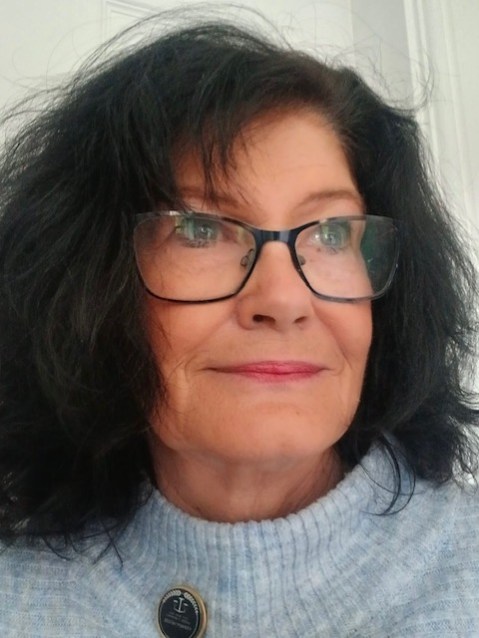
Paula Sussex – a Microsoft Teams picture

You may not have noticed but the UK Parliament and the National Health Service has not had a permanent Ombudsman to handle complaints for more than a year.

Ever since for some unexplained reason the former PM Rishi Sunak blackballed the first choice, Nick Hardwick, a former chair of the Parole Board, for the job despite going through a thorough selection process, interfering with a body which is independent of government, it has been rudderless without a permanent boss. See my blog on this here.

To solve the problem the Parliamentary Ombudsman’s office appointed an interim candidate, Rebecca Hilsenraft, then chief executive, after a meteoric rise since joining the organisation from the Equality and Human Rights Commission, who at least could adjudicate on complaints.

But they would have known then that her appointment would end on March 31st this year – a year after the last permanent Ombudsman, Sir Rob Behrens, retired. You would think that would have given them plenty of time to find a successor and go through a thorough selection process. But Oh no, by the time she reverted back to her old job, nobody had been appointed.

As a result the press office had to issue this statement:

“We are currently awaiting news on the appointment of a permanent Ombudsman.

“Our dedicated staff remain committed to delivering an important service for the public.

There may be a small number of cases we are unable to progress without an Ombudsman in post. Caseworkers will directly contact any complainants whose cases are affected.”

Checking their website yesterday there has not been one new press release nor any new decision of cases announced since April 1.

Then suddenly last week it was announced that the Public Administration and Constitutional Affairs Committee were to hold a pre appointment meeting this week for a new Ombudsman. Extraordinarily the name was kept secret from the public record until this Tuesday.

I gather it was at the request of the favoured candidate, Paula Sussex, because it appears she had not told told her present employer, she is chief executive of OneID, that she had clinched the job.

Now yesterday there was a hearing. The current chairman of the committee, Tory MP, Simon Hoare, recused himself from the hearing as he had sat on the selection board leaving Labour MP, Lauren Edwards, to take the chair.

It was a very underwhelming event both from the appearance of the favoured candidate and the MPs questioning. For a start four MPs did not attend and those who did were mostly newbies whom I thought had yet to get in their stride.

The candidate herself appeared to know little about the working of the PHSO system and even less about the NHS. She appeared to be a management and process person steeped in working for the private sector rather than a person concerned about policy. This was noticed when she was chief executive of the Charity Commission when a profile of her highlighted this. The article is here.

She was also wary of journalists. The same article noted: “she has declined to give interviews: she is said to be unused to dealing with the media, disconcerted by the amount of press attention the commission attracts and confirmed in her reluctance to speak by any coverage she perceives as negative.”

Considering she admitted during the hearing that the Parliamentary Ombudsman had too low a profile – it strikes me she is going to have to be more proactive with the media if she wants to change it.

Her previous jobs have involved her as a consultant on new technology, working at a top level at the transactional Students Loan Company and for private industry.

Her most recent role is as a non executive director with the Infected Blood Compensation Authority which will ” sadly”, as she said, to have to give up. Given her sparse knowledge of the workings of the Parliamentary Ombudsman’s Office I was rather surprised she did not mention that her fellow non executive director is none other than Sir Robert Behrens, the last Ombudsman, who could have given her great detail about its inner workings.

Also it is rather ironic that this body – which despite its name is a private contractor not a public body- is to face a recalled two day hearing next month of the Infected Blood Inquiry under Sir Brian Langstaff because of public dissatisfaction with its handling of compensation and a slew of other complaints. Jenni Richards KC , the inquiry’s counsel, has just published a huge list of issues. See here.

Given some of these issues will be the very bread and butter work that a Parliamentary Ombudsman and Health Service Ombudsman would have to handle, someone might ask why she presided in an organisation that now faces such searching questions for not doing its job. Of course its minutes aren’t published so we won’t know whether she raised such issues or went along with the management.

Altogether I am sceptical of whether there will be great change at the Parliamentary Ombudsman’s Office and I am afraid her attitude and the lax scrutiny by the one committee that can hold it to account will mean any great change.

The committee of course do not agree and think she is wonderful. This is their conclusion In a report published after the hearing.

“We are satisfied that Paula Sussex has the personal independence and professional skills necessary to fulfil the high profile, demanding and varied role of Parliamentary and Health Service Ombudsman. Paula
Sussex is an excellent candidate with a track record of organisational transformation with a focus on improving the effectiveness and external reputations of the organisations she has led. Her professional
background and experience as Chief Executive will aid her in giving the PHSO direction and certainty. We wish her every success in this role.”

Some 114 people applied for the job at a salary of between £171,000 and £189,000 a year -42 per cent were women.

One-Time
Monthly
Yearly

Make a one-time donation

Make a monthly donation

Make a yearly donation

Choose an amount

£5.00
£10.00
£20.00
£5.00
£15.00
£100.00
£5.00
£15.00
£100.00

Or enter a custom amount

£

Your contribution is appreciated.

Your contribution is appreciated.

Your contribution is appreciated.

DonateDonate monthlyDonate yearly

Please donate to Westminster Confidential

£10.00

AI instantly speeded up my NHS medical treatment – but MPs say government has a long way to go to achieve universal provision

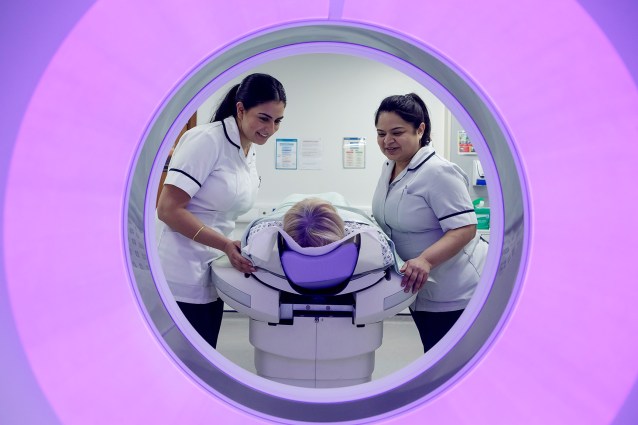
Scanner at the Paul Strickland Scanner Centre charity at Mount Vernon Hospital

I am currently being monitored by the NHS after having day surgery last year to remove a melanoma on my lower back. As part of the cancer recovery treatment I am being checked every three months at Mount Vernon hospital with both a CT and MRI scans to make sure there is no recurrence and having my skin checked by a dermatologist at Hemel Hempstead hospital.

Two weeks ago I had both scans at the Paul Strickland Scanner Centre, run by an independent charity, at the hospital. Imagine my surprise and nervousness when the CT scanner said to me as I was about to go home to stay behind because doctors were taking a look at my CT scan.

Then Luke, a junior doctor at Mount Vernon, turned up to tell me the scan had discovered blood clots in my lung. What was really amazing to me it had been discovered because the scanners at the charity use AI to check CT scanner. The AI showed up something was wrong which led the radiographer to examine the scan more closely to reveal multiple blood clots.

As a result I got instant medical treatment instead of waiting for the standard 14 days for the results of the scan to come back. The doctors and nurses gave me a through check on the spot – blood pressure, an ecg, a blood sample and checks on my breathing before prescribing blood thinners to start treatment that night.

Undetected blood clot produced no serious symptoms

If it was not for AI for the last two weeks I would have had a untreated blood clot on my lung without me knowing anything about it. It was virtually symptomless apart from a dull pain in my upper back when I was driving which I had put down to old age rather than anything else.

What I didn’t know is that Paul Strickland Scanner Centre, a charity which relies on donations, is at the cutting edge of linking AI with radiology. Its first introduction of new AI linked scanners was in 2022 -way ahead of other centres.

At the time Mr Will McGuire, the Deputy Superintendent for MRI at Paul Strickland Scanner Centre, said:“It’s the first time we have used deep learning, often referred to as artificial intelligence, as part of the image acquisition. The scanner software has been trained on thousands of scans. When the radiographer runs the scan, the scanner takes less data from the patient and the ‘Deep Resolve’ software then basically fills in the gaps based on its knowledge. The software packages we will get will both reduce ‘noise’ on scan images and provide radiologists with a better definition image.”

New uses for ” Deep Resolve ” software which could benefit kidney, prostate and breast cancer patients are also being pioneered this year. For the first time MRI scans could analyse bone structure as well as soft tissue speeding up treatment and reducing the need for both CT and MRI scans. The charity is planning to demonstrate this new technique at the European Congress of Radiology this year.

The initiatives by the charity show how dramatic the use of AI could transform services inside the NHS to benefit patients and provide services. I gather from Hillingdon NHS Trust where the hospital is based – though it is run by the East and North Hertfordshire NHS Trust – that there is also a trial using AI among hospitals in North West London to provide instant information after chest X rays which would speed up treatment.

The latest information on the state of public provision of AI came from a report by the Commons Public Accounts Committee after a National Audit Office report reveal very uneven provision.

The report concluded that the government is facing significant challenges to introduce AI across Whitehall and the NHS – with out of date computer systems and a big shortage of skilled staff.

It says :”For AI to be used well, it needs high quality data on which to learn …too often Government data are of poor quality, and often locked away in out-of-date, or ‘legacy’, IT systems, which are partially defined as “an end-of-life product, out of support from the supplier, [and] impossible to update…” An estimated 28% of central government systems met this definition in 2024. Approximately a third of Government’s 72 highest-risk legacy systems still lack remediation funding. The report warns that there are no quick fixes here, and calls for funding for the remediation of this kind of technology to be prioritised.”

“Another barrier to the safe and effective adoption of AI by Government are longstanding and persistent digital skills shortages. Around half of roles advertised in civil service digital and data campaigns went unfilled in 2024, and 70% of Government departments report difficulty recruiting and retaining staff with AI skills. The PAC has long raised concerns about digital skills gaps in Government, and is sceptical that the Department for Science, Innovation and Technology’s (DSIT) planned digital reforms will address the problem.”

Government’s ” sclerotic digital architecture”

Sir Geoffrey Clifton-Brown MP, Chair of the Committee, said:“The Government has said it wants to mainline AI into the veins of the nation, but our report raises questions over whether the public sector is ready for such a procedure. The ambition to harness the potential of one of the most significant technological developments of modern times is of course to be welcomed. Unfortunately, those familiar with our Committee’s past scrutiny of the Government’s frankly sclerotic digital architecture will know that any promises of sudden transformation are for the birds.

“A transformation of thinking in Government at senior levels is required, and the best way for this to happen is for digital professionals to be brought round the top table in management and governing boards of every Department and their agencies. I have serious concerns that DSIT does not have the authority over the rest of Government to bring about the scale and pace of change that’s needed. We hope the recommendations in our report aid the Government in succeeding in bringing public sector systems into the 21st century for their users, where other efforts have failed.”

Perhaps MPs on the committee and NHS government ministers should go and visit the Paul Strickland Scanner Centre at Mount Vernon Hospital in Northwood and see how they have pioneered linking AI to radiology. It is anything but sclerotic and ministers might learn how to avoid some of the pitfalls of the great transformation they are promising. Many patients, including me, would be very grateful if they did.

One-Time
Monthly
Yearly

Make a one-time donation

Make a monthly donation

Make a yearly donation

Choose an amount

£5.00
£10.00
£20.00
£5.00
£15.00
£100.00
£5.00
£15.00
£100.00

Or enter a custom amount

£

Your contribution is appreciated.

Your contribution is appreciated.

Your contribution is appreciated.

DonateDonate monthlyDonate yearly

Please donate to Westminster Confidential

£10.00

Latest interviews on Salford City Radio on developments over mediation for 50swomen

Last week Salford City Radio’s Ian Rothwell devoted a whole programme to the CedawinLaw case for mediation to solve the impasse of compensation for the 50swomen who faced a six year delay in getting their pension. Three speakers discussed the issues. Jocelynne Scutt, a former Australian judge and anti discrimination commissioner for Tasmania, gave an update description of the present legal position and how you do not have to court to start a mediation process. Janice Chapman ,a 1950s woman, gives a heart rending account of how women have already been discriminated against before they got their pension and then had to wait six more years before they could get it and how alternatives to work longer are often not possible. I give an interview questioning the wisdom of Waspi’s legal case for partial maladministration and how the All Party Group on State Pension Equality is moving towards insisting that all groups campaign together rather than the division between Waspi and all the other groups which has bedeviled the issue for years.

Here are the three interviews:

One-Time
Monthly
Yearly

Make a one-time donation

Make a monthly donation

Make a yearly donation

Choose an amount

£5.00
£10.00
£20.00
£5.00
£15.00
£100.00
£5.00
£15.00
£100.00

Or enter a custom amount

£

Your contribution is appreciated.

Your contribution is appreciated.

Your contribution is appreciated.

DonateDonate monthlyDonate yearly

Please donate to Westminster Confidential

£10.00
Department of Transport excludes over one million disabled drivers from the green car revolution

Electric car charging at home, Clean energy filling technology. Pic credit:www.freepik.com

A damning report from MPs today reveals that 1.2 million disabled drivers have been blocked by the government from being able to use electric charging points cars at motorway service stations and garages.

While the UK is on target to increase the number of charging points for the growing number of electric cars not one of the 73,000 charging points reaches accessibility standards laid down by the government for disabled people to use them.

The reason is that to install disabled friendly charging points has been left as a discretionary option for installers rather than a mandatory requirement by government.

Sir Geoffrey Clifton-Brown MP

Sir Geoffrey Clifton Brown, the Tory chair of the Commons Public Accounts Committee, said: “It is of deep concern that the needs of disabled drivers are being ignored. Not a single charge point in the country is currently fully accessible. We are risking baking a serious injustice into the fabric of a major part of our national infrastructure. Government similarly needs to understand how to remedy financial inequalities for those who have no choice but to use public charge points. Our report therefore challenges the Government – it must move at pace to overcome current delays and encourage take-up, while taking the time to ensure no-one gets left behind in this all-important shift to the future.”

The report warns: “Many disabled people are reliant on their cars as existing public transport does not adequately cater for their needs. Failure to address problems with the uptake of the standard will mean that the public charge point network will continue to develop without meeting the needs of drivers with disabilities.”

The treatment of disabled motorists reflects the disparaging attitude both the last Tory and the present Labour government seem to have for disabled people. Rail travellers are similarly badly treated with patchy provision to access station platforms and the London underground is only partly accessible with Euston underground been seen as the worst station in Europe. Compare this to the excellent provision for disabled people on public transport in Singapore, Sydney, Adelaide and Rio. I have had a good experience taking my late wife in a wheelchair round these cities.

And it comes at a time when the new government is planning a £6 billion cut in disabled people’s benefits and is expecting the disabled to get to work without providing proper facilities for them to travel there.

The treatment of the disabled is just one criticism of the present electric charging provision. The report found a very uneven distribution of electric charging points round the country. London, where ministers mainly live, has 250 charging points per 100,000 of the population. While Northern Ireland has just 36 per 100,000 population – suggesting that people taking their electric car on holiday there might have problems. In England the worst areas for provision were the North West, including the Lake District and the East Midlands, including Lincolnshire.

Most charging points are in urban not rural areas and there is also a problem connecting charging points to the national grid – which suggests that when they are used more widely we might find them running out of juice.

The previous government set aside £950 million to do this – but the report reveals nothing has yet been spent as pilot projects were subject to delays.

There is also an economic problem with public charging points paying 20 per cent VAT while those who have the space for a home charger paying only 5 per cent VAT. So it is much more expensive to use public chargers.

There may be a further problem for the many people who live in terraced houses who install an electric charger and then put cables across the pavement and roads to charge their parked cars.

So much for the green revolution which we are all promised. It is certainly happening, but not been managed well and disabled people are just an after thought as far as policy makers are concerned.

One-Time
Monthly
Yearly

Make a one-time donation

Make a monthly donation

Make a yearly donation

Choose an amount

£5.00
£10.00
£20.00
£5.00
£15.00
£100.00
£5.00
£15.00
£100.00

Or enter a custom amount

£

Your contribution is appreciated.

Your contribution is appreciated.

Your contribution is appreciated.

DonateDonate monthlyDonate yearly

Please donate to Westminster Confidential

£10.00
Dumped: The 50swomen who will get nothing after after a botched and divisive WASPI campaign

The new Labour government took until nearly Christmas to announce that it was not going to give the 3.5 million remaining 50s women a penny in compensation for their six year wait for a pension.

The result I am sad to say could have been predicted as both Labour and the Conservatives were determined from the start to avoid a pay out by delaying tactics and a refusal to discuss mediation.

It was left to MPs to continue the fight whose parties were either not in a position to pay out the money because they were not in government or didn’t have the power to pay out state pensions in the first place.

This is both a scandal and a tragedy for the women. They have been let down by ministers, the judiciary, civil servants,the Parliamentary Ombudsman, MPs, and even some of their own advocates, especially by bad decision making by WASPI, who took a route to secure compensation that was bound to fail.

Liz Kendall

Ministers have continually procrastinated over the pay out- either by claiming the Ombudsman’s report was so complex they had to study it in detail – the Tories under Mel Stride, then works and pensions secretary or Labour – under Liz Kendall, his Labour successor, that she needed more time..

The judiciary also played their part in delaying any decision and ignoring whether there had been discrimination against the women despite Margaret Thatcher signing up to the UN convention on the Elimination of All Forms of Discrimination Against Women in 1986. Only one judge, the Hon Justice Lang, a woman judge born in the 1950s, got the significance of the challenge facing this group of women by accepting all the issues raised by barristers Michael Mansfield and Catherine Rayner that it was age and sexual discrimination as well as maladministration. She understood the simple fact that although the decision was taken in 1995 to raise the women’s pension age to be equal with men, it was only now that the effects were being discovered.

The rest of the judiciary in the High Court and the Court of Appeal rejected this and the Supreme Court took the insulting decision that the case was out of time – having spent years already going through the court system.

Civil Servants in the Department for Work and Pensions were equally hostile – they didn’t believe in the women’s case, didn’t want to pay them and one senior civil servant went as far to accuse the women of committing fraud by wanting to claim.

The then Parliamentary Ombudsman.Sir Robert Behrens, produced a mouse of a report, reneged on his duty to make recommendations on the maladministration issue, leaving it to MPs knowing that ministers and civil servants were hostile to any payment.

Most MPs facing a prolonged lobbying campaign from WASPI, organised by Higginson Strategy, came behind the Ombudsman’s weak report and ignored the discrimination issue and later a proposal for mediation.

Making matters worse

To make matters worse the campaign for restitution was divided and split into various groups wanting different things and disagreeing over personalities. There was no united front. WASPI tried to control the agenda by focusing on maladministration. This was a false move as anybody would have known that the Parliamentary Ombudsman in the UK, unlike other countries, can be ignored by government and it cannot enforce its recommendations. So when the weakened report for partial maladministration came out, ministers knew they need not abide by it.

Why I supported Backto60 and CEDAWinLaw, is because they were prepared to put their money where their mouth was, did go to court and employed international experts to make their case, like Dr Jocelynne Scutt, a former Australian judge, to produce a well argued report showing that the case involved discrimination. What is appalling is that issue has been ignored by the national media who have airbrushed any mention of such a solution.

Later CEDAWinLAW moved to get mediation between the groups and the government – and invited everyone to joint them. WASPI looked at it and refused – I can only assume they don’t want any mediation to solve the issue.

Instead they are still flogging the dead horse of the Ombudsman’s Report – which the Government has already rejected- to MPs on the All Party group examining the issue and to the Commons works and pensions committee which is investigating the issue.

The result is I am afraid the women will still get nothing. Only by making a move for mediation will they get anywhere. And they will have to raise the money to force it through the courts as ministers don’t want to know. I know there is already an organisation prepared to act as mediators. What we need is the resolution of people to act or live forever without getting one penny out of the DWP.

One-Time
Monthly
Yearly

Make a one-time donation

Make a monthly donation

Make a yearly donation

Choose an amount

£5.00
£10.00
£20.00
£5.00
£15.00
£100.00
£5.00
£15.00
£100.00

Or enter a custom amount

£

Your contribution is appreciated.

Your contribution is appreciated.

Your contribution is appreciated.

DonateDonate monthlyDonate yearly

Please donate to Westminster Confidential

£10.00

Ministry slammed by auditors for not getting correct Parliamentary approval for paying out Post Office victims

Parliament’s watchdog, the National Audit Office, has qualified last year’s annual accounts of the Department for Business and Trade, for failing to providing accurate estimates of the money needed to compensate the Post Office victims of the Horizon scandal and overspending its budget by over £200m.

The disclosure is the latest blunder in the handling of the scandal where hundreds of postmasters were wrongly accused of fiddling their books and some spent time in prison for crimes they did not commit Instead there was a cover up by the Post Office when the computer system was at fault.

Gareth Davies, the head of the National Audit Office, who audited the ministry’s accounts, says the omission to provide Parliament with the correct figures and the £208m proposed overspend on the scheme amounted to a breach of the ministry’s spending limits and has been classified as irregular spending.

Kemi Badenoch. Pic credit: Gov uk

The decision to pay out compensation to the postmasters and quash their convictions happened when Kemi Badenoch, now the Tory Party leader, was business secretary. She was the sole shareholder of the Post Office under the present constitutional arrangement for running the business.

Last year the government set up compensation schemes for the postmasters – one to compensate them for the money they lost through the computer misrepresenting their accounts and another to compensate those who had been wrongly convicted.

What the accounts revealed is that the ministry did not hold enough data to properly estimate how much compensation it would have to pay out and put forward to MPs estimates to approve its spending that were not accurate – hence the overspend.

Under the first scheme the Horizon Shortfall Scheme (HSS), which is intended to support
those who accounts were falsified by the computer system , Individuals who qualify can choose to either accept a fixed sum of £75,000 or opt for full assessment by an independent advisory panel.

The Post Office is inviting current and former postmasters to apply if they wish to but haven’t yet done so, as there will be a closing date for the scheme. It has advised the ministry that it anticipates a response rate of approximately 25-30% and that the majority of new claimants will accept the fixed sum offer.
However, the auditors say due to the limited amount of available data on which to base this estimate,
the eventual outcome could vary significantly.

Under the Horizon Conviction Redress Scheme (HCRS) intended to compensate individuals who had their convictions overturned. Because this scheme is in its early stages, there is limited data upon which to base an estimate of future settlement values.

But the ministry just assumed that the proportion of applicants who choose to accept the fixed sum offer
(rather than submit a full claim for detailed assessment) will be similar to the take-up rate for those who had their convictions overturned by the court and are being compensated through the Overturned Conviction (OC) scheme;
It also assumed that the average settlement value for those choosing not to accept the HCRS fixed sum award will be significantly lower than its equivalent estimate for OC claimants.

Neither of these propositions could prove to be accurate because the period for claiming compensation is not over. And by estimating an extra £208 million to be spent on the second scheme led to the ministry breaching its obligation to tell Parliament how much it intends to spend.

The Department for Business and Trade said:”This issue took place as a direct result of the decision to rightfully offer further redress to Horizon scandal victims, at a time when the high volume and complexity of claims meant there was significant uncertainty on the cost estimates.

“We have acknowledged this to the NAO and remained determined to ensure that all affected postmasters receive the financial address they deserve to right these historic wrongs’

A further £1.8 billion has been provided since these accounts were reported.


One-Time
Monthly
Yearly

Make a one-time donation

Make a monthly donation

Make a yearly donation

Choose an amount

£5.00
£10.00
£20.00
£5.00
£15.00
£100.00
£5.00
£15.00
£100.00

Or enter a custom amount

£

Your contribution is appreciated.

Your contribution is appreciated.

Your contribution is appreciated.

DonateDonate monthlyDonate yearly

Please donate to Westminster Confidential

£10.00
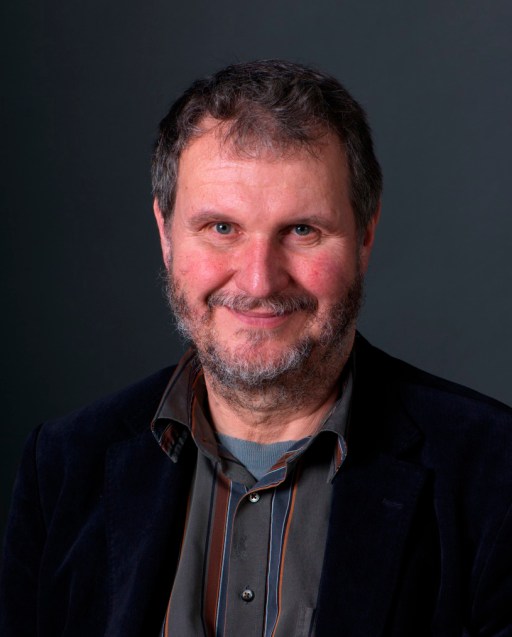
Jocelynne Scutt leads charge for CEDAWinLAW at APPG on 50s women pensions

Jocelynne Scutt

The All Party Parliamentary Group on 50swomen pensions finally heard from CEDAWinLaw about what they want to see the Government do about responding to compensation for the 50s women deprived of their pensions for six years.

Until this month the only organisation allowed to approach the group were WASPI and their lobbyists Higginson Strategy. The meeting was in private. An attempt to allow me to attend was banned by the chair, Rebecca Long-Bailey, the Independent MP for Salford, on the grounds that none of the other meetings had been open to journalists.

However I was not to be put off by that and have now managed to piece together who was there, what they said and how they were received.

The two main speakers were Joanne Welch, who organises CEDAWinLAW and Jocelynne Scutt, the former Australian judge, author of a report on the discriminatory nature of the treatment of the 3.6 million women and chair of the people’s tribunal, that examined the issue.

Their arguments will be familiar to my readers – seeking mediation with the government to decide the level of compensation rather than accepting the guidelines by the former Parliamentary Ombudsman, Robert Behrens, for limited compensation for partial maladministration. They were also given a strong briefing from Jocelynne Scutt on the direct and indirect discrimination against the women. She also welcomed Sir Keir Starmer’s commitment to using civil procedures such as mediation to end disputes – though the government is silent about doing this for 50s women.

What was clear to the group was this was the first time they had been told what CEDAWinLAW stood for – including a suggestion that the money could be paid in a lump sum and tax free over five years on top of their pension.

Of course the government does not want to get into such talks and would rather keep postponing making any payments.

Sir Julian Lewis MP

Here the strongest condemnation of this government’s approach came from Sir Julian Lewis, the Conservative MP for New Forest East.

He said at the meeting that the treatment of 50swomen was rather similar to all other cases where the government owes large sums of money in compensation – likening the delay in reaching a settlement to those seeking compensation in the contaminated blood and sub postmasters cases.

” The government wants to spin it out as long as possible hoping that people will get disheartened and give up or will have died by the time they can get any compensation.”

He said last night: ” The delay is equivalent to asking these poor old ladies to wait to end the both the First and Second World Wars for payment. The six year delay on payment of their pension is equivalent to the time the UK spent fighting each of the two world wars.”

Rebecca Long-Bailey MP: Official Portrait. Pic Credit: Chris McAndrew UK Parliament

So who did turn up to hear the case? Present in person as well as Sir Julian Lewis were Labour peer Lord Bryn Davies of Brixton; Ian Byrne, Independent MP for Liverpool, West Derby, who joined Dr Scutt when she presented a letter and petition to Downing Street earlier this year; Ruth Jones, Labour MP for Newport and Islwyn and Adrian Ramsey Green Party MP for Waveney. Five other MPs sent their personal assistants to the meeting. They were Chris Bloore, Labour MP for Redditch; Bell Ribeiro-Addy, Labour MP for Clapham and Brixton Hill; Mary Kelly Foy, Labour MP for the City of Durham; Kate Osborne, Labour MP for Jarrow and Gateshead East and Aspana Begum, Independent MP for Poplar and Limehouse.

The delegation did feel they had a fair hearing and Rebecca Long-Bailey praised them for giving such a clear description of their aims and promised to take their views on board. We shall see.

For those wanting more detail Jocelynne Scutt was initerviewed on Salford City Radio by Ian Rothwell this week and outlined a similar case there. This is the local radio station whose MP is Rebecca Long-Bailey, where I also have appeared on a number of occasions.

The interview is below.

Joanne Welsh has a five minute call for mediation on YouTube which you can hear below

We now await development but don’t hold your breath for an early resolution.

One-Time
Monthly
Yearly

Make a one-time donation

Make a monthly donation

Make a yearly donation

Choose an amount

£5.00
£10.00
£20.00
£5.00
£15.00
£100.00
£5.00
£15.00
£100.00

Or enter a custom amount

£

Your contribution is appreciated.

Your contribution is appreciated.

Your contribution is appreciated.

DonateDonate monthlyDonate yearly

Please donate to Westminster Confidential

£10.00

Trump re-election leads to Americans to flee their country for Europe and the UK

Donald Trump; Pic Credit: The Trump Organisation website

Donald Trump plans the biggest deportation of illegals ever seen in American history – accusing them of being criminals, mentally unstable, drug dealers and even eating people’s pets.

But like every political policy there are always unintended consequences. And one of them has been building up since 2020 ever since the notorious storming of the Capitol in Washington and the endless legal battles claiming the last US election had been stolen from him.

Well qualified US citizens – not the people Trump is targeting to leave the country at all – are deciding to get out of the USA and one country – Norway – is even taking advantage of Trump’s victory to encourage them to leave as soon as possible.

Facts and figures about the Americans leaving for Europe emerged this weekend on the website Dispatches Europe – see the article here – and the Dutch based website is offering tips on what they need to do to settle there.

And while the UK mainstream media – and both Tory and Labour governments- has been agonising over our illegal immigration and asylum problem – the boat people – the number of US citizens in the UK has jumped from 137,000 in 2013 to over 166,000 by 2021. This is the latest known figure and the highest in Europe. It could be higher by now.

While US techies who become digital nomads – are well known to be keen to travel to exotic places where they can work and surf ( both on the sea and on line), this seems a new phenomena.

Dispatches Europe says the biggest jump between 2021 and 2022 has been US citizens turning up in Portugal – not an obvious choice – with numbers jumping for 28,700 to 41,200 – an increase of 30 per cent.

The second highest jump is Germany – an increase of 19 per cent – from 12,400 to 15,300. Spain has seen a 9 per cent rise from 35,400 to 38,900. While Ireland has seen a 11 per cent rise from 11,700 to 13,200. Over a longer period the Netherlands saw an increase from 15,500 to 24,000 between 2013 and 2022.

Last year the Economist noticed the trend quoting that many Americans “are fleers rather than seekers.

Norway has gone further to cash in on Trump’s victory

One country has gone further. Another article in Dispatches Europe ( see here) features EmigrateMe, a site to reach out to disillusioned Americans, particularly but not necessarily with Norwegian descent, to come and work near Oslo.

It offers ” free healthcare and schools, reasonably priced housing, culture and a “high tolerance for religious beliefs and sexual orientation, stunning nature, clean air and fresh water.” What is not to like?

Obviously the figures are not huge compared to the huge population of the US. But once Trump gets into office – will a growing trickle grow into a big flood. And what will Labour under Sir Keir Starmer and Tories under Kemi Badenoch do faced with a new US invasion?

One-Time
Monthly
Yearly

Make a one-time donation

Make a monthly donation

Make a yearly donation

Choose an amount

£5.00
£10.00
£20.00
£5.00
£15.00
£100.00
£5.00
£15.00
£100.00

Or enter a custom amount

£

Your contribution is appreciated.

Your contribution is appreciated.

Your contribution is appreciated.

DonateDonate monthlyDonate yearly

Please donate to Westminster Confidential

£10.00