Privileges Committee hears all sides over Charity Commission breaching Parliamentary privilege on Ombudsman’s sex abuse reports

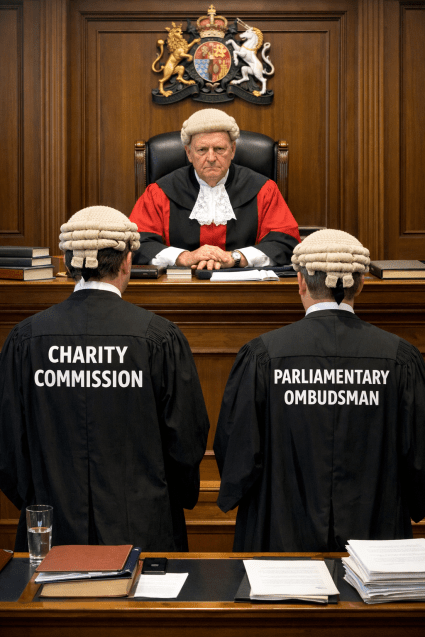
A rare but virtually unreported public hearing by the Privileges Committee on Budget Day revealed a sharp divide between the Parliamentary Ombudsman and the Charity Commission over the role of charities in safeguarding children and adults who have been sexually abused.

The hearing was sparked off by Parliament unanimously reporting the Charity Commission to the Privileges Committee after Stephen Hoare, the chair of the Public Administration and Constitutional Affairs Committee, decided the Commission had breached Parliamentary privilege by wanting to delay publication of the reports until after a judicial hearing being called by the Commission. I did a report here .

The reports which Parliament compelled the Ombudsman to publish with final conclusions covering complaints of a recent adult sex abuse case – Miss A – and a historic child sexual abuse at a school -Mr U.

Mr U later contacted my blog and waived his anonymity to give me a detailed account of what had happened at a Roman Catholic school in Blackburn when it was run by a paedophile priest. The blog about this is here.

Saira Salimi, the Speaker’s Counsel

The hearing began with a statement on the issue from Saira Salimi, the Speaker’s Counsel.

She told the hearing: “This is quite a difficult case, because it does raise difficult questions about
the relationship between parliamentary and legal accountability. There is a power conferring a discretion on a public authority to report in certain circumstances, and the report is made to Parliament. Although it looks at first glance like a function that might be reviewable by the courts, the interaction of parliamentary and legal accountability may mean that the decision is not justiciable.”

She said that if the issue of privilege had not been the raised the Parliamentary Ombudsman would have been inhibited from laying the reports before Parliament.

She added:” this is an unusual case where Parliament and the courts are on the same territory at the
same time. That is not unprecedented but is unusual, because of the self denying ordinance that the House normally maintains in relation to matters before the courts under the sub judice resolution. It is my hope that our intervention in this case will assist both the courts and Parliament in carrying out their respective roles, which are constitutionally distinct ands equally important.”

Karl Banister, Director of Operations, Legal and Clinical and Deputy Ombudsman at Parliamentary and Health Service Ombudsman (PHSO). gave evidence.

He told MPs: “the[ charity] commission should have an independent person review Mr U’s case to consider whether the reasoning was adequately accounted for; consider whether the outcome would have been different; look for learning on how it engages in such cases;[and] look at
its risk guidance;” Similar recommendations were made in Miss A’s case.

It is these recommendations that the Charity Commission is objecting to and says that the Ombudsman exceeded her powers and that such recommendations are unlawful.

He revealed considerable attempts were made at mediating the dispute.

“My assessment was that it was better not to provoke the commission to issue legal proceedings. It is obviously unattractive for two public bodies to be litigating. Were they to do so, they would likely get an injunction, and that would be an additional cost to the public purse.”

However in the end the Charity Commission decided to go ahead with a judicial review. it said:”“a declaration that the decision of 14 March 2025 is unlawful”—that is, our decision that it was
not compliant—“that the 14 March decision is quashed, that the defendant pay the claimant’s cost of the claim or any other order the court considers appropriate. That is what the judicial review sought.”

The Public Administration and Constitutional Affairs Committee were informed and the Parliamentary Ombudsman stuck to its point that the Charity Commission had not fully complied with decision. It was then taken out of their hands and Mr Hoare, the committee chair, decided to raise the privilege issue and compel the reports to be published so the committee could consider them.

David Holdswoth, chief executive of the Charity Commission

The Charity Commission brought a team of people to hearing headed by the chief executive David Holdsworth.

He told MPs:”The decision of the PHSO in its letter of 14 March—that we should reinvestigate criminal matters already investigated by the police, the CPS or the wider criminal justice system but deemed not able to proceed—has grave implications, in our view, for anyone involved in running a charity and, indeed, for wider citizens’ rights under the criminal justice process.
It is also our view that the ombudsman cannot retake regulatory decisions made by the commission to force a different conclusion, replacing our judgment with its own. It is for those reasons that we reluctantly sought to clarify matters through the courts.”

It soon became clear – and this was reinforced during the national Child Sex Abuse inquiry – that the commission regards the Commission as primarily an administrative and registration authority not an investigatory authority.

It was also clear MPs and the Speaker’s Counsel thought that the matter could have been cleared up at a meeting of the PACAC committee without going to the courts.

But Felix Rechtman, head of litigation at the commission said:”: We are not saying that the PHSO decision is just inappropriate. We go further: we say it is unlawful, and matters of law are
reserved to the courts under our constitutional arrangement.”

It is quite clear this issue is going to run and run. The courts have not given the Charity Commission a date for a judicial review hearing yet. The commission will first have to get permission to bring the judicial review and then have a hearing. The next stage will be the Privileges Committee report on whether the Commission has committed a contempt of the House.

One-Time
Monthly
Yearly

Make a one-time donation

Make a monthly donation

Make a yearly donation

Choose an amount

£5.00
£10.00
£20.00
£5.00
£15.00
£100.00
£5.00
£15.00
£100.00

Or enter a custom amount

£

Your contribution is appreciated.

Your contribution is appreciated.

Your contribution is appreciated.

DonateDonate monthlyDonate yearly
cards
Powered by paypal

Exclusive: Complainant” Mr U ” waives anonymity to reveal the child sex abuse cover up behind the Charity Commission and Parliamentary Ombudsman dispute

Kevin O’Neill Marist college principal and paedophile Pic credit: Lancashire Evening Telegraph

Damian Murray tells Westminster Confidential about his long battle with the Roman Catholic charity which covered up child sex abuse for 11 years

This is a story of the concealment and denial of child sex abuse by a charismatic principal of a college and religious charity who escaped justice in his lifetime and the failure of many organisations, including the Charity Commission and the charity to do anything about it.

Father Kevin O’Neill, a Marist priest, was principal of the Roman Catholic St Mary’s College in Blackburn. It was closed down in 2022 with £8.2 million debts reportedly caused by falling student numbers. It had been propped up by the last Tory government with emergency funding since 2020.

He was principal of the college from 1978 to 1993 and worked in Blackburn since 1964. He was born in Barking, east London and attended the Roman Catholic St Mary’s College in Middlesbrough going on to a get a degree at Christ’s College, Cambridge.

Damian was a pupil at the school between 1970 and 1977 and only discovered years later when a former pupil Graham Caveney revealed in a memoir that he had been sexually assaulted by O’Neill when he was a pupil there. It was then he realised O’Neill, as he long suspected, had been trying to groom him. The book, The Boy with Perpetual Nervousness was reviewed in The Guardian in 2017. See here.

Unlike Graham Caveney he was never sexually assaulted. It was in 2017 -seven years ago – that he started putting in a complaint to the Charity Commission and the Department for Education only to discover that neither were keen to take action. That is what led him to complain via his MP to the Parliamentary Ombudsman who have been the only people to do something about it

His view of the process is scathing. “This tortuously extended process also uncovered to me the worryingly close personal and organisational relationships actively fostered and maintained between the UK Roman Catholic Church and both the DfE and the Commission. It has shown in my view the
Commission in particular to be proudly unaccountable, intransigent, incompetent and
completely unfit for purpose.”

The former St Mary’s College, Blackburn Pic credit: Lancashire Evening Telegraph

The cover up by the Marist priests is as bad as the actual child sexual abuse. When it was admitted in 1993 none of the governors of the school were apparently told and the principal was packed off to the United States on the grounds he was sick. When he died back in the UK in 2011 after getting dementia a celebratory mass was held at the school and the Lancashire Evening Telegraph is full of glowing tributes to him from former pupils with his nickname ” the Rev Kev” prominently mentioned. None of the pupils would have known about his dirty secret.

As bad as that the school in 2008 named a new £2.5 million arts centre in his honour – the O’Neill Academy for Performing Arts – which is now in use as a community venue.

And as late as 2024 the accounts of Marist society a curious note reveals :“At the start of 2023, the Charity was informed by the RLSS [ Religious Life Safeguarding Service] of an historic allegation made against a deceased member of the Society. The allegation was immediately investigated with all relevant parties (including the Charity Commission) notified of the event. After a full investigation and professional advice, the victim received a private financial settlement of £30,000 in full and final settlement of the claim. The RLSS has now closed this case.”

Damian says the charity ” deliberately lied about and concealed O’Neill’s abuse from the police; from school and charity regulators; from charitable donors and beneficiaries; from current, former and prospective staff, pupils and parents at St Mary’s College from other potential victims of O’Neill’s grooming or abuse; and from the wider public.”

He said :”The Diocese of Middlesbrough, the Department for Education and the Charity Commission have all failed to demonstrate effective, timely, or appropriate oversight of the Marist Fathers at any time
since the abuse was disclosed in 1993. Between 2017 and 2020 when I brought these important concerns to their attention in great detail and in line with their statutory or other formal responsibilities, these allegedly independent regulators have blankly refused to address any of them directly. They have simply chosen to turn a blind eye, both to O’Neill’s sexual abuse of a child in his care and to its long-term, deliberate concealment by the Marist Fathers.”

He managed to send his evidence to the national child sex abuse inquiry in the UK headed by Professor Alexis Jay about the case, though by that stage its formal hearings were closed. The inquiry has published a wider critical report on child sexual abuse in the Roman Catholic Church.

The Charity Commission says it is beyond its power to do anything about a charity’s role in “historic ” cases of child sexual abuse but this will be tested in a judicial review it is bringing against the Parliamentary Ombudsman claiming it is exceeding its powers in this case.

Blackburn is not alone in suffering child sexual abuse at the hands of Marist Fathers or the associated Marist Brothers. The Royal Commission into child sex abuse in Australia reported in 2014 on cases in schools in Queensland and New South Wales – one involving 19 boys – and in New Zealand nine Marist brothers were convicted of child sexual abuse.

One-Time
Monthly
Yearly

Make a one-time donation

Make a monthly donation

Make a yearly donation

Choose an amount

£5.00
£10.00
£20.00
£5.00
£15.00
£100.00
£5.00
£15.00
£100.00

Or enter a custom amount

£

Your contribution is appreciated.

Your contribution is appreciated.

Your contribution is appreciated.

DonateDonate monthlyDonate yearly
You can donate via Paypal using this link

https://www.paypal.com/ncp/payment/865JAS3QJ3CGQ

Two damning reports from Parliamentary Ombudsman say Charity Commission failed complainants about sexual abuse

The Parliamentary Ombudsman’s Office today published two reports into the Charity Commission’s handling of separate sexual abuse cases following Parliament’s rare privilege decision last week – see my report here – to compel Paula Sussex, the Parliamentary Ombudsman, to release them in the face of the Commission starting legal action to stop or delay publication.

Both reports highlight the failure of the Charity Commission to implement some of its findings and the total dissatisfaction of the two complainants – Lara Hall, 37 and Damian Murray, who is 66. Both decided to waive their anonymity. I will be publishing a separate follow up story on Mr Murray’s case after he contacted me – particularly after the local media failed to cover it. It is a truly shocking story.

The two cases are different. Lara Hall’s case involves the sexual exploitation by a trustee of a UK charity where she acted as a whistleblower.

Damian Murray’s case involved historic sexual child abuse by a prominent figure in the local community which was concealed by the charity and the college where he worked.

Lara said:

“The Charity Commission’s repeated failures have caused me profound pain and ongoing injustice. Instead of holding a trustee to account for appalling sexual exploitation, it questioned my experience and forced me to relive my worst trauma. How can survivors feel safe reporting abuse if they think they will be treated like I have? 

“By trying to block Parliament from seeing the reports, the Commission attempted to avoid scrutiny – striking at the heart of accountability in our democracy. Even now, it refuses to accept responsibility or act to put things right.

“It is my hope that by bringing the reports to Parliament’s attention action will finally be taken. The Commission must urgently address safeguarding to protect vulnerable people. Right now, it is failing in its core duty.

“It is time for change, oversight, and accountability within the Charity Sector so what happened to me is never repeated. I call on Parliament to hold the Commission to account and restore public trust. People deserve to feel safe approaching charities, and they deserve a regulator that takes safeguarding seriously

Damian Murray said:“For over seven years the Charity Commission has refused to act upon my complaint about the concealment of child sexual abuse.

“The Charity Commission has doggedly resisted all efforts by me, and latterly the Parliamentary Ombudsman, to encourage it properly or promptly to discharge its statutory responsibilities, choosing rather to shield the charity and its Trustees from scrutiny and accountability.

“After much unnecessary time incurred due to this resistance, the Ombudsman’s report has now been laid in Parliament. I trust now that politicians will hold the Commission to account, where I as an ordinary UK citizen failed.

“By stark contrast with the Commission, I very much appreciate the careful, professional and empathetic way that the Ombudsman’s team have dealt with me and with the complex and consequential concerns I have raised.”

Parliamentary and Health Service Ombudsman CEO, Rebecca Hilsenrath KC (Hon) said: 

“The Charity Commission indicated throughout our investigations that they did not agree with our findings.  They have not complied with the bulk of our recommendations, despite our best efforts and our willingness to work with them to ensure compliance.

“It is important that the Commission provides a full apology for their failings and reassures Lara and Damian that they will put things right by complying completely with our recommendations. They have not done this so far. 

“Our report has now been laid in the House of Commons, following the intervention of Parliament last week. The Commission had prevented us from doing so by bringing legal proceedings. We act on behalf of Parliament to hold Government and other national bodies to account for failures, and we have a responsibility to make Parliament aware of cases of non-compliance. I am pleased that Parliament has taken an interest in these cases and has given us the opportunity to bring them to the attention of the House so that it can intervene.

“The purpose of our investigations is always to encourage learning and service improvements. If an organisation looks at what went wrong, it will be able to stop the same mistake from happening again.”

The Charity Commission released a statement criticising the action of Parliament to order publication of the reports.

A spokesperson said: “We have long accepted that there are genuine and important lessons for the Commission to learn from these two sensitive cases, principally in the way in which we communicate with complainants, and we have made improvements to our processes as a result. We have previously apologised to both complainants.

The Commission undertook detailed reviews in each case, as set out by the Ombudsman, and concluded that the overall outcome in each case was sound. In the case of Ms Hall, we had already issued an official warning to the charity concerned. 

But it is our view that by making the decision that we did not comply with certain recommendations in its reports, the Ombudsman has misunderstood our remit and overstepped its role, meaning that its decision making was unlawful.

We respect the work and authority of the Ombudsman, but it is vital that we, in turn, are enabled to do the job that Parliament set us

We have worked hard to seek to resolve the matter with the Ombudsman directly, but this has not proven possible. For that reason, we have brought legal action at the High Court. 

We have not asked the court to block the laying of any report before Parliament. We did, though, ask the Parliamentary committee to delay considering the reports to allow the courts to give judgment on our own and the Ombudsman’s statutory remits first.”

One-Time
Monthly
Yearly

Make a one-time donation

Make a monthly donation

Make a yearly donation

Choose an amount

£5.00
£10.00
£20.00
£5.00
£15.00
£100.00
£5.00
£15.00
£100.00

Or enter a custom amount

£

Your contribution is appreciated.

Your contribution is appreciated.

Your contribution is appreciated.

DonateDonate monthlyDonate yearly
You can also donate via PayPal The link is:

https://www.paypal.com/ncp/payment/865JAS3QJ3CGQ

Charity Commission reported to Privileges Committee by MPs after it tries to stop a critical report by Parliamentary Ombudsman

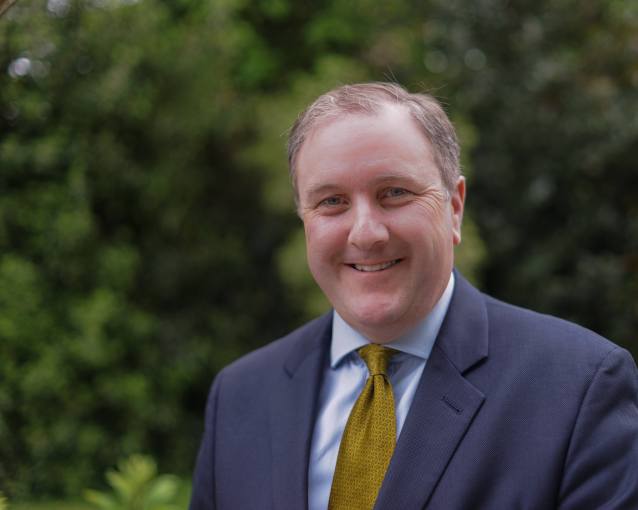
Simon Hoare MP, Tory chair of the Public Administration and Constitutional Affairs Committee

Exclusive: Report will reveal huge dispute over two reports into complaints of sexual abuse by charities supervised by the Commission

An extraordinary stand off between Parliament and the Charity Commission was revealed yesterday after Simon Hoare, Tory chair of the Commons Public Administration and Constitutional Affairs Committee, made a rare use of privilege to compel the Parliamentary Ombudsman, Paula Sussex, to publish a critical report into the Charity Commission next week after MPs were told the Commission was blocking its publication.

Lyndsay Hoyle, the Speaker, granted the request. It was the second one he has granted in four years – the last being from Angela Rayner, when she was in opposition in 2021 ordering the release of Government minutes of meetings between former Tory MP Owen Paterson, health minister, Lord Bethell and special advisers over the award of up to £777 million Covid testing contracts to Randox Laboratories, without competition who employed the MP as a consultant for £8333 a month.

MPs were told by Mr Hoare that the Charity Commission was blocking publication by going to judges and he wanted it reported to the Privileges Committee.

He said “The Charity Commission is bringing legal proceedings deliberately to prevent the laying of two reports before this House. That completely undermines the linkage between the ombudsman and this place, and …undermines our opportunity and decisions to look at any information that we deem to be of importance, or that matters to us, in order to allow us to advance policy.”

He claimed:  “Members from across the House have privately raised with me concerns about decisions that the commission is taking. It is appearing to do so in a slightly abstract or perverse way, without any degree of accountability. That matter is separate from this motion, but it is important for all our arm’s length bodies, and particularly the Charity Commission, to understand that this House will not be bullied by arm’s length bodies seeking recourse to the courts to stop us doing our job properly, efficiently and professionally on behalf of all our constituents.”

He was backed by Tory frontbench spokesman Alex Burghart and junior Cabinet Office minister Georgia Gould.

The Charity Commission has put a different interpretation of events in a statement issued yesterday which is at the end of this blog. Basically it is saying it was not aiming to block publication.

Bizarrely Mr Hoare said he had no knowledge of the complaints by a Miss A and Mr U in the two reports and had not seen him.

But both are already in the public domain on the Parliamentary Ombudsman’s website. Both contain criticism of safeguarding over sexual misconduct. Miss A has publicly named herself as Lara Hall, aged 35, and is a survivor of sexual abuse and a whistleblower.

She says in the news report issued by the Ombudsman: ” “I feel institutionally betrayed by the Commission. It made repeated commitments to me to deregister the charity and said it would do all it could to disable the trustee from acting in the name of charity in future, but the Commission dramatically changed regulatory course. This left me feeling incredibly vulnerable and confused.

“I feel so thankful and humbled to the PHSO for its diligent and thorough investigation into my complaint. I’m disappointed at the lack of contrition from the Commission.”

Acting Parliamentary Ombudsman Rebecca Hilsenrath said “Our investigation uncovered a number of failings around the Charity Commission’s handling of serious safeguarding concerns. It is important that the Commission apologises for its mistakes and reassures Lara that it will put things right.”

The full news report is here.

The second report involving Mr U involves historic child sexual abuse by a charity and in a sixth form college run by a religious charity. The abuse was hidden by the charity and it involved priests including one perpetrator who has a building named after him and was given a celebratory mass when he died.

The report said:” Mr U had long suspected he had also been a victim of grooming by the perpetrator. He told us it was only the book written by the victim in 2017 that allowed him to confirm the abuse as such. He told us the apparent absence of other victims was part of the reason he gave the perpetrator the benefit of the doubt for many years. ” When he raised issues he was treated as a vexatious complainant. The full report is here.

The Charity Commission says:“The Commission is challenging a PHSO decision that we have failed to implement some of its recommendations in two specific cases. We are concerned that PHSO’s approach expects us to act beyond our legal remit, at odds with Parliament’s intentions, and undermines our ability to regulate independently and effectively.

“We sought to resolve these matters without the need for legal proceedings but have been forced to put these matters beyond doubt, for the benefit of both organisations in fulfilling our respective public duties. We are therefore seeking the guidance of the High Court via a public law challenge.

“We welcome proper Parliamentary scrutiny of our role and have not asked the courts to prevent PHSO from laying any report before it. We had previously invited PACAC to delay its consideration of any report from PHSO related to this case, pending the outcome of these legal proceedings.”

 We are mindful this matter has arisen from complaints of difficult personal experiences related to charities. We accepted there are some genuine lessons for the Commission to learn from these two sensitive cases, and we have made improvements to the way we communicate with complainants.”

A charity should be a safe and trusted environment. As regulator, we are clear that keeping people safe should be a priority for all charities.”

One-Time
Monthly
Yearly

Make a one-time donation

Make a monthly donation

Make a yearly donation

Choose an amount

£5.00
£10.00
£20.00
£5.00
£15.00
£100.00
£5.00
£15.00
£100.00

Or enter a custom amount

£

Your contribution is appreciated.

Your contribution is appreciated.

Your contribution is appreciated.

DonateDonate monthlyDonate yearly

You can donate via Paypal via the link below:

https://www.paypal.com/ncp/payment/865JAS3QJ3CGQ

The legal establishment v Charlotte Proudman: An extraordinary exposure of misogyny and arrogant male entitlement in family courts

Charlotte Proudman Pic Credit:charlotteproudman.com

Last week I attended with Janice Chapman from CEDAWinLAW the launch of barrister Charlotte Proudman’s book He Said, She Said in London.

She is an extraordinary brave woman who stands up for sexually abused women and children in one of the most secretive parts of the judicial system – the family court – where estranged couples fight for custody of their children following a marriage breakdown. Most hearings are in private, ostensibly to protect the children, though a few can be reported in public following recent reforms.

For those familiar with my reporting of judgments in employment tribunals where whistleblowers stand only a 4 per cent chance of success this may not be such a surprise. Hearings such as those conducted by Leeds employment judge Philip Lancaster who has received 16 complaints from women he has insulted, belittled and patronised during hearings fit a pattern that seems rife in the family court system.

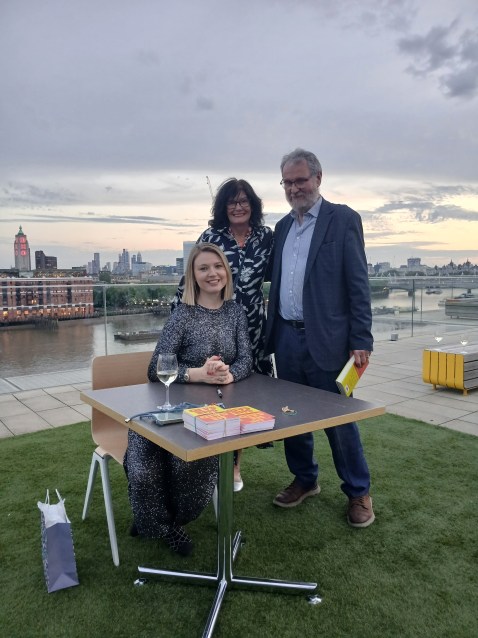
Janice Chapman and me with Charlotte Proudman at her book launch on the roof garden at Carmelite House. Janice asked her as a patron of CEDAWinLAW about the convention for the elimination of all forms of discrimination against women and why it needed to become law here.. Evidently the UK has not had a representative on the Geneva based committee under the last government and Baroness Helena Kennedy did not know whether the present government had to done anything to rectify this.

The book is a shocking eye opener into what goes on these largely secretive area of justice and exposes the appalling treatment of women in family courts – both by husbands and judges and ends with a failed attempt by the Bar Standards Board to end Charlotte’s career because she was exposing the mentality of the “boys club” world by both some male barristers and judges.

Among these is the case of a judge -Judge Scarratt – who threatened a woman who had been raped by her abusive partner and had been forced by him to take drugs to take away her daughter and put her in care and report her to social services for taking drugs. He made it clear that he was going to allow her abusive husband to have unsupervised contact with her daughter and said the whole proceedings were a waste of time. Charlotte Proudman managed to get his decision reversed by the Court of Appeal but by then the woman was traumatised as she says ” forcing even those who win to crawl over broken glass, leaving wounds that may never heal.”

Other highly disturbing material in the book includes the role of parental alienation used against women by men to say that women are turning their children against them. Extraordinarily these claims are backed up by so called experts – some who have no qualifications – who seem to be making a business out of the family court system.

Husband made wife sign a written contract allowing him to sexually assault his wife whenever he wanted

The most disgusting stuff is in a chapter on abortion and and reproductive coercion. It includes two contracts one before a woman became pregnant – which men forced on their partners. One insisted the husband would not have to give his sporting hobbies while she had to agree to shop for clothes in charity shops and ” keep the house as tidy as possible” and included the phrase ” I will entertain all sex requests- whenever and whatever -with a smile on my face and as a willing participant. It went to specify conditions for oral sex. As she comments; “It was, in effect, a charter for a man to rape and sexually assault his wife whenever he chose – a disgusting power fantasy.”

Two other chapters deal with a tragic case that involved the Hague Convention which is so limited in its scope that a woman fleeing her partner in Australia with her child because of domestic abuse was forced to return to him – as the issue of domestic abuse could not be used as a reason under the Hague Convention as it would have to be decided in Australia. The man then broke all his promises to the court.

Another case involved the hostile environment against child asylum seekers who faced female genital mutilation in their own country. Though the practice is illegal in the UK, the Home Office decided to split two sisters – allowing an 11 year old to stay but to deport her 14 year old sister on the wrong grounds she was too old to have FGM. After a desperate battle Charlotte managed to prevent the 14 year old from being deported.

The final part of the book turns the tables on Charlotte herself when she finds herself facing a tribunal at the Bar Standards Board for bringing the judiciary into disrepute – while far worse attacks are made against her on line by other barristers and men who lost their cases.

The tribunal decides that the justice system is robust enough to accept her on line criticisms of it – and board loses the case. The arguments put by the board to discredit her frankly look pathetic.

What this devastating book shows is that we still have along way to go to reform the judiciary and end the outdated boys club mentality. But Charlotte Proudman is on the right side of history and I am sure will prevail.

One-Time
Monthly
Yearly

Make a one-time donation

Make a monthly donation

Make a yearly donation

Choose an amount

£5.00
£10.00
£20.00
£5.00
£15.00
£100.00
£5.00
£15.00
£100.00

Or enter a custom amount

£

Your contribution is appreciated.

Your contribution is appreciated.

Your contribution is appreciated.

DonateDonate monthlyDonate yearly
Please donate to Westminster Confidential

£10.00

Sexual harassment at work to be treated as a whistleblower complaint under new employment law

But no answers from the ministry on plans to cost and scope the establishment of an Office of the Whistleblower

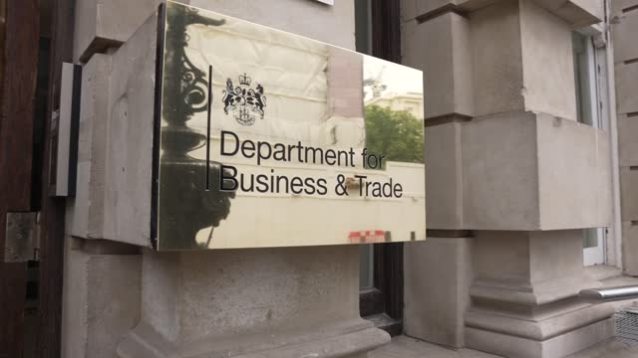
The Department for Business and Trade is changing the law to strengthen the right of people to report sexual harassment at work by making it a protective disclosure under whistleblowing legislation.

Bizarrely this measure was missed by mainstream media when the bill was published last month with most of the coverage being devoted to the measure improving employees rights in the job market and repealing some of the Tory legislation restricting trade union actions.

But there is a section of the new bill devoted to strengthening the rights of people who suffer sexual harassment at work. It proposes a three pronged attack to change the current law.

First it is strengthening the duty of employers to do something about the issue by amending the Equality Act to say they must take ” all reasonable steps ” to stop it happening.

This change has already been noted by lawyers who take up sexual harassment cases since it significantly reduces the wriggle room for employers to get out of any responsibility.

The new bill spells out what specific actions employers should take and will be further covered in regulations to be issued by ministers. These include carrying out assessments to deal with sexual harassment, publishing company policy, and drawing up reporting and complaints procedures.

The definition of sexual harassment is also extended to say “that sexual harassment has occurred, is occurring or is likely to occur“. ( my bold emphasis)

The second big change is that employers would have to act if a third party is sexually harassing their employee opening up the ground to take action if there are subject to unwanted sexually offensive social media attacks or customers are sexually harassing their employees.

The final big change is to incorporate reporting of sexual harassment as a protected statement under whistleblowing legislation by amending the 1996 Employment Relations Act so it is covered by PIDA.

A Department for Business and Trade spokesperson said:

“We’re committed to making workplace rights fit for the modern workplace and that’s why the Employment Rights Bill will strengthen whistleblowing protections, including women who report sexual harassment at work.

“We encourage workers to speak up about wrongdoings to their employer or a regulator and we will ensure they’re protected if they’ve been dismissed or treated unfairly for doing so.” 

There is a really good blog on sexual harassment changes in the law, including some prior to the new bill, by Mandy Bhattal, a senior solicitor at Leigh Day. The link is here.

While this is good news, especially for women, there are certain caveats to be made. The main one is that if a person ends up being dismissed or feels she has to leave her job, the case is likely to go to the employment tribunal system. It is fact that some male employment judges appear to be patronising and offensive towards women. I am thinking of the way judge Philip Lancaster treated whistleblower Alison . McDermott, during her case involving Sellafield. Eight women have complained about they way he treated them in different cases.

Nasty playbooks by barristers at employment tribunals

Secondly there is a rather nasty playbook used by barristers and solicitors engaged by employers to deal with whistleblowers at employment tribunals. They discredit them by bringing up other matters unrelated to the whistleblowing issue. This includes suggesting the person is a bully or cannot work with their colleagues. I fear a new playbook being invented to present the woman as a flirt or leading men on to undermine her case.

Indeed looking at the bill altogether employment tribunals are going to be central to the implementation of the new laws and safeguards for workers – increasing the need for their procedures to be reformed as I have said before.

Office of Whistleblower silence

Last week Baroness Jones of Whitchurch, the new junior minister at the Department for Business and Trade, took peers by surprise, by suddenly announcing the ministry was evaluating whether to set up a new Office of the Whistleblower, a demand long pressed by Whistleblowers UK, headed by Georgina Halford Hall. Their site is https://www.wbuk.org . WBUK is also doing a national survey of whistleblowers experience and perceptions which will lead to a detailed report to develop proposed improvements to the UK Whistleblowing Framework. The link for the survey is here .

She told peers in answer to a question from Liberal Democrat Baroness Kramer:” With regard to an office for the whistleblower, there are a number of ideas around this. We are looking at the role and remit that such a body could have. There will be a need to look at the cost, role and function of a potential new body, but we are looking at all the ways we can ensure that whistleblowers are protected at the workplace, as they should be. “

Baroness Kramer had previously promoted a bill to create such an office.

Baroness Jones also gave an answer to hereditary peer, Lord Cromwell, on non-disclosure agreements.

She told him “We have already noted the concerns about the misuse of non-disclosure agreements. We share his concern, because they are being used to silence whistleblowers and cover up sexual harassment and discrimination. I stress that there are existing legal limits to how NDAs can be used in an employment context, which means they are void and unenforceable in certain circumstances. The use of NDAs is not something we would support and, if there were ways of limiting it, we would do so.”

I contacted the ministry’s press office about Baroness’s Jones remarks. I asked them for the timetable for reviewing the need for an Office of the Whistleblower, whether there was a plan for a consultation paper on the idea and when such a review would report.

Answer came there none, it was completely ignored and instead I was told about the new measures affecting sexual harassment.

I am rather surprised. Either Baroness Jones had gone off piste or the civil servants at the ministry aren’t keen on this. I don’t believe she would have risked making such a statement which is reported in Hansard and is now permanently on the record. So we have a mystery. I am sure campaigners will follow this up.

One-Time
Monthly
Yearly

Make a one-time donation

Make a monthly donation

Make a yearly donation

Choose an amount

£5.00
£10.00
£20.00
£5.00
£15.00
£100.00
£5.00
£15.00
£100.00

Or enter a custom amount

£

Your contribution is appreciated.

Your contribution is appreciated.

Your contribution is appreciated.

DonateDonate monthlyDonate yearly
Please donate to Westminster Confidential

£10.00

London borough of Richmond and the Met Police deny historic child sex abuse after survivor’s predator gets jailed for six years

Keith Hinchliffe

Met Police says it was not a crime for council staff to proposition children for sex in 1984

Keith Hinchliffe, the child sex abuse survivor, who got his predator sentenced to six years in jail 40 years after he abused him for three years , is facing an uphill battle with the Met Police and the London borough of Richmond to get compensation or even recognition there was a problem.

The Met Police are describing his allegation that he was propositioned for sex by a member of staff at Grafton Close Children’s home as ” not a crime” and the council have employed lawyers and insurers to say it did not fail in its duty of care to look after him.

Keith’s abuser, Phillip Saunders, had open access to the children’s home where he took him out to sexually abuse him and the member of staff propositioned him when she invited him to her flat in return for saying she would help him leave the home early.

Documents show the Met Police has reviewed the allegations he made in 1984 which resulted in ” no further action” but came to the same conclusion again. The documents show that at first Richmond Council tried to say there was no evidence that he was at the home and then because he was not certain whether her name was Christine or Linda they could not trace anybody.

But the most damning finding was that the Met concluded that no crime existed in the first place.

The report said: “You stated ..that you had been propositioned but that the suspect had not touched you or physically sexually abused you. You stated that it was verbal comments only. I agree that crimes of such nature are fully within the public interest, however, there has to have been a crime committed for that interest to exist.”

Detective Sergeant Alex Woolley of the Met Police Child Sex Abuse Investigations Team, wrote to him saying: ”

“In relation to what happened you at Grafton Close, this report has been closed and classified as a “no crime”.
“Clearly the conduct of the member of staff is entirely unacceptable. However, we have to apply the law as it was at the time that the incidents happened. This happened before the Sexual Offences Act 2003 and so we have to consider what legislation is available to us in the 1980s.”
Keith Hinchliffe was very dissatisfied by the decision and has appealed to the London Mayor’s Office for Policing and Crime (MOPAC) for a review of the case at the end of October when Saunders was convicted. The office has accepted his complaint but warned him it could take 8 months to get a reply because of a backlog of complaints against the Met.

Richmond’s response has been even more negative. First they questioned whether he had ever been at Grafton and said there were no records showing he was there. Then by pursuing the issue with his local MP and a Freedom of Information request the South London Legal Partnership found a log confirming he had been admitted to Grafton Close and discharged six weeks later. But it said all the social work records at that time had been destroyed. It refused to release any documents on the Fernbridge investigation by the Met into child sexual abuse at Grafton Close home in 2015 which the authority did confirm it had co-operated with the police on the grounds that they were too sensitive because they contained details of third parties involved.

When he persisted in pursuing Richmond over this the council turned the case over to lawyers in Nottingham, Browne Jacobson, an Anglo-Irish firm, who cover business, government and health issues.

The firm in a letter this month set out to demolish Keith’s claims of negligence or breach of duty of care at Grafton Close. It cited case law to exonerate social workers who may be involved in his case and also said he had to meet stringent tests to bring any claim that the staff failed to protect him. One of them included he couldn’t produce documents to show the council’s policies at the time – since the council has destroyed all the records.

You can’t bring a negligence case if there was no duty of care -Richmond Council’s lawyers

The lawyers also said he was out of time to bring a case and they would challenge this in court. They were also sceptical of whether the conviction of Saunders would help. The lawyers wrote to him saying ” a claim in negligence cannot succeed if there is no duty of care in the first place”.

It goes on to say the council have neither admitted or denied the conviction of Mr Saunders but would need a certification of conviction or indictment.

The firm warned him they had agreed to represent Richmond if he brought a case and that he could incur substantial costs and he should take independent legal advice.

Since publication of the first blog I have been contacted by one other resident at Grafton Close suggesting there was a woman member of staff at Grafton Close who did sleep with at least one of the boys there. What Keith is exposing is a cess pit of behaviour which the Met and Richmond Council want to forget.

I don’t think Keith is going to give up on this so I expect there will be further developments. Watch this space.

One-Time
Monthly
Yearly

Make a one-time donation

Make a monthly donation

Make a yearly donation

Choose an amount

£5.00
£10.00
£20.00
£5.00
£15.00
£100.00
£5.00
£15.00
£100.00

Or enter a custom amount

£

Your contribution is appreciated.

Your contribution is appreciated.

Your contribution is appreciated.

DonateDonate monthlyDonate yearly
Please donate to Westminster Confidential

£10.00

Exclusive: Child sex abuse survivor gets his predator jailed 40 years after he committed multiple sex acts against him in London and Buckinghamshire

Keith Hinchliffe. He contacted me and gave me permission to use his name to encourage other survivors to come forward and get justice in the courts and compensation.

Judge described him as ” an immensely impressive witness, honest, reasonable and composed under pressure”

A child sex abuse survivor has got justice 40 years after he was groomed and sexually assaulted by a paedophile who went on to commit other offences against boys in Holland and a girl in Kent.

Philip Saunders, 67, was sentenced to six years in jail, with the judge saying only a rule that sentences had to reflect the law in the 1980s stopped him from giving him an even longer sentence.

Keith Hinchliffe, now 54, was abused at Saunders home, in his car, in his office at night, at Wembley Stadium and his predator was given open access to Grafton Close children’s home in the London borough of Richmond to take him out to abuse him when he was put in care.. The abuse continued for three years starting when he was 12 until he turned 16. Saunders was 27 at the time.

His case raises questions again about the role of Richmond Council under Liberal Democrat control and the Met Police in the 1980s who took no effective action to stop paedophiles abusing children in the borough. Grafton Close is the same home where a Roman Catholic priest, Tony McSweeney, was jailed for three years for indecent assault after escaping justice for 35 years following a fresh Met Police investigation in 2015. Like Saunders, McSweeney was able to take boys out of the home with the help of John Stingemore, then the deputy manager of the home, who was already a convicted paedophile. Stingemore died before the case got to court. See my blog on this here.

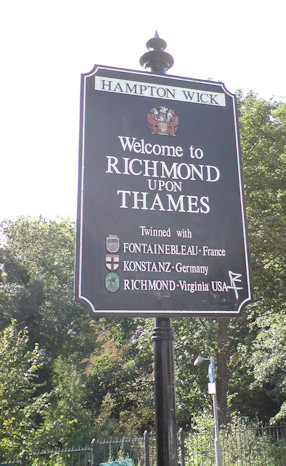
Richmond on Thames Council sign

Keith reported the incidents to the Met police when he was at Grafton Close care home in 1984 and allegations that he had been propositioned for sex as a 15 year old by a woman staff worker at the home. The Met interviewed him and decided to take no further action.

Keith plucked up courage in 2019 to report the abuse again after seeing the BBC investigation into paedophile Jimmy Saville and went to the NSPCC who reported it to Thames Valley Police.

Unlike the Met, Thames Valley Police took his claims seriously and the case went to Reading Crown Court where Saunders tried to deny everything but he was convicted last October and sentenced in December.

The judge, recorder John Ryder, in his sentencing remarks in court, told the whole grisly story. He revealed that Saunders, after abusing Keith, went over to the Hague and sexually abused two boys in his care and was sentenced to two years and six months in jail. In 2005 in Maidstone he was jailed for four years for three indecent acts with a young girl, the daughter of his current wife.

Saunders got access to Keith and his family because he was his sister’s boyfriend for about a year. The judge described how he got Keith to stay overnight at his home in Langley and then asked him to sleep in his bed because he claimed the spare bed was broken. The abuse began overnight and then he was given expensive gifts. This included a microcomputer – rare in 1982 – a Raleigh bike and a Michael Jackson DVD, Thriller. He also exploited the boy’s passion for fast cars taking him to test drives and shows.

” unusually expensive gifts were to groom him for sex abuse”

As the judge said: “giving unusually expensive gifts coveted by an adolescent boy and exploitation of his interests were a means of grooming him to sex abuse.”

He also took pictures of him with an Instamatic camera naked or dressed up at his home, in his car, at work and at Wembley Stadium where he took him to see an American football match.

Keith told the Judge if he didn’t comply Saunders , who is six foot four inches tall, became violent.

The judge says he said: “If I didn’t do things, he would let me know. Arm behind back- pain” .”Rebuffed once and pinned to floor and decanter of scotch all over my face as punishment and made to pleasure him again.”

Other times he was plied with drink, forced to watch pornography and forced to perform oral sex on him.
These events made Keith feel both fear and shame and he started skipping school. The judge summed up his evidence as finding “relationships hard. No friends. Initial abuse hard, aftermath is life changing. Did not finish education. Rebelled. Hated the world and everything around me. Navigated life without education guidance and to relive events in court and answer challenges again and again – had almost broken him.” His changed behaviour led him to be put into care by Richmond council.

He was too ashamed to tell his family and feared his father, an ex merchant navy man, would take it out on him if he knew. He has now told his mother, his present wife and has children of his own and has a job as a furniture maker. But he told the police he now regretted never taking exams at school and getting a good job because of the constant abuse from Saunders.

The judge said:

“I found Keith Hinchliffe an immensely impressive witness, honest, reasonable and composed under
pressure about [a] sensitive and damaging experience. Impressive man.” He described him as an ” insightful and measured in expression”. “Trauma and fear and shame shaped his personality and altered [his] outlook on the world.”

The judge was highly critical of Saunders for trying to deny the whole story and showing no remorse for what he had done.

” You continue to deny any sexual activity at all with him.{You] told PSR author only interested in adult female relationships. That assertion is completely contradicted by the facts in the Holland conviction. I have no doubt on the basis of evidence I heard from KH at trial – he suffered substantial and serious psychological harm as result of your actions. {You] abused a position of trust in relation to him.”

The police interview with Keith revealed he partly came forward because he had seen in the media that perpetrators of historic child sexual abuse were now being caught and jailed.

Despite securing a conviction against Saunders he is now having to fight the Met and Richmond Council to get redress. They won’t admit they did anything wrong in the 1980s or had a duty of care towards him. In the second part of this grisly story I will be revealing their responses to him.

One-Time
Monthly
Yearly

Make a one-time donation

Make a monthly donation

Make a yearly donation

Choose an amount

£5.00
£10.00
£20.00
£5.00
£15.00
£100.00
£5.00
£15.00
£100.00

Or enter a custom amount

£

Your contribution is appreciated.

Your contribution is appreciated.

Your contribution is appreciated.

DonateDonate monthlyDonate yearly
pl;ease donate to Westminster Confidential

£10.00

Operation Midland: Met Police to face fresh investigation over more witnesses ” perverting the course of justice”

Convicted paedophile Carl Beech – who made the allegations that sparked the inquiry

The flawed £2 million Operation Midland investigation by the Met Police into alleged sexual abuse by VIPs and politicians which contained sensational false allegations of child murders from a man who turned out to be sex offender himself could be re-opened after four years.

Carl Beech was sentenced to 18 years in prison in 2019 on 12 counts of perverting the course of justice and one of fraud.

His allegations named  former Members of Parliament Harvey Proctor and Lord Janner, the former Home Secretary Lord Brittan, former Prime Minister Edward Heath, former Chief of the Defence Staff Lord Bramall, the former Director of the Secret Intelligence Service Maurice Oldfield, and former Director-General of MI5 Michael Hanley. All the cases involved historic child sex abuse allegations.

Police raided the homes of Harvey Proctor and Lord Bramall and Lord Brittan. .

New inquiry to be set up

Former judge Sir Richard Henriques did a highly critical investigation of how the Met Police handled the investigation and also suggested that two other people -known as Witness A and Witness B who both claimed to be victims of child sexual abuse – should also be investigated for perverting the course of justice.

West Midlands Police carried out a further inquiry and has recommended a further inquiry into all the evidence supplied by both witnesses to see if further action should be taken against them. The police force said there were reasonable grounds to think they had perverted the course of justice.

The Met is asking a second police force to decide now whether there is enough evidence to breing charges.

The Met Police also said that new evidence against them had been supplied by a third party.

After the statement Harvey Proctor claimed he was the person who had supplied fresh evidence. I do not know the identities of the two people

The full Met Police statement reads: “

In 2016, Sir Richard Henriques was asked to carry out a review into the Met’s handling of Operation Midland which was an investigation into non-recent sexual offence allegations against persons of public prominence.

Sir Richard’s report recommended that “offences of attempting to pervert the course of justice be considered” in the cases of two individuals known as witnesses A and B. He added that “it would be appropriate for another police force to carry out such investigations”.

Earlier this year, following a third party referral which included new information, the Metropolitan Police arranged for West Midlands Police to consider all relevant material relating to witnesses A and B in order to advise on whether any further investigation should follow.

That work has now been completed, with West Midlands concluding that there are reasonable grounds to suspect witnesses A and B have committed an offence of perverting the course of justice and that it is in the public interest to open an investigation into whether there is sufficient evidence to justify a prosecution.

Acknowledging that in light of its previous involvement the Met would not be the most appropriate force to carry out this investigation, officers are in the process of agreeing terms of reference with an external force so that the matter can be taken forward.”

Please donate to Westminster Confidential to allow me to continue my reporting.

One-Time
Monthly
Yearly

Make a one-time donation

Make a monthly donation

Make a yearly donation

Choose an amount

£5.00
£10.00
£20.00
£5.00
£15.00
£100.00
£5.00
£15.00
£100.00

Or enter a custom amount

£

Your contribution is appreciated.

Your contribution is appreciated.

Your contribution is appreciated.

DonateDonate monthlyDonate yearly
please donate to Westminster Confidential

$10.00

Promises, Promises! Suella Braverman’s half baked response to the Independent Inquiry into Child Sex Abuse report

Suella Braverman Pic credit: BBC

While the Parliamentary Lobby were excited about Suella Braverman’s latest escapade trying to fix a private driving awareness course for herself to avoid penalty points on her licence, yesterday she took the opportunity to issue a very important statement on how the Government will tackle child sex abuse.

Whether the timing was aimed as the latest diversionary tactic to avoid further embarrassment , the result was a half thought out and half baked response to a very detailed and important piece of work on a scandal which shames our nation.

Alexis Jay, who headed the inquiry, spent seven years investigating what was seen as as ” a national epidemic ” of child sexual abuse which affected virtually every single religious order, schools, the internet, and grooming gangs across the country. Her report exposed heinous cases of child sexual abuse from teachers to bishops and appalling attempts to cover up what had happened. While by no means perfect, it also did provide some outlet for the survivors to speak out about what had happened to them.

Government hyperbole

Yesterday with I am afraid the typical hyperbole the government uses at almost every occasion now Suella Braverman claimed that the reforms proposed were “on a level not seen before” and would “mark a step change in our approach to child sexual abuse”.

She told MPs: “This Government have risen to the inquiry’s challenge. We are accepting the need to act on 19 of the inquiry’s 20 final recommendations. She promised MPs “fundamental cultural change, societal change, professional change and institutional change.”

But when you examine closely what the government proposes to do it is nothing of the sort. Many of accepted recommendations are surrounded by caveats for further reviews and debates and none are going to be implemented immediately.

Alexis Jay, chair of the independent child sex abuse inquiry

And I am not the only person saying this. The chair of the inquiry, Alexis Jay, told the Independent today:

“We are deeply disappointed that the government has not accepted the full package of recommendations made in the final report,” she added.

“In some instances, the government has stated that a number of them will be subject to consultations, despite the extensive research and evidence-taking which the Inquiry carried out over seven years.

“”The package announced by the government will not provide the protection from sexual abuse that our children deserve.”

Similar doubts were expressed by the NSPCC, the children’s charity.

If you study the detailed response from the government – you can find it here – you will see it is riddled with caveats and rejects more than one finding as the minister claimed.

The headline change – setting up a compensation scheme for the survivors – is a promise but subject to much more consultation before it is to be implemented. A more competent government would have laid the bare bones of the scheme, how much money will be provided and then asked people, including survivors, to comment yesterday.

Similarly with mandatory reporting of child sex abuse by professionals – which was thoroughly debated by the inquiry before recommending it – it won’t happen immediately. Instead it is put out for more consultation. Do we need any more?

Other accepted recommendations are a con. The recommendation for a children’s minister at Cabinet level is glossed over by saying we already have one – the education secretary. Yet provision for children is more than just education. And Rishi Sunak could do with someone present at the Cabinet to fight children’s issues.

And the creation of new child protection authority does not look likely to happen any time soon.

And there is one extraordinary proposal. Braverman rejects – the inquiry’s recommendation to outlaw inflicting pain on residents of young offenders institutions and secure units – claiming that there are ways of safely inflicting pain on young people. Is she some sort of a sadist who enjoys bringing pain and misery to the young or just plain stupid? Pain is pain full stop. If anyone knows how this might be done I would like to hear from them.

The government is also relying on its on line safety bill to outlaw child pornography but it seems the paedophiles are already one step ahead of her. Sajid Javid, ex minister and Tory MP for Bromsgrove intervened in her announcement to say they are already using artificial intelligence to produce child sexual images. How is this to be traced?

Frankly this was a disappointing statement dressed up as the government taking action. Ministers and civil servants have had seven months to respond and could have laid the groundwork for real change rather an promising more consultations. But given Suela Braverman’s track record why should we be surprised.

Please donate to Westminster Confidential

£10.00

Subscribe to get access

Read more of this content when you subscribe today.

One-Time
Monthly
Yearly

Make a one-time donation

Make a monthly donation

Make a yearly donation

Choose an amount

£5.00
£10.00
£20.00
£3.00
£9.00
£60.00
£3.00
£9.00
£60.00

Or enter a custom amount

£

Your contribution is appreciated.

Your contribution is appreciated.

Your contribution is appreciated.

DonateDonate monthlyDonate yearly