An inquiry into an inquiry: Will it uncover what went wrong when Ben Emmerson quit the Child Sexual Abuse inquiry?

ben emmerson

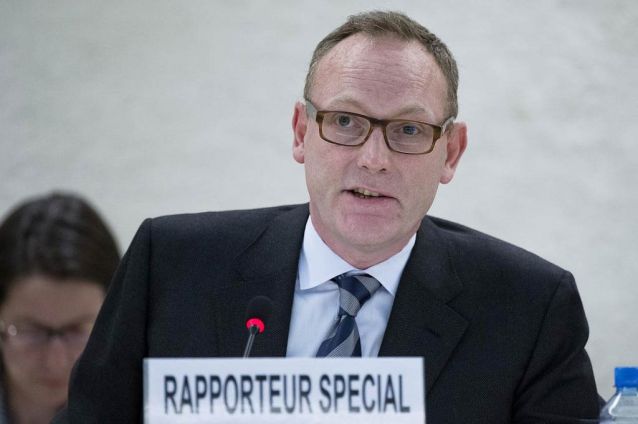
Ben Emmerson: He resigned as leading counsel from the inquiry last September Pic Credit: UN

CROSS POSTED ON BYLINE.COM

The rather bland announcement from Alexis Jay, chair of the independent inquiry into child sexual abuse that she had appointed an employment judge Mark Sutton to investigate dignity at work  and safeguarding inside the inquiry poses more questions than answers.

It followed ferocious  criticism from the Commons Home Affairs Committee after the rather lurid – and now said to be untrue – tale that its leading counsel. Ben Emmerson, had sexually assaulted a woman on the inquiry’s premises.

The report concluded: “It is not for us to pass any comment on the allegations made in the media about the former Counsel to the Inquiry, which he has categorically denied. We are not in a position, and it is certainly not our responsibility, to assess either the facts of the case or the details of the processes that the Inquiry pursued.

However, on the basis of the evidence we have seen, we do not believe that IICSA has taken seriously enough its responsibility to pursue allegations of bullying or disclosures of sexual assault within the Inquiry.”

It goes on:

“Nor do we believe it has done enough to demonstrate publicly that it has a robust approach to such matters. IICSA’s public response has been inadequate, and the words attributed to an unidentified “IICSA source” in the press in response to the alleged assault are completely inappropriate, appearing to dismiss the serious nature of the matter and the credibility of the alleged victim.

“One of the Inquiry’s key purposes is to assess other organisations’ procedures for dealing with disclosures of sexual assault or abuses of power, and institutional reluctance to confront difficult issues that might jeopardise their reputation. We therefore believe that it is extremely important that the Inquiry can show that it treats these issues with appropriate rigour when they affect IICSA itself.”

 The reason for these strong words followed evidence from Hugh Davies QC, who resigned as Deputy Counsel to IICSA in December 2015, He made it clear he was unhappy with the procedures for handling such instances.  He said:“the institution cannot abdicate responsibility to the person making the disclosure, who may be vulnerable or otherwise emotionally unable to pursue a formal process”.

Also significantly the report says : “We also received a confidential submission relating to this alleged incident. Although it is not appropriate for us to publish this evidence, it has helped us to understand the incident and the way in which IICSA dealt with it. We are very grateful to the individual concerned for providing us with this information.”

How IICSA handles this will be crucial and it must not be seen to bury it. Its instructions to Mark Sutton say:

“You are requested to examine the events surrounding the Counsel to the Inquiry’s resignation from the Inquiry and to advise on the appropriateness, in the given circumstances, of the Inquiry’s actions at that time.
If you find evidence that there are structural challenges in HR / employment matters that arise due to the legal status of public inquiries and their employment model of seconded staff, self employed individuals and contractors, the Inquiry would welcome your Review making broader recommendations or observations.”

 He will not rerun or second guess the actual incident nor will he publish his advice to the inquiry. And the inquiry will see his report  before any statement is published.

I have also learnt separately that Graham Wilmer, a member of the original panel before it became a public inquiry, wants Mark Sutton, to look at the involvement  of Mr Emmerson in a  campaign conducted by members of the Victims and Survivors Consultative Panel to undermine him and the Lantern Project, which helped survivors in  the Wirral, North Wales and the North West. He has passed documentary evidence to the inquiry. Given that Mr Wilmer was a member of the first independent panel one would expect ” dignity at work ” to apply to their dealings with him.

My concern – given there have been other allegations of  bullying dating back to when Dame Lowell Goddard was in charge – is the inquiry may not do enough to allay fears and suspicions among staff working there.

If that happens people will not be satisfied. You can’t have an inquiry examining the most sensitive allegations of historical child sexual abuse which have been hidden for decades through the abuse of power  if it can’t handle sensitive allegations about its own staff.

We don’t want yet another cover up in this already troubled inquiry.

Independent Police Complaints Commission largely drops investigation into Met Police handling of Operation Midland

New_Scotland_Yard

IPCC largely clears Met Police of disciplinary charges in their handling of Operation Midland Pic Credit: Wikipedia

CROSS POSTED ON BYLINE.COM


The IPCC has announced on Budget Day  that it is dropping disciplinary proceedings against most of the police officers who carried out the £3m investigation into  allegations of a historic Westminster paedophile involving prominent figures, Mps and former government ministers.

In particular they have cleared all the officers facing possible disciplinary charges who investigated complaints by ” Nick ” who has been accused in a separate  independent report of possibly perverting the course of justice by raising the allegations. This is subject to a separate investigation by Northumbria Police.

The IPCC says: “The IPCC has also discontinued its investigation into allegations the DAC, DSupt and DCI failed to properly investigate allegations made by a complainant ‘Nick’ which lead to an extended investigation causing prolonged and undue stress to those under suspicion.

“There is no evidence to indicate bad faith, malice or dishonesty and no indication any of the officers may have behaved in a manner which would justify disciplinary proceedings.

” The information available indicates the investigation was extensive and carried out diligently with the majority of the decisions made appropriately recorded.”

They have dropped  complaints made by some of the people involved that the police exceeded their powers in seizing material from the homes they raided once they got search warrants.

The only investigation that will continue is into whether the police breached rules in applying for a search warrant on homes by not disclosing all the relevant information to a district judge

The Met Police had previously apologised to Lord Brittan’s family for shortcomings in the investigation-particularly the delay in informing him that they had dropped the investigation.

The full statement from the IPCC is as follows :

Following a comprehensive assessment of the available evidence relating to the conduct of five Metropolitan Police Service (MPS) officers linked to its Operation Midland, the Independent Police Complaints Commission (IPCC) has determined the scope of its investigation.

Operation Midland was an investigation into allegations of non-recent sexual offences said to have been committed by prominent public figures.

There is an indication that a detective chief inspector (DCI), a detective inspector (DI) and a detective sergeant (DS) may have behaved in a manner that would justify disciplinary proceedings in that they may have failed to accurately present all relevant information to a district judge when applying for search warrants for three properties.

It has been determined that there is no such indication in respect of similar allegations against a deputy assistant commissioner (DAC) and a detective superintendent (DSupt). As a result this part of the investigation against them has been discontinued.

The IPCC has also discontinued its investigation into allegations the DAC, DSupt and DCI failed to properly investigateallegations made by a complainant ‘Nick’ which lead to an extended investigation causing prolonged and undue stress to those under suspicion. There is no evidence to indicate bad faith, malice or dishonesty and no indication any of the officers may have behaved in a manner which would justify disciplinary proceedings. The information available indicates theinvestigation was extensive and carried out diligently with the majority of the decisions made appropriately recorded.

The MPS also referred the conduct of the DAC relating to allegations that an investigation into Lord Brittan was extended without good reason to do so thereby causing significant distress to Lord Brittan and his family. The evidence indicates a significant delay in making the decision to take no further action in the case but does not indicate the DAC may have behaved in a manner which would justify disciplinary proceedings. As a result the IPCC has discontinued this part of theinvestigation.

The IPCC has also discontinued investigating allegations that there were irregularities in the seizure of exhibits during the subsequent searches. There is no evidence to indicate that any of the officers involved may have breached professional standards.

IPCC Commissioner Carl Gumsley said:

“The allegation that incomplete information may have been provided to a district judge when applying for search warrants is serious and the IPCC will thoroughly investigate this matter.

“However, a thorough assessment into the other matters that were referred to the IPCC has been carried out. After considering the information resulting from that assessment, I am of the opinion that there is no indication that these matters would amount to behaviour which would justify disciplinary proceedings. Consequently, I have taken the early decision todiscontinue the independent investigation into those matters.

“In coming to that conclusion I have been very conscious of the fact that the force has already acknowledged its shortcomings in the investigation into the late Lord Brittan and has apologised to Lady Brittan.

“It is also important to acknowledge the climate in which Operation Midland and the investigation into Lord Brittan were being undertaken. At this time there was much concern that cover-ups by the ‘establishment’ had taken place and there was widespread intense scrutiny on both investigations. The way both investigations were conducted should be considered in that context and in line with policies which existed at that time.”

Britain: A nation of paedophile voyeurs

simon-bailey-police-chief

Police chief Simon Bailey, also in charge on Operation Hydrant co-ordinating cases of allegations of child sexual abuse Pic credit :BBC

CROSS POSTED ON BYLINE.COM

Simon Bailey,  the National Police Chiefs’ Council lead for child protection, has caused a storm of controversy this week by suggesting  that people who view pornographic pictures of children on the net should not be prosecuted.

He wants to limit prosecutions to people who direct  child sexual abuse on line and those seeking to groom young people on line so they can later rape them. As he says:

“There are tens of thousands of men seeking to exploit children on line with a view to meeting them with a view to then raping them and performing the most awful sexual abuse on them. That’s where we believe the focus has got to be, because they’re the individuals that pose the really significant threat.”

He wants people who just view child sexual abuse to be given a caution and put on the sex offenders register because he says the police haven’t the resources to prosecute them.

He told the Times : “We’re able to asses whether a paedophile viewing indecent images of children is posing a threat of contact abuse and in circumstances where that individual does not pose a threat of contact abuse they should still be arrested, but we can then look at different disposal orders than going through the formal criminal justice system.”

He described this group as the ” tip of the iceberg”.

Now what is shocking about this is the scale of the problem. We are now having the police say although they are prosecuting 400 people a month they cannot cope with the numbers who are committing this  crime because it is so widespread. What does this say about the nation we now live in?

yvette-cooper-pic-credit-twitter

Yvette Cooper Pic credit : Twitter

Yvette Cooper, chair of the home affairs select committee, has responded very robustly to this in a letter she released to Simon Bailey.

” This raises some very serious concerns about the scale of online child abuse, about the level of resourcing the police have available for it, about the systems the police has in place to deal with this new and increasing crime and also about the priority being given to it by police forces.”

“You also referred to there being a significant number of “very low-risk” paedophile offenders and you stated that the police have become very adept at assessing the risk to children in terms of which offenders will move on from viewing indecent images to committing contact abuse offences.

“This was certainly not the case a few years ago when the police indicated that making such assessments was very difficult. I would therefore be grateful if you could set out the evidence to support your statement, including the changes which have taken place in the last few years to bring about the improvements in risk assessment to which you refer.”

Finally she warns that will people who are not prosecuted still go on the Disclosure and Barring Service.

“Specifically, could you explain, under the current disclosure and barring rules, if a case was dealt with outside the criminal justice system, what information would then be available to organisations carrying out checks on people applying for voluntary or paid positions with children. ”

He has until March 7 to reply. I hope he will be summoned to explain himself before Parliament.

His assessment seems to suggest we are turning into a nation of paedophile voyeurs because the offence is so widespread. This would suggest we are becoming a very sick nation indeed.

Home Office rewrites definition of child sexual exploitation

home-office

Home Office: trying to define child sexual exploitation Pic credit: gov.uk

CROSS POSTED ON BYLINE.COM

This week  the Home Office quietly announced a new definition of child sexual exploitation which will be used by all practitioners in the field – from the police and social workers to voluntary organisations and charities.

The decision was overshadowed by an announcement that the Government was spending an extra £40m tackling child sex abuse.

It included the launch of a new Centre of Expertise on child sexual abuse, an extra £20 million for the National Crime Agency to tackle online child sexual exploitation, £2.2 million for organisations working to protect children at risk of trafficking and the launch of Independent Child Trafficking Advocates (ICTAs) in 3 early-adopter sites across the UK.

The latter service will initially be provided by Barnardo’s in Wales, Hampshire and Greater Manchester ahead of a full national roll out.

However the change in the wording of what constitutes child sexual exploitation had been a minefield for the ministry. The consultation paper admitted the existing definition of child sexual exploitation adopted since 2009 had not worked and had hampered investigations.

It described  current rules as ” unclear and out of date.”

“Voluntary organisations, devolved administrations and local agencies have responded over time by developing a number of alternative definitions. Partners have told us that this has led to local agencies using different definitions or using the terms ‘child sexual abuse’ and ‘child sexual exploitation’ interchangeably, resulting in ineffective multi-agency working, inconsistent risk assessments and poor data collection.”

But changing the definition has not been easy. The first draft proposed a year ago has been attacked as both being too broad – and threatening to include all sexual relations between 16 and 17 year olds – and too narrow in its definition of exploitation over the internet.

The original proposed draft said:

“Child sexual exploitation is a form of child abuse. It occurs where anyone under the age of 18 is persuaded, coerced or forced into sexual activity in exchange for, amongst other things, money, drugs/alcohol, gifts, affection or status. Consent is irrelevant, even where a child may believe they are voluntarily engaging in sexual activity with the person who is exploiting them. Child sexual exploitation does not always involve physical contact and may occur online.”

The Home Office received criticism from organisations over under 18 year olds being ” persuaded, coerced or forced into sexual activity”.

” There were concerns that the definition was too broad and had the potential to be interpreted as covering age-appropriate sexual experimentation as well as cases of child sexual exploitation. In particular, a number of respondents felt that the inclusion of the word ‘persuaded [into sexual activity]’ could cover a range of ‘normal’ behaviours within the relationships of 16 and 17 year olds that would not fit the coercive nature of child sexual exploitation.”

Persuaded has now being dropped in favour of ‘coerce, manipulate or deceive’..

The Home Office was also thought to have too narrowly defined exploitation using the internet.

“Respondents thought the phrase ‘may occur online’ in the proposed definition did not adequately capture exploitation that might occur through the use of mobile phone applications and other forms of technology.
We have amended the definition to refer to ‘the use of technology’.

The new revised definition which comes into force next month now reads:

“Child sexual exploitation is a form of child sexual abuse. It occurs where an individual or group takes advantage of an imbalance of power to coerce, manipulate or deceive a child or young person under the age of 18 into sexual activity (a) in exchange for something the victim needs or wants, and/or (b) for the financial advantage or increased status of the perpetrator or facilitator. The victim may have been sexually exploited even if the sexual activity appears consensual. Child sexual exploitation does not always involve physical contact; it can also occur through the use of technology.”

The full results of the consultation can be read here.

It goes to show how difficult it can be to define what people might think is a simple issue – and also if you get it wrong it may explain while child sexual exploitation has not always been properly tackled by the police and social services if no-one agrees what it is.

Brian Altman: The scuba diving prosecutor who “speared” Milly Dowler’s killer

brian-altman-qc-320x289

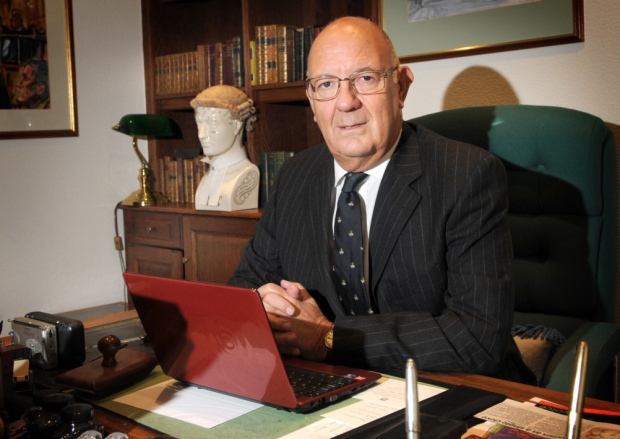
Brian Altman – new lead counsel for the independent child sexual abuse inquiry. Pic credit: 2 Bedford Chambers

CROSS POSTED ON BYLINE.COM

The announcement this week that former Treasury counsel Brian Altman has been appointed lead counsel  from March to the much troubled Independent Inquiry into Child Sexual Abuse should be  good news for survivors.

The man has a formidable reputation as a forensic prosecutor and a particularly strong line in bringing criminals to justice in  ” cold case ” murders.  For once the phrase ” highly experienced”  used by the inquiry chair, Alexis Jay, is no exaggeration.

He has yet to get a cameo role as a lawyer  in ” Silent Witness” – though he did appear in a BBC 4 Real Crime and Punishment series ( sadly no longer available on BBC i-Player.).He has received much praise from journalists who regularly cover Old Bailey trials for the way he ensnares defendants who hope to escape justice for unspeakable crimes.

His case list of successful prosecutions is impressive. They include the notorious serial killer and rapist Levi Bellfield who murdered  teenager Milly Dowler and  killer Colin Ash-Smith convicted 21 years after he murdered 19 year old Claire Tiltman.

He has also prosecuted in a joint British and Dutch investigation  of canal murderer John Sweeney who killed and dismembered former American model and photographer, Melissa Halstead, in Holland in 1990, and disposed of her remains in a Rotterdam canal, and Paula Fields in London in 2000, whose dismembered body parts were found in the Regent’s Canal in 2001.

He has a string of other murder cases – where he both defended and prosecuted killers – and successfully prosecuted terrorists-including  those involved in a disrupted Islamic state terror plot and Syrian trained terrorists planning attacks in the UK.

He is familiar with the workings of the security services  and bad behaviour by MPs – he once advised on whether to prosecute one for expenses fraud – and his client list include members of a Middle  East Royal Family – though not disclosing whether it is the Saudi Arabian one or not. For a full list see his entry on his  chambers website here.

All this should bode well  for those who want forensic examinations of some of the most highly contentious cases that will be looked at by the child sexual abuse inquiry. This will in time include the Westminster paedophile ring, Greville Janner and the Leicestershire institutions involved in child sexual abuse and some of the more contentious child sex abuse scandals in London.

Historic child sexual abuse is also a ” cold case ”  issue – so this quote should comfort the sceptics.

“For cold case murders, he is the go-to barrister because he is able to draw together all the small pieces to provide a coherent analysis, and he knows these cases so well that there is nothing the defence can come up with to outfox him. He is completely relentless, extremely personable and a great team player”; “He is a master of detail who never makes a mistake.” Chambers & Partners 2016 (Crime)

Frankly  the inquiry after all the row surrounding the departure of his predecessor, Ben Emmerson, could do with a boost. Given there is also outside pressure – thankfully resisted by Theresa May who set it up – to try and get the government to close the inquiry down because of its scope and cost, this is doubly important.

Brian Altman in his Linked In profile also lists two hobbies – scuba diving and travel. I can well understand  he will sometimes want to get away from it all after all this work pressure.

He is  coy about where he has travelled and where he has scuba dived. He tells me one of the places he has not yet visited is Australia’s Great Barrier Reef – the largest scuba diving place in the world.

Given he is probably lead counsel for the largest child sex abuse inquiry in the world- perhaps he also should also get some time off to relax there as well soon.


Paedophile loses case to ban Facebook from publishing his criminal past

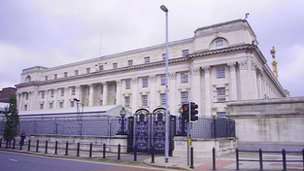
Belfast High Court

Belfast High Court Pic Credit: BBC

CROSS POSTED ON BYLINE.COM

An important judicial decision came out over the Christmas recess in a highly controversial case in Northern Ireland which has led a paedophile to claim £20,000 for harassment because of a blog revealing his criminal past.

The ruling is particularly significant as more people get their news from Facebook and Google rather than traditional mainstream media.

The case has been featured on this blog before. It arose after  Joseph McCloskey set up a Facebook profile page called ” Keep Our Kids Safe from Predators 2 ” which posted information about a convicted sex offender called CG.

CG was released from jail in 2012 after serving a sentence for gross indecency and indecent assault offences against a young girl and a teenage boy.

He is now over 40 and he remains under supervision by the authorities.He has been assessed as posing no significant risk to the public.

His lawyers argued that an online campaign after his details appeared on the page had reached the level of dangerous vigilantism..One user called for him to be hung while others endorsed shooting or castrating him.

CG also claimed he has been threatened with being thrown off a pier during a fishing trip, hounded out of a cinema and had to use a supermarket trolley to fight off another tormentor.

None of the information published  by McCloskey was private. It was all in the public domain at the time of CG’s conviction. CG’s solicitors complained to Mr McCloskey  who removed the posting. He later put two posts disclosing CG’s criminal record and his picture.

The lawyers weren’t satisfied and went to court claiming the sex offender had been harassed on Facebook and his human rights breached by the publication on Facebook misusing private information.

The judge found against the campaigner and Facebook and awarded the sex offender £20,000 damages for harassment.Facebook decided to appeal as it thought the ruling was excessive.

Now the Court of Appeal has decided that Facebook should have taken down the post earlier because it was leading to the harassment of the paedophile.

But very significantly the court ruled that the two other posts which dealt with his criminal record and showed his picture can remain.

The decision by Lord Chief Justice Sir Declan Morgan means that the compensation awarded to CG – which has not be paid because of legal proceedings – will be cut.

But it is also establishing a ruling that contradicts Google’s ” right to be forgotten” procedures saying that public information involving court proceedings can remain on line and cannot be construed as private information.

It was  critical of suggestions that re-publication of conviction information was relevantly private information because in principle “the public has a right to know about such convictions. Information about what has happened in open court can be freely communicated by members of the public”. This was an important aspect of the open justice principle “of very significant weight which can only be outweighed by the interest of the individual in freedom from intrusion in the most compelling circumstances”:

It also rejected the idea that because t some information is covered by the Data Protection Act is it automatically private.

considerable caution should be exercised before reading across  those matters, because the “fact that information is regulated for that [data protection] purpose does not necessarily make it private”.,said the ruling.

For those who want to follow the finer legal detail there is an interesting report by lawyer Christopher Knight, of 11KBW in London here  and a report in the Irish News which dwells on the part of the the Court of Appeal  judgement that was upheld.


The 60 year old shame of Home Office treatment of sexually and physically abused child migrants

8058822-3x2-940x627

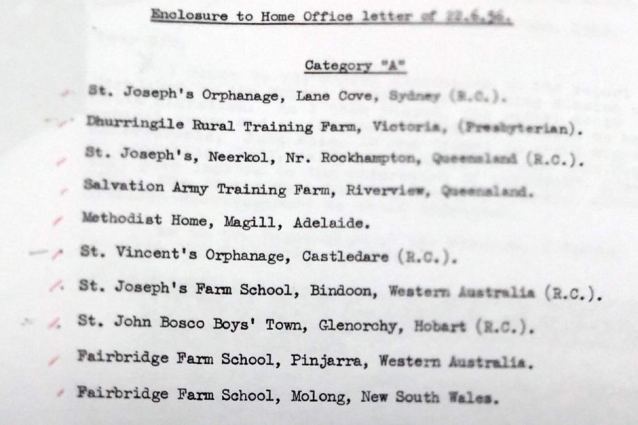
The list of homes the Home Office is said to have known abused children; Photo credit: ABC News

CROSS POSTED ON BYLINE.COM

Next month the Independent Inquiry into Child Sexual Abuse will hold a hearing into how British children were shipped abroad to  Australia, Canada and Southern Rhodesia ( now Zimbabwe) where they were subject to appalling physical and sexual abuse.

One of the people who has submitted evidence to the British inquiry has already raised issues about his treatment at one of these homes, Fairbridge Farm School,New South Wales in Australia.

David Hill  was interviewed by  the Guardian last year in Australia and tells a horrific story of a place where people were poorly educated and fed,brutally treated and some sexually abused. He went out with his brother in 1959 from Eastbourne in Sussex.

He has been one of the people who eventually prospered becoming chairman and managing director of the Australian Broadcasting Corporation. ABC carried a report on his decision to send evidence here.

But his most damaging evidence is that he might not have gone there if the Home Office had acted on information they  received three years earlier after a visit of UK MPs to Australia. In 1956 they came on a fact finding mission to find out about conditions in those schools.

The result, according to evidence submitted to the inquiry. is that the Home Office were given the names ( see above in a memo) of ten schools that should have been put on a blacklist and no British children should have been sent there.

But the Home Office appeared to  do nothing even though they decided that  the schools would need a ”  complete metamorphosis ” to be fit to accept children. So they appear to have ignored the findings so they could keep the migrant programme going – where British children from poor backgrounds were offered a new chance in life. Their decision was no better than when a whistleblower, Lucy Cole Hamilton, alerted the Home Office over a decade earlier about conditions at Fairbridge Farm and warned them not to send British children there. As a report by Sanchia Berg for the Today programme revealed in 2009 the decision was to “lay by ” and do nothing.

I am hoping that this callous attitude – which seems extended today by the Home Office and Theresa May’s view that we should all but ignore the plight of immigrant children seeking asylum in the UK – is thoroughly examined by the inquiry.

The inquiry’s own research report points out the whole area is remarkably under investigated.As it states no inquiry has ever undertaken a proper  and sustained  analysis of the failings of this huge programme and properly investigated whether some of the children were sexually abused by people in institutions before they were sent abroad.

Gordon Brown has apologised in 2009 about the way the children were treated. But it was enormous programme – some 150,000 children participated and it began in the early 17C when children were sent to Virginia – though some of the largest programmes were after the second world war. It did not stop until the 1970s.

A lot of questions need to be answered – not least from the one posed by David Hill about the role of the Home Office in the late 1950s.


Police drop cases of men arrested on suspicion of stalking a child sexual abuse survivor

New_Scotland_Yard

Met Police arrest man on suspicion of stalking Pic Credit: Wikipedia

CROSS POSTED ON BYLINE.COM

UPDATED: The Met Police today ( May 23) dropped charges against Darren Laverty  for stalking Esther Baker and a woman journalist and abandoned the case against Simon Just who was arrested on suspicion of stalking   following advice from the Crown Prosecution Service. 

A statement from the CPS said: “Following a review of additional evidence received from the police, we have concluded that there is no longer a realistic prospect of conviction, and will not be pursuing the case. The court and the parties involved have been informed.”

The Met Police this morning arrested a 51 year old man in Kendal after obtaining a warrant to search his property  under the Harassment Act.

A statement from the Met Police said : “Officers from the Metropolitan Police Service carried out a warrant under the harassment act at an address in Kendal, Cumbria, on the morning of Wednesday, 4 January.
Police arrested a 51-year-old man on suspicion of stalking.
He was taken to a police station in Cumbria for questioning.
He has been bailed to return on a date in mid-May.”

I understand the man arrested was Simon Just and the person who was being allegedly stalked was Esther Baker, who has publicly disclosed that she is an abuse survivor.

The arrest comes while there is a separate police investigation by Staffordshire Police into  historic child sex abuse allegations involving the abuse of Esther Baker and other people. Staffordshire Police have referred the investigation to the Crown Prosecution Service.

In a separate move  earlier another  man – understood to be Darren Laverty – has also been arrested  and charged with stalking Esther Baker and another woman, a journalist.


Henriques: Help or Hindrance


Sir Richard Henriques.

Sir Richard Henriques. Pic Credit: Blackpool Gazette and loucollins.uk

CROSS POSTED ON BYLINE.COM

The heavily censored Henriques Report – only 84 out of nearly 500 pages released – comes firmly down on the side that all the prominent people investigated in Operation Midland are innocent of sexual abuse allegations made by “Nick” and the Met police should have closed down the investigation.

It has also triggered an investigation by Northumbria Police into whether ” Nick ”  should be prosecuted for perverting the course of justice by making such allegations.

More significantly  it  questions the whole approach of the police  in handling future complaints and allegations of child sexual abuse across the country.

It amounts to a rebalancing of the way the police handle child sexual abuse and rape cases from protecting the accuser to offering more support to the suspect.

In doing so it exposes a rift between the  judge and Operation Hydrant, the national co-ordinating investigation into allegations of child sexual abuse by prominent people headed by Simon Bailey, the chief constable of Norfolk.

Basically Henriques wants to  revert to the earlier situation where people who allege a crime was committed against them are treated as complainants and not victims of crimes and anyone who alleges child sexual abuse is not necessarily believed.

Simon Bailey clearly disagrees with this and makes it clear  that he believes  it will be detrimental to the trust people who have been abused  have in dealing with the police.

I disagree with both of them and think  they should be called survivors – as the use of the word victim  implies powerlessness- something I have not seen with the survivors I have met.

Henriques seems to want a return to historic times where from North Wales to London an accused paedophile could get away with it much more easily and die peacefully in his bed.

His assurances that people complaining have nothing to fear from telling the truth has  not worked in the past or we wouldn’t have this huge backlog of cases.

Savile and Sir Cyril Smith managed to avoid prosecutions altogether. But by taking abused people seriously years later North Wales paedophiles  Gordon Anglesea and John Allen have been convicted as a result of the Pallial investigation.

Operation Fernbridge also led to the  successful conviction of a well connected Roman Catholic priest who had escaped justice for some 40 years. Among celebrities who have been successfully convicted is Rolf Harris.

However the treatment of  the police of suspects like Paul Gambaccini, Cliff Richard and Lord Bramall that Henriques declares innocent  during the police  investigation seems to have been excessive and looks ( though he doesn’t go into the full detail in his heavily redacted report) that many procedural  mistakes were made.

He also challenges Bailey over the small number of false claims – and seems to suggest that there are likely to be more false claims against prominent people.

He says there is an imbalance between the anonymity granted to the accuser and the danger of the anonymity of the suspect being disclosed. However the police do not name the suspect until charged

His solution is to limit information released by the police while they are investigating the case by removing the age and the location of the person involved being interviewed,arrested or their home searched. I can see being reasonable over home raids and interviews but it is dangerous if it is extended to an arrest.

At present if a journalist becomes aware someone is arrested they will limit their coverage to avoid prejudicing a trial. If the police refuse to confirm this  they risk a  prejudiced trial because journalists won’t know and could  publish information that will damage their case.

There is also one serious error in his conclusion over Exaro’s coverage. He says the news organisation used a photo identity test on the survivor.  He implied we did it while there was an ongoing police investigation. Wrong. It took place before the police ever interviewed ” Nick”. It was done because if the person couldn’t recognise any of the people who he claimed had abused him, it would throw doubt on his claims. The  late Lord McAlpine case is an example where this did not happen with disastrous consequences.

I am also sceptical of him seeking ” confidentiality  agreements ” with survivors binding them forever to secrecy over their allegations which even he admits survivors would face no sanctions if they ignored it.

The survivors would in theory if the police decided there was not enough evidence to prosecute be left unable to tell anyone about his or her case. As a result they would  be left in a worse position than if they never complained to the police in the first place.

So help or hindrance? With firm evidence that there are at least 100,000 people now in this country viewing children being sexually abused for pleasure on the internet  there is a danger that a substantial shift in the balance from protecting the survivor to protecting the suspect could hinder the advances being made in bringing paedophiles to book.

You do not change the law  for the whole country based on a few very high profile cases even if a judge rules  that they were unjustly accused and there was no corroborative evidence.

Yes make some adjustments to officially confirming information to protect people who could be innocent. Don’t put back the present  direction of travel – otherwise you are giving comfort to that small minority who still persist in believing that child sexual abuse is just a ” conspiracy theory ” created by  a few people trying to make money out of innocent public figures.


Why prosecuting “Nick” for perverting the course of justice may not stand up in court

New_Scotland_Yard

Will Scotland Yard prosecute Nick? Pic Credit: Wikipedia

CROSS POSTED ON BYLINE.COM

The storm after the damning Henriques report  into  how the  Met Police police handled a series of high profile paedophile investigations -including Operation Midland and Yewtree  -has led to demands that one of the principal accusers called ” Nick ” be prosecuted for perverting the course of justice.

I have never met ” Nick” as the story was handled by my colleague Mark Conrad but am aware of the circumstances of the Exaro investigation.

Henriques himself – while deciding that all the prominent figures accused in Operation Midland are innocent and were subject to false allegations – stops short of actually recommending this despite being pressed by the Janner family and seeing the strong demands from former Tory MP Harvey Proctor.

He says “Such a course  is well outside my terms of reference and may well be cited as a ground for staying any criminal action against ” Nick.”

But the Met Police decided to ask Northumbria Police to investigate whether ” Nick” had indeed done this.

Unless Henriques, who has only released 84 pages of a 500 page report,has secret information on Nick proving how he made all this up I have considerable scepticism that the police could make a charge of perverting the course of justice stick or even be accepted by the Crown Prosecution Service.

My reason is that there is a precedent. Just 16 months ago a person was tried at the Old Bailey in a court case that most of the national newspapers could not be bothered to cover.

I was a prosecution witness  alongside other journalists in that trial  in a case brought  by the Met Police against Ben Fellows   who had accused the former  Tory chancellor, Ken Clarke, of sexually abusing him.Clarke denied it vehemently and Henriques backs him up.

My involvement – which is contained in a statement on this website after the trial was over – was because I had given a statement to the Met Police while they were investigating his claims.

Fellows was a member of an undercover sting by the Cook Report which was looking at Ian Greer Associates, a long defunct lobbying company, and it was while he was working with us he alleged this had happened.

The Met Police in the end not only did not find any evidence but decided to prosecute him for perverting the course of justice.

He was acquitted of this charge by the jury.

We do not know why the jury decided this. However it was put  to them by his defence barrister that  it was the police that sought his statement not Fellows  who had actually initially refused. So he had not deliberately set out to pervert the course of justice.

The survivor Nick is in the same position. He did not go to the police demanding they investigate the Westminster paedophile ring. The police sought him as a potential witness when they contacted Exaro asking whether  we could provide his details to them.

Exaro made it clear to the police that it would be up to Nick whether he talked to them. Exaro also remained neutral on whether he wanted to talk to him – we did not pressurise him to go to the police. In the end he decided he would – but it was because the police requested it.

Given that – unless again there is something secret that Henriques knows but is not telling the public – it is going to require a high bar to prove he deliberately set out to force the Met Police to spend £2m on an investigation.

There is also another point to this. If the police ask a survivor to make a statement to them so they can pursue people where child sexual abuse crimes are  alleged to be committed are they now going to issue  a warning to the survivor. Are they going to tell survivors that if they cannot prove the case – or no other witnesses come forward – they will liable for prosecution for perverting the course of justice. If that is the new era  survivors are going to be very reluctant to come forward to the police in future.


#