Hypocrisy and double standards: How a Tory flagship council denies the ” just about managing ” their new homes

2630b1b

Nickie Aiken – Westminster Tory leader and a bit of a hypocrite over housing

CROSS POSTED ON BYLINE.COM

Today Philip Hammond the Chancellor made a big statement aimed to help the young get on the housing ladder with promises to build hundred of thousands of new homes and no stamp duty for the first £300,000 of the cost of a first time buyer home.

At the same time the Tory flagship council of Westminster has just decided NOT to make available affordable homes for young people which  it could provide by legally demanding a deal with a developer to provide cash and new homes for ordinary people in the centre of London.

The development around Baker Street by Portman Estates will allow the company to make a mint by building 51 homes, new offices and shops in a part of London where flats easily go for over £1m and much more.

By law Westminster could demand that nearly a third of the homes are made available at affordable (still high) rents to ordinary people and that the developers given £12.5 m towards the council’s own affordable housing fund – this is used often to export the homeless to other cheaper places.

In fact council documents show Westminster is about to agree a deal to accept the wealthy developer’s offer of providing just ten affordable homes ( under 20 per cenr) and contribute less than half the £12.5m the council could demand  from them = by agreeing to their offer of £5m.

You might think that this is well par for the course for the council that was famous in the 1990s for the ” homes for votes ” gerrymandering scandal under Dame Shirley Porter. They tried to move out poor families by letting new council homes to the middle class in Tory marginal seats.

But the new feisty leader Nickie Aiken  – she gave a good compassionate speech at the Tory party conference in a local government fringe – has made the point of NOT being another Dame Shirley.

She has told the Financial Times in June : “My view is that too many times we have not always pushed back enough in requiring affordable homes on-site, have buckled on viability or surrendered to the idea that brutal market economics simply denies housing opportunities for most people and that is just a harsh fact of life.”

And in case you missed it told the London Evening Standard  the same thing in January this year.  They reported : She suggested she would do things differently by no longer accepting “cheques” from developers in lieu of building more affordable homes.

“I can tell you there will be a lot more built under me than today.”

Well really – what a hypocrite – obviously not accepting cheques from developers meant they needn’t pay her so much to make even more money.

Councillor Paul Dimoldenberg, Labour’s Business, Planning and Public Realm spokesperson, said:

 “Once again the Conservatives prove that they cannot be trusted on delivering new affordable homes for Westminster residents. The Conservatives talk tough but roll over when developers plead poverty on major multi-million pound redevelopment schemes. The Conservatives are giving the go-ahead to more luxury housing and failing those in need of an affordable home in central London.”

If anything he was probably being too polite. The Tory leader is very keen to show a compassionate face for next May’s elections. The trouble is deeds count much more than words for the plight of young people who can’t get homes. Hypocrisy is not necessarily a good vote winner. I bet you don’t see this story in the London Evening Standard.

The full details  of the planning application and Westminster’s recommendation are here.
 

Exclusive: How newly found “destroyed” papers revive the mystery of the notorious gay and paedophile Elm Guest House

Elm-Guest-House

Elm Guest House: Run jointly by Carole Kasir

CROSS POSTED ON BYLINE.COM

UPDATE: Since this article was published a fresh source has come forward to my colleague Mark Conrad, who also wrote about Elm Guest House, showing that Carol Kasir was born Carol Linda Jones in the West Riding of Yorkshire on 4 July 1942 and was never born in Germany. She and her family grew up in south London. Carol moved to the USA with her mother when she was a teenager, but did not like the States and soon returned.There is no direct family link to the name Weichmann – Carol’s relatives think she made up the name, or adopted it to cover her background, before she married Harry. Harry would have thought her maiden name was Weichmann as it was declared on her marriage certificate.

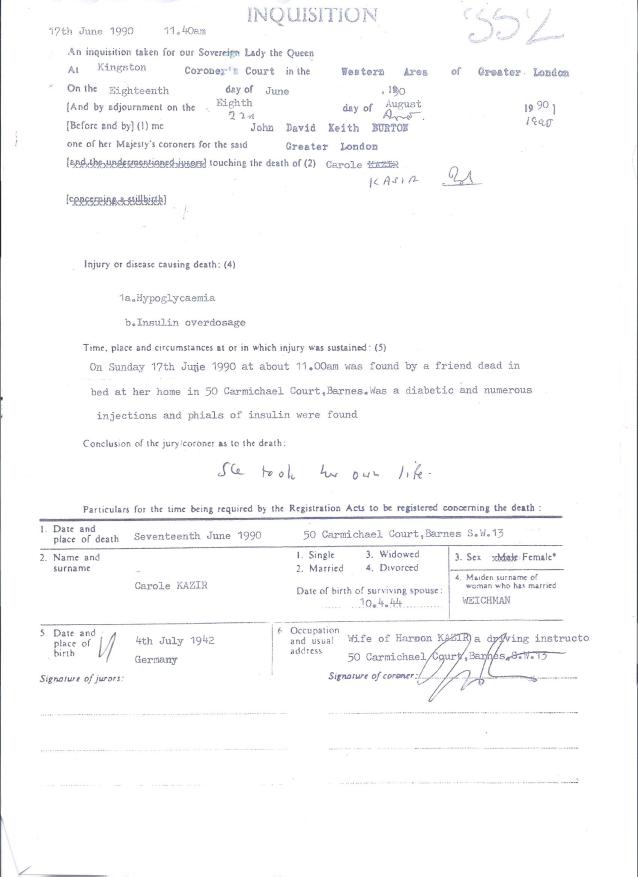
Coroner’s papers covering the controversial inquest of Carole Kasir, the madam who ran with her husband, the notorious Elm Guest House in Barnes, south London. have been discovered after the police said they had been destroyed

They revive the whole business of whether the venue for consenting gay adults was  used as a haunt for paedophiles. I have written  today with Keir Mudie, the Mirror’s deputy political editor, an article about it in the Sunday People and it is also on the Mirror website here.

The verdict by the Hammersmith coroner way back in 1990 was that she committed suicide – and given two suicide notes were found – so it should have been a slam dunk case.

But other people who gave evidence thought she might have been killed because she was alleged to have kept records and photographs of some of the visitors who came there – one of whom the Met police confirmed was Sir Cyril Smith, whom even the biggest naysayers about VIP paedophilia, would have difficulty today making a case that he was innocent.

What is extraordinary is that the Met Police did a recent investigation – Operation Fernbridge-  into Elm Guest House  and a Richmond Council children’s home Grafton Close – that led to the conviction of a Roman Catholic priest Tony McSweeney and the arrest and charging of the deputy manager of the home, John Stingmore on child sexual abuse. Yet they told an MP Tom Watson, now Labour’s deputy leader, who raised questions about the case, that all the papers relating to Kasir at the inquest had been destroyed.

kasir inquest

The covering page of the” destroyed” inquest document

That is plainly not the case as these redacted documents show. I understand that more recently the police may have checked back though there is no evidence that they are re-opening the Richmond investigation.

McSweeney was not charged with anything about Elm Guest House only in connection with the children’s home and abuse at Stingemore’s flat in Bexhill. Stingemore was charged with one count involving Elm Guest House but he died just before the case was due to come to court. So it was never tested in court.

What the documents do show illustrates how difficult it is to investigate historical child sexual abuse and the mass of contradictions -surrounding the story.

They even go down to Carole Kasir’s name  in the document. The official record gives her name as Weichman and born on 4 July 1942 in Germany. Her marriage certificate I have  recently learnt has Weichman as her father and her estranged husband at the time  said her name was Weichman. But a close relative  who should know said her maiden name was Carole Anne Jones and she was born in London.

The documents also raise questions about her suicide and here even the accounts are contradictory. Her GP, David Walker, who she had been a patient at his practice for 14 years, reveals she did have a history earlier of suicide, was diabetic and had a drink problem. But he concludes that she was NOT the type of person he expected to commit suicide.

The toxicology report from New Cross Hospital confirms she died from hypoglycemia and an overdose of insulin. But the examination did not bother to check the syringes or phials or the contents of her stomach. No alcohol was discovered.

But the most contentious  and sensational evidence came from other witnesesses One insisted that he had seen a pile of photographs of prominent people and documents naming which VIPs came there  at her home and another claimed she was being pursued by the security services and the police.

One piece of evidence from the inquest  does chime with the Metropolitan Police’s answer to Channel 4 Dispatches  is the involvement of Sir Cyril Smith. The detailed evidence to the inquest included a story that the overweight MP broke her toilet and wouldn’t pay for the repair which added a further dispute. between him and her.

The inquest also took evidence from Richmond Council  where Mr Jeffries, director of social services, admitted that Stingemore was a paedophile convicted in 1983 -a year after he left Richmond Council.

But Terry Earland, the head of children’s services, suspected that boys were being taken to Elm Guest House from Grafton Close earlier under Stingemore’s care. This appeared not to be taken up by the then director of social services, Louis Minster who  then suddenly resigned from the council.

Now you might say as many naysayers do, why should we be bothered. It is all in the past and we should move on. But I bet none of these people have looked into the eyes of people who have been abused and seen the havoc and destruction they have faced years after the event. They would prefer to just call them fantasists and say none of this probably happened anyway.

That is why we have an independent inquiry at the moment looking into historic child sexual abuse and certainly looking at the evidence it has already dredged out of  the sexual abuse of children at Knowl View School in Rochdale by Cyril Smith there was a cover up as well as abuse.

That is why painstakingly we need to get the nearest we can to the truth and pretending document’s don’t exist is not a way to get there.


The collapse of the local press: A disaster facing local democracy

Grenfell_Tower_fire_morning

Grenfell Tower: The next morning Pic credit: Wikipedia

I recently wrote a piece for the National Union of Journalists campaign,Local News Matters fighting to keep local newspapers alive. While much time has been devoted to the plight of the national press losing swathes of staff, not enough attention has been given to the almost total collapse of local news reporting.

The catalyst was the appalling Grenfell Tower fire which erupted with a huge loss of life, and why ,until then, nothing had been written about it. The fire not only destroyed a community but exposed the appalling lack of local reporting in the months leading up to the fire.

The local residents association – the Grenfell Action Group – had been warning of fire safety issues in Grenfell Tower and other blocks of flats as long ago as 2013.

But they had been ignored and when their blogs got too critical they were threatened by  the solicitor to the Royal Borough of Kensington and Chelsea with defamation proceedings unless they took down the critical posts.

The reason why their concerns went unreported was entirely due to the state of the local press. As Grant Feller, a former reporter, wrote in Press Gazette
In 1990 there would have been two rival papers the Chelsea News and the Kensington News and a team of ten reporters looking at everything in the borough.
“But today there is no-one there. There is a newspaper that cares for Londoners, reflects London and does its bit for London – and that’s the Evening Standard. But it doesn’t do these types of stories.”
Indeed there are only two on line papers Kensington Chelsea and Westminster Today and the Kensington and Chelsea Times. Both are mainly life style and leisure publications. The KCWT contained just one article on the Tower disaster culled from coverage already broadcast by the BBC. The Kensington and Chelsea Times had one original story by a named reporter when the fire had taken hold and one story on an appeal for the victims.
This is not unusual. A damning submission from the NUJ to Sadiq Khan, the Mayor of London, gives details of the parlous state of the capital’s papers and their reporting abilities. It warns that events are not being properly covered, staff have been slashed to the bone, pay is appalling with many journalists not able to afford to live in London in rented accommodation yet alone get a mortgage. The situation is similar in the rest of the country.
Ex editors feel the same. Mike Gilson, who has had a stellar career in regional and devolved national journalism from the Portsmouth News to the Brighton Argus and from The Scotsman to the Belfast Telegraph, recently quit the Argus after trying to revive good investigative local journalism.
In article in the Press Gazette quoting from an essay he wrote for a book Last Words? How Can Journalism Survive the Decline of Print? he says :
“In Brighton searing images and accounts of the Shoreham Air Show tragedy last year, as an out-of-control vintage aircraft sped from a clear blue sky into unsuspecting motorists on the A27, were online before journalists, photographers and writers, had even made it to the scene.
But we still need journalists with the time, training and passion to avoid this ever-increasing deficit. No amount of digitally empowered bloggers, many of them diligent thorns in the side on a range of issues, will make up for the loss of professional reporting.
In some towns courts, council meetings and trust boards are all going unreported now.”
Now some of the slack has indeed been taken up by the growth of bloggers and citizen journalists. But however good these people are they are not a substitute for a well staffed paper with ten fully paid reporters covering a local community.
Bloggers just like the Grenfell Action Group are also vulnerable to being picked off by powerful people and threatened with defamation if they criticise wealthy powerful individuals or even public bodies. The case of the Camarthenshire blogger,. Jacqui Thompson, who was threatened with losing her home after a bitter legal dispute between her and the chief executive of her local council, Mark James. is an example. He used public money to sue her and fight a counter claim despite criticism from the National Audit Office in Wales. She is still left with paying out £25,000 over a dispute that began with her filming the council.
Frankly this means that people in powerful positions are beginning to realise they can get away with things that ought to be investigated by an independent press. Whether it is local corrupt deals, appalling child sexual abuse claims or people being bullied and harassed by the wealthy, those in authority and criminals knowing they have a 90 per cent chance of getting away with it.
The conclusion is obvious. If we don’t do anything to stem the collapse of local reporting we will have a democracy in name only, with no substance because nothing will be reported.

Revealed: The bucolic wine buff accountant who let privatisation spivs fiddle London fire brigade

image

Robert Napper: Pic credit: Twitter

CROSS POSTED ON BYLINE.COM

He has been fined £120,000 and barred for three years from his professional body for ” professional misconduct ” by the Financial Reporting Council in April for his part in allowing a now bust private firm to fiddle its income from London Fire Brigade.

But before this happened Robert Napper, a partner with Grant Thornton, one of the big accountancy names, had already quietly retired with his pension to live in the rural Oxfordshire countryside and become a pillar of the local community.

Grant Thornton will have to pay a £2.3m fine for their part in allowing Assetco to fiddle the books after the company took over responsibility for maintaining London’s 700 fire engines in a privatisation deal which went badly wrong.

The scheme had been pushed by the now disgraced former Tory chair of the London fire brigade, Brian Coleman, to save money and curb the power of the Fire Brigades Union. Coleman was wined and dined by the director John  Shannon and given a Christmas hamper from Harvey Nicks for his trouble.

The union all along protested about the way the company was run – but even they did not know it was fiddling and inflating the books with false invoices for claims that were never made ( see my earlier blog).

To be fair neither Robert Napper nor Grant Thornton made any money out of it – indeed the auditors ended up as creditors with unpaid bills. But they did allow enormous latitude to the directors of Assetco, John Shannon and Frank Flynn, to fiddle the books and rip off the company, the shareholders and ultimately the taxpayer.

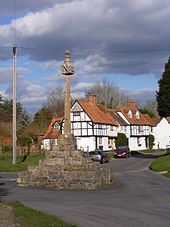
So who is Robert Napper who got duped? He lives in East Hagbourne in South Oxfordshire near Didcot.  It is a village of 1882 people with  a mixture of  modern properties (where he lives)  and many  chocolate box cottages. It has a community shop and post office which Robert Napper is one of the directors.

Village_cross_East_Hagbourne

Village Cross at East Hagbourne. Pic Credit: Creative Commons Rob Stallard

He was a senior accountant with 23 years experience who as a partner – one of the top paid jobs at Grant Thornton –  and should have known better. The report by the FRC distinguishes between his role and junior staff who were inexperienced in handling Assetco’s accounts.

It also turns out that he is a serious wine buff – his Twitter account includes many pictures of fine wines- and the best food to accompany it. Among these are his Christmas 2015 selection ( see below).

CXVy90IWcAAqHHd

Robert Napper’s Christmas wine collection

He will have to pay the fine in instalments. I contacted him to ask him if he had anything to say about the scandal or whether he knew the whereabouts of the people who had duped them.

He said he could not comment because of legal reasons though he did say he was not appealing the findings against him.

As for John Shannon and Frank Flynn they appear to have fled the country – he thought one of them could be in Thailand. Anyone who knows where they are could  they contact me and I would be very grateful.


Equal Pay,Unequal Misery: Unison and the Durham Teacher Assistants’ Dispute

DDWDbaZXYAAfDmI

Durham teaching assistants at their protest meeting over the deal this week.

CROSS POSTED ON BYLINE.COM

The issue of equal pay for equal work is one of most enduring work scandals of our time. Women workers in particular lose out to men but it requires a lot of hard bargaining and money to tackle it.

The most dramatic current case is the long running Durham teacher assistants dispute involving over 2700 teaching assistants in Durham, mainly low paid women.

To implement equal pay Labour controlled Durham Council proposed cuts in  wages of up to £5000 for already low paid teacher assistants earning between £14,000 and £20,000 a year to bring it into line with other low paid workers they employed. The teaching assistants are the backbone of Durham’s schools, helping kids to read and understand basic numbers and when teachers fall sick deputising for them by taking classes.

The council and Unison, the union that is supposed to stand up for low paid workers, evidently were about to agree a deal that would worsen their pay and conditions when they faced a huge grassroots revolt from the teacher assistants themselves.

Feisty women workers called meeting, rallies, marched at the Durham gala and lobbied the sympathetic Labour leadership at last year’s Labour conference securing a meeting with John McDonnell, the shadow chancellor. They were even partly responsible for Labour’s poor performance in this May’s local elections which saw Liberal Democrats, Independents and Tories take seats from Labour.

Their strong action led Unison to change its mind and back them and give them some limited say in negotiating a better deal.

Last week in the middle of the Unison annual conference in Brighton the union claimed it had  negotiated a breakthrough.

UNISON Northern regional secretary Clare Williams said: “Several months of tough talking later, a revised and improved offer has been proposed that will benefit the majority of teaching assistants.

“Strikes and relentless campaigning by dedicated teaching assistants, along with the support of the community, have been crucial in moving the council from its original position.

“Dismissing, rehiring and cutting the pay of so many education professionals would have risked many quitting their jobs. That would have had a huge impact in the classroom.

“Both sides have worked hard to reach agreement over the past few months. The union is absolutely committed to continuing to work with the council to secure the best possible outcome for everyone.”

However within days the promised deal which is based on a complicated regrading started to unravel once the 2700 teacher assistants got individual letters with new terms of employment.

This week a big meeting was called in Durham and the grassroots again began to revolt.

Megan Charlton, one of the leaders of the group, wrote in a blog that she will not be accepting the deal – even though she will get a pay rise in two years time.

She said: “472 Teaching Assistants – 22% of the workforce – will still be losing money. Many are losing £1200 a year, some are losing less, some are losing more (several on our facebook group are still facing losses of £4,000 and that’s AFTER they agree to the extra hours).

“We now have a situation where the vast majority of Teaching Assistants are required to teach at least one session a week. Surely teaching should be an ‘enhanced’ requirement, an ‘enhanced’ skill, not one you would expect from the majority of Teaching Assistants who came into the profession to do exactly that: to assist teaching, not to teach.”

She said if it had been just a ” few anomalies ” she might have accepted the deal but clearly it wasn’t. It will now go out to a ballot.

Durham County Council responded to my inquiry:

The council’s corporate director of resources, John Hewitt, said: “Throughout this process the issue for the council has been the risk of equal pay claims caused by the current teaching assistants terms and conditions.

“To mitigate the equal pay risk, and to ensure that assistant’s job descriptions and grades are appropriate for the work they do, we have  worked really hard with trade unions, teaching assistants and head teachers on a fundamental review of TAs responsibilities and roles.”

“The outcome of that work is that, if accepted, the vast majority of teaching assistants will see an improvement in their financial position after the compensation period.”

To its credit Durham County Council has withdrawn its threat to sack and rehire all the teaching assistants on inferior terms. The problem the teacher assistants have is with their union which they believe rushed into the deal to announce it at its annual conference without checking the full terms.

I wanted to put this to Clare Williams, the regional secretary, and a supporter of ” Team Dave” during the last election but she declined to come back to me.

But it seems to me that  Unison has been too ready to accept this deal and has sold out some of its low paid members without pressing for  further improvements. For them it is  a real loss of cash from a low salary . An equal pay deal has resulted in unequal misery for a fifth of the workforce. And it has been negotiated by a well paid official earning at least three times the money of the lowest paid teaching assistant.


Revealed: Faked bills and dodgy deals How Assetco conned auditors and ripped off London and Lincoln’s firefighters

london fire engine

A London fire engine then owned by Assetco

CROSS POSTED ON BYLINE.COM

The scandal that led to the huge £3.7m  fine ( reduced to £2.4m after co-operation) against  accountants Grant Thornton and ex  partner Robert Napper is revealed in a dry 56 page report by the Financial Reporting Council.

The biggest con by the privatised company  Assetco responsible for  owning and maintaining the capital and Lincolnshire’s fire engines was in faking additional cash payments from London’s fire brigade when it was asked to do  more work.

Directors of the company took advantage of three extra requests that were approved by London fire brigade – involving new equipment for fire engines and emergency training for 700 of the capital’s firefighters.

In all three cases they fiddled the books to boost the value of the company to shareholders and lied about the cost of the contracts to  gullible auditor Robert Napper and  accountancy firm Grant Thornton.

The London fire brigade wanted its engines to be equipped with new foam pumps and thermal imaging cameras. Under the privatisation deal they could charge large sums of money per month  under a  leasing deal for fitting this equipment. But the greedy directors were not satisfied with this great deal. They decided they wanted icing on the cake and claimed even more to make their company look more profitable. And not just a few pence -literally millions of pounds.

The new foam pumps meant that Assetco could and did charge an additional £2.6m to London fire brigade. But the directors claimed that additionally they were charging London fire brigade another £46,975 a month from April 2009. This produced promised income of another £4.991 million over the next 14 years. But Assetco never even sent an invoice to the London fire brigade. for these sums. It was a complete fake – the money did  not exist and the auditors didn’t spot it.

The same applied to the thermal imaging cameras. The 140 cameras were leased to London fire brigade at a cost of £331,443 a year or £27,620 a month.  But then the directors told the auditors that it had cost over £1m to purchase and fit the cameras and that the London fire brigade was paying over £57,000 a month. This generated a total of  over £5,875m over 13 years. Again this was a complete fake and it would have shown a profit margin of 80 per cent. This went unchallenged by Mr Napper despite queries by his team.

Finally they fiddled the emergency training programme for 700 firefighters. They claimed they were receiving another £71,000 a month for ladders and hoses and guards that they were already were being paid under an existing contract.  They also fiddled the costs. They said it would only cost the company £2m to provide it over five years. In fact it was over £6m.

This catalogue of deceit was aimed at inflating the value of the company. It was particularly despicable because the directors were using the need to improve London’s  fire fighting capability as a vehicle to fiddle the books. But that was not all they were doing and I will come back to it in another blog.


Fined £3.5m for professional misconduct: Grant Thornton approved dishonest accounts for London and Lincolnshire’s privatised fire engines

GrantThornton

Grant Thornton: A big fine for professional misconduct Pic credit: Wikipedia

CROSS POSTED ON BYLINE.COM

In 2011 this blog was involved with the Fire Brigades Union in investigating the handing over of London’s and Lincolnshire’s  fire engines to a private company called Assetco.

The company nearly went bust  in 2011 owing £140m. Shareholders and banks hoping to make money from privatising the emergency services lost millions and small shareholders were ruined.

The  City Hall Tories under Brian Coleman, then  the elected chair of London’s fire authority now nowhere in public life, saw the  flagship policy as a future blueprint for privatisation. Instead it was a disaster compounded by an Old Etonian baronet buying London’s fire engines for £2  from Assetco only to go bust himself leading to another company taking over.

Now six years later the grim and unsavoury truth has come out. A report from proceedings taken by the Financial Reporting Council against the auditors of the Assetco, big accountancy firm, Grant Thornton, and the accountant who audited the company Robert Napper,  has led to a £3.7m fine for  both of them for professional misconduct. Neither Grant Thornton nor Mr Napper made any financial gain out of the scandal.

The facts are staggering. Over two years Grant Thornton   were found to have committed no fewer than TWELVE  cases of professional misconduct which meant the accounts presented to the public were mainly fictitious. Robert Napper was found to have  ELEVEN cases of professional misconduct.

As the report says: “This misconduct adversely  affected or potentially adversely affected a significant number of people in the United kingdom.”

It points out shares were trading at £6 during this period and fell to £1 in 2011 when the real situation was known. The report adds: ” The share price in 2009 (£6) reflected financial statements that contained an inflated balance sheet and included some significant revenue that was fictitious.”

An accompanying report reveals the scale of the dishonesty and cover ups. They range from fictitious payments amounting to millions of pounds from City Hall to buying up a firm for a relative  with shareholders money and creating a rental firm that let property out to directors. So extensive was the deception that I intend to use further blogs to describe in detail what happened.

As the report says: ” GT and Mr Napper were deliberately misled by AssetCo’s  management but the exercise of proper scepticism would have led to dishonesty being uncovered.”

Grant Thornton  was fined £3,500,000, reduced to £2,275,000 after  they co-operated with council and given a severe reprimand;

Mr Napper was fined  £200,000, reduced to £130,000 after  he co-operated  with the inquiry

Grant Thornton also had to pay £200,000 as a contribution to the Executive Counsel’s costs.

Mr Napper, an accountant with 23 years experience, was seen to have acted so badly that they have also recommended he be barred for three years from membership of his professional organisation ( the ICAEW –Institute of Chartered Accountants in England and Wales) for breaching  their code of ethics.

Mr Napper, from South Oxfordshire has since retired.  The Executive Counsel of the FRC said: ” The misconduct of Mr Napper , in its totality, is so damaging to the wider public and market confidence in the standards of members and in the accountancy profession and the quality of corporate reporting in the United Kingdom that removal of the member’s professional status is the appropriate outcome in order to protect the public or otherwise safeguard public interest”.

Further inquiries by me show Mr Napper in his Linked In page was publicly  endorsed by seven people including  Perry Burton, head of London audit, for Grant Thornton. and Natasha Pettiford-White, an executive assistant at Grant Thornton. Mr Burton’s recommendation would carry considerable weight as he is an auditor of 20 years experience.

Gareth Rees QC, Executive Counsel to the FRC, said:
“The Respondents have admitted widespread and significant failings in their audit work, and GT specifically has accepted there were serious failings in the execution of certain aspects of the firm’s quality control procedures. This misconduct is rightly reflected in the seriousness of the sanctions, such as the exclusion of Mr Napper from membership of the ICAEW ( the accountants professional organisation) and the fines on both Respondents.”

Matt Wrack, general secretary of the FBU, said :

“It is mystifying that central government did not spot this scandal, when the Fire Brigades Union and firefighters themselves were warning about it for years.  Leading politicians and fire service managers were responsible for allowing a gang of spivs to take over essential equipment and vehicles, the property of the people of London and Lincolnshire.  Both of the authorities for these regions need to investigate fully to ensure this never ever happens again. ”

Grant Thornton were approached and did not reply. I have written about this in Tribune magazine.

In my view this shows that one of our big accountancy firms was derelict in its duty in protecting the public from people who obviously wanted to fleece shareholders and took no care in auditing the books of people in charge of vital emergency  vehicles in London  and Lincolnshire. It also shows the real dangers of privatisation and we cannot  trust big accountancy firms to act in the public as opposed to their private commercial interests. You will see the scale of the scandal in future blogs.


Must a stellar Tory performance lead to Labour oblivion?

Theresa May

Theresa May:Leader of the Tory party. Pic credit:BBC

CROSS POSTED ON BYLINE.COM

If I was a Conservative strategist I would be very pleased with myself. The local election results could not have gone better to plan. In one fell swoop the 650 plus Tory gains have put Labour on the defensive and even threatened their heartlands, halted the Liberal Democrat revival in the West Country, pushed back  the SNP advance in Scotland and destroyed UKIP.  One symbolic Tory gain was winning a seat in Sedgefield, Tony Blair’s old Durham constituency.  The only small flies in the ointment is that the Tory advance was contained in the big South Wales cities and they failed to make any impact in Manchester and Liverpool.  We have no indicator of how London will vote.

On the face of it Theresa May is heading for a coronation in  the June general election with a majority of anything from 140 to 220 with  most of the four million UKIP voters in the bag to add to her diehard Tory supporters. Grim reading indeed particularly if the convention is  that previous local election results underestimate swings to the government party in a general election.

But note that the Conservatives are not crowing too much about this result. The result in one sense ( with 11 council gains) has been too successful and they have to big up ” Corbyn ” or they will have no bogeyman to frighten their more affluent voters to come out and vote for May. Because if they think it is in the bag they may not bother.

They also have an interesting campaigning challenge – do they limit campaigning in Tory seats on the grounds that they are impregnable now – and go and campaign in seats where Labour has a 10,000 majority on the grounds that May is so popular that they can take these. Or do they take a more cautious approach and fight hard in their marginals.

Whatever the situation  the Labour top team have got to up their game and try and convince both working class and middle class voters that are tempted by May and her robust nationalist challenge over Brexit to switch.

Labour should have the high ground on the rest of the agenda, the NHS, police and crime, education, transport, the environment and welfare. In all these areas the government is making a mess of it – and with five years of more austerity and rising prices the message ought to get through that we need a change in direction.

But it will still to be dominated by Brexit and how Britain is going to lead the negotiations – and Labour has failed to counter this.

There may be a way to deal with this. As May is not going to reveal her negotiating stand perhaps Labour who have a talented Brexit secretary in Keir Starmer should do so. What would happen if Labour took the risky chance of holding a press conference to announce their negotiating stance and their team that would go to Brussels. And what if that was combined with the post Brexit future a Labour government would provide for Britain. It would look like a government in waiting.

It would be controversial as the media would concentrate on Labour’s plan but it would put May on the defensive to explain her vision – something she is reluctant to do so given she is after a blank cheque wrapped up in the Union Jack.

And it would widen the gap between Labour and the Liberal Democrats who are seen as the remain party – but they have the problem that their increasing vote share has been eclipsed by UKIP supporters swamping them by voting for May in the West Country and elsewhere. While the Lib Dems will probably gain some seats in Remain constituencies  ( St Albans,Twickenham and Bermondsey) they have no chance of becoming the official Opposition even if Labour do badly.

To my mind for Labour to try and combine their vision for Britain with their vision for Brexit could cause some of the people who have quit Labour for May to think again. It could also avert some of the most dangerous aspects of a complete breakdown with Europe.


How a Roman Catholic paedophile priest who mixed with celebs nearly escaped justice

Father Anthony McSweeney

Father Anthony McSweeney; Nearly escaped justice Pic Credit: BBC

CROSS POSTED ON BYLINE.COM

One of the successes of the Met Police investigation into the notorious Elm Guest House in Barnes was the arrest and conviction of a Roman Catholic priest Anthony McSweeney who was jailed for three years  in 2015 for sexually abusing a teenager and making indecent images of children.

The inquiry into Elm Guest House led the police to focus on a Richmond  Council children’s home – long since closed – called Grafton Close which at the time was run by a friend of the priest, John Stingemore, who would have been tried alongside him at Southwark Crown Court if he had not died just before the trial.

The allegation that boys were taken by Stingemore to Elm Guest House were never tested in court – though the CPS agreed a charge should be made – because of Stingemore’s death.

But the court heard that McSweeney and Stingemore did take boys away to a flat in Bexhill on sea where they were sexually assaulted. And when McSweeney was arrested   pornographic pictures of children were found on his computer.

Until then Anthony McSweeney had escaped his crimes that took place between 1979 to 1981 and if it had not been for Operation Fernbridge he would still be a popular priest a director of a  Catholic school in Norwich, helping with Norwich City  football youth team and local boxing clubs.

He  was held in high esteem and mixed with some of the great and good. He married the boxer, Frank Bruno and Delia Smith, the celebrity cook and supporter of Norwich City, once asked to arrange a special football service for the club.

But his secret activities could have been stopped nearly 20 years earlier when it was discovered while he was working as a priest in Harlow and Leigh on Sea, Essex, that had a stash of pornographic videos. His cleaner discovered his stash of sex toys, truncheons and pornographic videos at St Peter’s Catholic Church in Leigh-on-Sea, Essex. Instead in 1998 the Roman Catholic Church quietly transfered him to another parish, St George’s church in Norwich.

Now an independent review undertaken by the Dioceses of East Anglia and Brentwood in the wake of his conviction has revealed serious lapses in the whole way the Church handled the discovery in 1998.

In a statement the two dioceses say:

 The Church should have taken more robust action following the discovery of video tapes in 1998, later referred to in Anthony McSweeney’s trial, and should have ensured that the matter was reported to the police so that a full investigation could have taken place.

 Local priests and parishioners were not adequately supported, their concerns were not taken sufficiently seriously, nor acted upon diligently;

 Anthony McSweeney’s subsequent transfer to East Anglia, as outlined above, was poorly managed, lacked insight and was not adequately documented.

The Church defends it behaviour by saying:

“At the time of these events awareness of the need for child protection was in its infancy. The national safeguarding procedures and processes put in place since 2001 would now ensure that such a matter would immediately be passed on to the police, via the Safeguarding Coordinator. Now over 95% of parishes have at least one Safeguarding Representative whose task it is to ensure that the concerns of the local clergy and parishioners are taken seriously, and to refer those concerns to the Diocesan Safeguarding Coordinator.”

However it is clear that the review is not satisfied even today as it recommends the Catholic Safeguarding Advisory Service, and the National Catholic Safeguarding Commission:

 To review and clarify the existing policy about priests transferring from one diocese to another to ensure consistency and transparency in the process in all the dioceses in England and Wales, and in particular, to ensure that any issues to do with safeguarding are resolved before any such move can take place;

 To issue clear guidelines for managing cases potentially involving indecent images;

 To review the existing “whistleblowing” policy

The Church is refusing to publish the report or even name the author who prepared it on the grounds it was an ” internal report”.

Yet it highlights one of the major perennial problems in tackling child sexual abuse – the decision by authorities to sweep scandals under the carpet – and quietly transfer the person to a new post elsewhere. Not only is this irresponsible but its is dangerous as it puts more children at risk just to preserve the reputation of the organisation.

This a good case  to be referred to the Independent Inquiry into Child Sexual Abuse – either under its Roman Catholic investigation – or the part of the inquiry that will examine safeguarding. Alexis Jay, the chair, should seek out this report as it will help explain in detail what went wrong here and how it can be tackled in future. Otherwise valuable lessons could be missed and the Roman Catholic church will once again have to be taken on trust that it doing the right thing.


Jeremy Corbyn: Can he break out from being caught between a rock and a hard place?

Jeremy-Corbyn1-440x248

Jeremy Corbyn ; a difficult but challenging task ahead

If official opinion polls are to be believed Theresa May is heading for a landslide on June 8 with a 24 point poll lead and a majority of between 140 and 160 in the House of Commons. If she wins the argument that we need  ” stable and strong leadership ” to push through Brexit and every leaver in Britain  vote for her – especially in England and Wales – she should in theory increase her share of the vote to 52 per cent and take seats like Sunderland and Stoke, leave Labour on a wafer thin majority in Newcastle and win back seats in London. She could then dream of having a 200 majority and reducing Labour to a rump party.

But will this happen?  Jeremy Corbyn is certainly not starting from a good place.

Ever since he has been elected twice as leader he has been vilified in the mainstream media. When he was first elected some colleagues in the Parliamentary lobby thought he would not last a week and have had a mind set since that he shouldn’t have survived.

The image of him alternates between a dangerous Leftie and too weak to run the country. He can’t actually be both or he wouldn’t be  dangerous. The divisions inside the Parliamentary Party culminating in no candidate of substance standing against him in the second leadership election have done a lot of damage with the electorate. And the obvious division between him and the elected deputy leader, Tom Watson, have not helped and don’t seem to have been mended on either side.

He was also put in an impossible position by Theresa May’s snap decision to call a general election. If he had opposed it the national media would have said he is frit to face the voters, if he supported it they would say as the SNP already has that it was like ” turkeys voting for Christmas.”

Nor do I see the solution at the moment in getting a new right wing electable leader as a panacea – whoever leads the Labour Party will get a rotten press from the Daily Mail and the Sun.And it won’t depend on the policies either. Look at the more muted response from the tabloids to the idea of capping energy bills when it is a Tory leader who suggests it – as opposed to Ed Miliband.

He also has a problem from the unpopular policies by some right wing Labour councils – which could paint a worse picture for him on May 4. Two of the Labour run authorities – Durham and Derbyshire – are in areas where Labour  have decided to make huge cuts in the salaries of their natural supporters – teacher assistants- who are already on low salaries. The cuts in the name of equal pay have infuriated voters in Derby and Durham – and I would not be surprised to see Labour lose seats in these strongholds. Indeed some of the teacher assistants in Durham  I talked to at the Labour conference were planning to vote Liberal Democrat in the local elections and support Jeremy Corbyn  in a general election.

And recent Labour council seats lost by Labour to the Tories have included Salford – where the Labour council backed a development by a millionaire ex footballer to build luxury flats leading to a split vote when a residents association fought the seat. It split the vote and let the Tories win. And Labour controlled Southwark , Lambeth and Haringey are unpopular with council tenants for allowing redevelopments which will deprive local people of their homes and boost the income of foreign buyers.

So it my mind given the horrendous state of the NHS, social housing, social care, schools, transport, benefit cuts and the failure of many privatisation projects both in Whitehall and the NHS the only way Jeremy Corbyn can go is a populist anti Establishment campaign – aimed at first at the core vote to highlight the state of the country.

If he can get that message over plus a commitment to do something about it the very least it will do is to prevent such a big Tory landslide. The best would be an astonishing turn around – by convincing some of the disillusioned young voters, floating voters, and people with a conscience about growing inequality – and put the present triumphant Tories on the back foot.

While Brexit will also dominate the campaign – this is likely to be more of a battle between the Tories and the Liberal Democrats – with the Lib Dems threatening Tories to take back seats the Tories took from them in 2015.

So for  Jeremy Corbyn  it won’t be easy  but when you are caught between a rock and a hard place, you have no choice but to take the biggest risks.