Dada Hari Ni Vav

This is an absolutely fascinating travel blog written by a retired American grandmother on a four month trip to India. Not only does it explore places off the tourist track, it has great pictures and a feeling for people as well as places. I put up this particular blog as an example of a whole series she has put together on an Indian journey for those who enjoy travel writing.

annetbell's avatarTalesAlongTheWay

dada-hari-ni-vav02

Dada Hari, was the  chief attendant of Sultan Muhmud  Begada’s royal harem at the turn of the 16 century. She commissioned the building of this step well as well as a garden, mosque, and her own tomb.  The ancient rulers had chosen aristocrats to  build their own burial tombs while they were still alive.  Dada Hari was a very powerful and influential woman in a time where that was not usual.  A story goes is that she wanted the step well to be built as a cool, peaceful spot for the women in the area to rest and visit with  their friends while collecting water for their families.  She was an early feminist helping  other women.  She created one of the coolest places, literally, for a man or a woman  to spend a hot afternoon in Ahmedabad.7976365609_d6bb63b6b6_z

View down into the nearly dry well.  It will be replenished during monsoon.

View original post 294 more words

Saved by the NHS: A Scilly Isles medical emergency

Some three years ago  I railed about the failure  of the NHS services on the Isles of  Scilly to diagnose  a triple fracture  of my shoulder. I complained to the then primary healthcare trust and about the misdiagnosis by the  GP run hospital  on  St Mary’s.  Since then it looked to me that the  service had improved.Little did I know I was about to test it again.

On a gloriously fine Friday my wife Margaret were sitting out on the terrace of the Ruined Cottage cafe on Tresco while two of  our grandchildren were playing on the beach. Suddenly my wife complained of feeling dizzy and moved into the shade. Within seconds  her speech had become slurred, her vision impaired and she could hardly communicate.

What I didn’t realise is that she had had a stroke totally out of the blue. What happened next virtually  saved the day The waiter realising something was wrong got her a glass of water and a sugary drink.  The cafe called the first responders, volunteers trained by the NHS who arrived in five minutes. They took her pulse and called a paramedic  who got to Tresco in 15 minutes from another island. He called in an air  ambulance which got to Tresco within 30 minutes enough for them to take her by road ambulance to the heliport on the other side of the island. By 5.0 pm she was at  the Royal Cornwall Hospital in Truro – under two hours from her collapse. She was immediately given a brain scan and is now starting to recover in stroke ward.

But what was well beyond the call of duty was the way the responders and the cafe proprietor also looked after me and by now stunned grandchildren. They were taken away from the scene by the staff and given drinks.   They organised my tickets so that I could get off the island the next morning by boat, despite nearly all places being taken because it was end of half term. They checked the times of trains to Truro from Penzance and even the number of a taxi firm in Truro and a good B & B so we could stay there. They even gave me a BT phone so I could ring my daughter  tell her what happened   – as there is no mobile signal at my cottage.

I couldn’t thank them enough for all their help – they checked up on us the next morning to see we were all right. Now I have the difficult part of waiting to see how Margaret recovers. But it is a timely reminder of how valuable the NHS is to Britain, something we take for granted and how important it is that in this case that all this is provided free of charge. Imagine the bills for just getting my wife to hospital.

Shamed by Japan: Britain’s pot holed roads to ruin

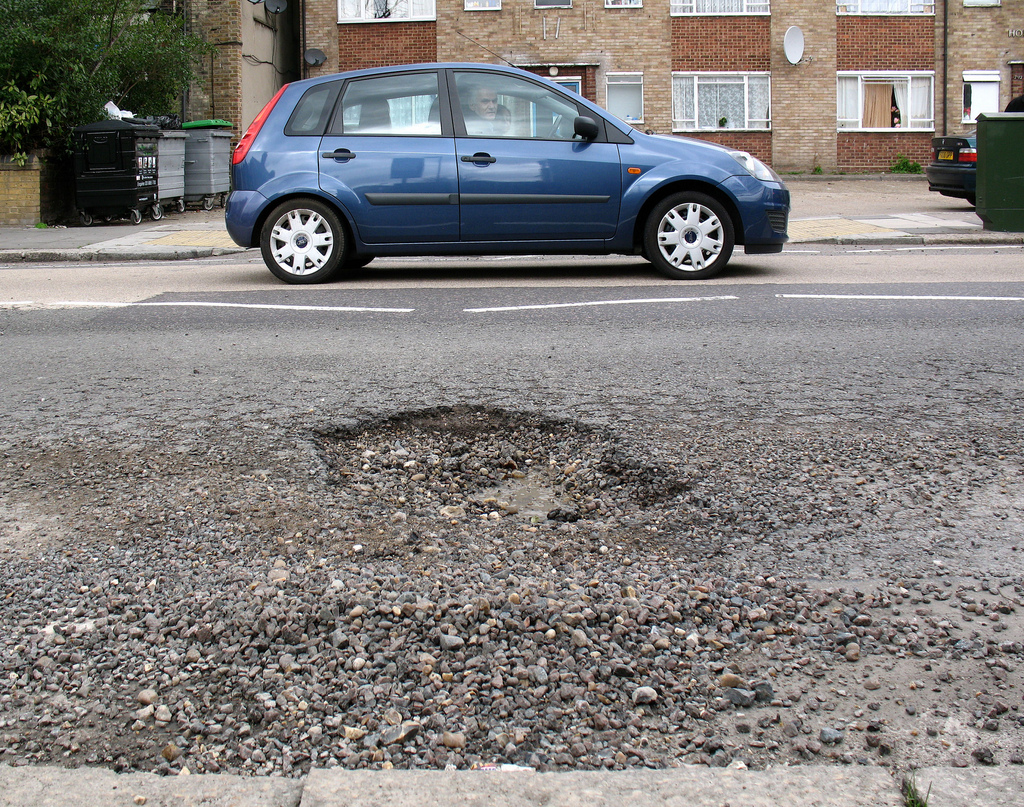
Pothole in London borough of Haringey: Pic Credit: Alan Stanton -Creative Commons

Pothole in London borough of Haringey: Pic Credit: Alan Stanton -Creative Commons

You couldn’t make this up. Britain’s potholed and noisy roads have such a bad world-wide reputation  for damaging new cars that a Japanese manufacturer has  replicated a British road  to test them before they can be sold in the UK.

Yes Honda has built four miles of rough British road -including British road signs and a roundabout -in Takasu, Hokkaido in Japan because they cannot find a main road bad enough to test car suspension in the 5500 miles between Japan and London.

Evidently  Britain is unique in building roads with porous surfaces which mean that every winter  they crack, break up and create pot holes. Nobody else in Europe would dream of building such roads which are noisier and can’t cope with bad weather.

As  a spokesperson for Honda  put more diplomatically: “The road surface in continental Europe, especially in the North, are paved with hard material which doesn’t absorb water. This is because in severe winter, absorbed water in the material may freeze turn into ice and destruct the roads.

“In England, we don’t tend to suffer with this severe winter and so the surface is made with softer materials with many pores to absorb rain to prevent a slippery surface. As a result, UK roads have a rougher surface which creates more road noise than other European roads. What Honda wanted to replicate in Takasu was this type of road surface. Rough does not mean badly maintained or pot-holes. It means the different material.”

Honda has also created roundabouts because as Honda put it:” In certain rural UK areas, roundabouts create a situation where high stopping power, agile acceleration response and high manoeuvrability is required. There is no such situation in Japan as there are hardly any roundabouts.”

So now we know why we are having to put up every year with multi million pound bills, legal claims for compensation from councils. Instead we need to buy cars which have to be tested abroad on replicated British roads because they can’t find any like ours in  their country.

The full story is on the Exaro News at http://www.exaronews.com/articles/4921/japan-recreates-rough-uk-roads-in-test-track-for-new-cars . If you want to see the spiralling costs of pot holes see February’s Which/ magazine (http://bit.ly/11T0Lfn) . The outstanding bill for repairs is £12.93 billion.

Or if you are really fed up why don’t you e-mail the roads minister, Norman Baker at norman.baker@dft.gsi.gov.uk and tell him to start bitmac ( the replacement for tarmac) roads with surfaces that are bound to crack up every winter.

Discovered: The idyllic St Lucia hideaway of Amy Winehouse

Moonrise at Cas en Bas beach, Cotton Bay

Moonrise at Cas en Bas beach, Cotton Bay

If you want some peace and quiet, sun, sand and some luxury, I can recommend a week on the island of St Lucia.

I have just returned from a stay there ( No I did not disappear, Dan Hodges,  into a nineteenth century opium den,(see http://bit.ly/XM83jx).  But digesting the horrors of Leveson and midway through a long disturbing investigation into a historic paedophile scandal requires a break.

The hotel chosen by my wife, Margaret, from a Sovereign holiday brochure, proved to be a great find –  remarkable oasis of calm and privacy – and yet extraordinary spacious and comfortable – and by no means the most expensive venue there.

While many hotels are crammed into massive noisy resorts – this one was tucked away alongside a wild and semi deserted public beach where horses cantered along the shore with the local youth  demonstrating their bareback riding skills on Sundays.

Cotton bay; The main pool

Cotton bay; The main pool

The Cotton Bay hotel (http://www.cottonbayvillage.com) consists entirely of villas and apartments,  two restaurants, one attached to a bar on the beach and the other, Piano,Piano, an up market one with a resident pianist; a superb pool, good facilities for kids, a spa, and for the very energetic (unlike me) kite surfing. Built next to a mangrove swamp, part of this had been preserved with the result that the night resounded to myriad frogs calling their mates.

It's a dogs life on holiday

It’s a dogs life on holiday

But its charm was that this piece of unashamed 21st century luxury was alongside  the rest of the  Cas en Bas beach – a very public place where families drove the odd car down for a beach party, dogs were welcome to roam (unlike England) following you on hikes and anyone could bathe in the warm Atlantic ocean.

What caught me off guard was when a local driver taking tourists on a trip to see the remnants of  St Lucia’s rainforest (the colonial Brits chopped down rather a lot of it) and I mentioned Cotton Bay and he said ” You’re staying with the celebs then”.

As I knew neither Dan Hodges, Rupert Murdoch or even Barnet’s local celeb Mrs Angry had been staying there, I wondered who.

It turned out that Amy Winehouse had rented a rather large villa there for six months ( being a journo I checked this out with the hotel manager) and had also committed a remarkable feat of generosity by giving £4000 to a local coconut seller so he could have a hernia operation. See the tale in The Mirror (http://bit.ly/Y7gXUF ) and it appears to be true and happened on the beach! The good news -from another  taxi driver – is that the Chinese are building a new public hospital at Castres, the capital.

The hotel had many plus points. we were on half board and could dine at either restaurant and if we had  three meals, they only charged us for the cheapest one. We had one complimentary spa treatment  between us and they did not charge us for the most expensive treatment.

The ground floor apartment was more than spacious with its own kitchen, sitting room and two bathrooms ( we appear to have been upgraded!)

Cas-en-Bas beach looking towards the bar

Cas-en-Bas beach looking towards the bar

Bad points – if you were going self catering, the shop had only limited supplies, though they did run a complimentary bus service three times a week to a local shopping mall. Also it was a long way from the main road where there are cheap bus services and it would have been far too hot to walk there. Taxis, car hire  and tourist trips are expensive though the rain forest trip on an aerial tram was breathtaking.

Probably the most bizarre story there was that at one stage the forest was occupied by Zimbabwean refugee Rastafarians, who started chopping down parts of it for firewood and introduced a new species, cannabis sativa, into the forest. Our tour guide, a trained lawyer, said they had been moved and some Norfolk pines had been imported from Cuba to fill the gaps. Anything can happen in the Caribbean.

The Green Man of Wark

Battlesteads Hotel: An ordinary country pub on the outside, but with a beating green heart inside

Just to show this website is not all doom and gloom  here is a heart warming story of a man who is showing how to  combat climate change.

Up a B road in a remoter part of Northumbria is the Saxon village of Wark. In this small community is the Battlesteads Hotel. As you can see above, on the outside it looks a very pretty ordinary country pub.

But this hotel is a pioneering green business and having just stayed there, I am more than impressed by the amazing efforts of the owners Richard and Dee Slade to create a comfortable environment that helps to save the planet.

Richard Slade preparing to pluck a rather large courgette for the pot!

This is not just the case of using low energy light bulbs and asking you to  reuse your towel – the normal lip service to ” green ” policies employed by Travelodge and other chains. Practically everything in this place you use is green or local.

The hotel is centrally heated and the hot water plentiful. But there is no gas or oil-fired boiler. The source is a large biomass boiler in an outbuilding fed by wood chip from  a sustainable forest less than mile away. A rainwater system  feeds organic vegetables , flowers and salads grown all the year round in polytunnels.

Breakfast and dinner also tick many of the low food miles boxes – with different cheeses coming Northumbria, Cumbria and Durham- beef from Northumbria  farms and low salt kippers smoked in the same county. And there are lots of real ales and some English wine.

And if you don’t finish your meal the residue from kitchen waste goes into a modern composter which produces the loam for the next generation of courgettes  and lettuces.

And there is more to come. He is planning to resurrect an old spring from a nearby farm helping drain the land. This will feed a new pond, to be the home for slug eating toads, frogs and Ken Livingstone note, newts.

And he has even  done his bit to thwart cuts ( despite bureaucratic opposition) from Northumbria Council by taking over the contract to supply Wark primary school with school dinners – after the authority withdrew the hot meals service to its schools. So a new generation of young Warkians are being sustainably fed – just like Saxon times. Jamie Oliver should approve, Michael Gove may not!

For the future this hotel is one of the few in the country – with an electric charging point for cars – beating Nissan’s planned production line for the vehicle by a year.

Up the road from Wark at Rothbury is the historic home of  Lord Armstrong, Cragside, home of Victorian arms manufacturer , innovator, who over a century ago as every Geordie should know- powered the first light bulb from hydro-electric power. The home is run by the National Trust (see http://www.nationaltrust.org.uk/cragside/).

Lord Armstong’s Cragside estate – on a slightly grander scale.

Lord Armstrong and Richard Slade have one thing in common – both are pioneers. One is historic, one is very twenty second century. No doubt climate change sceptics like Lord Lawson would think this is a waste of time., though I bet his daughter, Nigella , would enjoy the food!

One day all hotels will all be like this, but in the meantime if you want a comfortable break with good food and beer and don’t want to help destroy the planet. Visit! The website is http://www.battlesteads.com/.

PS – for the cynics among you – we paid out own way to stay!

Compare the Meerkat: Whipsnade Zoo Experience

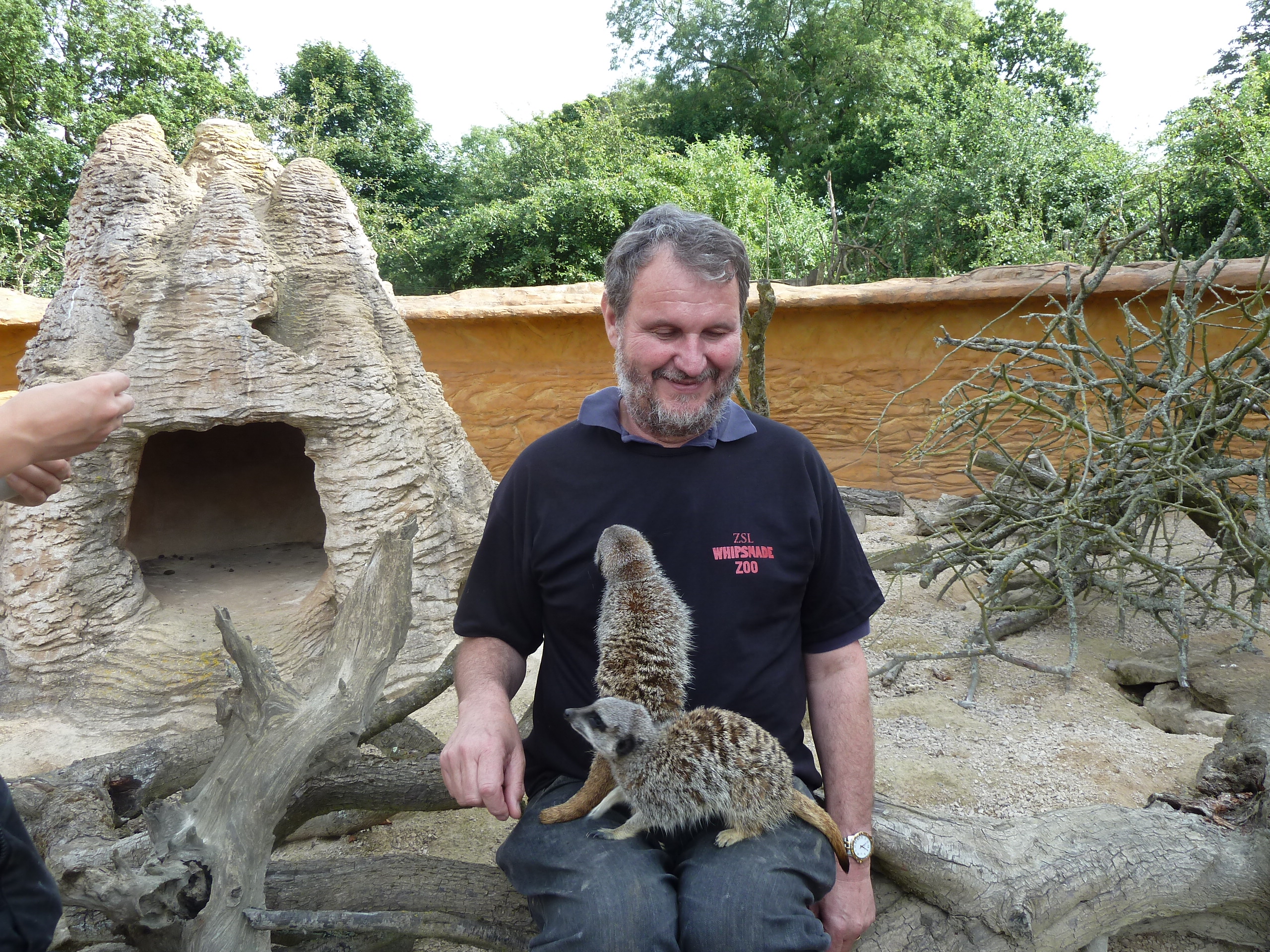
Zoo Keeper Rosie instructs me on how to handle the meerkats

It is the silly season so now for some fun and frolics. I spent the pre Bank Holiday weekend being a Whipsnade zoo keeper for a day! My wife Margaret brought it for my birthday and I must say Whipsnade deserve a big accolade for organising the whole experience. I would recommend it to anyone who likes animals.

compare the meerkats

We were given a perpetually cheerful keeper, Rosie, to take us around and make sure we didn’t get into any danger when we were less than a metre away from tigers, chimps and rhinos.

A wolverine – not cuddly – it can kill a moose with no trouble

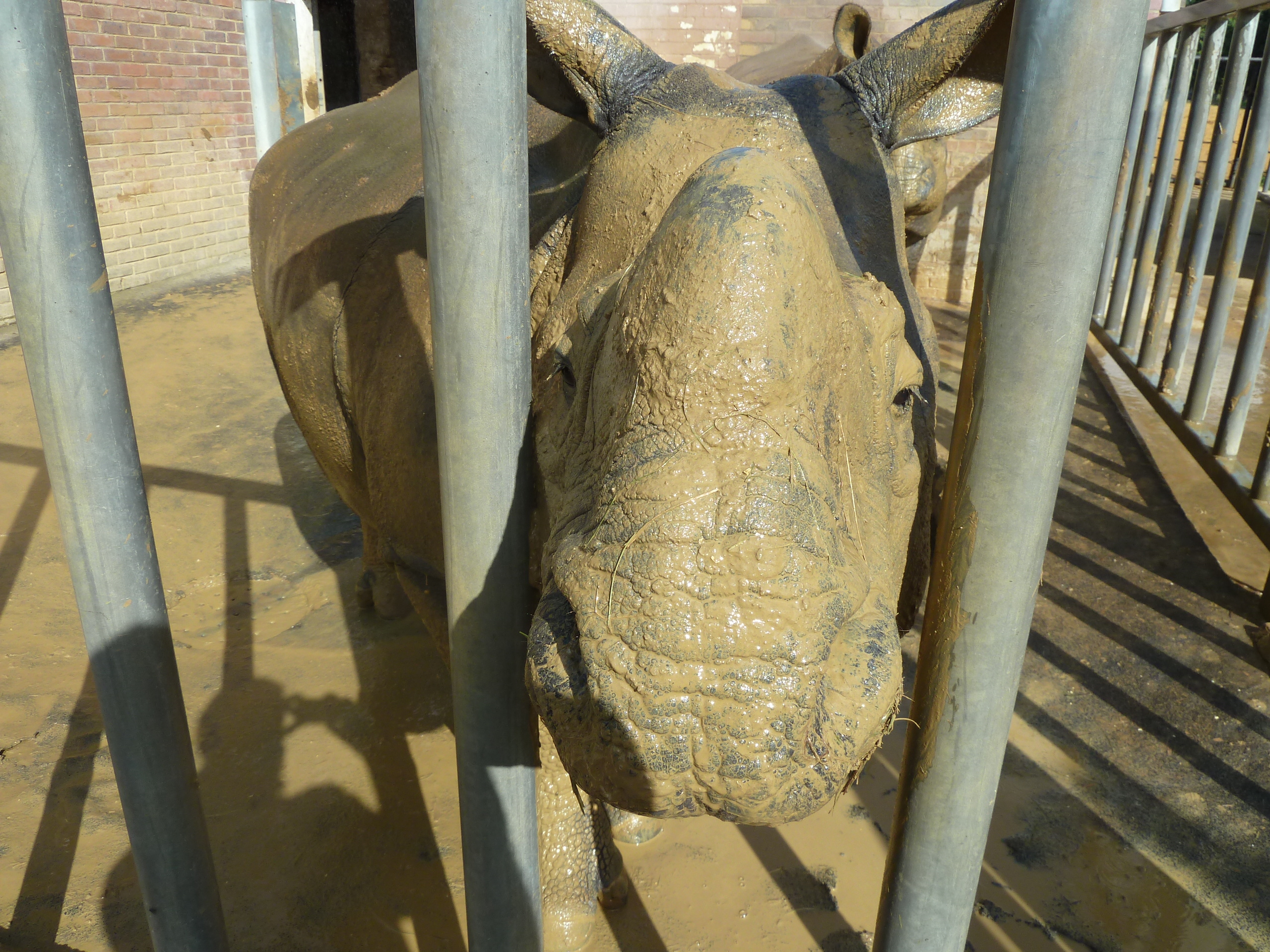
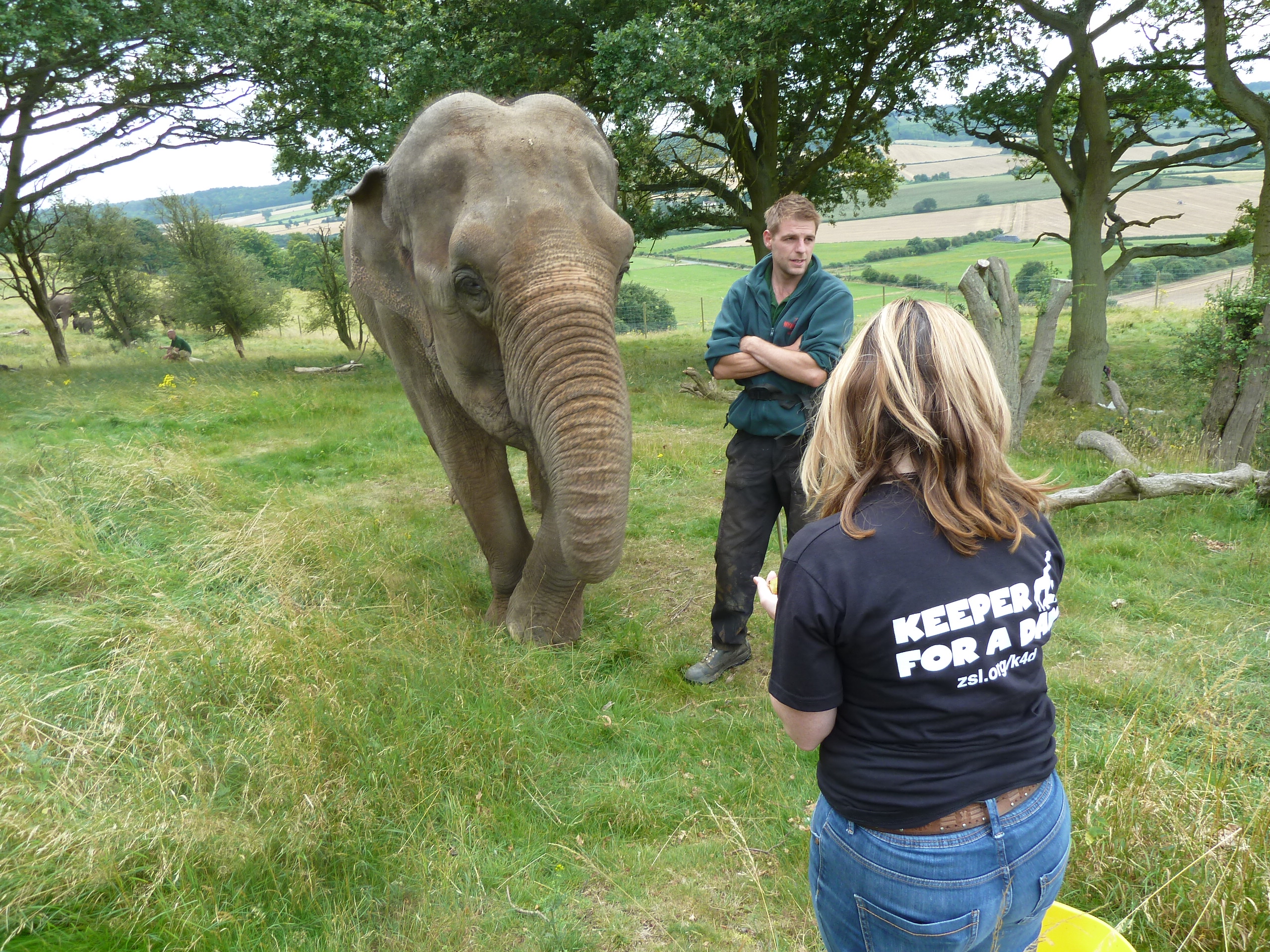
As you can see we got really close to some animals – including feeding the meerkats – diet live crickets- and letting elephants take apples from our hands. I am now an expert on rhino poo having shovelled a few kilos of it and know how to hide elephants and chimps food  in trees, tyres and on ledges.

my prehistoric Tory friend at close quarters

I have hand fed rhinos, giraffes and penguins and thrown dead chicks to wolverines.  I have watched at close  quarter a tiger devour a meat joint in just 15 minutes.They are all very demanding, pretty publicity conscious, and  they love playing to the gallery, just like MPs really!

So  to take your mind off the grim world of politics, government spending cuts, Brian Coleman and  Andrew Lansleyfor one moment, here are the equivalent animals. I let you guess who should be who. No prizes offered.

elephant feeding time with keeper and fellow day tripper

An Alpha Male with the strength of eight humans. Ed Balls? Not Nick Clegg

Updated Exclusive:: Home Secretary says Gatstrip scandal will be taken seriously

The disclosures on this website and in the Tribune magazine at the weekend over the strip searching of Afro Caribbeans and the atrocious treatment of a gay man  by border staff at Gatwick Airport will be taken seriously by Theresa May, the home secretary, I was promised today.

Given the widespread interest- with 1700 hits so far and still counting and from the US, Australia and Europe – this is the least I would expect.

I took the opportunity of her appearance at the House of Commons Press Gallery lunch today (Tuesday) to question her about the findings in the report by John Vine, the independent chief inspector of the UK Border Agency.

She seemed not to be quite au fait with the detail but did respond positively to the issue. She said that Mr Vine was meant to be the Home  Secretary’s source for what is happening on the ground at ports and airports and she always took up his recommendations.

 Given that Mr Vine has made it clear that the behaviour there could have breached the Equalities Act that is good news.

She added: ” I always take the recommendations of Mr Vine seriously and in this case I expect the findings to be taken very seriously. We will respond to his recommendations.”

I shall wait the outcome with interest. The next question is what is the position of the Equalities and Human Rights Commission on this scandal. Given that it is headed by Trevor Phillips, of Afro-Caribbean descent, I expect to see some action here very soon.

Exclusive: Shame of Gatwick’s “strip search ” security staff who target blacks and gays

An inappropriate strip search – picture caption: Pbase.com – not at Gatwick

An extraordinary damning report revealing appalling practices by UK Border Agency staff at Gatwick Airport has gone almost unnoticed and unreported in the run up to Britain’s plan to welcome millions of people from abroad to celebrate the Olympics.

It reveals that overzealous, badly trained and unsupervised staff appear to be singling out Afro Caribbean women for unjustified strip searches and humiliating gay people in public at Gatwick’s North Terminal.

While government ministers, pop stars and airline staff are being allowed to leave and enter the country completely unchecked. through the VIP Sussex  Suite, putting border security at some risk, the cavalier way staff have treated the general public defies belief.

The findings are from no other impeccable source than John Vine, independent chief inspector of the Border Agency,whose highly critical report can be found here. (http://bit.ly/MIMZS6 ).

 It revealed that Afro Caribbean visitors to Britain have been subject to unjustified and possibly illegal strip searches . The searches were spectacularly unsuccessful in finding any illicit goods– with 96 per cent yielding nothing.

The report says  far more women seem to have been targeted for strip searches than men. Twice as many African and Afro-Caribbean people were searched compared to white people. “We found that 16 out of the 24 identified strip searches undertaken involved women. Given that only 30 of the 108 passengers subject to person searches involved women, this indicates that at least 54% of the female passengers stopped and searched were strip searched compared with between 11% – 20% of the men subject to a person search.”

He comments:“Indeed, even in the majority of the identified strip searches conducted (14 out of 24) there did not appear to be a sufficient basis to justify any type of person search, let alone a strip search.

He goes on: “The failure to observe the correct recording procedure can render evidence inadmissible in court and mean officers could face charges of assault in relation to the conduct of person searches.”

 “The extent of any discriminatory practices should be investigated and action taken to ensure officers both understand and comply with the Agency’s duties under the Equality Act 2010.”

As bad were the treatment of gay people. The report describes how one gay person was stopped and had his luggage searched in public and with other passengers passing by.  A request for a less public search was refused twice.

The report is worth quoting in full: “The contents of the passenger’s bag were then openly displayed including photographic equipment. The officer subsequently left the passenger to undertake background checks and later emerged signalling that the passenger could continue on their way. The officer then commented to another officer that the passenger was HIV positive; the colleague then advised that the searching officer should use stronger hand gel. These comments were made within earshot of the passenger and indeed other passengers in the channel.

When subsequently asked why this passenger had been stopped immediately after this interaction, the officer commented that the passenger‘looked like he might be involved in paedophilia’ and then went on to say that ‘the presence of the camera and the fact he had a boyfriend confirmed this’ (no photos were examined).

Notebook records of this exchange were not kept. The inspector describes this as” inappropriate and  unprofessional.”

You might say this is an understatement. Compare this to other parts of the report which reveal a casual attitude to people bringing in cannabis and a lack of consistency over allowing people with  excess cigarettes and alcohol to  bring it into the country. And aircraft are rarely searched – despite one being discovered with cocaine hidden in its panels.

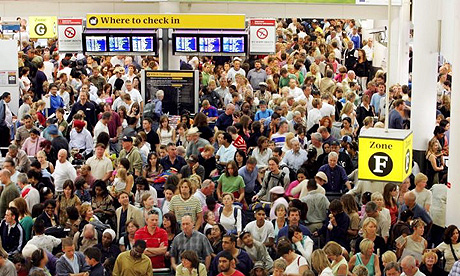
Real Queues at Gatstrip -sorry Gatwick Airport. Pic Cap: The Guardian

Mark Serwotka, general secretary of Public and Commercial Services Union, said: “Some of these findings are very troubling, and it is not the first time John Vine has criticised UKBA, but they are symptomatic of the parlous state the agency is in as a result of massive cuts to staff. UKBA has been left unable to cope, and not just with the queues for passport checks, but with the wide range of services it operates and if further planned cuts go through the situation will get even worse. To prevent this, the government must put a stop to these cuts and start properly investing in staff and the vital services they provide.”

Frankly this is not all that is wrong. It is time the Government got a grip of what looks like a disgraceful racist and homophobic situation at Gatwick before lots of other people are treated like this  – apart from the VIPs of course who are NOT subject to such  treatment.

 There is also  evidence of similar problems in a more recent inspection of Heathrow Terminal Three. The report says: “Person searches were not considered to be justified and proportionate in 31 of the 46 (67%) cases that we reviewed…The finding that unjustifiable strip searches may be taking place at Terminal 3 replicates our inspection findings from Gatwick North. This indicates that this problem is not isolated to one terminal and as a result we believe that Border Force needs to take action to address this issue promptly.”

If  you are reading this and have been treated either to a unwarrented and illegal strip search, homophobic reactions or found that Gatwick  or Heathrow adopted a lax attitude to border controls, contact me at david.hencke@gmail.com and it could go much further than just a report on this website.

Those magnificent recycling men and their flying machines

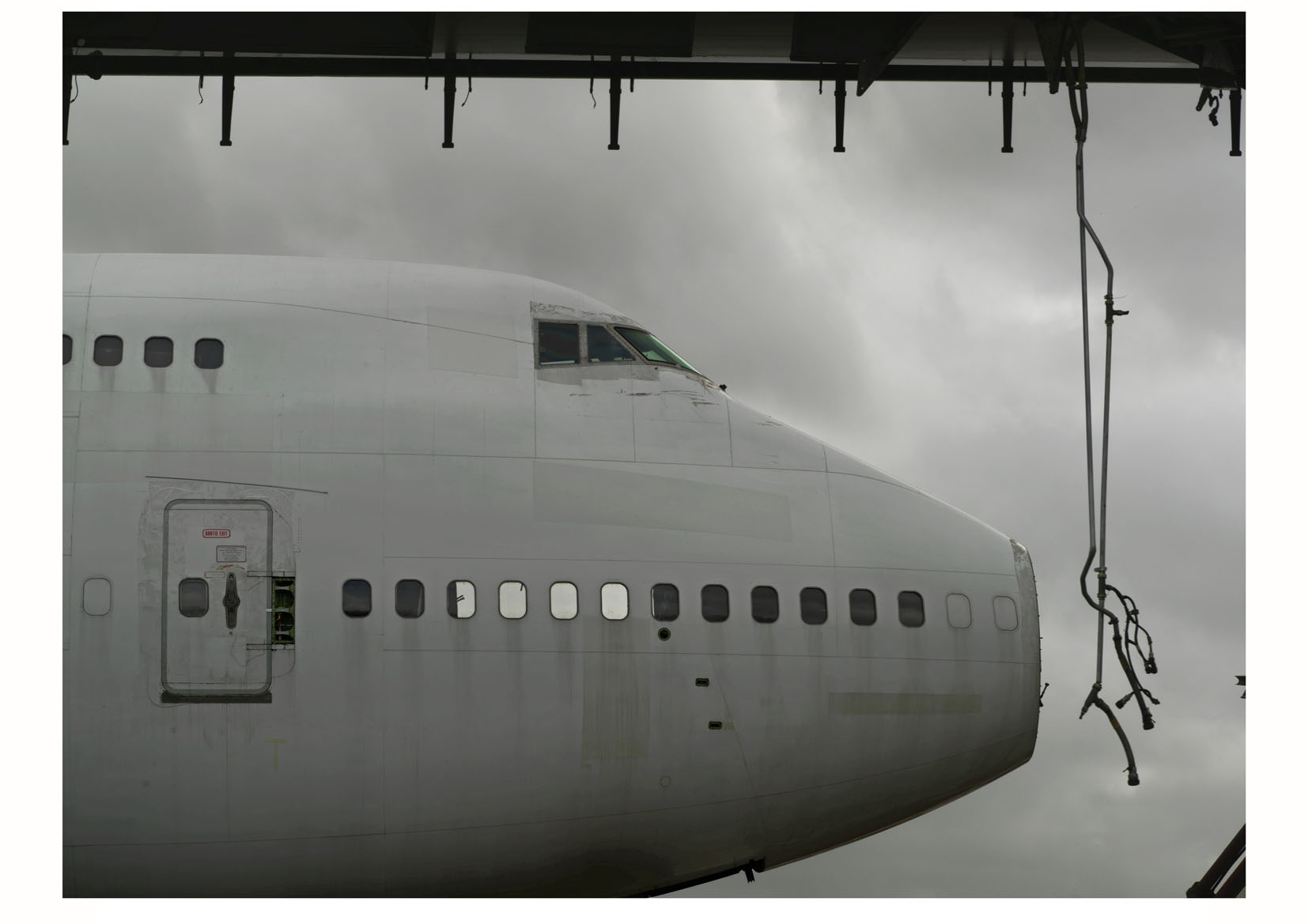
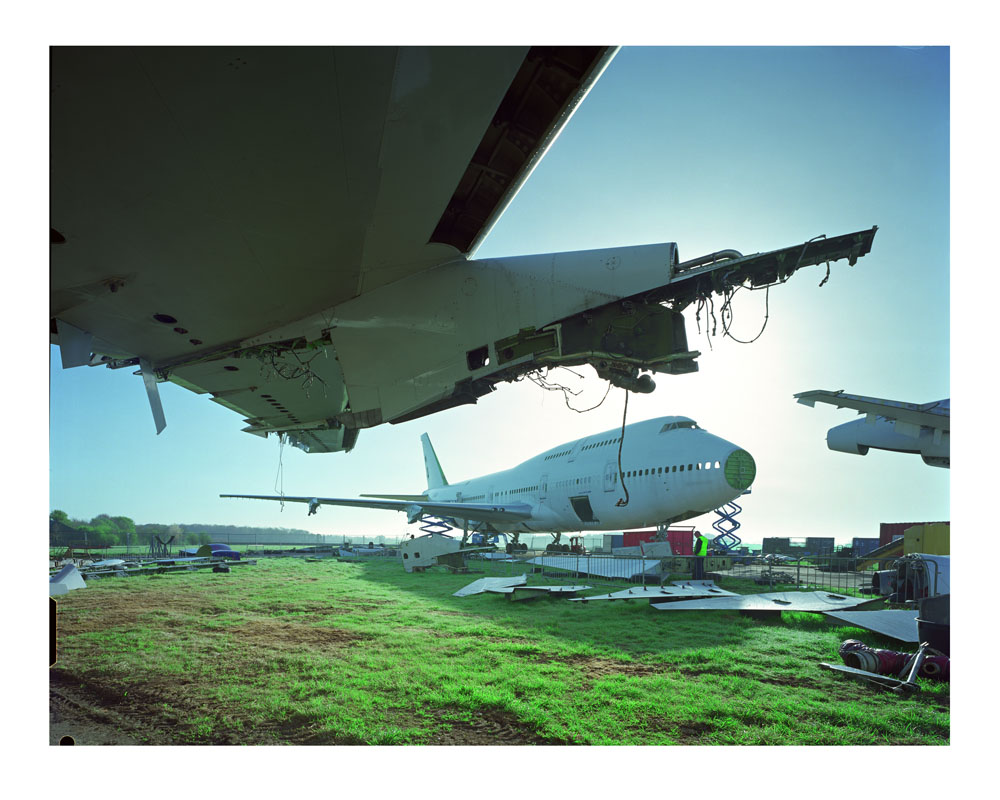
Jumbo jet awaits its fate in the Cotswolds

 Pictures:Tony Hutchings

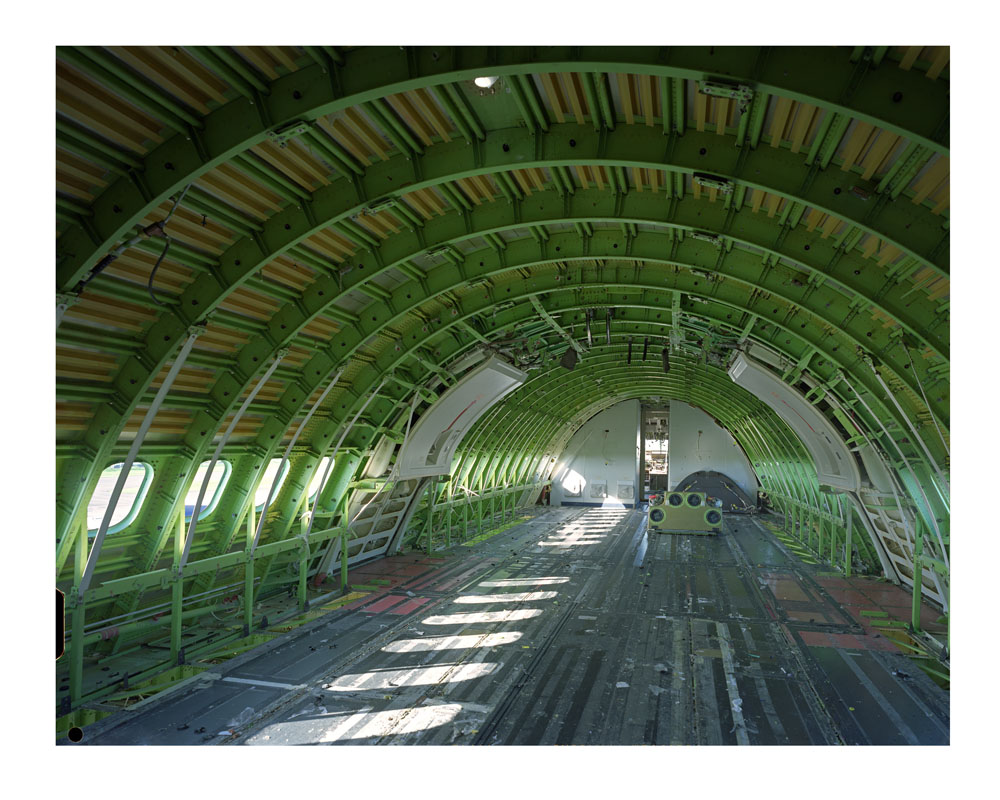
In the depths of the countryside in the Cotswolds there is an amazingly good story about a recycling success that no-one has noticed. Jets as young as seven years old from major airlines like easyJet are being ” parted out” and 100 per cent recycled in a green revolution started as a family business.

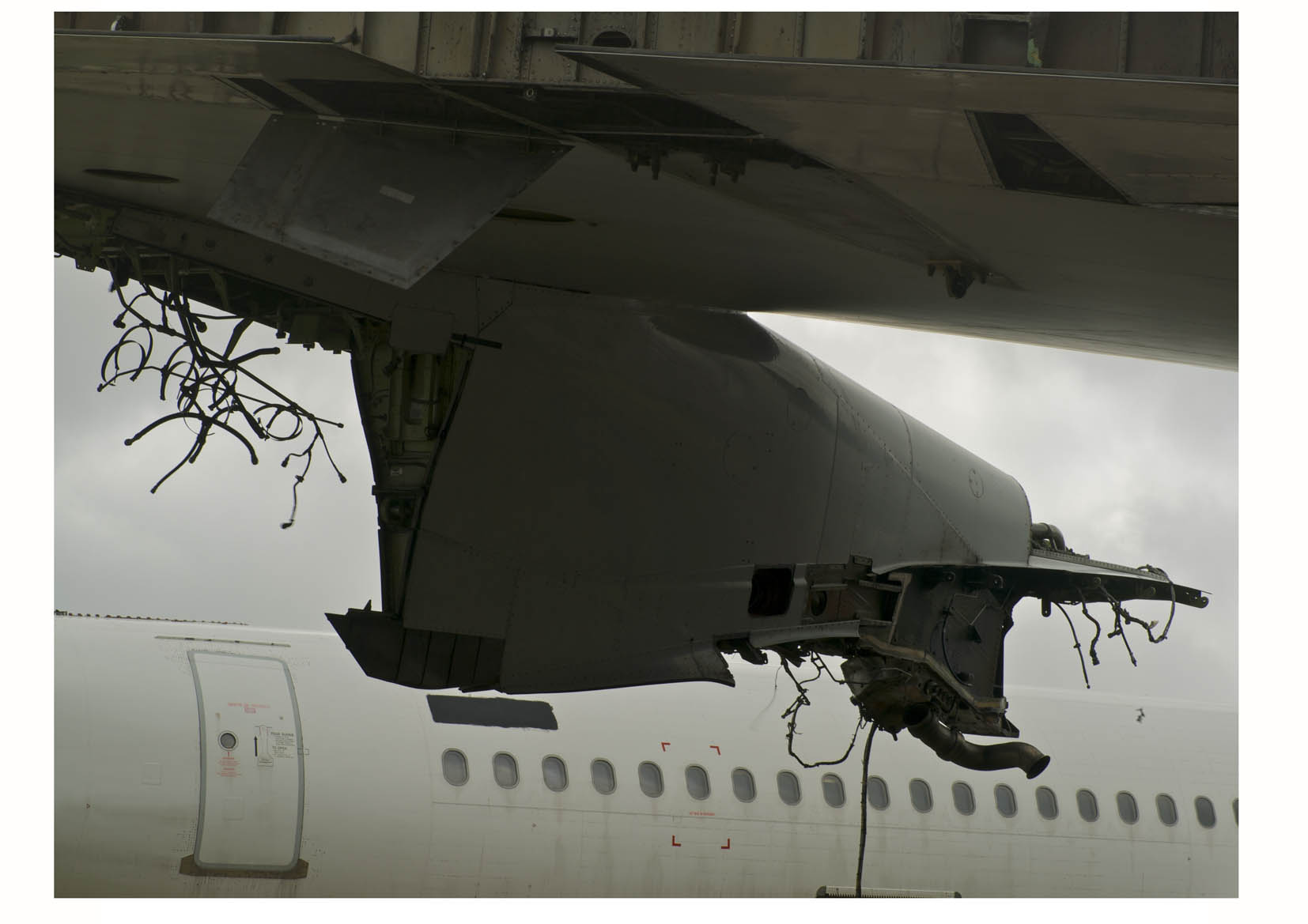
Your Boeing 737 is having its engines, flying gear, brakes, seats re-used as spares for other aircraft. The lightweight aluminium is being turned in beer cans and artists and sculptors are buying plane spare parts to turn into standard lamps, mirrors and coffee tables.

another jet awaits its fate

The full story is in this week’s Sunday Times magazine but here are some of the amazing pictures of the people taken by my Berkhamsted friend and photographer Tony Hutchings. He can be contacted at www.tonyhutchings.co.uk.

Planes at ASI's scrapyard in the Cotswolds

Politically this an extraordinary good news story. The firm ASI (Aircraft Salvage International ) -see their website at http://www.airsalvage.co.uk/  is run by father and son team Mark and Bradley Gregory and has created some 40 or more jobs from scratch. The ” green ” revolution enables all the  plane parts to be reused and means that passengers are now flying in brand new more fuel-efficient jobs when they go on holiday.

Star Wars feel to the stripped inside of a jet

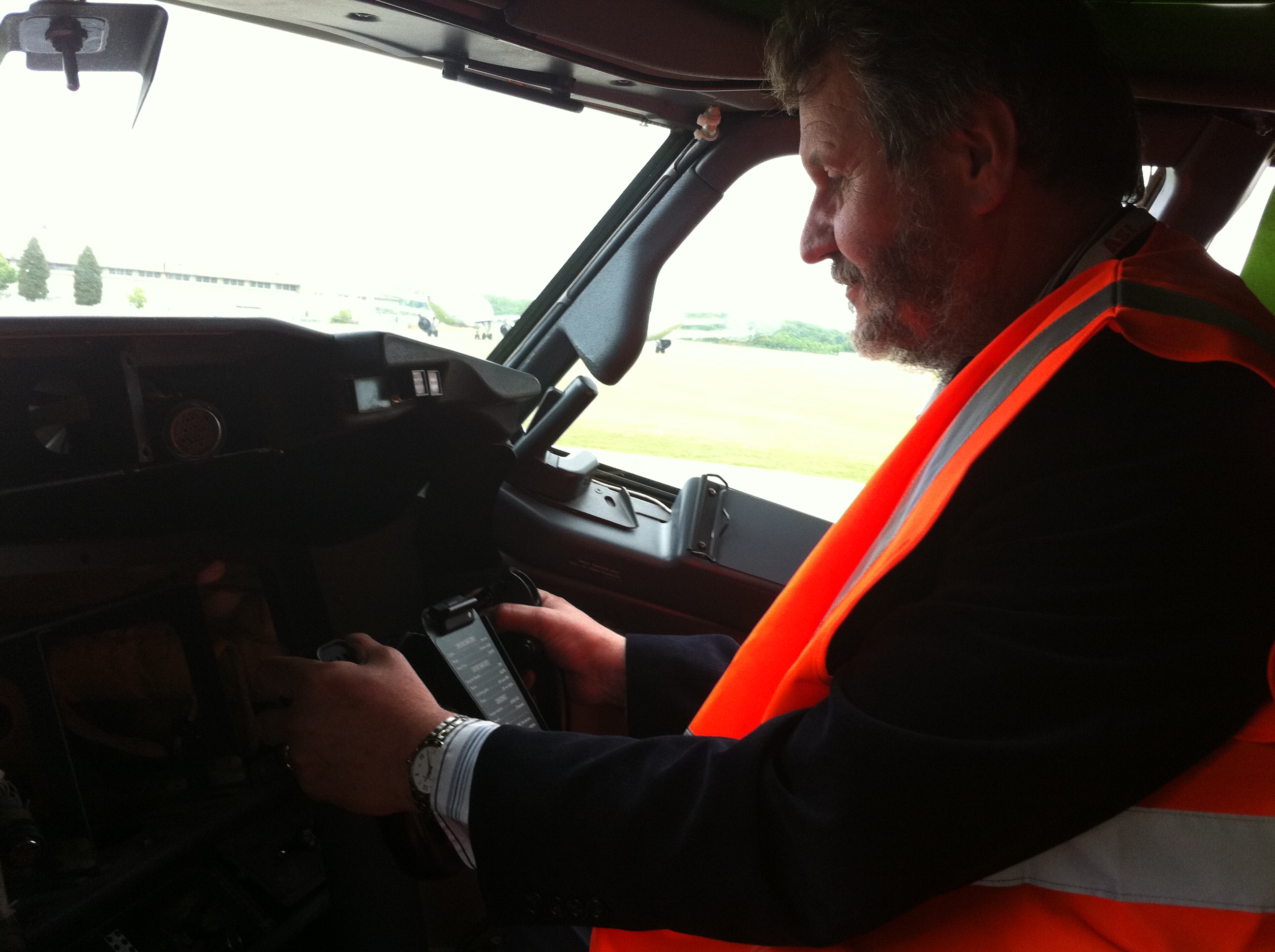
The author pretends to be a pilot

The government should be shouting this success from the rooftops, the environmentalists should be pleased and questions should be asked why the much larger motor industry has recycling rates at much lower recycling rates and still a blight on the countryside.

 At the moment there is just silence on these remarkable achievements.

Thomas Hardy: Kept far from the madding crowd

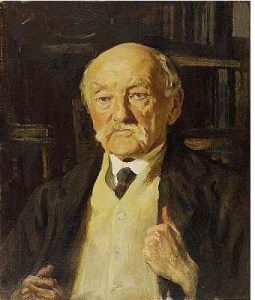
Thomas Hardy: An A list celeb neglected by the National Trust: Pic caption courtesy victorianweb.org

In a year when Britain celebrates Charles Dickens 200th birthday another great British author,Thomas Hardy, is suffering outrageous neglect by one of the great guardians of our heritage, the National Trust.

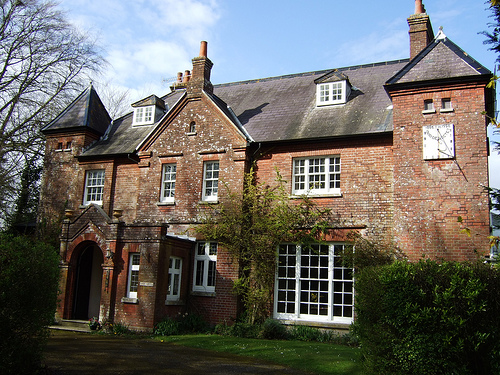
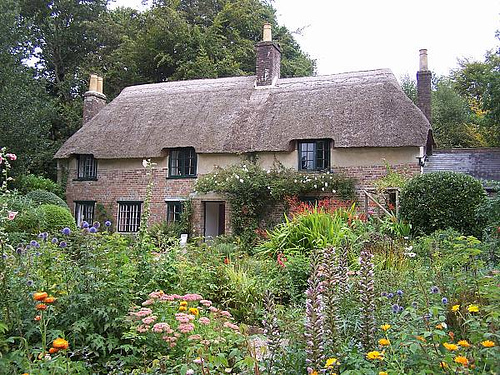
The author’s birthplace in Higher Brockhampton, just outside Dorchester and his rather grander home, Max Gate, where he died in 1928, on the  outskirts of Dorchester, are both owned by the National Trust.

You could however be forgiven if you knew nothing about both the humble cottage and the grand home of the author of Far From the Madding Crowd. For the new National Trust 2012 guide gives just a short mention of the birthplace and  is positively misleading about the bigger home  Hardy, also a qualified architect, designed himself.

 Readers  searching for the opening times for the birthplace cottage  can find them  in the guide-Wednesday to Sundays 11-5  but don’t  go looking for when to visit Max Gate- you are told to ring the trust’s West Dorset Office  instead.

What the guide doesn’t tell you  is that Max Gate is open exactly the same times as his birthplace – but the NT couldn’t get its act together in time to tell anybody this year.
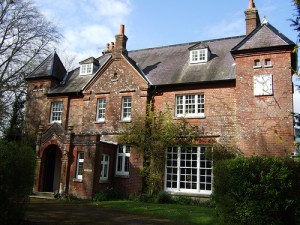
Max Gate: Hardy's hard to find home

All this is compounded by a daft decision by the Highways Agency  responsible for erecting tourist signs  giving people directions to both places. These brown signs are meant to direct people to places of interest – and most National Trust properties get one.

But not Mr Thomas Hardy. The two homes  are both  just off the busy A35 on  its approach to Dorchester and on the Dorchester by-pass and managed by the Highway Agency. But look for sign on the A 35 in vain. There are none.

And the irony is in the case of Max Gate millions of motorists pass within 100 yards of the property totally oblivious of  its existence.

But as the Highways Agency says on its website: ”

All authorities limit the number of signs allowed. This is for road safety reasons, as too many signs can be confusing and distract drivers, and for environmental reasons – too many signs could harm the countryside or street scene.”

Of course this could be remedied by Dorset County Council -in charge of tourism and signage off the major highways – but they have done nothing. Not a sign in sight in the centre of Dorchester on how to get  to Max Gate. Indeed there are more directions for dinosaurs and  a Tutankhamen exhibition ( not  part of Dorset’s heritage but I stand to be corrected) than poor neglected Mr Hardy. His study, restored at Dorset County Museum  does get a mention, but unfortunately the opening hours of museum do not coincide with those at the National Trust.
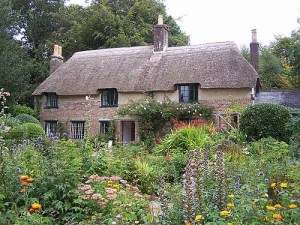
Idyllic but simple birthplace of Thomas Hardy

Hardy is as much part of out literary heritage as Dickens or Jane Austen. In his time he was the equivalent of an A list celeb –  according to the excellent visitor’s book kept at Max Gate – which records visit to his home from Robert Louis Stevenson and composer Gustav Holst. His novels have translated into memorable films, Julie Christie’s performance in Far From the Madding Crowd, being one.

Yet it would appear – despite valiant efforts from enthusiastic volunteers at Max Gate ( predating Cameron’s equivalent of the Big Society) – the powers that be at the National Trust, the Highways Agency and Dorset County Council care little about one of the country’s literary giants.

 Something should be done. I urge people – frustrated like me on the search for Thomas Hardy – to email them in protest at their neglect. The director general of the National Trust is Dame Fiona Reynolds. Her mail is fiona.reynolds@nationaltrust.org.uk . The chairman is Sir Simon Jenkins, journalist and author and can be contacted at simon.jenkins@guardian.co.uk.

The minister responsible for the Highways Agency is Mike Penning. His direct e-mail is mike.penning@dft.gsi.gov.uk  and the chief executive of Dorset County Council is David Jenkins. His e-mail is  d.h.jenkins@dorsetcc.gov.uk .

It is time that this shameful neglect ended. One would have thought Dorset would want to celebrate rather than hide one of its famous sons. It does bring tourist revenue to the county.  And the National Trust might have just a more than passing interest in encouraging more visitors.

Response from Mike Nixon,secretary of the Hardy Society:

 “I hope it doesn’t come as too much of a surprise that we at the Hardy Society are very aware and can identify with your frustrations you detail on your blog.
I have myself  been involved with a ‘working group’ for a couple of years under the promising title of ‘Hardy Country’, whose members include the National Trust/West Dorset Disrict Council/Dorset County Council etc etc etc!!
We have discussed on a number of a occasions the lack of ‘brown’ signs and lack of promotion of Max Gate.
In fairness to the NT, their national handbook had to go to the printers very early, apparently before the Max Gate opening times had been agreed regionally.
They have this year (and last year) issued an attractive booklet entitled ‘Discover Hardy Country’, which links in Hardy’s birthplace/Max Gate and T.E.Lawrence’s, Clouds Hill, just up the road near Wareham. This is helpful.
There is now a strong working relationship developing between us here at the Society and the NT,including regular meetings.
What I can’t be so positive about is your accurate comments on the ‘brown sign’ debate. I think I raised this on behalf of the Society 3/4 years ago, so far to no avail! ”

 Response from the National Trust:

Nicola Andrews, Assistant Director, Operations (Dorset and Wiltshire) writes:  “The National Trust firmly believes that Hardy was a novelist and poet of the greatest merit, and we are passionate about finding ways to deliver increased access and public benefit from the Hardy places in our care.  We are committed to improving the experiences at both Hardy’s Cottage and Max Gate. As you noted, we are blessed with having wonderful teams of volunteers and staff who help us achieve this. The teams at Hardy’s and Max Gate are fantastic….

When tenants moved out of Max Gate in late 2010, and in line with our desire to increase access, we took the decision to trial opening the full building to the public rather than re-letting it. This was a challenge because we do not own the original contents, were faced with an empty house to interpret, and the loss of rental income. We are realistic in our ambition for Max Gate. It will never be a big visitor attraction because of its location in a quiet residential area.  That said, our aim is to make it a fantastic experience for all those who do visit.  After a year’s trial, we took the decision to continue opening the full building and through the support of generous benefactors and supporters we are slowly furnishing the house and bringing it back to life as it might have been when Hardy himself was there.  

At Hardy’s Cottage, we are working with Dorset County Council and other partners on a bid to the Heritage Lottery Fund for a project to significantly improve visitor facilities and interpretation on site. We hope this bid will be successful, but in the meantime we have recently represented the interior of the cottage drawing out the stories of Hardy’s time there much more clearly. You did not mention your thoughts on the interiors in your blog, but we hope you found the presentation a significant improvement on your previous visit. Our vision is to enable people to experience both the Cottage and Max Gate as they might have been when Hardy and his family lived there: to enable people to sit by the fire with a cup of tea as Hardy and his family would have done; to bring to life his poems and novels encouraging people to immerse themselves in them in his studies and other writing spaces. 

We are also committed to the partnership which is developing and promoting the broader Hardy offer in Dorset, as outlined by Mike Nixon in his response to you. I am sorry you found it difficult to find Hardy’s Cottage and Max Gate.  Signage from the A35 is outside our control but has been a frequent point of discussion between ourselves, the Council and the Highways Agency. We agree that from a visitor’s perspective, and to help us enable as many people as possible to enjoy the Hardy legacy, good signs from the A35 would be invaluable and we would very much like a trial of this. 

We are conscious, however, that there is a delicate balance to be struck when introducing such signage.  Both properties are small in size and cannot cope with large numbers of visitors, both are located in quiet residential areas, Max Gate has no car park and Hardy Cottage visitors make use of the small Council car park at the end of the track.  So, whilst we are keen to trial signage from the A35 and would welcome Highways support for that, we also recognise that we will need to monitor the pressure this causes on the sites and to keep it under review. .. I feel it is unfair to say that we don’t care about this literary giant. We do care, and we would encourage people to visit themselves and form their own judgement. ”

Response from the Highways Agency:

Sean Walsh writes :”I’ve looked into the signing for both sites. Although neither is signed from the trunk road, Max Gate House is adjacent to the A35 junction with the A352 (known as Max Gate junction) and has a brown sign just off the A352 on the local road.  Higher Bockhampton, where his birthplace is located, is signed from the A35 at Cuckoo Lane junction and Stinsford roundabout (in both directions), and I understand that there are signs for “Hardy’s Cottage” on the local roads.

I’m pleased that you’ve noted on your blog that the Agency has to limit the number of signs on its network, both in road safety terms as too many signs can cause a distraction/confusion, and because they can detract from the countryside and street scene.  If you’ve not already seen them, the current rules regarding tourism signs are also on our website at http://www.highways.gov.uk/business/32118.aspx .    I’m not aware that the National Trust has applied for brown tourism signs on the trunk road for these two Hardy sites, although under current guidelines it is unlikely that either would meet the criteria for signing. However, the Government’s approach to the provision of brown signs is under review, with the objective of ensuring that signing policy best reflects the needs of both drivers and the tourism industry. It is expected that the review will be completed and revised policy issued later in the year, although I can’t be more specific than that at the present time.   “