Picture of Yasser Arafat by SA’AR YA’ACOV at the time he won the NOBEL PEACE PRIZE in 1994.
Family raise suspicions over his death
As the Middle East is still in turmoil an extraordinary ruling will be made by the European Court of Human Rights concerning events around the death of the Palestinian leader Yassar Arafat nearly 17 years ago.
His family have been suspicious he died from poisoning in 2004 and claim there was not a fair trial looking into this after he died in a French military hospital.
The applicants to the ECHR Suha El Kodwa Arafat and Zahwa El Kodwa Arafat, are French nationals.The case concerns a criminal complaint filed by the applicants, the widow and daughter of Yasser Arafat, who died on 11 November 2004 in France at the Percy Military Hospital where he was being treated, claiming that Mr Arafat had been the victim of premeditated murder.
They claim that the French authorities didn’t give their case a fair trial by refusing to include additional expert evidence.
They wanted an additional expert report on the cause of the decline in Mr Arafat’s health, as they had requested on account of their doubts concerning the origin and traceability of the sample used for that assessment, the methodology applied and the results, which were contradicted by the results obtained by Swiss experts.
They also criticise the refusal to order a fresh expert report on their behalf and to grant their other claims, based on contradictions between the results obtained by the different experts, Swiss and French, from their respective measurements and analyses. In French courts, Arafat’s wife and daughter were unsuccessful with their lawsuits and appeals. In 2017, they appealed to the European Court of Human Rights In French courts, Arafat’s wife and daughter were unsuccessful with their lawsuits and appeals. In 2017, they appealed to the European Court of Human Rights.
The court decision will be announced on Thursday raising an issue that has literally thought to have gone away and could not come at a worse time for Palestinian and Israeli relations. A ruling in their favour might re-open the issue but ECHR News believe they may lose the appeal.
Successive governments’ decision to cut drastically the legal aid budget has caused enormous damage to diverse women and girls groups according to witnesses who gave evidence today to the CEDAW People’s Tribunal.
They cover the plight of Muslim women who are forced to seek divorces at Sharia Courts because they cannot afford to go to a civil court, migrants denied access to legal aid and married women fleeing domestic violence going to family courts over the custody of children and divorce settlements. The tribunal is looking at how the Un Convention on the Elimination of all forms of discrimination can be put into UK law.
Legal aid ban putting Muslim women at the mercy of patriarchal fundamentalism
Pragna Patel founder and director of Southall Black Sisters (SBS) [SBS is, a multi-award-winning women’s organisation founded in 1979 to address the needs of black and minority women experiencing gender violence. It successfully campaigned for the release of Kiranjit Ahluwalia, a landmark case in which an Asian woman was convicted of the murder of her violent husband. The case reformed homicide law, creating greater awareness within and outside minority communities.]
A damning indictment of the drastic effect of legal aid cuts which had created formidable barriers for all women – but especially black and ethnic minority women – was made by Pragna Patel.
She was particularly critical of the plight of Muslim women fleeing a marriage and unable to access the civil courts because of the lack of legal aid. Instead decisions were taken by unofficial religious courts dominated by conservative patriarchal fundamentalists. ” The woman has no status there, no right to keep her children, no property rights and no inheritance rights. This completely contravenes human rights.”
She cited a case of one woman who has only had a religious marriage – which had never been followed by a civil marriage. As a result when she went to a civil court to get her rights – the court could not rule on the marriage as it has never been legally recognised. The case has gone to the Law Commission but it has so far not ruled on it.
She also attacked the funding system – having won a judicial review against Ealing Council – when it withdrew funding. She said most of the money was now given to ” generic services ” based on getting results set by targets rather than specialist services offering long term support to people.
“Domestic abuse perpetrator given custody of children at his former wife’s expense”
Dr Charlotte Proudman – barrister at Goldsmith Chambers
Dr Proudman highlighted the lack of legal aid holding back women to defend their rights in family courts after quitting their marriage over domestic abuse. She said there was an inequality of arms when they had to appear as a litigant-in-person because they could not afford to pay a barrister. She also said the courts had the discretion on who should pay and where the children should reside in cases – leaving in one instance a woman who had left her husband because of domestic abuse having to pay for her children to be looked after by her abuser – her husband.
She was highly critical of the lack of training for barristers and judges on handling domestic abuse cases – and the failure of the government after the passing of the Domestic Abuse Act to specify what training will be given. She also said that many of the lawyers eyes glazed over when they the issues of women’s rights and certainly CEDAW were mentioned.
She also thought that judiciary was dominated by elite men -” male, pale and stale” – educated at private schools and Oxbridge. She said most of the women were also from the same elite -privately educated and with Oxbridge degrees – meaning neither knew much about the life of the people who came before their courts. She came from a working class background and had gone to a state comprehensive school.
Equality Act has left people working in silos
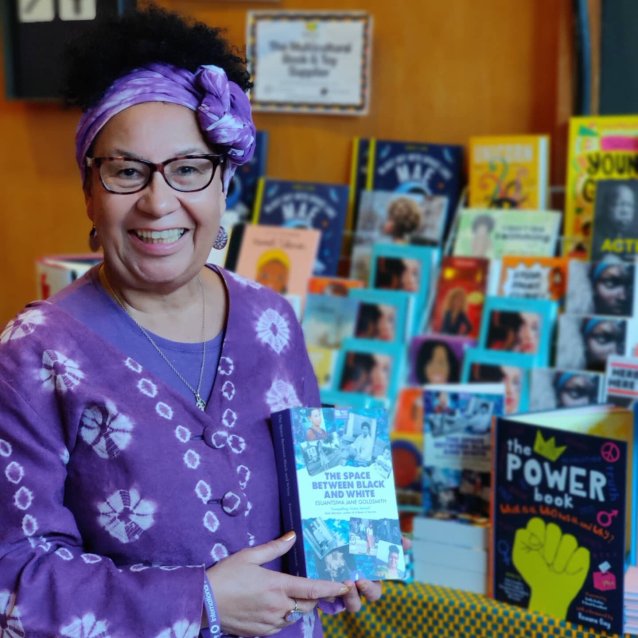
Esua Jane Goldsmith
Esuantsiwa Jane Goldsmith, from Anona Development Consultancy on International Developments on Human Rights. Esuantsiwa was one of the first black VSO volunteers, serving as a teacher in Tanzania 1977-79. Esua was a leading figure in the UN process for women, attending the United Nations Fourth World Conference on Women, Beijing 1995, as a member of the UK Government Delegation representing Development INGOs. She was founder and Chair of the Beijing Forum which co-ordinated the input of UK development NGOs. She was the first black woman Chair of theFawcett Society, Chair and Co-founder of the Gender and Development Network
Esua has highly critical and disappointed by the failure of the 2010 Equality Act. She had great hopes that the Equality and Human Rights Commission by putting all the equality issues together would be a big improvement. But instead she said it was still working in silos and relying on individual litigation.
She thought putting CEDAW into domestic law would create a much more holistic approach bringing together business, politicians, civil society, ngos and the women’s sector together by breaking down barriers.
She was scathing about the lack of progress of BAME women in Parliament – 35 out of 650 MPs. She also attacked the way white males trolled and pursued prominent black women like Diane Abbot, just because they were powerful people.
Dramatic rise in on line sexual abuse during the pandemic
Kelly Johnson – researcher
Dr Kelly’s areas of research/expertise include domestic and sexual violence, policing, and more broadly violence against women and girls; including Rape Crisis. She has particular research experience in the policing of domestic abuse, image-based sexual abuse (including ‘cyberflashing’, so-called ‘revenge porn’ and ‘upskirting’) and feminist theory.
An alarming picture of the rise in ” revenge porn” during the pandemic leading to sexual violence against was women during the pandemic left the police unable to have the resources to act to control it, Dr Kelly told the tribunal. She said this caused “significant and devastating harm for women”. Black and ethnic minority men were disproportionately involved and many of the attacks were misogynistic with a sense of male entitlement that they could do what they wanted.
When sexual violence followed this the police were not always able to cope – with basic resources like police cars in short supply – so they couldn’t get out to see people. Perpetrators were getting away scot free and were also using on line dating sites.
She called for long lasting cultural changes including much better education of young boys, teaching them the need for consent.
Media stereotyping of women puts pressure on women politicians at national and local level
Sofia Collignon -politics researcher
Sofia is Co Investigator in the ESCR-funded Representative Audit of Britain project, part of Parliamentary Candidates UK and principal investigator in the Survey of Local Candidates in England. Fields of expertise: Gender equality, Participation, Policy design and delivery
The media were criticised for stereotyping women politicians and putting extra strain on women in public life. Some times they were the victims of a campaign of disinformation or not given the opportunity to reply. She called on journalists to be more accurate and carefujl in their reporting of women ;politicians and local councillors.
She said that though there were more women MPs -originally from a low base – an analysis of candidates standing for Parliament showed they were often given unwinnable seats so never got elected. She praised three countries -Sweden, New Zealand and Mexico – for giving women politicians a pro active role. Mexico was particularly praised for having a gender equal role which saw a massive increase in the number of women politicians.
She thought Parliamentary candidates should have compulsory training in equal rights before they stood for Parliament – as part of an initiative to bring CEDAW into domestic law.
The secret UK world of polygamous marriages
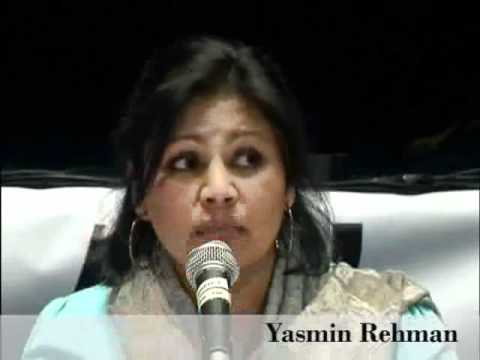
Yasmin has worked for more than 30 years predominantly on violence against women, race, faith and gender, and human rights. She has acted as an expert witness in legal cases providing expert reports on faith based abuse and Muslim marriage practices including polygamy and temporary marriage. Yasmin is chief Executive Officer at JUNO WOMEN’S AID (formerly Women’s Aid Integrated Services).
An extraordinary picture of the unknown scale of polygamous marriages in the UK was given to the tribunal by Yasmin Rehman.
She said nobody knows the scale of the marriages and the government is blind to the problem. It is hidden because Imans often give secret ceremonies for Muslim men who have one civil marriage to marry other women. There is also a ban on sex outside marriage for Moslems, she said, – which is why there are some additional marriages. Other polygamous marriages avoid bigamy laws – as UK men with a wife and family at home, marry another woman in countries where polygamous marriages are allowed.
She said the religious practice was harmful to women who are given a subordinate role – but the real problem was the clash between the freedom of practices allowed by religion with gender and equality issues. Worse there was some evidence that women were trafficked into the UK for forced polygamous marriages.
” The issue is seen to be in the too difficult box which is why there is not a single politician who is prepared to take the issue up.”
She said only one politician – the former Tory Chancellor, Sajid Javid – had raised part of the issue – but only over children being forced to marry an older man.
Other witnesses
Baljit Banga, executive director of Imkaam, a UK based black feminist umbrella organisation, gave a detailed run down on what was wrong with the Domestic Abuse Act and why there is a need for a much better alternative and Dr Annette Lawson, chair of the national Women’s Commission, abolished in 2010 on why there is a need for some successor funded body to pull all women’s groups together to implement CEDAW.
The hearings are now over and the next stage is to draw up a report.
The president of the Cedaw People’s Tribunal, and a former judge, Jocelynne Scutt, said today that the decision by the Court of Appeal to turn down the judicial review into the handling of the rise of the pension age for 50s women will be overturned.
She was commenting on evidence to the tribunal from Christine Cooper, chair of accounting at Edinburgh Business School on the plight of 50s women and how CEDAR could redress the issue. She was giving evidence in a personal capacity.
Christine Cooper pointed out that the ruling -part based on the fact that the 1995 legislation allowed the Department for Work and Pensions to say they had no obligation to tell the 3.8 million women about changes to their pension would have wider implications for the rest of government policy if it was applied in other areas. For this reason alone it is likely to be challenged in other cases.
If the UN Convention on the Elimination of all forms of discrimination against women (CEDAW) was part of UK law it would seen as discrimination against a particular group on that ground alone.
Christine Coooer
Christine Cooper strongly defended the 50swomen saying ; ” This is a group of women who did all what was expected of them in society, brought up families and went back to work when they could. The way they have been treated is mad.”
She said if the government had spent the £6.5 million on an advertising campaign to get people to take out a second private pension instead on informing women about the change in 2001 they would have been more prepared. Instead it had only spent £80,000 47,000 leaflets many going to private finance advisers – the people who were most likely to know about it anyway. She said the worst affected people were those who were in low paid jobs, single women, divorced women, women from ethnic minorities and those who had worked part time.
She it was clear that there had been no impact study in 1995 on the effect it could have on the women and the impact study which covered the 2011 Pensions Act was based on how men would be affected. Most women only had months notice – while men had seven years notice of the rise in the pension age from 65 to 66.
She also revealed that the DWP does not keep any information on the gender pay gap ,the gap between the pension earnings of women and men. Instead a survey is done by Prospect, a Whitehall trade union, which revealed that the difference has remained stubbornly at 40 per cent for the last five years -meaning men will get a pension worth £7,500 more than women.
Occupational pension pots for women aged 65 are at present £35,800 – a fifth of the figure for men at the same age.
Government pressure to get trade deals will hit women’s pay – former civil servant
Janet Veitch- former civil servant with extensive knowledge of CEDAW
A former senior civil servant warned that both Brexit and the hostile environment against migrants were going to have a disproportionate effect on women’s rights.
Janet Veitch OBE is a consultant in the UK and internationally on women’s rights, having worked for ten years for the UK Ministers for Women and as Director of the UK Women’s National Commission.
She is a founder member of the End Violence Against Women Coalition; Vice-Chair of ‘Equally Ours’ and an associate adviser on gender for the British Council. Janet was awarded the OBE for services to women’s rights in 2011.
Janet Veitch said that the UK leaving a market of 500 million people would profoundly affect the British economy because it had yet to find alternative markets. Pressure to get trade deals would lead to a downward pressure on wages and labour conditions, which would predominately affect women, as many were already in low paid jobs.
The ” hostile environment ” against migrants would also lead people to start to condone a critical attitudes against people who looked visually different to themselves. CEDAW might not be a complete panacea but it would force the government to do due diligence on a host of issues.
Horrendous statistics on how women are treated over maternity leave and costly child care
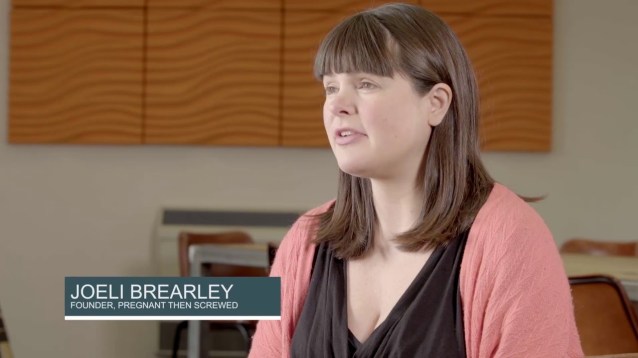
Joeli Brearley – campaigner on maternity rights
A horrendous picture of discrimination against pregnant women was outlined by Joeli Brearley to the tribunal.
Joeil,founder and CEO of ‘Pregnant Then Screwed’, a charity which protects and supports women who encounter pregnancy; maternity discrimination and lobbies the Government for legislative change. This was after being sacked when she was four months pregnant. Joeli was awarded the 2019 Northern Power Women ‘’Agent of Change’’; and is an International Women Human Rights Defender.
She described the appalling position of pregnant women who were often sacked by employers but then found they could get no redress under the employment tribunal system She said they had, while heavily pregnant only three months to lodge a case, found it would cost them £8000 to do so and many had no knowledge of the law. As a result there were very few cases.
She said women were hit by two major issues -facing pay cuts if they lost their jobs as they had to seek part time work on low pay – and paying for the second most expensive child care costs in Europe.
Typical child care costs took 33 per cent of their salary while single mothers, it took 67 per cent of their earnings. The difference between maternity leave and male parental leave of just two weeks meant only three per cent of men took a major part in looking after the new born baby, even though many more men would have liked to do it. Those who did had a 40 per cent more chance of staying together.
She said the situation had worsened during the Covid 19 pandemic. She thought CEDAW would make a big difference.
Loneliness and misery for women in rural Britain
Nick Newland
Poor transport and health services, loneliness in the remote areas of the UK were all part of the problems facing women in rural England, Scotland, Northern Ireland and Wales.
Nick Newland is from the Association of Country Women Worldwide The organisation exists to amplify the voices of rural women, so that the problems they face and the solutions they raise are heard and acknowledged by international policy-makers and legislators. Rural women are the backbone of families/communities but they go unheard in legislation, and they remain unprotected and unsupported. ACWW exists to change that.
He hoped CEDAW would lead to women have a much greater say in rural areas – and not just in the odd focus group -so they could get change in their area. He said transport was a major problem for many women – though it was better in Scotland and Wales than England.
He cited an example of one woman living in Monmouth who had to spend seven hours travelling to get a 15 minute jab against Covid 19 in Newport because of the bus timetable.
He also said that loneliness and isolation of women was a major issue – and had been made worse for women by the raising of the pension age. He said getting health care was also a big issue and there was a serious mental health crisis in rural Britain – some times aggravated by their farmer partners committing suicide. There were also cases of brain damage among women who had tried to commit suicide but had not succeeded.
” There is a desperate need for a national strategy , a better quality of life and equality for women in education and health.”
” We have already got one Pakistani here , we can’t take another one” – women’s refuge owner
Rosie Lewis at TUC backed rally
Rosie Lewis is Director of the Angelou Centre , Newcastle supporting the organisation’s services for Black women and girl survivors and has been involved in social justice activism for more than 25 years.
She has given evidence to CEDAW and to the Independent Inquiry into Child Sexual Abuse in order to ensure that the findings of both reflect the state response to violence against Black and minority ethnic women and girls.
An appalling picture of the treatment of women from ethnic minorities now migrant women and children had been excluded deliberately by the government from new domestic abuse legislation was given by Rosie Lewis
She said they were now being excluded from access to justice, help from specialists and many professional organisations no longer want to know or help them. She cited the case of one woman fleeing a forced marriage being told by the person running a women’s refuge, ” We already have one Pakistani here, we can’t take another one.”
She said a city like Durham now had no specialist organisation that could help people in the surrounding rural areas.
She thought if the UK did adopt CEDAW in UK law it would raise awareness, and improve access to services for ethnic minorities.
Other witnesses.
There was also evidence given today from Catherine Casserley, a barrister specialising in employment, discrimination, and Human Rights law. Co author of ‘Disability Discrimination Claims: An Adviser’s Handbook’. She said CEDAW would make a big difference to the plight of disabled women, including increasing awareness, creating a willingness to change and give a proactive approach to achieving equality.
Cris McCurley, who studied Law at the University of Essex and is a Partner in Ben Hoare Bell LLP; and a member of The Law Society’s Access to Justice Committee. gave some damning evidence of the treatment judges gave in family courts towards ethnic minorities.
Rebecca J. Cook from Toronto University who has made a contribution to international women’s rights as an author, legal educator, editor, lecturer, and participant in numerous conferences sponsored by such organizations as the World Health Organization and Planned Parenthood. She gave a video interview on abortion issues facing women.
Lisa Gormley from the LSE Women’s Peace and Security Policy, gave a talk on violence against women and the role of the Istanbul Convention, which the UK has yet to sign up.
She is an international lawyer specialising in equality for women and girls. She has also worked closely for several years with the UN Special Rapporteur on violence against women, its causes and consequences Lisa a legal adviser in Amnesty International’s International Secretariat (2000-2014).
Finally there was also a video from Professor Diane Elson and Mary-Ann Stephenson analysing how much the government spends on women and the huge pay gap between women and men.
Mary-Ann is the Director of the Women’s Budget Group and has worked for women’s equality and human rights for over twenty years as a campaigner, researcher and trainer. She was previously Director of the Fawcett Society and a Commissioner on the Women’s National Commission.
Margaret Owen, first witness at the CEDAW People’s Tribunal
A leading women’s human rights barrister yesterday launched a wide ranging attack on the failure of the UK to stamp out discrimination against women -during the 41 years after the UN convention on the elimination of all forms of discrimination against women (CEDAW) was passed.
Margaret Owen,-from the National Council of Women founded in 1895 and which has more than 40 women’s organisations affiliated to it – criticised the government, Brexit and Liz Truss, the current women’s minister and international trade secretary for all contributing to either ignoring or downgrading women’s rights.
She was the first witness to a unique tribunal – the CEDAW People tribunal – which has been set up with the help of one of the country’s leading human rights law firms, Garden Court Chambers. The tribunal will hear evidence and then with the help of judges and leading QC’s plans to draw up a women’s bill of rights aiming to implement the convention into UK law.
The UN convention was ratified by Margaret Thatcher in 1986 but has never been implemented by the UK.
Ms Owen’s position was that women’s groups used to have a statutory right to be consulted about government legislation but all this was swept away when more wide ranging changes were introduced. She thought CEDAW could introduce new procedures restoring statutory rights for women’s groups.
” Now all we have is consultations with the Government Equalities Office.”
She said that the civil servant there was sympathetic but had already told women’s groups that the provisions of CEDAW was “unlegislatible” -saying there was already human rights legislation. Shed said this amounted to an ” oxymoron”.
She accused Liz Truss of having ” a conflict of interest ” in being both negotiating trade deals -including arms deals – with regimes – some of whom were misogynistic – while standing up for women’s rights. She attacked the recent cuts in overseas aid which she said had damaged help for women and girls-partiuclarly in health and providing contraception.
Scottish developments on legislation
Kasey McCall-Smith from Edinburgh Law School
Developments in Scotland, which is preparing to legislate to put the UN Convention into Scottish law, were explained by Dr McCall-Smith, a lecturer in Public International Law and Programme Director for the LLM in Human Rights. She is a US qualified lawyer and an adviser to the Scottish government.
She explained that Scottish interest in women’s rights had grown out of the country having a more progressive policy towards children’s rights than in England.
She said there were three ways of introducing CEDAW into Scottish law. One was to create a framework of law putting the entire convention on the statute book. The second, as had happened in South Africa, was to put it in the country’s constitution, and the third was to introduce sectional changes into individual laws. She thought the most effective was the first.
She also pointed out that the present 2010 Equalities Act failed because it was ” gender neutral ” rather than ” gender sensitive ” to women – when much of the existing discrimination affected mainly women.
She also said the current CEDAW convention- written before the introduction of the internet and social media – should not be regarded as a static situation but should be developing all the time. She said it was important it covered economic, social and cultural rights.
As a US lawyer she said a Women’s Bill of Rights should be able to strike down legislation that would become incompatible once it was law. She added that Britain leaving the EU also had created a problems because EU law – while not perfect- was more supportive of women’s rights.
Women ambassadors told to go to the ” diplomat wives room”
Jennifer Cassidy – Oxford University
Jennifer Cassidy , a policy adviser, and a former UN diplomat, gave a grim picture of the way women diplomats were treated. She said that while the Foreign office always used statistics to show there were more women diplomats, they were not sent to the most important capitals in the US, France or Brussels. In some countries where women were not given equal status, some women ambassadors were told by their hosts to go to the ” diplomats wives room” until they had to point out they were the ambassador.
Wales “gender sensitive” act on domestic abuse
Rachel Minto Cardiff University
The most positive picture was given by Dr Rachel Minto, a politics lecturer at Cardiff university. She said that Wales already had passed new legislation on domestic abuse which was ” gender sensitive” legislation on domestic abuse recognising that most of the victims were women not men. This was in contrast to the Westminster legislation which was ” gender neutral”. She also said that women’s groups were keeping up links with the EU despite Brexit
Over 18000 trafficked people awaiting a Home Office decision about their fate
Kevin Highland, former first Anti Slavery Commissioner
Kevin Highland, former head of the Met Police’s Human Trafficking Unit, gave a grim picture of the treatment of trafficked victims in the UK. The Home Office is currently holding some 18,000 awaiting a decision whether they can stay here. He thought CEDAW could help improve the treatment of women and girls, particularly pregnant women, who have just been offered a paltry extra £3 a week by the Home Office to help them.
He was highly critical of failures by police forces to investigate trafficking because it was complicated crossing police borders – and found investigators had treated trafficking as ” a game of tennis” passing the ball from one force to another.
He was also revealed that the” county lines ” drug dealers who used vulnerable children to carry drugs across the country also ran a ” county lines” trafficking in young girls – often for prostitution. He told the tribunal they often targeted vulnerable children in care homes, promising them a new life only to be dragged down into alcoholism, drugs and prostitution.
Northern Ireland ” years behind in women’s rights”.
Rachel Powell – Women’s Resource and Development Agency, Belfast
A startling picture of how far women are behind in Northern Ireland in gaining their rights was highlighted by two witnesses, Rachel Powell, and Jonna Monaghan, from the Northern Ireland Women’s European Platform.
Rachel Powell provided some alarming statistics showing how 30 per cent of women in Northern Ireland, earn nothing, staying at home. Many others with higher qualifications take low paid part time jobs because they have unpaid caring responsibilities.
Opposition to women’s rights from the Democratic Unionist Party and to CEDAW in particular, were highlighted by both of them. The current first minister, Paul Givan, is piloting the Severe Fetal Impairment Bill, through the Northern Ireland Assembly to restrict abortion despite the UK government in Westminster passing an anti abortion bill. The Assembly is at the moment refusing to implement the UK legislation.
There were also fears that the people in Northern Ireland would not get new rights if the EU passed further laws now the UK has left Brexit even though Northern Ireland is still in the single market.
Alison McDermott – whistleblower Pic credit: BBC News
A potentially ground breaking case bought by whistleblower Alison McDermott, a former consultant to the nuclear reprocessing plant at Sellafield, began a three week hearing at Leeds Employment Tribunal this week.
The case of McDermott versus Sellafield, the Nuclear Decommissioning Authority and former Sellafield HR director Heather Roberts has been brought under the Public Interest Disclosure Act 1998 – also known as the Whistleblowers’ Act.
Alison McDermott, an HR professional and diversity specialist, claims that the sudden termination of her freelance contract in October 2018 by Sellafield was linked to her protected disclosures containing evidence of systemic bullying, and racist and sexist incidents at the Sellafield site in Cumbria. The original story was reported in BylineTimes
Since the report came out the BBC did an investigation into what it called toxic bullying, homophobia, sexual harassment and racism at the nuclear plant.
At the beginning of hearing Employment judge Philip Lancaster told the tribunal: “This, of course, is not a public inquiry into an alleged toxic culture at Sellafield and it is certainly not a forum to investigate specific allegations of improper behaviour on behalf of named individuals.”
The case has been complicated by one of the organisations fighting her, the Nuclear Decommissioning Authority, changing its stance and is distancing itself from Sellafield. More will come out later in the case.
Ms McDermott faced aggressive cross questioning of her stance by Deshpal Panesar QC, representing Sellafield and Ms Heather Roberts, the plant’s former human resources director.
” I hope you’re not going to tell me we’re going to start letting women in burkas in here”- HR director
Ms McDermott was paid £1,500 a day – the same sum paid to previous consultants Capita -to monitor equality, diversity and inclusion at the nuclear fuel reprocessing and decommissioning site in September 2018.
Mr Panesar pointed out that she had taken no action when she first met Heather Roberts who is said to have told her “”I hope you’re not going to tell me we’re going to start letting women in burkas in here.” He said this was a reference by Ms Roberts because of security at the plant where people had to have photo passes. She said she was horrified by the reference but did not raise it with her because it was their first meeting.
Yet later after she had investigated other complaints she had pressed for a formal inquiry into a series of complaints and allegations about bullying, homophobia and sexual harassment. He accused her of ” weaponising” the issue at the plant.
Ms McDermott denied this,
She said Ms Roberts then asked her to take part in a covert investigation to “flush out” issues raised in the report, but she refused and advised her there needed to be a formal investigation.
Mr Panesar suggested she had agreed to take part in an undercover investigation, using focus groups to question staff.
In the latest move in a long running saga over the reporting of child sex abuse allegations made by Esther Baker to journalists, former Liberal Democrat MP, John Hemming lost a case for a summary judgement giving him aggravated damages against journalist, Sonia Poulton. The case will now go to a full trial.
Hemming was also unable to strike out most of her defence and the judge ruled that a counterclaim by her for damages for harassment and injunctive relief, pursuant to the Protection from Harassment Act 1997 could go ahead. The latter counter claim was also against Sam Collingwood Smith and Darren Laverty, whom the judge said with the MP ” have been in some communication with one another, and have to some extent supported and assisted one another in various activities, not least litigation.”
The judge also allowed Sonia Poulton to amend her defence when the case goes to a full trial. There is a separate case for damages being pursued by Darren Laverty.
The full judgement can be read here. It includes the history of a previous case between John Hemming and Esther Baker and the circumstances that surrounded a film interview Sonia Poulton gave which went on YouTube.
Peter Lilley, former Social Security Secretary Sir Rob Behrens, the Parliamentary Ombudsman
Last week I had sight of the Parliamentary Ombudsman confidential preliminary report into whether there was maladministration in informing some four million women that their pensions would have to wait another six years before they got their penswion.
The report found that there was – but only from 2005. The report exonerated the Department for Work and Pensions for its handling of everything from 1995 – when the Pensions Act was passed – to 2004.
Its official words were: ” Between 1995 and 2004, accurate information about changes to State Pensions Age was publicly available in leaflets, through DWP’s agencies and on its website. What the DWP did reflects expectations set out in the Civil Service Code, the DWP Policy Statement, the Pension Services Customer Services Charter and the Benefit Agency Customer Charter”.
I thought I would check their findings against the release of hitherto secret documents from the DWP following the court case brought by BackTo60 which I obtained when the case was over.
The Ombudsman’s report says it applied the same standard to events that happened before 2005 and after 2005 – when internal documents showed the ministry did have tougher standards for the delivery and supply of information for benefits and pensions from 2006 which strengthened the Ombudsman’s hand.
What surprised me therefore was the lack of weight in the Ombudsman’s report placed on a key document in February 1997 -just months before the general election that saw Tony Blair’s landslide victory.
It read: “Ministers have seen your submission of 20 January seeking agreement to run an advertising campaign aimed at informing/reminding women of the change in state pensions age following the Pensions Act 1995.
“Ministers do not see a pressing need at this stage to run such a campaign but would be prepared to re-consider at a later date.”
Lack of curiosity
There seems to be a remarkable lack of curiosity by the Ombudsman about this. For a start the internal document shows it went right up to Peter Lilley, then Secretary of State, which is the highest level in the ministry. Secondly they don’t ask what sparked civil servants to seek such action.
Perhaps it might be because the the DWP devoted just two sentences in an appendix to the legislation to any thought of communicating the change to millions of people. They decided to leave it in the hope that employers might voluntarily tell their staff. Why should they, surely it is the government’s job? The DWP anyway insisted in the court case they had no obligation to tell anybody.
The second point is that the Ombudsman is right to mention that leaflets were printed, there was some advertising and were distributed in benefit offices and citizen advice bureaux. What they don’t say is the quantity. Internal documents show the DWP spent just £80,000 printing 47,000 leaflets to inform the 3.8 million women affected. How pathetic is that for a communications policy?
Priority given to independent financial advisers
Priority was given to informing independent financial advisers, representing the wealthiest pensioners, who received personalised letters. For some reason, this letter appeared to be missing from the 1,600 pages of documents submitted by the DWP as part of the judicial review.
Yes some £6.5 million was spent by Alistair Darling, the Labour social security secretary in 2001 on advertising -including the notorious talking dogs advert – but ministers at the time tell me the emphasis was then on getting people to take out a second workplace pension to supplement the state pension not on the impending rise in the pension age for women.
So it seems curious for me that the Ombudsman has let off the ministry for this period while coming down strongly against them after 2005 when people had little time left to plan to alter their retirement plans. The evidence that millions of people didn’t know as the internal documents reveal is shaming for the DWP, as is the slow way they reacted to the facts. Indeed, ironically it was only because civil servants feared someone would complain to the Ombudsman that they thought they must cover their backs.
Flaw in the process
My other thought about the report is the process. Normally the Ombudsman might be dealing with one family or a small group of people in handling a maladministration case. In this instance they are asking six people to respond to their report on behalf of four million people. It puts a huge burden on those six people to have the knowledge and time to respond to get this right. I don’t know who they are but I am not sure in this case this is entirely the right process – since they can’t share the findings with other people or get advice.
This is one reason once I discovered the report had been circulated rather more widely than the six – including with the DWP and MPs – that I thought, on public interest grounds, it ought to be more widely known.
Here is the Salford City Radio programme broadcast last night. I talked about the importance of tackling all discrimination against women and girls in the CEDAW People’s Tribunal. I explained how the issue had evolved from the Back To 60 judicial review over discrimination against women who lost their pensions into a three day hearing later this month with the backing of top lawyers from Garden Court Chambers.
Joanne Welch talked about the latest developments in the Back To 60 campaign which is a burning injustice issue for millions of women born in the 1950s and waited six years to get their pension.
The new Parliament has seen a complete revamp of the all party group tackling the long standing festering issue of pension inequality for millions of women caused by the mishandling of the rise in the women’s pension age.
Out go Carolyn Harris, the former chair and Labour MP for Swansea, East and co chair Tim Loughton, Conservative MP for East Worthing and Shoreham.
In come Andrew Gwynne, Labour MP for Denton and Reddish as the new chair and Peter Aldous, Conservative MP for Waveney as co chair.
The good news is that the change means a fresh start and a move to a more inclusive approach taking in the views of all the different women’s organisations that represent those born in the 1950s who were faced with a wait for up to six years to get their pension. Unfortunately under his predecessor Carolyn Harris this was not always the case and it was a never completely clear what this group of MPs wanted in compensation for the millions of women affected by the change.
Andrew Gwynne summed up the change succinctly.
“The APPG on State Pension Inequality exists to keep the issue of the 1950s women’s pension injustice alive.
“As new Chairs, Peter Aldous and I are informally taking evidence from all the 1950s women’s groups to get as much information as possible. We also await the Ombudsman’s report.[This is the report on maladministration]
“We recently had a good meeting with BackTo60 who are providing information to us about CEDAW and whether there is a parliamentary route on the issue.”
I gather that as well as Waspi and Waspi 2018 they have asked Joanne Welch, who ran BackTo60, to address a full meeting of the committee.
welcome news
This is particularly welcome news as for years we had a ridiculous position of a major court case seeking a judicial review of the government’s handling of the issue running alongside complaints to the Parliamentary Ombudsman – with the former being ignored by this committee. The first dealt with the past inequalities that were enshrined by the legislation, the second with whether the Department for Work and Pensions was guilty of maladministration in handling it.
The first ultimately failed but the fact that it took place at all is due to a ruling by Mrs Justice Lang – a remarkably independent woman judge – who decided that it couldn’t have possibly been known in 1995 that the new act would cause such present hardship to a group of women born in the 1950s. She incidentally took an equally controversial decision to save at the eleventh hour from destruction Brandon Station on the Suffolk/ Norfolk border designed by the architect who supervised the stone carvings in the Houses of Parliament. See my blog here.
The great news is that MPs will now look at all proposals from full restitution to compensation, take account of what the Parliamentary Ombudsman finally says, and be able to present their views to ministers who have been extremely reluctant to award any money at all to the 50s women.
CEDAW People’s Tribunal
They have also acknowledged the link to CEDAW – the UN Convention on the Elimination of all Discrimination Against Women, ratified by Margaret Thatcher in 1986.
With a CEDAW People’s Tribunal due to be held from June 21 in London with the backing of lawyers from Garden Court Chambers – it also very likely that the plight of the 50swomen will form part of wide ranging submissions covering violence to women, unequal pay and job discrimination.
The other members of the committee are: Philippa Whitford, SNP MP for Central Ayrshire; Liz Saville Roberts, Plaid Cymru MP for Dwyfor Meirionnydd; Ruth Cadbury, Labour MP for Brentford and Isleworth; Jason McCartney, Conservative MP for Colne Valley; and Gavin Newlands ,SNP MP for Paisley and Renfrewshire North.
Provisional findings point to some compensation likely to be paid to women born in the 1950s and 1960s
A confidential letter seen by this website shows the Parliamentary Ombudsman, Sir Robert Behrens, has managed to both exonerate and damn the Department for Work and Pensions for its handling of the administration of the rise in the pension age for millions of women born in the 1950s and 1960s,
The letter contains the provisional findings of an investigation which has taken years to undertake by his office – also wrongly temporarily halted because of a court case brought by Back To 60 seeking full restitution of the hundreds of millions lost by pensioners on grounds of inequality not maladministration.
The ministry is exonerated for all the work it did between 1995 and 2004 – from the passing of the 1995,Pensions Act.
DWP exonerated for first nine years of the announced change
The relevant paragraph reads: ” Between 1995 and 2004, accurate information about changes to State Pensions Age was publicly available in leaflets, through DWP’s agencies and on its website. What the DWP did reflects expectations set out in the Civil Service Code, the DWP Policy Statement, the Pension Services Customer Services Charter and the Benefit Agency Customer Charter”.
But the provisional report go on to make findings of maladministration for the department’s handling of events from 2005 to 2007 when it belatedly found out through internal research that people still did not know about the change and needed targeted information.
The report reveals that at the time the ministry had a sufficient database to have issued targeted information to people who were affected by 2005. But the huge delay in sending out letters meant in the worse case scenario many women did not get an official letter until 14 years after the event. The letter quotes Paul Lewis, a financial campaigning journalist, saying on average women born in the 1950s did not get a letter until one year and four months before they turned 60.
DWP ” did not get it right “
It says: ” We think DWP’s decision making following the 2003/04 research failed to give due weight to relevant considerations, including what research showed about the need for ” appropriately targeted” information, what was known about the need for individually tailored information, or how likely it was doing the same thing would achieve different results. It failed to make a reasonable decision about next steps. In Augusts 2005 DWP did not ” get it right”. And its failure to use feedback to improve service delivery meant it did not seek continuous improvement. Our provisional view is that it was maladministration.”
” We think DWP then failed to act promptly on its 2006 proposal to write directly to affected women, or to give due weight to how much time had already been lost.. It did not get it right because it did not meet the requirements of the Civil Service Code and it did not take all relevant considerations into account. And it failed again to use feedback to improve service delivery and seek continuous improvement.. Our provisional view is that was also maladministration.”
” We think maladministration led to a delay in DWP writing directly to women about changes in the state pension age. In our view that letters would have been issued around 28 months earlier than they were if the maladministration had not happened.”
This led to women who were not aware of the changes being given less time to make changes to their retirement plans. ” The next stage of our investigation will consider the impact that injustice had.”
The report seems to exonerate Whitehall for the way it handled the pension changes in 2011 with letters going out 18 months after the further change. But because of a huge delay in sending out letters to the women affected by the changes in 1995 many did not know until just before they thought they were going to retire.