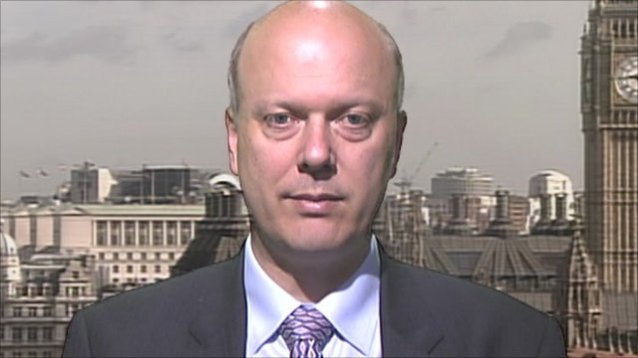
For those who are not yet following me on Byline there is now a two part investigation by me into the cost – both financial and personally damaging – to British taxpayers of cabinet minister Chris Grayling. His nine years in office – from Employment Minister to Lord Chancellor and now Transport secretary – have brought misery to millions of people whether they are rail commuters, prisoners, victims of criminal attacks or faced discrimination at work. Some people have even had to plead guilty to criminal offences they did not commit to save money. Others have become victimised twice because of the debacle of his probation privatisation programme.You read the two part series in bylinehereand here.
Department for Work and Pensions – still misleading the facts on 50swomen pensioners.
The Department for Work and Pensions has produced statistics to frighten the public into believing that compensating 3.8 million women born in the 1950s who lost out through the rise in the pension age from 60 to 66 will cost more than double the real price.
A new DWP research report issued a day after judicial review hearing on June 5 and 6 and given widespread coverage in mainstream media put the cost at an eye watering £188 billion and £212 billion instead of a previous figure of £77.2 billion. The directly comparable figure hidden in a footnote is £91.1 billion at today’s prices.
Now I am back in the UK after going around the world and visiting 22 countries I am introducing some changes to my blog.
I have a number of major projects for the current year and a backlog of challenging investigations following a number of you contacting me on this site to ask me to write about issues which are not being reported or ignored in mainstream media.
I am currently employed as a consultant to a national newspaper and an independent television production company scoping a long term investigation which hopefully will appear later this year.
BYLINE
I will also be regularly writing for byline.com on their new project bylinetimes – a print and on line paper that specialises in reporting issues not covered by the mainstream press. This will mean that my coverage of Whitehall mismanagement and political scandals will first appear on their site but every article will be highlighted on this site so you can link to it and read it.
This site has run a number of articles on the plight of the 3.8 million women born in the 1950s who have been hit by the raising of the pension age from 60 to 66. I decided to back the campaign by BackTo60 after seeing the poverty, stress and misery caused to so many people by this mismanaged policy. Apart from the Guardian and the Press Association, this site and bylinetimes were the only people to cover a judicial review hearing which could affect the lives of 3.8 million people.
Coverage of this issue will be intensified over the next few weeks as I have a string of exclusive stories and analysis in the pipeline.
This site has also covered very challenging child sex abuse stories in the past and some very controversial investigations through Exaro News . I am still planning to cover issues raised in this area and will come back to it shortly.
YOU DECIDE
The rest of the news agenda on this site will depend partly on you, the reader, when you ask me to either investigate something that has manifestly gone wrong or expose mismanagement and corruption wherever it might be. I have had a number of you contacting me about local government scandals, housing and business scandals, racism, mental health issues to name but a few. Please bear with me as it takes time to do a proper investigation.
Finally I have made one change. My figures from WordPress show though this a UK site some 10 per cent of the traffic is from overseas – notably Spain, France, the US, Canada, Australia, Cyprus and Turkey. It also has had sizable hits from the United Arab Emirates, Croatia, Mexico, Bulgaria and Thailand to name a few. Many of these could be migrants or expats but I have added a Google translate button so the blogs can be read in other languages.
In the meantime I am very gratified by the huge increase in the number of hits on this site – mainly as the result of my support for the 50s born women. The site is running at record levels, so thank you all.
The fight by 3.8 million women born in the 1950s. Film by Jasper Warry and Hello Deer Productions
This up beat film rightly pitches the mood of a generation of women who are not going to lie down and lose tens of thousands of pounds each because of a cruel, incompetent government which thought it could get away with raising the pension age without telling them.
It is a worthy rebuke to George Osborne, the multi millionaire former Tory chancellor and editor of the Evening Standard who once boasted about the removal of the benefit:
“I’ve found it one of the less controversial things we’ve done and probably saved more money than anything else we’ve done.“
Instead he has left the Department of Work and Pensions with a multi million pound legal bill and that’s only for starters. If the women win it is going to be one of the most costly decisions George Osborne has ever made.
Oxfam to be damned tomorrow while 23 other international charities could have a worse history of sex exploitation of women
The Charity
Commission will tomorrow issue an excoriating report on Oxfam’s mismanagement
and failure to act over the sexual exploitation of victims of the Haiti
earthquake in 2011.
But the Commission will ignore a much wider scandal that suggests that 23 of the world’s biggest overseas aid charities are hiding far worse sexual exploitation of vulnerable people by their own staff and of fellow women and gay aid workers.
Internal Whitehall documents released yesterday reveal that
the Department of Work and Pensions secretly knew on six separate occasions that there
was “ widespread ignorance “ among 3.8 million women born in the 1950s that
they were about to lose their pensions for up to six years.
The disclosure by Michael Mansfield, QC came on the first day of a landmark judicial review brought by the campaigning group Back to 60 into the raising of the pension age from 60 to 66 which has left this group of women living in poverty after they had relied on the money for their retirement.
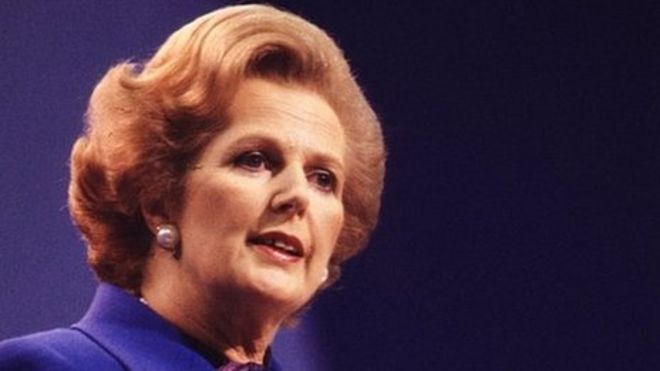
It is a supreme irony. Margaret Thatcher’s government ended the Treasury contribution to the National Insurance Fund that has now deprived 3.9 million women born in the 1950s of their pensions for up to six years. Now she could also be their saviour.
This is because Britain’s first woman prime minister took the decision to ratify in 1986 the United Nations Convention on the Elimination of All Forms of Discrimination 1979 (CEDAW).
It is this decision that commits the United Kingdom to outlawing not only any discrimination against women who are unfairly treated but demands reparations for the people who lost those rights.
Pic credit: BBC
The CEDAW convention also crucially provides a mechanism to deliver the money to 50s women without facing a legal challenge from any other group – whether it be the pensions industry or anyone else.
The role of this convention is likely to be a major debating point in next week’s high court judicial review since Professor Jackie Jones – elected last week as a Labour MEP for Wales and former professor of Feminist Studies at the University of the West of England – will be BackTo60s expert witness. In the hearing that led to the granting of the judicial review she produced a brief here which explains the convention.
What is particularly exciting for 50s women – regardless of the result of the judicial review – is that this mechanism known as a Temporary Special Measure could be implemented by government ministers without any need for a judicial review at all. All it would need is the will of the politicians to do something about it under our obligations to ratify CEDAW.
The effect would be to legal proof any challenge without changing the law that has equalised the state pension age.
There is also an extraordinary precedent which was adopted by the Blair government and extended by the Brown government.
In 2002 Parliament passed the Sexual Discrimination (Election Candidates )Act which set up the controversial all women’s short lists for MPs, MSPs, MEPs, AMs and local councillors. The aim, as a detailed House of Commons library briefing reveals, was to dramatically increase the number of successful women candidates in public life and redress the balance between men and women holding public office.
This particular change was seen as a Temporary Special Measure originally aimed to end in 2015.
The 2010 Equality Act used an order to extend this to 2030. The measure was enthusiastically adopted by Labour who had pioneered the idea for the 1997 general election. Other parties did not adopt all women short lists but came under increasing pressure to select more women candidates.
The result has been a big increase in the number of women in Parliament. Now there are 208 women MPs in Parliament compared to 60 in 1992 before Labour introduced the all women shortlist.
Two issues have not been sorted out. The UK has repeatedly refused to embed all the provisions of CEDAW into domestic law. It steadfastly refuses to incorporate CEDAW into the Equalities Act 2010 or pass a separate Act that would provide women with the rights and fundamental freedoms Mrs Thatcher pledged to adhere to over 30 years ago.
And no special legislation has been passed to allow such payments to be made to the 3.9 million women born in the 1950s.
However this is changing. A Parliamentary motion calling for a temporary special measure to compensate the women has attracted 139 MPs from all parties and widely differing views. These include a number of ex ministers from the two main parties including Tories Sir Michael Penning and Robert Halfon, Labour’s Kevan Jones and Angela Eagle.
Other MPs supporting Anna McMorrin’s motion include the DUP chief whip, Sammy Wilson and Brexit spokesman Nigel Dodds; Green Party MP Caroline Lucas; Labour MPs Stephen Kinnock, David Lammy , Chris Bryant, Emma Lewell-Buck and Gareth Thomas; Tory MPs, Sir Peter Bottomley, Dame Caroline Spelman,Sir David Amess, Sir Henry Bellingham and Laurence Robertson;Liberal Democrat MPs Jo Swinson, Layla Moran, Tim Farron and Stephen Lloyd; Plaid Cymru MPs, Ben Lake and Jonathan Edwards Scottish Nationalists, Angus Brendan MacNeil and Deidre Brock and Independents John Woodcock and Chris Williamson.
What is clear is a gathering support for action among MPs – something the present government and pensions minister Guy Opperman ignore at their peril. The 50s born women have a just cause on their side.
The 2019 local elections were one of the most surreal in recent times. For a start two of the newest party groups, Nigel Farage’s Brexit Party and the breakaway group, ChangeUK, were too late to field any candidates. So they didn’t reflect the range of political alternatives on offer.
The voting results Pic credit: BBC
They took place against a background of massive disillusion with politicians and country bitterly divided between Remain and Brexit.
The comparison with 2015 – the last time the seats were fought- was not equally valid as the 2015 elections were on the same day as a general election when more people turn out to vote.
England scoreboard
PARTY
COUNCILLORS
CHANGE +/-
Conservative
3564
-1330
Labour
2021
-84
Liberal Democrat
1352
+705
Green
265
+194
UKIP
31
-145
Others
1177
+660
So it was not surprising that the two major parties suffered and there was a rise in the number of Independents elected reversing a trend for decades.
However contrary to some of the reporting disillusionment did not fall equally on the Tories and Labour. The Tories lost out massively , Labour did not.
The Conservative party lost 1,330 seats and lost control of 45 councils. They now have control of 93 councils. Labour gained some councils but finished with an overall loss of six councils ending up controlling 60.
The Lib Dems managed net gains of 11 councils – leaving them in control of 18. The Greens did not win any council but are now a presence in both rural and urban areas.
When you get down to the detail you find Labour’s performance reflects a trend that was going on last year. The party is finding it is losing ground in some traditional working class areas where they have dominated for decades but still gaining ground in the most unlikely of places, particularly in the South.
The must dramatic losses were in Sunderland ( 10 seats), Bolsover (14) and North East Derbyshire ( 17), Redcar and Cleveland ( 13) all traditional working class areas. They also were driven back in Derby where the Tories are now the largest party and lost five seats in South Tyneside. Labour lost to a landslide of Independents in Ashfield, Nottinghamshire and now only have two councillors left. Labour disappeared completely in Dacorum ( Hemel Hemsptead) where they have been declining for years. In Stoke on Trent where Labour launched its local election campaign it lost five seats and the Tories gained eight. They also lost control of Bolton, Darlington , Stockton, Middlesbrough and Hartlepool.
Now the council leader of Sunderland Graeme Miller blamed the loss of Labour seats on a ” massive protest ” over the party’s attitude to Brexit by agreeing there could be a second referendum. This may have been partly true – as other big losses were in Leave areas – but in Sunderland voters seem to be saying ” Anybody but Labour” by voting in UKIP, Liberal Democrat , Conservative and Green councillors.
Now if this was repeated all over the country it would have been a very bad night for Labour. But it wasn’t. Labour gained seats to take control of Trafford, High Peak and Gravesham in Kent. They also remarkably took over Witney town council winning 15 of 17 seats on David Cameron’s doorstep.
And again like last year they won seats in areas where Labour hasn’t existed for years. This included one seat on South Norfolk council, one seat on Lyme Regis town council, 16 gains in Thanet – last time a UKIP stronghold, six in Folkestone and Hythe, where they hadn’t been represented, and they doubled their councillors in Worthing from five to ten. They also won 3 seats on Lewes council in East Sussex where they have not been represented for a decade.More surprisingly they took two seats in Surrey on Waverley council – both in Godalming, bringing back into politics the former Labour MP for Broxtowe, Nick Palmer. The rout in Waverley which covers true blue Farnham and Haslemere saw a 49 seat Tory majority collapse with 30 Tory councillors losing their seats ( Lib Dems gained 13, Greens two, and Farnham Residents, an independent group ended up with 14 councillors.
The Liberal Democrats did well with landslide results in Chelmsford, North Norfolk, Bath and North East Somerset, Vale of the White Horse, Hinckley & Bosworth, Winchester, Cotswolds, North Devon, Mole Valley, North Devon, Somerset West & Taunton and Teignbridge. Without doubt at a local level they have shrugged off their appalling performances after the coalition government but it is not entirely clear that in every area it will mean a rejection of Brexit. The Greens also now have a presence on many councils by winning seats in both rural and urban areas and strengthening their position in Lewes, Brighton and Norwich.
The Conservative losses are so numerous that it is impossible to list all the 45 councils they no longer control. But there was a devastating trail across Kent and Surrey and serious losses in the West country. Among the biggest losses were Waverley (30), Guildford ( 22) Bath and North East Somerset ( 25) ,Chelmsford (31) , Swale (16) North Norfolk (19) and Kings Lynn (16).
What does all mean? It is too facile to see this as a Brexit v Remain result particularly as they have been a substantial rise in Independents. These are by no means all Tories in disguise. On one level it is the reverse of the 2017 general election which saw the two main parties dominate. Now they are in the back foot in some of their strongholds – whether it be the North East or parts of the Midlands for Labour or the South East, West country and parts of East Anglia for the Tories.
Labour is still advancing the South East and has strengthened its position in Manchester. The Lib Dems are back with a vengeance in former strongholds.What will happen next with the European elections and the Peterborough by-election may also not be a true guide.
We live in surreal times and these were surreal local elections.
It could be science fiction.It has already been featured on games videos. But in the Australian Bush there’s an extraordinary real problem which is entirely self inflicted.
In the 1930s some bright person thought they had found an ecological way of dealing with a pest – a beetle – that was destroying Australia’s sugar cane crop. They decided to import the world’s large toad that had been introduced to Hawaii from Central America. The toads grow up to six inches long.
What the people who imported the toad did not know is that this large toad could not jump. And the beetles lived at the top of the sugar cane some 15 feet above the ground. So the toads were less than useless in combating the pest.
But their legacy has been a disaster. The toads secrete a poisonous fluid when attacked as their main defence mechanism. Toads are the natural food for many native reptiles and birds. They have no natural predators in Australia.
Worse the reptiles and birds that ate them were poisoned threatening the diversity of wildlife and forcing snakes and iguanas to the point of extinction in some areas. They also multiplied from a few hundred to an amazing 200 million and expanding their area from a small part of Queensland into the vast Northern Territories.
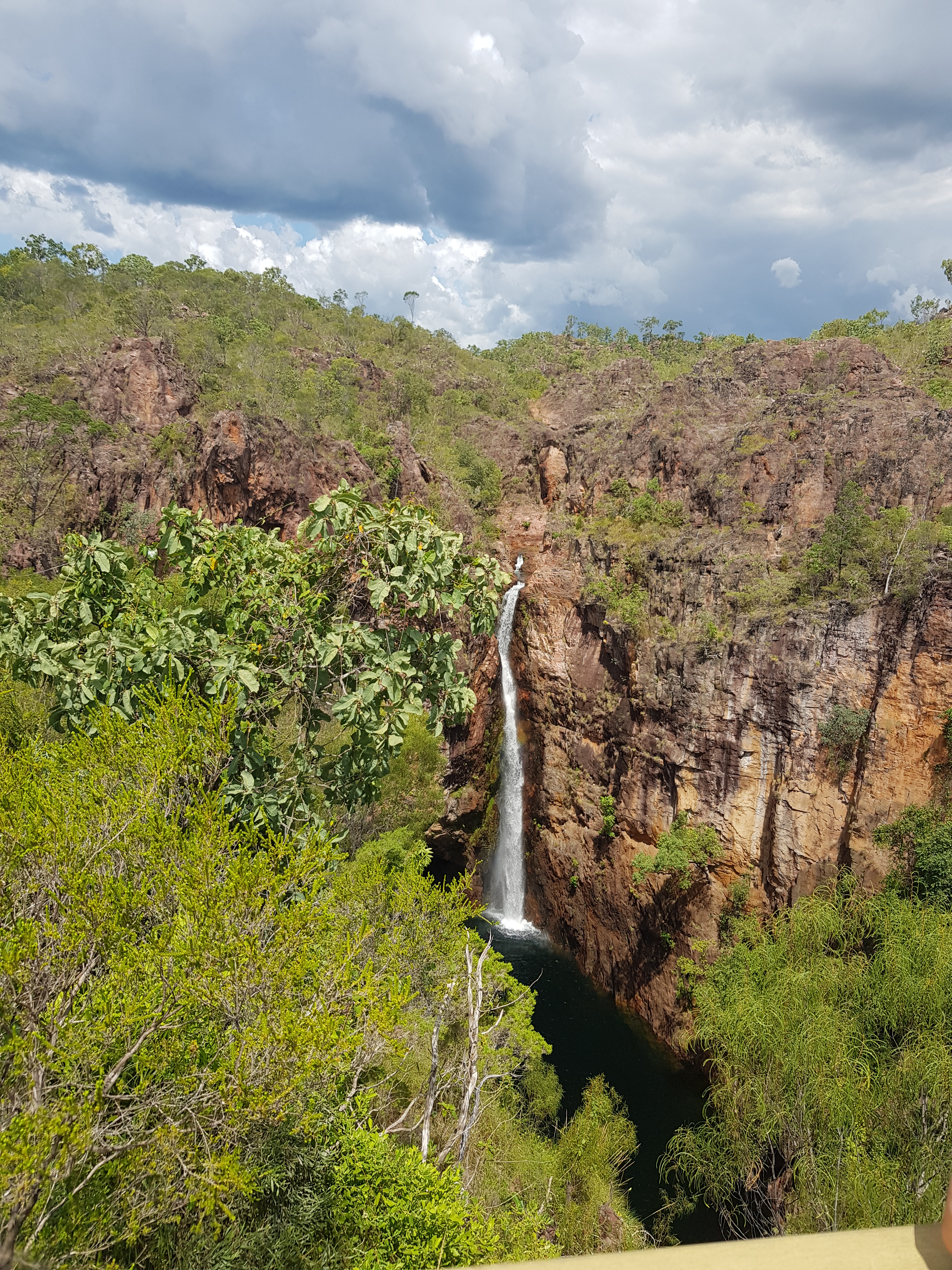
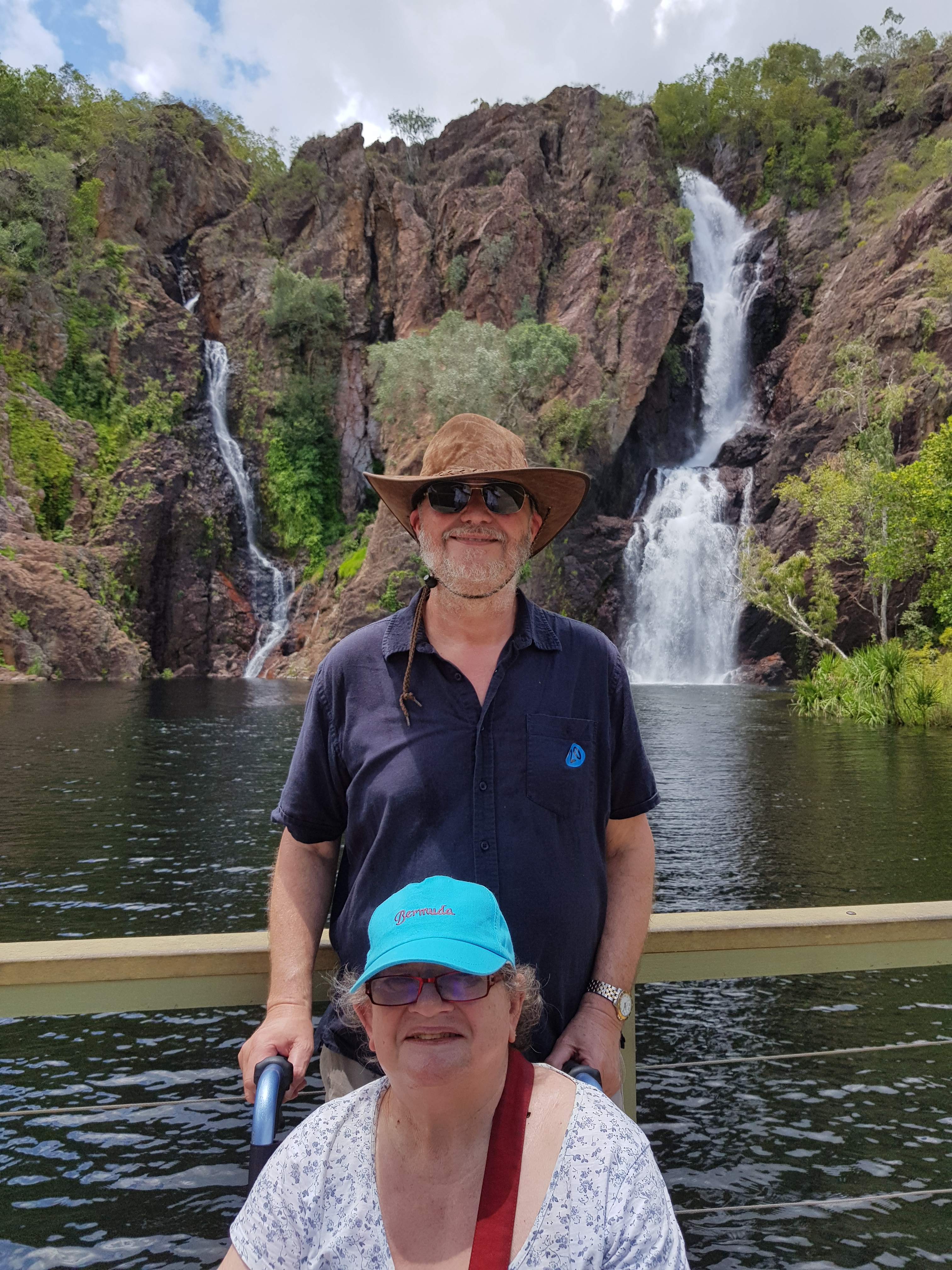
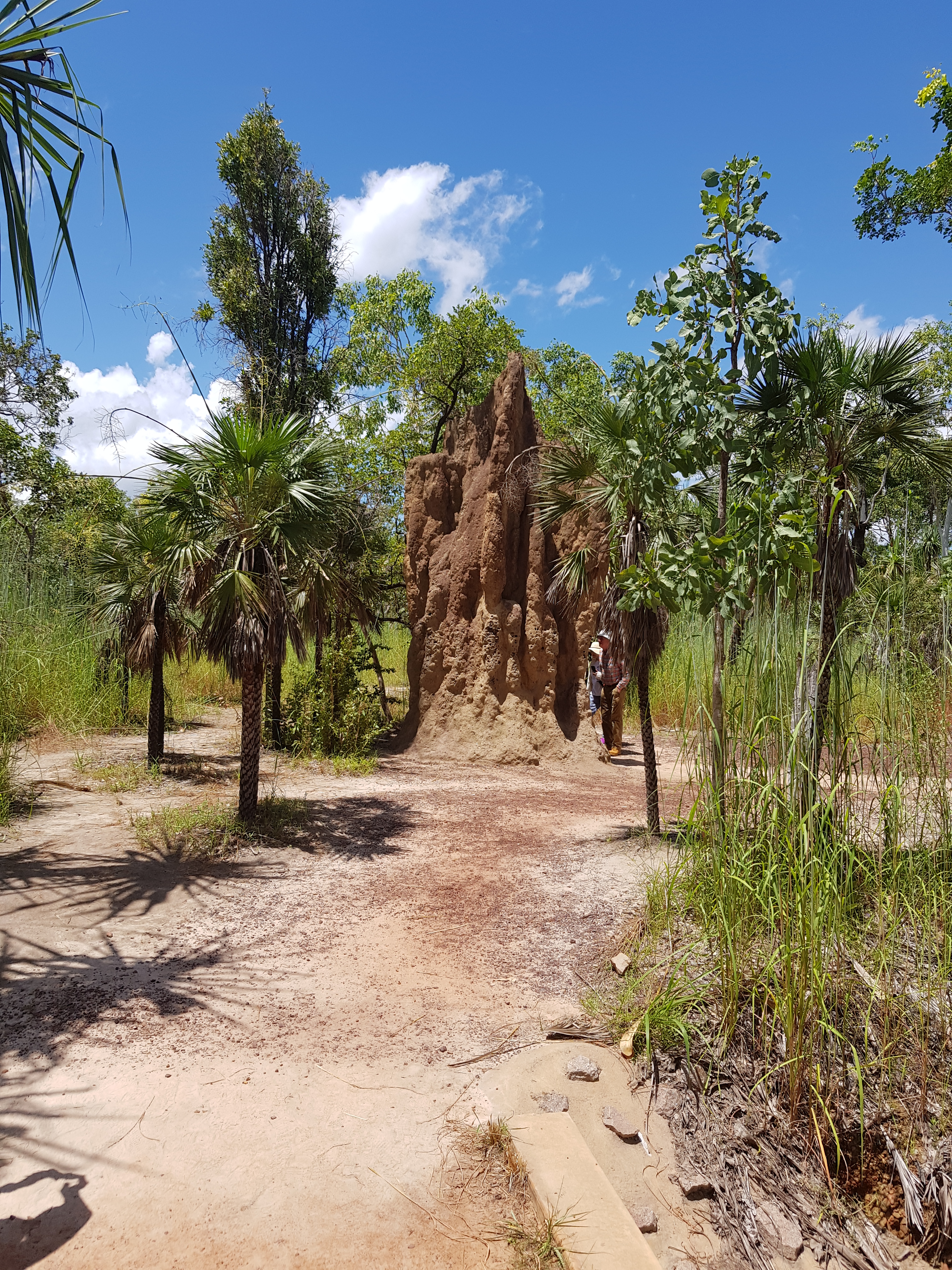
One area we visited was Litchfield National Park south of Darwin. This bush park is famous for its waterfalls and its giant termite mounds. Here the arrival of the cane toad has seen the disappearance of iguanas and some species of snake who ate the toads.
The guide who took us on the trip was devastated by the impact of the toads on other wildlife. And he was concerned about the spread of the toads which extend their range by about 25 miles every year.
Obviously it has not destroyed all wildlife in the park. Some specialised species like the olive python which feeds on bats are largely unaffected. And there is some hope that Australian wildlife hit by the toads may be able to adapt.
One snake has evolved to have a smaller jaw so it cannot swallow a giant toad. A bird under threat has found that if you turn the toad belly up it is possible to eat parts of it without being poisoned.
And the park’s meat eating ants have found they are immune from the poison. Normally they invade the huge termite mounds and kill the termites. Now they have found toads as another part of their diet.
The Australian cane toad has also adapted. It has grown longer legs so it can cover greater distances in this huge continent. Meanwhile scientists have unraveled the toad’s DNA in the hope of finding a way to try and eliminate them. This is an extraordinary story of a self inflicted problem that could be solved by evolution.
It is one of the most serene parts of New Zealand we saw in our short visit.Situated on the mainland of the beautiful Bay of Islands the Waitangi Treaty grounds is where in 1840 the Maori tribal leaders ceded sovereignty to the British.
The agreement has been disputed ever since through mistranslation. The Maoris thought they had ceded sovereignty, the British thought they had agreed that they would govern them and be able to take over their lands.Since Maoris had no written language it was an easy and useful mistake by the British.
The signing led to the seizure and purchase of the vast majority of Maori lands and like many of the people who inhabited the land in Australia and North America before the arrival of European settlers they became marginalised.
Since the 1940’s there has been a huge migration of Maoris from rural to urban areas. In 1926 84 percent of Maoris lived in rural settlements by 2006 it was down to 15 per cent. This added to marginalisation as many lost touch with their roots and some drifted into crime.
However since the 1970s there has been revival of Maori culture and nowhere does this show more than in Waitangi.The treaty grounds are run by a trust which receives no government money. Even the purchase of the land in the 1930’s depression relied on a well off white family rather than state aid. But the enthusiasm of the people who run the trust reflects the revival.
It was best illustrated by our Maori guide at Waitangi called John. He had a Maori name but that was too difficult to pronounce or remember for a European like me. He loved his job and spoke eloquently about Maori culture, traditions,language and history.
What came over is Maori fascination with ancestry. He could trace his own back 15 Maori generations and discovered in the process he was part Scottish and one per cent Native American.
The role of tattoos in Maori culture is also fascinating.John had got married and instead of exchanging rings with his bride he had a tattoo on his chest to celebrate his marriage. Marriage must be forever for Maoris.
The treaty grounds include the house where the treaty was signed, a Maori meeting house and a replica of a 150 man war canoe, a museum and a woodcarving centre where the
ancient Maori craft has been revived.
Princess Diana stirred up controversy on a Royal visit to Waitangi when she became the only woman to sit in the canoe breaking the sacred Maori rule that only men can sit in war canoes. But she was never one to follow tradition.
It also has a flagstaff with three flags,one created after the crew of trading boat were jailed in Australia for trading without a flag,the Union Jack, and the modern New Zealand flag.
The Treaty House is no grand building for such a momentous event. It is just a small homestead which later had an extension added. The room where the treaty was signed is simply furnished with bare boards and a wooden table.
For anyone visiting New Zealand this is well worth the trip.Allow a full three hours to include a display of Maori dancing.





 Westminster Confidential